
Leaderboard


Popular Content
Showing content with the highest reputation on 08/25/2026 in Posts
-
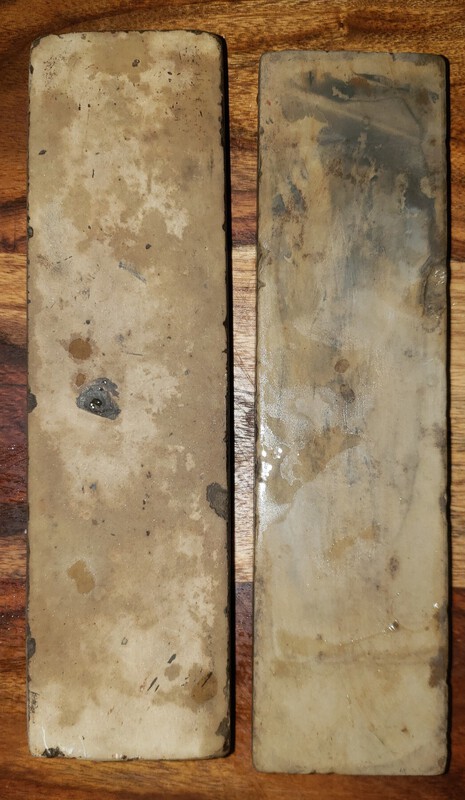
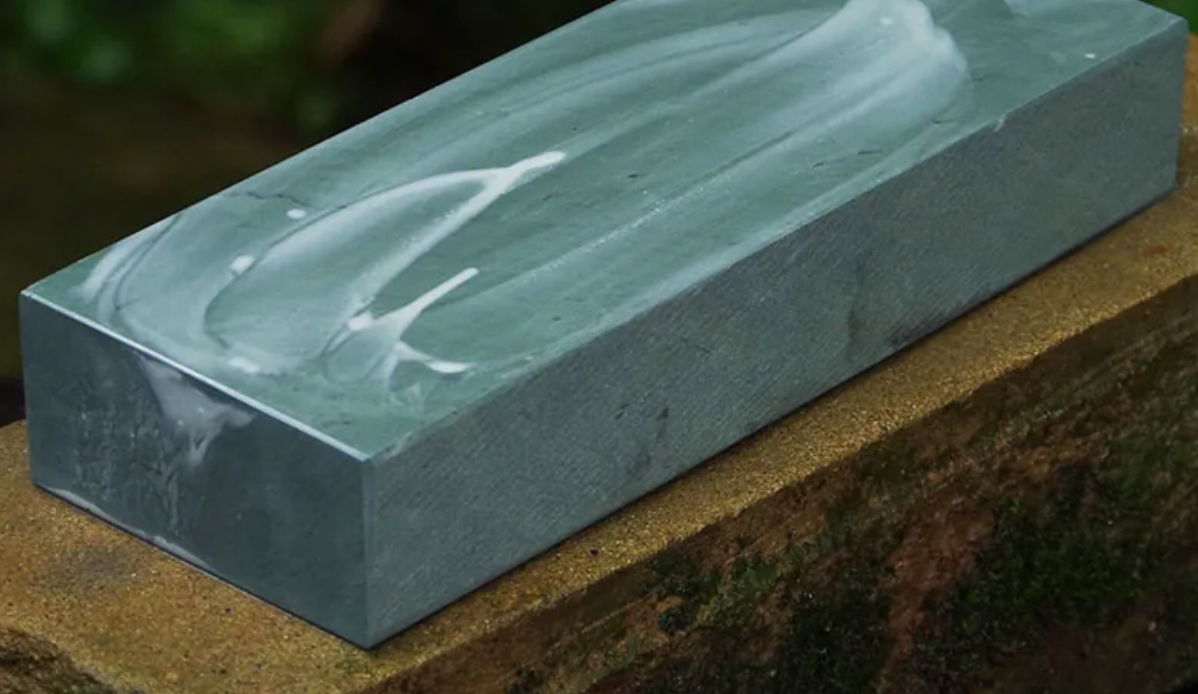
These stones were brought from Japan during World War II pass to my uncle and then to me. I just had hoped someone here had knowledge of their origin. My uncle told me the green one was used to flatten and correct the large one and create a slurry. I don’t mean to mislead or belittle anyone here just looking for info thank you.4 points
-
Lt General Kawata, Tsuchitarō (河田槌太郎) - seen here as a Major General during his command of the Imperial Guards Division in the early 40's. He later went on to command the 31st Division in Burma, a somewhat stark contrast to his subsequent surrender in 1945.

 4 points
 -
Was just browsing a few different websites and came across announcement at NTHK site that states they will be conducting a Shinsa at the West Coast show in 2027. Hadn’t seen it mentioned here (unless I missed it) so I figured I would post the info. https://nthkamerica.com2 points
-
Kevin Jones is active on Facebook so you could contact him on Facebook messenger. https://www.facebook.com/kevin.jones.7161952 points
-
I have 9 on file with kokuin, and 6 others without it, all stamped with Showa or Seki. If you want photos, I could send via email.2 points
-
The attribution is Fuyuhiro (冬広), not Hisahiro as stated in the post.2 points
-
Grey, in principle, you are correct, but I saw his workshop in the background of the photos, so I hope he's just an innocent woodworker without bad intentions!2 points
-
Jean said "In case these stones are not related to Japanese sword polishing, this thread should appear in the IZAKAYA I believe." In case these stones are related to Japanese sword polishing, this thread should disappear. We are supposed to have zero tolerance for amateur polishing here; no properly trained polisher would have to ask about the stones. Grey2 points
-
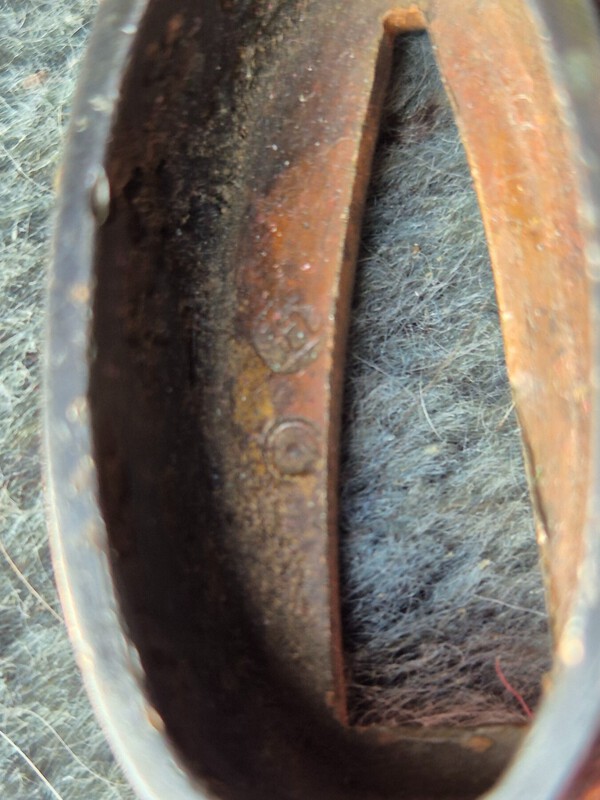
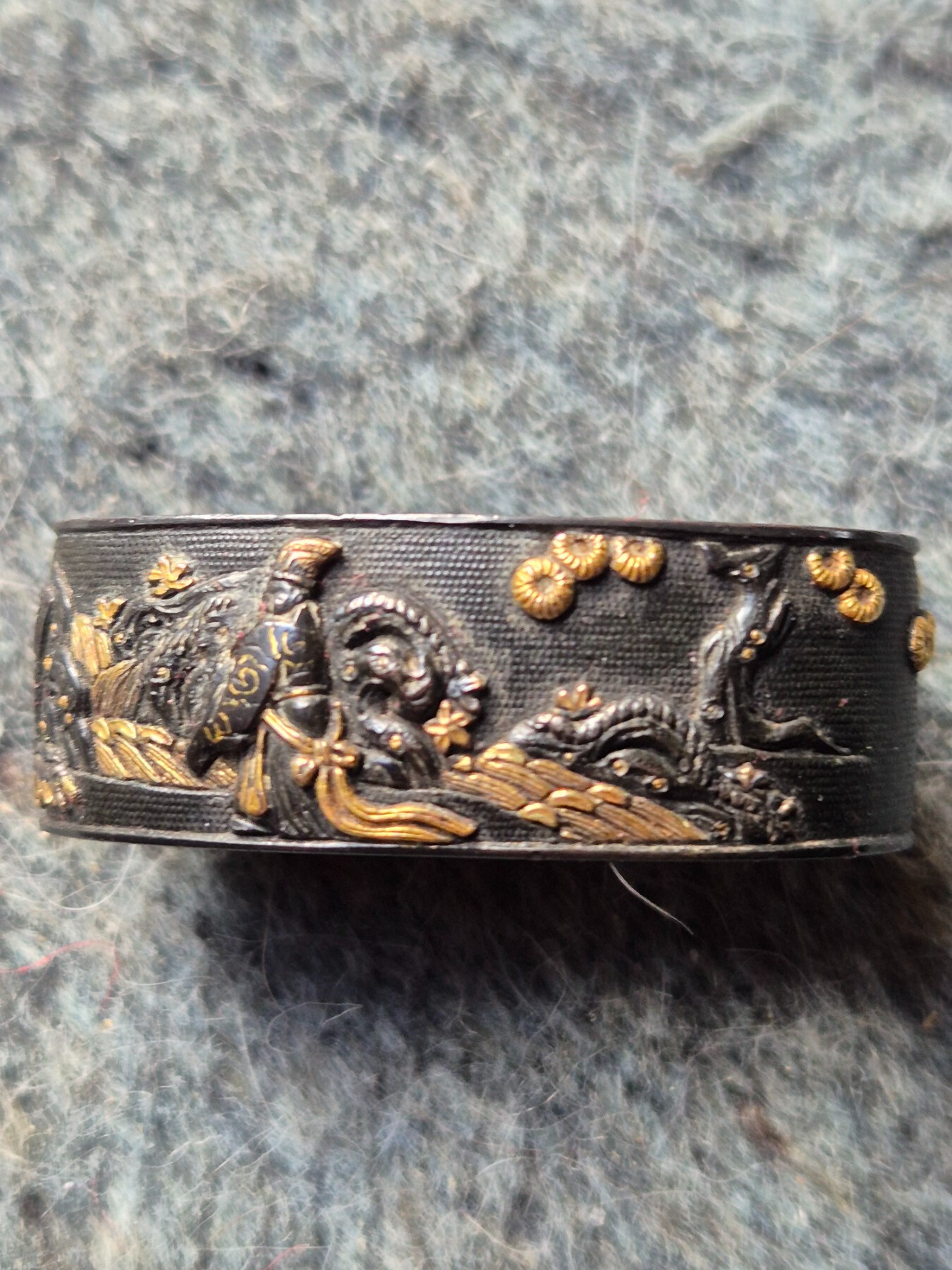
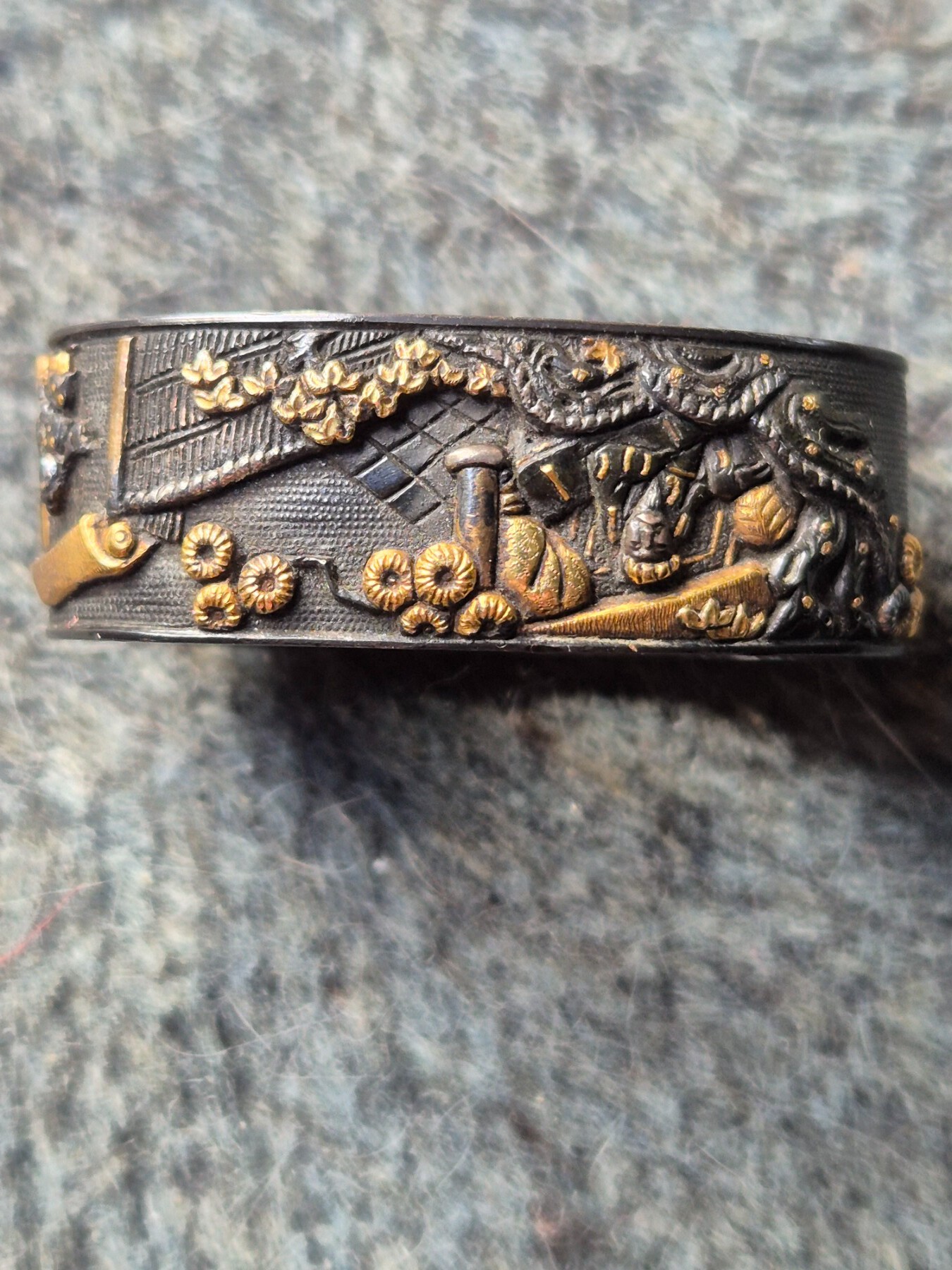
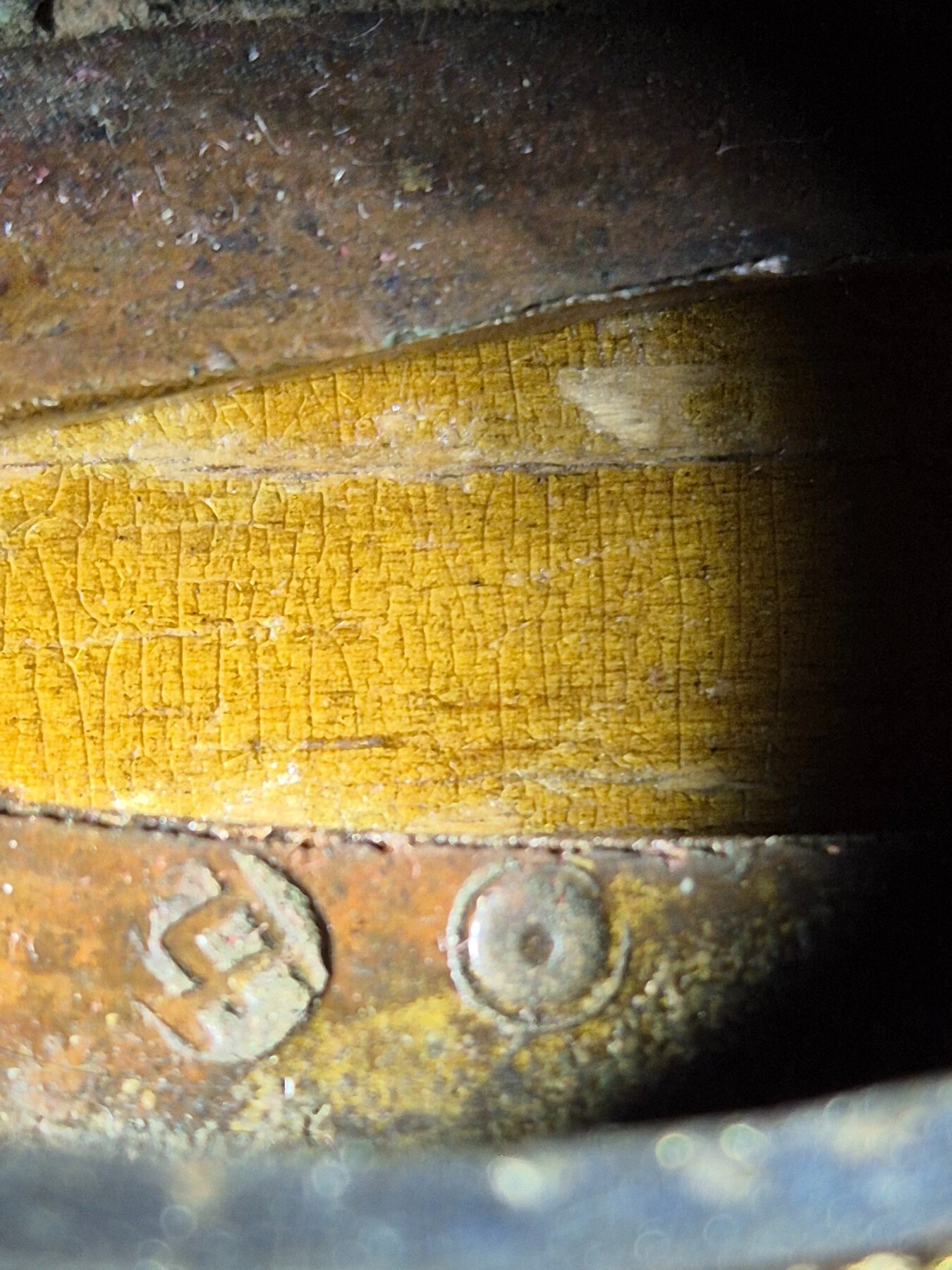
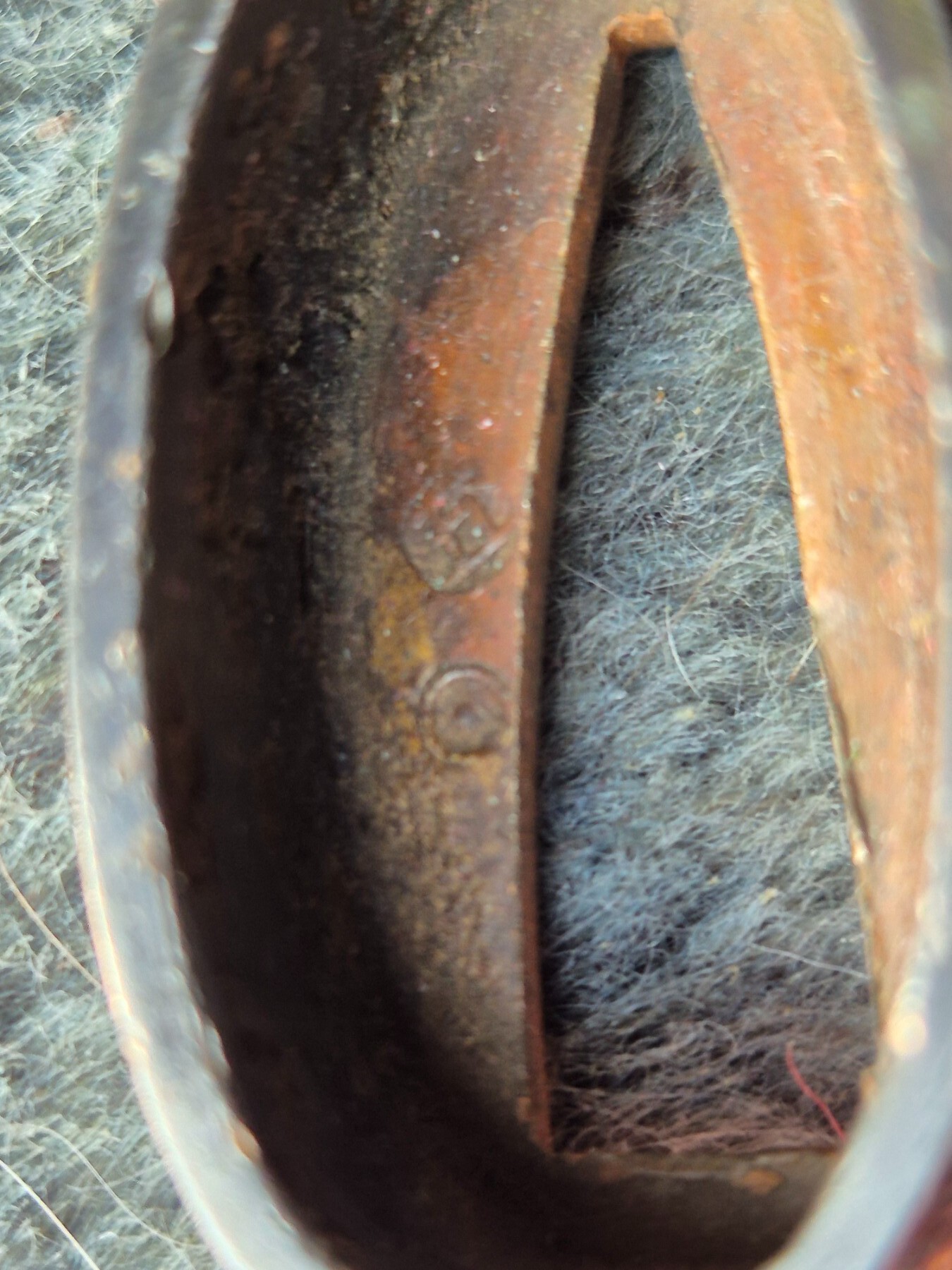
Hi everyone, first post. My name is Jonas and I come from Stockholm, Sweden. This has been in my family for at least two generations. I don't know how it came to us or where it came from originally, so I have no provenance to offer. Just to be clear up front: it's not for sale and we're not looking to sell it. We'd simply like to understand what we have. I don't know anything about Japanese swords or fittings, so I'd rather not guess and lead anyone in the wrong direction. I'd just like to hear what you see. There are two small marks on the inside that I can't make anything of. Photos included. It hasn't been cleaned and I'm not planning to clean it. Any thoughts welcome. Age, quality, what it was for, whether the marks mean anything. Happy to take more photos from any angle if that helps. Thank you.


 2 points
 -
Hi Jonas, to me, the FUCHI has a HIKONE BORI tradition touch. Better quality than NAGOYA MONO in my opinion. The marks on the inside may be by the workshop. Possibly, unsigned school work by an employee or a student was marked that way. We have a Menuki Orphanage section, so in case you were interested in completing your FUCHI to a matching set, you might look there. A set is much more desirable than a single FUCHI.2 points
-
It is antique; though not of particularly high grade. Looks to be a late-Edo (1750's would be my guess?) "working man's" koshirae.2 points
-
東卯一 - Higashi/Azuma Uichi2 points
-
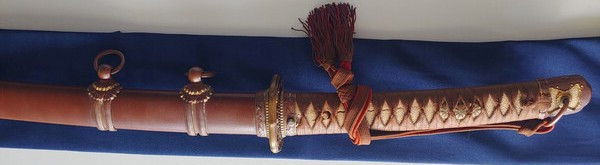
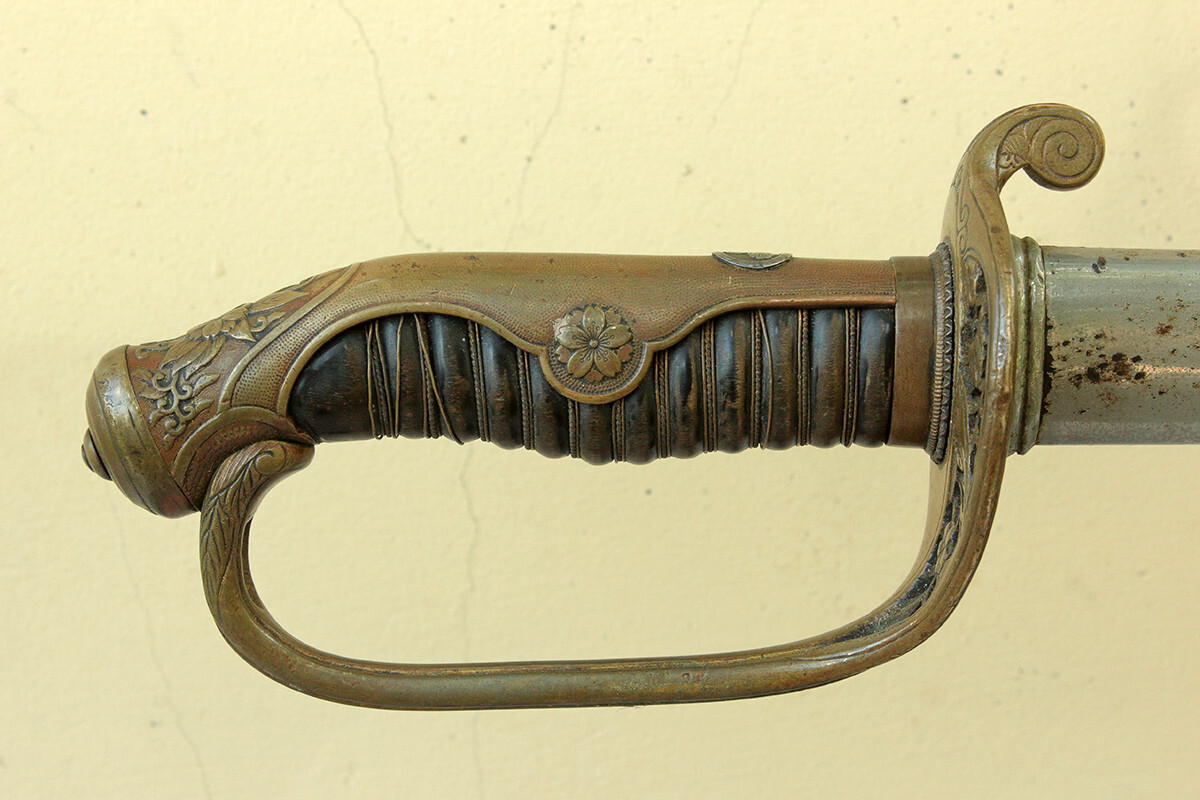
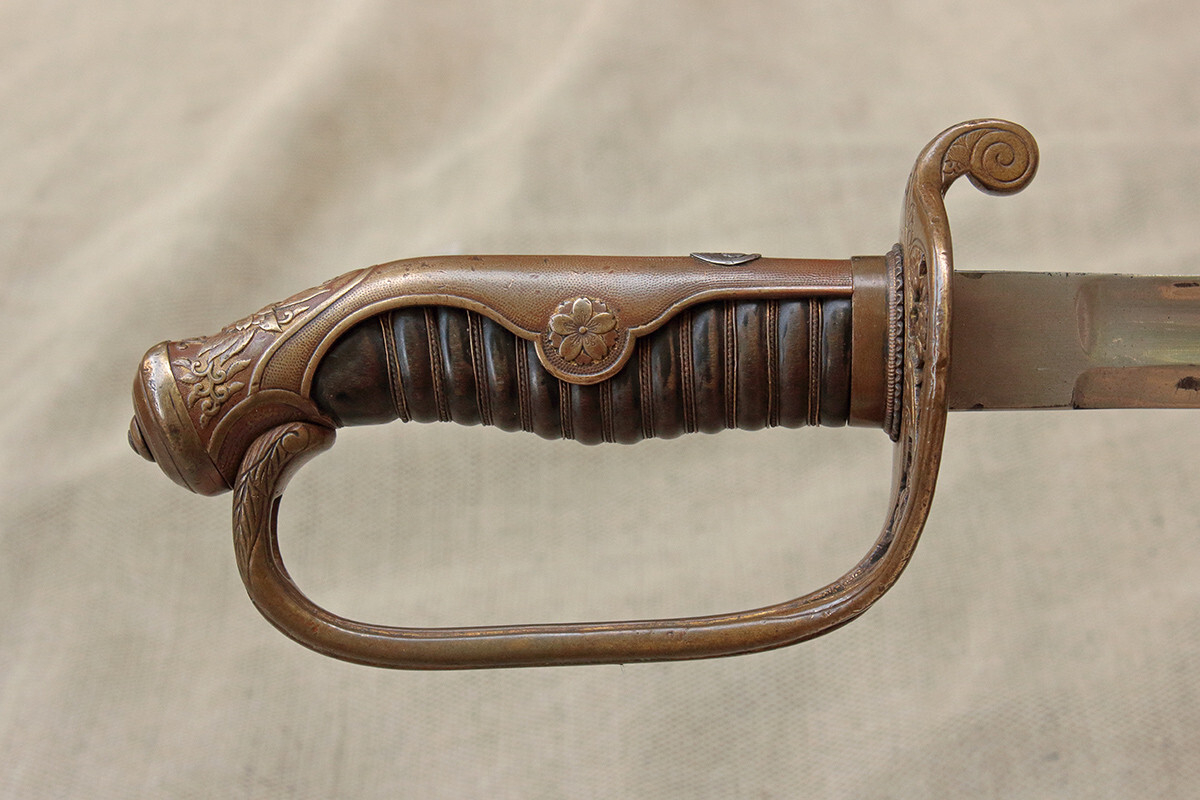
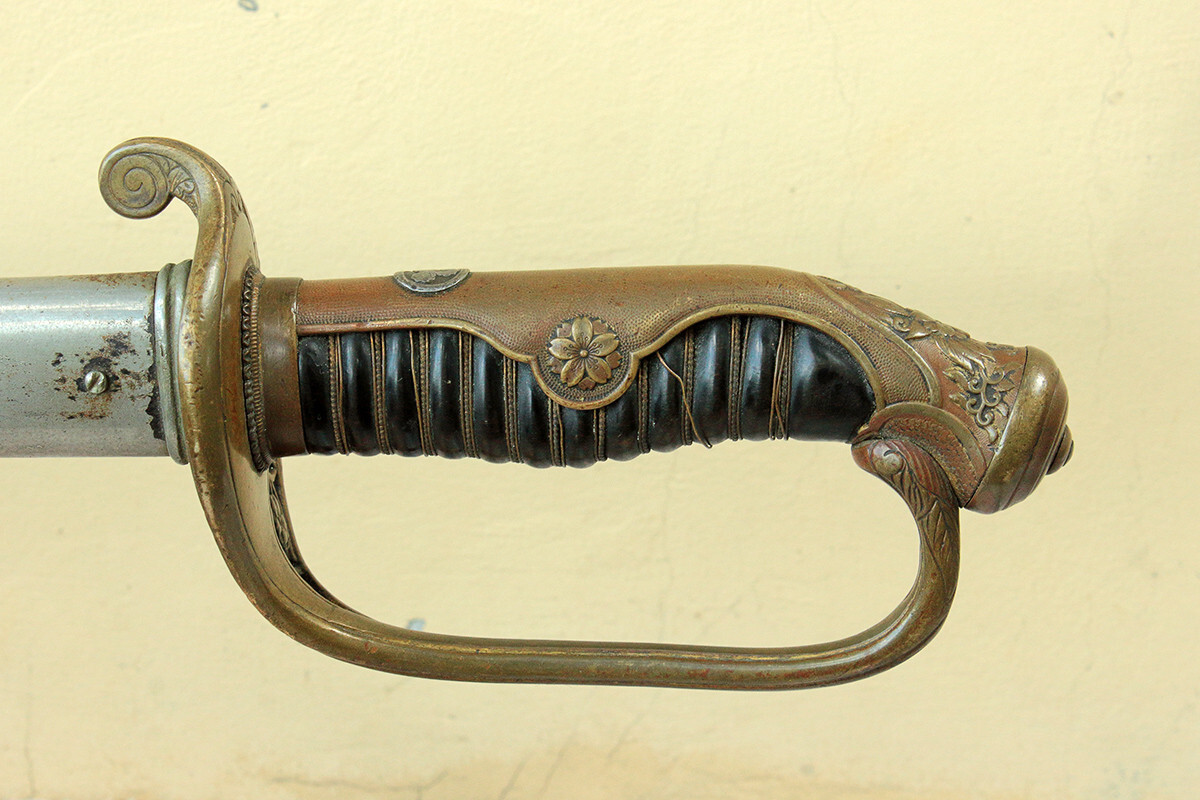
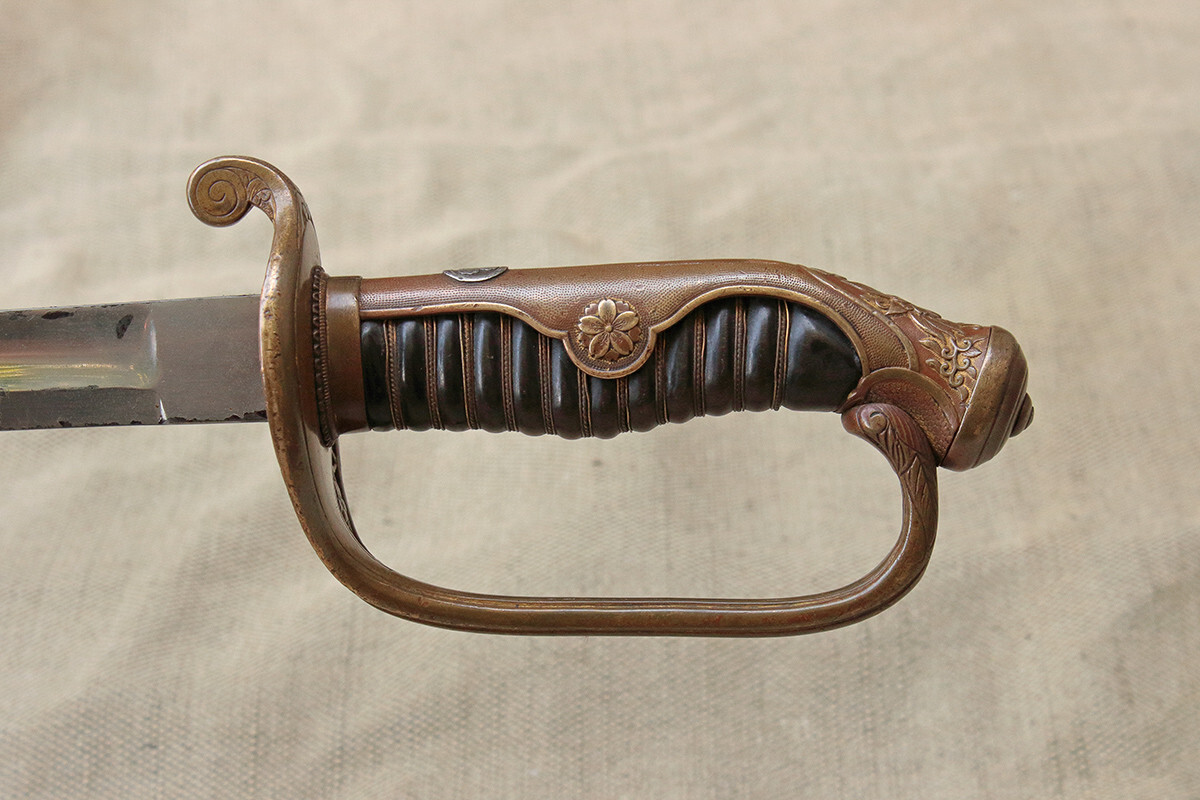
Hi Charles, The fittings are the Japanese Army officer gunto Type 94 or 98. If you show a shot of the top half of the rig, showing the side with the latch, we might be able to give you an idea of which version it is. Otherwise, you can learn about this sword style on Ohmura's site: Commissioned Officers Gunto - Type 98.2 points
-
Not 室町 but 毛彫 Perhaps… (?) And 無銘2 points
-
Now and again these crop up and most of the time seem rather gauche in execution, and objectively worse at protecting a blade than normal shirasaya. Given that very few daimyō historically resided underwater, is anyone aware of any significance, reasoning, or history behind lacquered Shirasaya? https://katanahanbai.com/katana/heianjo-nagayoshi/ Imperial Coronation Tachi by Yoshichika, 1928.

 1 point
 -
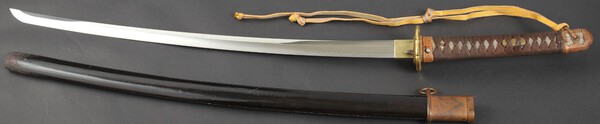
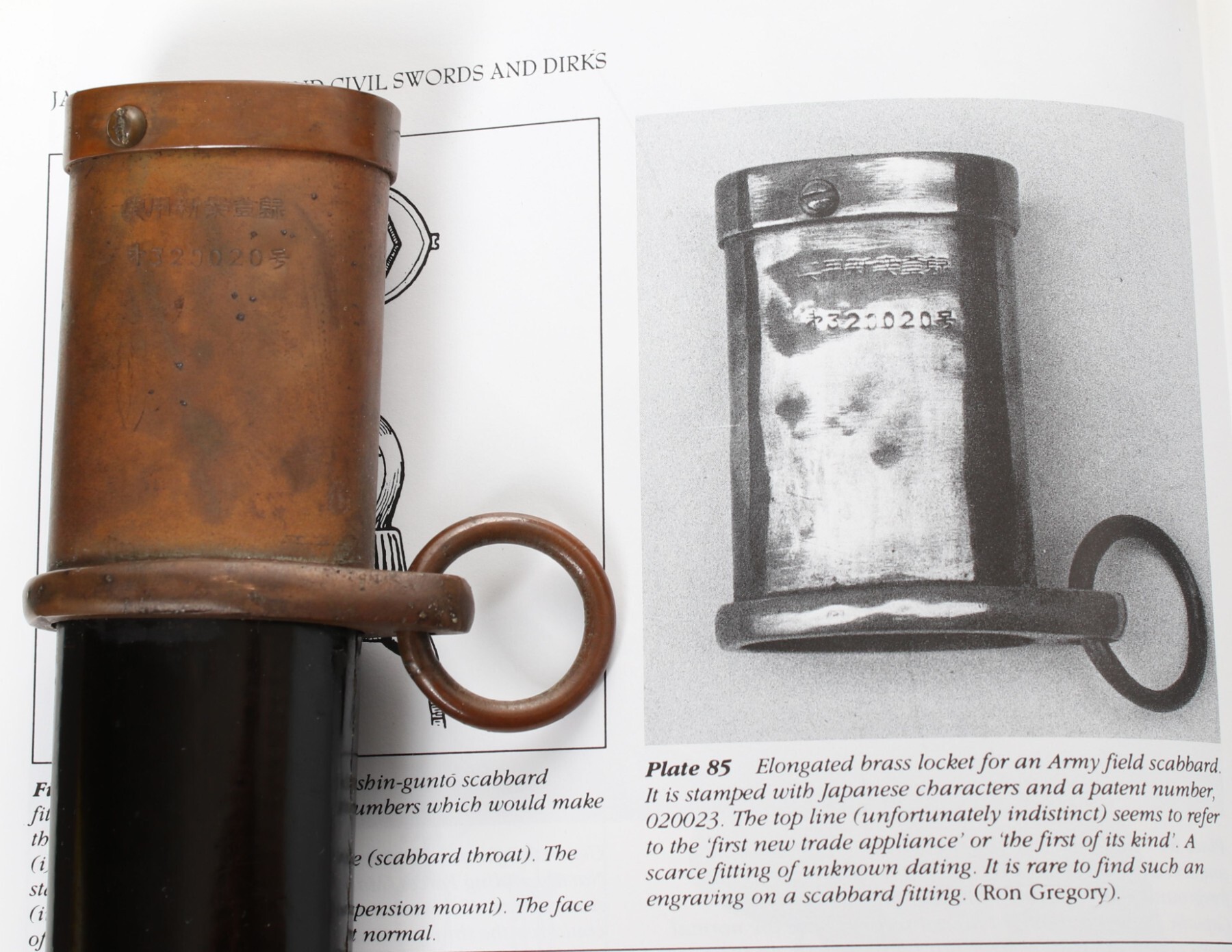
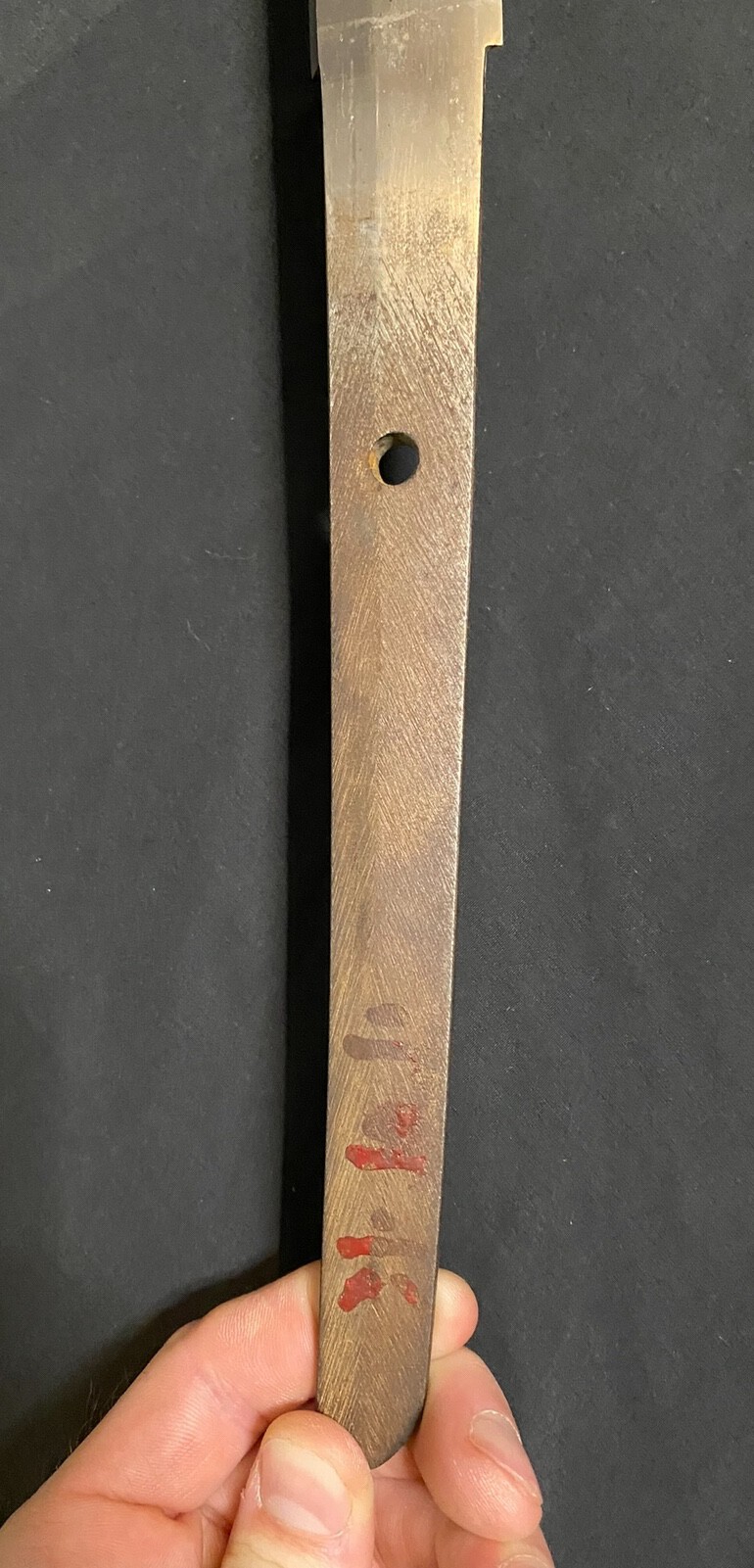
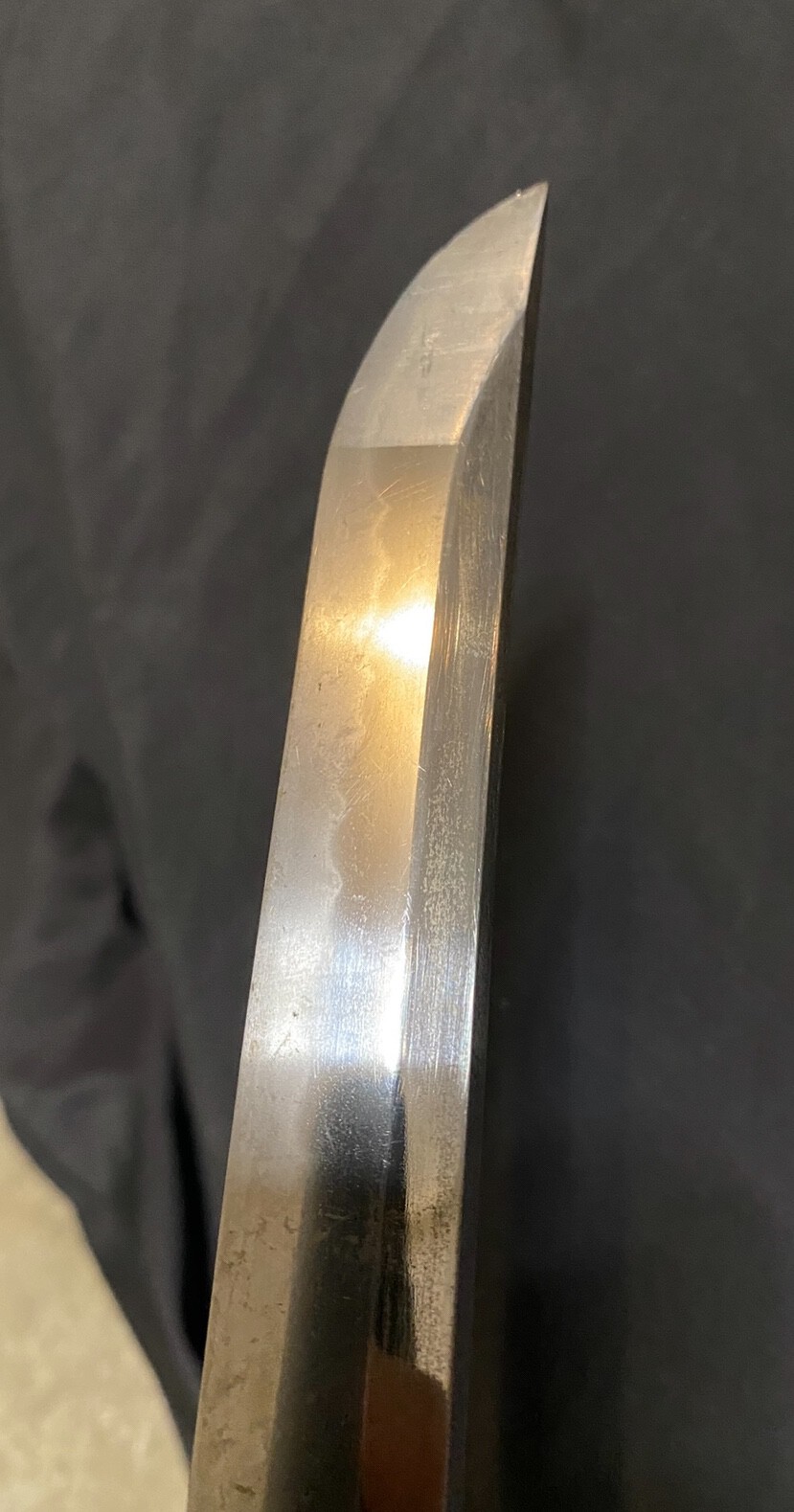
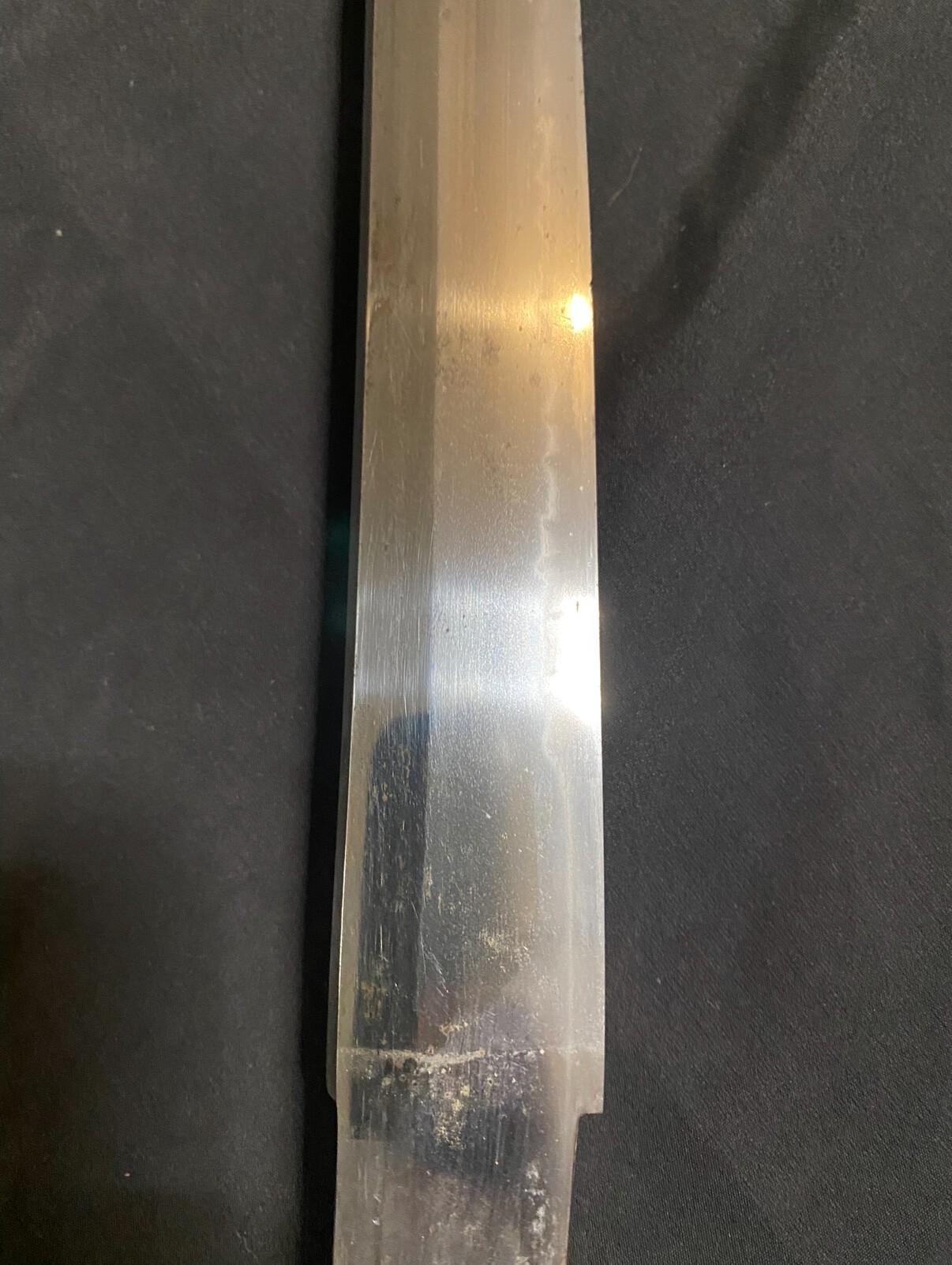
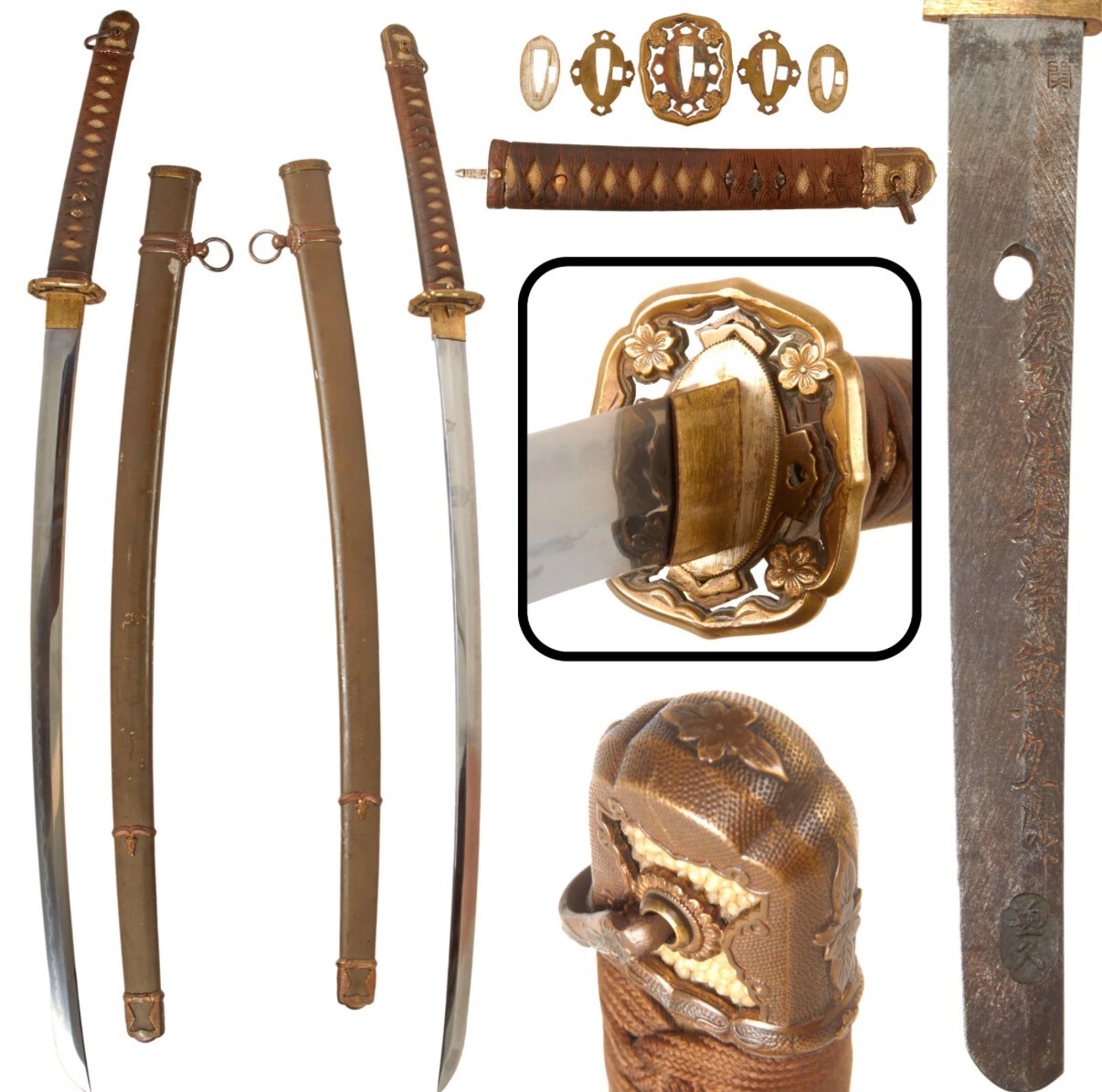
Hello All, I have come across a WW2 era Gunto Katana in a rare scabbard (according to a book I found) but the tang is unsigned. Was this common? Also the retaining pin hole appears to be punched instead of drilled. I've uploaded a few photos. Any insight would be very much appreciated. Kevin
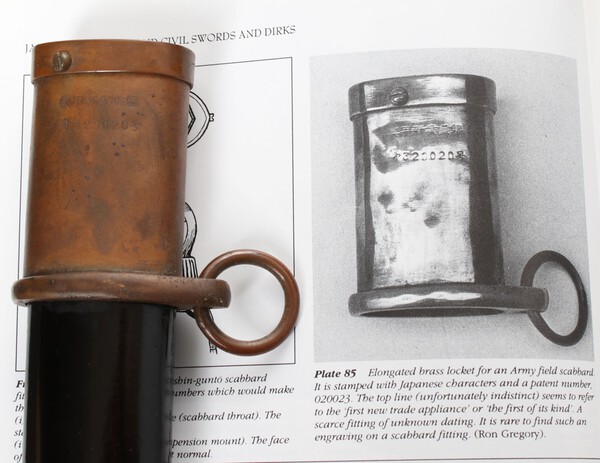


 1 point
 -
Here's some of my hindostans. The striations are a classic indicator of them and why I believe it is one. The 2 on the far right and the separate picture haven't been cleaned and still have old oil and grime. It looks like yours has been used with oil as well. What is the size? "Most" American stones fall within the 2x8×1/1.5 inch range.
 1 point
 -
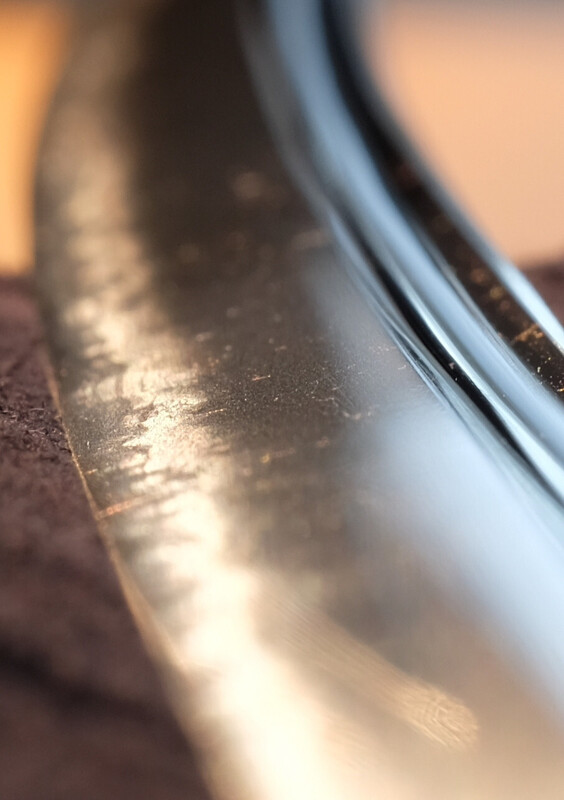
I was playing with a different light source on my Senjuin TH papered kodachi. Fujifilm XT2 Laowa Macro lens, 250W Metal Halide bulb. This sword was originally part of the Tsukamoto Sozan Museum collection and attributed to Go Yoshihiro.


 1 point
 -
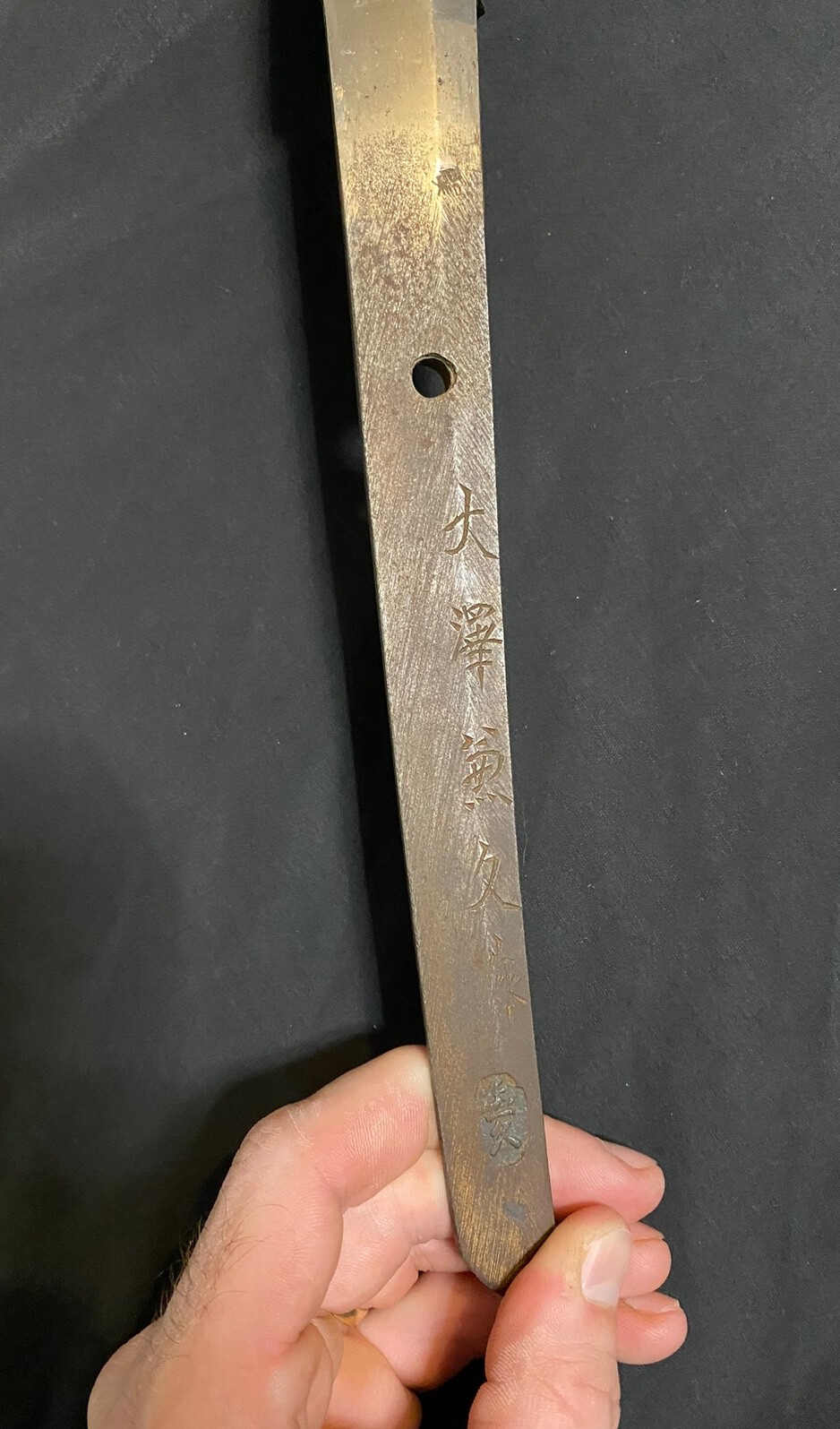
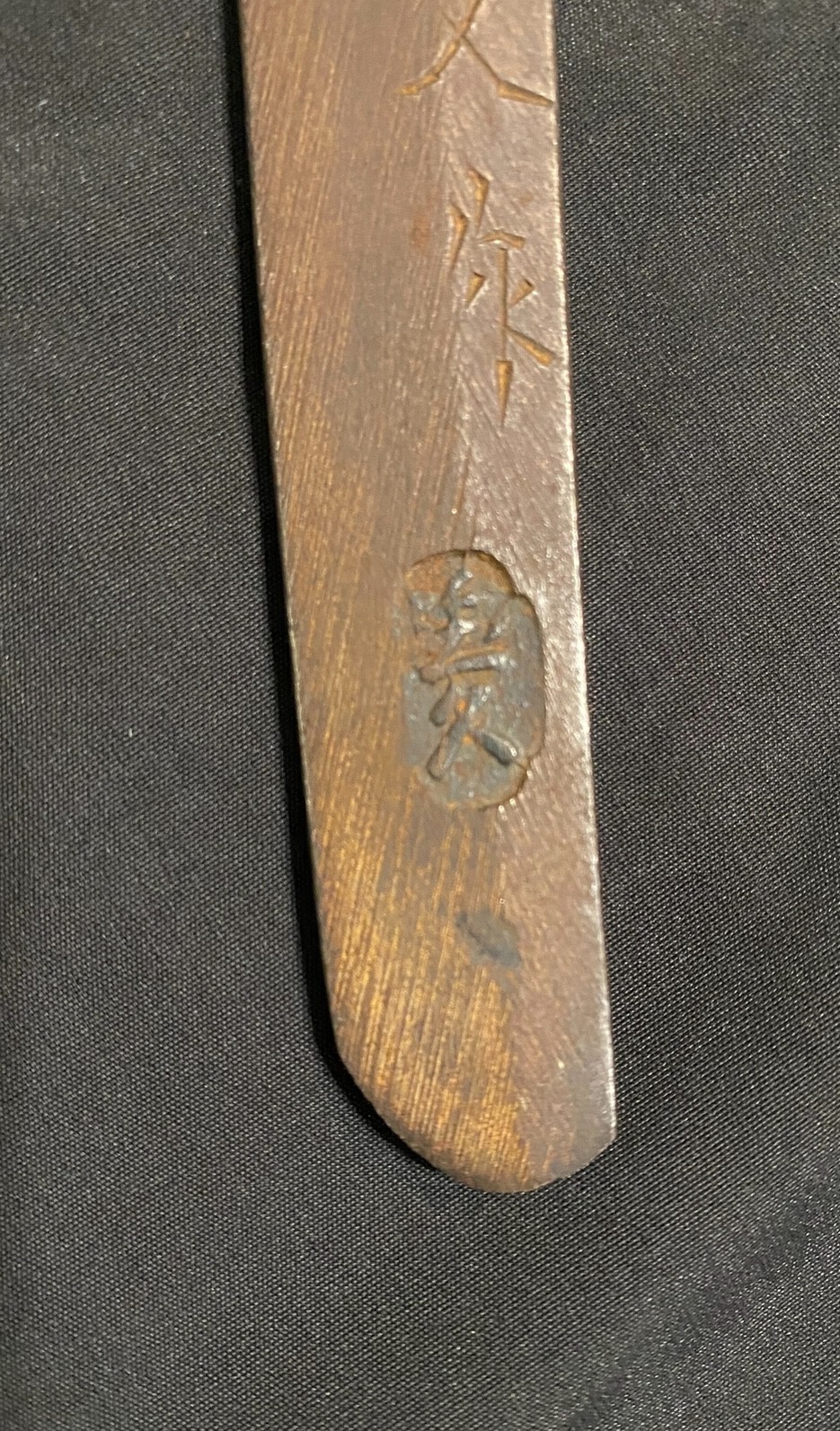
That would be awesome, Bruce! Thank you. The person I sold the sword to is one of the PNW club members. It would be great to share with him some additional information / data on Osawa Kanehisa. Best, -Sam1 point
-
Thanks Charles, I can see the release button is centered, like a Type 94. I was hoping for a photo more like this: Yours only has one haikan (belt hanger) but the second one was removable, and most often were. If you have a caliper, you could measure the thickness of the edge of the tsuba (handguard). The 94s had a thicker tsuba, 11mm I think?
 1 point
 -
In my contacts, I have Kevin Jones - kevinATryujinswordsDOTcom - as his email.1 point
-
Yes it appears they are different entities with very similar website addresses. Seems to have had some delivery and customer service issues in the last few years.1 point
-
Thanks Sam, good one!1 point
-
Good afternoon Mark, I think Kevin relocated to Wales. The site shown is US based and nothing like Kevin's style.1 point
-
Thank you Kirill, You are completely right, it reacts very well to light. I am trying to kantei this wakizashi on my own, however my chances to get it right is quite low. So I'll create a separate topic some time later. It would be unfair for this sword to shoot some quick photos and post them. It's also a pleasure to be in no hurry, enjoying the sword through both the naked eyes and camera viewfinder. As for the camera, I believe that first I have to figure out the setup for shooting photos of swords using a tripod and my old camera. Currently waiting for the arrival of my tripod to start experiments.1 point
-
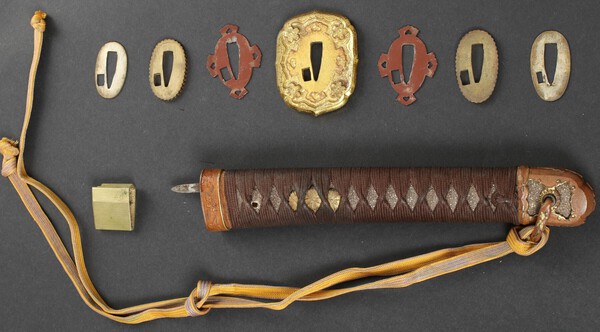
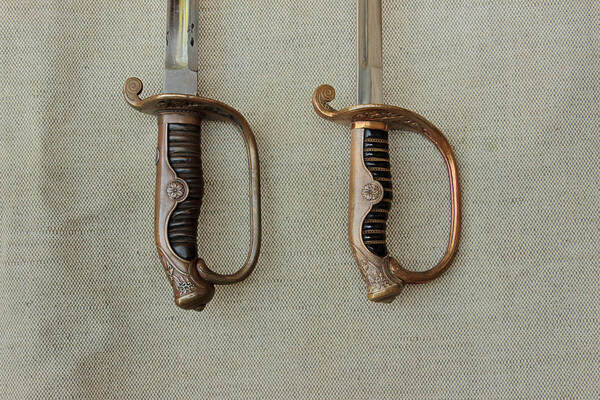
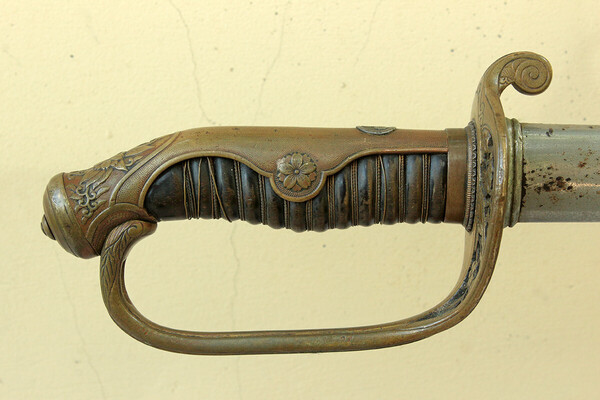
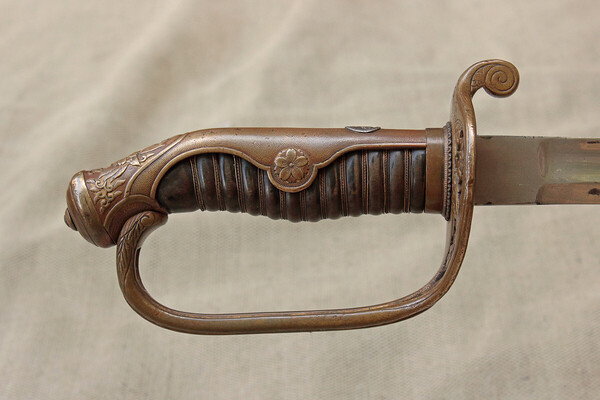
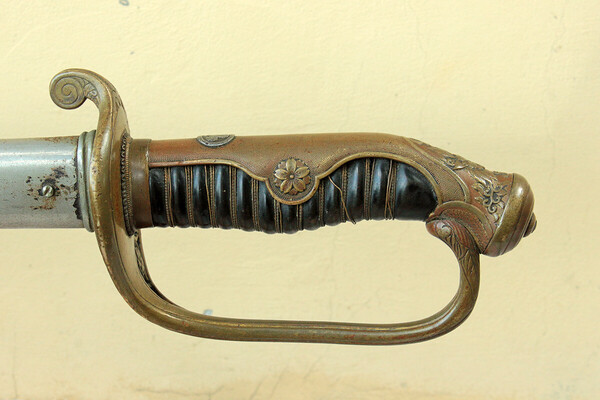
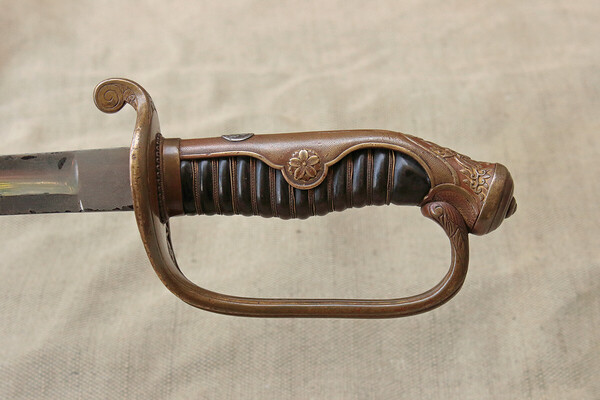
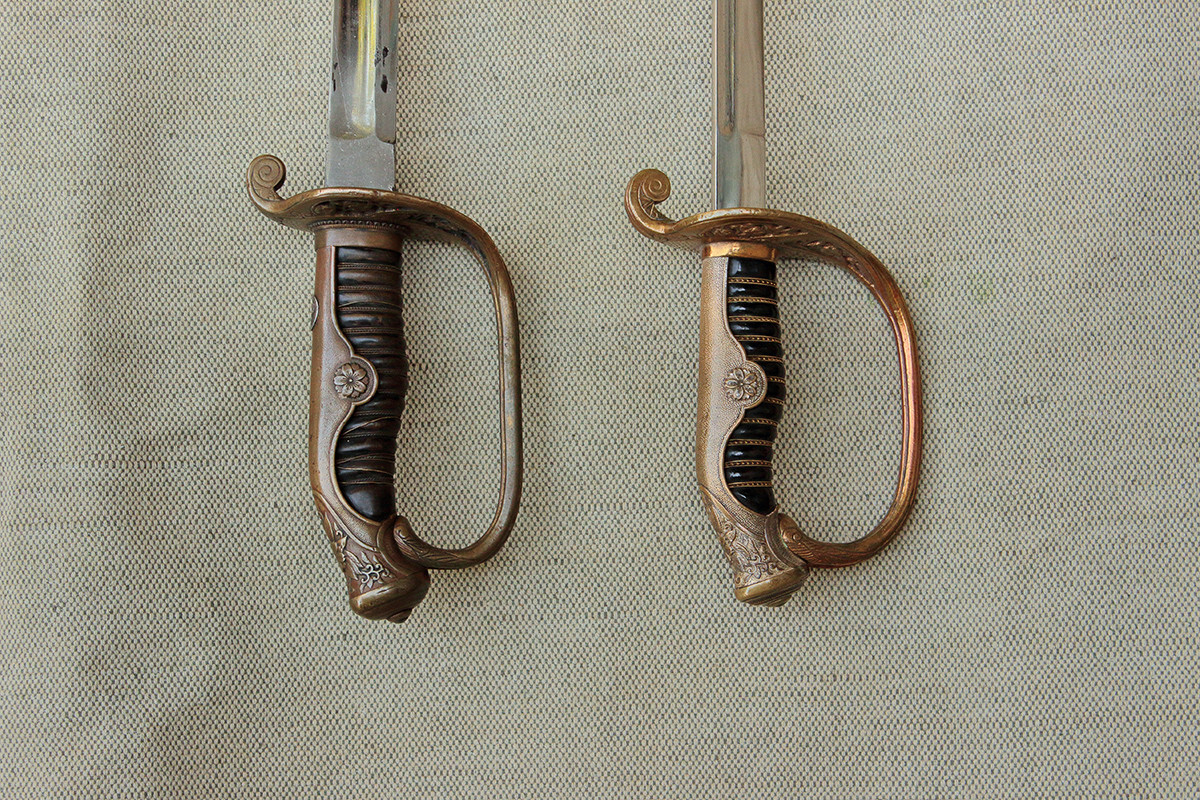
Forgot to add a picture of handles in comparison. When it comes to the sword condition, I enjoy it immensely. The sword is far from being mint and pristine, yet there is no extensive damage for the chrome plating of the blade. The patina on brass parts is priceless. And there are things that I could address, which is superb. I didn't know how many time I could spend on the sword, so I started with simpler things. I lightly cleaned the dirt from the brass parts using toothbrushes slightly wet with soapy water. In some places I used brushes wet with isopropyl. It was only light touches with the goal to not to disturb the patina and remove only main depositions of dirt. Turned out, those dirty spots were hiding remnants of "gilding". Then I sorted the wire on the grip. It took longer as the wire got tangled and I had to figure out which coil was first, second and so on and so forth. I worked using tools from my extended weapon cleaning kit. They look like the tools for dental work and have hooks of different configurations. I also made an improvised wooden micro spatula to straighten wire by chasing it along the grip. And talking about grip. It turned out that it has no leather wrapping. There is only wood, very nicely finished and lacquered. I checked my other Type 19 and its grip is also just a laquered wood. It's quite a discovery for me. Here are some photos "Before and after":
 1 point
 -
You have shown the date side more clearly here and in the correct orientation. The full date inscription is: an auspicious day in October, 1939. Best regards, Ray1 point
-
11. @Lewis B is right, this is a fantastic deal. Many well-done photos, done in settings that emphasize nie and hataraki, even showing through the hadori polish - something that often isn't done on blades of this calibre 16. "Massive" doesn't just mean "long" - the book itself is quite large, and so are the photographs inside Good buys here for folks interested in top-end blades.1 point
-
I've found a few more books I can sell. 16. 100 Masterpieces from the Collection of Dr. Walter A. Compton by Christie’s 1992. Hardback in Cardboard slipcase. Massive book with really good photos of swords and fittings. $50 17. Swords and Wordsmiths of the Gendaito Period: 1868 to 1989 - by Frederick A. Fimio. $10 18. The Hartman Collection of Japanese Metal Work. Christies 1976. 676 lots with good quality photos of important fittings. Hardback $201 point
-
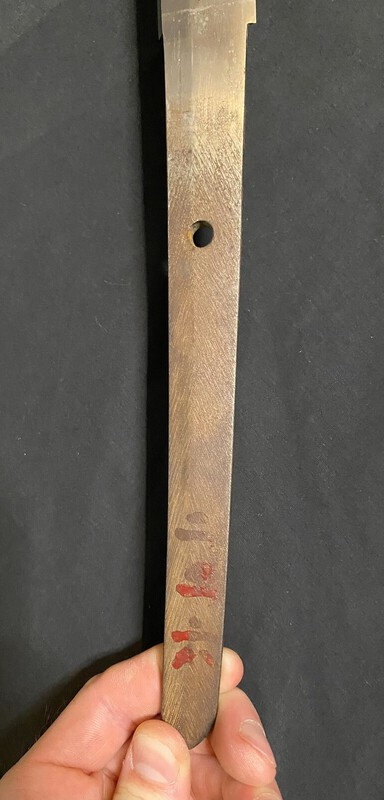
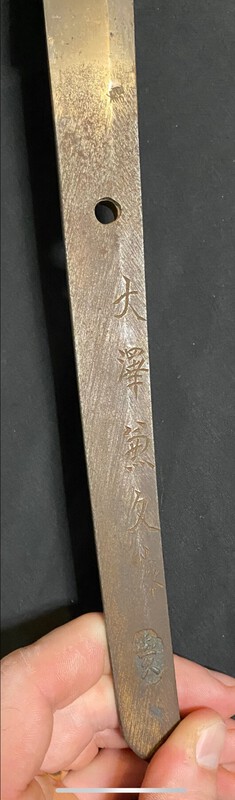
Another example signed Osawa Kanehisa with large seki stamp and kokuin, found here: https://www.ima-usa.com/collections/new-arrivals/products/original-Japanese-wwii-type-98-shin-gunto-handmade-katana-sword-by-osawa-kanehisa-with-aluminum-scabbard

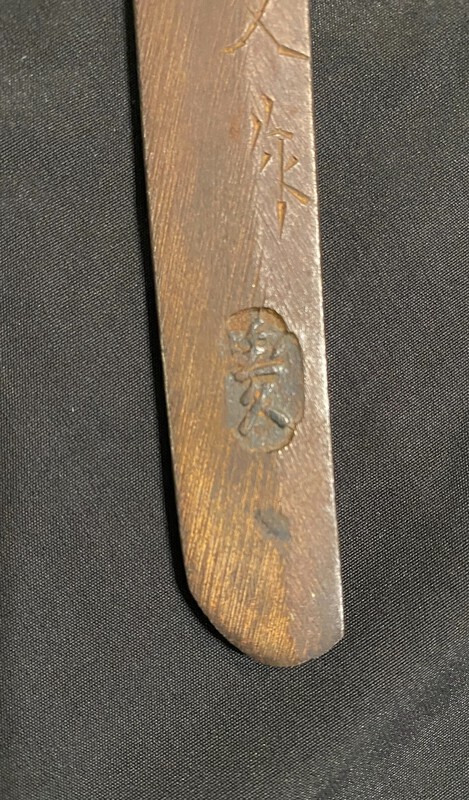

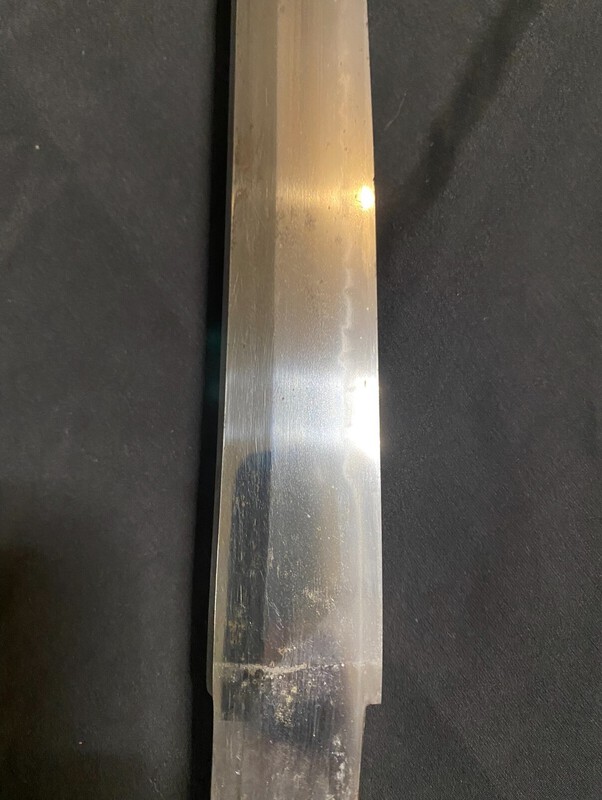

 1 point
 -
That green one could be artificial or from China. The single largest natural wet stone product is a similar kind of homogeneous green stone at around 800~1000#.
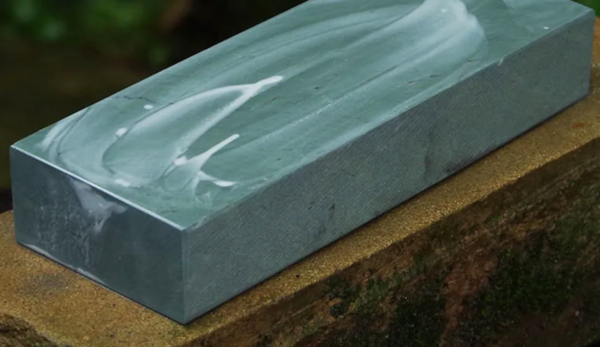 1 point
 -
Not sure about the green one, but the other is a Hindostan.1 point
-
Steve, where have these stones been quarried? If they are not Japanese, it might be difficult to find out the provenience as grindimg stones are found all over the world. Green ones are a bit rare. In case these stones are not related to Japanese sword polishing, this thread should appear in the IZAKAYA I believe.1 point
-
Killer deal on #111 point
-
I know that these stones shouldn't be used to polish Japanese swords. Grey1 point
-
Hi @Jonas W, I can relocate this for you to the Tosogu section. Welcome to the forum! Best of luck with your investigation. I am sure the fittings members will offer input soon. All the best, -Sam1 point
-
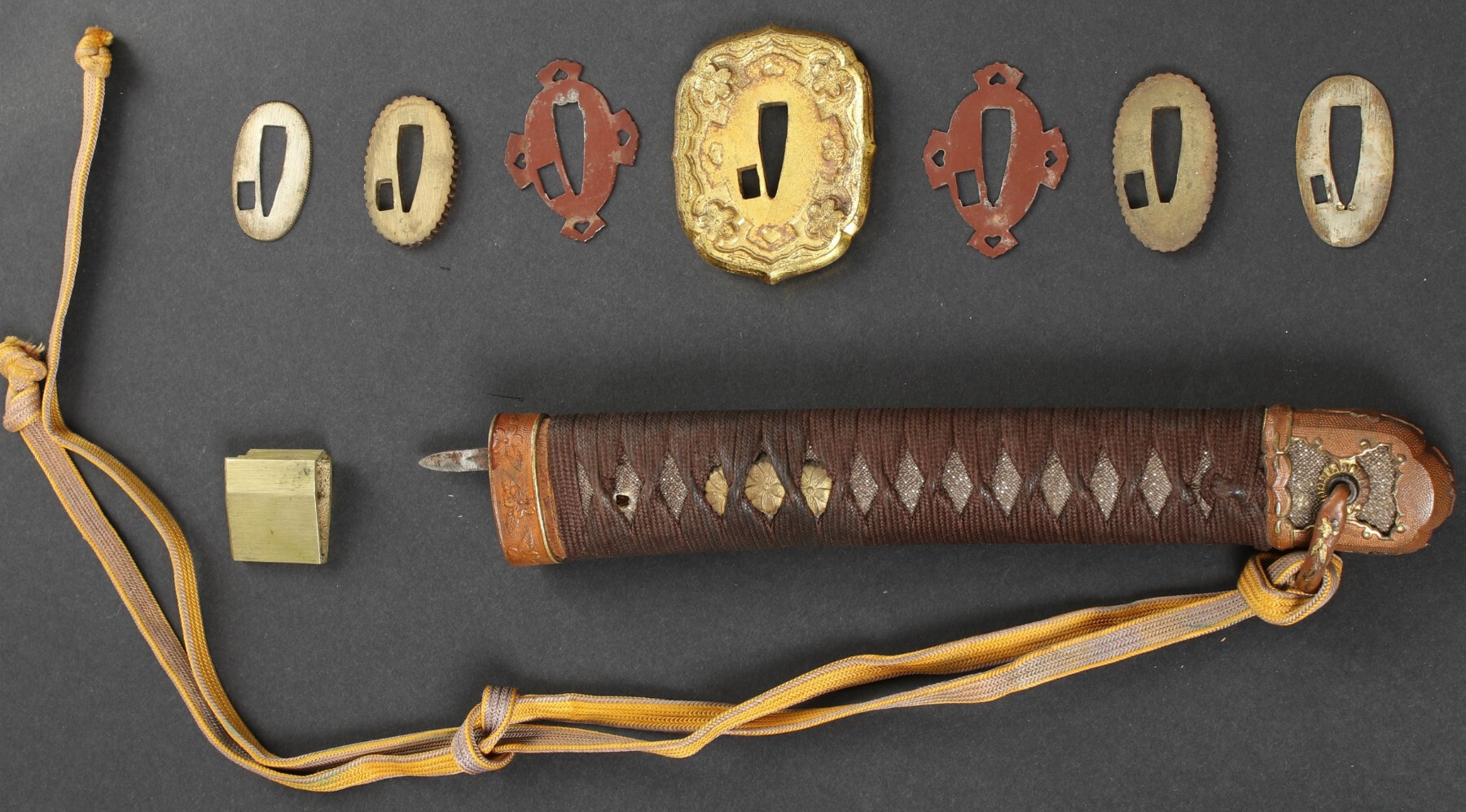
Jason, it would certainly help if we could see the parts dismounted (photos made on a plain dark background). Sometimes, bad condition as on the KASHIRA makes an assessment very difficult. From a first look I think the KOSHIRAE (what can be seen of it) is very late EDO or younger, but unfortunately quite neglected.1 point
-
In fact, according to official Japanese military documents, there was also a cavalry(騎兵) variant of the Type 95 NCO sword. Chinese cavalry units also use some the Type 95 as their cavalry sword. The cavalry variant was slightly more expensive,the main difference was presumably that the cavalry version came with a special hanger.

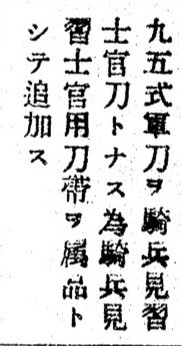


 1 point
 -
Interesting short video of Martin Hornak burnishing a bohi horimono https://www.facebook.com/share/v/1EPwsZrk9m/1 point
-
The fact that there are infinitely more militaria collectors than there are Japanese sword collectors speaks a lot. Most of those people collect history, not items. And I daresay that man of them have far better investments than many of us Nihonto collectors. And for many people, investment aspect is something that cannot just be ignored in the name of art. But hey...as they say, "You do you"1 point
-
I hope to someday find a light source neutral enough that we can photograph the "bluish-purple" steel of Masamune or the "deep blue" of old Bizen. I do see swords with a bluish sheen on some dealer websites but I think this is a function of their lightning temperature since all their listed blades, even shinto and gendaito, appear with the same colouring.1 point
-
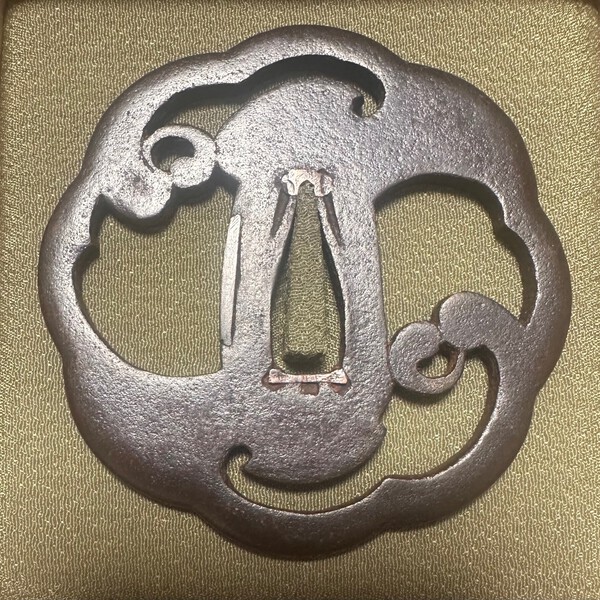
Congratulations Tom - that is an absolutely beautiful tsuba! I love the swirling cloud design myself (whether bad luck or no 😉), which is why I purchased this Higo tsuba on Yahoo recently. Best, Hector
 1 point
 -
I think it would be more appropriate to call this another koshirae style, as the shira- in shirasaya implies that it is unadorned (which includes lacquer). It's obviously not intended for practical use; perhaps more like a display koshirae for when visitors come to the house (looks more formal/impressive, but doesn't require nearly as much time to assemble/remove as a proper koshirae)? The Katana Hanbai listing itself describes this as 朱漆塗鞘 ("vermillion lacquered saya") rather than 白鞘 (shirasaya).1 point
-
Please absolutely do not do anything on your own to clean the blade or remove rust.1 point
-
Very nice find, this is a sword by the Yasukuni shrine smith Yasunobu. The blade is dated 1939 (Showa 14). https://www.google.com/search?q=Yasukuni+Yasunobu+site%3Awww.militaria.co.za&oq=Yasukuni+Yasunobu+site%3Awww.militaria.co.za+&gs_lcrp=EgZjaHJvbWUyBggAEEUYOdIBCTEwNDExajBqNKgCAbACAQ&client=ms-android-google&sourceid=chrome-mobile&source=chrome.ob&ie=UTF-81 point
-
Hi Dean, the apprenticeship in this field is about 35 years for Westerners and 2 years less for Japanese. So be patient and study!1 point
-
Honestly, what's the point of trying to translate a mei that is clearly cast or stamped in, and not carved? I wouldn't go past that point before calling this a fake. Sorry.1 point
-
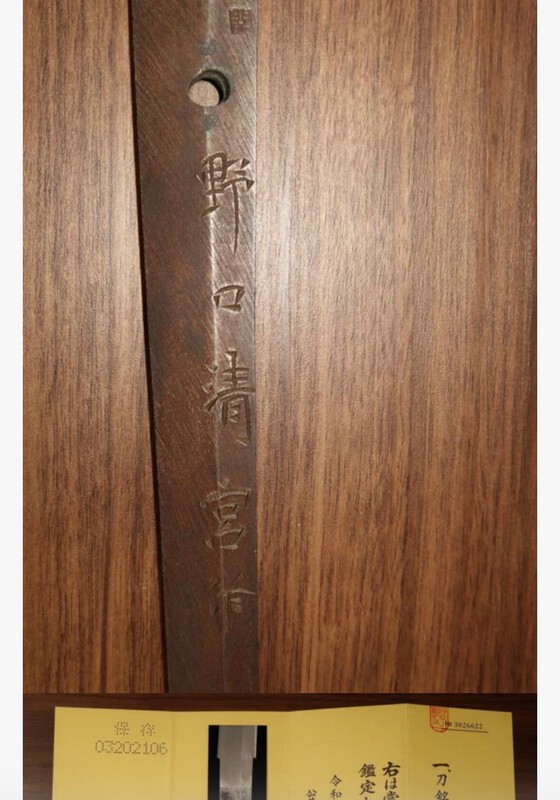
Now I've looked into this, it's been going on for a long time. And to say that it's only NBTK-NPO or star stamps flies directly in the face of documented evidence. Both NBTHK Hozon papered, the first four photos show the stamp clearly filed off with no attempt at repatination and the last two show an intact Seki stamp. Obviously, the NBTHK also doesn't have any problem in deeming these blades 'Worthy of Preservation'.


 1 point
 -
I think this is a cast replica, and it's best not to dwell too much on errant or missing strokes. If you look at authenticated (papered) works of Nobuyoshi, you can see how his true signature should look. The meanings of the characters themselves aren't so important. Sometimes artists pick the characters for the sound, and sometimes they pick them for the meaning, and sometimes they might be given to them by a mentor or relative. Characters might even be picked because of some superstitious reason (eg. the number of strokes in the kanji character is deemed lucky). I wouldn't rely too much on AI to parse these kinds of historical topics. Sometimes its good, but sometimes it just leads you down pointless dead ends, as its done here.1 point
-
In a similar vein, I watched this 3 part documentary on YouTube and I must admit to having very mixed feelings about it. The incredible skills of the individuals interviewed is beyond any doubt ...... but would I buy anything from them which is described as being 'Japanese'? No. https://m.youtube.com/watch?v=963e3aGz4Gg&pp=QACIAgE%3D&rco=1&ra=m https://m.youtube.com/watch?v=XnuoQoChS2g&ra=m https://m.youtube.com/watch?v=CfVn8wOBQrg&ra=m1 point





















.thumb.png.54593db2789c8a1dcb235543b184ce39.png)




This leaderboard is set to Johannesburg/GMT+02:00