
Leaderboard

Popular Content
Showing content with the highest reputation on 06/13/2026 in all areas
-
On very popular museums this can happen in special exhibition when famous swords are displayed... In this case I believe it was special occasion as pictures were allowed. The crowd was always like this, even worse around the swords so difficult to get more than few minutes of view time. I much prefer the rural quiet shrines where you can just stand and look at the sword for 15 minutes without anyone waiting for turn. In these crowded ones it is difficult to even get a minute at a time.
 3 points
 -
It should absolutely be restored professionally. This will not work with alcohol or oil. f corrosion persists, there is a risk that inlays may fall out in the end.2 points
-
Thanks Piers. So, maybe Myōchin Munesuke (明珍宗介) Myōchin Munenaga (明珍宗長) Myōchin Muneyasu (明珍宗安) Myōchin Munetsugu (明珍宗次) Myōchin Munemasa (明珍宗政) Myōchin Muneharu (明珍宗治or宗春) .....?2 points
-
Mune—- 宗2 points
-
It's also interesting to compare the age and demographics of nihonto enthusiasts at Japanese events to the ones in the West. Much younger, much more evenly distributed gender-wise (with many, if not most, tilted in favour of girls and women).2 points
-
The websites usually tell you when the museum tends to be most crowded. Personally I’ve had some success avoiding crowds with late afternoons.2 points
-
Two different metals, one each side Two different metals, one each side Four different metals, two each side. These examples from the Metropolitan museum2 points
-
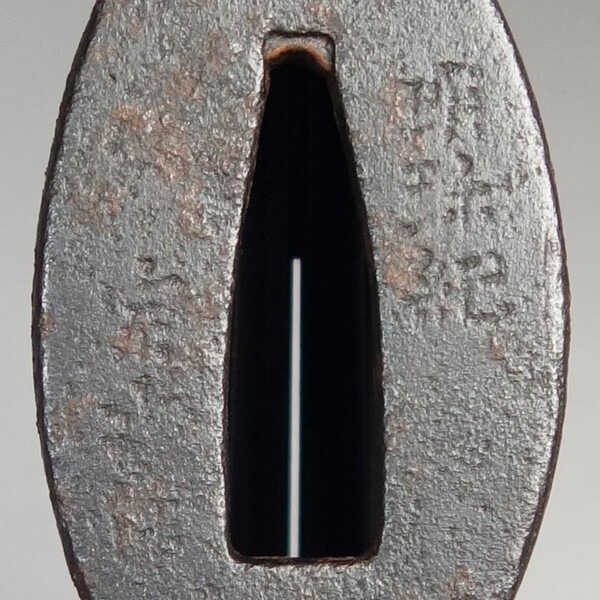
My guess is, 武一 - Takekazu/Takeichi (reading?)2 points
-
Here is an article by T.C. Ford that outlines some of the characteristics of a retempered blade. Since you have the blade in hand, walk through his points and look carefully at the blade. You may or may not find some of those characteristics. Also, he estimates that 10 percent of the blades in the US are retempered, so there is a 90 percent chance it is not! John C. retempered blades.pdf2 points
-
My error. Yaki-ba or yaki-ire would have been a better choice.2 points
-
In fact I also had a kogatana in my collection of a similar fashion. Quite nice, very finely made. Best,.Alex
 2 points
 -
Hi nihonto community. Even though the USPS office of the inspector general is still looking for the Sanjo Chikamura blade, it still hasn’t been found. I have my fingers crossed that eventually it will be found and will find its way back to me! I do want to mention that Nicholas Benson has been a real gentleman throughout this whole process and we have come to a mutually acceptable agreement. As such, I am happy to continue to be one of his customers and have recently bought some juyo blades from him!2 points
-
It’s been a while since we’ve had a good Kantei quiz here in NMB. Some of you have seen this sword or know it but keep your answers in spoiler tags and I’ll post the answer later.


 1 point
 -
Hey everyone, nice to meet you all. This is my first post here and I'm looking forward to learning from the group. Just wanted to get some opinions on my wakizashi which I purchased from Tozando in Kyoto. It unfortunately does not have NBTHK certification, but is a beautiful blade that immediately caught my attention. Can anyone tell me about the signature? Pictures are here.1 point
-
Hi. I recently secured this little treasure, a Toran Kei Tsuba from the Kofun period. I absolutely love it, the antiquity, rarity, beauty and charm. It measures about 7cm x 5.2. The wording placed over the tsuba is my instagram account. Mark

 1 point
 -
Dear fellow sword enthusiasts, We would like to let you know that the Dutch Token Society will be present at the Japan Art Fair in Utrecht this weekend. If you are visiting the fair, please feel free to stop by our stand, have a chat, and share our passion for Japanese swords. We look forward to meeting you there! Kind regards, On behalf of the Dutch Token Society, Leen van Ochten Chairman1 point
-
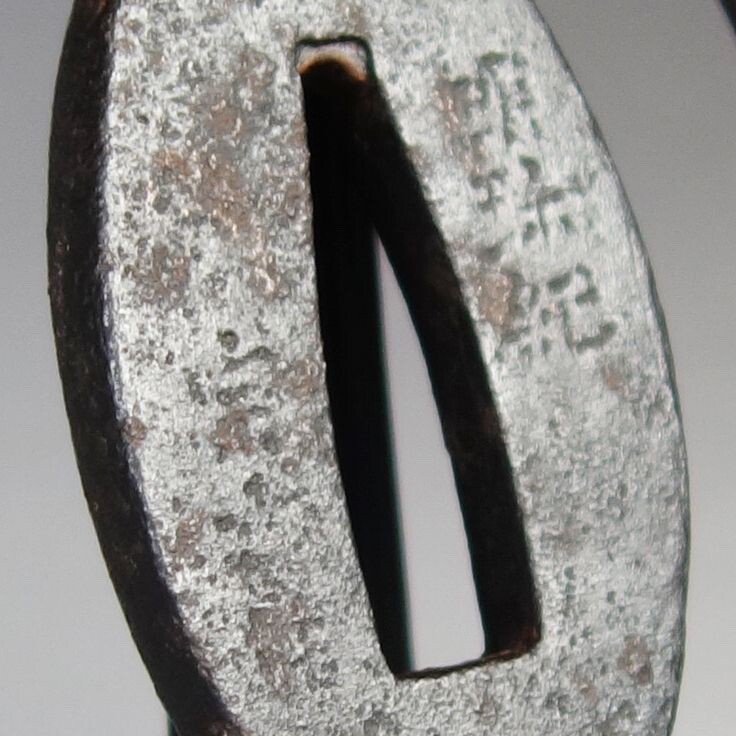
I can make out 明珍紀 on the right but the left is too faint. Any ideas? Best, Hector
 1 point
 -
Your tsuba depicts the popular subject of a dragon emerging from storm clouds. The large swirl on the reverse is a suggestion of violent winds and tempest and the design I’ve circled in red looks like it is actually the tail of the dragon ie the design continues front the face over to the reverse….imo.
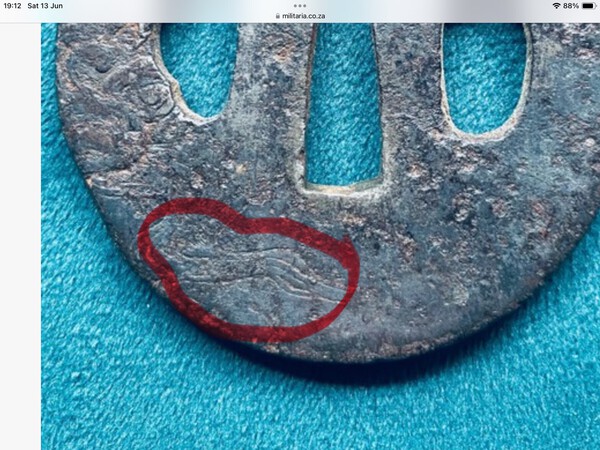 1 point
 -
Not sure if y'all followed this but I sold for about $10k above the ask. It's what I expected. Wish whoever bought it many years of enjoyment. Would love to see it in hand some day. Congrats to the winner.1 point
-
perhaps we can faintly see the top ‘lid’ of 安Yasu …(?) Calabrese. When I start to write an answer, I get a world globe ikon bottom left and that enables me to switch between English and Japanese and keyboard settings.1 point
-
So natives are still interested in nihonto. This picture should be saved, pinned and spammed everywhere.1 point
-
This kind of random stippling is just easy to make, and many tools will be at hand for it. The above TSUBA with no SEPPA-DAI and made with a wrong tool (too sharply pointed) looks like amateur work to me. No machine needed, just a steady hand and some endurance. Generally, the use of mechanical machines is overestimated. For individual workpieces, you would have to make a work-plan, create an adjustable fixing device, and control the work progress. Non-flat surfaces remain a challenge. Modern CNC machines can do that easily but they are uneconomical with small series of only a few hundreds, and in comparison, all work-pieces will look exactly alike..
 1 point
 -
Wait... that's not a monkey... that's a techpriest. On the second one, good find! But my overall point, is how do you guys deal with that cognitive dissidence where you know it's old... but it looks like something else? It reads as a modern machine pattern, (beloved of the Omnissiah perhaps) but none the less you can tell it's old by another aspect, like the carving next to the pattern?1 point
-
A set of fitting here with very similar punched surface [like reverse nanako?] https://www.jauce.com/auction/r12311189331 point
-
It will have to be something non-reflecting of course, and photos are best made in a dark room with only spotlights.1 point
-
I think your reading is correct.1 point
-
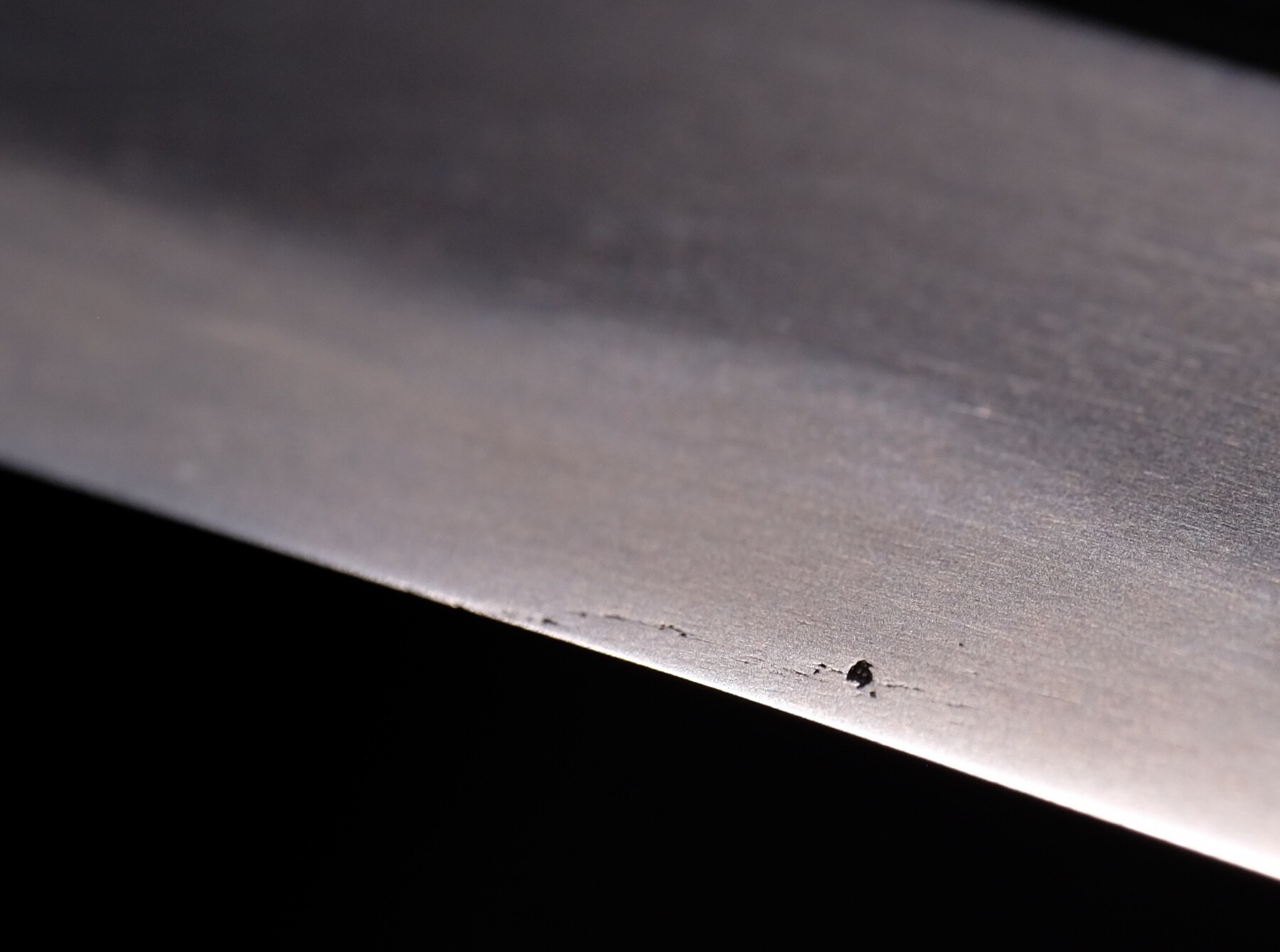
I have something very similar on my senjuin Kodachi sword. I think it’s called hagarami. The crater is about 1/4mm and the horizontal line 2mm. Looks more significant under a macro lens and only visible on one side.
 1 point
 -
Of course! How could they have any other meaning? Oh of course! (They could also mean romance.)1 point
-
This listing popped up today on Nihontowatch. The orikaeshi mei on a tanto is a first for me. Appears to be an early Norishige mei example and note the tilted 'shige' kanji, which is a common idiosyncracy on his early work. I would say the Norishige Matsukawa hada is not as developed as in other later works, so could this be an example of an early foray into this forging technique (it could also appear like this after many polishes I guess). Its unfortunate the blade is significantly machi-okuri. From the condition of the nakago likely quite a recent reworking. No papers but the mei looks good and is very clear in the photos. Undoubtedly an interesting research blade, albeit not his most accomplished.


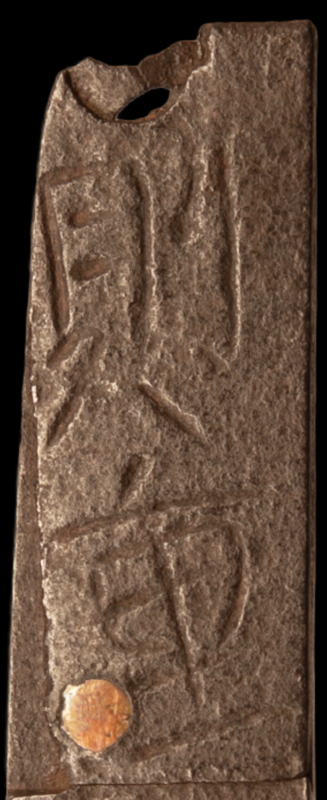 1 point
 -
We had a nice discussion. I look forward to seeing the Dutch token society expand and develop in the coming years. Given the healthy attendance on the first day of the show it clearly illustrates the interest in Nihonto, tosogu and katchu ( looking forward to the menpo talk tomorrow) is still strong and attracting younger enthusiasts.1 point
-
I think there's a good chance that the surface texture of the steel was largely deliberate, and not caused by corrosion1 point
-
Last 2 for now
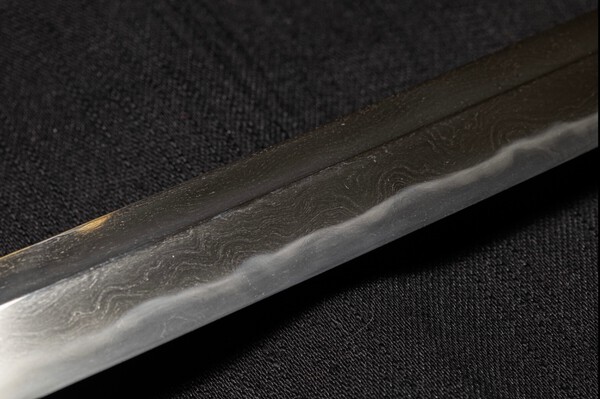
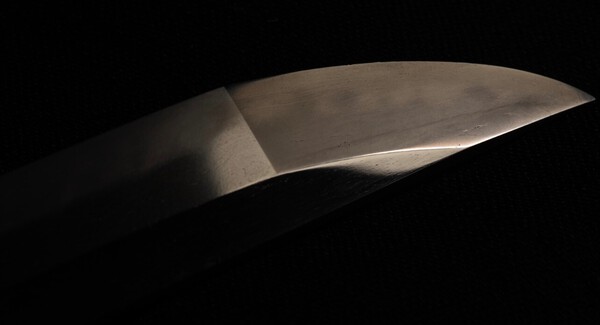 1 point
 -
Very nice piece, I used to have a papered set of F/K (now moved on to a new owner) in the same theme and materials. Bats in Japanese culture are symbols of happiness, luck, and prosperity. In Japanese, bat is 蝙蝠 (kōmori) and the second character 蝠 can also be pronounced ‘fu’ or ‘fuku’ which means happiness. It is the same character found in the name of the lucky god Fukurokuju (福禄寿). https://curiousordinary.substack.com/p/bats-in-Japanese-folklore1 point
-
If my memory serves me well, it was offered by Raymond Yan1 point
-
Thank you so much, Steve and Koichi. The romaji transcription for 面白元作之珍重 should be omoshiro gensaku no chinchō, right?1 point
-
Unfortunately Google "search" nowadays is somewhat more reliant on AI hallucinations than data analysis/indexation; please adjust your expectations and research methodology accordingly.1 point
-
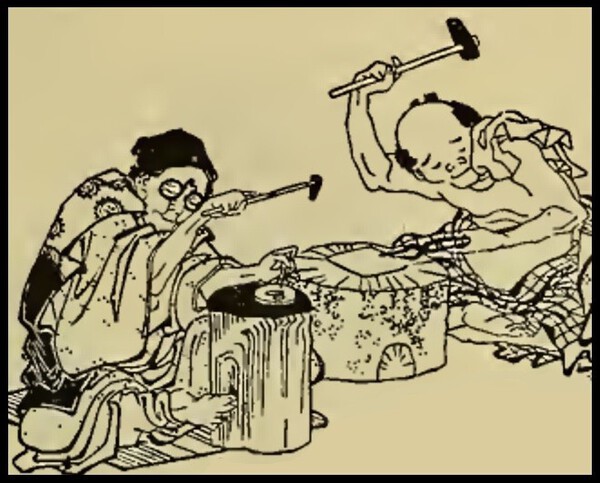
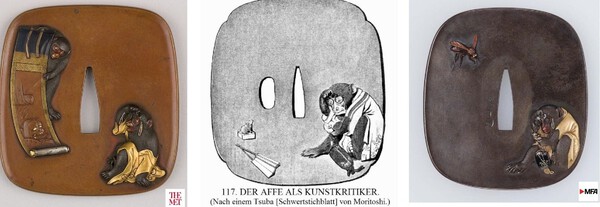
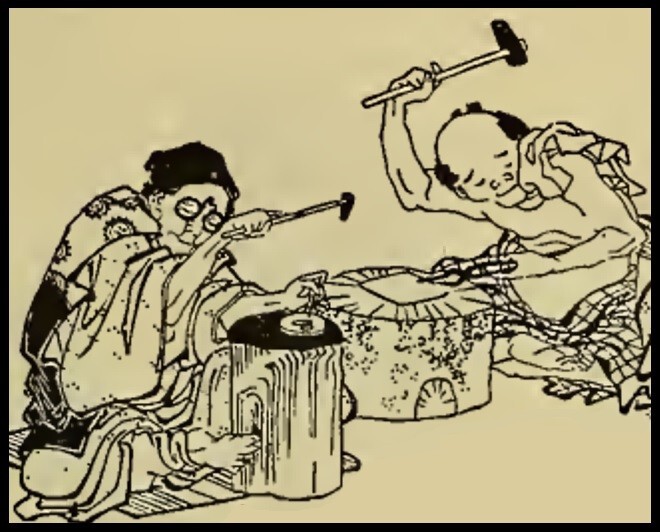
The tsubako artists have had glasses for several hundred years - as shown in this Edo period woodblock - also even the Monkeys wore them!
 1 point
 -
Ford Hallam had a digital microscope! On the topic of the 'helpers' in the old master/apprentice style systems, that isn't 'guy off the street' or 'seasonal farm help' it's 'live in students who will themselves someday be masters' as in @Curran's statement about a particular master being made to do that work when he himself was an apprentice. My mother, herself an artist and great appreciator of art, has in her jewelry collection a griffin she treasures. She bought it in Florence from a long term family business with tremendous history in the art, and talked for a long time with the patriarch. She said he told her one of the most tragic things... "Yes, just when you are starting to get really, really good at it... is when your eyes start to go."1 point
-
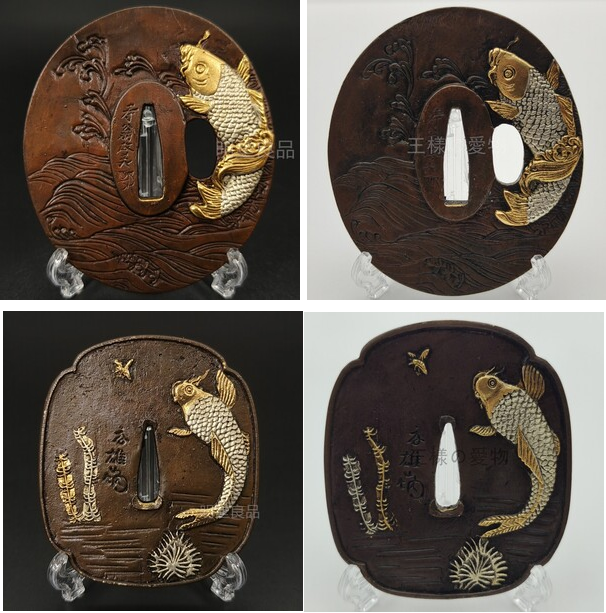
Various types of Ishime-Ji - by their very nature they tend to be "unique" Technique : Ishimeji base, Certificate :NBTHK hozon tosogu paper (Issued 24 December Reiwa 3(2021)) https://nihontocraft.com/Ko_Kinko_Tsuba_G.htm ishime ji. This tsuba dates to early - mid 1500s Tsuba with eagle searching for prey (NBTHK paper) Modern cast examples are not "unique" in that they are numbered in the hundreds if not thousands. It is a matter of finding multiple examples and comparing- I can't find another matching the Carp, but plenty of obvious fakes with a Carp theme.
 1 point
 -
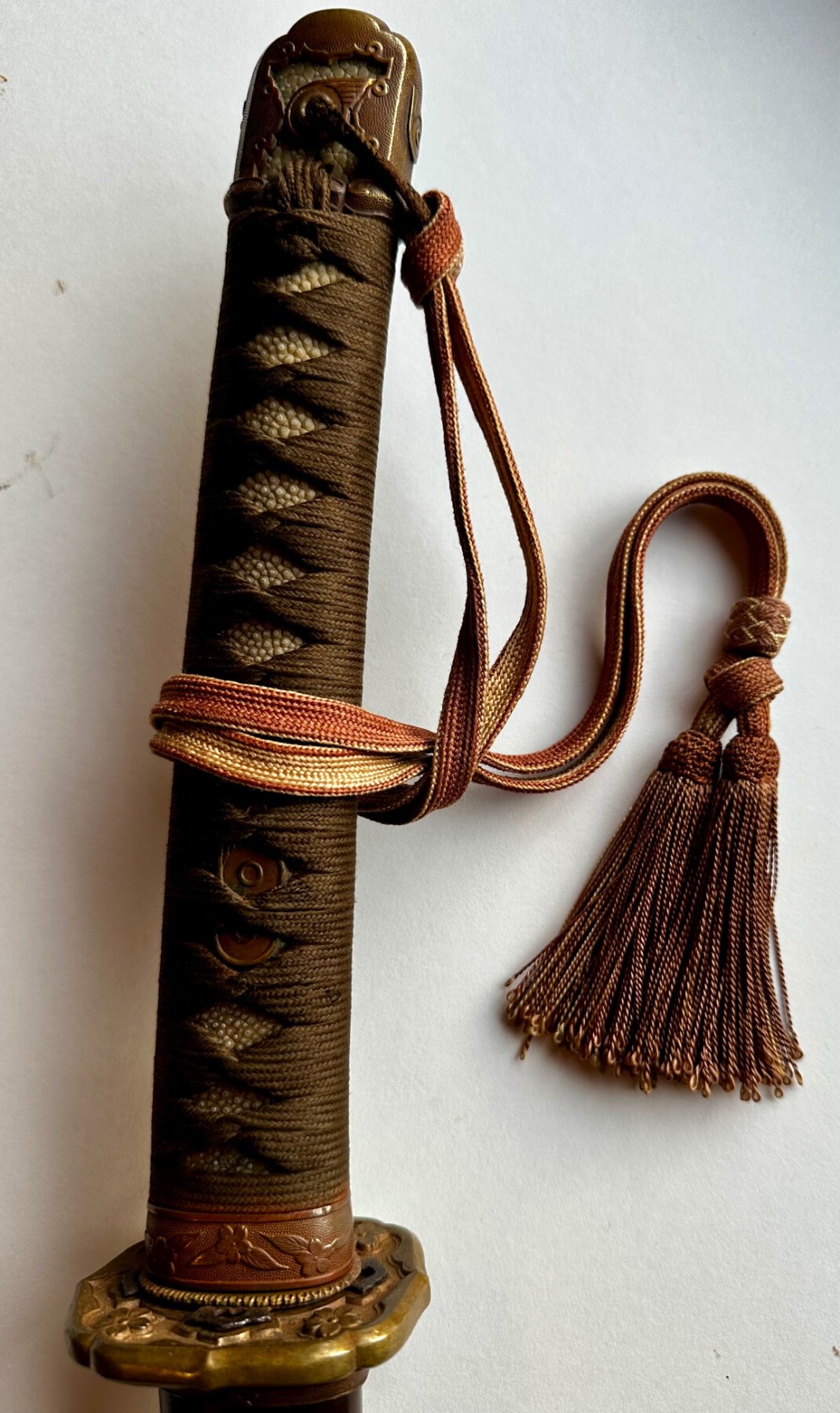
A Meiji era tassel for both Field and Company grade officers. I had read about them, but never seen one. All black, round cord, leather tassel either painted or rubberized.\ Found on this Auction.

 1 point
 -
I thought you might want a picture of my railroad tassel. Tom
 1 point
 -
Even the fake monkeys wore glasses - I wish I could un-see this one!0 points
-
When the question «How was your workday?» actually starts to annoy you0 points

























This leaderboard is set to Johannesburg/GMT+02:00