
Leaderboard


Popular Content
Showing content with the highest reputation on 12/01/2025 in all areas
-
Hi Brett, I appreciate the effort you've put into this. Let me offer some insights. First, it's important to understand the structural difference of the markets you are comparing. Western collectible markets strive to minimize knowledge asymmetries and maximize price transparency, which in turns increases market activity, liquidity, and trust. You see this with numismatic, comics, Tolkien and Harry Potter, fine watches, Baseball cards, etc. These objects are commodities: aside from an objectively-gradable condition, they do not differ for a specific item type. A black lotus is a black lotus, minus the crooked corner. Furthermore, they are extensively catalogued, and their their rarity is a matter of common-knowledge for market participants. This legibility combined with immediate liquidity provides reassurance to buyers. When COVID hit, and enthusiasts in their 40's with disposable income are suddenly carried by nostalgia, the collectible market's inherent transparency gives an easy way to park money in confidence. In other words, collectibles are commodities, and commodities due to their transparency are friendly to new market participants. Nihonto, on the other hand, are not commodities, and they follow the opposite market structure. Knowledge asymmetry is sky high and price transparency is almost non-existent. The items themselves are not legible. You simply do not know what you get, and it is exceedingly difficult to situate it within the broader spectrum of rarity or desirability. This lack of transparency increases transaction costs and risks for new market participants. You can't go wrong buying a graded Black Lotus, but at a similar price point, you can be very, very wrong buying a Juyo mumei Rai Kunimitsu if you use Aoi's past prices alone as your guiding function. If you go into Nihonto with a comic book collecting mindset, you will commit costly mistakes. What does the Compton Collection have in common with the magnificent Kanemitsu tachi that sold for over 200 million yen? What would the top items sold during the legendary "Museum of Sword Fittings" auction sell for today? Now, we are talking about comparable. I will leave it to you as an intellectual exercise to disentangle the structural difference from the items you've been following that have cycled through other auction houses which form the foundation of your analysis on price decline. Add to this a cultural layer that differs from our own in terms of values (Japan vs the West) - as well as different tax policies that create their own class of structural incentives, and you will begin to understand that the foundational data you use to support your analysis only translates to a specific class of items. As others have wisely pointed out, the vast majority of Nihonto transactions that would matter for such an analysis simply go unrecorded, and are carried out between trusted parties in total secrecy. There, million $+ exchanges are not uncommon. The more precious and rare the item, the greater the shroud of secrecy. So, you are left with the tip of the iceberg, and doesn't translate to the vast mass hidden under the sea. Would greater transparency increase the Nihonto market's liquidity, prices, and reduce transaction costs? Absolutely. Are current market participants motivated to do so? Not at all, knowledge is jealously guarded in this field, because it is hard earned. If you know that an item is the best Tokubetsu Juyo piece from a given master, would you be keen on others knowing it? Only if you are on the sell-side. And how hard is it to obtain this knowledge? Well, it is remarkably difficult and requires building a library worth ten's of thousands of dollars of rare and out of print books, hours of study, translation work, and in-hand experience sampling across a wide range of comparable. You're looking at a decade of serious study. What does this information asymmetry mean in the end? It leads to a much slower rate of maturation in the market, the "bid/ask spread" is noisy, and adjusts slowly. From the lowest grade to the highest grade of Nihonto, the price differential is about 100x-500x, which is a complete anomaly when compared to other Art or collectible markets. There are ~2.5 million registered Nihonto with Torokusho, ~1'100 Tokubetsu Juyo, and ~110 Uber Tokuju. If you apply the price-to-rarity mapping of the collectibles or Art market, you will quickly realize that something is completely off. There are economic forces keeping it this way, enabled by the lack of transparency, which benefit, in fine, high-end buyers who spent decades in gathering knowledge, and reputable dealers who have nurtured their reputation and relationships over generations. Markets are markets, in the end, and even the most obfuscating of market practices cannot stop all top items from finding their price. The Kanemitsu really ruffled some feathers. Finally, let us pause for a moment and remember that we have 700 years of collecting praxis in this field. Unlike nostalgia items, which fade in and out of consciousness through a single generation, the Nihonto is a foundational cultural artifact that resonates deeply with the soul an entire civilization. For these reasons, I invite you to be optimistic. But also realistic. It is not an easy field. Best, Hoshi11 points
-
I consider myself as a sword researcher with 0 financial interest. Now will you still believe that line if I will tell that I have 575 pages of sword prices, and have tracked down interesting swords for over 10 years... Here is a link to an old version that I shared to NMB I think almost 7 years ago: After posting that I had some interesting discussions with few people, back then I didn't understand the bigger picture too well but I try to think I have learned something in 7 years. I had some good ones with Darcy and while we sometimes butted heads a bit as we had maybe a bit different view of the some things, now with more experience under my belt I've come to realize that the actual historical prices are pretty unrelevant. As I go through all of my regular sites every week, I just type down the price down as a habit as I had done it for so many years. Main point for myself is just tracking down the items themselves for my database. Jūyō items are actually quite easy to track down when they pop up as I have the basic data. One thing is that different dealers will sell the same item for different prices and it is just normal in life. Some can squeeze in larger profit (and will have to do it for business) while some are satisfied with smaller profit. I was just commenting last month to a smaller Japanese dealer that they have excellent prices, their answer was of course logical that they are online only, so they don't have any additional costs. Compare that to some of the top dealers, showroom in Ginza with staff etc. I feel that the only relevant thing is the current price of the item and how comfortable you are with it. Items are one of a kind items and if you are happy with the price I think that is the only thing that matters. Of course every week as I browse through all of the interesting new items that dealers and sites in my list have put out, I do keep immidiately thinking how something feels overpriced or something is actually feeling like a very good deal. I am actually super happy that Tōken World at Nagoya won the Mikazuki Kanemitsu, now I can see it some year when I visit Nagoya. For me that is the most important thing that people can actually see the items in museums. Had some top tier private collector won the item, most people would never had the chance to see the sword. I won't say anything about the big auction houses, just that I am extremely against them. I will much rather support Japanese and International dealers and would even pay premium for them for the same item rather than deal with extremely greedy auction houses. Sword dealers have a passion for this which auction houses lack.6 points
-
Don't forget what I consider to be a huge influence on the above: The internet and availability of a huge number of swords from a wide variety of sellers. In the past, you heard about swords being available on auction, or you traveled to a seller. You had to fight other buyers for a decent sword as auctions and sales were the primary source of Nihonto. Now you just log onto the internet, and can choose from thousands of swords. Sellers aren't guaranteed a captive market. They need to be competitive and aattractive to buyers. The more the internet makes good stuff available to a wide audience, the more prices will have to adjust to lure the customers. It's no longer "Buy that sword because I don't know when a better one will come along" Now it's "Let me compare 10 of the best examples available on the net and decide which interest me" I think in a market like that, it's only natural that prices remain competitive and sellers are under pressure.5 points
-
A quick note on the Rai Kunimitsu. The Christie's blade was a JuBi Kunimitsu and not just a Juyo Rai Kunimitsu. There are 23 Juyo Bijutsuhin Rai Kunimitsu and almost 200 Juyo Rai Kunimitsu blades (and counting) currently. There won't be more JuBi Kunimitsu blades. Also, comparing various works of the same smith, one might come across a 10x in value or more at the extremes. An obvious example of this could be a smith who has only a small handful of Juyo or TJ blades to his name and the vast majority sit comfortably forever in Hozon and Tokubetsu Hozon. One might expect that those rare examples of the Juyo or TJ blades will go for much more than other blades of the same smith forever stuck at Tokubetsu Hozon. At DTI this year, I counted over 7 Shizu blades. Most sat comfortably around the 7-9M JPY range with one caressing the 11M JPY range. Same Juyo papers, different shinsa sessions, but the same attribution nonetheless. However, as I looked at each one, there were clear "winners" and "losers" in my opinion as to which ones I enjoyed more and were "worth" more. I say that as an enthusiastic collector and not as a professional appraiser. Consequently the blade that had the healthiest form, minimal flaws, and best polish (in my opinion) was the 11M example. Maybe that's a "pricing bias" or maybe I was actually holding the objectively "better" blade. As a final note, comparing sales across a maker can definitely give us a trend for what a rough value for a certain swordsmith's work might be worth but it is not definitive and each blade must be treated individually when assessing is quality. If we find a blade by a maker and the quality is judged as excellent, then we can assume the value will be, on average, in the upper deviations of the bell curve of prices for that smith. That is, assuming you can rightly assess the sword in hand and judge its quality compared to the swords that have sold for higher amounts in previous markets. I can't do this on the fly and certainly not without time to research on my laptop.5 points
-
Hi All. I moved to another state and a smaller home last year and have decided to sell about half of my collection, which has been overflowing from my safe. I will be attending the shows in Las Vegas, Chicago and San Francisco this coming year, so please look me up if you attend any of those shows. If you plan to attend, or if you are not but are still interested in seeing the list of swords that I will be selling, please drop me a line and I will be happy to send you the list. In the meantime, I have listed a few nice swords on eBay. I am posting one of the links below. If you click on "sellers other items", you will find the rest. Sorry for my poor photography - I am working on improving it! Cheers, Bob PS, I'm a long time supporter of NMB and will make an extra donation if this posting yields sale results. PPS, I have been having trouble logging on to NMB (working on it with Brian), but the message function appears to work. https://www.ebay.com/itm/1679648008304 points
-
I picked this up online a day ago and I'll add more pictures when I receive it. Should be quite illuminating I hope, as it shows work by the first generation of post WWII smiths exhibiting their best blades just four years after the swordmaking ban was lifted. Described as: [Illustrated] New Sword Exhibition Catalog Japan Sword Association Cultural Property Protection Committee Japan Art Sword Preservation Association Showa 32
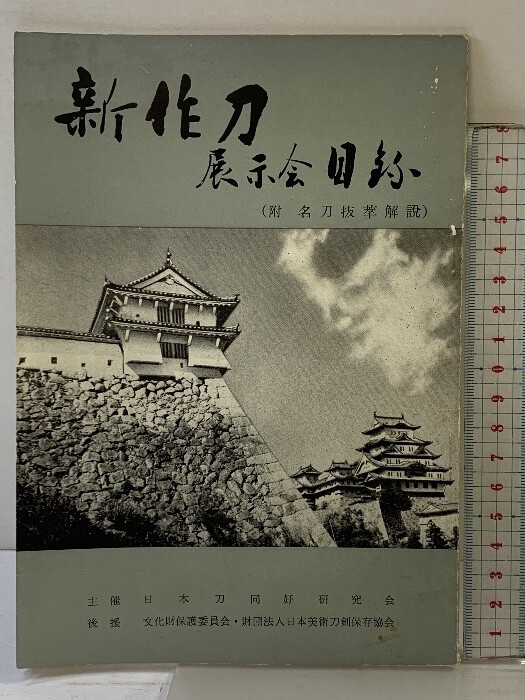

 3 points
 -
Hello! I have finished it and keep updating it yearly. Here is the version I uploaded to NMB: Since then I have done only separate yearly Jūyō results over the years. And I have been correcting errors to the big index on my pc as I have gone through all Jūyō items few times over the years. I think NBTHK should release the 71 shinsa results soon now in december, so I can update them in too and post a full index with all of the corrections. When you are typing thousands of kanji there have been some errors I made. I just got 5 Jūyō books from Yahoo JP that are in the mail. Then I will have all books from 1 to 56 on my bookshelf, and as I have few others too I am only missing about 10 or so books. And for Tōken Bijutsu I have pretty much completed my collection for the moment, I am only missing 21 of the very early numbers and I have 800+ magazines in total.3 points
-
All markets have to operate in the pertaining real world circumstances and the past is usually not a guide to the future…..quite the opposite in fact. So we look at our world and what do we see…..serious actual conflicts, serious potential conflicts, serious economic problems/conflicts/extremes, incompetence of governments etc etc In times such as this will Japanese swords be viewed as an economic safe haven? This is a seriously obscure small market that as said above requires years and years of learning to become even vaguely knowledgeable. Why is gold soaring? What are todays embryonic collectors likely to jump into? The past will not decide what happens, we need to look ahead, not back. Hmmmm…..3 points
-
In 2025 from my perspective it was a better time to be a buyer than seller. Even with me feeling that way I've been reluctant to invest too much because I worry the Nihonto market, while actually rather stable in the long run, will remain somewhat stagnant even into the future. Nihonto has such a steep learning curve, lack of tradesmen so everything is so expensive to procure (just to name a few: polishing is the biggest one, re-silver foil something, repair saya, have shirasaya made, have tsuka made or repaired, have habaki made or repaired etc...and each blade being unique in sizes makes it hard, if not impossible, to standardize anything), a market with forgery landmines, blade certification being so slow and essentially only in Japan is also a rather big wall for the market....and I could go on but basically because of Nihonto's unique facets its a really hard market to develop steady growth in and bring in new buyers that stick with it and dont get too burned along the way to burn out. Out of all my "collections" my returns when selling are always (by a pretty large margin) the smallest with Nihonto and I feel like I always risk at best selling for what I paid or at worst even less. In the end though...even with all that said...I personally think my Nihonto collection is my favorite thing I collect. It just seemingly wont help me retire one day like my other collections will. I mention these things because a healthy market would want today's gunto buyers to become future Juyo buyers and the more blocks and burns in a market the more buyers will fade out before getting to Juyo. Nihonto is a tough field and not for the faint of heart and wallet which will always play a role in the market and it's future capabilities.3 points
-
One needs to look no further than shinsa costs to understand why things are postured the way they are with NBTHK papers. Similarly, with swords IDK that any points grading system would change things because already you'll hear things like "That blade's a JINO blade" or "this shinsa session is really strong" where you'll have sub-values assigned to the values of each shinsa depending on who the judges were, what blades passed, and what the competition for that year was like. For example how do you grade a newly found, newly discovered for the first time ever Rai Kuniyoshi that is deemed shoshin? Is it an auto 9.8 gem mint because its the only existent blade of this smith and a huge historical discovery for the Rai school roots? What if its a little tired but signed? Still a 9.8? I don't know that the NBTHK could provide some level of objective criteria on which all blades could be judged unanimously. There is nuance within traditions, within schools, and within smiths individually and as more blades are submitted and discovered, the scale on which we must grade all future discoveries also changes. Hence the bucket approach naturally also fits (if not for the income for the NBTHK with the bucket system)3 points
-
A nice leaf mon habaki, posted by @lonely panet on a waki he's selling HERE

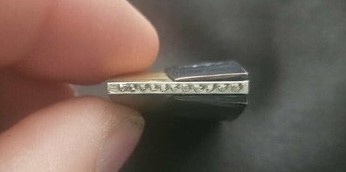

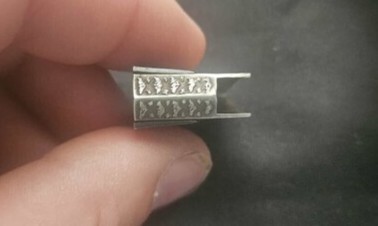 3 points
 -
I have been doing some research into the state of the Nihonto Market and have come up with some worrying outcomes. Price have not moved since Dr Compton's Christie's auction all the back in 1992 (33 years ago) which still holds the record for the highest collective auction sale of $8 million and the highest public auction price for blade at $418,000 for the Ichi signed blade. From my limited research the Christie's Auction in 2002 appears to have been a high water mark for the Nihonto blades market since the year 2000 (note prices did not get back to Dr Compton levels 10 years before that) with prices not getting much above these 2002 price over the next 23 years and in fact in some cases price being sold significantly below these prices. I have pulled out three examples to highlight my findings. Here is an example of a Juyo Bizen Masazane: In 18 October 2013 one sold at Bonham's Auctions for: $47,500 And another sold on the 26 October 2022 also at Bonham's Auctions for: $44,475 A 9 year gap in between sales but another loss another Loss - although this is a lot less than before but a lost of $3,000 over 9 years does not represent incredible value. Finally, here is an example of a Juyo Naoshi Katana: In 9 November 2011 one listed at Christie's Auctions and sold for: 70,850GBP or 112,862.63USD. And another sold in 25 March this year at Sotheby's Auctions () for: 101,600 USD This represents a 14 year gap and a $10,800 loss. Finally here is the price movement of a rather more popular sword smith Rai Kunimitsu again examples of Juyo Katanas: In 19 June 2002 one sold for at Christie's Auction for: 94,650GBP or 141,738USD. More recently a Juyo Rai Kunimitsu Katana sold at Samurai Museum for: $41,590.15 And another Juyo Rai Kunimitsu Katana has been listed at Eirakudo for: 7,800,000JPY or 49,956.13USD. This represents a $100K drop in prices of Juyo Rai Kunimitsu Katanas in the last 23 years. Or a 70.6% loss over this time - probably one of the worst investments in this space. Now I know that many will say this is an extremely small sample size and blade quality and provenance matters, etc. And yes it does but this is a sample lot that tries to compare (as much as it is possible with the difference in blades and quality) apples with apples. All are a specific maker and all are a specific grade (Juyo). There are not many Nihonto Blades of quality that have gone to auction over the last 23 years and this sample lot is what can be extracted from these auctions. From my findings the market does not appear to have moved and in fact has gone backwards since 2002. With the lack of private sale data, auction data tends to be what big money collectors (not necessarily the most educated collectors) use to price the market and currently this appears to be very concerning. The Sotheby's Auction of 25 March 2025 (8 months ago) is of particular concern for me here. The prices did not appear to achieve what they wanted on many of the lots and at the end of auction they only had a 56% clearance rate. This kind of sums up the state of the Nihonto market from the data I have found. I would have thought Nihonto Blades would have sky rocketed like they did in the 2000s under the dot com bubble but they did not. Even the Covid Bubble that caused other asset prices at auctions to sky rocket (I am looking at you Michael Jordan, JK Rowling & JRR Tolkien collectors) the Nihonto market did nothing. Nihonto blades have not even kept up with inflation and in fact as shown above lost ground. A steady 100% per ten years is a pretty acceptable growth rate for most assets but this has not appear to have happened with Nihonto (even though most videos and articles on the most expensive Nihonto blades always multiply the price of these blades by inflation to suggest how much that would be in today's prices - but they are not)? Why is that? What is preventing Nihonto blades, as an asset class, from appreciating like other assets? Is this a case of Japanese Stagflation - following the price of Japanese houses? That is the Japanese economy has gone sideways therefore the Nihonto market has also gone sideways? I am unaware of any database of sales data that exists but if there is I would really appreciate someone pointing me in the right direction. How do Nihonto Sellers or shops price their blades? Do they simply keep a track of what other shops are listing their blades for? Clearly you can only sell at what people are prepared to pay. I am aware that at the moment there is very much a Japan shop price and a Europe/America shop price (not auction price). That is blades sold outside of Japan are more expensive than those sold in Japan. Which has been pretty common for some time and where a lot of the price growth has been pushed but more recently there appears to be a slow down even here due to the 15% tariffs being introduced in the US meaning that either the seller is taking a 15% hit or the customer in the US is being slugged with a 15% increase in price meaning that even in the private sales market the sale of Nihonto have slowed. Many American sellers are not even shipping the blade outside of Japan until they have a customer, advertising the blade on their website, but not having it in their possession in the US. Makes sense as someone outside of the US may buy it but the US is still without a doubt the biggest market outside of Japan for these blades. This uncertainty in tariffs appears to be affecting the market and prices as a result. I also mention the price disparity between Japanese and foreign markets as the auction houses used here in these examples are foreign auction houses suggesting they should be priced higher than the prices in Japan... but this has not been my finding. I also heard stories of Nihonto sellers actually offering 10% discounts at DTI for the blades in their store as an opening gambit to try gain custom. This seems unusual compared to previous years, no? What did people who attended the DTI observe compared to previous years. Did it show the same interest? Do we know if there was an increase or decrease in sales this year? Now that we are starting to see gold move up and equities and cryptos slowing down have we missed our opportunity and are Nihonto about to extend their 23 year "winter of discontent" even further with prices about to come down again or am I missing something and are we seeing the early signs of spring in the Nihonto market? With the BoJ increasing rates will we start to see a price increase in Nihonto? I am not an economist but any insight or thoughts here would be valuable. Do we have clear examples of like for like blades selling for multiples of where they sold over the last 23 years? What blades or names have out performed this market? Have we identified any clear trends? I am aware of some outliers where a special sword had a closed auction and apparently sold for millions (although because it was closed we do not actually know) but that appears to be an exception rather than the rule. From what I am found the Nihonto market appears to be broken and I am not sure why or how to fix it - thoughts? I am not an expert in the Nihonto price action and am not trying to be a Debbie Downer, I am simply trying to share my findings with the intent of starting discussion and sharing knowledge. I am also happy to be proven wrong - this helps me grow immensely. Thank you.2 points
-
A very interesting thread, This discussion is wonderful and insightful. Having said that, there are some points I disagree on. I personally will not take auction results from auctioneers like Christie’s, Sothebys (or other high end auction houses), as a market parameter. These auctions are in many cases outliers, and one auction or auction house is to me not a proper market indicator. Having been active as a dealer in the antique market when I started at 14 has taught me A lot about market decline and rise. I have sold ancient Roman and Greek coinage ever since I was 14. The coin market is very transparent, you’ll always be able to check the market price for a particular coin. I have a very wide range of databases that I use to figure out the price increase or decline of certain coins (which overall has seen an uphill increase). But from the perspective of a coin dealer this transparency is also a curse, my profits are low (because anyone can find out where they can get it from my source), and I focus on selling in quantity to make a living. This cannot be said about Nihonto. When I started buying Nihonto, I desperately wanted to gain intimate knowledge of the market and trends within the market. I have never been rich so I’ve always focused on the Hozon-Tokubetsu Hozon range. The market is completely dependant on location and clients, it’s a whole different game. There is no standard metric to compare your swords to. The Japanese market is very different depending on who you know or where you can get into (for example dealer auctions). Dealers can really truly ask whatever they want, if they have a client willing to pay. There is of course some basic understanding of price, but it can wildly differ. Overall in Japan when I talk to dealers, some can be quite optimistic. Looking to branch out more and reach more clients, and working to get young people interested in Nihonto. I don’t worry as much, at least not at my collecting price point. Greetings, Lex2 points
-
Agreed! For any market to exist or to survive or to grow there is really only one critical factor……demand. There must be a demand for that product and that demand can vary drastically especially at different price points and in the case of swords, also geographically. So, where is the current demand for swords? Increasing, static or declining and at what price points? What current factors drive that demand?….and are they likely to change…and how, and why? Demand can be encouraged and manipulated to some extent but ultimately people must want it…….whatever “it” is. Right now the transparency that does exist in the “open market” most easily visible via auctions (and even sales on this forum) would suggest the market is over supplied, thus depressed - but as usual there are exceptions. Anything sensibly priced stands a chance, anything over valued stands little chance. Better quality sensibly priced is more likely to sell. What happens behind closed doors is anyone’s guess and is likely to remain so. As Brian has said, the internet has had a drastic impact on the sword market. It has increased product choice and visibility and has thus increased competition between dealers. It has enabled buyers to easily access far more of the “product” than ever before, but has not necessarily increased demand. Static demand coupled with over supply is bad news. Reducing demand coupled with over supply is extremely bad news for market performance. It would be great to have some dealer input…….2 points
-
Personally I buy to collect and study not as an investment vehicle to diversify my portfolio. There has been way too much speculation in other collecting arenas eg whisky, fine art, watches etc that all it achieves is to price out the little guy (read enthusiast). I’m all for downward adjustments as it warns off the investor types who have no interest in the commodity only that it makes a profit on resale.2 points
-
Hi, No one seems to have mentioned that the NBTHK Hozon attributes the tsuba as mumei: Mito best regards, John2 points
-
And to add to Colin's points above... we, the collectors outside of Japan, have no leverage to effect any real changes and would likely wind up on several blacklists if we tried. Work with the world you've got, not the world you'd like.2 points
-
I don’t want an argument but this is not true when dealing with clients that are perfectly happy and well prepared to pay a premium for exclusive private buying opportunities. Also many dealers do not wish it known that they sold “sword X” to “customer Y” for “$Z” Not everyone wants exposure to the limelight. It’s the same in any high value commodity market. The art market operates in a very similar way. Imagine you are a dealer with many high net worth private clients…….the problems that could occur when your clients find out what you have sold to their rivals etc. You stand to lose your best customers. Transparency can work negatively as well as positively……it can depress a market if the “prices” start to fall - because there is no guarantee that sword prices will rise especially in this world. We have seen a few very decent collections hit the open market in the last year or two with pretty gruesome results……high percentage of unsold….likely caused by vendors expectations. And, what effects of age demographics will we see……will younger collectors be interested (or able) when these high value swords come onto an open market? Or will they prefer a new Porsche? It’s a complex set of circumstances.2 points
-
To be fair, this isn't entirely true. Many genuine netsuke (especially later ones from the 19th century) have cord holes of the same size. Also, signatures were uncommon on earlier netsuke, but became more and more common in later times, and while some of them were indeed artistically made, others were just cursive scribbles. Check out these reference books for examples of both kinds: https://archive.org/search?query=lazarnick2 points
-
If you mean the one mentioned above..have you checked the downloads section? If you mean a full translation, no-one has confirmed one exists.2 points
-
The results from the big English auction sites can always be taken with a grain of salt when compared to the real market. The relative prices of masterpiece swords haven't really changed much in hundreds of years.2 points
-
I think that Jan’s reading “備後三次住田村正行作 = Bingo Miyoshi-jū Tamura Masayuki saku” is correct.2 points
-
Forumites, I really do love the Itomaki Gata, (Vertical Spindle Shape), style tsuba seen here in this diagram, bottom left. Though, as much as I've tried, I've never found any historical tsubas in such a style online. I've only found such a style ever with a circle surrounding the equidistant symmetrically sized spindle shape. Though, does anyone know of any historical examples that they can direct me to of this Itomaki Gata, (Vertical Spindle Shape), tsuba? If I can find an antique example I'd like to purchase it for study and replication. I really love it because it seems very uncommon, rare and the equidistant spindle shape that is symmetrical along its horizontal and vertical axis makes me think of a shorter style of crossguard on either axis. As if this were taking inspiration from traditonal cruciform medieval sword crossguards, though I know entirely such reason for development was not at all occuring. Thank you for your attention in reading my post. Best regards, Barrett Hiebert
 1 point
 -
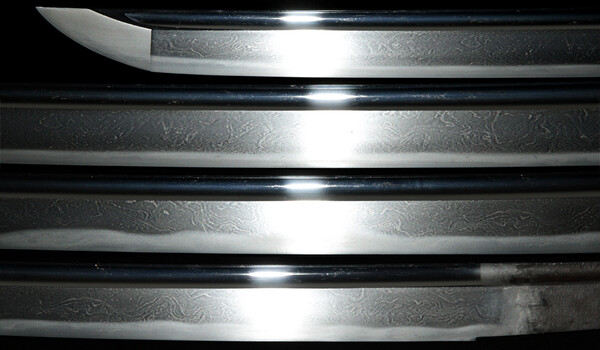
Hi Friends, I've been fortunate to handle a beautiful piece of history even thought it was for a very very short time, it was a tease more than anything. A client of mine was on the hunt for this big name and so with a bit of luck and timing on our side I was able to satisfy his appetite. Norishige who was one of the big Juttetsu and having played such a big role in Soshu-den History I felt that it was unfair for this piece like this to disappear into the dark corner of a private collector and possibly remain unseen for the next couple of decades. A piece like this deserves to be looked at and appreciated, especially for those of us who will never own or touch such an item. And so with the permission of the owner I would like to offer some pictures and leave an open discussion for those who would like to study and comment on this piece, share some knowledge preferably in a constructive way where others can benefit. Attaching other pictures for form of comparison/ study are permitted so I leave this in your hands from this point on. I won't be participating in this discussion as my workload is backlogged. I ask members to keep in mind that the owner may have a peek at this so please don't be too harsh if you have something negative to say. I will ask this thread to be deleted in the future out of respect for the owners wishes so you are welcome to save everything. The nagasa is just over 73cm with a Kinpun Mei most likely done during Edo period. It does have recent Juyo papers for those who are doubtful of its authenticity. Enjoy and thanks to everyone who took a peek!
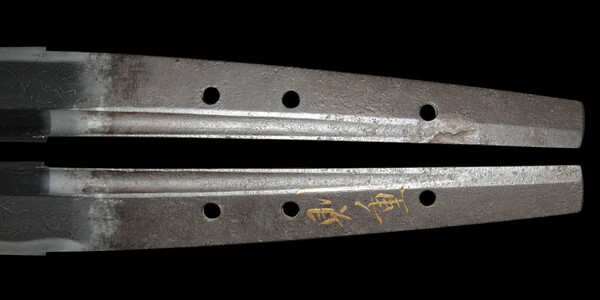

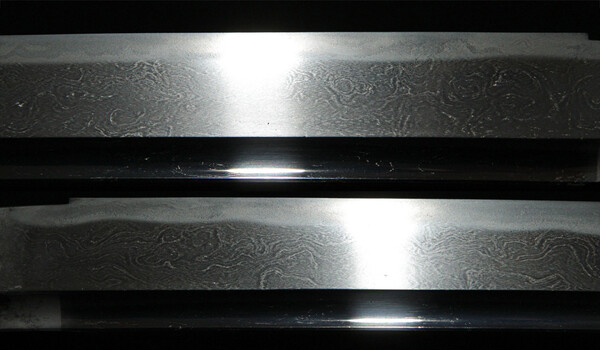


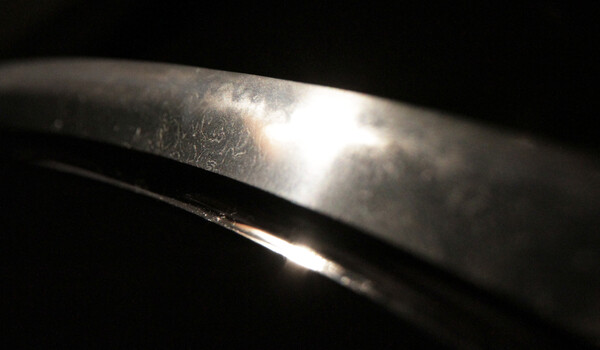 1 point
 -
It would be usual for the descriptions to be within a printed catalogue and in the online sale catalogue. Auctioneers rarely do description cards to display with the Lots. Did you see the catalogue?1 point
-
Michael: To start your answer, you should post a picture of the signature in the "translation" section. You can get more info with the smith name, overall condition of the blade, and relative rareity. John C.1 point
-
There are still useful and incredible uses of AI, even within niche hobbies. That being said, most content now days that is being AI-generated isn't done with educational or research purposes in mind. Its a way to blast the internet with content to drive up engagement, SEO ratings, and other general bloat while adding net negative to the information we have and wasting an enormous amount of energy, resources, and space to fill the web with useless nonsense. On the other hand, there are plenty of situations where the pattern recognition, pseudo-logical processing (the best kind because we can still give it rules to follow but it has "intuition" which allows much more complex pattern matching than one could write in a standard program), and the ability to be constrained allow it to be a phenomenal tool in the right hands with the right intents.1 point
-
Hallucinations are a fascinating part of generative AI and one that can quickly lead down paths of nonsense if one is not careful. In a world of specialized terminology and weird habits (nihonto is very guilty of this), this becomes even more common. The resources from which ChatGPT or whatever model you were using no doubt are referencing other AI generated articles rife with their own hallucinations. We're starting to see AI-generated "educational" articles pop up with references to nihonto on non-nihonto (typically repro sword sales) sites with a mish-mash of correct and incorrect information. The problem is is that nobody will check these for historical accuracy and the next batch of AI-generated articles will use these as references and sources of truth when making the next article thus further tainting the pool. I remember in High School when teachers would always tell us "Wikipedia isn't a legitimate source, you must go deeper to the source material, journals, etc. and conduct your research there". The same is only more true today in the internet of generative-AI, only a hundred-fold more so. Due diligence is key and in fact, the old books might be making a comeback as sources of wisdom upon which we can study and learn.1 point
-
Got it. Much love @Tim Evans for helping here.1 point
-
I cannot speak to the mei, but out of the 10 I have on file, 2 of them were signed on this side, with the Kiku ichi.1 point
-
I wonder if this is what Nobunaga thought when he was born into the not very influential nor powerful Oda clan? I jest and appreciate the sentiment, as concerning as this sentiment is. I am simply trying to find ways to improve the Nihonto's lot - it deserves better. I think everyone in this space wants that - Japanese & foreigner.1 point
-
You're right, of course. I looked at Jan Pattersson's book on Yonezawa Matchlocks. Although the less-than-ideal illustrations are the Achilles' heel of this otherwise wonderful and fascinating publication, they clearly show that the Yonezawa teppo's did not have the hinawa toushi ana , nor did the related Seki-ryu style matchlocks.1 point
-
Lots of impressive talk about high end rare and expensive swords but they represent only a numerically very small part of the far wider market. Are we talking about the whole market or a very small exclusive enclave? ….and do the same factors exist across the wider market? ….. and which sectors should most of us be concerned with? The UK has been awash with swords in auctions recently with very poor mixed results……with more still to come. Why is this?1 point
-
I have never known a market where private sales sell for more than at auction or public sales. They tend to sell for less and stay private so as to not upset the apple cart for other owners. But Darcy was a legend with great reach in this very opaque and small market. Perhaps this is the Japanese way... to stay discreet? Just buggers up the optics for the foreign investors who want to see an obvious active market of price appreciation not a discreet market that operates behind closed doors on ifs, buts and maybes. To me, if true, then this is a very clear and obvious reason as to why prices have not openly appreciated.1 point
-
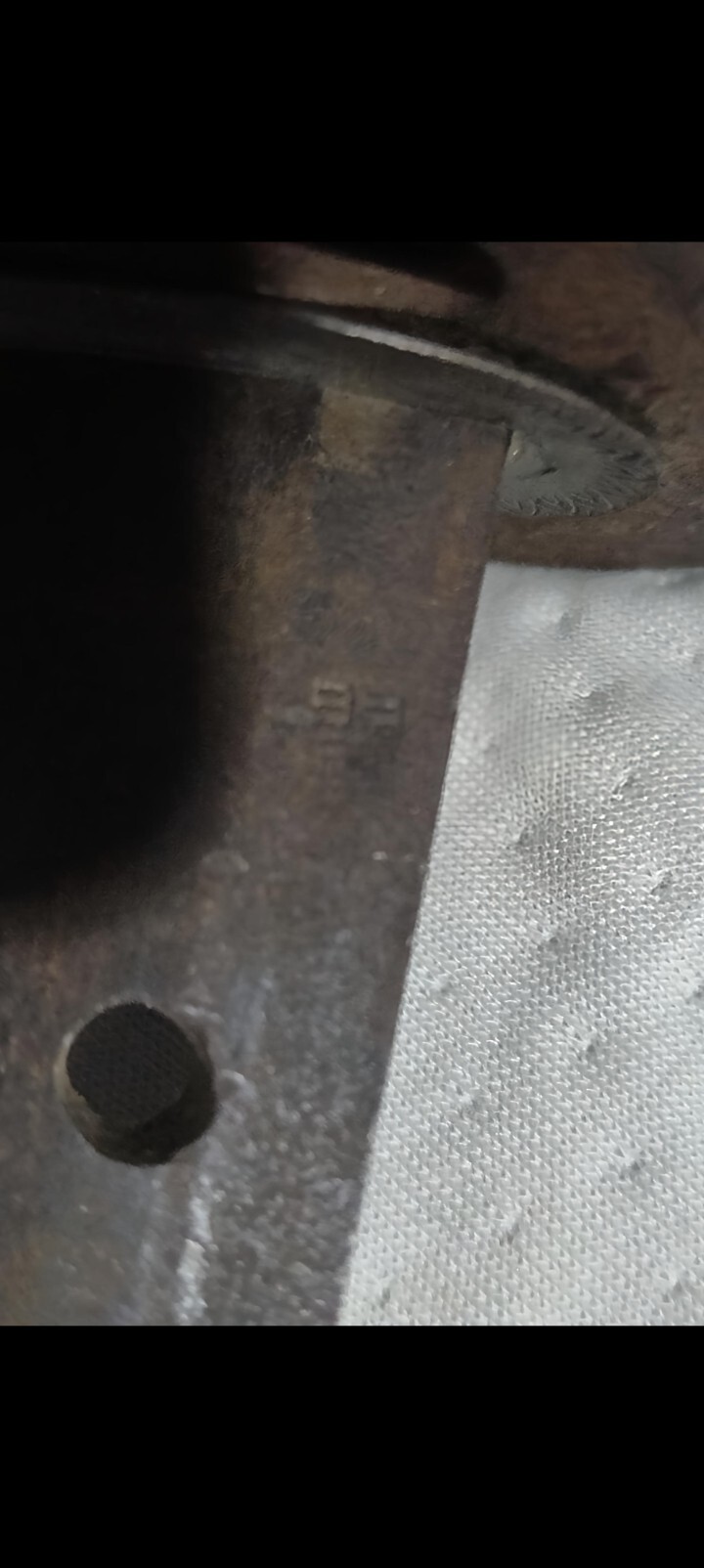
Thank you all for the information. It's so interesting. Im sorry for the photo quality, I've not got the best phone for pictures. So this very small mark is in the same side and the mei just up higher, and it's very small.
 1 point
 -
I believe this is referred to as Ninja is because, with a sturdy saya, the Ninja could lean the sword against a wall, point down and with the flat of the tsuba against the wall, step on the projecting opposite edge of the tsuba and get a boost in climbing over. The flat stops the tsuba from rolling. I have been told that there is little evidence ninja ever existed. Makes a good story, though. Grey1 point
-
Perfectly put and sadly true Alex. Even at the highest echelons of Nihonto expertise, the evidence in front of the observer can be misinterpreted. And what’s worse is those conclusions go unchallenged as it would be deemed 'rude' to discuss an opinion. This is not how a field of study improves and evolves. Dogma should always be challenged.1 point
-
冰清玉洁 as clean as ice, as pure as jade 陳胖製陶 pottery made by 陳胖 竹趣 fun of bamboo1 point
-
Happy holiday season folks, Have a silver buckle for sale here. All the details and descriptions are on eBay. I would like to offer this piece to a fellow member of this forum for a discounted price of $200 before the new year. https://ebay.us/m/SC6FXI Please let me know if you have any questions or concerns. Best wishes, C. C.1 point
-
備後三次住田村正行作 = Bingo Miyoshi-jū Tamura Masayuki saku (made by Tamura Masayuki, resident of Miyoshi in Bingo province)1 point
-
@Tyler stone ….compare yours to this genuine example of the same subject by Okatori from the Kyoto school. This one sold at Bonhams for over £6000 nine years ago. The difference in subtlety and carving quality should be apparent. I hope you did not pay a lot for these ……they are next to worthless. Were you misled by a dealer?…because I’d be happy to try and help you get your money back.
 1 point
 -
Under normal circumstances, all nihonto in Japan had to be banned and scrapped just after WWII, because they were thought to be mere arms. To save their lives, nihonto were defined as artwork and traditional crafts to be preserved. Therefore, existing nihonto must be traditionally made from traditional material and registered as artwork. Any blades like nihonto which do not clear the criteria to be registered are thought to be only weapons and illegal in Japan. IMHO, modern nihonto are not expected or allowed to be improved as weapons beyond traditional borders.1 point
-
By quality, I mean "properties", not that it's necessarily better or worse. While I don't have extensive experience with shinsakuto, the steel used by the Akamatsu Taro smiths has a somewhat darker color compared to the blades typically produced using NBTHK-supplied tamahagane. It also seems to produce chikei and kinsuji/sunagashi somewhat more readily, which I imagine would be critical for a group that prides itself on Kiyomaro-utsushi (although admittedly this could also be due to technique, or a combination of both). The jigane can be observed in the close-up photos at these listings: https://www.toukenkomachi.com/index_en_tachi&katana_A090823.html https://world-seiyudo.com/product/ka-050420/ https://www.aoijapan.net/katana-higo-koku-yatsushiro-ju-akamatsu-taro-kanemitsu-saku/ https://world-seiyudo.com/product/ska-010125/ https://katanahanbai.com/en/katana/katana-higonokuni-akamatsutaro-kanehiro/ There are also some great pictures and more information about them on this listing by a fellow NMB member: Scroll down past the first post for more detailed photos and discussions. Disclaimer: I have a shinsakuto made by Akamatsu Taro Kanemitsu (Kimura Mitsuhiro)1 point
-
Tyler, sorry but this is an imitation probably made in China. Modern work. The signature is there to deceive.1 point
-
Yesterday a friend asked me if I would be willing to part with a dōran waist box. My best one! In exchange he offered me a nice kayaku-iré blackpowder flask and an adjustable iron candle stand. Well, he knows my weaknesses…1 point
-
Unfortunately to me the one with red background seems to be signed 備州長船清光 (Bishū Osafune Kiyomitsu). Kiyomitsu smiths were very prominent during late Muromachi. One thing that might be taken into consideration is that it is common for us to call a gimei for a big name smith, while there could have been other smiths signing the same way. Like for example for Kanemitsu we will easily not pay too much focus on Kanemitsu signed katana like the one in this thread as it does not be a work of Nanbokuchō Kanemitsu. Well that does not maybe make a huge difference to most if it would be by unknown Muromachi Bizen Kanemitsu or a gimei. I just think the Japanese sword appreciation is extremely top heavy as they are the ones featured in almost every reference.1 point
-
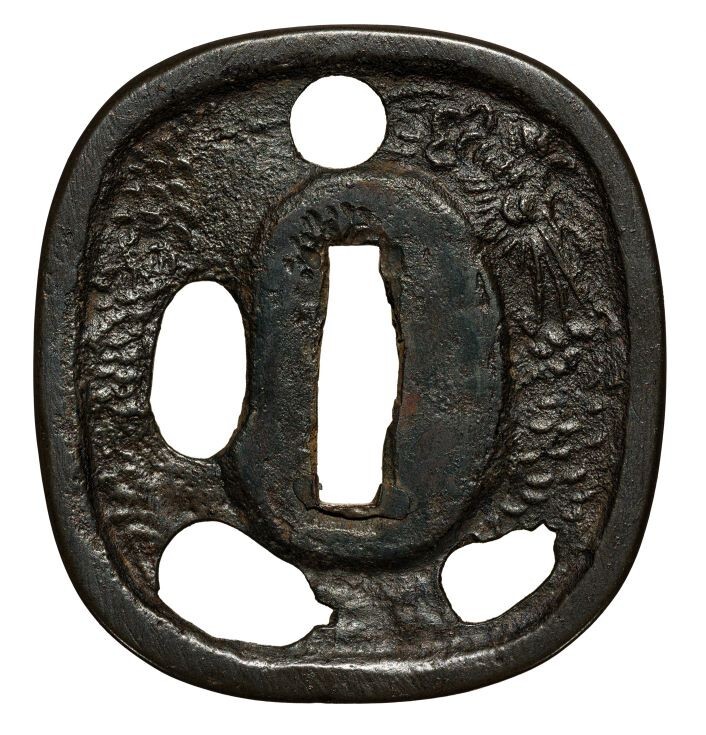
Here is another that is ascending and descending dragons. The plate is only about 1mm thick in spots. I think the two holes at the bottom were casting flaws modified to look like bottles. I see some similarities to #10 in Sasano's book.
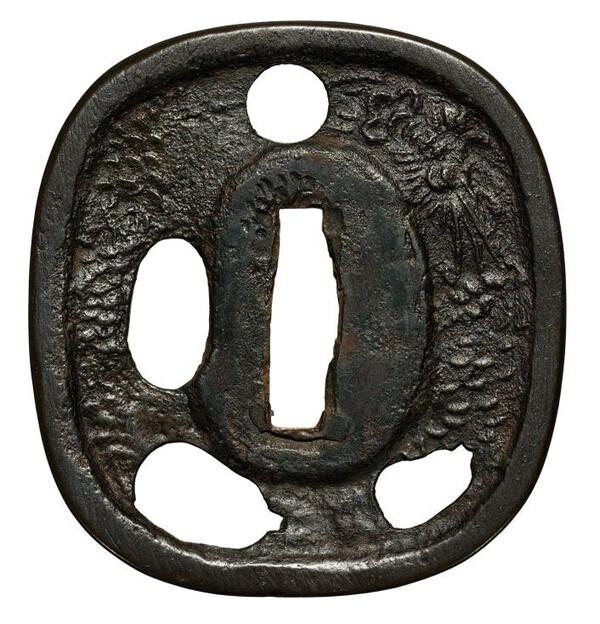 1 point
 -
Mauro Piantanida, Yes, thank you for finding me such. Perfect! Much obliged! I'll definitely be saving that one! Hehe. It's my favorite tsuba style! I don't think such would be a clothes shredder considering how wide and flat the cardinal point edges are. I'd buy it in a heartbeat if it was available and I could afford it. Thank you again for bringing a true itomaki gata type tsuba to my attention. Wishing you well. All the best. Best regards, Barrett Hiebert1 point
-
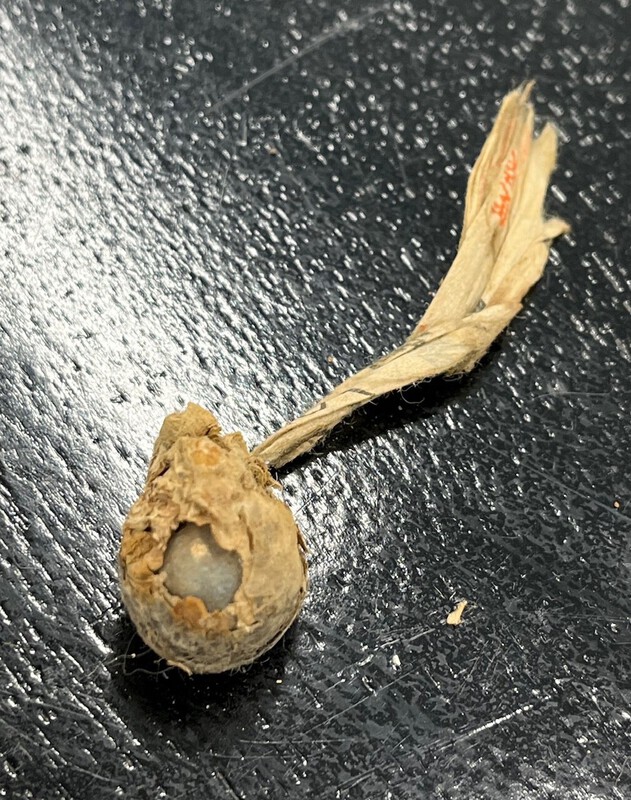
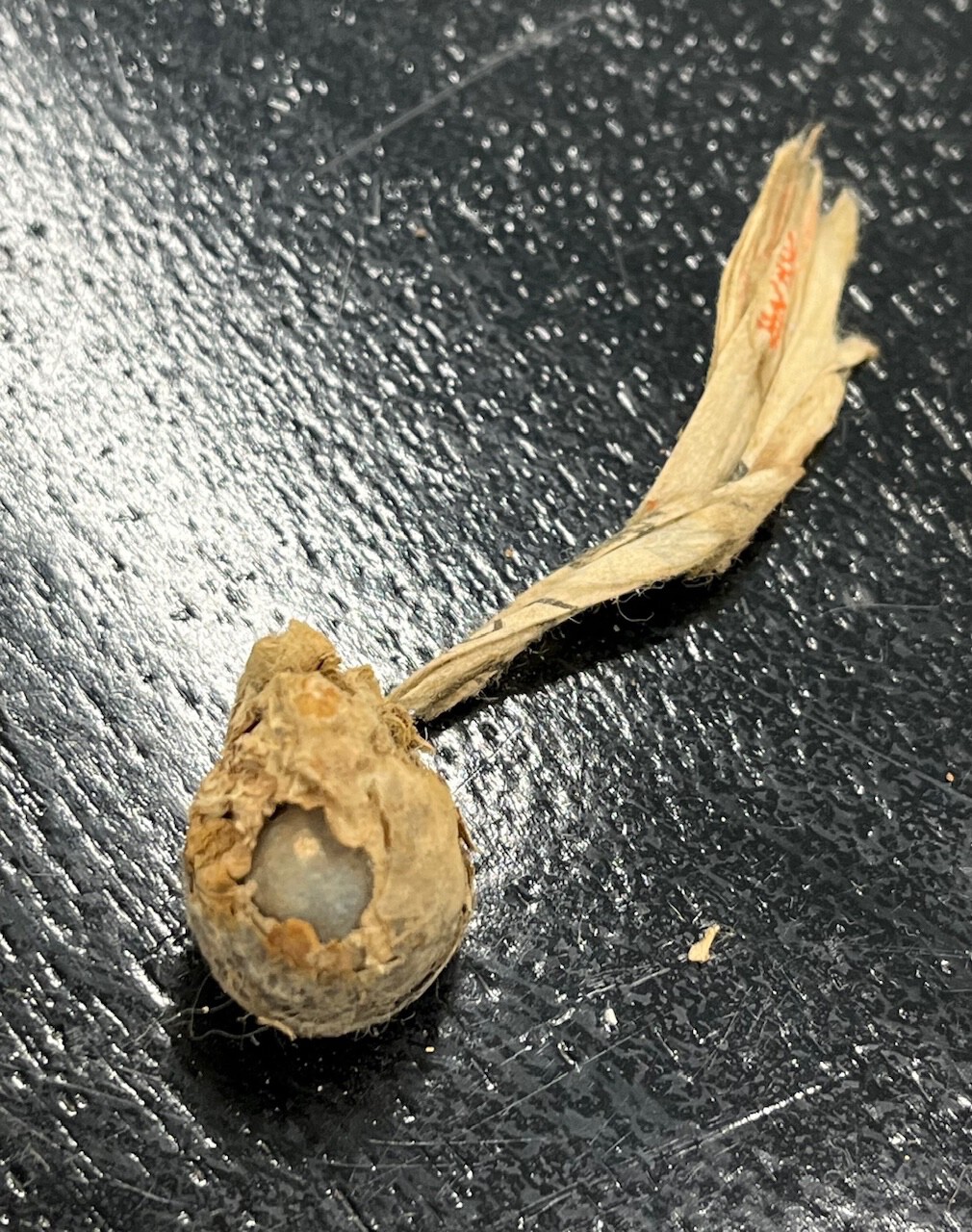
Today in a pile of old Japanese armor related bits I spotted a small plastic bag containing a lead ball wrapped in paper. Pretty sure this was a pre-patched ball. Not mine, but I took a quick photo while I had the chance.
 1 point
 -
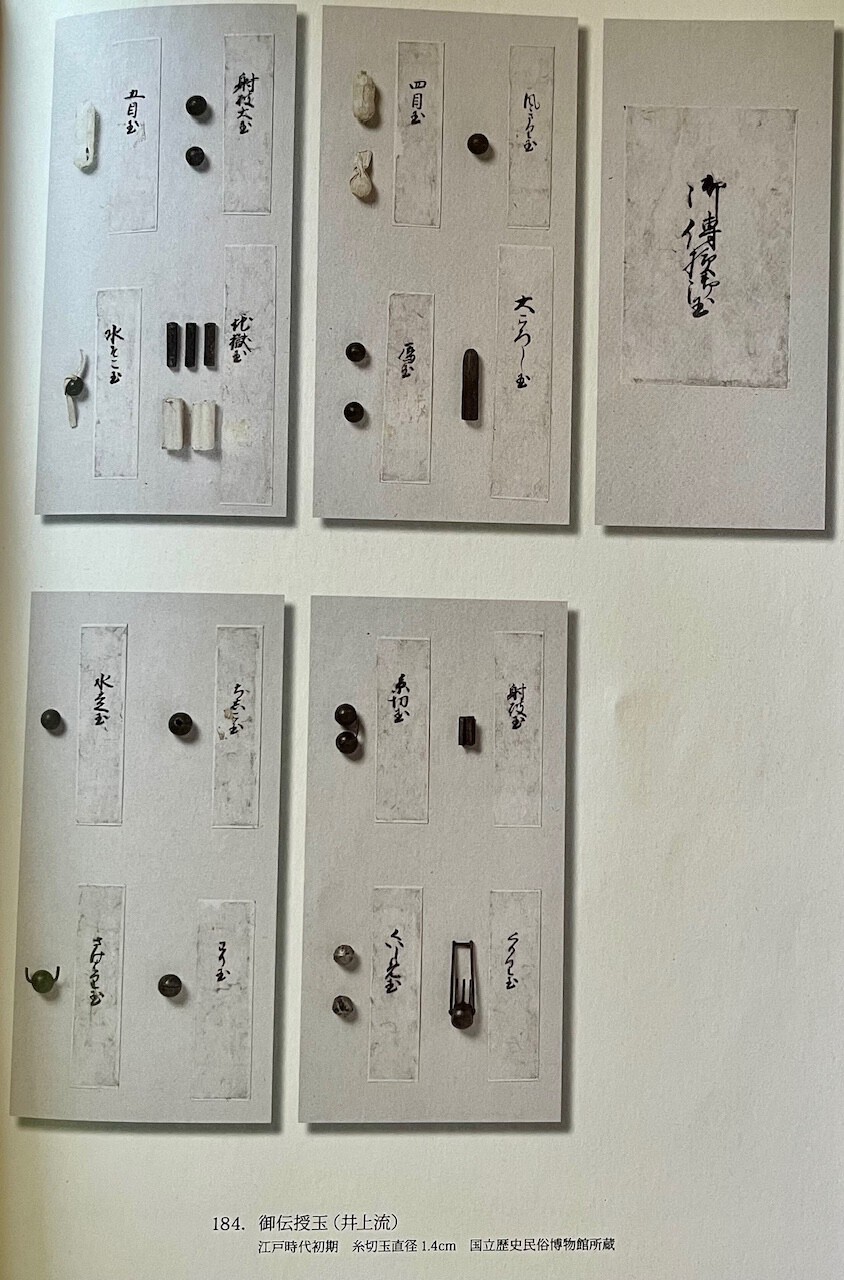
Rolland, only just seen your post! Apologies. This is from Ogawa San’s Accessories book, p. 073, showing some Inoué Ryū gunnery school ball experiments from early Edo. These materials are preserved in the Kokuritsu Rekishi Minzoku Hakubutsukan. See patched ball mid top. The cut ball is 1.4 cm in diameter.

 1 point





















This leaderboard is set to Johannesburg/GMT+02:00