All Activity
- Past hour
-
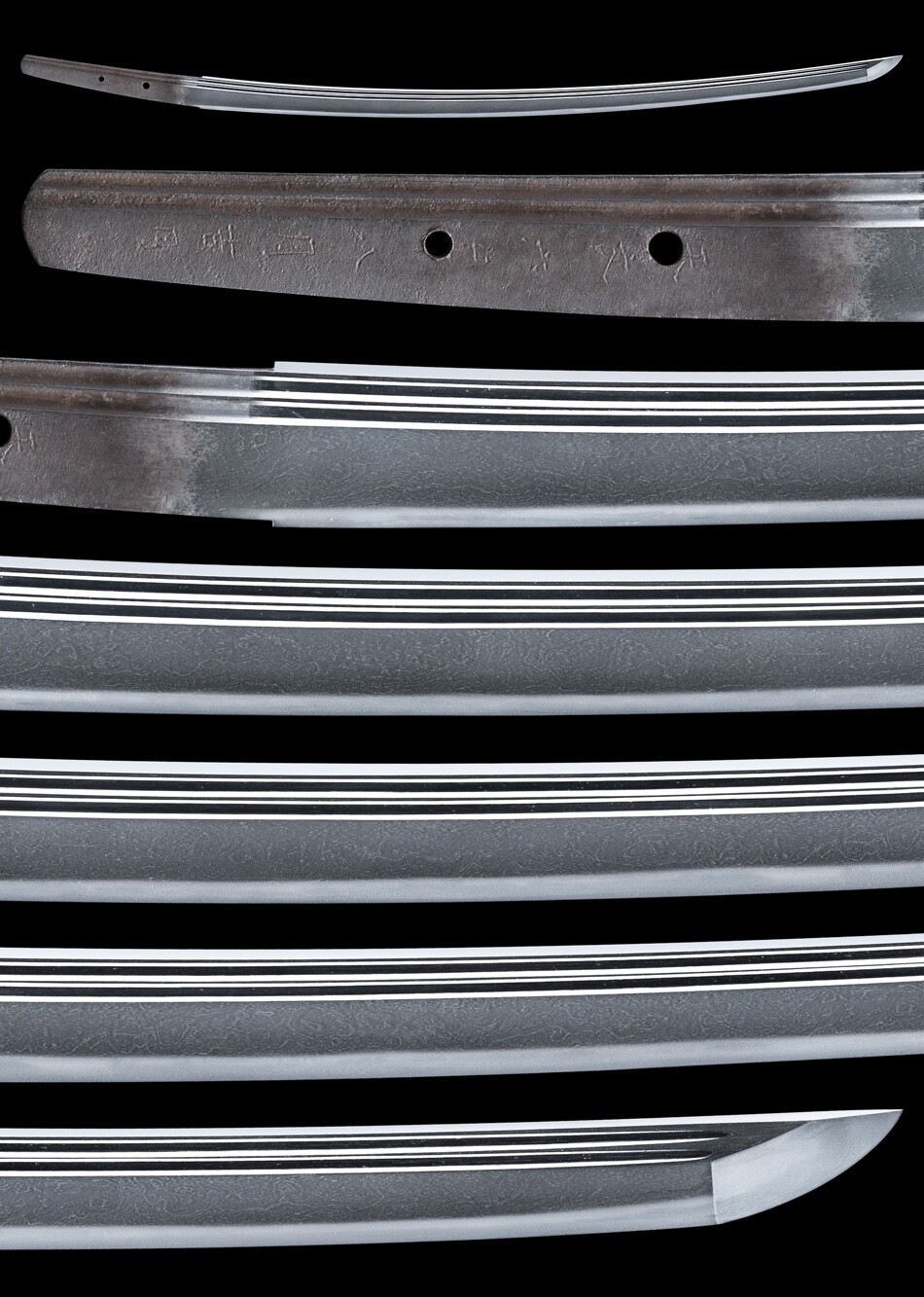
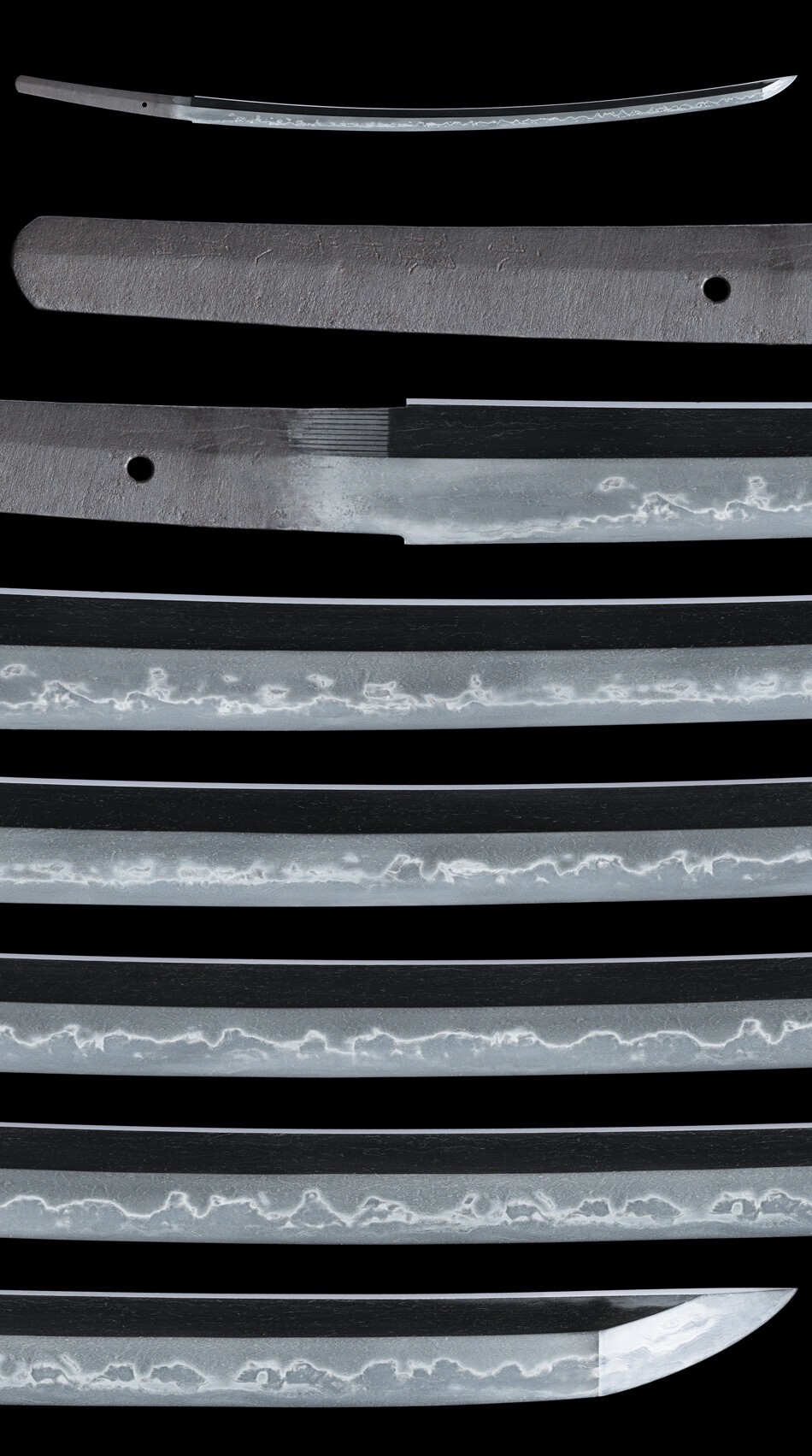
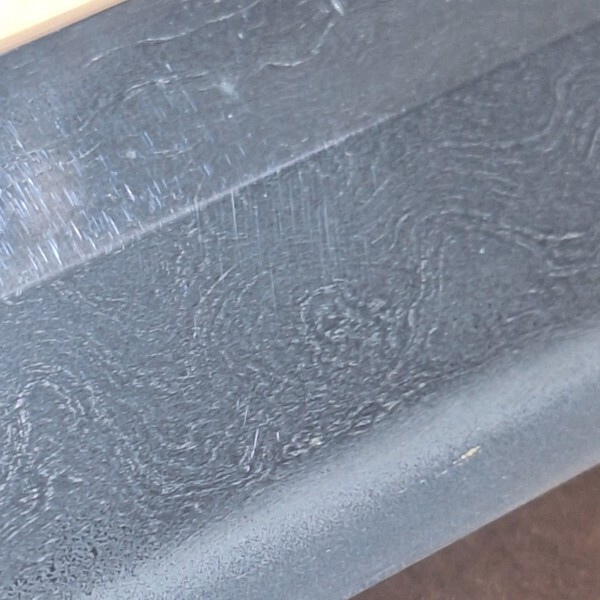
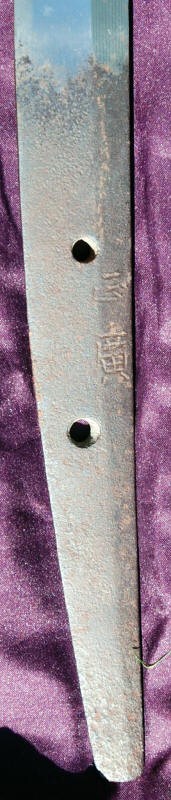
I made a purchase! I made a 3.5 hr drive and viewed multiple swords in hand at a member of this forum's home. I ended up purchasing a 26 inch Daito papered by the NTHK-NPO in 2019 to 7th generation Masahiro 1573-1590. But the blade has the potential to be much older. According to Soshu Den Museum records. Masahiro did not sign as such after 1553. When he took the name, Tsunahiro. The form, length, and grain patterns and activity do not really match later Soshu works, but earlier. The nijimei signature is, as well, non existent in Tensho Masahiro swords. It has a partially polished out Buddhist prayer horimono. A previous owner (whom sold this blade on this forum 5 years ago). Thought the horimono might have been engraved in late muromachi period. I am under the impression that the NTHK-NPO may have classified it as a 7th gen. Potentially due to having lack of reference for anything older. And chose a "safe" designation. I checked Soshu Museum's records. The mei, as well as the forging patterns they desrcribe. Do line this sword up better with 2nd generation Masahiro (1393-early 1400s). Or something made in the 1400s. I would think the Japanese NBTHK would have a far better reference collection to nail down the date better. But also, I not doubting the NTHK's expertise. Just curious why a Masahiro blade would get made in such an old style, with a Mei that hasn't been used for generations, in Tensho? Maybe special ordered that way? There are a few ware up front. Which would knock it down a peg or two. Some signs of use. And it has a few smudges that may polish out. But overall, I am very happy with it. Late 1500s or late 1300s. It's is a very nice work. And a great first blade *i may add some more photos if interested.



- Yesterday
-
What about horimono? Maybe someone else was doing it? Compare to other blades with bo hi of his forging
-
That Yosozaemon was absolutely insane. I have 2 nice ones I can show from Bizen, Sengoku era. 1. Gorozaemon no Jo Kiyomitsu 1537 2. Bishu Osafune Sukesada 1567


-
Adam Savage checks out a sword
PNSSHOGUN replied to Brian's topic in General Nihonto Related Discussion
If memory serves me right these were purposefully cut at that angle to allow a slight tension to avoid falling out. It would also allow easier removal as the handles sit further away from the Fuchi. You will find this detail on many good quality Koshirae with Kozuka. -
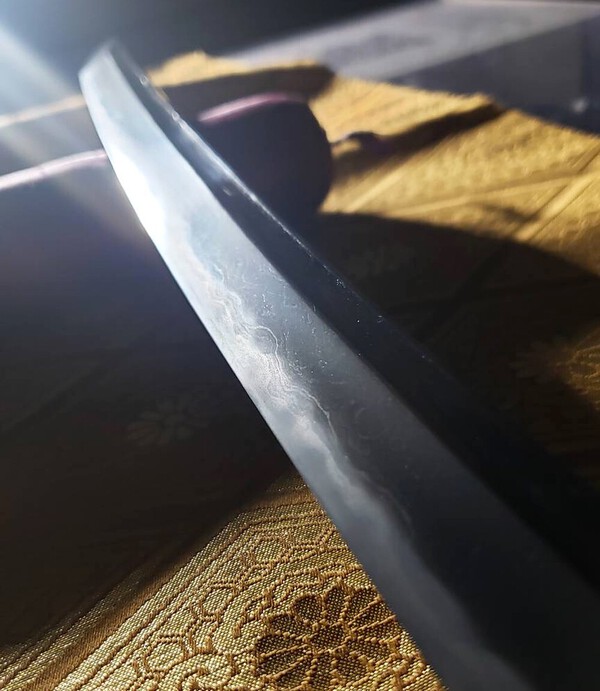
All very possible reasons. Does anyone by chance know of anything similar from Naotane to compare to? Maybe it was something he did on other specific blades also? Maybe at the request of the customer? @PNSSHOGUN good question, this one is actually Soshu style, so yeah that would probably rule out Ichimonji @Natichu sure - check below.


-

NBTHK TOKUBETSU HOZON HOKKE KATANA w. 2 Koshirae
JakeNYC replied to JakeNYC's topic in Swords and Edged Weapons
Sold- ty! -

2nd Tanegashima - help again please.
Alans replied to Alans's topic in Tanegashima / Teppo / Hinawajū
Spot on Lars and Piers - I managed with callipers to measure further down the barrel, and indeed it is 13mm! Thanks again for your valuable information. -
sold, please move to archive, thanks Oli
-
Wow, very nice. I think Bruno looks for a Smith from the Kato group. Sukehiro was the nephew of Kato Masakuni.
- 1 reply
-
- 1
-

-
My Tomita Sukehiro is a sword with a flamboyant hamon. It has some scratches and would benefit from a polish. However there is a lot to be enjoyed without. Date: koki ni sen roppyaku ni nen gatsu (1942) Nagasa: 68,58 cm Sori: 1,27 cm Sukehiro was trained by his grandfather Kato Sanekuni and worked as a Rikugun Jumei Tosho during WW2. He was rated 1 million yen. This sword is in need of a New home. It is priced at €2100,-


- 1 reply
-
- 4
-

-

-

-
Great acquisition. Congrats to the buyer!
-
--SOLD-- This one is going to a good home, and I'm going to miss it.
-
more soon......

-
I wanted to post a brief follow-up and clarification to my original introduction, as further close study of the blade and mounting details has led to a more precise understanding of the sword’s remounting history, specifically regarding the second mekugi-ana. In my original post, I described the koshirae as a coherent mid-Edo remounting, and while that assessment remains broadly correct for the visible fittings themselves, closer examination of the nakago, mekugi-ana placement, and patina has refined when a critical remounting event may have actually occurred. The blade has two mekugi-ana, and after spending a frankly obsessive amount of time studying their placement, finish, and internal patina, it is now clear that the second mekugi-ana was not a late or decorative alteration, nor a simple reinforcement measure, but the result of a deliberate, planned remounting event. Both holes exhibit uniform age and undisturbed patina, with spacing that reflects a change in tsuka geometry rather than emergency field refitting or later display-driven modification. This I believe strongly places the addition of the second mekugi-ana in the late Momoyama to very early Edo period, most plausibly the Keichō era (circa 1596–1615). In other words, the blade appears to have been remounted structurally right at the transition from endemic Sengoku warfare into early Tokugawa peace, rather than centuries later. What this suggests, and what I find particularly compelling, is continuity of ownership. Rather than being replaced, discarded, or relegated to storage, this Sengoku-era blade seems to have been retained, trusted, and thoughtfully adapted as its owner survived into a new social and military reality. The later Edo-period fittings, including the Maruyama Sōzan work, are best understood as subsequent aesthetic or preservation updates, fitted to an already established tang configuration, not the moment that necessitated the second mekugi-ana. Importantly, this interpretation also addresses a common misconception I initially shared, namely that two mekugi-ana necessarily indicate “wartime reinforcement.” While extra holes do appear on Sengoku blades, they overwhelmingly reflect adaptation and remounting, not a doctrinal preference for dual pegs. A properly carved tsuka with a single well-fitted mekugi was standard even at the height of warfare, and the evidence on this blade aligns with planned remounting rather than battlefield expediency. Nothing about this refinement diminishes the coherence or quality of the koshirae as it exists today, but it does sharpen the sword’s life story in a way I find deeply satisfying. It reinforces the idea that this was a working blade that earned its keep, survived its era, and was carried forward with intention. I appreciate everyone’s patience indulging this level of detail, and I’m grateful to be part of a community where these nuances are appreciated - especially as part of the learning process. I'm also sure some other experts here may have already thought this, but hey, as a newbie to this, it's a realization to me lol. I’ll be sure to share higher-resolution images once the sword arrives and I can document it properly in hand. Thanks again, and I look forward to continuing to learn here. – Alex
-
Original WWIIYasukuni hanging scroll wooden box
Volker62 replied to Volker62's topic in Translation Assistance
again many thanks for your kind help Moriyama san! -
Does anyone here find it odd that, for the high quality of koshirae shown in this video, that the slots in the saya for the kogai and kozuka aren't cut properly near the koiguchi? You can see that the kogai and kozuka sit at an angle in the saya.
-

Importing Nihonto through US Customs and Tariff info
Gerry replied to MEENag's topic in General Nihonto Related Discussion
I received a sword from Tsuruginoya via UPS in late Aug 2025, and it came through without issue. All I had to do was to pay for the tariff through UPS. -
Nidai Yamakichibei for SALE $1250 Tokubetsu Kicho papers + very fine raised box 8.21cm x 7.97cm x [3.35mm thick] If you have any interest in Owari iron, I fully recommend this one. I've been having a hard time letting it go since acquiring a Juyo nidai. Ask any questions. Per Steve W's guidance and comparison with my Juyo example, I believe that it is nidai work. I got this one out of the woodwork years ago, and I'm probably grossly underpricing it. Let us see how the market feels about old iron these days. I believe the lead plug is original. Under magnification, there is a good bit of lacquer remnants. USA domestic shipping is free. International shipping and Customs, we talk about.


-

Adam Savage checks out a sword
Lewis B replied to Brian's topic in General Nihonto Related Discussion
The kozuka and tsuba are exceptional quality. Mr Mansfield had a very good eye for the aesthetic. -
Hello Nick! I'll reach out to you in just a moment ~Chris
-
 If together they weigh 6.5-7g and ~20k gold, that is almost spot price just for the metal. Tempting.
 -

Adam Savage checks out a sword
Jussi Ekholm replied to Brian's topic in General Nihonto Related Discussion
I don't know that much about koshirae as I focus on the blades. However to me in this case the sword blade is pretty uninspiring and the fittings are very high quality. I would dare to think that there would be extremely few daishō sets with full Miboku fittings, so I would think they are very precious. Yokoyama Sukesada blades in this case would not be that interesting considering the fittings. The interesting part to me is that it seems they were given to museum in 1936 so they were in the US before WWII. I am not sure who this Howard Mansfield was but he seems to have had a huge collection of extraordinary Japanese Fittings, including another daishō set this time full Konkan fittings, several Natsuo work etc. top tier artists. Just write his name into MET search and enjoy some spectacular sword fittings. -
Thank you for the links. I’ll look into each of them. This sword sold within an hour of me posting it on here. 😂
-
Indeed, a very nice hanbo, nonetheless.
-
Nick, Other than the second ana, this one is a really good example of a standard WWII officer sword. The large Seki stamp puts the date between 1940 - 1945 with the most likely date of 1942.