Matsunoki
-
Posts
3,778 -
Joined
-
Last visited
-
Days Won
70
Content Type
Profiles
Forums
Events
Store
Downloads
Gallery
Everything posted by Matsunoki
-
Honestly it’s impossible to tell you much from these images. It looks like an old blade that has been shortened and carried in WW2. Personally I struggle to see any trace of a Mei and if it has been shortened then much, if not all of any Mei could be lost. These images could be hiding something really nasty like hagire (crack through the hamon), forging or hardening flaws. Can’t even be sure it has a hamon at all. Even the kamon could be added for effect rather than be genuinely period. The two kamon are different! Asking us to judge a sword from these images is not going to give you anything reliable. Its a crap shoot if you buy it - so much could depend on if you know and trust the seller and if the seller knows what he’s talking about.
-
In what way? Unhardened? Explain please.
-
Good Meiji pieces are now starting to be truly appreciated……about time!!! https://www.bonhams....8-1912-circa-1890-3/
-
Looks like a genuine old sword that has been heavily and possibly very badly “improved”. The saya lacquer looks to be a fairly common crushed abalone and pine needle finish with what might be some old Handachi fittings (the suspension fitting looks wrong) The blade looks acid polished maybe The tsuka has been badly re-wrapped The blade looks to have extensive hadaware in the shinogiji (openings in the forging above the shinogi) Gives the impression of a “bitsa”…..bits of this and bits of that. …..but better clearer images needed including the nakago.
-
Kanenobu. Signed Noshu ju Kanenobu.
Matsunoki replied to Swords's topic in General Nihonto Related Discussion
Please don’t pound anything with a hammer and a block of wood until you know what you are doing. If you were pounding the tsuka (what you call the scabbard!!!) with the mekugi still partially wedged you are likely to break or bend something. Also as said earlier, the mekugi often have a gentle taper on them so they are intended to come out one way, not both ways. Try it gently from both sides as Brian suggests with a chop stick and see which way it wants to emerge. From your two images to me it looks like it will come OUT of the hole in the top image as the other is partially covered by the ito. It also helps if your pics are in focus. -
Kanenobu. Signed Noshu ju Kanenobu.
Matsunoki replied to Swords's topic in General Nihonto Related Discussion
What you are saying makes little sense. Please show us an image of what you are trying to do. The tightness of the wrapping should not be an issue in removing the mekugi. -
Saw this and thought of you….. https://www.the-sale...635555434e905b3e1e49
-
Barry, signed? Not common to find two of these together. personally never seen one. Looks like real inlay rather than just multipatination so a ton of work involved?
-
Cmon Piers, you can’t tell without show. Whatever it is, I bet I’ve bought worse! Damn, missed your reply above. Id have bought it for sure.
-
A couple of new (to me) ones on the way
Matsunoki replied to Mich's topic in Military Swords of Japan
Was hoping you’d got an old blade but sadly not. The military sword guys will tell you all about it. Looks better than the first one! -
A couple of new (to me) ones on the way
Matsunoki replied to Mich's topic in Military Swords of Japan
…and #2????🙂 -
Has anyone in the US bought kumihimo cord from Japan?
Matsunoki replied to John C's topic in Other Japanese Arts
I’ve dealt with the eBay seller matsu-kaze.Japan, he is reliable and trustworthy and sells a variety of inro cord. https://www.ebay.com...pan&_oac=1&_nkw=inro -
The red and gilded kamon became very common on several of the more prolific Satsuma pottery kilns output throughout Meiji. By that time it had little “official” significance beyond trying to influence the wealthy gaijin of the time into believing it was somehow “important”. Excellent early marketing.
-
The left hand column in second pic is a rather cursory rendition of Hododa……a well known mass maker of Satsuma wares.
-
Two Swords - As Found - Second Sword
Matsunoki replied to Fusilier's topic in Translation Assistance
The en-suite metalwork fittings on this sword are called “Han dachi” or “half Tachi” ie very similar to Tachi mounts but on a sword worn edge up. It was a popular and inexpensive style of mounting very often found on daisho…..so this could well be the Wakizashi from a daisho. High quality ones could be shakudo but far more common were a different heavily patinated copper alloy that could be made to resemble shakudo and with simple linear gilt borders. The fuchi appears missing here sadly. -
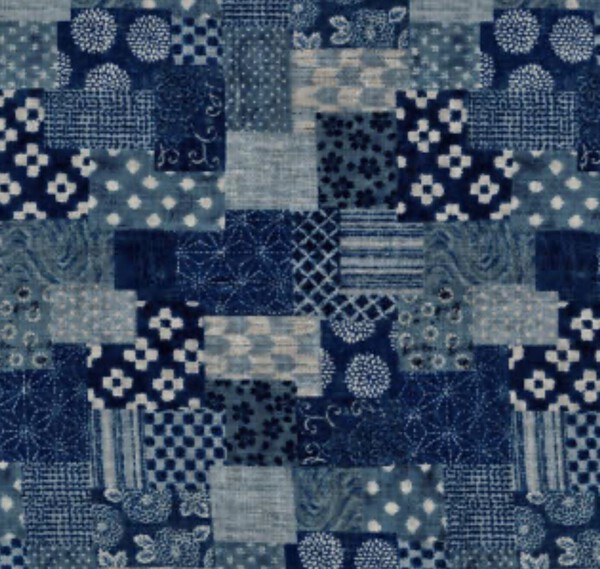
…..I still think something like this is a possible inspiration candidate. If they are intended to illustrate different punched designs why repeat just a few of them? Dunno
-
Mark, you could go on eBay.com and search for “shakudo fuchi kashira” You will have to ignore some Chinese crap but if you persevere I bet there’s something lurking on there. I just had a Quick Look and a few seemed likely candidates.
-
Painting of a samurai from the 1920's or 30's
Matsunoki replied to Robert S's topic in General Nihonto Related Discussion
Because it was normal to wear Tachi/Tanto daisho.Also the tsuka of the short sword looks like a classic tsuka for a Tanto and with a very small Tanto style tsuba. The Koshirae look to be depicting true daisho mounts and Tachi/Tanto is the classic pairing. But, without being able to examine the swords you are free to interpret it however you wish. -
Looks more like a textile patchwork effect. Doesn’t look cubist to me.
-
Kevin, the price and the value of perfectly genuine swords can vary hugely from a few hundred£ all the way to hundreds of thousands. No two swords are the same and the value depends on many inter-related factors.
-
Painting of a samurai from the 1920's or 30's
Matsunoki replied to Robert S's topic in General Nihonto Related Discussion
Tachi and Tanto were often worn together and the smaller sword here looks like a Tanto whilst the larger is a Tachi. -
To my eyes, that Mei looks to have been on that nakago for a very very long time. Personally I wouldn’t dream of removing it . Jussi’s advise above is spot on (as usual!)
-
For example……
-
Maybe the design is a rather stylised Nami no Chidori……waves and plovers…..a very popular subject?
-
Mine is a Tory, soon to be out of a job and out of power and thus a waste of time…..no change there. This type of headline grabbing political vote grabbing woke ignorance and disregard just shows how utterly stupid they are. To hell with law abiding citizens. ……and as for Parcelforce…..who owns them?…….the Govt! - and I suspect their knife ban is the result of a back door nudge from the Govt.