


uwe
-
Posts
2,169 -
Joined
-
Last visited
-
Days Won
2
Content Type
Profiles
Forums
Events
Store
Downloads
Gallery
Everything posted by uwe
-
Hi and welcome Mark! All I can do is confirm the translation “兼元” (Kanemoto). Obviously one of the many Kanemoto’s from Mino province. I’m sure the sword scholars here can help you along, as far you provide more pics of the blade. BTW, the tsuba (sword guard) was made by “大高寛長” (Ōtaka Hironaga), a late Edo artist from the Bushū-Itō school. Now I leaf the stage to the more knowledgeable….
-
It looks like “豊州高田住守行” (Hōshū Takata Jū Moriyuki)
-
It depends we’re you draw the line between very good and top It’s an later Edo period “interpretation” of a medieval armor…
-
No. 2. Fun auction to support the forum. Runs until 3 November.
uwe replied to Bugyotsuji's topic in Military Swords of Japan
Great undertaking Piers 👍 -
Yes Andrew, it’s not unusual to find numbers or combinations between numbers and letters on parts of lent armors (okashi-gusoku) referring to the respective inventory system. Mostly done in red and often hard to read. Honest armor, like it!
-
I admittedly struggling with the second character. The first is "中" (chuu) which means as much as middle or medium. So I guess the writing refers to the size of the kote....
-
I guess it reads rather “Seki jū Okada Kaneyoshi saku” (関住岡田兼義作).
-
The provided description is “interesting”….I don’t dare a comment 🙄… 🤓
-
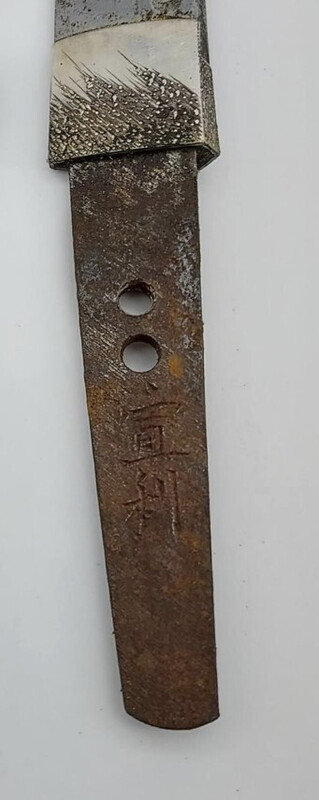
It's "宣利" (Nobutoshi) !
-
Hi Louise, at the quick. It’s a Kuwagata-Maedate. Modified over time, the oldest form of tatemono for Japanese helmets. Nothing to do with a clan or family. There is one book dealing with maedate, as far as I know. Unfortunately only in Japanese language. I can go more in detail this evening if nobody chimes in….
-
Tang of Kai Gunto - need help with translation
uwe replied to Kolekt-To's topic in Military Swords of Japan
First five are perhaps “濃州住栗木…..” (Nōshū jū Kuriki…) -
It’s called “Maru ni mitsubiki”. Unfortunately used by many families, for example: Abe, Asano, Kawasaki, Sabae, Kitsukawa, Sakuma, Takaki, Tsugu, Kitanokoji, Manabe….etc…etc. In a modified form by: Ashina, Furuta, ….etc.
-
Let me add “Matsudaira” (Tango) and “Honjo” (Mino)…
-
It seems to be “濃州関住星谷義長” (Noshū Seki Jū Hoshitany Yoshinaga)!
-
Thanks for the add Brian!
-
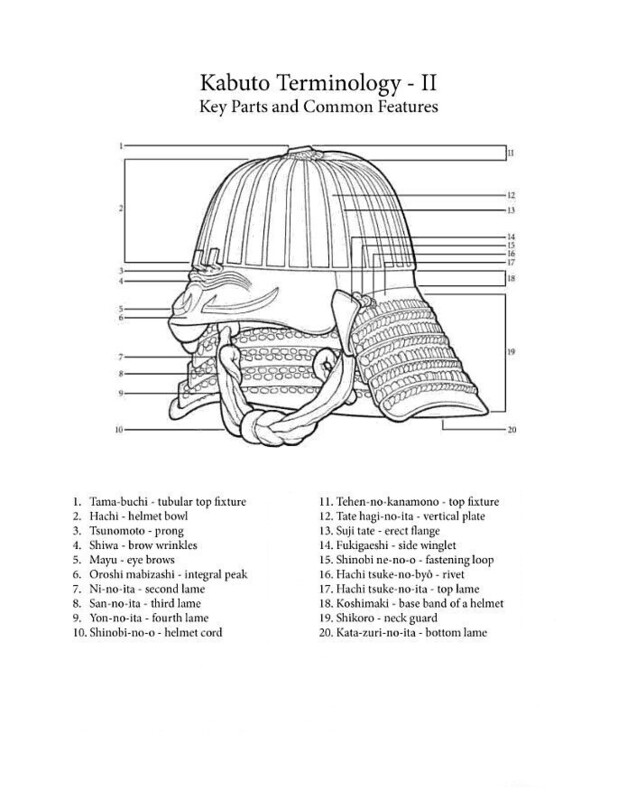
Hi Michael, sorry for my shallowness. A kaji kabuto is simply spoken a firemans helmet, worn by samurai while performing this spezial duty. The sketch below should introduce the main terms for kabuto: NB:- Kabuto sketch from the Watanabe Collection book by Trevor Absolon and David Thatcher And now the mon. Mon means basically family crest. Unfortunatly this particular crest was used by many, many families over the centuries. So it will be almost impossible to pin down the "original owner"...sry!

-
It’s a Kaji-kabuto with “hidari mitsudomoe mon” on the fukigaeshi. Nice find!
-
Jinja Shinji invitation
uwe replied to Bugyotsuji's topic in Sword Shows, Events, Community News and Legislation Issues
Agree -
Yo are right with the date Rob! ”昭和十八年….” (Shōwa juuhachi nen… = 1943)
-
Welcome Caroline! Your first Tsuba seems to be signed “小田原住正(勝)作”, (Odawara jū Masakatsu saku). Not sure about the second character of the smiths name (only the left radical is legible), so I’ve put it in brackets. Will try the second one this evening, if nobody chimes in….
-
Looks like “正阿弥重信” (Shōami Shigenobu)!
-
Hmm…can only trace both in Edo or Nara…? Sorry for taking over the kabuto-thread, Alain! We should discuss this elsewhere…
-
Seems to be signed “壽命” (Jumyō) “十六年”
-
Yes Luc, although we don’t know the original from author (Matsumiya Kanzan) but we know that the copies bearing mistakes, I doubt that is the case in this respect. That makes the problem even more interesting… So I’m afraid we have to shed some light on the Nara based katchū-shi at that time (that said, a lot of translation work ahead )
-
Hi Alain, yes, I know the entry about the subject in the copies of the "Meikô zukan" and I think the popular belief is based on the information given in "this book" (or better in the copies and their copies... ). Also Iida san's book relies on this work. What makes me wonder are two "facts". 1. It is said that the Iwai (岩井), going back to Yozaemon (与左衛門) and Genbei (兵衛), been made mainly two styles of menpô. The Oie-bô and the Etchû-bô. Like mentioned in the MZ. Well, that means, that they had focused on the one hand of the high quality (and rarely seen) Oie-bô and on the other hand of the Etchû-bô. An menpô in a competely diffrent form, adorned with yasurime (the Hosokawa thing) and executed in diffrent qualities. Thus totally contrary to the fine and feminin Oie-bô, IMHO. 2. The latter ones, or at least the basic shape of this type are seen very often. Therefore it can be assumed, that they were made in large quantitys, probably during the whole Edo period. Admittedly, also without their trademark, the yasurime. The above in turn forces the comparison with the so called Nara-bô of the Haruta (春田) school. A "mass produced" menpô which could be adepted to the respective customer's request. Unfortunately, almost all extant specimens are not signed. That makes an accessment considerably more difficult. Furthermore, and that is my main problem, the few signed pieces all refer to Haruta...




