Ray Singer
-
Posts
5,376 -
Joined
-
Last visited
-
Days Won
147
Content Type
Profiles
Forums
Events
Store
Downloads
Gallery
Everything posted by Ray Singer
-

Late Kamakura Yamato Taima blade - Tokubetsu Hozon
Ray Singer replied to Ray Singer's topic in For Sale or Trade
Thank you Robert, I just sent a reply to your email. Best regards, Ray -
Ed, you can see here for a list of all Bizen smiths whose mei end in Mitsu. https://nihontoclub.com/view/smiths/list?id_op=%3D&id=&name_op=starts&name=&kanji_op=ends&kanji=%E5%85%89&province=52&start_era=All&school_nid=All
-
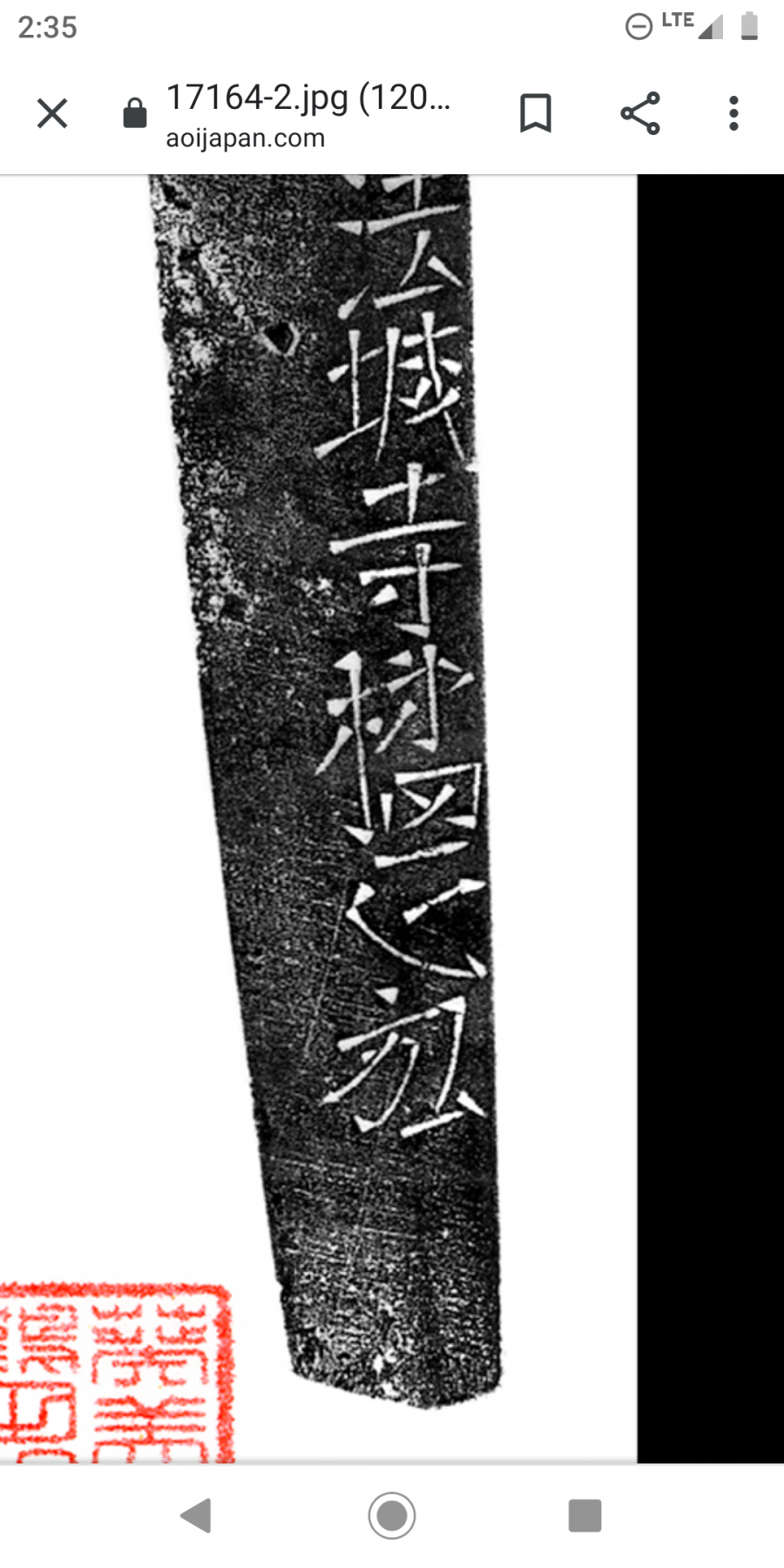
To me, the closest is 守光作.
-
At a guess, this is trying to read Osafune Sukemitsu.
-
Please help to identify these sword makers for further research
Ray Singer replied to ichiku's topic in Nihonto
#3 may be by Bushu Edo Kanesada. -
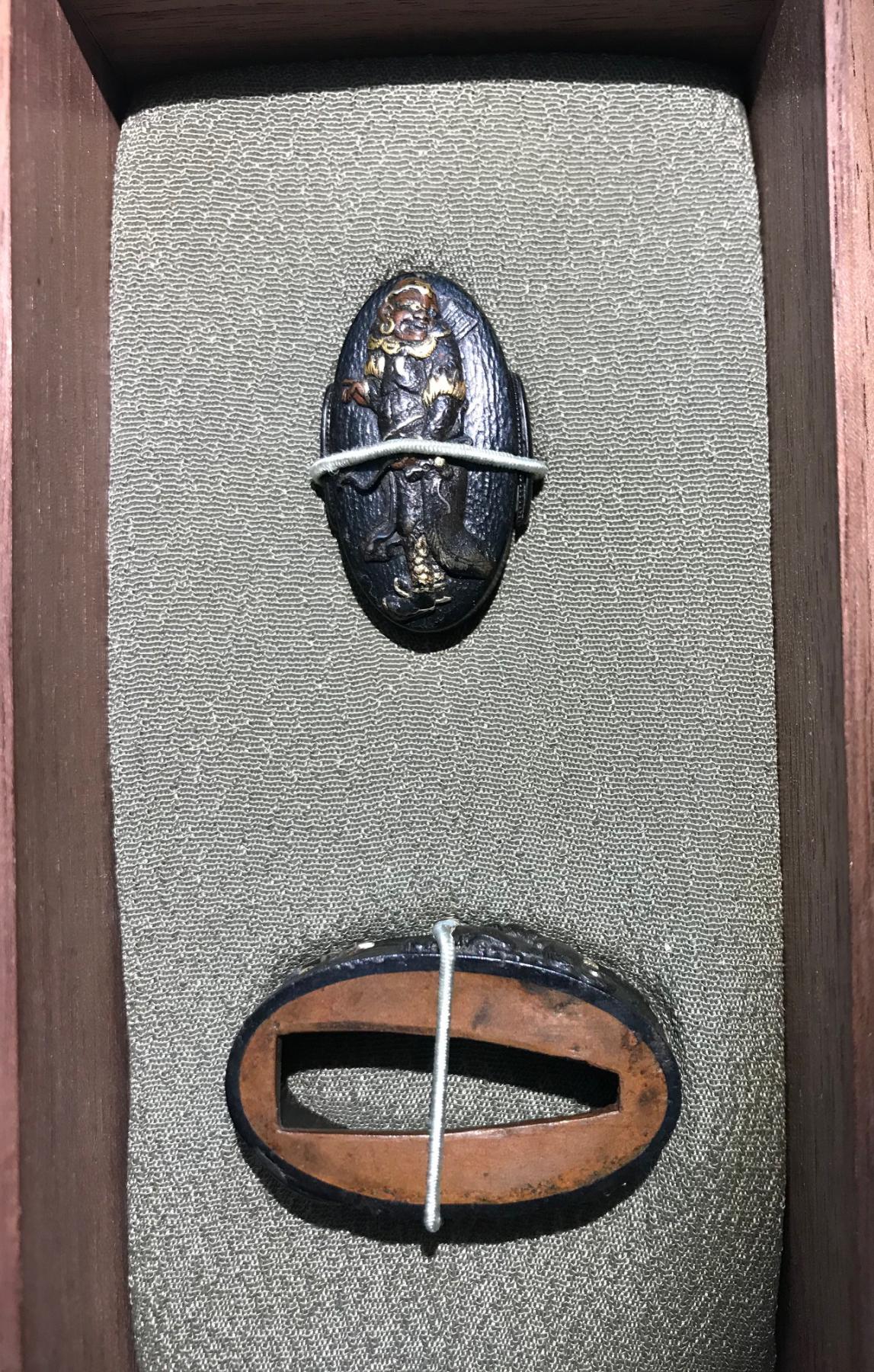
Listing three nice pieces for a friend. Please see below for description and prices. For any inquiries, please send an email to raymondsinger@gmail.com. Best regards, Ray 1. Fuchi Kashira – unsigned Tetsugendo school Motif: Hou Yi Chinese archer with Dog Dimensions: Fuchi 37.8 mm (l) x 22.2 mm (w) x 12.7 mm (h) Kashira 31/7 mm (l) x 11.9 mm (w) x 7.1 mm (h) Very nice soft wax-like brown iron. Trademark of the school. Mint condition. Boxed $500 (plus shipping and PayPal) 2. Possibly Tosa Myochin (Higo utsushi) unsigned Motif: Baiku (Curving Plum Branch) Dimensions: 7,3 cm h x 7,2 cm w x 5 mm thick at rim Good iron. Deep black patina in great condition. Boxed $500 (plus shipping and PayPal) 3. Menuki – Possibly Waki-Goto Motif: Tora ni Take (Tiger in Bamboo). Shakudo with gold and silver highlights (eyes, dew, stripes…) Dimenions: 41.4 mm (l) x 16.6 mm (w) x 5.5 mm (h) The kon (small stem at the rear) have been removed but otherwise mint condition Fitted hako $400 (plus shipping and PayPal)


-
Luis, there is no doubt that this is an authentic Japanese sword.
-
The link above explains how to reseat the blade into the handle. Use a short length of bamboo chopstick to replace the removed screw.
-
Is that a metal screw? If so, there should not be one in the tsuka (handle). Typically this is a wood peg. Remove carefully so that you do not damage the blade. Hopefully there is enough extending out that you can grasp and remove.
-
And here is an example of the types of photos and angles which will be helpful to make an evaluation. http://yakiba.com/Wak_Mumei_3.htm
-
To begin, please see below for some guidelines on how to disassemble the sword. Go slowly, and use care not to damage the wrap or allow the bare blade to fall. http://www.nbthk-ab.org/swordcare.pdf
-
This does not appear to be a gendaito. I would lean towards the blade being shinto. There were a number of smiths who signed,l Kunitsugu, this will require some legwork to determine whether there was an authentic Kunitsugu mei and for which smith, however it appears that the mei was removed (rather than being deteriorated). Additional note, aside from the formation of the mei Masahiro the sword itself does not appear to be in the style of Shinto Hojoji.
-
8 December Heritage Auctions Sale
Ray Singer replied to Brian's topic in Auctions and Online Sales or Sellers
That was my thought as well Mike. I was glad to see that people had clearly done their own research, rather than simply buying based on the papers. -
8 December Heritage Auctions Sale
Ray Singer replied to Brian's topic in Auctions and Online Sales or Sellers
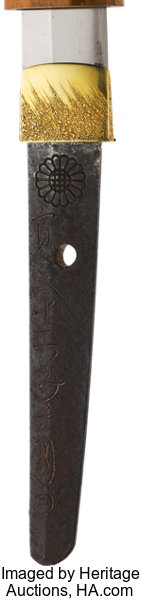
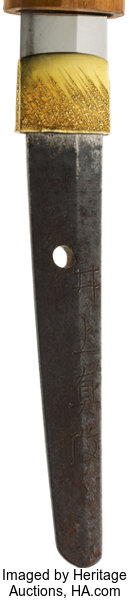
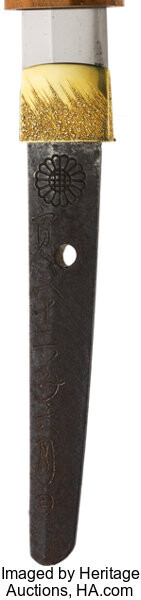
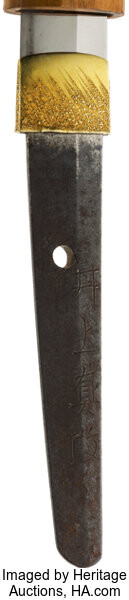
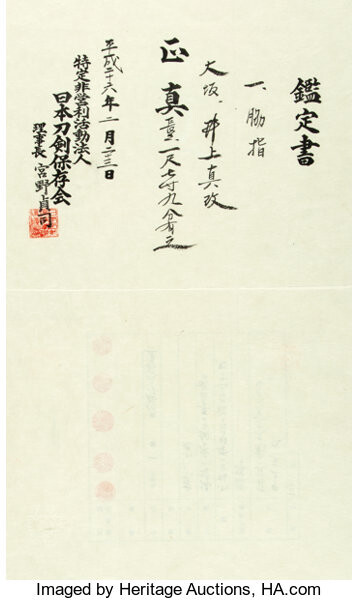
I am curious what others thought of the 'Inoue Shinkai'. The sword had NTHK papers and it appeared to have previous sold for $35,000. It sat on the Heritage website with a $4,250 Buy It Now price for weeks after the auction. To my eyes it appeared to be gimei, and was dated months before this smith was believed to have changed his mei to Shinkai.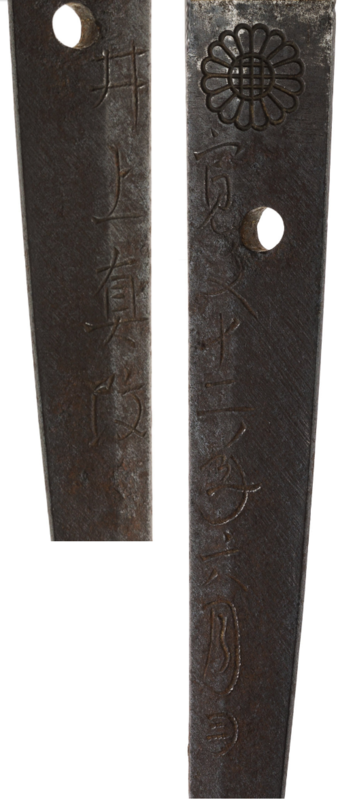
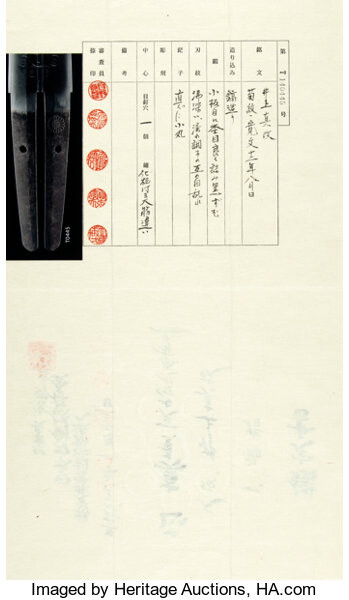

-
Hi Peter, this is signed with the typical signature and inscription of Shitahara smith Musashi Taro Yasukuni, and refers to the school's forging method. http://www.militaria.co.za/nmb/topic/22487-katana-made-by-musashi-taro-yasukuni/ Best regards, Ray
-
Interesting, signed Kunitsugu on the reverse.
-
An interesting sword that had a flurry of bids
Ray Singer replied to waljamada's topic in Military Swords of Japan
From the place where the bo-hi and soe-hi ends, I believe the partial mekugi-ana at the end of the nakago is the ubu-ana (which is why it was left visible). So, this was originally a larger koto blade... now o-suriage mumei. -
Please show the entire nakago, including the nakago-jiri at the bottom. I am not seeing evidence that it is suriage.
-
Yes, please see attached.
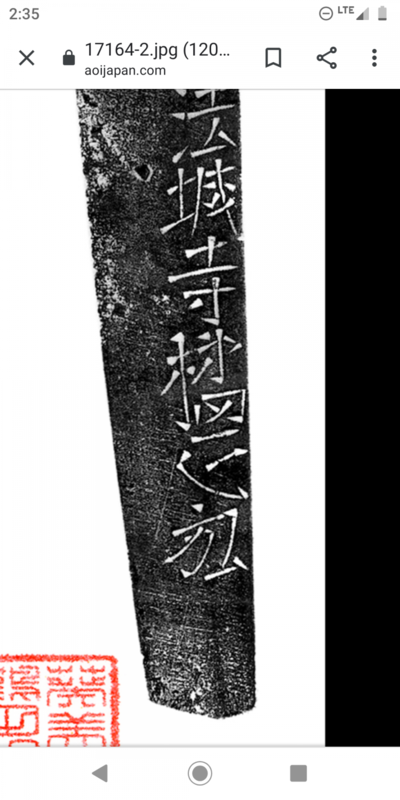
-
Kyo shodai Tanba (no) kami Yoshimichi tanto
Ray Singer replied to Ray Singer's topic in Sold Archive
Very glad that you are pleased, thank you Yura. -
More specifically, the mei is written in the style of Hojoji Masahiro.
-
John Tirado is the only sayashi stateside I have used for the past 20 years.
-
Yoshisuke
-
Please post photos. Best regards, Ray
-
My deepest condolences to his friends and family.