Bruce Pennington
-
Posts
14,289 -
Joined
-
Last visited
-
Days Won
170
Content Type
Profiles
Forums
Events
Store
Downloads
Gallery
Everything posted by Bruce Pennington
-
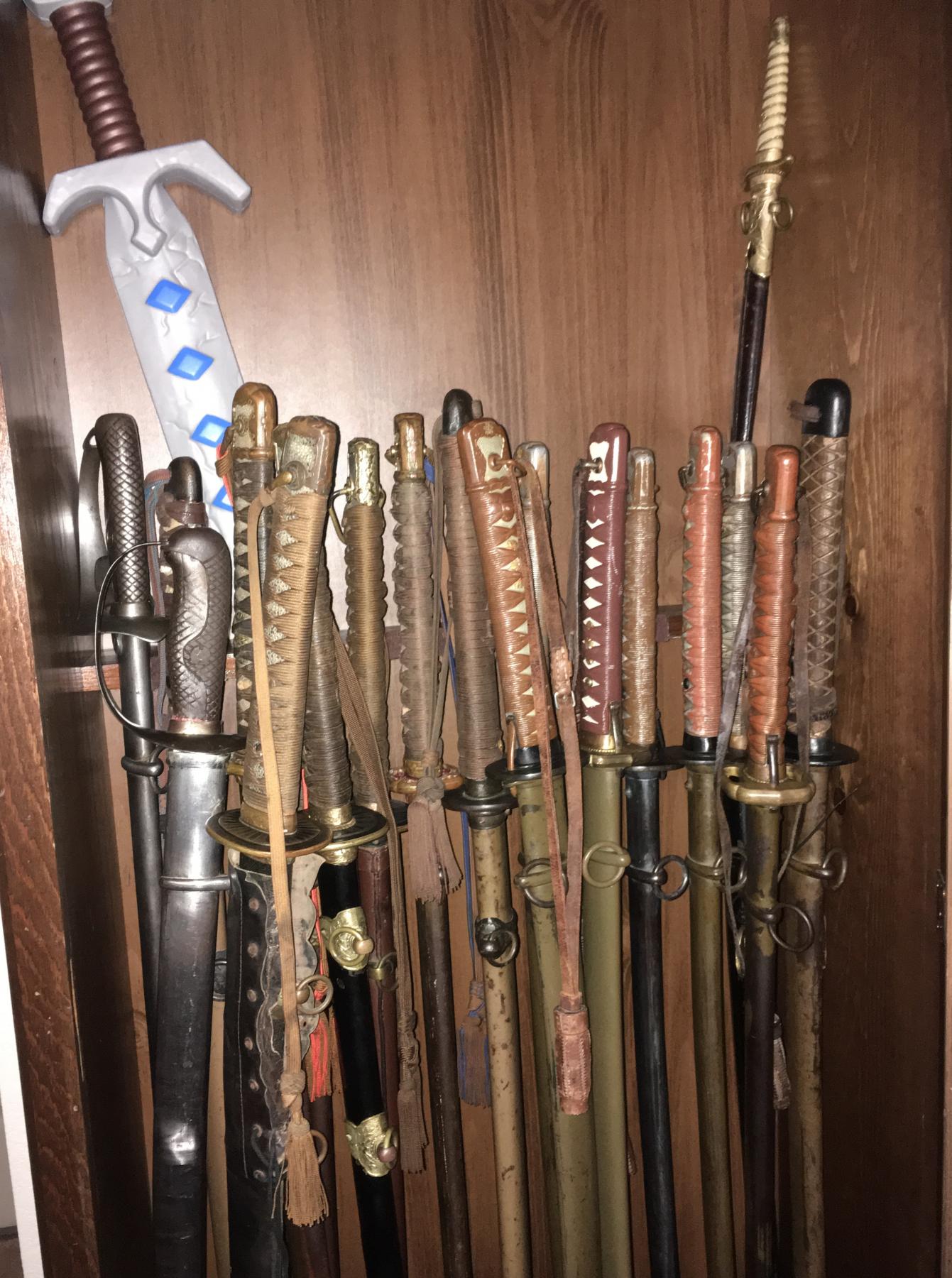
I was told it was a vet-bring-back from Patton's invasion of Sicily!
-
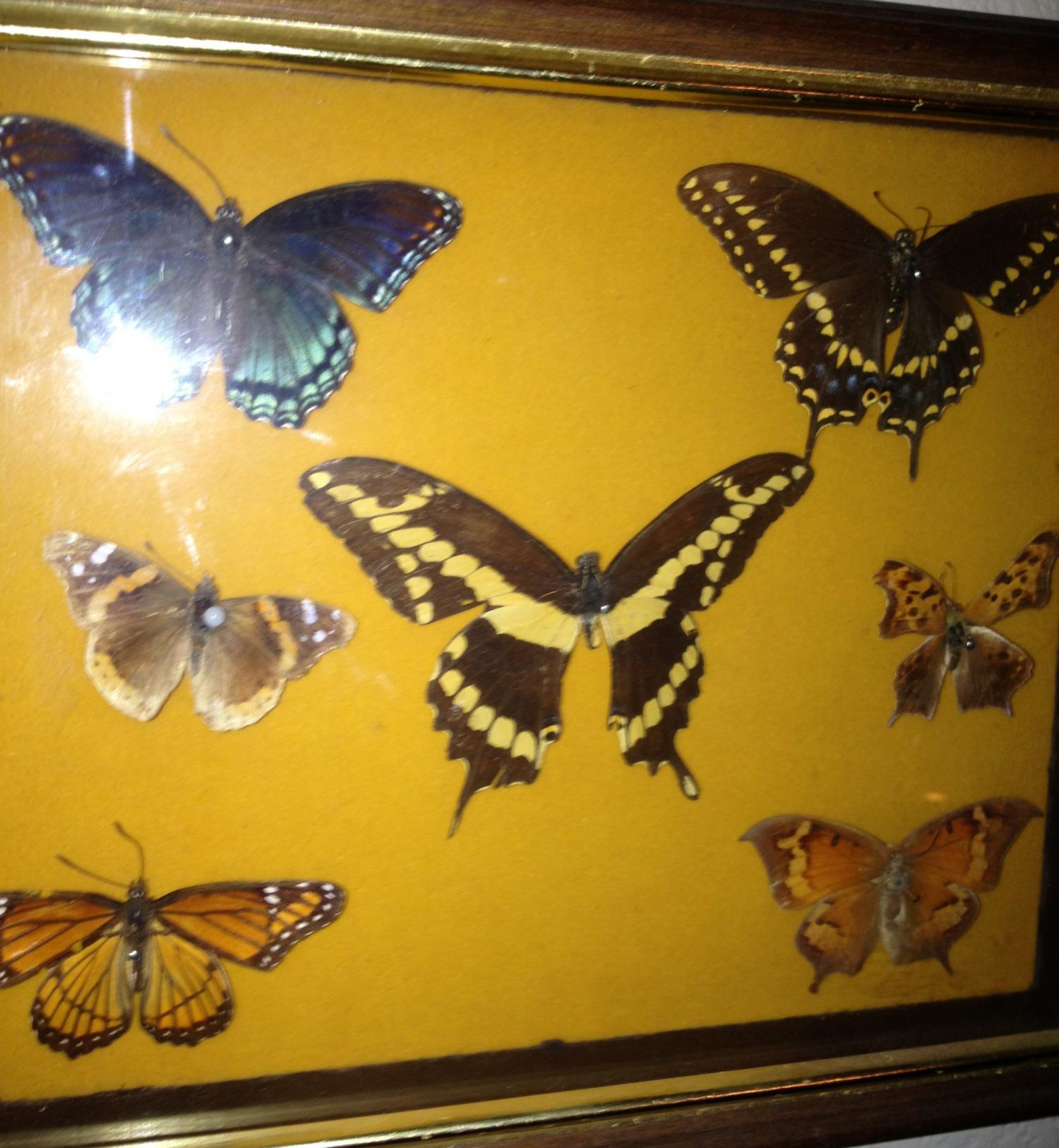
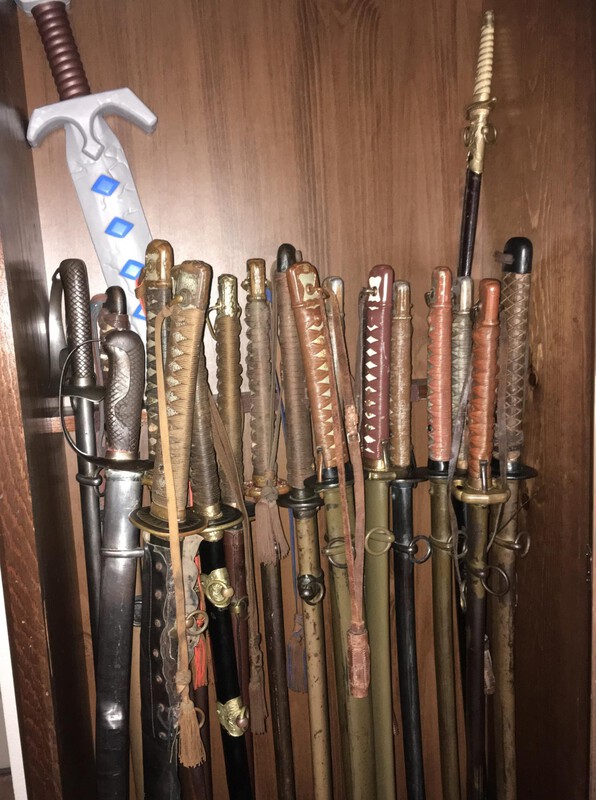
Interesting topic Neil, thanks! I just collect WWII Gunto, though, I do have some pre-WWII Type 32s. Like Chris, I began with rocks and coins. I still have two shadow-boxes of butterflies I caught and dried for display.
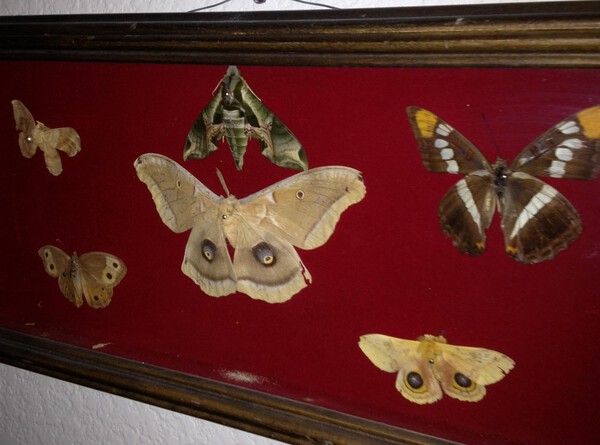
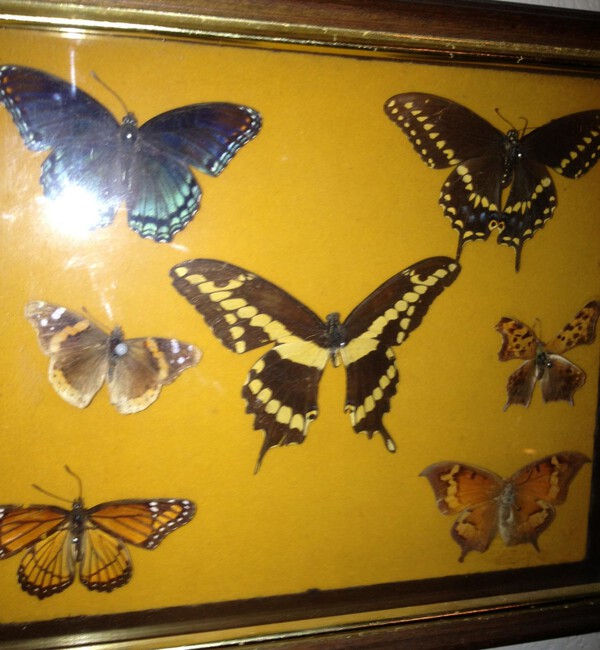
- 111 replies
-
- 14
-

-

-
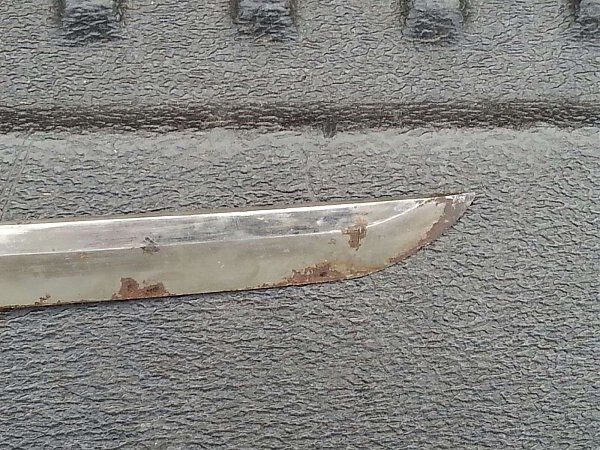
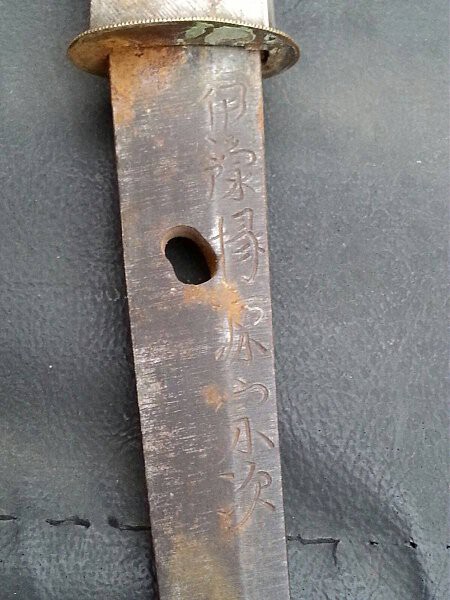
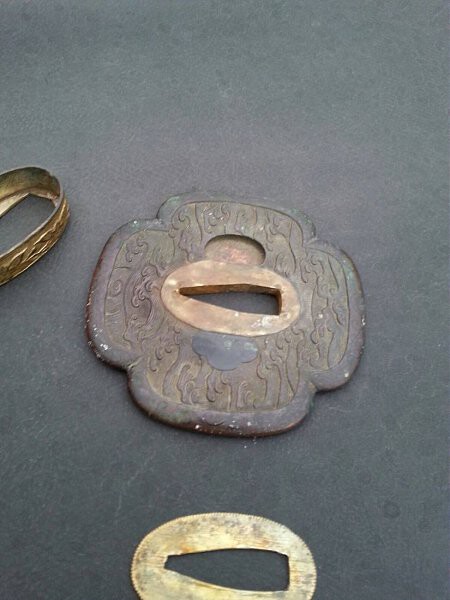
Yes agree on the pop-ups! Here’s the rest of the pics.
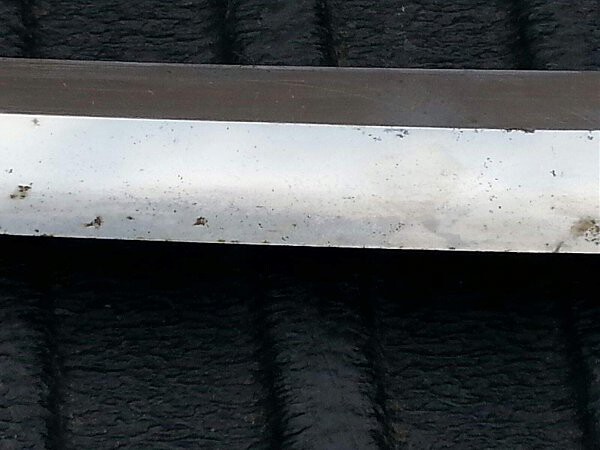
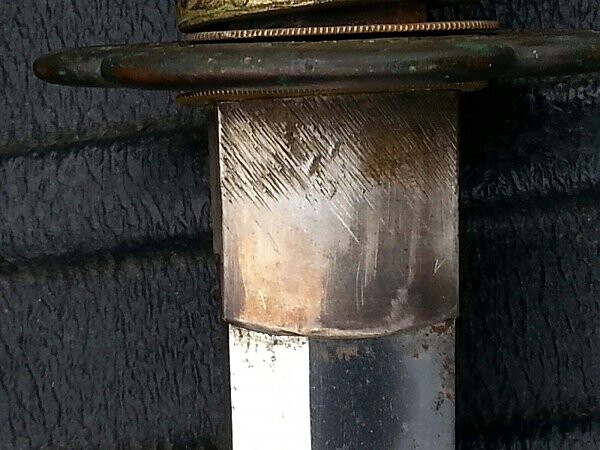
-
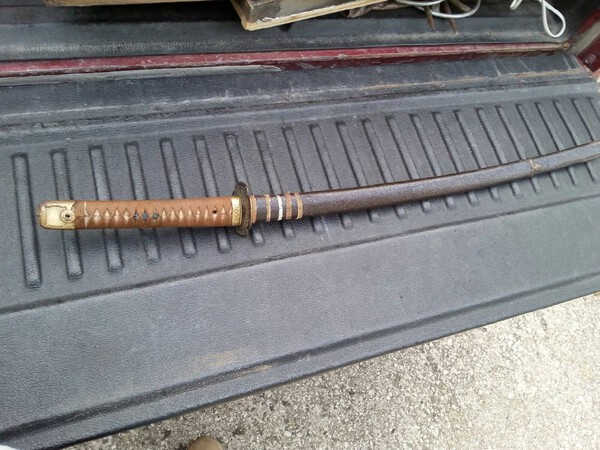
Just thought this was an interesting one. Found on a civilian sword re-fitted for the Navy during the war. Navy fuchi and kabutogane, but they left the original same' in white. Don't see too many re-fitted swords for the Navy, so I don't know if leaving the white same' was normal practice. Might also explain some war pictures of Naval officers wearing what appears to be gunto with army tsukas (white same'). Found over on Gunboards:https://forums.gunboards.com/showthread.php?1114013-Recent-Sword-Find&p=9919627#post9919627
-

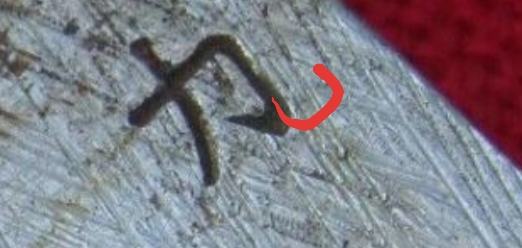
The Mysterious "w" Stamp!
Bruce Pennington replied to Bruce Pennington's topic in Military Swords of Japan
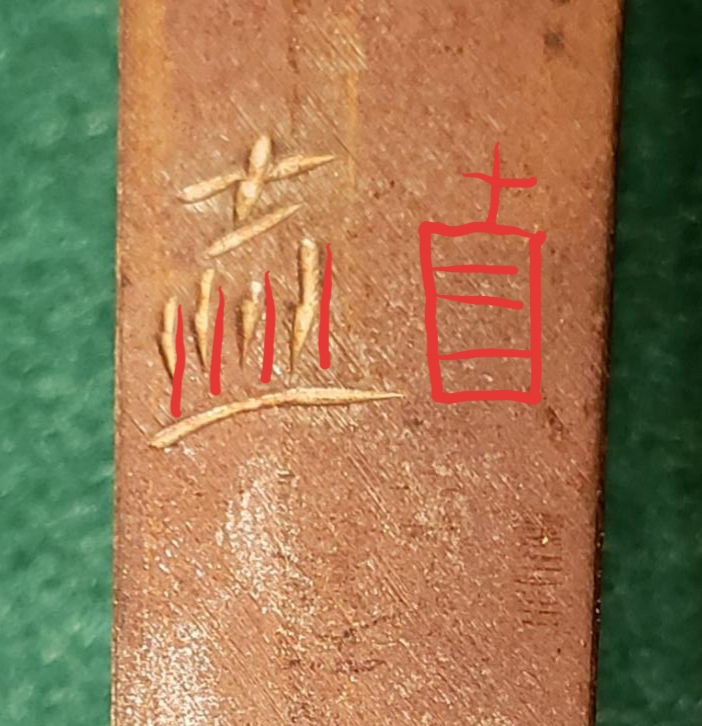
Thanks Bruce, The other stamps are Gifu stamps. The one you are thinking is a W is tough to make out. Maybe it's more obvious in person. I can see it might be poorly struck and is the left half of a W, but it could be a poorly struck Seki as well. Trystan, you are WAY better at reading smith names than I will ever be, but would the kanji "直" be written with 4 vertical lines? I don't know what it could be but that seem odd. Bruce you might run it by the Translation Assistance forum: http://www.militaria.co.za/nmb/forum/15-translation-assistance/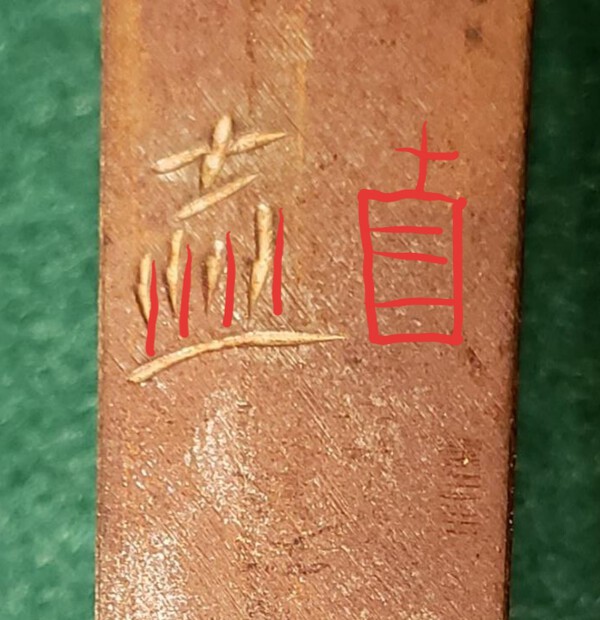
-
I would add to Brian's description the double release buttons. The gunto with gendaito blades seem to all have the double release button. In line with the phrase "With WWII gunto, never say never, and never say always!" I personally have a star-stamped RJT gentai blade that came in a metal saya, though the paint is dark not light. It has the double release button too.
-
Show Us Your High Class Gunto
Bruce Pennington replied to lonely panet's topic in Military Swords of Japan
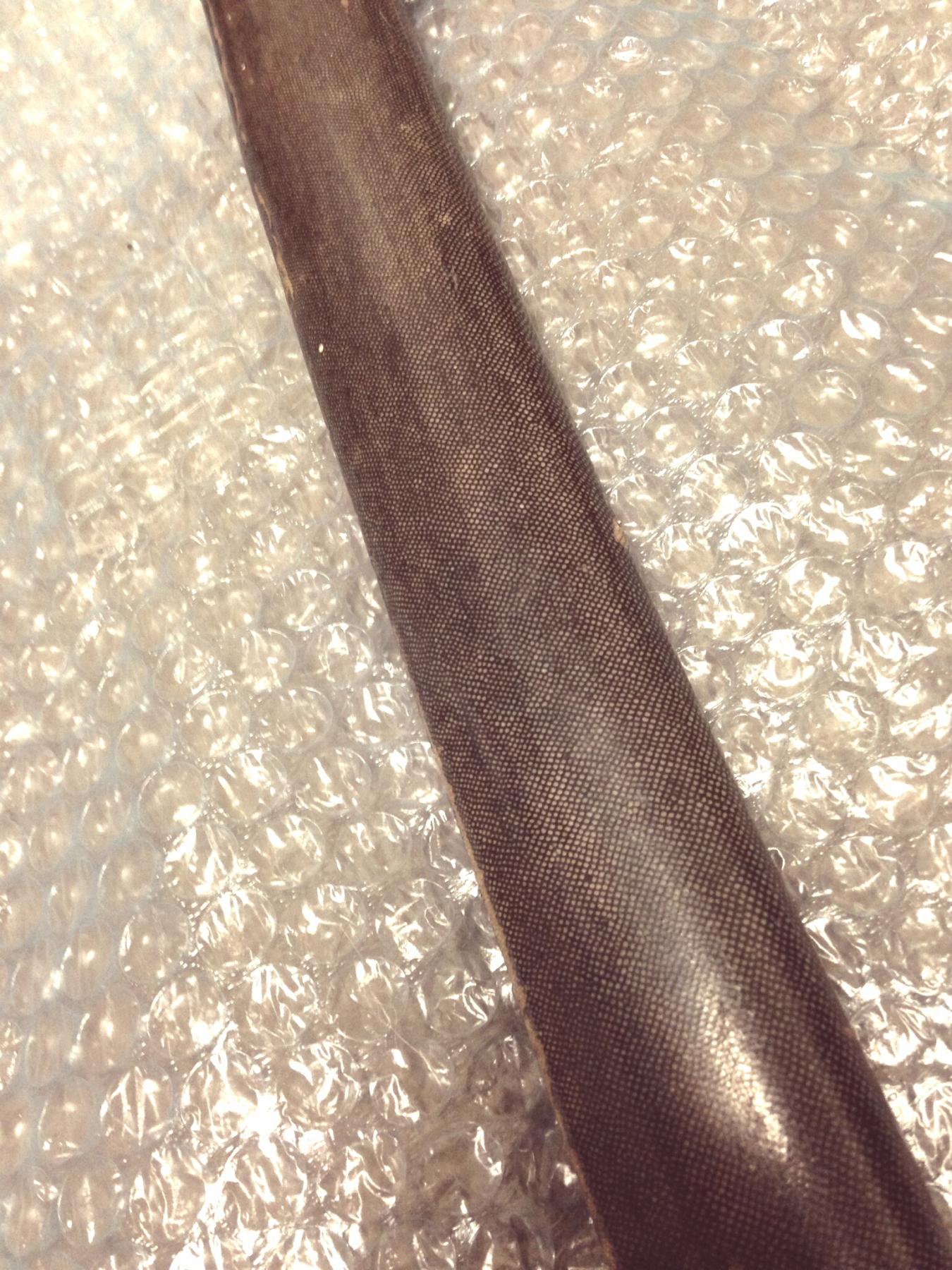
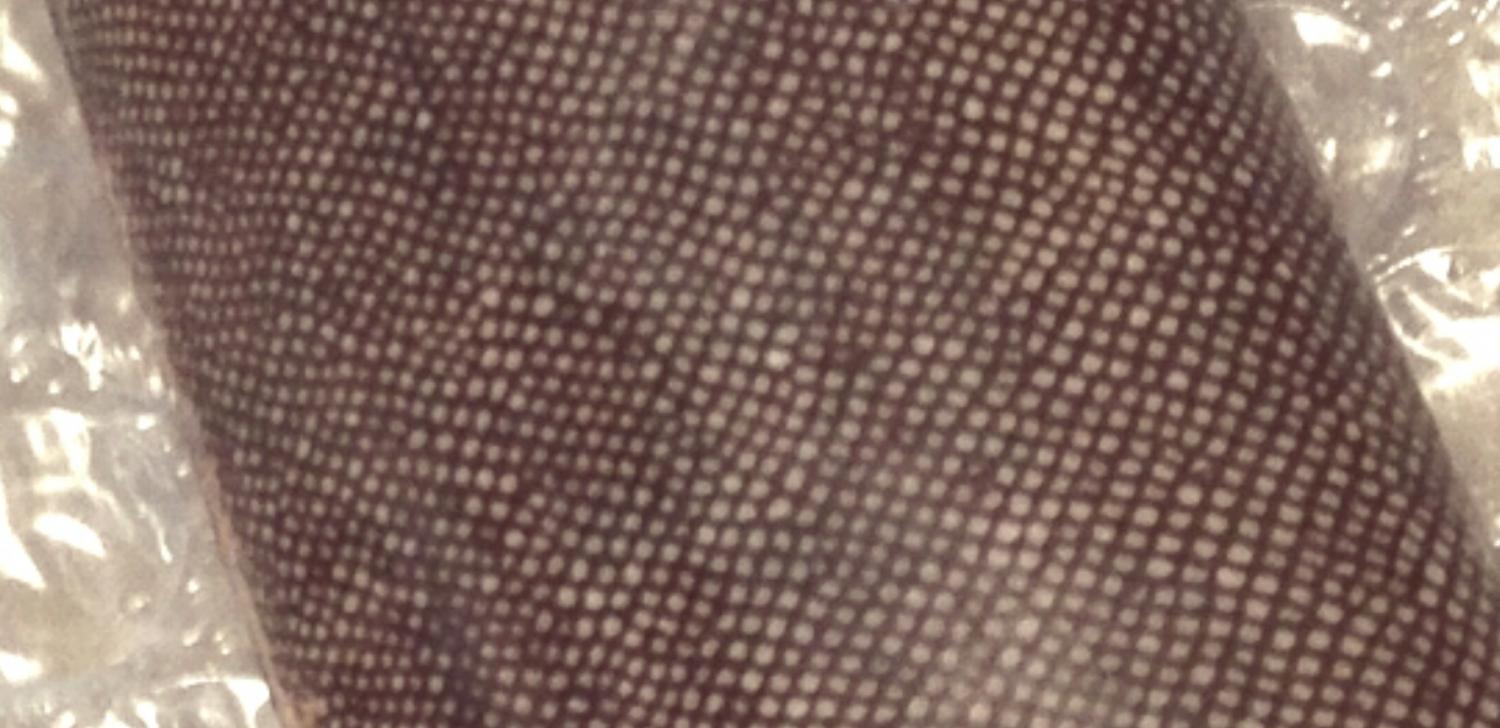
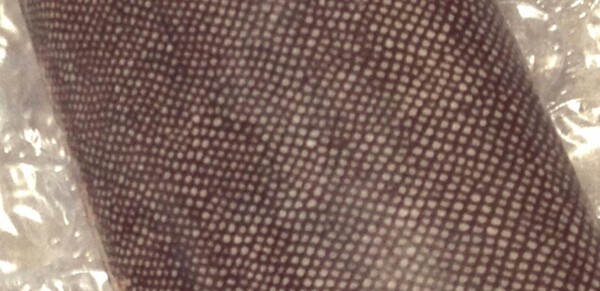
Wow Neil. Do you think it's man-made? Seems too geometrical to be natural, yet, the dots seem the same as those around them and the dots around them seem to be undisturbed. In both, the dots spiral in toward the center dot. On another note, I always thought this large dotted skin was eel. I have one that I was told was shark, and the way to tell, they said, was shark has diamond-like shape to the dots. But this is something I know nothing about. (hope I don't side-track your point!).
-
The Mysterious "w" Stamp!
Bruce Pennington replied to Bruce Pennington's topic in Military Swords of Japan
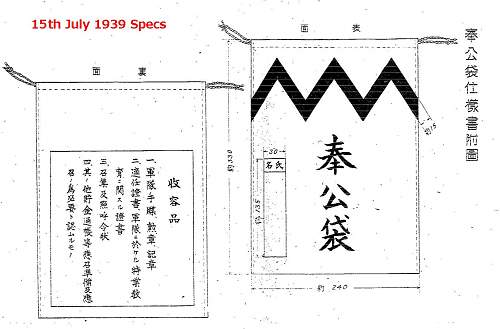
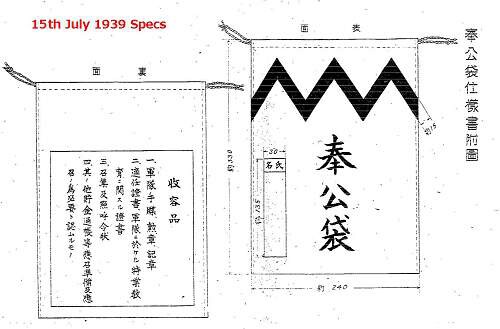
That's quite an interesting book Thomas cited. It is an American edition, first published in 1942, of the original Tokyo edition dated "as far back as 1932." Col Creswell had 2 Japanese officers working with him on it. Nick Komiya, Warrelics, has doubts about the definition since the yamagata images on blankets and other military items have 3 full peaks. I believe it is possible they Army stamp marking office simply narrowed the image to fit a tiny metal stamp.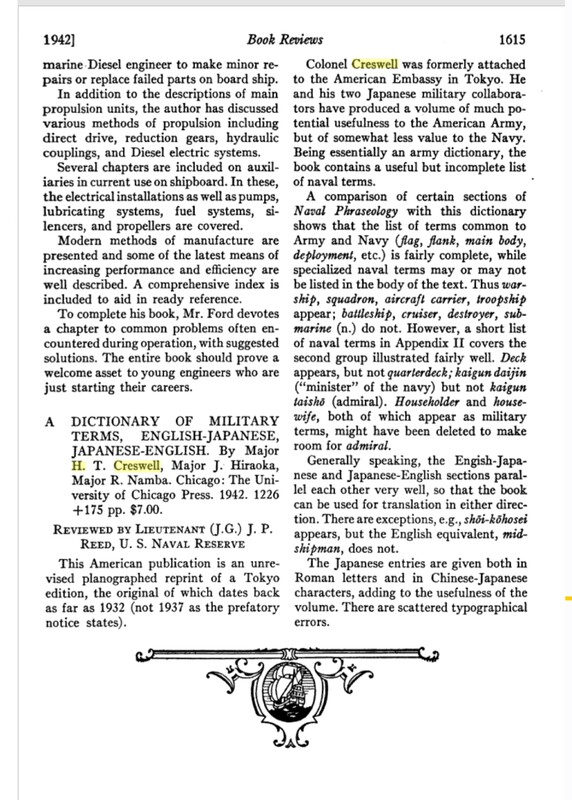
-
The Mysterious "w" Stamp!
Bruce Pennington replied to Bruce Pennington's topic in Military Swords of Japan
Ahso! It says “property of the War Dept”. That makes more sense than the prefecture idea. Mantetsu blades, even unfinished ones sent to the Tokyo Arsenal, wouldn’t be getting a Yamagata prefecture stamp, but getting a War Dept stamp would make sense! It would also explain why blades would have them from other areas of the empire. -
The Mysterious "w" Stamp!
Bruce Pennington replied to Bruce Pennington's topic in Military Swords of Japan
Thomas,I looked up "Yamagata" and found there is a prefecture named Yamagata. It is near another prefeture, Fukushima, that I have seen an inspector stamp from (fuku). It is possible these are inspector stamps from the various prefectures. Interesting! The word means "mountain shape" and would be a fitting stamp for the Yamagata prefecture. -
Japanese WW2 katana translation help
Bruce Pennington replied to Derek McGrogan's topic in Translation Assistance
Me too, still don't see it after hearing the translation! Dud wis a badd spillerr! -
I would check with Neil, IJASWORDS. He's got a great collection of the late-war gunto. My un-expert view is: NOT fake. Occupied forces likely. The crooked shinogi (that line that runs down the nakago) is a sure sign of non-Japanese work. The tsuba of occupied forces swords usually attempt to integrate some IJA style, but are always off (maybe intentionally. I doubt the IJA would allow "allies" to exactly copy thier military spec items) but with clear quality compared to the icky stuff you see on fakes.
-
What can you tell me about this sword?
Bruce Pennington replied to Misterbovigoren's topic in Military Swords of Japan
David, I had heard similar things like John stated, like Mantetsu are too hard so traditionalists don't like to use their stones on them. So I checked with Hofhine and he happily accepted the job. Very pleased with his work. -
That's a nice grip material. Is it eel?
-
What can you tell me about this sword?
Bruce Pennington replied to Misterbovigoren's topic in Military Swords of Japan
David Hifine - http://6muncodqjvmdpowvj6egtg-on.drv.tw/kensei/ It’ Run you over $2,000, but it was worth it to me. -
What can you tell me about this sword?
Bruce Pennington replied to Misterbovigoren's topic in Military Swords of Japan
Which brings us to a regular discussion we have often - There are some collectors who really cherish WWII weapons "as is" because it shows the life of the blade. Then there are some who love restoring gunto to as close as their original condition as possible. I was seriously torn when I was considering having my dad's Mantetsu polished. The blade had lots of scratches and marks of use (ok, sure, that could have come from weed-wacking! But he got it from a fellow marine in 1957 and I don't think it saw that kind of treatment). So, do I "lose" all that history?! Or do I polish? I went with the polish, as I have several other gunto in as-is condition, but this one of Dad's will be, probably, my only polish. And man, oh man, did it come out beautiful. But, it boils down to what flavor of collector are you. Figure that out and go for it!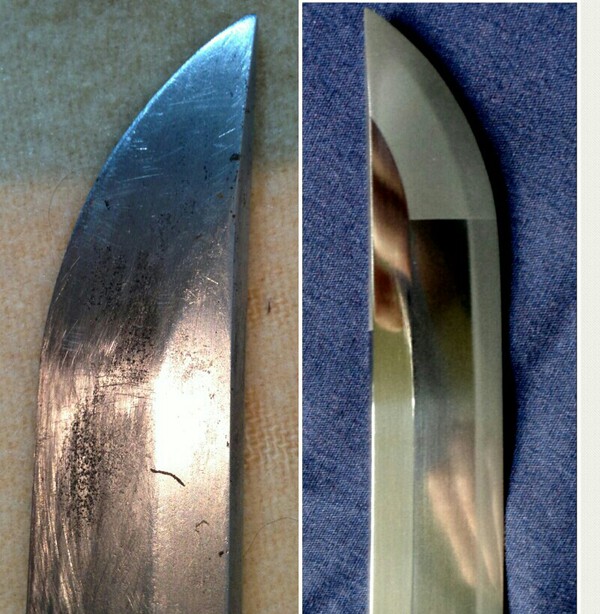
-
What can you tell me about this sword?
Bruce Pennington replied to Misterbovigoren's topic in Military Swords of Japan
Bo, I have seen many of this style, commonly called Type 3 fittings, with wooden saya (scabbard). They are usually with more expensive, high quality blades. They're not usually covered in ratan, though! They will have other upgraded paint and finish. That's quite a beautiful and rare gunto you've got there. If you have the hobby cash, it would be worth having one of the pros mentioned already to re-wrap the handle. I wouldn't try to improve the blade at all. Lightly oil it for preservation. It looks great as is. -
Koa Isshin With Nthk Papers
Bruce Pennington replied to PNSSHOGUN's topic in Military Swords of Japan
Rats, what a killjoy! Couldn’t even enjoy my fantasy for 24 hours. -
Nlf Gunto Discussion
Bruce Pennington replied to Bruce Pennington's topic in Military Swords of Japan
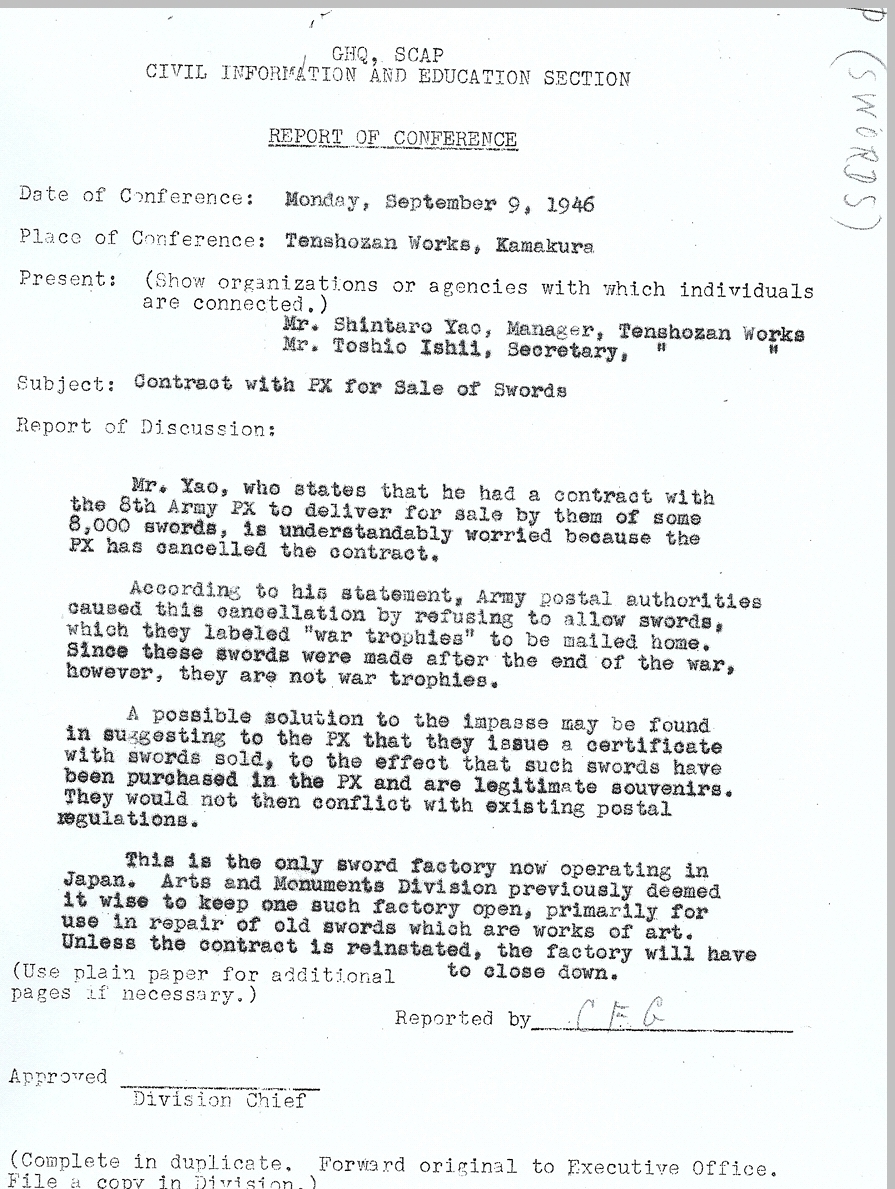
Chris, The document states that the 8th Army PX had contracted "for some 8,000 swords." -
Koa Isshin With Nthk Papers
Bruce Pennington replied to PNSSHOGUN's topic in Military Swords of Japan
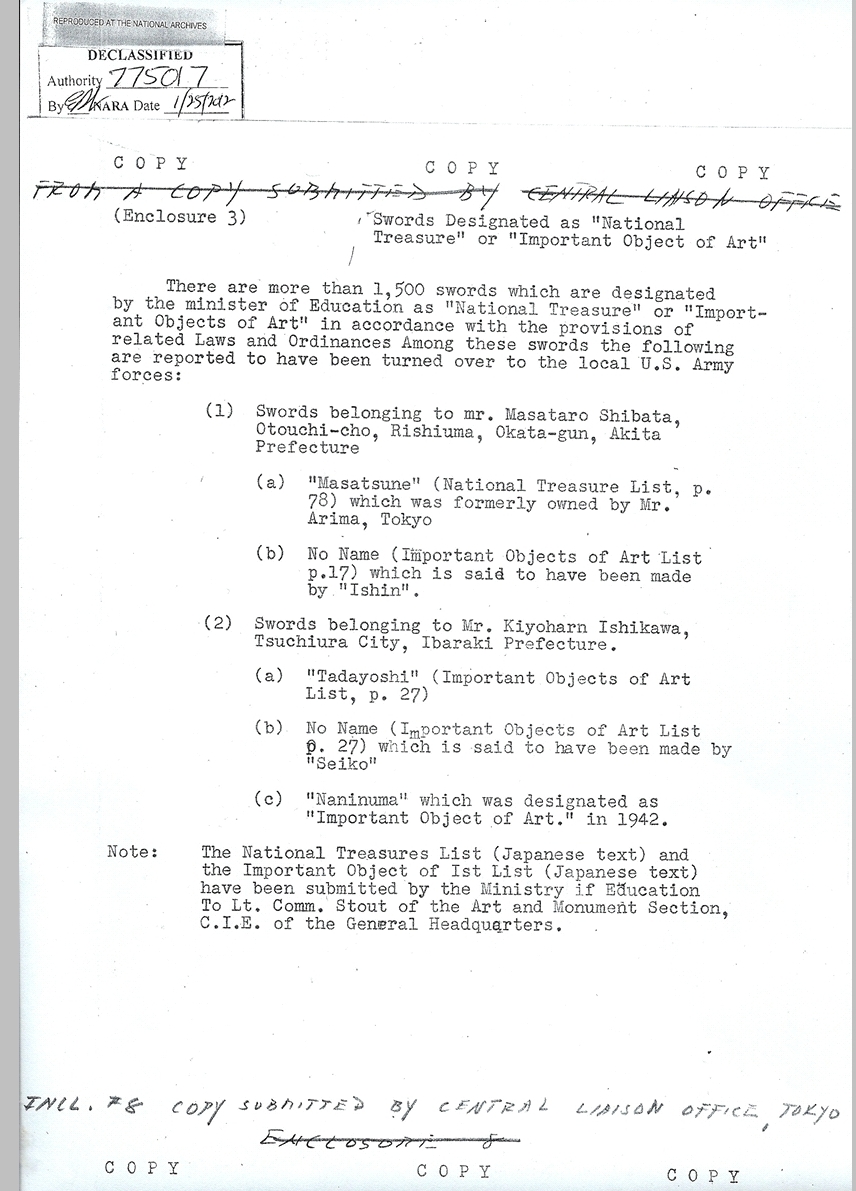
Here's some food for thought. A document from right after the war, discussing swords classified as national treasures and works of art. Paragraph 1.b. lists a sword without signature but said to be made by a guy named "Isshin"! Ha! So, a Japanese official actually listed the Koa Isshin as an important work of art!? Hmmmmm. This comes from the Articles section: http://www.militaria.co.za/nmb/forum/57-nt-and-iao-list-and-sword-documents-by-us-gov-1945-1950/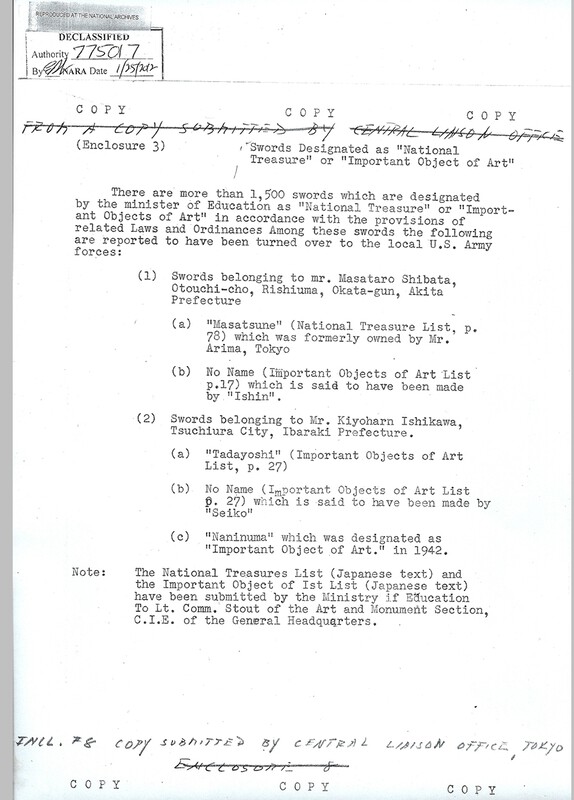
-
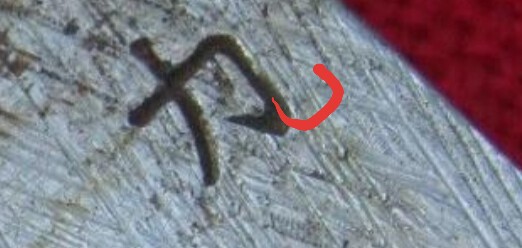
Wouldn't a 9 look like this?
-
Nlf Gunto Discussion
Bruce Pennington replied to Bruce Pennington's topic in Military Swords of Japan
That's the way it looks. -
Nlf Gunto Discussion
Bruce Pennington replied to Bruce Pennington's topic in Military Swords of Japan
Here is the document. It shows the Tenshozan factory was the only factory allowed to remain open and was making these swords.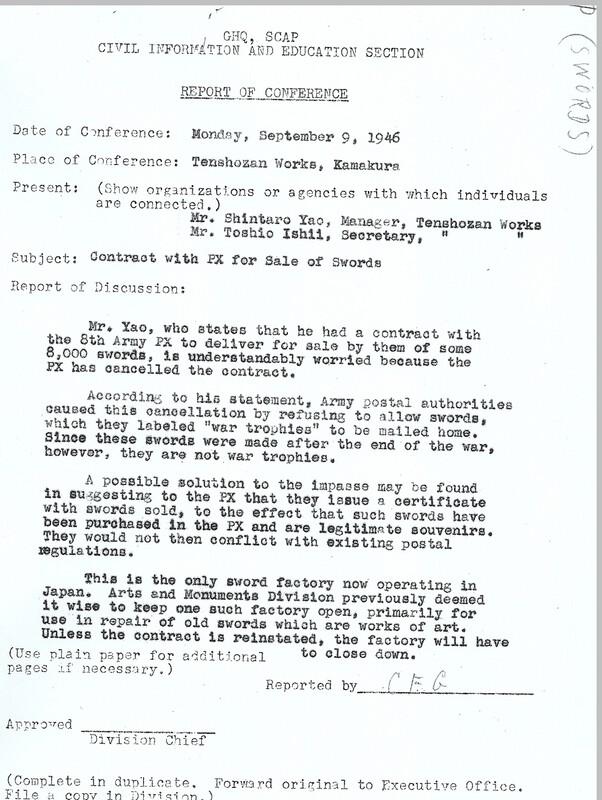
-
Matching Mystery Marine Mounton Ebay
Bruce Pennington replied to Johncstroud's topic in Military Swords of Japan
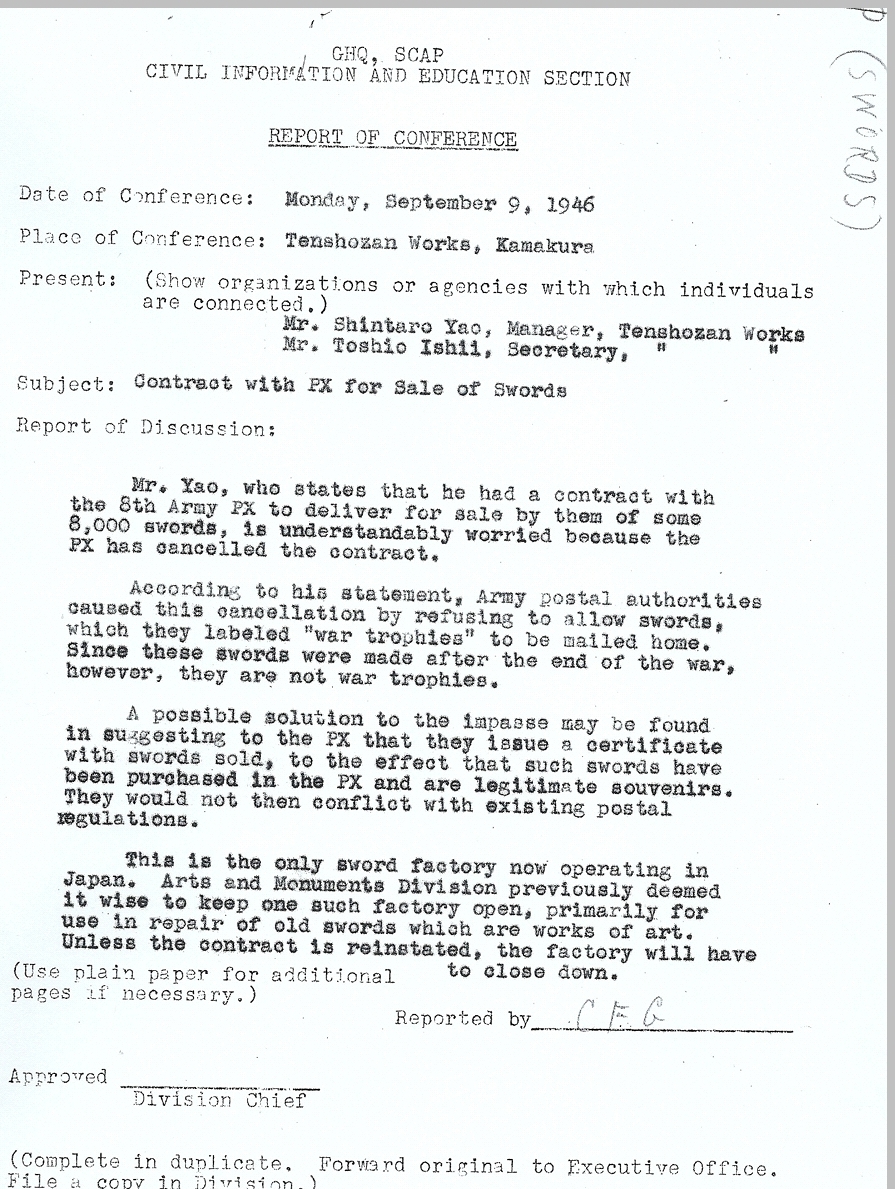
Here is the document. It states that the Tenshozan factory is the only one allowed to remain open after the war and was making these "swords". I don't know if they were just making the blades and Japan Sword was doing the rest. It doesn't say.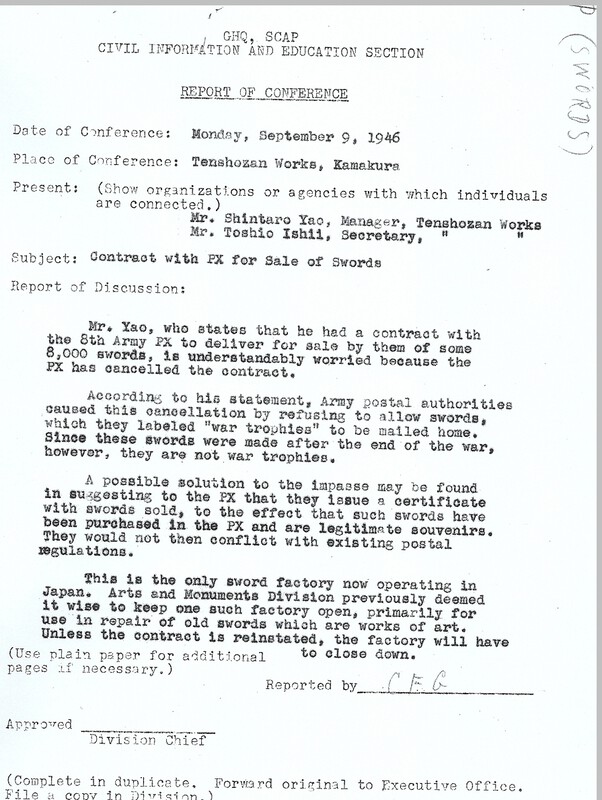
-
Nlf Gunto Discussion
Bruce Pennington replied to Bruce Pennington's topic in Military Swords of Japan
Copying something provided by Ian on another thread: Ian B3HR2UH Jo Saku Members 120 posts Locationdrouin australia Posted Yesterday, 11:26 PM There are a few documents around that I think explain what these swords are Among the fantastic documents that Stephen Thorpe kindly posted in the articles section is the report of a conference held at the Tenshozan Works Kamakura on the 9th of September 1946. Those present included the manager Shintaro Yao who said that he had a contract with the 8th Army PX to deliver for sale by them 8000 swords . He was worried because the PX had cancelled the contract. Among the downloadable documents in the National Diet library website is a letter from Capt Wall dated 22 July 1949 where he seeks permission to take home one Naval type Japanese sword presented to him by Mr Yao supervisor of the Japanese Naval sword Manufacturing Co Kamakura . There is a further letter dated 4 March 1950 requesting authorization to procure authentic samurai swords and hari kari knives for resale to the Exchange . I am not sure what the exchange is but the letter goes on to approve the recommendation that CPO be allowed to procure for sale to the exchange some 6000 souvenir swords . It was noted that the recommendation was based on the fact that an original purchase order had been placed with the manufacturer and had not been cancelled in time to prevent the manufacture of some 6000 swords. In order to prevent monetary loss to the Japanese concern procurement of the remainder of the purchase order was approved . I think these documents explain the origins of these swords Ian Brooks