Bruce Pennington
-
Posts
14,118 -
Joined
-
Last visited
-
Days Won
169
Content Type
Profiles
Forums
Events
Store
Downloads
Gallery
Everything posted by Bruce Pennington
-

Help with blade, tassel and fittings
Bruce Pennington replied to Michaelr's topic in Military Swords of Japan
This is an interesting gunto. The tassel is of the North China Railway Police (taken over and run by South Manchurian Railway), but the fittings don't have the railway emblem. Ohmura discusses it in length here: http://ohmura-study.net/308.html He does state that many of the officers were actual army, which would explain the standard IJA fittings but I doubt an officer would carry a tan/brown tassel. It had to have been someone associated with the railway police though. And this would be a good discussion over on the Military Swords forum. -
Introduction to the Type 94, Type 98, & Type 100 Gunto
Bruce Pennington replied to Kiipu's topic in Military Swords of Japan
Thomas - great thread! Thanks for posting! This gunto suffers quite a bit, though, from the many names it goes by - Late War; Navy Landing Forces; Type 3; Type 0; Type 100; and counting. In Nick Komiya's article, which you cite, he argues quite strongy against using the "Type" term at all, stating the "Types" are created by Imperial edict. The Contingency model had no such edict and was an interim fix to the problems caused by the expensive 94s and 98s. The Engish name for the gunto, according to Nick, is "Contingency Standard Sword" or Japanese (in English!) "RINJI SEISHIKI GUNTO". I hate typing all that, so I call it the "Rinji" or "Contingency model." As to the near 2 year order-to-street time line - it's seems to be true in other areas as well. The stamping of non-traditional blades was ordered in 1938, but the stamps really didn't get going until 1940. I suspect it's simply that it takes time from an order to spin up tooling and manufacturing to make it happen. -
I agree with John, looks to be “handmade”, but there was something done that makes it non-traditional, like maybe a different steel was used or it was oil quenched. The Showa stamp is 99% indication that it was not made in the fully traditional way. Still a very nice blade in upgraded fittings. About dedications- they are not the norm, but there are plenty to be found on the market. All in all a very nice gunto!
-
Bibliography of Modern Edged Weapons, 1868-1945
Bruce Pennington replied to Kiipu's topic in Military Swords of Japan
A very useful list, especially for those looking to get started. We often get questions about recommended books. Now we have a link to give them. Thanks Thomas! -
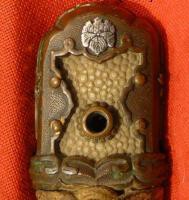
One Bryce found, posted on the “pinned kabu” thread:
-
Are Contengency Gunto (Type 3) Underpriced?
Bruce Pennington replied to Bruce Pennington's topic in Military Swords of Japan
Yes, I failed to consider aesthetics. No matter how rare an item is, if collectors didn’t find it appealing, they’re not going to be interested in buying, and if they do buy, the price will be lower. -
Are Contengency Gunto (Type 3) Underpriced?
Bruce Pennington replied to Bruce Pennington's topic in Military Swords of Japan
David, I went back to the books and discovered that the 500,000 number was just the American number. One book simply states "400,000 to 500,000" collected, but doesn't specify by whom. Whereas, Fuller specifies that AMERICAN numbers collected were 661,621. He also specifies that "372,609 were dispersed as torphies, to museums, and technical use. The remaining 289,012 were destroyed." He didn't say his source, but the specificity implies these numbers came from actual records. Fuller speculated that the total Allied swords collected could have been as high as 1,000,000. Another discovery after re-looking at sources: The Type 95 total production was more likely to have been 288,000! Nick's chart from Army records shows 168,950 for years '41-'45. Assuming the low end rate given, the years of '36-40 would have produced another 120,000, giving a total of 288,950. -
Are Contengency Gunto (Type 3) Underpriced?
Bruce Pennington replied to Bruce Pennington's topic in Military Swords of Japan
Dave, Wow, you spent some time gathering that data! Thanks for that! I would modify the numbers in that the percentage requires adding all the gunto together for the total of 104. So: 98 - 63% Contingency (type 3) - 14.4% NCO - 10.5% Kai - 11.5% But it is a good example of a spot-check number. 15 out of 104 were Contingency. If representative, it backs up my suposition that many more were made than the govt order of 3,000 per year. -
I've also learned to be cautious about labeling a "brass" looking tsuka as fake. I own a Nagoya side-latch whose tsuka has oxidized into a brassy looking finish. You can see the original aluminum coloration on the edges where wear kept the oxydation rubbed off, but from a distance, it looks like a brass tsuka. But witht the fakes, there will be more signs of fakery than simply the tsuka color, as in this one.
-
Pinned Kabutogane on Type 94
Bruce Pennington replied to PNSSHOGUN's topic in Military Swords of Japan
After seeing John's, with the heads missing, but pins evident on one side, I'm thinking that Neil's one with just the holes must have originally had pins, but they must have gone missing at some point. -
How about "Ashikaga" or a derivative?
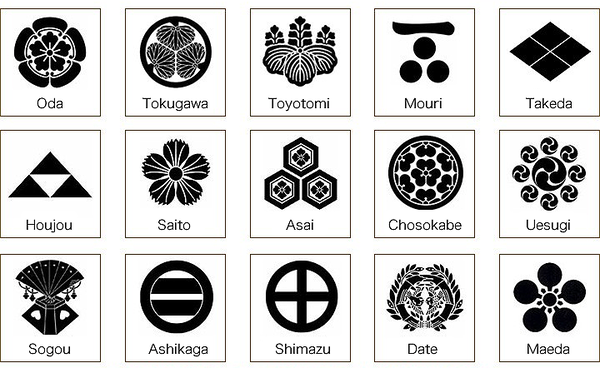
-
Pinned Kabutogane on Type 94
Bruce Pennington replied to PNSSHOGUN's topic in Military Swords of Japan
Any speculation as to thier reason to exist? Funtion? Asthetics? Are any of our Nihonto followers aware of historically older koshirae with pinned kabutogane? (I realize the "civilian" style of old mostly had a different styled Kashira, or butt-cap, but some came with a kabuto). -
David, Maybe some of our Nihonto experts can fill us both in on that question. The practice goes back before WWII, but I don't know how far. I have just begun collecting them, and don't know much about their use. I have noticed some blades, by the same smith, where one will not have a kakihan and another will.
-
After re-reading Nick Komiya’s discussion of the origins of the “Contingency Standard Sword”, I noticed the order was to produce “3,000 blades annually at a maximum cost of 80 Yen for a sword.” Assuming the gunto hit the streets in mid-1940, it was produced 5 years. That would be only 15,000 Contingency gunto made during the war. My guess is that they must have made much more than that. We see far too many of them on the daily market. They must have become fairly popular. The very high quality versions with nihonto blades is probably an indicator of that. It is said that the Allies collected 500,000 gunto at the end of the war, and half were destroyed. I’m just working out percentages here. I have read that there were 180,000 NCO Type 95s made, so even if ALL 180,000 were part of the 500,000 collected (which we know wasn’t the case), that would leave 320,000 Officer gunto. If only 15,000 Contingency gunto were made, and ALL of them were collected (again, not likely), they made up only 4.6%. Personally, my guess would be more like only half were collected, so that’s down to 2.3%. So, given all other sales and circulation variables are neutralized, we should only see 2 Contingency gunto for sale out of every 100 officer gunto on the market. I haven’t done a survey of sales, but my gut says that while there are less Contingency sold than Type 98, it’s far higher than 2 of 100. Yes? So, there must have been more than 3,000 made per year. Still, there ARE less of them than the 98’s, so that should cause their collection value to be a bit higher, though, that’s counter-balanced by the fact that they tend to be lower quality blades than an average 98; except for the nihonto, custom order version, which then should put THAT version back into the more-rare category, and therefore move valuable. If the custom gunto were, say, 10% of total Contingency blade production, then they would make up only .2% of Japanese officer swords!!! Since they are that rare, and usually have RJT nihonto in them, I’d say they are currently way under-priced! Thoughts?
-
Pinned Kabutogane on Type 94
Bruce Pennington replied to PNSSHOGUN's topic in Military Swords of Japan
John, is your example on a 94? I only see one haikan (ashi). I know Neil has a few of these. It will be good to hear his view on this. -
The Mysterious "w" Stamp!
Bruce Pennington replied to Bruce Pennington's topic in Military Swords of Japan
Kiipu - is that your name? If not, as per forum rules, could you please go to your personal settings and set a first name into your posts for us, thanks. By "chevron" are you refering to the "M" or "W" stamp? If so, it seems to be a double chevron? That would be very interesting! Does your source say what it refers to? Most of the stamps we see - Ko, To, Na, Seki, Gifu, etc - refer to localities or arsenals. The Sho was created for the stamping of non-traditional blades and the Star for RJT blades, but most have a direct reference to their meaning. -
Brian, Steve or Ernie may correct me (please do if I'm wrong!!!), but I believe it's a decent replica (fake). No inspector mark on blade, the Gifu and Na stamps are really bad (though, they've gotten darn good with that Kokura stamp!). Another telltale sign is the "sandblasted" texture of the tsuka. I don't think it's legit.
-
One from John's thread of a mon for Prince Asaka Yasuhiko, http://www.militaria.co.za/nmb/topic/29427-mint-condition/
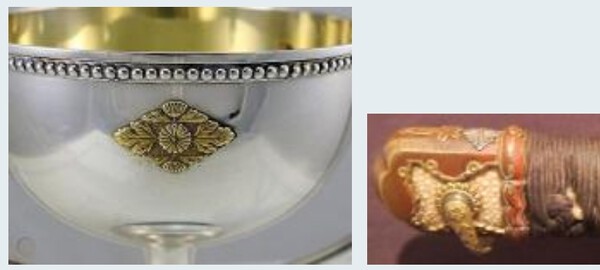
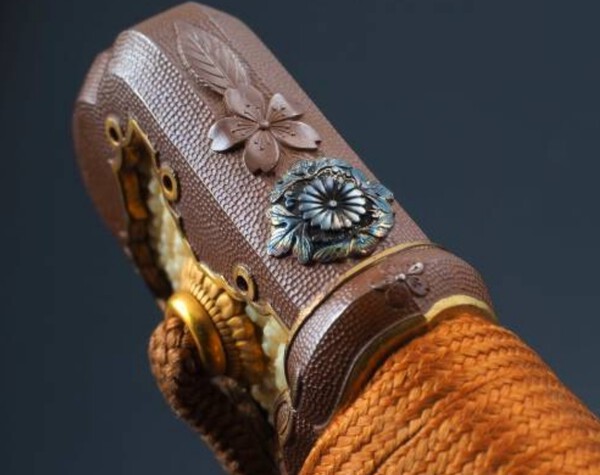
-
One that we see occasionally, this one from Chris' thread: http://www.militaria.co.za/nmb/topic/29587-gunto-pedigree-id-requested/
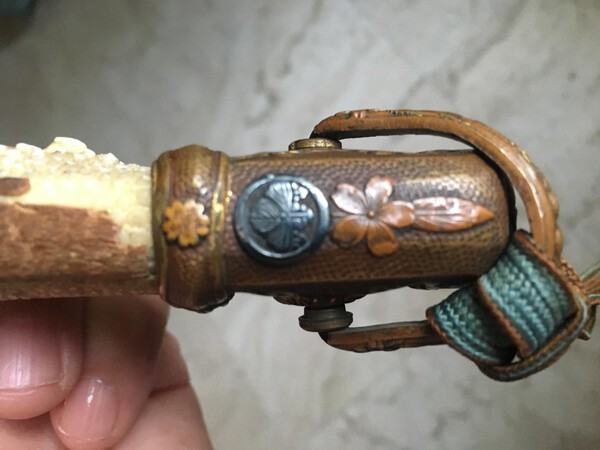
-
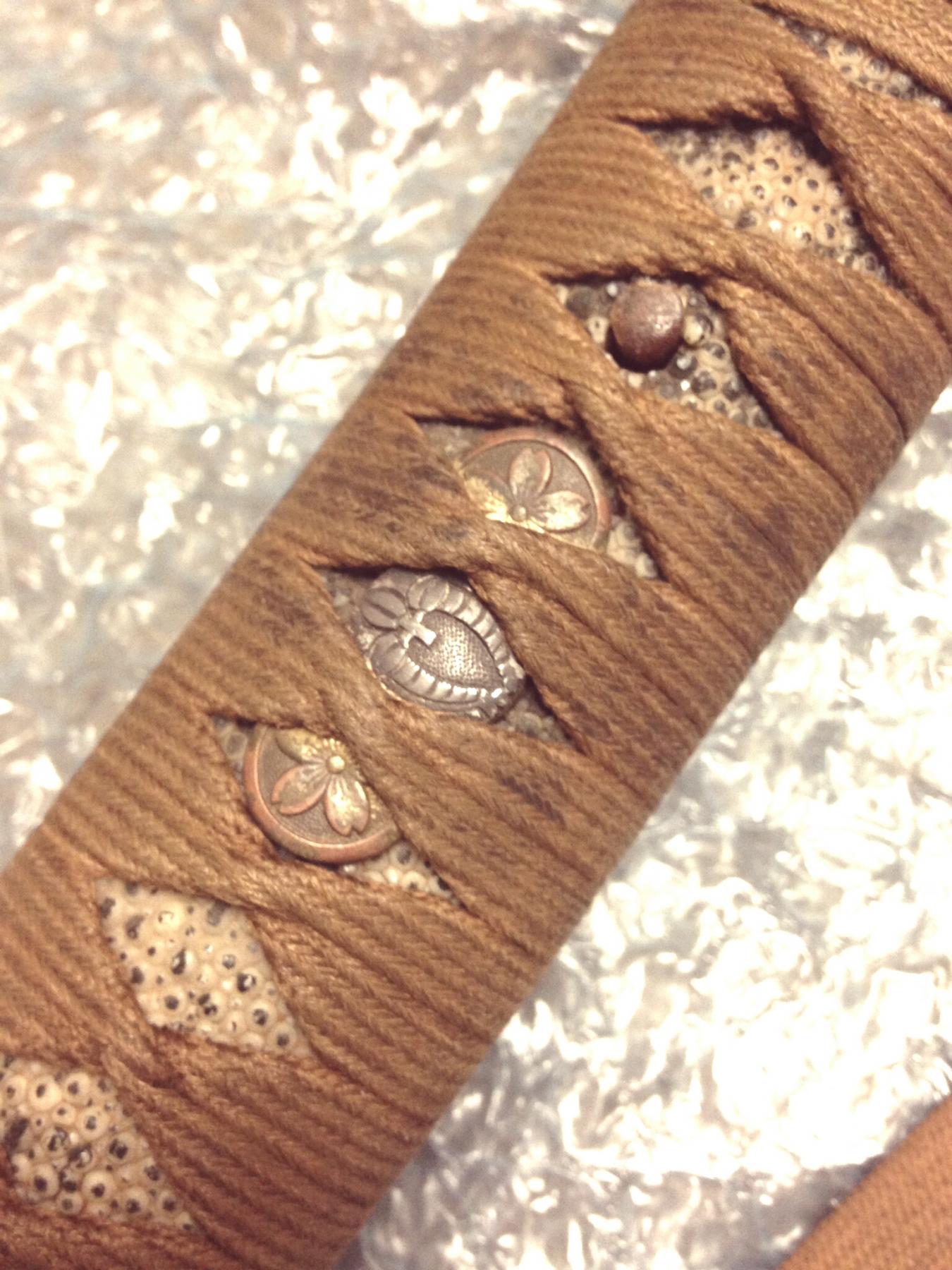
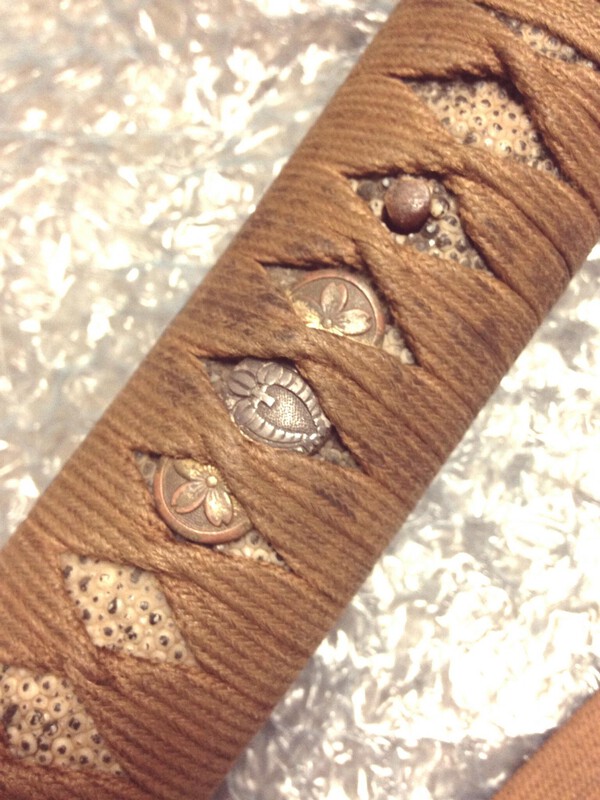
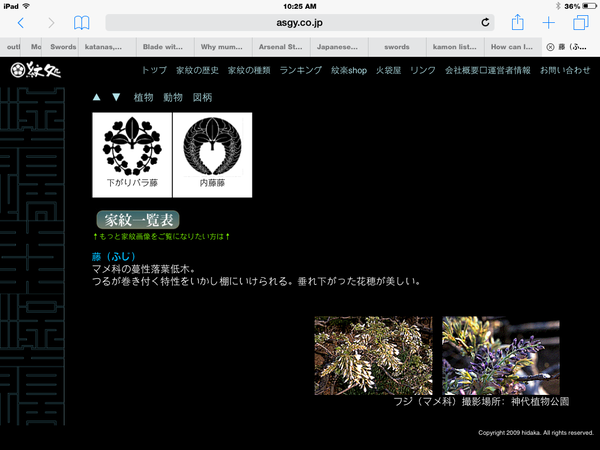
The only one I have. The guys said it was originally "Fujiwara", but today there are a number of names tied to it. It's on a kaigunto with a sharkskin saya and a mumei, 500 yr old blade.
-
David, The rust layer obviously makes the stamp ID difficult, but I’m leaning to a “Na” of the Nagoya arsenal, so not like to be gendaito.
-
Tom, How about a pic of the serial number on the other side of the NCO blade?
-
Show Us Your High Class Gunto
Bruce Pennington replied to lonely panet's topic in Military Swords of Japan
Brandon, That looks like a kakihan at the end of the nakago. Who was the smith on this? I'd like to add it to the Stamps Document. -
Denis, Nice job on the Bubba-paint removal. I have a 95 that was painted gold - even the blade!!! Acetone (which is what is in nail polish remover) does the trick without removing the original paint. It is slow and laborious work though, but worth it. The "while" handled gunto in pictures were actually wrapped in cloth to protect the handles. Many pictures of the practice out there.
-
Military sword fittings , Older blade?
Bruce Pennington replied to phil reid's topic in Military Swords of Japan
Stephen, I tried to "Like" your post and got this message: "An error occurred You have reached your quota of positive votes for the day" HA! didn't know there was a daily limit to the number of Likes we could post!