Bruce Pennington
-
Posts
14,053 -
Joined
-
Last visited
-
Days Won
169
Content Type
Profiles
Forums
Events
Store
Downloads
Gallery
Everything posted by Bruce Pennington
-
 JP!!! Glad to hear from you again! Can't say more than the guys have already said. Love your caring heart and feel for you as you mourn and heal. After losing my best friend, then parents, then a brother, I realized that loving greatly comes at a great cost when we lose those we love. But what are we to do, right? Loving greatly is worth the price. I am surprised at how great a blow a person can take and still recover. I can tell you (I'm sure you already know) many of us here are blessed by your company and are very glad to see you back. Thanks for sharing your story. I agree that telling it helps in healing. And honestly, a daily visit to NMB can be a refreshing break from one's burdens (it is for me!).
 -
Attention Mantetsu Owners: A Survey
Bruce Pennington replied to Bruce Pennington's topic in Military Swords of Japan
Here's my thoughts on it, Trystan - When SMR started, according to Ohmura, they were making 400 blades per month, or 4,800 per year. The chart found by Nick Komiya for 1944 production showed that SMR made 6,000 blades that year. If they were just numbering the blades from 1 to 6,000 there would be numbered blades found each year in that full range. But they were breaking them up with the Iroha lettering series, and each year had anywhere from 6 to 14 "series". Let's just say a year used 10 katakana. With 6,000 blades, divided evenly (we don't know that they were), we wouldn't see any numbers over 600. 1942 only used 6 katakana, so it would be normal to see a number over 1,000, and we do have a couple. 1943 used 15 katakana, so I'm surprised to see some over 1,000 (this may mean the numbers for each kanji weren't uniform in distribution). 1944 only used 5 kanji, so I'd expect to see numbers over 1,000, and we have plenty. What is surprising is to see numbers that year over 2,000 (again suggesting the distribution of numbers wasn't uniform). And finally, 1945 used only 1 kanji. With fiscal year beginning April 14, there were only 4 months of production, but at 550 per month, that still should put numbers over 2,000 and we have 1 in the 1,000 range. -
Matt, We neglected to fully discuss the style sword you have, in our chasing down the smith. Your fittings are from a contingency modification to the Type 98 Japanese officer sword. Type 98s were fairly expensive, and officers had to buy their own swords. So the contingency model, or Rinji seishiki (RS), or for years incorrectly called the 1944 model (designed in 1938 and produced in numbers by 1940), and Type 3 (Type designations were ordered by the Emperor, and this was never established as a "Type") was created to be cheaper, yet had modifications that made it a hardier sword. The lacquered ito (handle wrap) and simpler fittings made it able to "take a licking and keep on ticking". Not popular until around '43/'44, then we see a lot of higher-end, upgraded RS like yours with fully traditionally made blades. Most blades in the RS fittings weren't traditionally made, called showato, but the blades in the upgraded fittings are almost always traditional, called nihonto. Many officers brought family blades to the war and had them refitted in military koshirae, and many were donated to the war, or bought up by the military and sold in markets and/or private shops. Yours is the first old/family blade we've seen in the RS fittings. So it's pretty unique. You can read about the history of these here: https://www.warrelics.eu/forum/Japanese-militaria/deflating-another-myth-type-3-army-officer-s-sword-expanded-version-584796/ and http://www.warrelics.eu/forum/Japanese-militaria/unveiling-rinjiseishiki-sword-1940-a-793016/ This one discusses the program to get family blades for the military and the sword shortage that made it necessary: https://www.warrelics.eu/forum/Japanese-militaria/family-short-blades-gunto-688110/
-
How common were Type 98 mounts on Wakizashi blades?
Bruce Pennington replied to Kolekt-To's topic in Military Swords of Japan
Dang! I’m going to have to look up half of these words! -
I have considered this. I don’t believe the gold is random or insignificant. It is normally a sign of royalty, wealth, respect, worship. I don’t want to speculate yet, even though that is something I do regularly! Ha! But I think it is intentional. In our culture today, it represents the highest of prosperity.
-
How common were Type 98 mounts on Wakizashi blades?
Bruce Pennington replied to Kolekt-To's topic in Military Swords of Japan
There are a number or Army waki posted on NMB over the years. Here's a thread: Short gunto -
Some officer gunto: And another with obvious wear and tear:




-
More gold gunto: Many of these show clear wear and tear. This one is black with gold, whereas mine was gold with black trim: This one is like mine, but the tsuka wasn't painted like mine was:


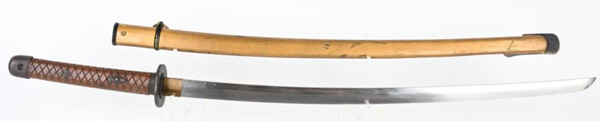
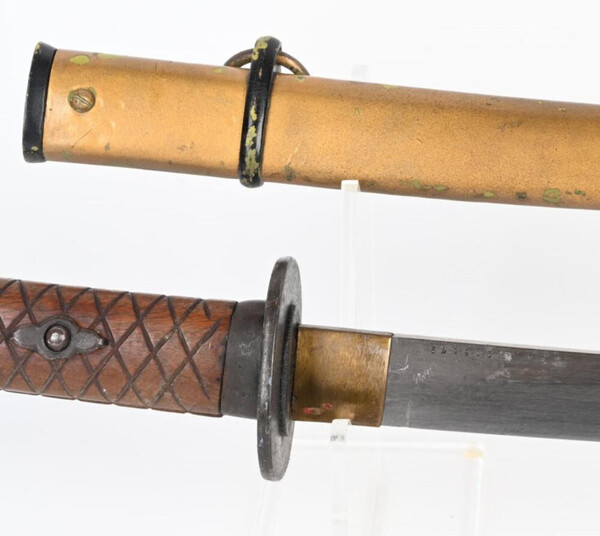
-
That is the operative question, Geoff. No one knows. And it wasn't until recently that some of us began believing that some of this strange paint was done during the war. Obviously, none of it was factory. But I'm growing to believe that individual soldiers, officer and NCO, had personalized their gunto with a paint job - black, mottled green, white, gold, and there are some other colors coming that I'm aware of. The blacks, whites, and green seem understandable as a guy would want to reduce his detectability in the field. I believe these are in @Shamsy's collection: But I haven't come up with a reason for gold. But then, who doesn't like gold, right?!
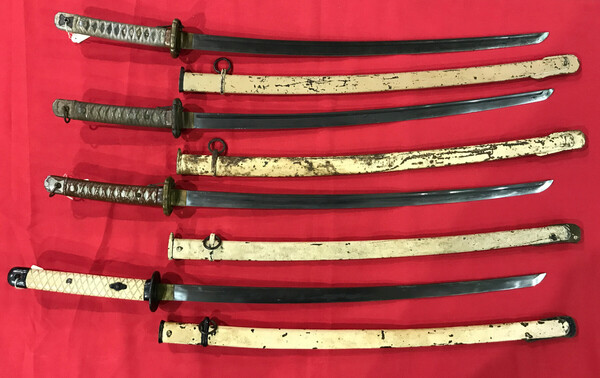
-
New gunto pickup with wild hamon
Bruce Pennington replied to drb 1643's topic in Military Swords of Japan
@drb 1643 - Tom, how about a nice pic of the habaki for the Catscratch Habaki thread? -
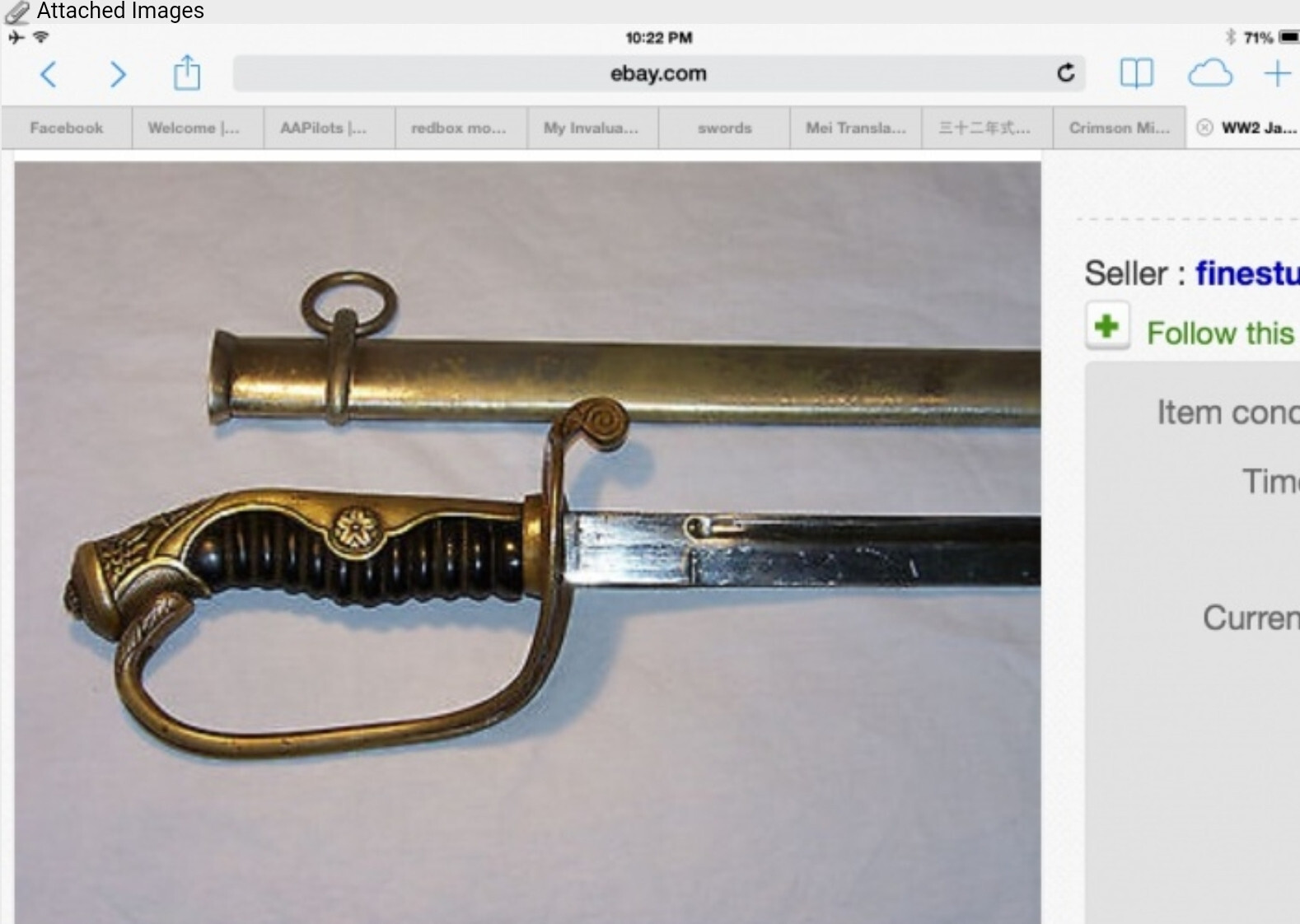
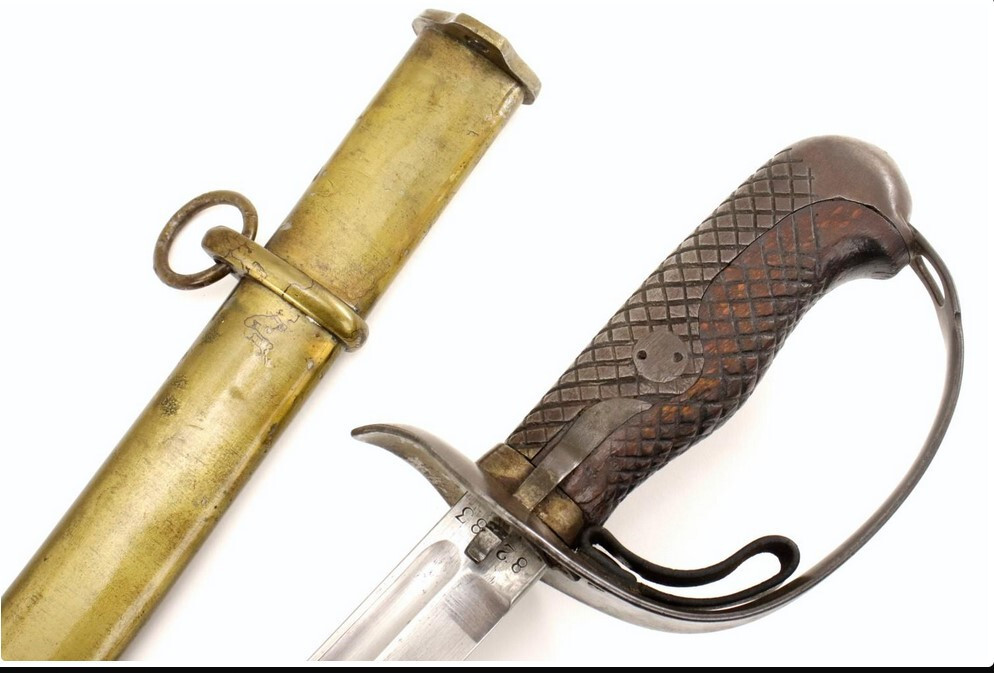
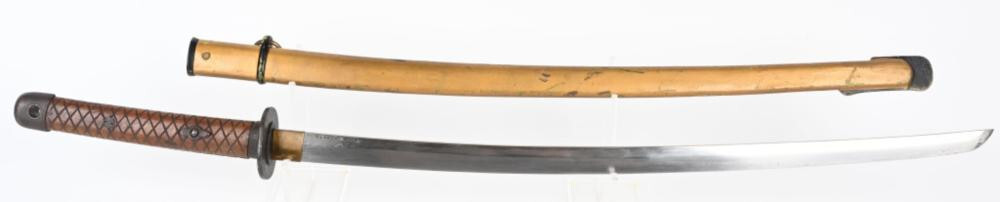
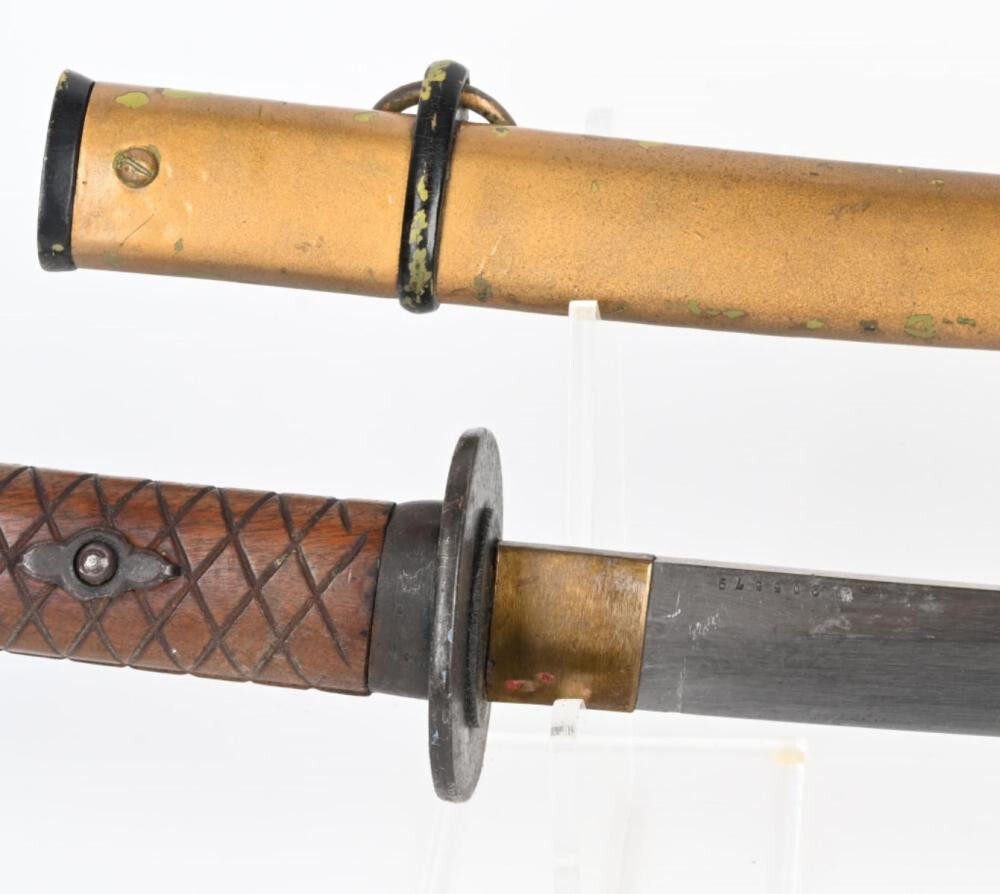
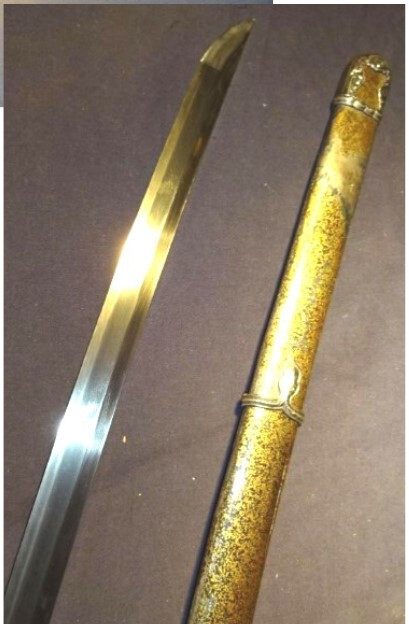
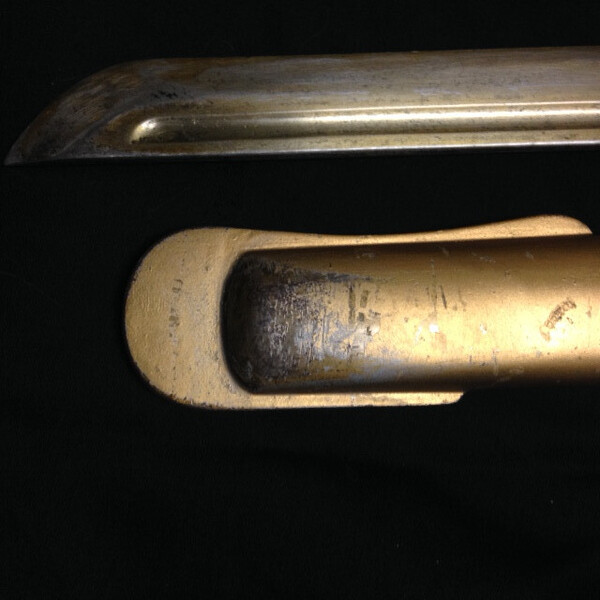
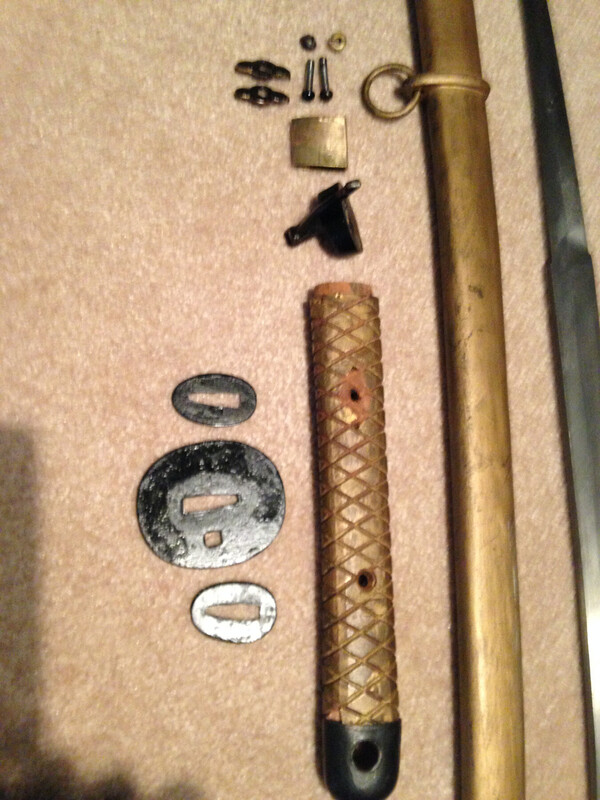
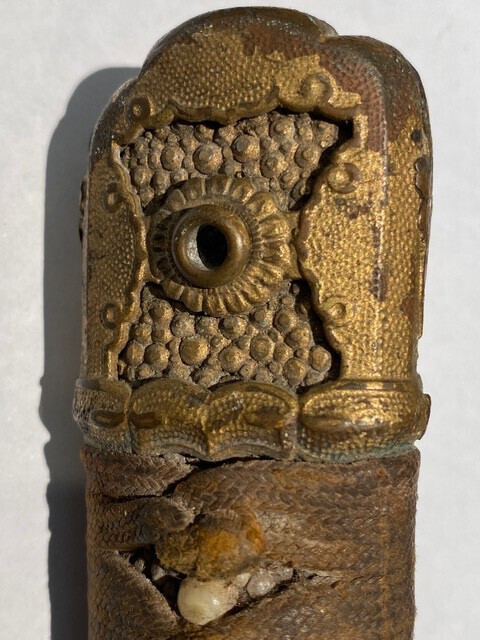
I've been hijacking @Shamsy's Type 95 Black Saya thread for too long, so I'm starting a Gold-painted gunto thread to track the gold ones. I considered labeling it "Painted Gunto" to gather all the colors, but the discussions of each can get quite lengthy, so I'll keep this one just on the gold. But for reference, Steve's thread also has several examples of officer gunto painted black as well. And we have the thread on Mottled Green paint on Type 95s. I've had examples of all 3 colors and regret stripping the 2 gold-painted 95s and the mottled-green 95. I still have one black-painted 95. But back to the gold! My interest started with the acquisition of 2 Type 95s, one totally painted gold (even the blade) and a late-war 95 painted black and gold: I believe this one might have been post war as the paint come off relatively easy using acetone, and the blade, once cleaned, had lots of scratches and marks as if used plenty prior to painting. Also, there was no original paint underneath. It had been completely stripped before re-painting with gold. The late war 95: In hindsight, I now believe this one to be a wartime personalization. The paint was hard to get off with acetone, and the original color was underneath. The following are other examples that I've filed, beginning with a primo one just posted by @Arty A on this thread HERE. The paint is old and abused from use, and is covered with patina inline with the rest of the gunto: (out of time for now. Will update and continue later)






-
WW2 Military Sword - Please assist in identifying
Bruce Pennington replied to Arty A's topic in Military Swords of Japan
@Arty A - Arthur, could you post a couple of clear shots of the metal parts that seem to be painted gold? I have been loosely tracking gold-painted gunto for quite some time, and yours is obviously not a post-war paint job. In the early stages, everyone wrote them off as post-war Bubba work, and certainly some might be. Some, I have been told, were painted by theater groups for plays (kings didn't use Army green swords!), and that is likely true as well. But I've seen enough of them, like yours that look to have been done during the war. -
What are your thoughts on this Shin-Gunto?
Bruce Pennington replied to Wulfschanze6's topic in Military Swords of Japan
@Wulfschanze6 - Andrew, John's link is a great one. I'd recommend the whole Ohmura site for a new guy: http://ohmura-study.net/900.html Also, a great discussion of the use of civil swords for the military Here: https://www.warrelics.eu/forum/Japanese-militaria/family-short-blades-gunto-688110/ -
Anxious to see it. And your sentiment is honorable and heard often on NMB.
-
Neil, Just seeing the aging of the nakago can often give guys an idea of the era the blade was made. Smith names are often found there, and sometimes dates. It is very uncommon to find a note of whom the blade was made for.
-
MIZUNO MASANORI SAKU
Bruce Pennington replied to Swords's topic in General Nihonto Related Discussion
I don't have a big, broad experience with polishers, as I've only had one done, but with mine, the polisher cleaned the nakago as part of the job.

-
Thanks David! Yoshinao, No date, Showa
-
Peculiar. And possibly another shop label on the saya?
-
The mon is the 3-layered pine tree. Don't know the family names associated with it. Discussed on the Mons Forum HERE
-
So that's a mon at the top! How interesting!
-
Dave, Please try to contact them! Let them know that thousands of WWII Japanese sword collectors really want to see that nakago!
-
Toyokawa blade, WW2 or Post war produced?
Bruce Pennington replied to lambo35's topic in Military Swords of Japan
Thanks Chuck. I appreciate your efforts to finish fitting the bare blade out. If it were me, though, I'd find a good army tsuba/seppa set, as the rest of the gunto fittings are all army. Army had some black colored saya as well. I'm puzzled that the black paint simply comes off with alcohol? I haven't tried alcohol on original paint before, but I've tried acetone, and original paint really resists coming off with acetone. Post-war paint comes off much more easily. Does anyone know if original WWII paint comes off easily with alcohol? The whole thing, like John said, looks like a post-war Bubba slapped a bunch of pieces together. But if there is bare wood under both ashi, that wouldn't seem to be what I'd expect on a Bubba-job, unless Bubba totally stripped an original saya for his re-paint. My leanings are toward a Bubba-job, but with real WWII parts. -
Can anyone elucidate on the blue painted kanji. Doesn't seem to be the normal numbering.
-
And that's one heck'ov a hamon for a showato!
-
I'd go with Kanenao: http://japaneseswordindex.com/oshigata/kanenao3.jpg