Bruce Pennington
-
Posts
14,527 -
Joined
-
Last visited
-
Days Won
175
Content Type
Profiles
Forums
Events
Store
Downloads
Gallery
Everything posted by Bruce Pennington
-
 I have 2 other Kazunori, showa-stamped, blades on file and they are both in civil fittings:
.thumb.jpg.0a442557020f2897cba58f0db2cc9f0b.jpg)

-
Hi Shawn! Welcome to Japanese sword collecting! Your mixed fittings are typical for a sword that was originally owned and fitted as a civilian sword. Many blades made in during the war were still bought and owned by civilians. But due to sword shortages, the government/military made a couple of big public drives to get civilians to donate or sell their swords for the war effort. These civil swords then got re-fitted in widely varying combinations to militarize them. The Kabutogane (end cap) and wooden saya (scabbard) were likely how the sword came to the military. The re-fitting operation simply left them in place and put military menugi, tsuba, and seppa. The saya would have been covered with a leather cover, and a belt ring added. Both have gone missing in the post-war timeframe. Lots of free education available on these sites: THE Japanese SWORD GUIDE (japaneseswordindex.com) Military Swords of Imperial Japan (Guntō) (ohmura-study.net) Master Index for Reference Articles written by Nick Komiya (warrelics.eu) You can read about the stamps on this article: Stamps of the Japanese Sword And lots of other topics here: Member Articles
-
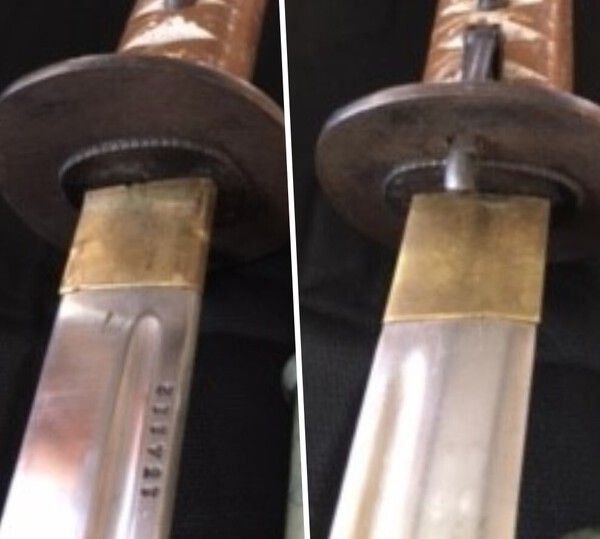
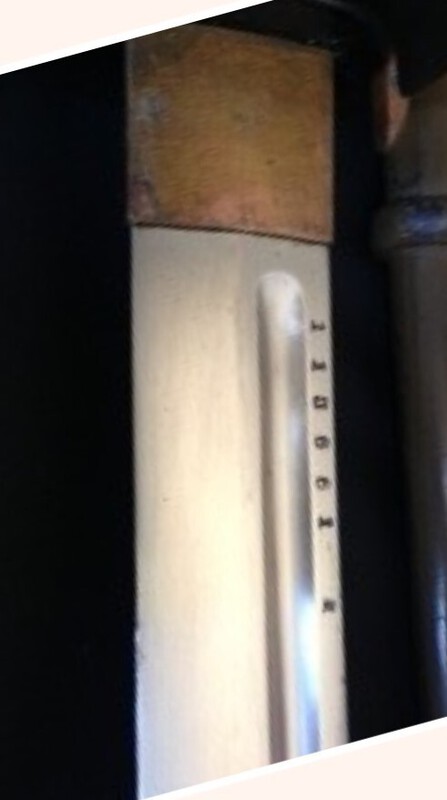
John, You may have read a post or 2 of mine where I comment that the Nagoya Arsenal didn't seem to have quite as tight quality control as the Tokyo 1st Arsenal. They still had good quality, you just see very slight variances that aren't as prevalent on Tokyo blades. But, their bohi, or fuller groove was open-ended (for lack of better word) compared to the Tokyo bohi. Here is an example of the Nagoya bohi: Whereas, Tokyo bohi have a more distinct shape: Now, having said that, I have actual examples from both arsenals of just the opposite. But they are the exception, not the norm. As to the other types - I have fake 19s, 95s, and 98s on file, but no kaigunto or Rinji seishiki (Type 3). I believe I have seen fake kaigunto, but didn't think to file photos at the time.
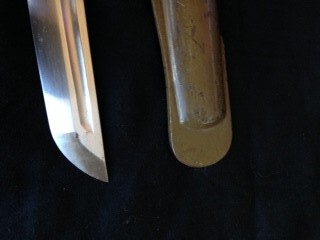
-
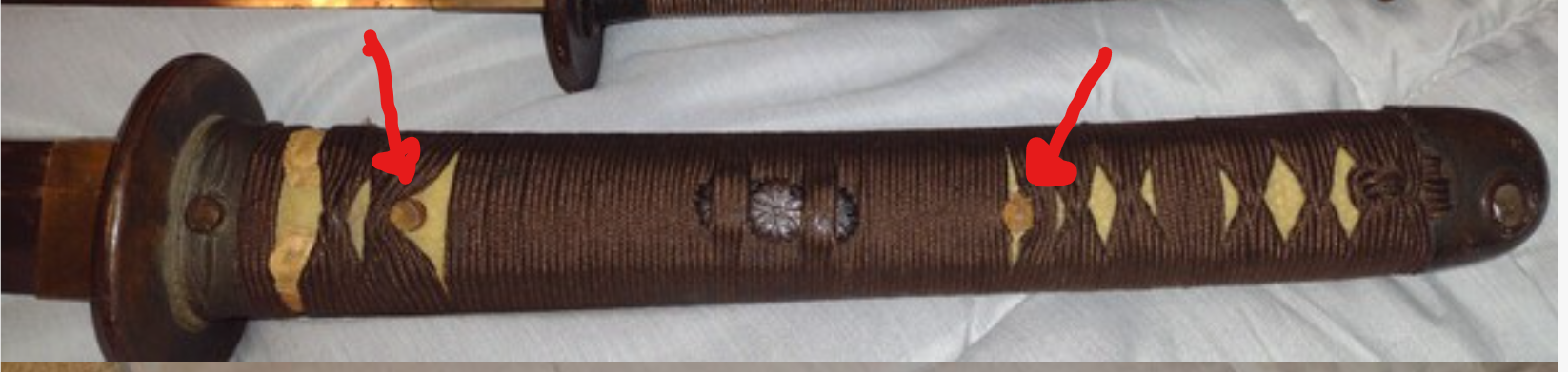
I am away from my books, and will look up the smith later, unless someone beats me to it. The fittings obviously had a rough life and the handle (tsuka) has been re-wrapped recently. Still, a legitimate Type 98 in combat saya.
-
Assistance with character on Onkashi-To fittings
Bruce Pennington replied to PNSSHOGUN's topic in Translation Assistance
Yasuyo https://en.m.wikiped...wiki/Yasuyo_Yamasaki commander of the Attu raid. I have no idea, but this came up when I searched the name. Maybe the fittings craftsman with numbers in the middle of his name. I don’t see why he would put numbers in the middle of his name, though, instead of after. OK, I’ll sit down and be quiet. -
discussion about rare Japanese dirk
Bruce Pennington replied to antiquegallery's topic in Military Swords of Japan
Thanks Alex and Trystan! So the OP dirk is a Korean Governor dirk. A 3:5:3 would be a Railway Board, Junior officer dirk. Thanks guys! -
Help in identifying the image of the plant.
Bruce Pennington replied to gorec5642's topic in Military Swords of Japan
This dirk is extremely unusual, too, as it only has 1 belt loop. I've sent this link to "Ortos" at Warrelics to see if he can identify it. He's got quite a dirk collection and has some dirk reference material that I don't have. Here's a recent thread he started, in case anyone wants to contact him about dirks: A collection of Japanese dirks (warrelics.eu) -
discussion about rare Japanese dirk
Bruce Pennington replied to antiquegallery's topic in Military Swords of Japan
Trystan, Curious to know your source on that. The only reference book I have that discusses various dirks is F&G Japanese Military and Civil Swords and Dirks. On pages 183, 184, he shows this exact pattern, for the National Railways Board Dirks, Junior and Senior. In his discussion, he states they both carried the 5:7:5. He states that the drawing of a 3:5:3 in Swords of Imperial Japan 1868-1945 was an error. -
Repainting Type 95 Aluminum
Bruce Pennington replied to Lordd_Humungous's topic in Military Swords of Japan
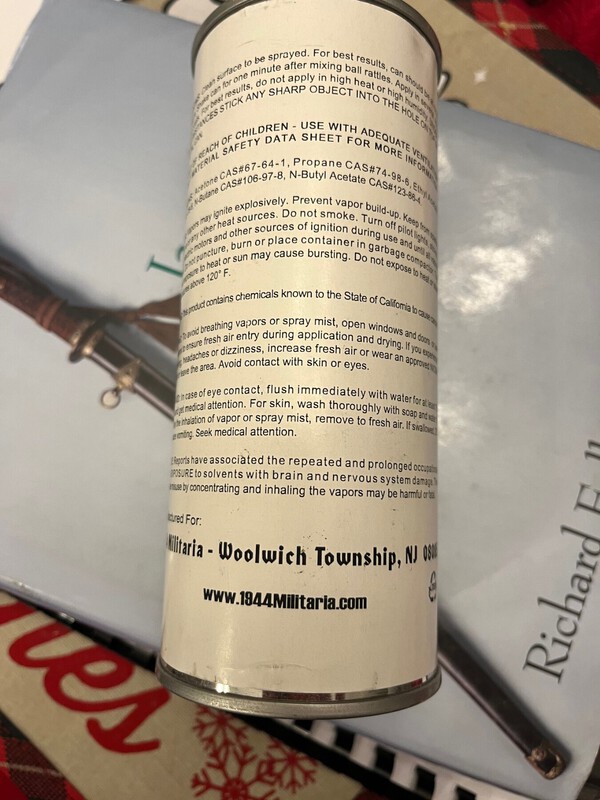
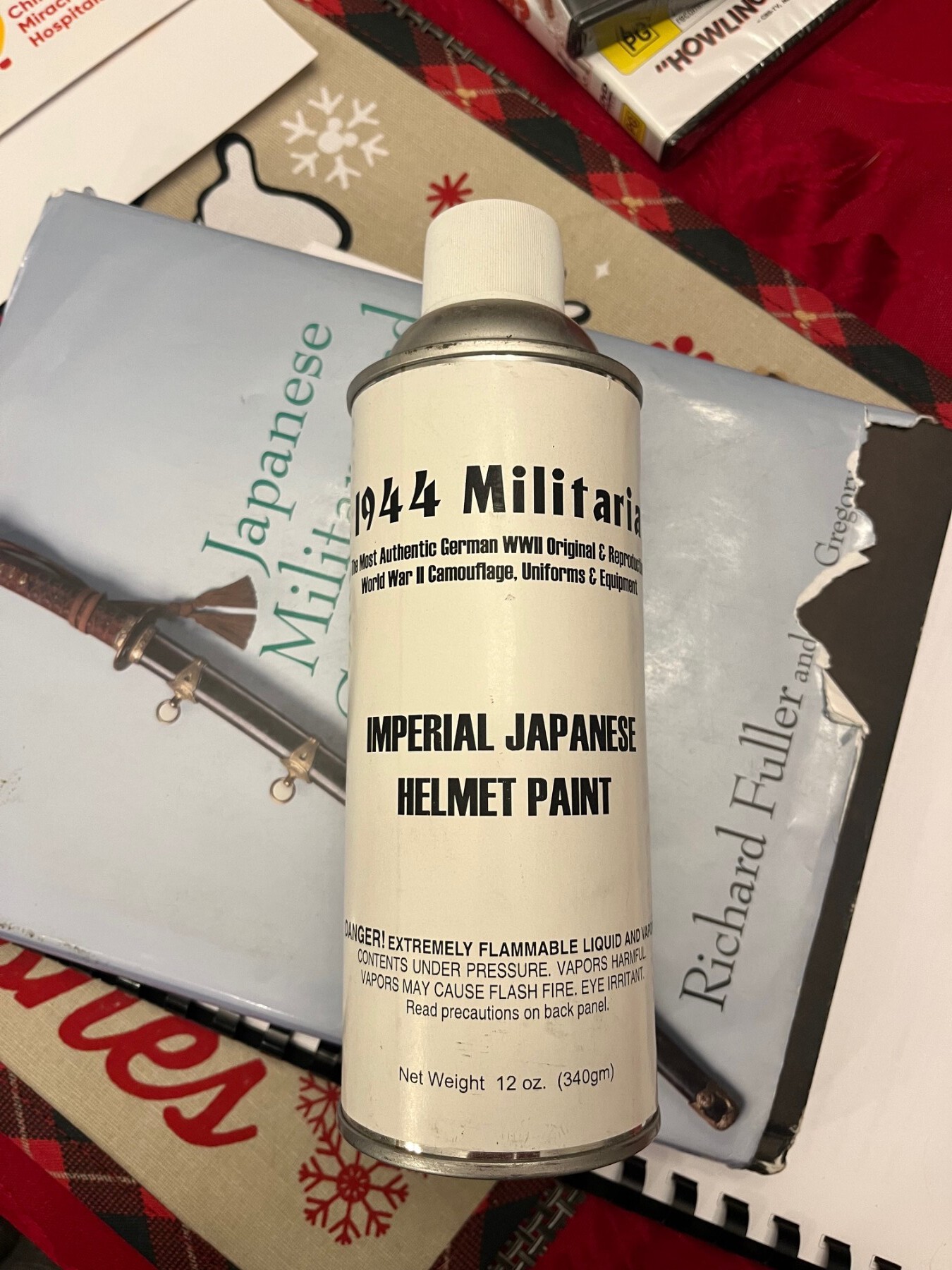
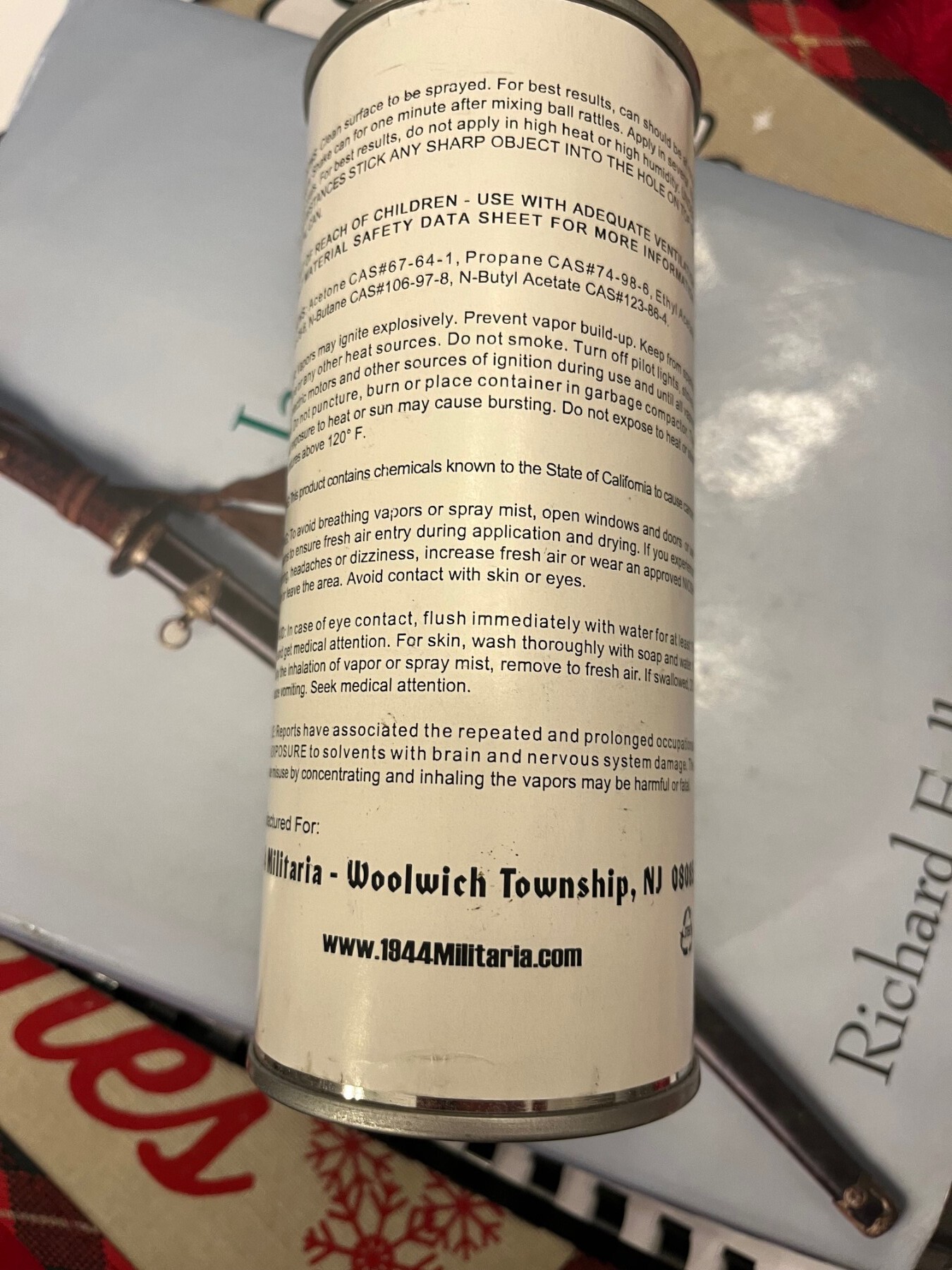
Jackson, I went through this when I decided to re-paint a Type 95 I had that was totally painted gold, even the blade. You can read what I went through here: The short version is I had a friend that painted model airplanes do the tsuka, and I ordered a WWII helmet paint for the saya. It turned out to be too green to match my other legit 95s, so I mixed some brown spray paint as I sprayed the green. It's still not exact, but for what you're describing, it should help. Here are pics of the spray can. You can see a website at the bottom of one side, for contact info. I haven't tried it, so I don't know if it's active.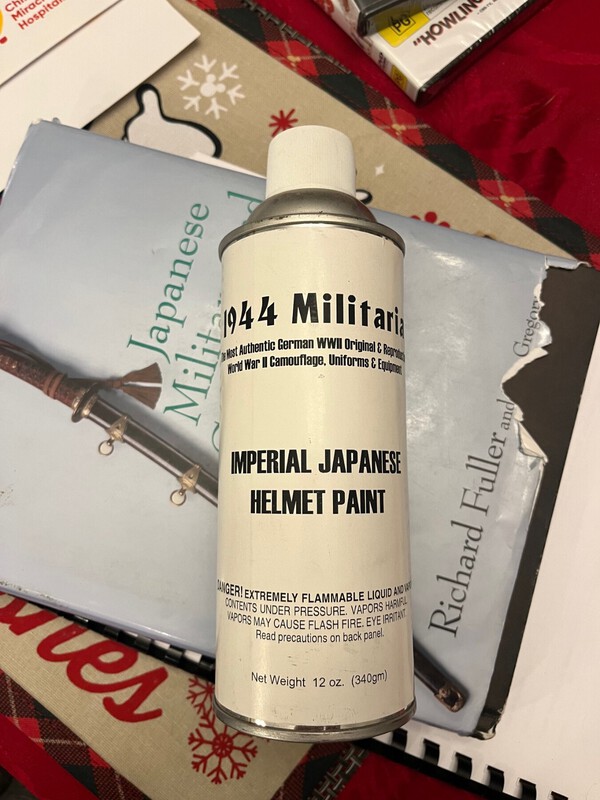
-
Identifying inherited sword
Bruce Pennington replied to James R's topic in General Nihonto Related Discussion
James, The small stamp, Showa stamp, is seen on blades from 1935 - 1942, with the massive majority of them in 1940-41. Just to give you an idea of it's age. They tend to be above average quality, and 1 or 2 have even been papered by Shinsa. Maybe you could give us a couple close-ups of the blade showing the hamon (temper line)? -
Any Shin Gunto With "battle Scars"?
Bruce Pennington replied to PNSSHOGUN's topic in Military Swords of Japan
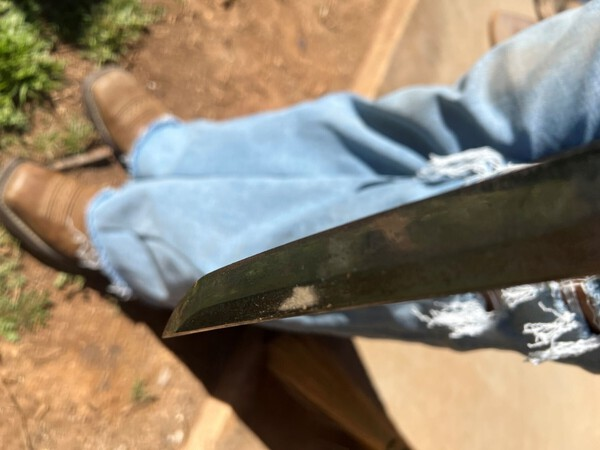
There's a good one posted by @JohnWB HERE Looks like the bullet glanced off the blade. Testimony to the quality of of the blade, I'd say!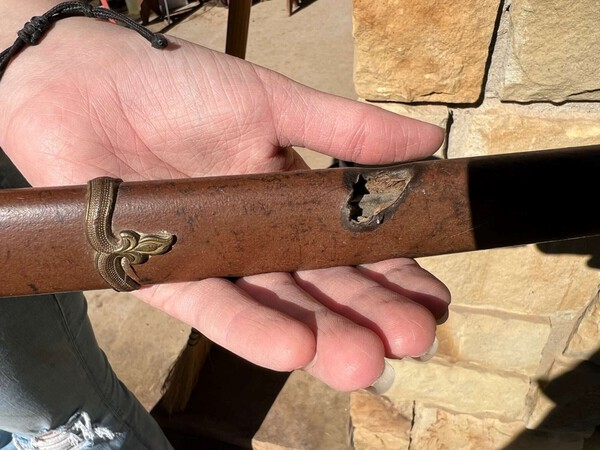
-
Ooo, nice!
-
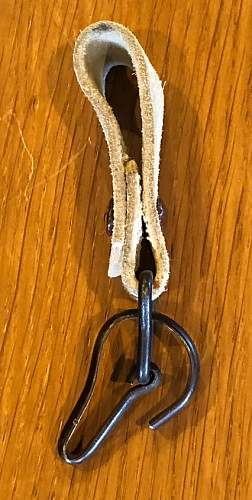
I'm no bayonet guy, but that's a bayonet frog. If original, the owner must have lost/damaged his sword belt and gotten creative!
-
discussion about rare Japanese dirk
Bruce Pennington replied to antiquegallery's topic in Military Swords of Japan
Still having trouble with the Warrelics site. But the guy discussing the variations on his dirk collection said there were many more variations seen in the early years of dirk production. So, maybe yours is quite early. -
Interesting Sword Hanger (warrelics.eu)
-
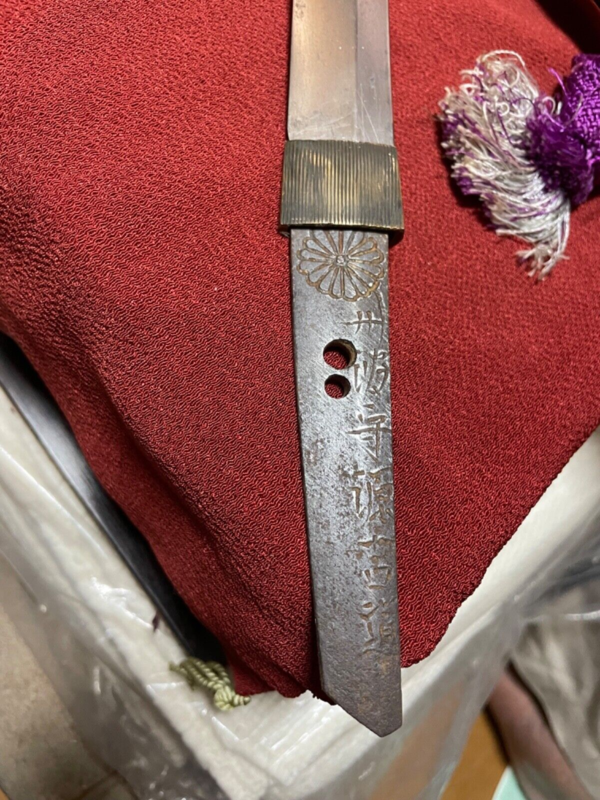
We sometimes get asked if there are kaigunto with family blades, or civil swords re-fitted for the navy. I've seen more kaigunto, full naval koshirae, with an old blade (I own one), but rare to see a civil sword re-fitted for Navy. Here is one. A 1600's Yoshimichi with Kiku, civil fittings, but obviously re-fitted for a naval officer. For sale HERE.
.thumb.jpg.9cc579cddf213175f6c6f6b716946ca1.jpg)
.thumb.jpg.4468a6759137e56209c145bb99364654.jpg)
.thumb.jpg.dadb4329f6833ee439a0443f653781db.jpg)
-
Information about WW2 Smith Ikeda Kunitada
Bruce Pennington replied to Itomagoi's topic in Military Swords of Japan
Ok, now I see it, thanks Peter! -
Information about WW2 Smith Ikeda Kunitada
Bruce Pennington replied to Itomagoi's topic in Military Swords of Japan
Can anyone make out the year on that nakago? It looks to me like "2608" but that would be 1948! -
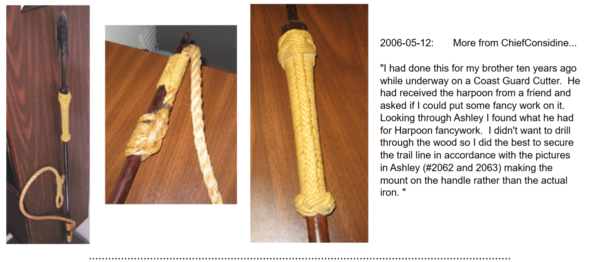
Now having ID'd the sailor 'fancywork', you made me curious - do you know of Japanese craftsmen do this kind of knot-work on saya?
-
Bingo! Exact same pattern as the OP
-
Stephen, That is the one he's re-shot with different lighting a focus: Appears to be corrosion.


-
WWII sword hilt translation
Bruce Pennington replied to WWII sword tang's topic in Translation Assistance
Interesting idea, Thomas. Might explain why the large stamp is seen all the way into 1945 (1). The guild seems to have replaced the stamp from 1943-'45 with the Gifu-in-sakura stamp after Nagoya hijacked the seki. My assumption was that the large Seki stamps were still lying around and got picked up randomly, or even a particular inspector, maybe in a more remote location, was still using his when the rest of the inspectors had transitioned to the Gifu. But your idea is worth throwing into the mix for sure! I have 5 1944 blades, and 1 '45, with the large Seki Stamp: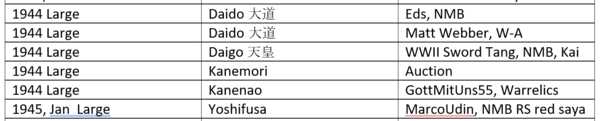

-
Ok, thanks for checking! One of the many undocumented smiths of the war.
-
Japanese Officer Sword- Iwo Jima
Bruce Pennington replied to montrealfan1986's topic in Military Swords of Japan
Hi Matthew, Japanese swords over the centuries have been intentionally made so the handles (tsuka) come off easily. Like John mentioned there are 2 wooden pegs (menuki) on yours By the looks of it, these are the fatter ends, so you would push them out from the other side. Then the whole set of handle, handguard, and spacers will simply slide off the tang (nakago). If you get resistance, no worries, it's usually just decades-old grime, sometimes a bit of rust. I wrap the blade tightly with a shop rag to hold, and tap the handguard (tsuba) with a rubber mallet to knock it all loose. To learn more about your sword, try these articles: Unveiling the Rinjiseishiki Sword in 1940, by Nick Komiya Army Type 3 (old terminology), by Ohmura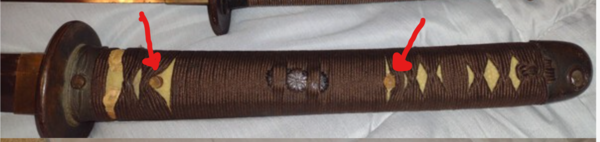
-
Are those names of Japanese workmanship? The word I'm looking for is for G.I. or Allied sailors who do such work to kill time on the ship going home.
.jpg.96c7ba509423799aba19054ed8b02618.jpg)





.jpg.524116f3c25091170b50260b4ede9d48.jpg)
.jpg.99e6786b9a9ea5c9ff85a1247277e467.jpg)
.jpg.e484fcf39f42bf03d07cf9406ce07abf.jpg)