


Bruce Pennington
-
Posts
14,509 -
Joined
-
Last visited
-
Days Won
175
Content Type
Profiles
Forums
Events
Store
Downloads
Gallery
Everything posted by Bruce Pennington
-

Help with mei translation on gunto
Bruce Pennington replied to JohnWB's topic in Military Swords of Japan
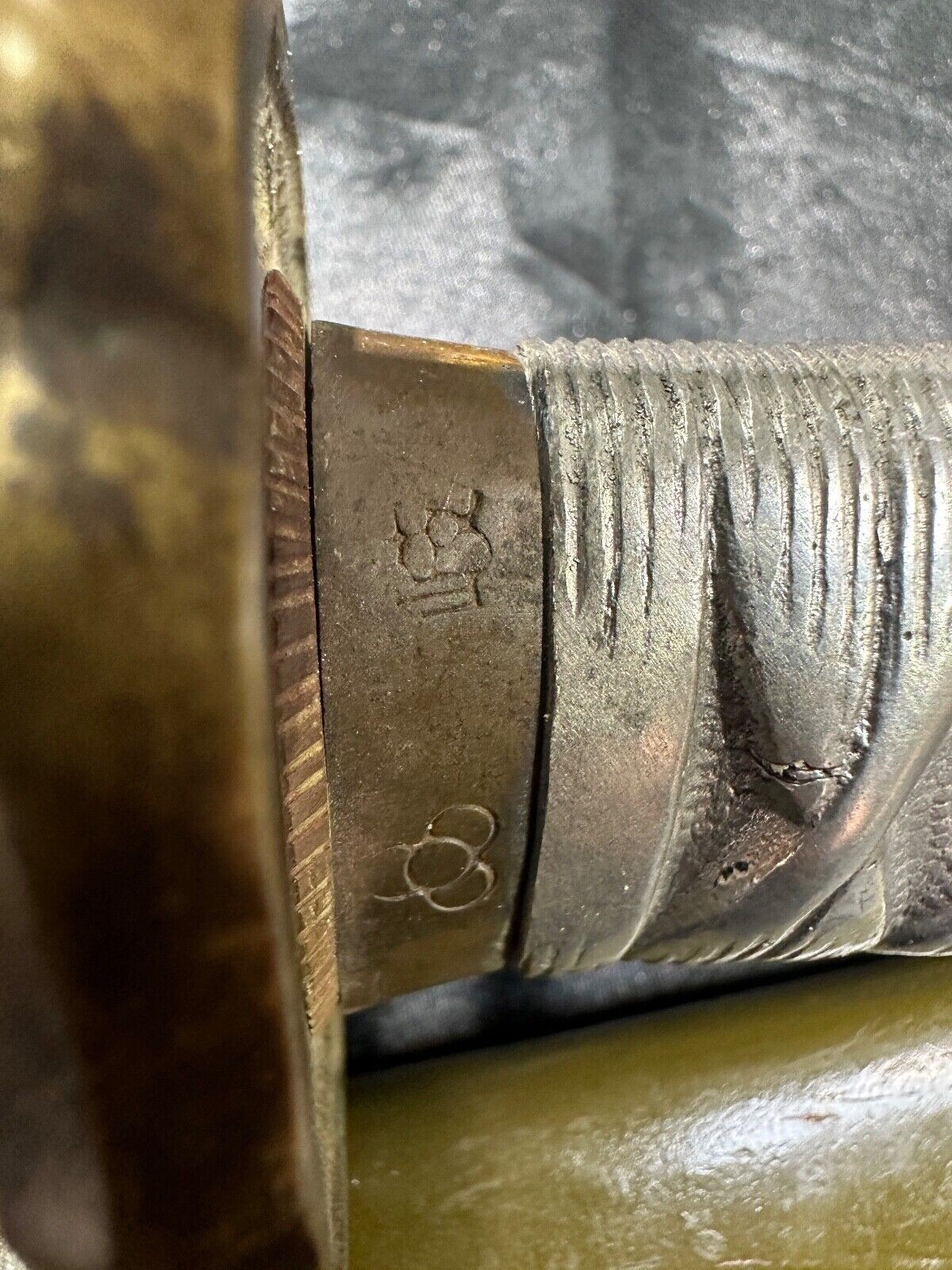
So, January, 1944. Could you do me the honor of posting a couple of clear shots of the small stamps near the top? -
Steve, The looseness is likely due to drying out and shrinkage of the leather seppa. Couple of ideas - make a leather seppa to go on the other side of the tsuba; buy a couple of spare seppa to make the fit tighter. I have added seppa to a number of gunto in my collection to make the fit snug. They don't cost that much, luckily, as you will have to buy a few of them to get 1 or 2 that you like and that fit well.
-
Attention Mantetsu Owners: A Survey
Bruce Pennington replied to Bruce Pennington's topic in Military Swords of Japan
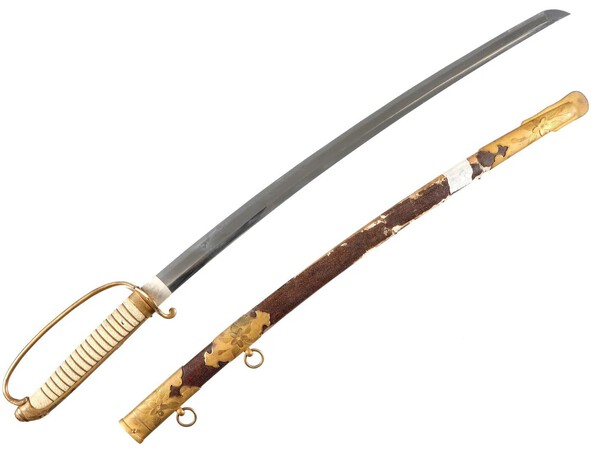
A 1938 SMR Mantetsu in Navy Kyugunto fittings!!! -
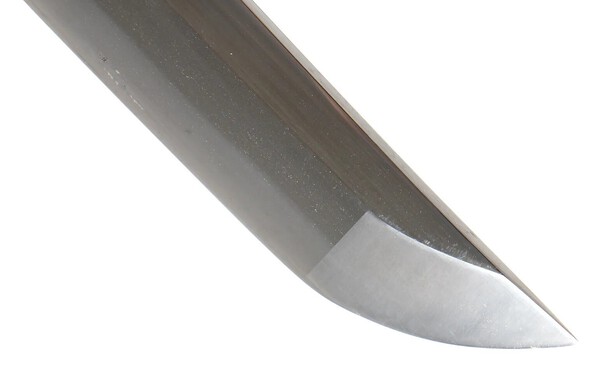
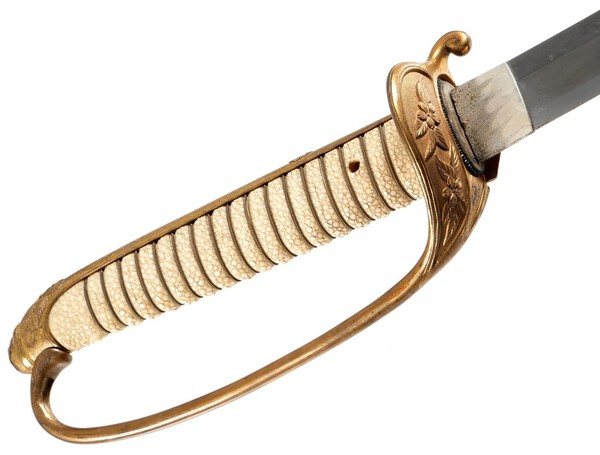
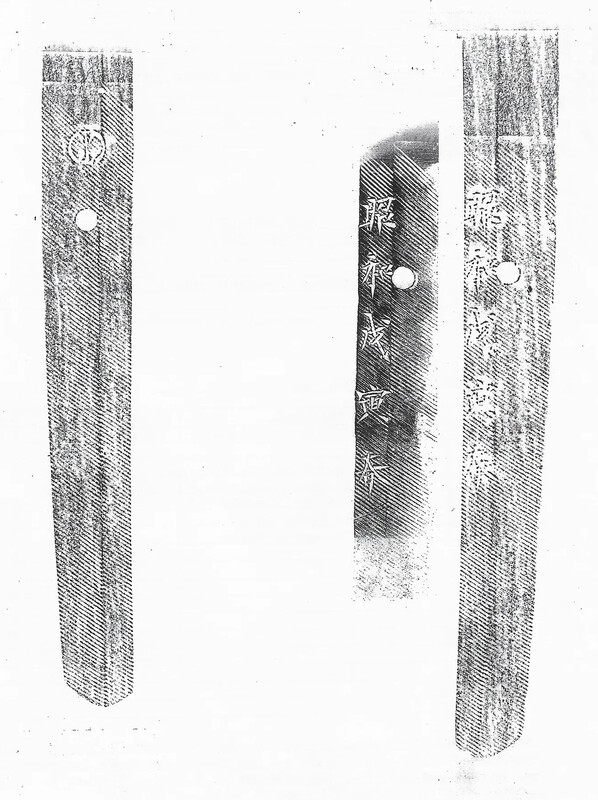
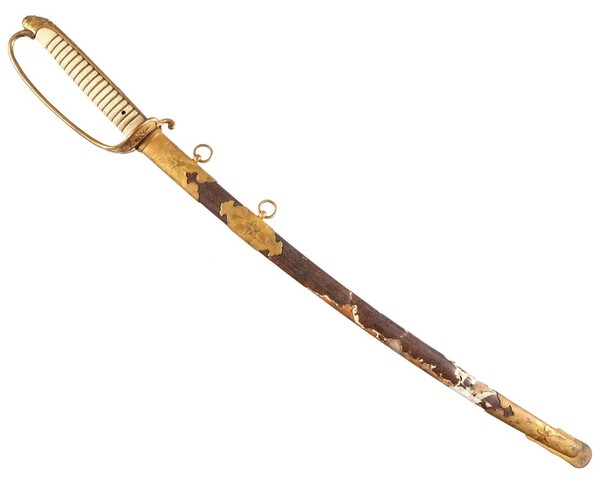
One of our guys gave me a link to this. It had been at auction, Amero Auctions, and he hoped to get it, but was outbid. Hoping someone here won it and will post photos, including the serial number! A 1938 SMR Mantetsu in Navy Kyugunto fittings!!!
-
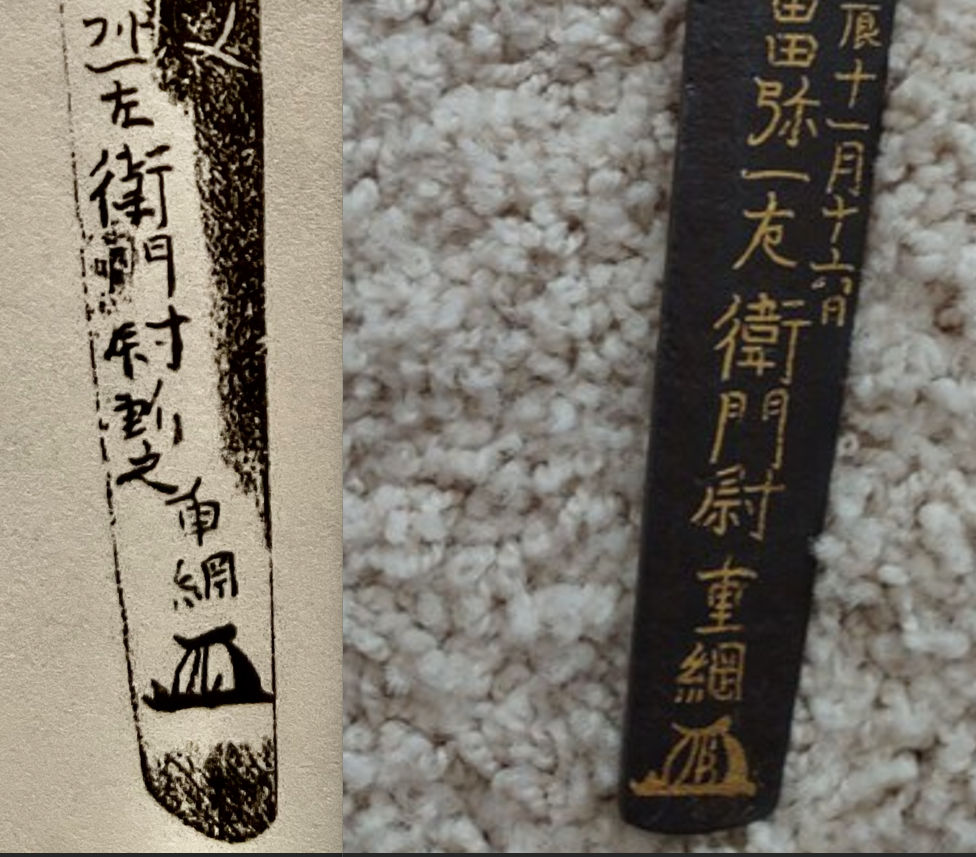
The more I look at the Sesko blade's mei, I'm wondering if it weren't done by another hand. What's it called? Nakarishi mei? BTW, I've added a photo of this actual kakihan to the upcoming March revision to the Stamps Doc. Thanks guys!
-
Good eye, George! I had assumed it had come up from the leather saya cover, but from this picture, you can see it is above the tuba, like you say.

-
Opinions and value of a type 95 nco sword
Bruce Pennington replied to Gunner1171's topic in Military Swords of Japan
I don’t think anyone knows the answer to that question. -
This one is very much like the OP sword mei. Almost makes the one in Sesko look gimei! Ha!

-
Wanted Study Group in Colorado
Bruce Pennington replied to Darin Steele's topic in General Nihonto Related Discussion
I am in Colorado Springs. I know there are a couple of guys in Denver. Seems like there’s someone else in Colorado Springs too, though, I can’t think of who that is. -
Black Oil Cloth for Type 97 Tsuka?
Bruce Pennington replied to Kolekt-To's topic in Military Swords of Japan
Sort of surprising - an old nihonto in standard fittings, and a showato in custom fittings! Must be a factor of either taste, or finances of the officer. -
Very nice! Outside of Markus' example, this is the first Shigetsuna I've seen 'in the wild'! The kanji are written much more clearly than the Sesko example. There is a small veriation in the Kao. If both mei are legit, then it means he modified his kao over time. I've seen this done by a couple other cutters, but not common. Sesko's dated 1681 - yours 1676

-
Things get slow around here on the weekends. Give them some time, someone will help. Very nice kaigunto!
-
There are collectors who look specifically for such items.
-
Black Oil Cloth for Type 97 Tsuka?
Bruce Pennington replied to Kolekt-To's topic in Military Swords of Japan
Sounds like a good research project for you Geoff! Good reading here: From Rinji-seishiki to Daiyou-seishiki of Weapon Specs (warrelics.eu) and here: 1945 Rinji Seishiki on the ICU Ventilator (warrelics.eu) I can't find the thread where Nick listed the changes in materials for the swords. Maybe it's in the 2 I posted, and I just missed it. But there was a spec change that ordered manufactures to avoid using animal products, which would have included rayskin. I think this came in '43 or '44. Obviously, since we have seen many '43-'45 gunto with rayskin, the industry didn't really comply. But the style you're posting certainly did comply. I haven't tracked these, so I don't have data to say, but off the cuff, I'd say all these will be found to be in the last year. Maybe you can start a study tracking them. Dated blades would tell the story. -
For those working to get better at telling the difference between the real and fake 95, here is a great presentation of a real Ijima/Tokyo gunto. The pictures display all the key areas for ID purposes. It's in Russian, but the pictures are all that matters. One could save this link for future comparisons. Type 95 Ijima/Tokyo Pictorial Example
-
Genuine or not? Thoughts?
Bruce Pennington replied to aabderson's topic in General Nihonto Related Discussion
I can't resist - who's asses are we talking about? Ha! Oh the difference 1 letter can make! Sorry, but to your regular programming. -
Oh My! No Clue, need help!
Bruce Pennington replied to Bruce Pennington's topic in Translation Assistance
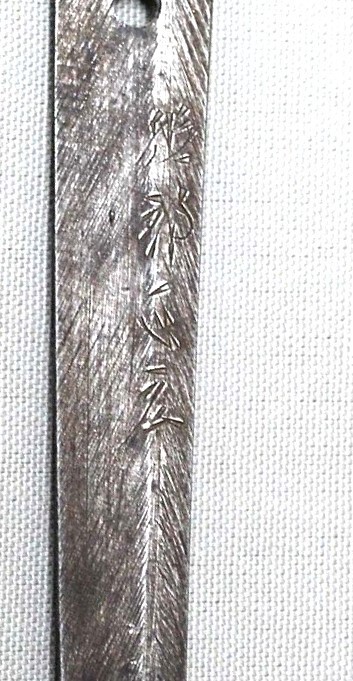
Thanks guys (Steve!). I would have guessed "masa" for that 3rd one, but no way I was going to get close on the rest. -
Didn't know what that was. After a google search, now I understand why my wife's sister brought us one from her visit to Japan years ago. Not at home, but when I get a chance, I'll post a pic.
-
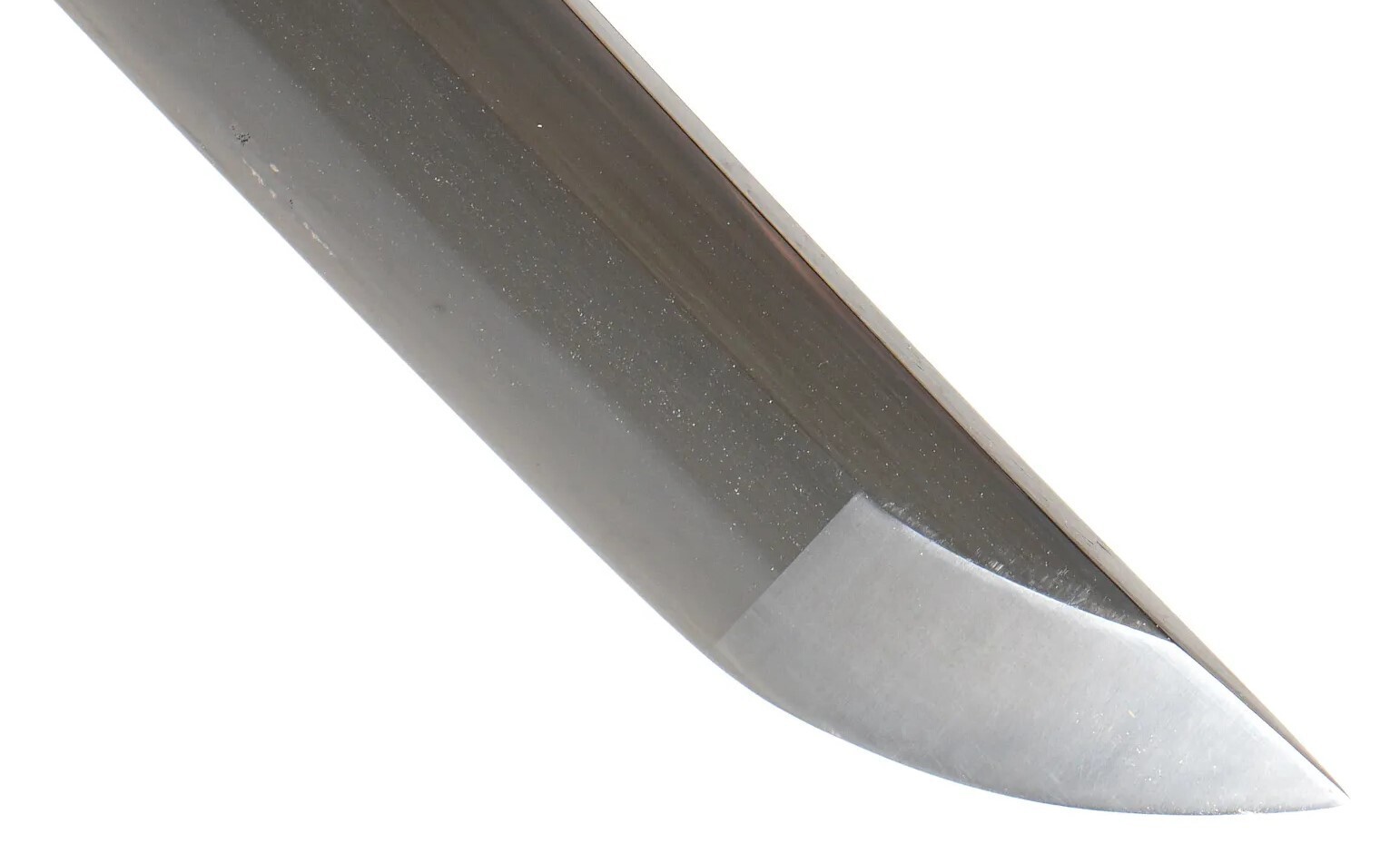
So to summarize the top 5 (not that these are always present, or the best signs) 1. Overall look - As in the photo above, the bohi stands out as not being shaped right, starting too far down and ending too early 2. A closer look at the bohi, most fakes go for Tokyo blades & stamps. If so, then the start and end of the bohi should be shaped not tapered. Nagoya blades, though, have tapered bohi. This example was actually shaped (with a small blip of an error). 3. Numbers - some guys are good at spotting proper font, I'm not, but it is clear when an attempted Tokyo blade has the numbers with the cutting edge up. Only Nagoya blades are stamped that way. Tokyo blades are read with cutting edge down. Also, the fakers have a really hard time with the "TO" stamp by the serial numbers. 4. Stamps on the fuchi. Usually they are horrid. The Polish fakes are getting quite good, but if you can get a clear shot of their Ijima stamp, the detail is usually not as crisp. 5. Any writing on the blade? Fake. I have a very vague recollection of a 95 with a school graduation notation on the blade, but anytime you see stuff on a 95 blade, LOUD alarm bells should be going off.
-
Oh My! No Clue, need help!
Bruce Pennington replied to Bruce Pennington's topic in Translation Assistance
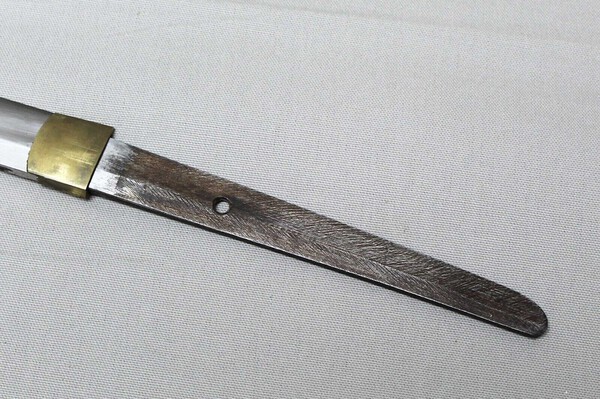
I know! Sometimes I just shake my head. Doctors, here, are notorious for intentionally poor handwriting. Seems some of these smiths went to the same school as our docs. Thanks Steve! It's an undated, large Seki-stamped blade in 98 fittings on fleabay..thumb.jpg.bcc07b8e1345bdacf862bd1899234fc1.jpg)
.thumb.jpg.20db71277ac2c692239ca6e94dad1ad2.jpg)
-
Normally I can at least make out 1 kanji!!!
-
That's the one! Only Nagoya blades stamp the numbers with the cutting edge up.
-
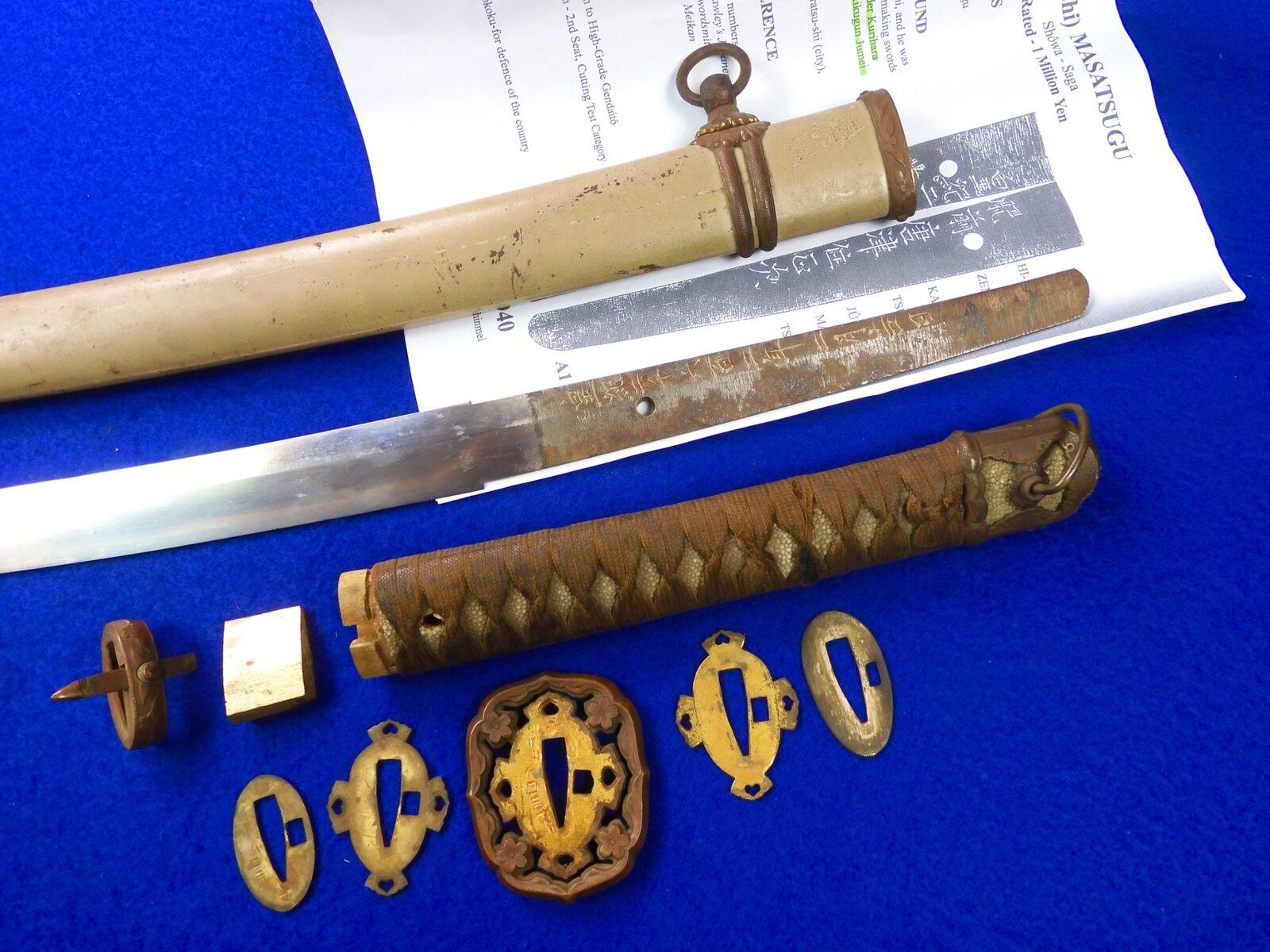
Reference the tan saya color of @TimJs post. Here's on officer saya the same color. Just unusual to see it on a 95.

-
Really good, John. Missed a Biggie on items 2 & 3 photo.
-
4. And 5 (which is not present on this sword, but often seen) Now you guys tell me what's wrong.

.thumb.jpg.1b4fad10fa9c9a7ceabc92deb4f16b34.jpg)







.jpg.081fc6f144457680e191638f86e5c34f.jpg)
.jpg.825b720351cc91f0ef7dccc270b880a4.jpg)

.jpg.62b18e193f3c44eefc009db06c803197.jpg)