
Bruce Pennington
-
Posts
14,509 -
Joined
-
Last visited
-
Days Won
175
Content Type
Profiles
Forums
Events
Store
Downloads
Gallery
Everything posted by Bruce Pennington
-

Is it real WWII Wakizashi or not?
Bruce Pennington replied to MaxMorelli's topic in Military Swords of Japan
-
Is it real WWII Wakizashi or not?
Bruce Pennington replied to MaxMorelli's topic in Military Swords of Japan
Date correction: Showa 17, so 1942. -
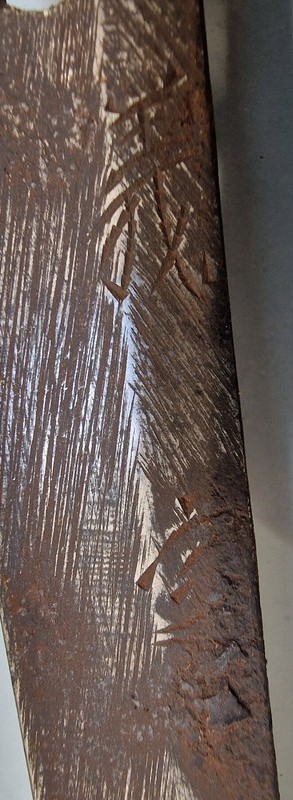
I'm posting this here to avoid hijacking Bruno's thread on Gunsui-to, but the original post is HERE, with link to the original site where it was found. So, this image is found on a gunsui-to. No one has offered an ID or meaning of it yet. While looking through Dawson's book on early Type 8's and their markings, I found this and thought it was the same thing. But, the Clement & Jung symbol has 8 rays, whereas this one only has 6. Might lend some credence, though, to the idea that this may actually represent something, as Dawson suggests, like a sun or cannonball burst.


-
After checking Dawson's discussion, he doesn't specify when Japan stopped stamping the ricasso, and I say "Japan" not just Suya as the Tokyo Arsenal had been stamping ricasso in this style as well for a while.
-
Type 95 NCO Sword - SC
Bruce Pennington replied to montrealfan1986's topic in Military Swords of Japan
Nice! The learning curve is climbing rapidly! Good eye spotting problems and being cautious. Can't remember if I already recommended Ohmura's site. Here is the link to his Type 95 pages, but you can get to all his sword pages by clicking the "Table of Contents" link at the top of his page. Non-commissioned officers Gunto 1935 (Type 95 Guntō)/title> (ohmura-study.net) -
It comes up in Japanese when I click it.
-
NICE NAOTANE PACKAGE
Bruce Pennington replied to BIG's topic in Auctions and Online Sales or Sellers
Interesting! First time I've seen a Buddhist bonji stamped onto the nakago. -
Can someone help me translate this into English
Bruce Pennington replied to Vampyres's topic in Translation Assistance
Yes, August '43. -
Google translate: A modern master craftsman who defeated the famous sword Tora Toru at the Showa 14 sword trial slashing tournament and won the title of "Sharpest Japan No. 1", and also made the samurai sword of Emperor Showa [predecessor Shiro Kunimitsu Japan sword] Free Shipping present JPY 8,250,000(Tax 0 yen) Strangely not all dremel, but most seems to be something other than a chisel


-
A Study: Yasukuni-to
Bruce Pennington replied to Bruce Pennington's topic in Military Swords of Japan
Are you thinking of this thread, Stephen? -
Company grade kyu-gunto, carried by officers prior to the release of the Type 94 in 1934. Looks nice.
-
The two-tone is new to me, but sounds like Steve has seen this before. Quite nice looking!
-
I'm away from my reference books, but is this a dress sword or a fighting kyu-gunto? The fighting blades were all made pre-WWII. I believe the dress 19s were made from inception to the end of WWII (might be wrong on that). My gut assumption on these is that they were early in production, mimicking the company stamping of the German early examples. As Japan got into full-on production, I suspect this style marking faded out. But that is pure speculation on my part. Hopefully some of the guys who collect these know more.
-
ww2 sword engraving info needed please
Bruce Pennington replied to Simon Moon's topic in Military Swords of Japan
Tom, A couple of questions - Can you remove the hardware from the tang, completely, and check for small stamps near the top or on the back edge? and how about that tassel, is it all brown or a 2 tone color? -
Is it real WWII Wakizashi or not?
Bruce Pennington replied to MaxMorelli's topic in Military Swords of Japan
In the seller's description, he lists the blade as 1700-1750, but the fittings as WWII. I agree with all the above. The blade looks legit, but horribly messed with, and the fittings are likely the result of a good intentioned Bubba wanting to "fix up" a sword with battered or missing parts. I have 5 Yasuhiro with kiku on file. He seemed to use a variety of kiku. The other one on file with this style looks quite similar, though this one is pretty coarsely cut. Can't speak to the mei itself. This one has a similar nakago shape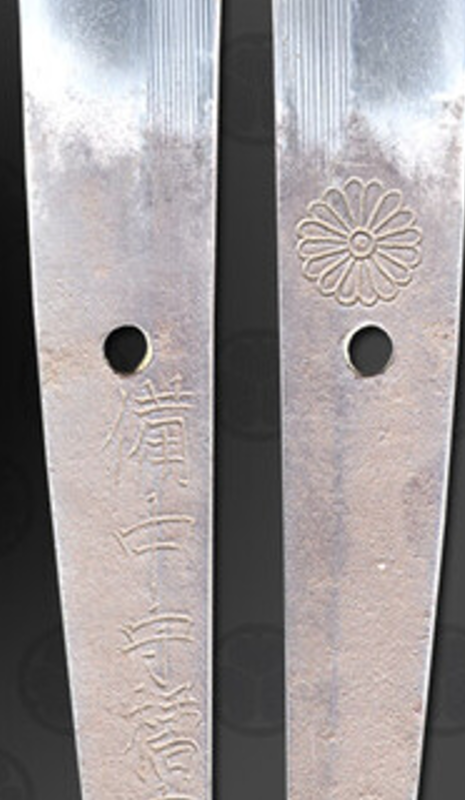

-
A Study: Yasukuni-to
Bruce Pennington replied to Bruce Pennington's topic in Military Swords of Japan
Thanks Carl! A combination of the angled file marks plus straight lines. Nice silver work, too. -
New Collector ~ NCO Sword - Serial Number
Bruce Pennington replied to montrealfan1986's topic in Military Swords of Japan
That’s a good one Matthew. -
WW2 Japanese sword by Kanesada
Bruce Pennington replied to Swords's topic in General Nihonto Related Discussion
-
WW2 Japanese sword by Kanesada
Bruce Pennington replied to Swords's topic in General Nihonto Related Discussion
It's like being married. You have to come to the point where you realize you cannot change your spouse, she (or he) is what she is. Once you accept that, you can then just talk to her where she's at and not get frustrated about it (or at least not show it outwardly! Ha!). -
Another of the blackened style, posted by @Okan HERE.


-
Any Date on this Cut Test blade?
Bruce Pennington replied to Bruce Pennington's topic in Translation Assistance
Great Steve, thanks! I'll amend the files. -
Kane Something Kane Something
Bruce Pennington replied to Bruce Pennington's topic in Translation Assistance
Thanks Mal! I went all around it, but didn't spot "tatsu"! Like we all know, "Close is only good with grenades and horseshoes!" -
Please dont tell me this is "Kanemichi"! That last kanji is close to "通" or "接" but isn't either. Help! It even looks like a version of Kanehiro but not.


-
Any Date on this Cut Test blade?
Bruce Pennington replied to Bruce Pennington's topic in Translation Assistance
Thanks Steve. Now I have 2 of his. The first one wasn't dated either and the blade was estimated to be mid 1650s. I realize cuts tests were often done sometime after a blade was made, maybe years, but 100 years seems a bit of a stretch. Any chance our NMB treasure @Markus Sesko is around? He literally wrote the book on the testers. Or if anyone else can give me an idea of when Yoshitoyo did his work? -
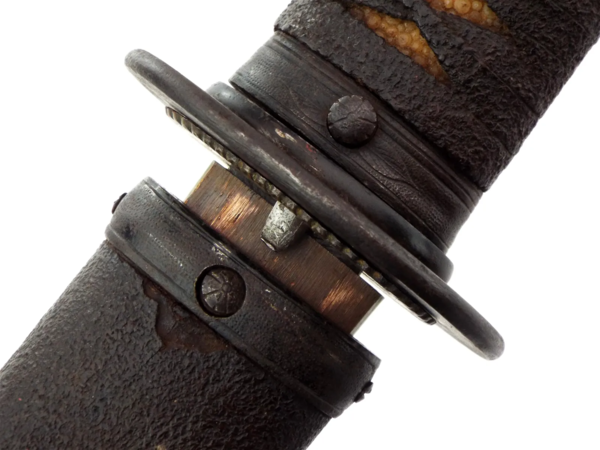
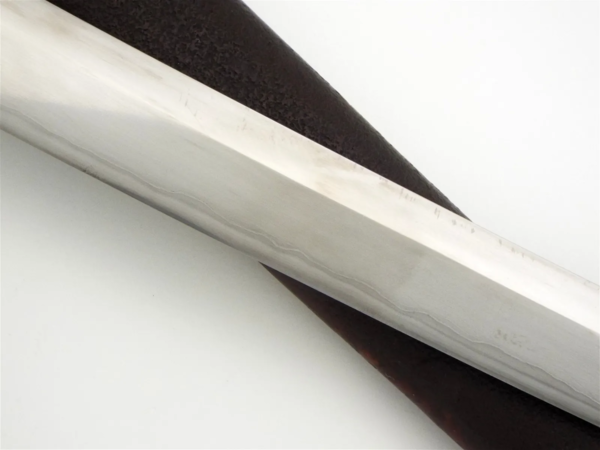
I just had to post this. Maybe there is some rookie collectors out there that may want a lesson on what to look for. Auction is HERE. This is being sold with that title "Interesting Japanese WWII Officers Katana Sword With Hand Made Pattern Welded Blade" Anytime you see the word "pattern" in the description, it is a red-flag. Also, what the heck is a "welded blade?" Sadly, this comes in a set of custom Rinje seishiki fittings with double release buttons that would normally house a nice gendaito RJT blade. It looks like that blade was removed an a mumei substitute showato was added. The dust cover seppa is missing, hence the gap in the fit. Strangely, the latch is too short to even reach the saya throat.
-
- 3
-

-

-