zanilu
-
Posts
542 -
Joined
-
Last visited
-
Days Won
5
Content Type
Profiles
Forums
Events
Store
Downloads
Gallery
Everything posted by zanilu
-

New Forum Software Update.
zanilu replied to Brian's topic in Forum Technical Details and Maintenance
Dear Brian You are probably already working on it, but the button "mark this forum as read" have disappeared. We all appreciate your work Best regards Luca -
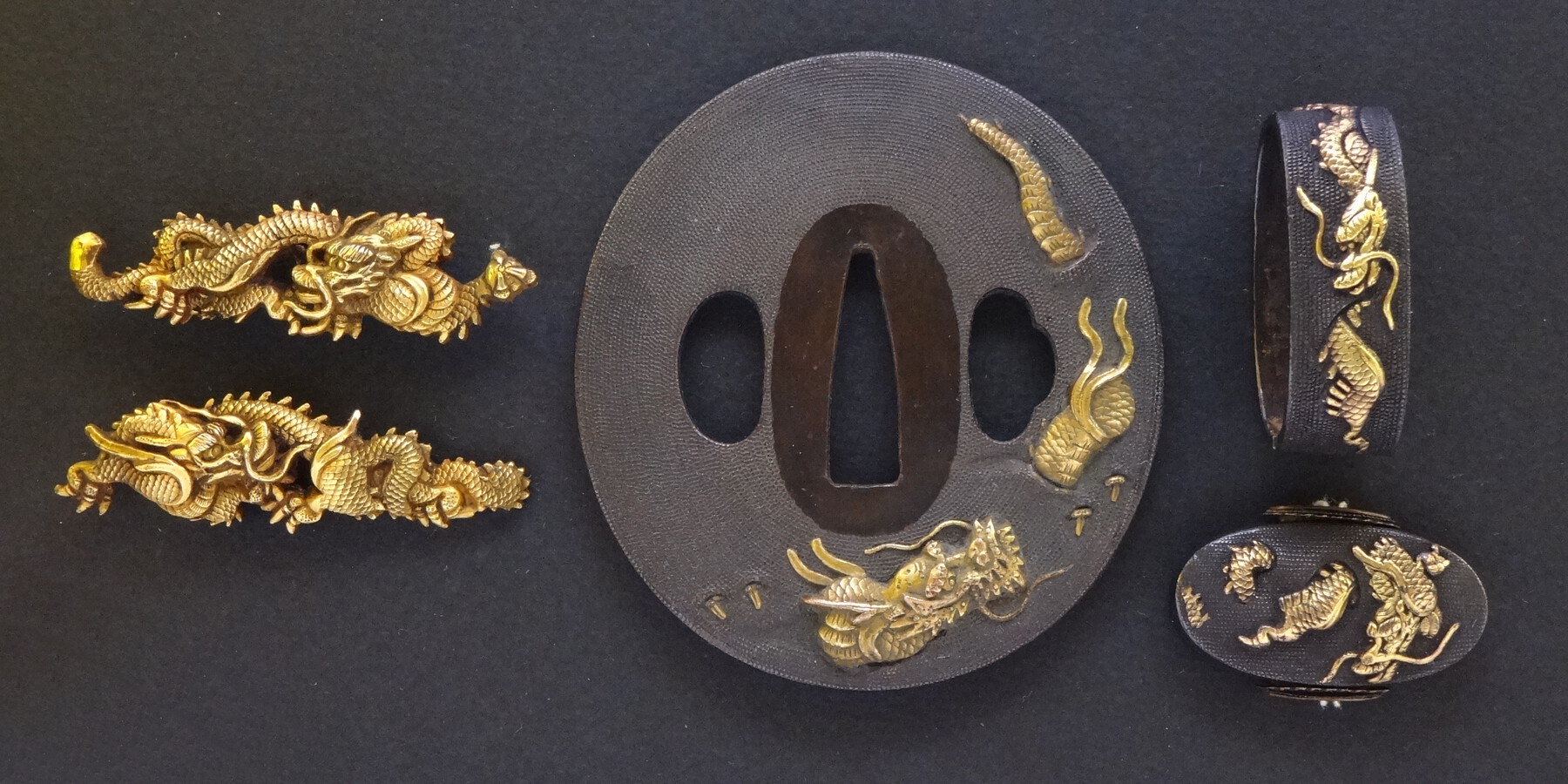
Dear Bazza. Here is a larger picture of the menuki. I do not know if they are solid gold. Luca

-
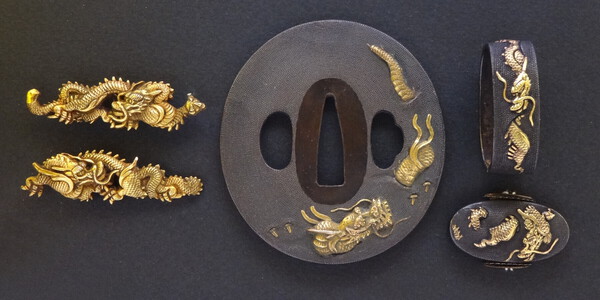
Hello Mark In my early days of my collector career I have put toghter this set. It is made purely by my western taste. I put together what are probably Mito fittings coming from different sources. I think of it as my Frankenstein set. Any comment is of course welcome Best regards Luca
-
I would say Hieanjo for Both. Left one early. Right one late. Luca
-
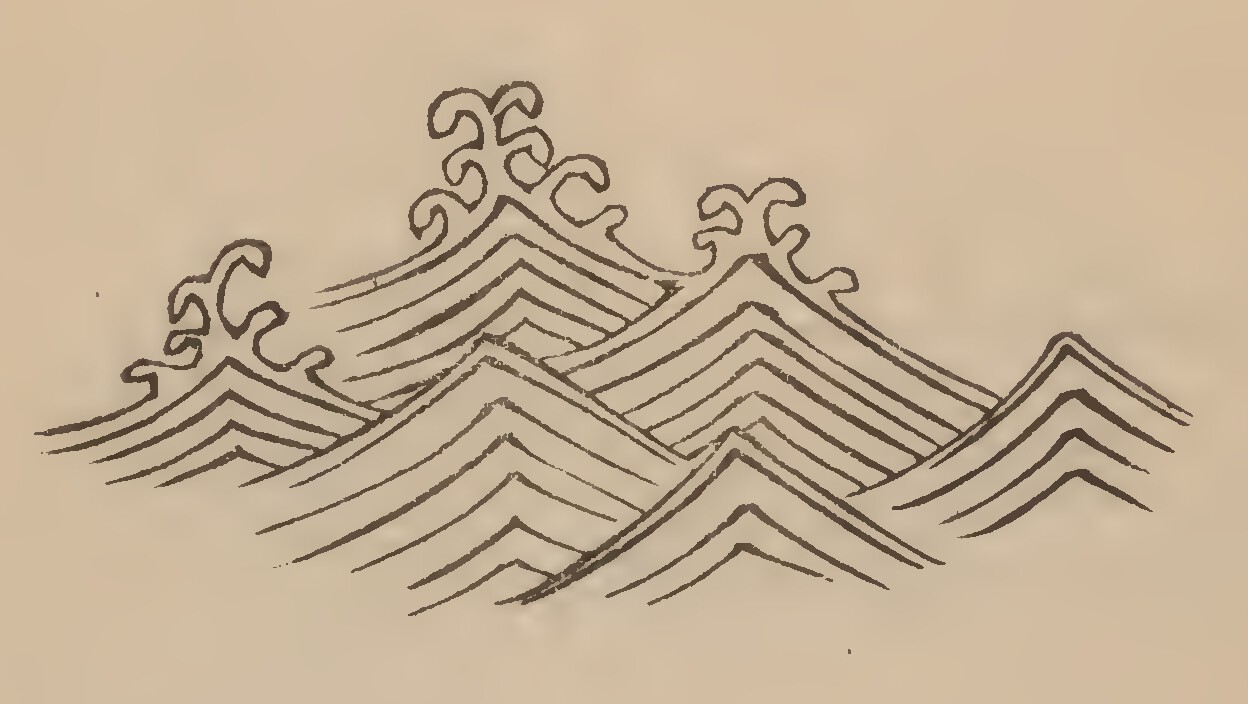
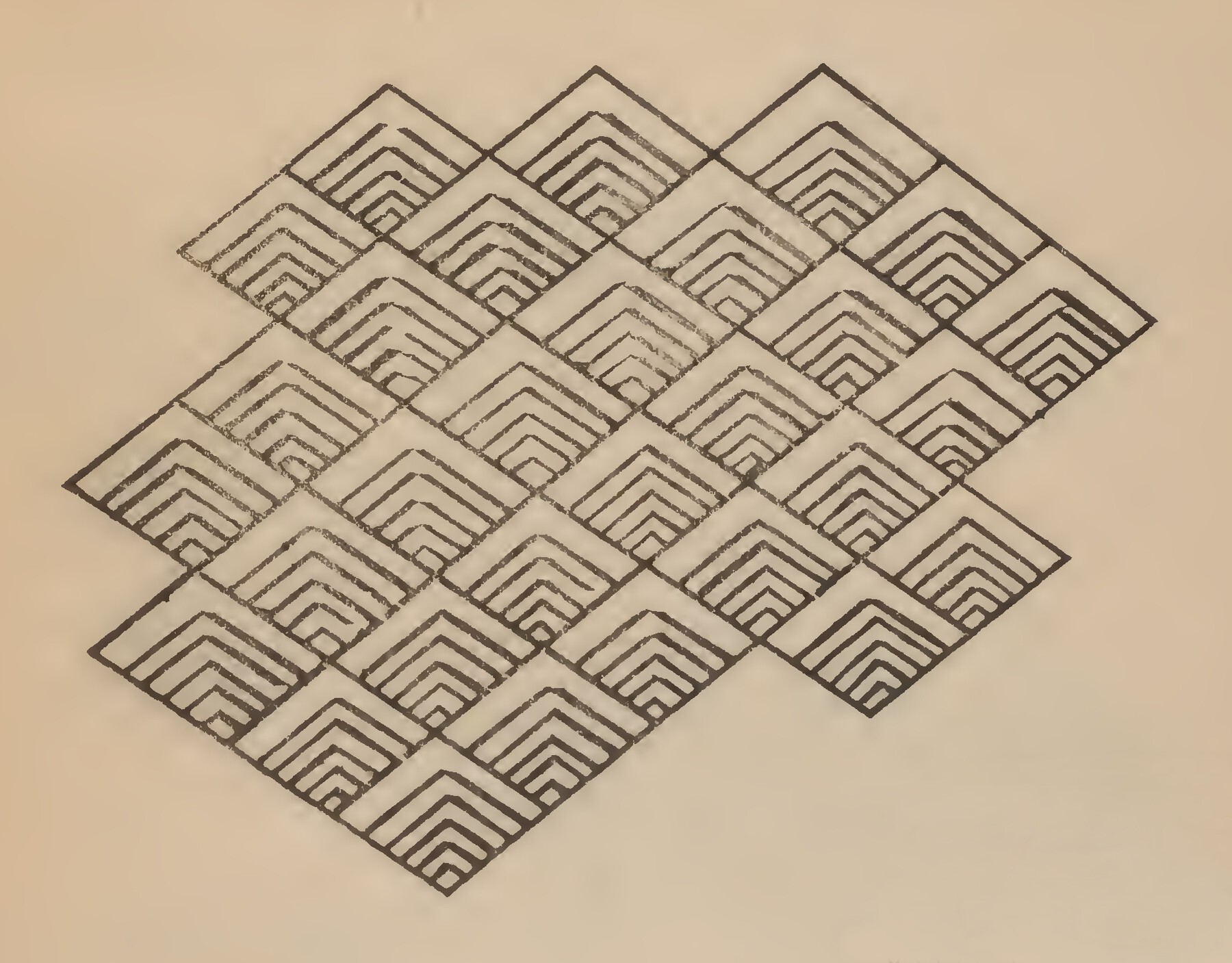
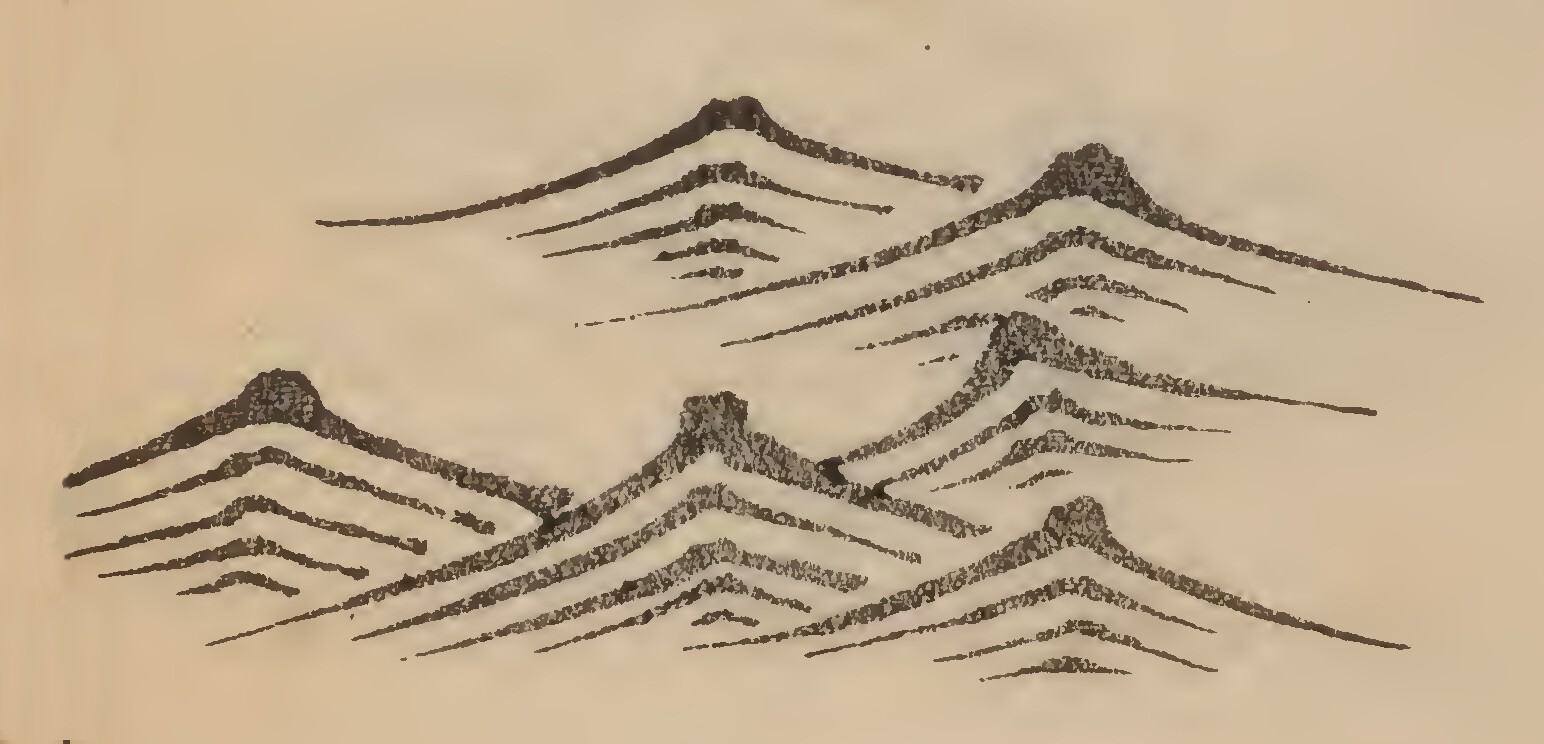
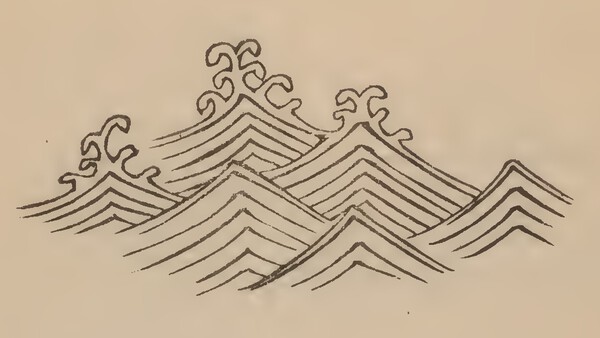
From: Mori Yuzan, Hamonshu: A Japanese Book of Wave and Ripple Designs Volume I, page 5: Volume I, page 15 Volume III, page 17 Regards Luca
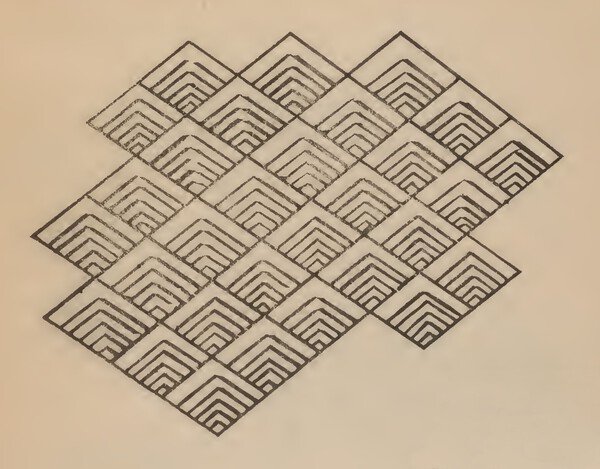
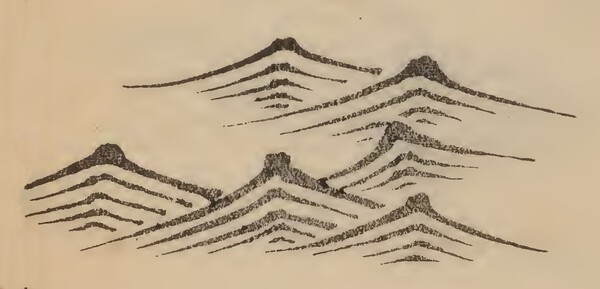
-
Grazie Mauro. I will look into it! If they are indeed waves then the decoration can be regarded as an extremely stylized kukusui mon? Or I am letting my imagination running too wild? Regards Luca
-
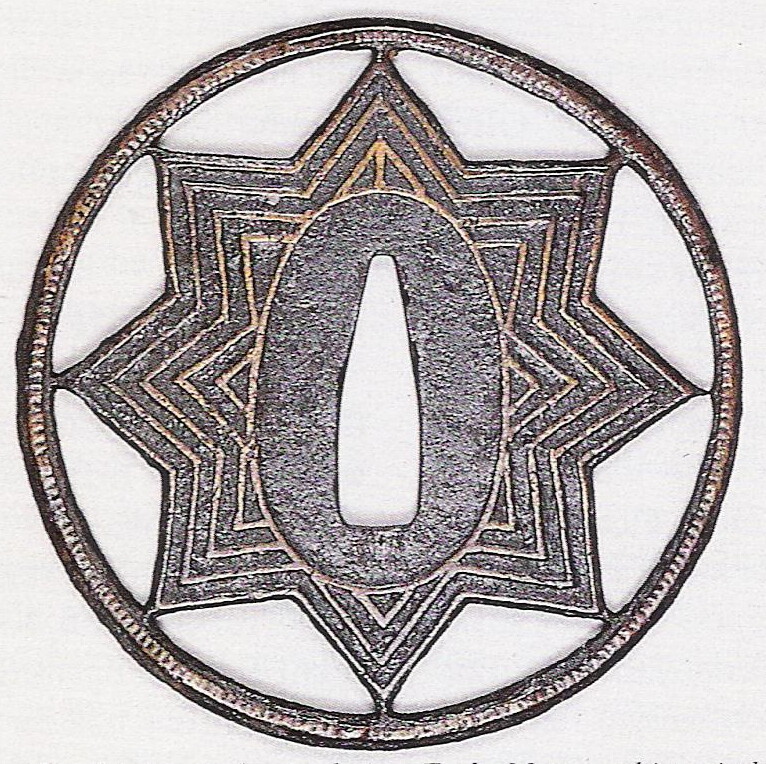
Thank you Curran. Do you mean this one? In the mean tine I have found another Onin tsuba with a similar desing: From Gemmel, Tosogu: Treasure of The Samurai, Sarzi-Amade Limited, 1991 pag 142 number 17 described as "Onin iron tsaba of star design with cast brass strip inlay. Early Muromachi period". Regards Luca
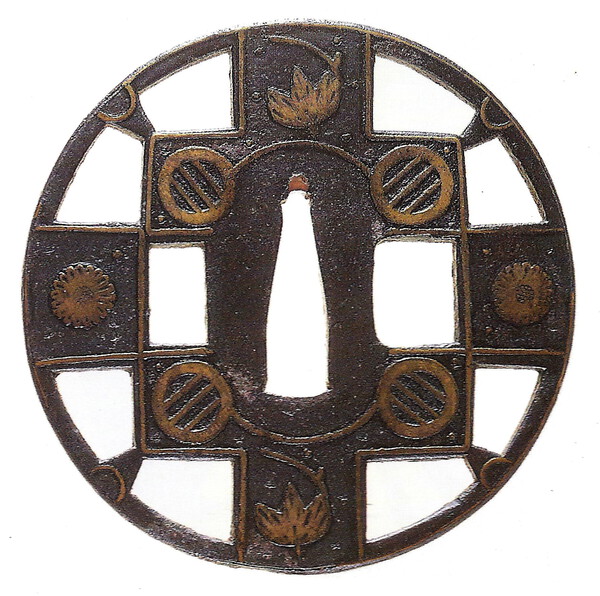

-
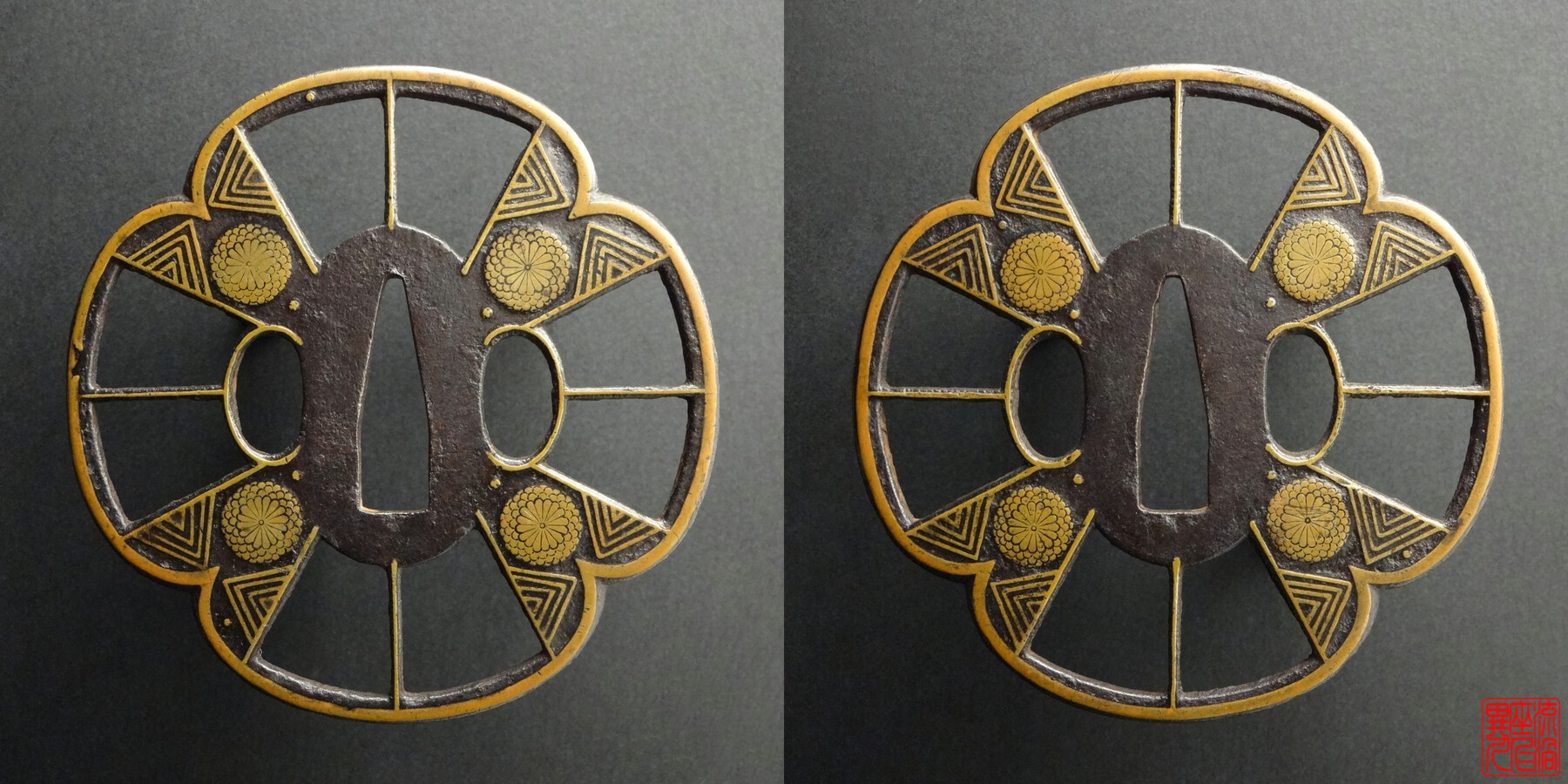
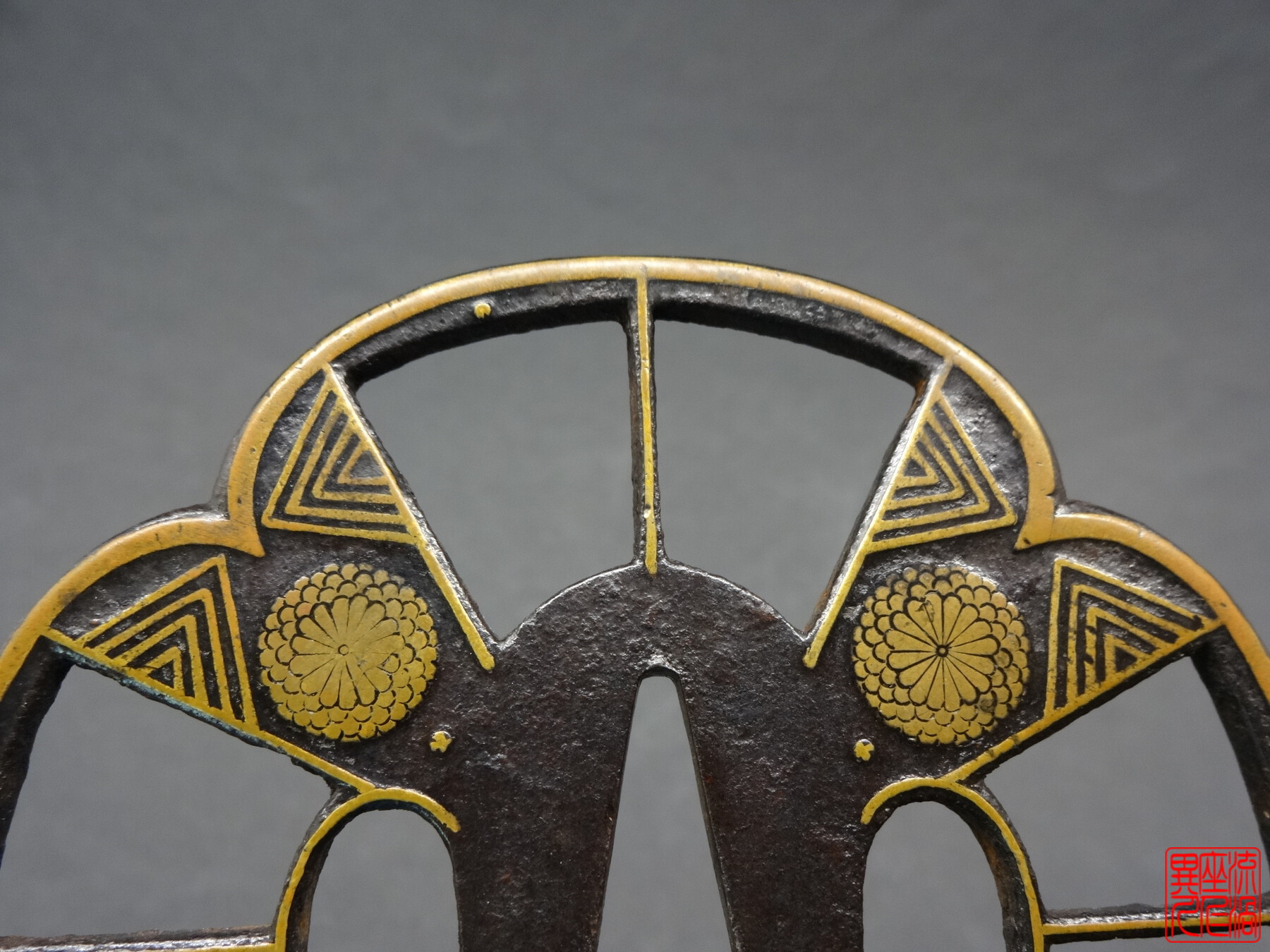
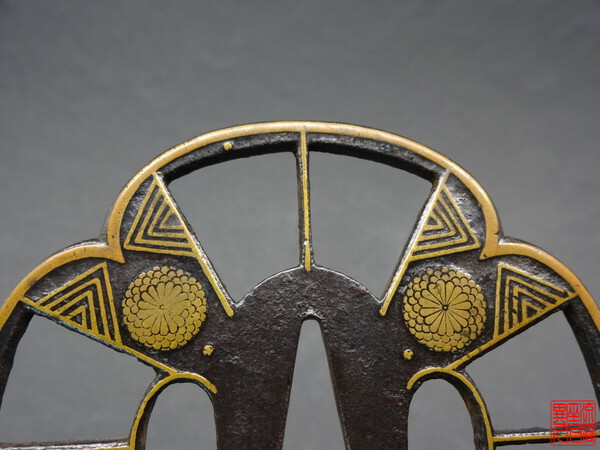
Dear All This is one of my most recent acquisitions. It is a nice mokko gata iron tsuba with brass inlay. Dimensions 86.3 mm x 85.5 mm, 3.8 mm thick at seppa dai. The brass inlay is almost the same on the omote and ura sides. The only difference is in the positioning of the ten-zogan away from the seppa dai. My first idea was of course Heianjo, but the practically symmetrical design between front and back leave me with some measure of doubt. Any of you have a different attribution? Aside of the four kiku mon (菊文) the chevron like decorations are a little puzzling in their meaning. If I do a search on Jisho (https://jisho.org/search/chevron) I get as a result "Yamagata" (山形) i.e. "mountain shape; chevron; cone". Is this a fitting description for the triangular shapes surrounding the chrysanthemums? I am missing something? Do you have/see a different interpretation? Or the combined design chrysanthemum-chevron have a meaning by itself? Your comments are greatly appreciated. Best Regards Luca
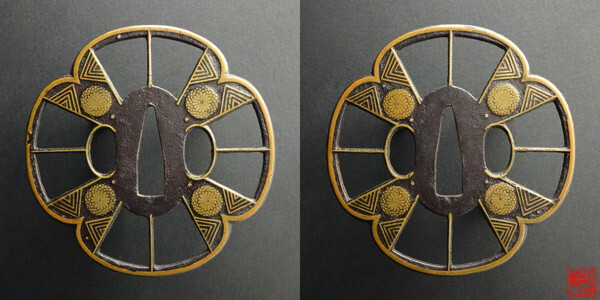
-
2012 Yoshihara Yoshindo se sei in Novara, Italy Unfortunately it's in Italian. Enjoy. Luca
-
Grev you mean the Koto? Luca
-
Dear all Thank all of you for your comments. Dale thank you for the table. Ford I know your point about the brass introduction and when I wrote Azuchi/Momoyama I was really thinking about the end of the period. Thus I am ok with your assessment of early 1600. I had also the impression that the nunome zogan was a later addition but I had no points about it so I kept silent on this point. Coming from you has an altogether different weight Being no botanist I said grape vines only due to the small circles. If any of the other member has a better attribution I will not dispute it. Best Regards Luca
-
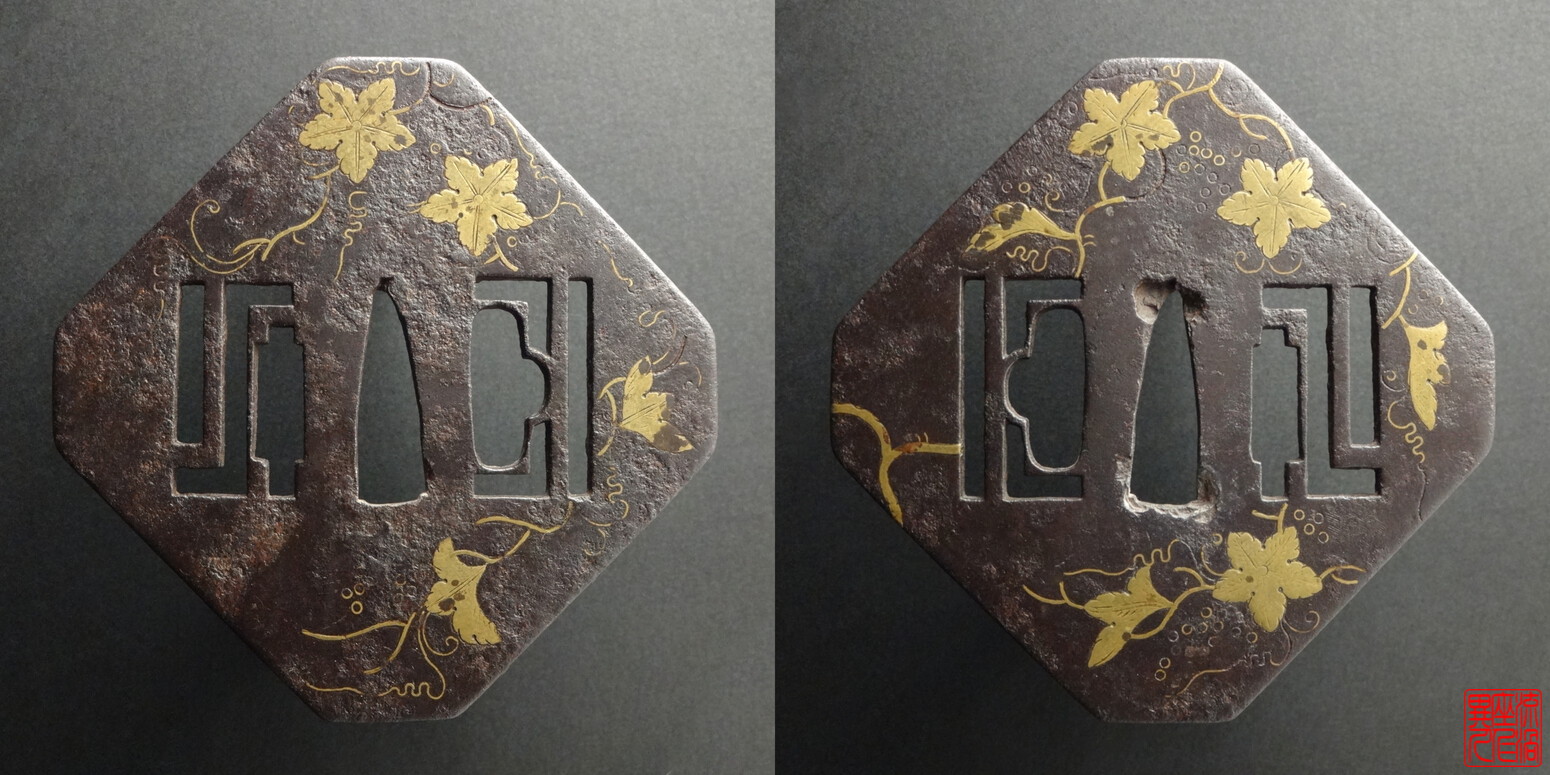
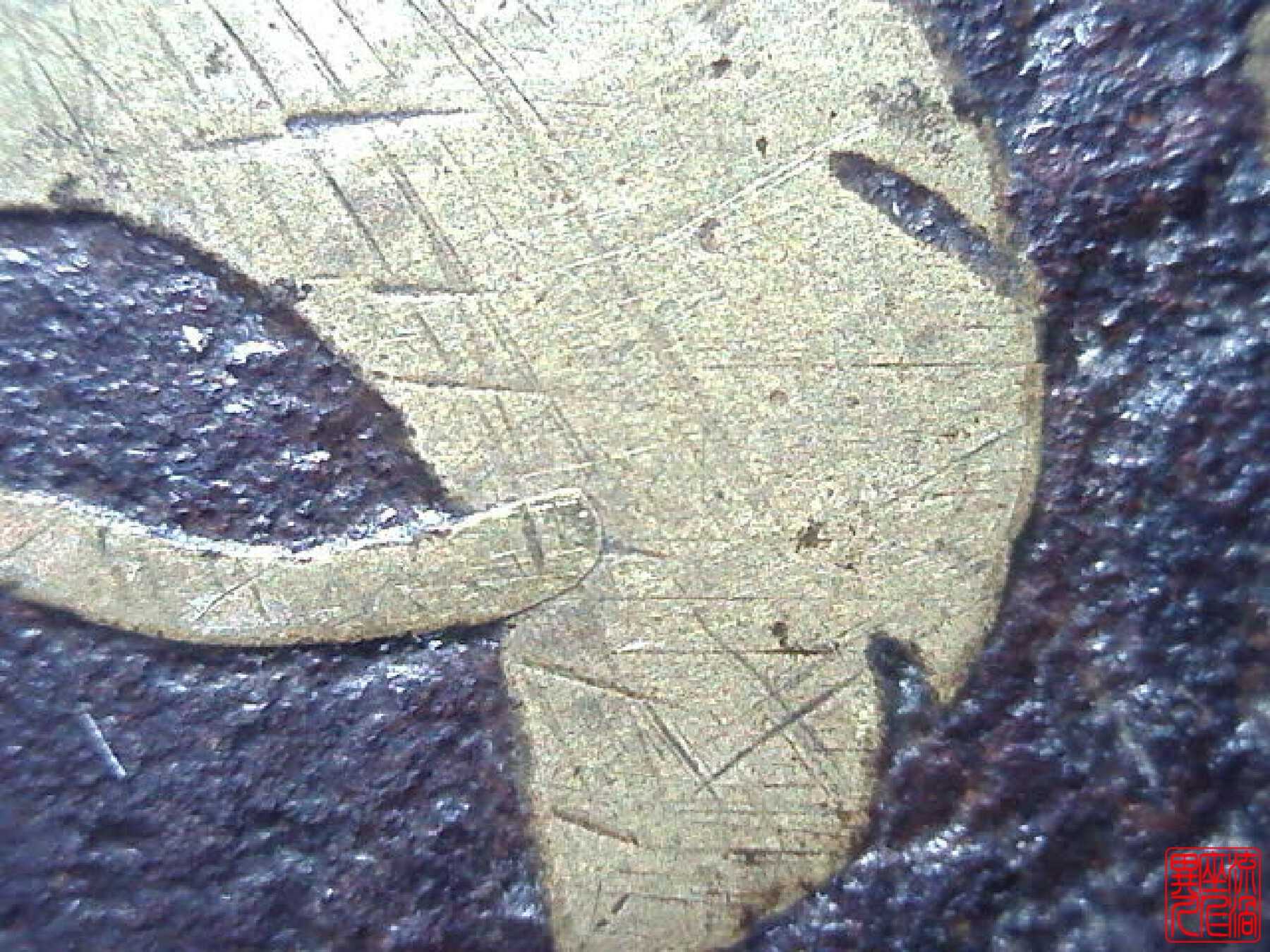
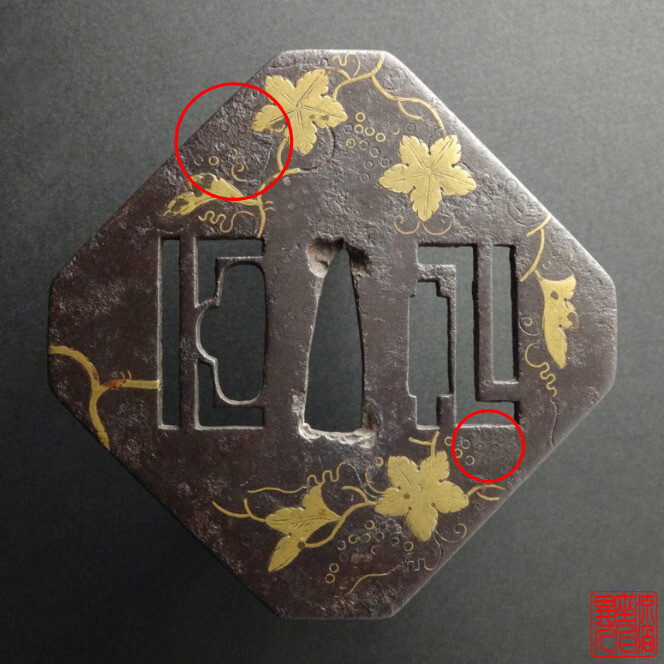
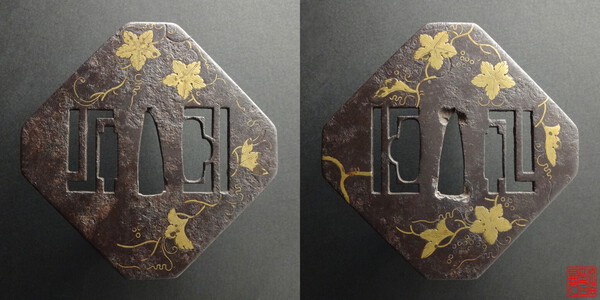
Dear All This is one of my recent acquisitions: Size 94.4 mm x 94.2 mm, thickness; at seppa dai 4.5 mm at mimi 3.9 mm. The motif I think ois Grapes and vines (budo tsuru kusa-zu) and sukashi is Genji-mon. What is your opinion? The iron look similar to other Heianjo Zogan tsuba with a nice chocolate brown color and prone to corrosion as in many examples of this "school" (if Heianjo can be considered a school and not a style). The tsuba is thin but not too thin with it 4 mm uniform thickness. So looking just at the iron, its conditions and thickness I would put it around Azuchi/Momoyama. Looking at the inlay I see some missing parts, as expected given the age, and some oddities. I took some pictures of the tsuba with a USB microscope. In a couple of points there is an overlapping of the inlays that I have never seen before on Heianjo Zogan tsuba. Maybe there have been some repairs? Also there are zones of cross hatching on the base iron that look like the preparation for nunome zogan. In these regions there are ghost-like circles of the same dimensions of the grapes inlaid in hira zogan on other areas . I have the impression that some of the grapes have been rendered in nunome zogan that was then lost but protected the underlying material from corrosion since the ghost circles in the hatched regions are somewhat raised over the cross hatched areas. Since I have never seen papered Heianjo zogan tsuba with nunome zogan I am for discarding this attribution. Maybe we can consider Shoami? These are my first, chaotic impressions, I could be utterly wrong of course. Comments are more than welcome... Best regards Luca


-
Heinaho tsuba received a couple of days ago. I have to repeat Grev statement; "the pictures don't do it justice" It was a pleasure dealing with Kyle Luca
-
Probably you already know it https://library.si.edu/digital-library/book/hamonshu It is a three volume book about waves design. Regards Luca
- 1 reply
-
- 8
-

-
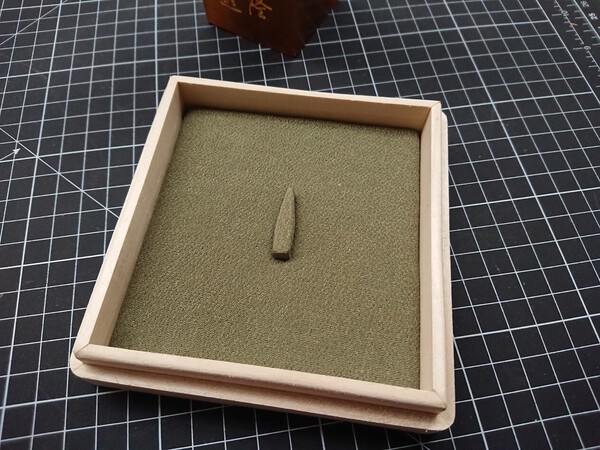
No pillows Dale, I have no sewing skill, this is the only item I miss to have a complete box. Daisho box is possible they are made upon request, no mass production involved. No nails either. There is only wood, silk and paper in the box. Instead of nails I use toothpicks to fix the "nakago" to the base. I did some experimenting with toothpicks they break off cleanly at the base of the "nakago" post without protruding if the "nakago" snapped off the base. I will not ship my tsuba in the display/storage box anyway. Regards Luca
-
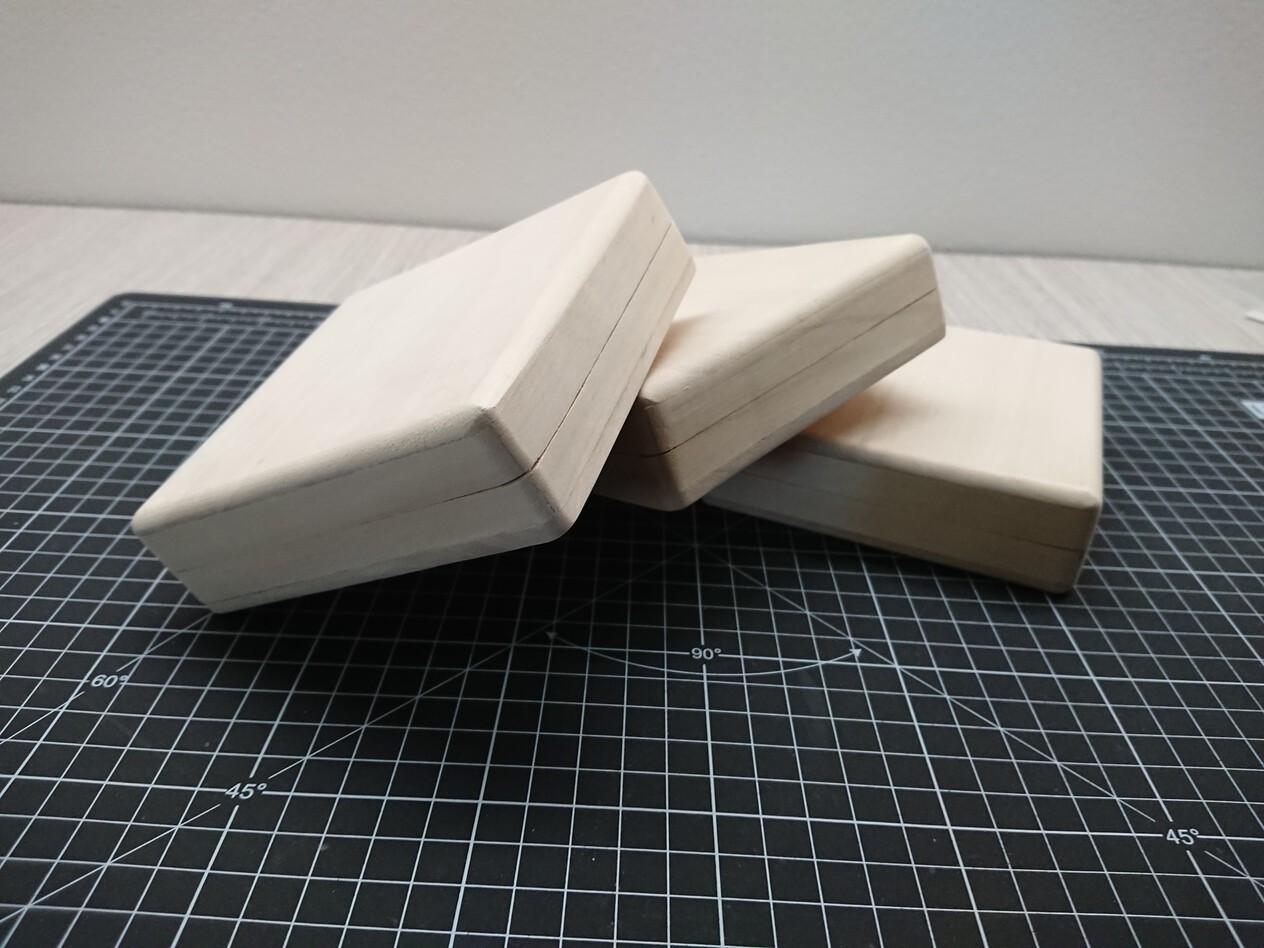
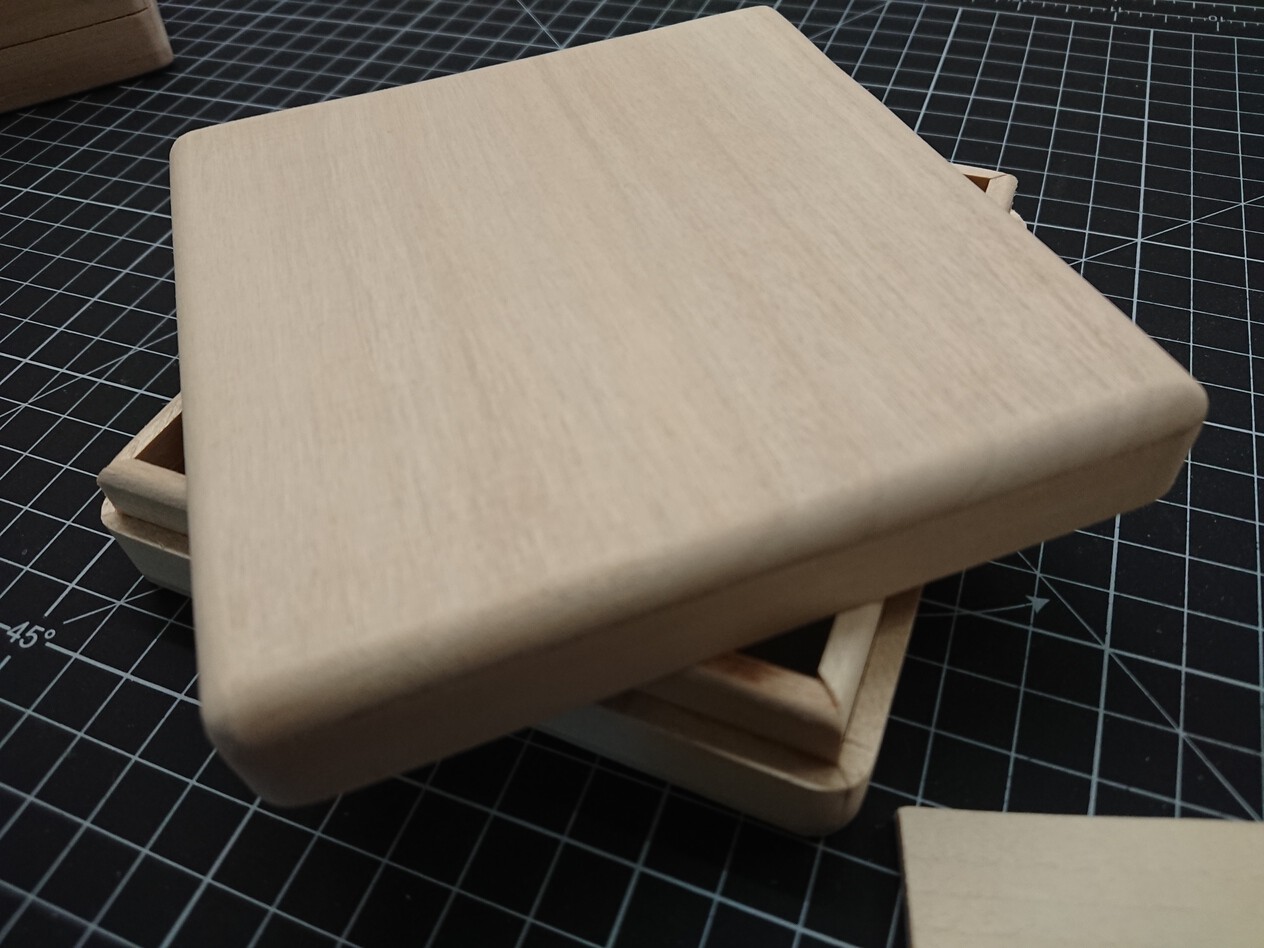
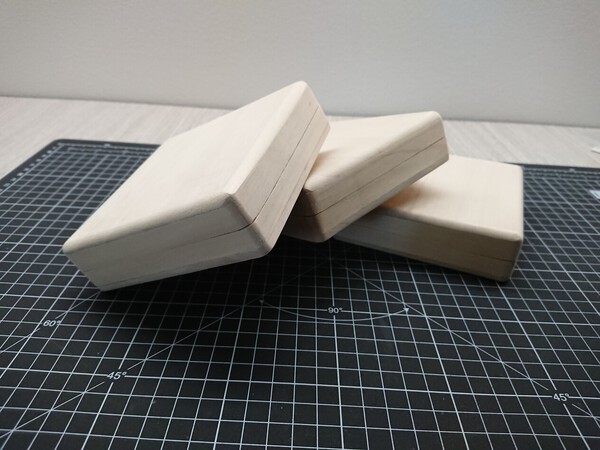
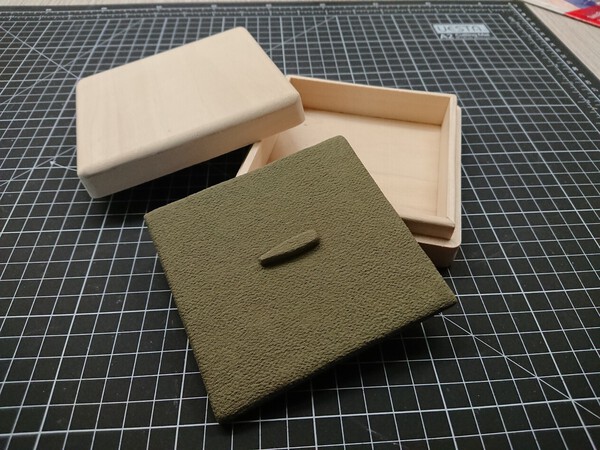
Dear all Recently finding good quality tsuba boxes has become increasingly difficult and expensive for whatever reason. So I asked a friend of mine, that is a professional carpenter, to make some prototypes using a mid range Japanese made box as a reference. We used well seasoned poplar as base material, since poplar is a wood known for not releasing any corrosive substance. I am quite pleased from the quality of the first prototypes shown in the previous pictures. Some small defects have to be corrected but the overall results are quite good. I was also able to make the lining myself starting from a square of poplar board provided together with the boxes. Regards Luca


-
As said by other members it looks above the average Soten copy. Given the layer of dust that cover it, it is also difficult to see the color of the iron base that could be a indication of the provenance. As for the signature it is difficult to say because just looking at the sheer number of them, only among the papered or referenced ones, is a long and troublesome job. In the reference cited by Peter there is a small collection of signatures. If you can post a picture of the other side I will be grateful Regards Luca
-
Ciao Mauro The statement of the seller was clear to me. The piece is a fine one regardless of the paper and seller statement. I was just trying to gather more information before accepting the possibility of an error ("shock horror in the rural Japan!") from the all knowing NBTHK. Glad to hear that they are human too. Luca
-
Thanks Bruno I found that too and, as you, I do not think it is connected. Luca
-
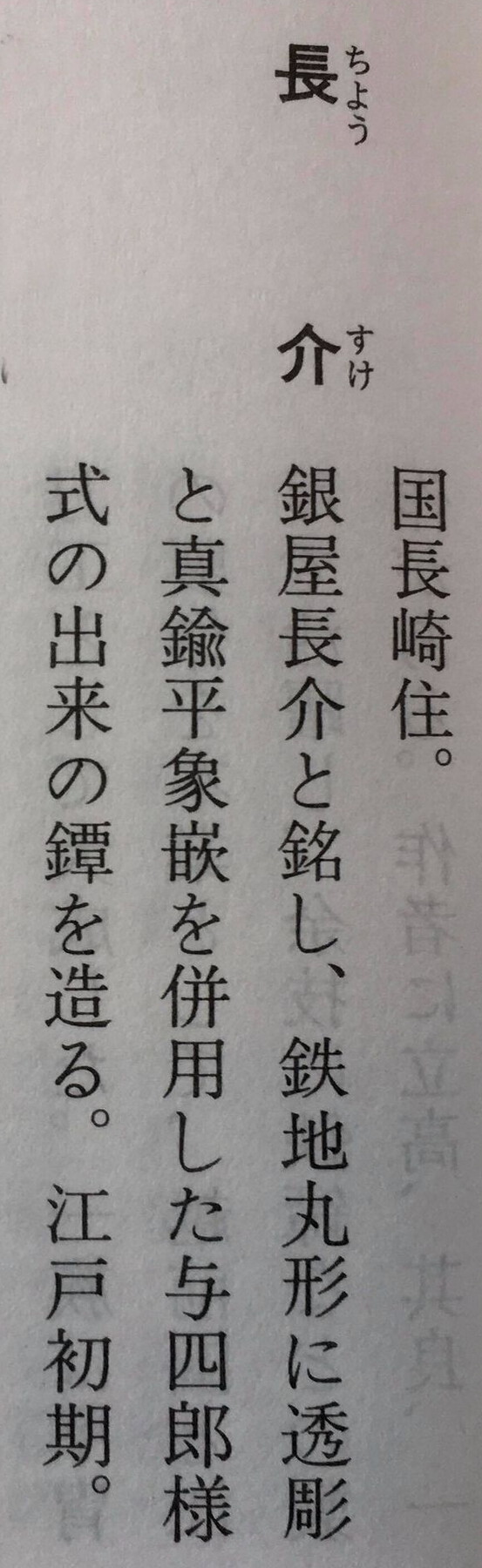
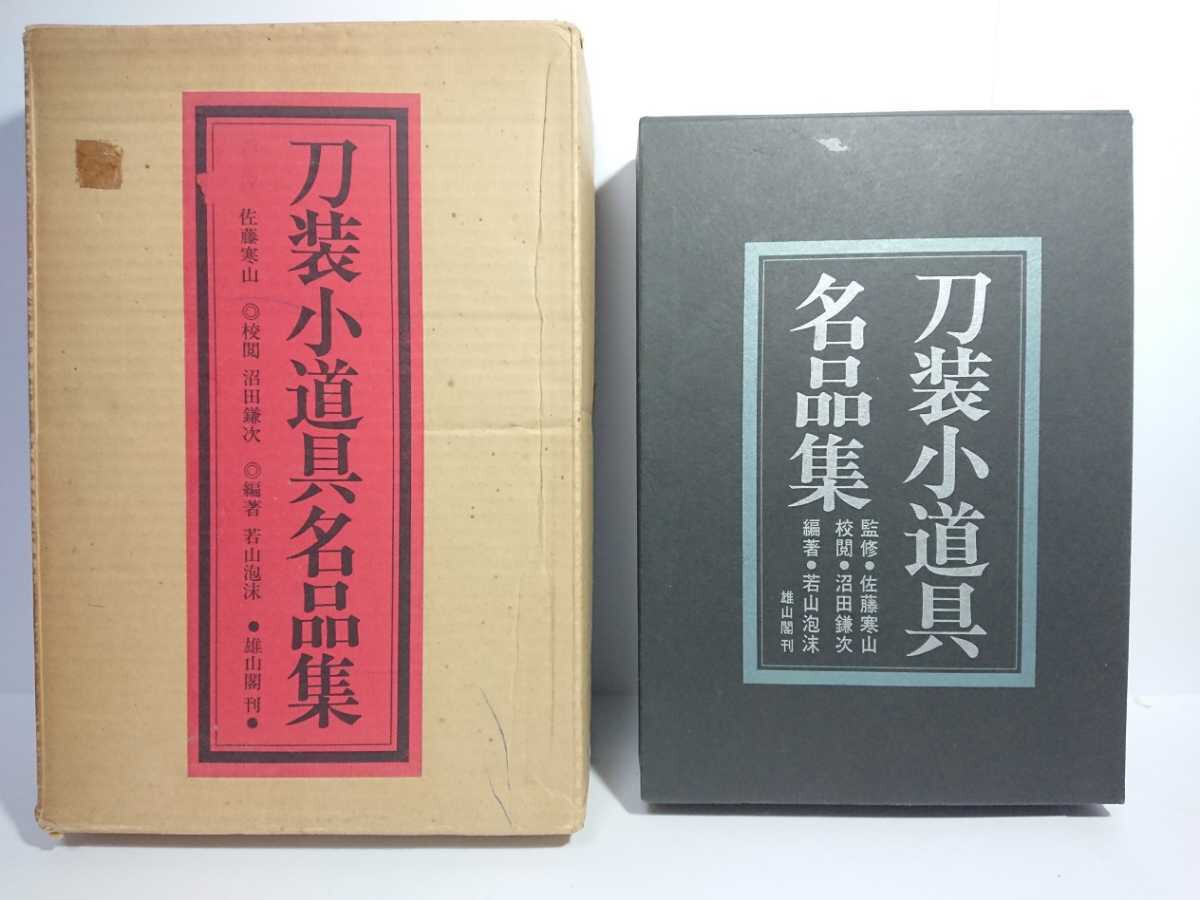
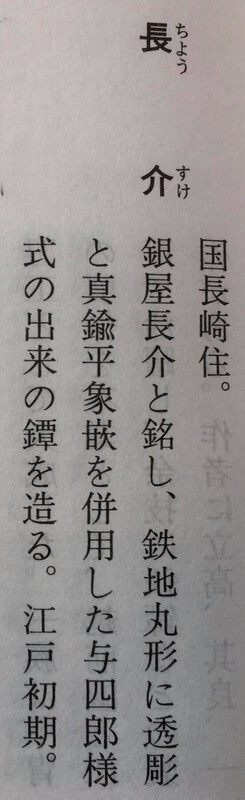
Dear all I have recently acquired a NBTHK Tokubetsu Hozon Yoshiro Zogan tsuba signed, as per NBTHK paper, "Hiroshima Ju Ginza Chosuke". According to the seller the signature is "Hiroshima Ju GINYA Chosuke". I was not able to find any reference or information about the "Ginza Chosuke", but some about the "Ginya Chosuke" on the Kinko Jiten by Wakamatsu Homatsu. A rough translation of it is (please pitch in if you have a better one): Chosuke Living in Nagasaki, Japan. Named Ginya Chosuke, carved in brass flat inlay on a round iron base in Yoshiro Zogan style. Early Edo period. So this "Ginya Chosuke" seems to be spot on for the tsuba. style However I would like to hear your opinion about the NBTHK and seller attribution. If any of you have information about "Ginza Chosuke" or additional information about "Ginya Chosuke" that you care to share I would be grateful. Best Regards Luca


- 4 replies
-
- 3
-
-
- tsuba
- translation
- (and 1 more)
-
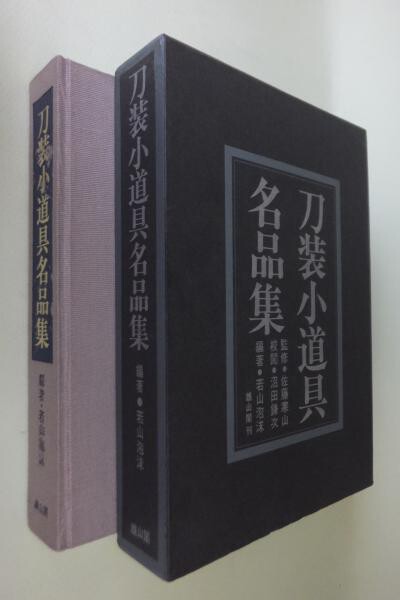
Dear all. Do you know if the translation fo this book is available and if it is worth having? Best regards Luca

-
Grazie Mauro Sei una certezza! Thank you Mauro. I was sure that you will provide something of interest! The most intriguing thing though is the connection between the three themes, if any! Regards Luca
-
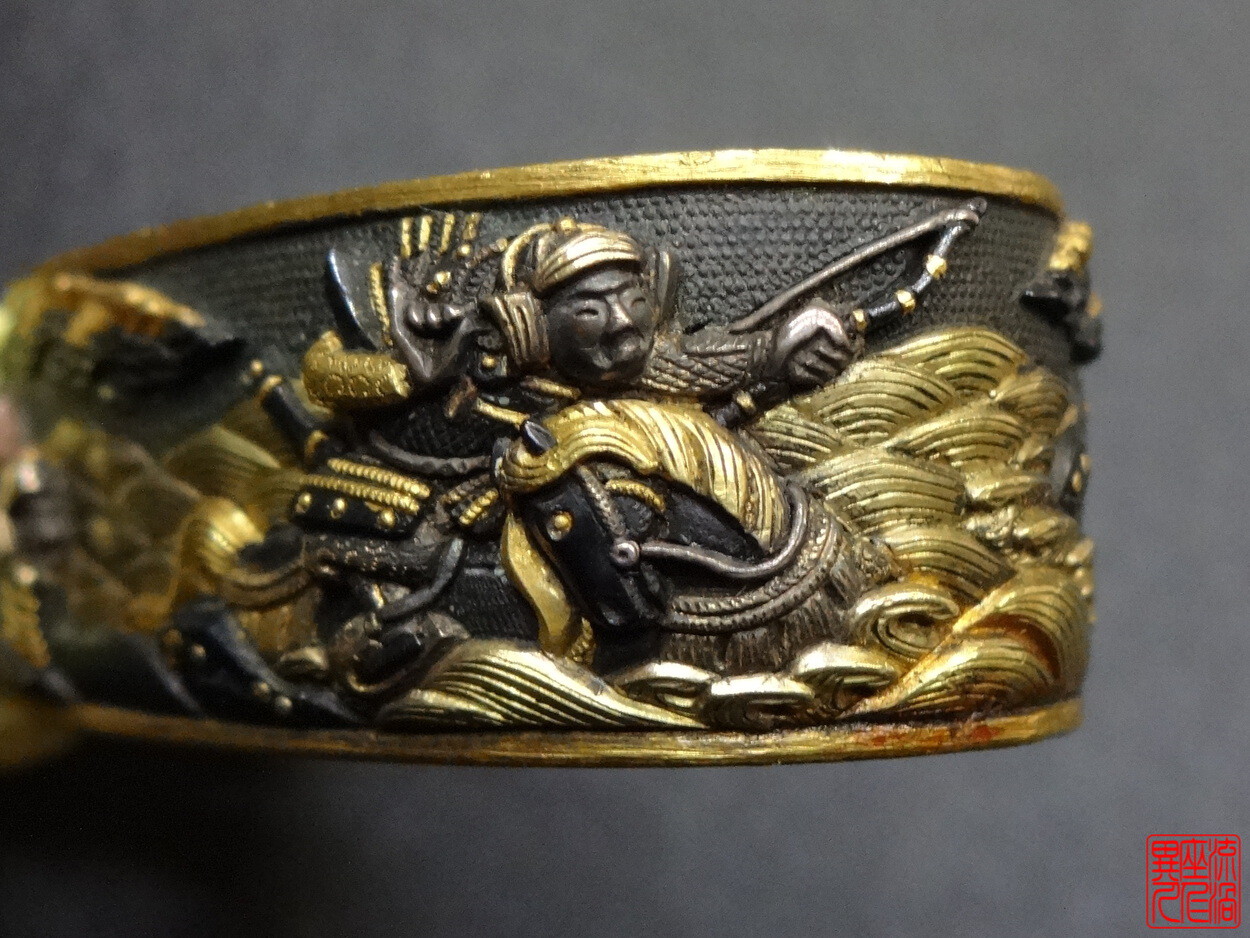
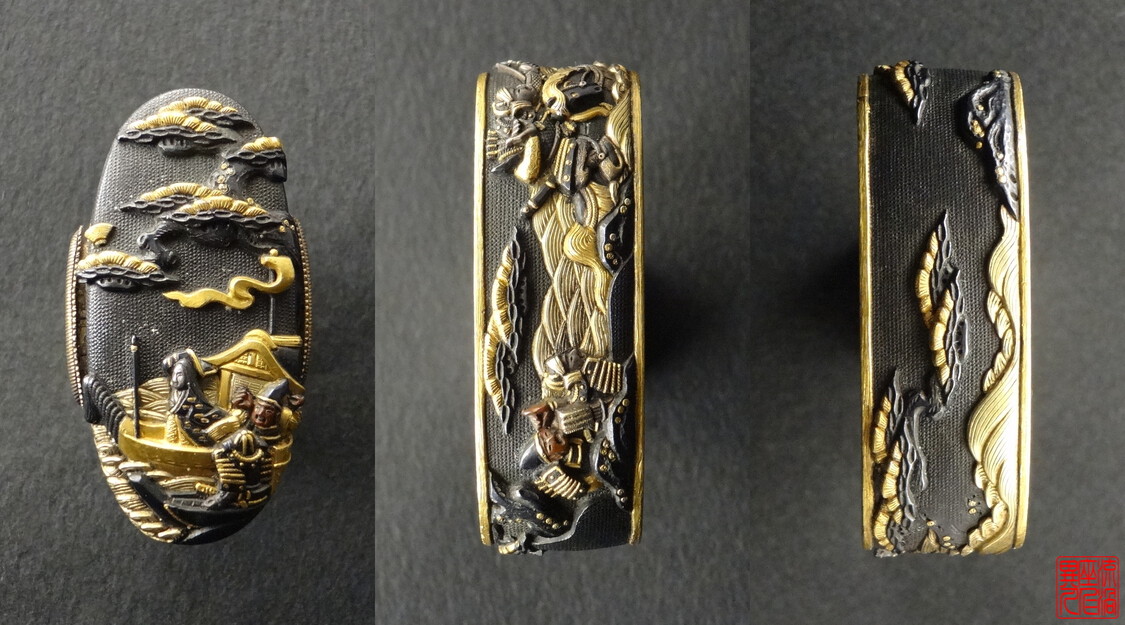
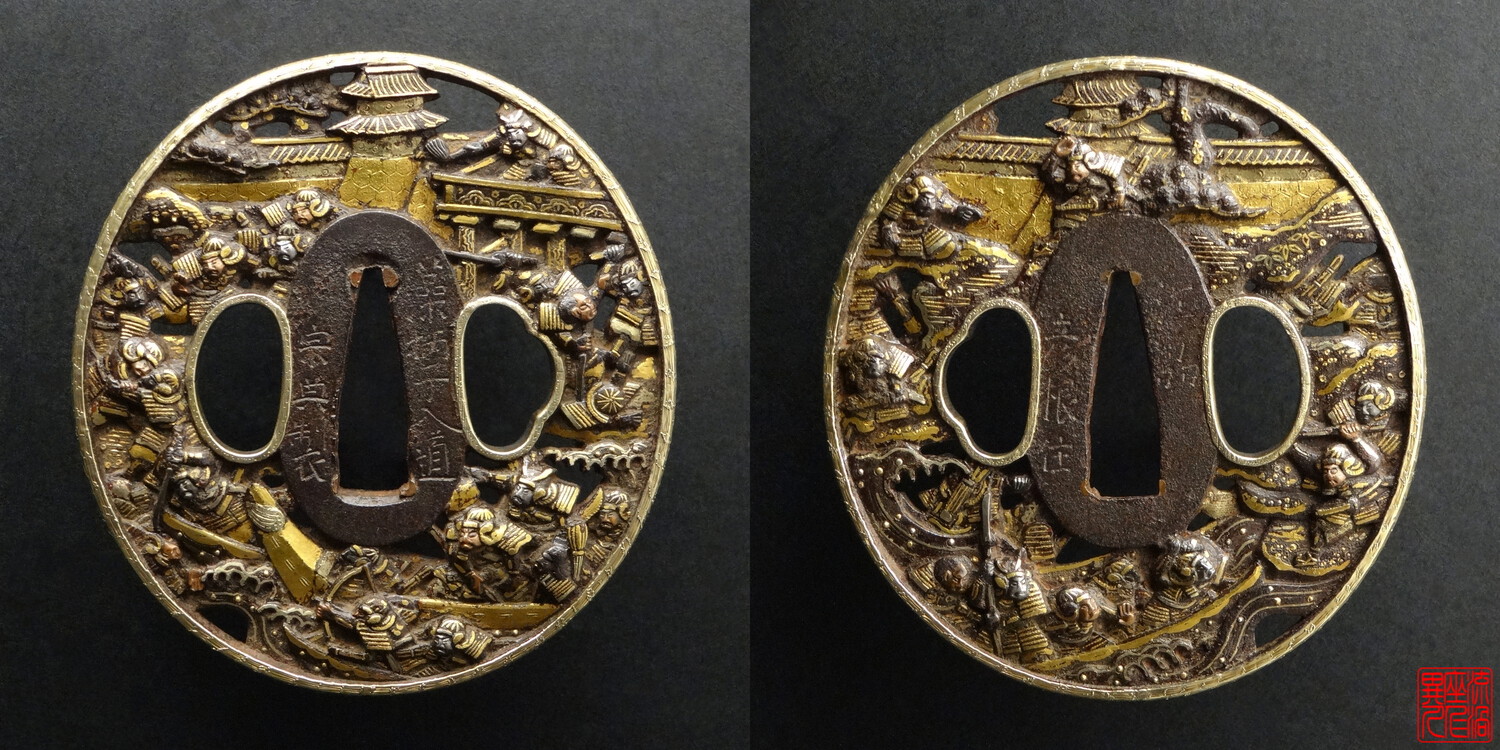
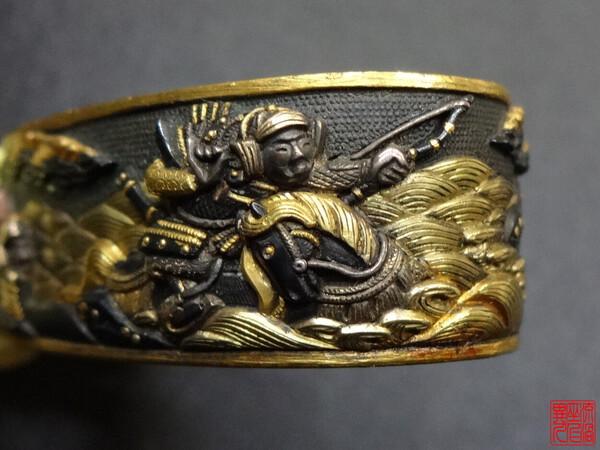
John I have a fuchi kashira showing the deed of Nasu no Yoihchi just after he let loose the arrow And a tsuba probably depicting the battle of Dan No Ura... These are among my preferred pieces in my collection. Best Regards Luca


-
Hello, and season greetings to all I have recently purchased an Heianjo tsuba with a composite theme. On the omote side we can see flowers that I think are autumn plants (Akikusa - 秋草) with overlaid a sort of cloud full of hanabishi (花菱) kamon. On the ura there are wild geese and waves (gan no nami - 雁波). I need some help to sort out some questions I have about the themes. First it is right to refer to the ura theme as "gan no nami" and use the kanji "雁の波" or there is a more befitting way to refer to it? There is any story connected with such a design or representation? While I can see a connection between the autumn grasses on the front and the wild geese on the back, i.e. autumn migration of the geese, the connection with the hanabishi kamon with either one is not clear to me. As far as I have understood the hanabishi does not refer not is abstraction of any real flower. Any thought about the tsuba itself and about the theme are most welcome Thank you in advance and best regards Luca

-
Mauro Nasu no Yoichi was my first thought too. But the lack of waves stayed my hand. According to the Heike Monogatari: Without the waves I was a bit lost. Regards Luca P.S. Merry Christmas to everybody.