Ken-Hawaii
-
Posts
7,353 -
Joined
-
Last visited
-
Days Won
96
Content Type
Profiles
Forums
Events
Store
Downloads
Gallery
Everything posted by Ken-Hawaii
-
New Member Introductions
Ken-Hawaii replied to Dusty62's topic in General Nihonto Related Discussion
Welcome to the forum, Thomas. Brian, should be moved to the New Members thread? Ken -
I hadn't heard that Tanobe Sensei had retired. Thanks for the update! Ken
-
Rob, I suggest that you read this article: . It provides one of the best descriptions of the characteristics of the Japanese sword, & is written by the Senior Managing Director of the Nippon Bijutsu Tôken Hozon Kyôkai (NBTHK). Can't get any better qualifications than that! Ken
-
Quick question on Kantei Volumes
Ken-Hawaii replied to Markus's topic in General Nihonto Related Discussion
Yes, definitely sounds like a great idea, Markus. Your other volumes have been very useful. Thanks! Ken -
Please let us know what you see, Robert - thanks! Ken
-
Yeah, I saw that definition, John, but am still scratching my head about why Mi would make any difference in describing a blade. Wouldn't a blade be shinogi zukuri whether or not the nakago was involved? Ken
-
http://www.ebay.com/itm/Fine-3-400-Year-Old-Japanese-Ancestral-Samurai-Katana-Sword-Silver-Habaki-No-Fit-/251295927121?pt=Asian_Antiques&hash=item3a82678b51 The abovelisted blade on eBay has five (!!) mekugiana, but the nakago still looks almost ubu. Are blades with that many suriage very common? Ken
-
I seem to be missing something here. How do Mi & Sugata differ? Ken
-
Felipe, I think you've completely missed the point. Simply do NOT use Nihonto for tameshigiri!! I've trained in MJER for several decades, but would never use anything except a modern tosho for any type of cutting practice. Ken
-
Tobias, if you'll send me an e-mail (jssh@catii.com), I will send you a fillable PDF form that I developed for our sword club that fully describes a blade. You need to spend some time figuring out what each term means, however, rather than asking about them; they're all available via the Web. Ken
-
I agree with John, William, that you've done a good job of researching your blade. Wish others would spend that amount of time before asking good questions! Ken
-
Piers, is this the Mukansa smith Ando Hirokiyo who you have met, along with his son? Ken
-
Tozando makes great blades, Barry, but have your friend be extra careful to insist that the blade be an aluminum alloy, not steel. My wife & I upgraded our iaito last year, & although we specified an aluminum alloy, what we received was steel on both blades. We decided to keep them, but please be aware. And unless your friend will be staying in Japan for two weeks or so, he shouldn't expect to be able to bring the iaito back with him if it's at all customized. I'm sure they have "off the rack" blades, but have not seen any of those myself. If he is planning to train in iaido, be sure to have him mention that, as blade length is rather critical, especially for newbies. We've had no problems bringing back iaito from Japan, at least through Narita or Haneda - just be sure it's in checked luggage.... Ken
-
How to Display/storage of Nihonto?
Ken-Hawaii replied to NihontoSeeker's topic in General Nihonto Related Discussion
"Dry" is a relative term, Reuben, & steel blades do have a tendency to rust in even the driest climates. I have a friend in Phoenix who had two of his blades rust within a few days when he had them on display in a kake, showing off for his relatives. Like Chris, I keep my blades in a katanadansu (late Edo) that is specifically made to store swords long term (of course I do live a literal stone's throw from the Pacific Ocean). If you have to leave your blades out, they should preferably be in shirasaya, which you can consider as mini-tansu. Next best would be leaving them in koshirae, but those are definitely not as moisture-tight as shirasaya or tansu. Ken -
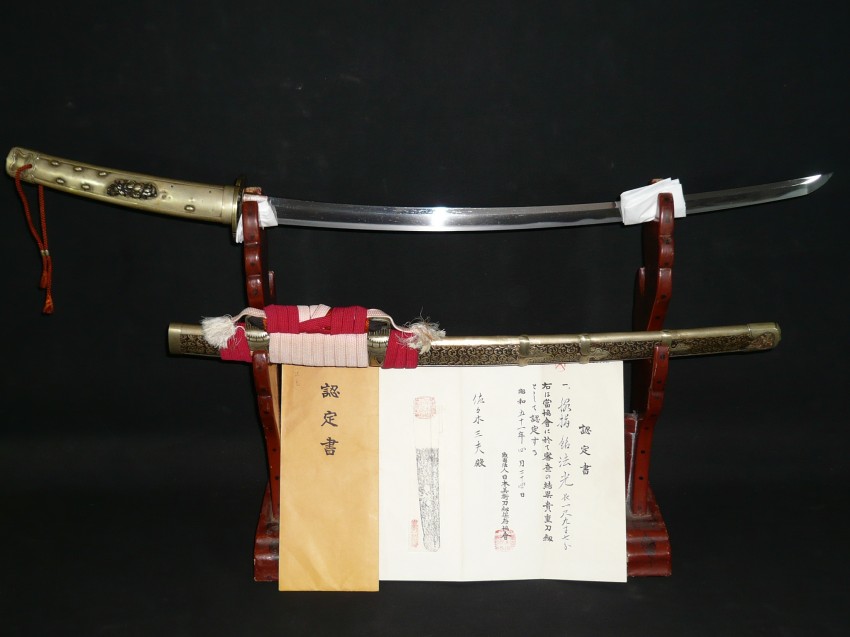
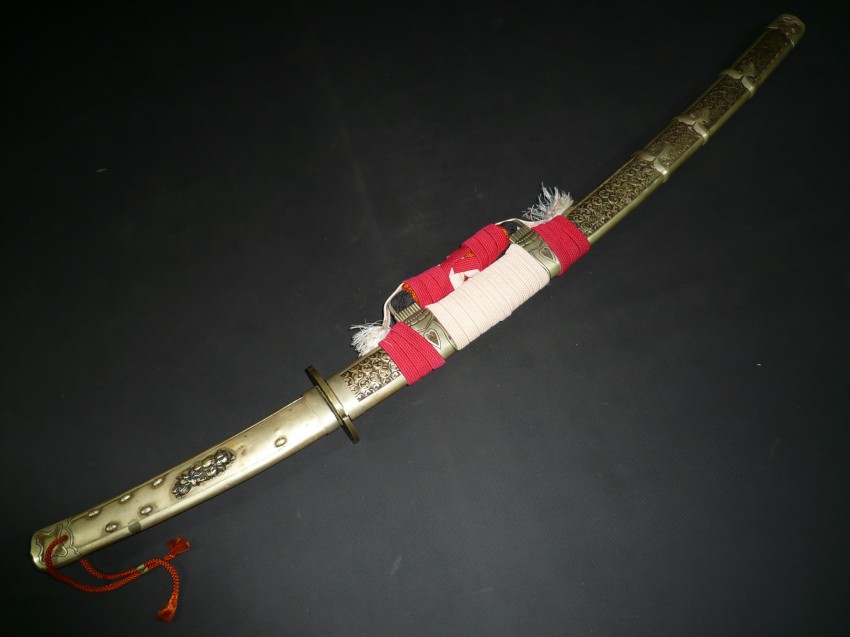
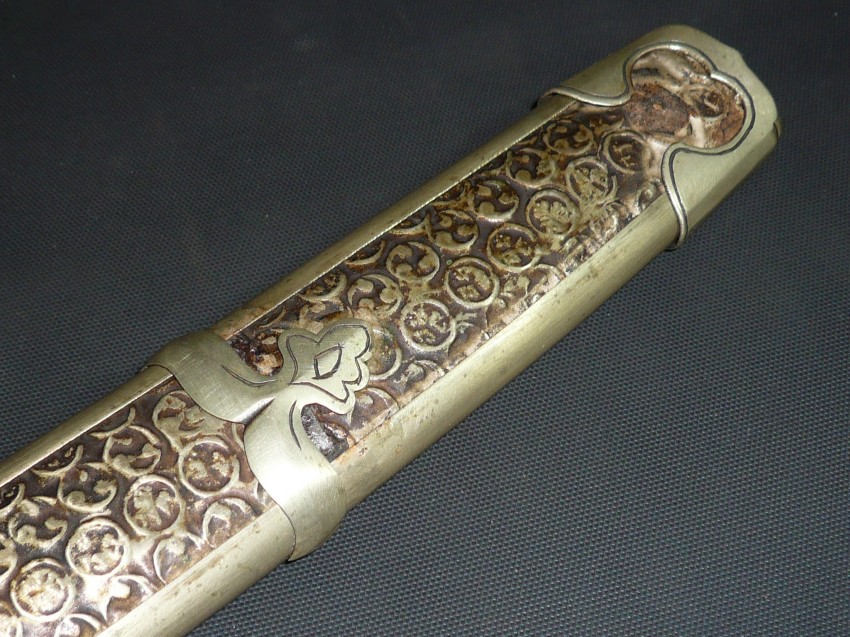
Does anyone have detailed information on how Ezo koshirae are made? I just purchased a very nice Norimitsu katana that is in wonderful condition, but it's the koshirae that really catches my eye! One side of the saya is made of what appears to be a takamaki-e (raised maki-e) that is almost as solid as the metal side. I can't find much information on Ezo on-line, & so hope one of you experts can lead me in the right direction. Many thanks! Ken
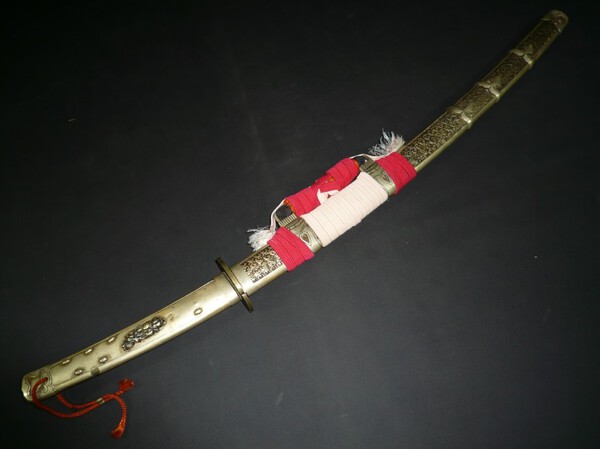
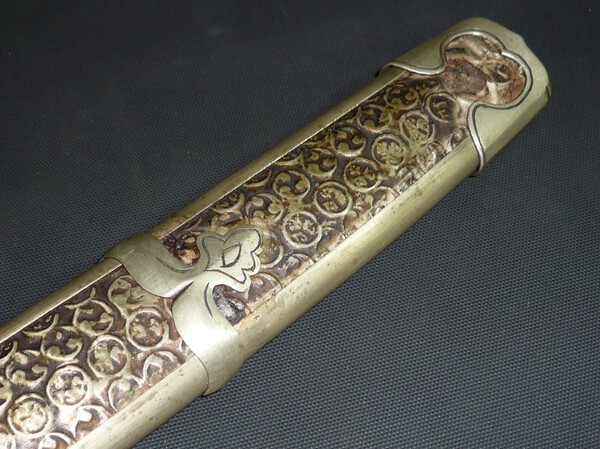
-
Jeremy, what makes you think it's a serious flaw? Especially in a blade that old? Ken
-
Help with a wakizashi and katana,, signatures and tips
Ken-Hawaii replied to Pompe's topic in Nihonto
Pontus, I happen to own a wakizashi made by Hitachi no Kami Muneshige. It's in much better shape than is your katana, but I would be very interested in seeing your katana once it has been polished. Ken -
New Member Introductions
Ken-Hawaii replied to Dusty62's topic in General Nihonto Related Discussion
Brian, should this not go into viewtopic.php?f=9&t=4483? Welcome to the forum, Reuben. Ken -
Christian, we are really just custodians of our Nihonto, right? Unless we do something really stupid, our blades & other items will long outlive us, & I believe they should be cared for the same way we do for our kids & grandkids. Chris, your post is about as timely as it could possibly be. I'm recovering from two major surgeries last month that really got me thinking about my longevity, & has my wife & me discussing this very topic. Our collection likely isn't as extensive as yours, but with a papered Kiyomaro, Norimitsu, & Enju, it's certainly not trivial, either. During my long recovery, I've created a spreadsheet listing each item in our collection along with what we paid, an approximation of market value, whether it is papered, & a bunch of photos. Then I tagged each item & its origami against the spreadsheet. This will at least allow our son (our Executor) to have a general idea of what he's inheriting. Our family situation is interesting: our daughter-in-law, Yoko, is Japanese from the vast Yoshida clan, which has been a great source of support. When my wife & I started iaido training for example, the clan bought both our iaito for us, which came as quite a surprise at the time. Although Yoko is quite interested in our Nihonto, neither she nor our two grandkids who live locally are particularly interested in studying our blades. But I am wondering whether we should offer any of our collection to the Yoshida clan, not to mention how we would go about doing so. Thank you for a well-thought-out post, Chris. Ken
-
George, flint & obsidian are definitely not the same. Flint is a sedimentary form of quartz, while obsidian is a volcanic glass. Both are forms of SiO2, but their internal crystalline structures are very different. They can both be knapped, of course. Ken
-
Expanding the NMB and publicizing
Ken-Hawaii replied to Brian's topic in General Nihonto Related Discussion
The cost for VBulletin 5 is around US$200 for an upgrade & $250 for first purchase, Brian - are those the prices you're looking at? I'm sure there are many of us who are willing to contribute towards that purchase. Please tell us a bit about your server hardware configuration, too. Who knows how we might be able to help...? Ken -
New member need help with books
Ken-Hawaii replied to Marc's topic in General Nihonto Related Discussion
Martin, I think Marc-André is looking for some guidance on his first set of reference books to develop a knowledge baseline. You've done a pretty good job, Marc-André, including a couple of must-haves: The Connoisseur's Book of Japanese Swords (of course! If you knew everything in this book, you'd be a true expert) Yumoto, The Samurai Sword: A Handbook (very inexpensive & a great starter reference) Nakahara, Facts and Fundamentals of Japanese Swords Those would be my base library, but please spend some time on http://www.nihontomessageboard.com/faq.html checking out Brian's book recommendations. And, by the way, I am mightily impressed that you are buying books before your first blade, Marc-André!! You're certainly an exception! Ken -
That's a very interesting hamon, Piers. In fact, I have no idea what to call it.... I assume it's a standard kogatana-size blade, right? Thanks for those shots. Ken
-
Thanks for that link, Piers. Looks like some great blades in the show. No, I didn't get the info on Ando-san making blades from my meteorite! More info would be greatly appreciated! Has he set pricing? Photos? Ken
-
Darn, Piers! Wish we were coming out again this year, but none of those super-fares.... Do you have any photos to share? Ken