

SAS
-
Posts
2,495 -
Joined
-
Last visited
-
Days Won
22
Content Type
Profiles
Forums
Events
Store
Downloads
Gallery
Everything posted by SAS
-

Request professional opinion - blade with hadaka-yaki
SAS replied to Brano's topic in General Nihonto Related Discussion
Hitatsura, wildly uncontrolled, interesting art, but not for a practical sword. It reminds me of the patterns on my favorite eating reef fish, the bigeye. I can't read the mei.Blotched_Bigeye_Heteropriacanthus_cruentatus.width-1200.326af2d.jpg -
Presumably you will also have seppa and a tsuba between the habaki/saya and the fuchi, so the closeness in size shouldn't normally be a problem, imo.
-
Beautiful sword!
-
It looks machi okuri but i would buy it if I had Bill Gates' money!
-
General American cringiness at how the sword is handled, but a really nice koshirae and potentially good sword in need of polish, being returned to Japan.
-
He is definitely not a metallurgist........
-
Foreigner Bladesmiths in Japan?
SAS replied to barnejp's topic in General Nihonto Related Discussion
http://togiarts.com/Louis_Mills.html This has a bio with his own statement on the nature of his art. I do not have NY INFO TO SUGGEST THT HE HAD ACTUALLY FORGED BLADES IN Japan, SO PERHAPS HE DOES NOT MEET THE SPECS THE OP INQUIRED ABOUT. (sorry for caps, typing in the dark) -
Foreigner Bladesmiths in Japan?
SAS replied to barnejp's topic in General Nihonto Related Discussion
Louis Mills "Yasutomo" RIP, a pioneer Westerner in the Japanese tradition. -
Wow, very nice indeed!
-
What menuki would you like to get your hands on?
SAS replied to barnejp's topic in General Nihonto Related Discussion
Tigers are always good; I bought a pair of silver ones for the aikuchi project i did a while back. -
Yes and yes.
-
In high humidity areas, it is good to clean and reoil swords frequently; also too much oil can attract moisture and promote rusting (strange but true).
-
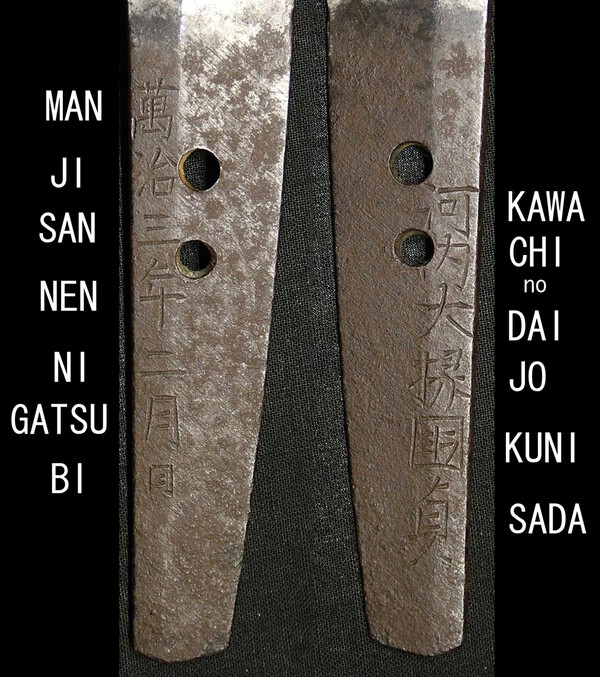
This is not my photo, it is from the sales listing when i bought it from Ed.
-
So Darcy, I would like to hear about your dive trip.....maybe post in the Izakaya? Staying tuned for the rest of the sword's journey......
-
Nakago treatment is similar to the one Kunisada example i have; that is about all i can say.
-
There were 2 generations of Aizu Kunisada also, in early Shinto; very little information published on how they fit in.
-
George, just so you know, there are a lot more members of the board here who haven't commented on this thread, than those who have, so characterizing the board by the comments of a few members is perhaps drastic. I am not a rich man either (lots of us aren't) and living on VA and SS disability. We are not all elitists
-
Sal's instagram and Facebook has a lot more examples, including tsuka work, if you can find them. I had to do some digging (it was worth it).
-
I was hoping to see more of this sword....bummer. Watch any public cutting competition in Japan; they all have someone straightening swords after bad cuts to allow resheathing. Bends without shinae and cracks are easy to fix.
-
Sal Moretto is a member here on the Board.
-
Possible to date this poor mumei katana blade?
SAS replied to Logan09's topic in General Nihonto Related Discussion
My advice...find a polisher who will address that specific area, etch it, and that will show any heat affected zone (HAZ) from any welding.....if no HAZ appears, it is more likely to be corrosion from....something, maybe residual acid, immersion, etc. PM me for more discussion. -
Jerry, check out Jizamurai_customs on Instagram....Sal Morretto is in Florida, and his work looks very nice.
-
If you are friends with the local X-ray tech, that might be a nondestructive option to see how the menuki are made.
-
The dimensions look strange; the nakago is out of proportion, and the nakago ana seem to be too low. Rust seems forced and too uniform. Should polish out ok, but why? I just looked at seller's other sale.......twins!
-
I’m hoping for help from the membership in translating
SAS replied to rhodesia's topic in Translation Assistance
The Seki stamp means that it is a non traditionally forged sword made from mill steel as opposed to tamahagane. Its value is in militaria vs as an art sword.

