Kevin Adams
-
Posts
257 -
Joined
-
Last visited
-
Days Won
5
Content Type
Profiles
Forums
Events
Store
Downloads
Gallery
Everything posted by Kevin Adams
-
The photos of the edge by themselves make a convincing case for the set being cast.
-
Good morning! This is the first of many apprentice duties that have been laid on my lap. As some of you may know, Ford's coming over to the USA next week for a brief teaching session in the woods of New Hampshire. What you possibly don't know is that he's been setting up his new studio space to allow running classes at home in Torquay, England. In fact, the first 5-day class will be held soon after his return from the States (with me in tow). That class was created in response to some very demanding people who felt he was being unfair by spoiling our American cousins and not looking after the "home team". This 5-day class was filled as soon as it was mentioned, so there wasn't a chance to advertise it publicly. Because the first class filled immediately, we're curious if there'd be any interest in a little 3-day intro class, running on the 7th-9th of November (Monday to Wednesday). This might be of interest to the collecting community, to understand some of the technical aspects of tosogu a little better. We'd be covering some basic tool making, a bit of raised inlay and a bit of classical non-ferrous patination. The class would cost £300 and would include a light lunch, and tea/coffee. Materials will be supplied, but you would need to order (from Ford's specialist tool maker boffin bloke) a mini starter kit which will likely cost about £75. It's all a bit last minute but he's set up in England and available so if you're interested and fancy a brief trip to the English Riviera to mess about with metal, Japanese style, let us know. I'll be in England at that point as well as the "studio elf" (Ford's words, not mine), so it would be great to finally meet some of you. Thanks!


-
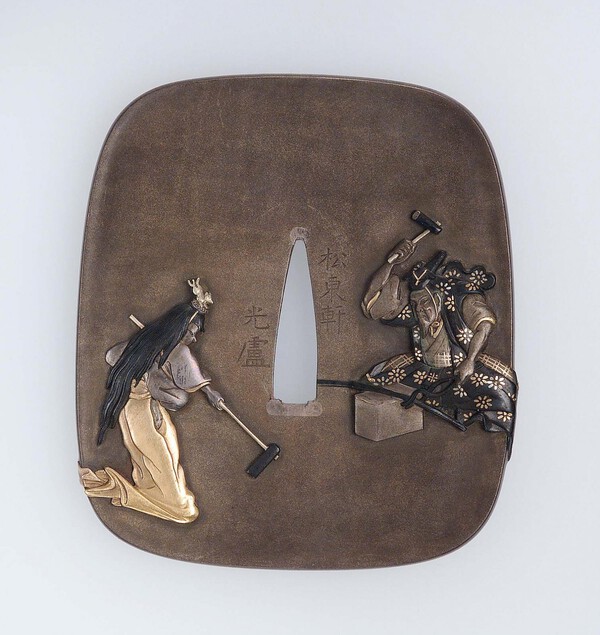
I prefer this one, frankly:
-
To cover a mistake when the mei was originally carved, I reckon.
-
I always wonder what to make of requests to see what's in peoples' collections, without a stated purpose to the request. Are you researching something specific?
-
I think the question we need to be asking is whether this piece is even worthy of such discussion. The katakiri technique is weak, and the composition is a little strange - I think this is relatively late-period amateur work, if not modern. The surface finish is almost certainly a flash plating over copper - any attempts at restoration would depend entirely on what's under that surface treatment...but I'm not certain it would be worth the effort or expense.
-
"The Sawada Miki Kinenkan museum said they were believed to be used by Christians who practiced their faith in secrecy even after anti-Christian measures were instituted in Japan. " No link to a primary document, no research, no evidence. It's a lovely bit of press for an exhibition though - but not much else.
-
Thanks for the plug on the crowdfunding campaign, Stephen! For anyone that would like to help out outside the actual campaign, Paypal would be fine - just PM me for the info.
-
Photos of Marcus' entry can be found at the link I posted. We unfortunately don't have any photos of Remo's tsuba entry...he's a bit secretive like that.
-
Thanks gents! And for anyone that missed this thread back in April: http://www.militaria.co.za/nmb/topic/19387-nbsk-tobunkyo-competition-2016/
-
Payment sent. Thanks Markus!
-
Count me in as well.
-
Any chance of a link to the discussion board in question? It's difficult to comment on this topic - converting tosogu to jewellery is very different from melting them in a furnace.
-
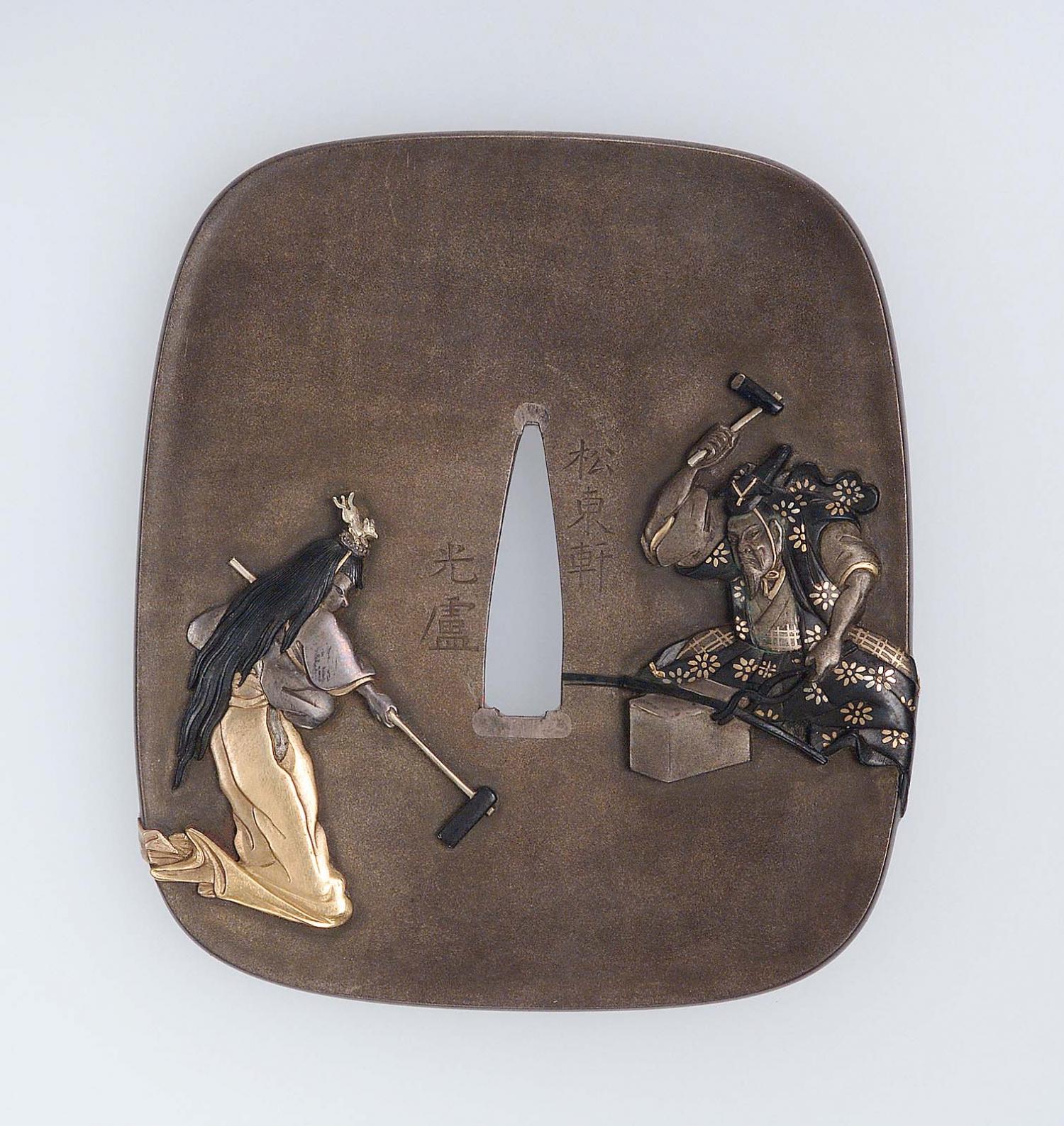
Morning all - the deadlines have come and gone for submissions into this year's competition, and I wanted to take a moment to share my own. This is a study of a piece in the Met's collection (I had posted about the original artist here, I'm still unsure about the details - maybe someone can have a look in their Wakayama as Haynes is a bit vague). I've used mixed metal inlays on a shinchu plate. For those interested, here's a work-in-progress gallery I built while making the piece (let me know if it isn't visible, I'm playing with the permissions). I know there are a few people on the board that are also entering, maybe we can see theirs as well?
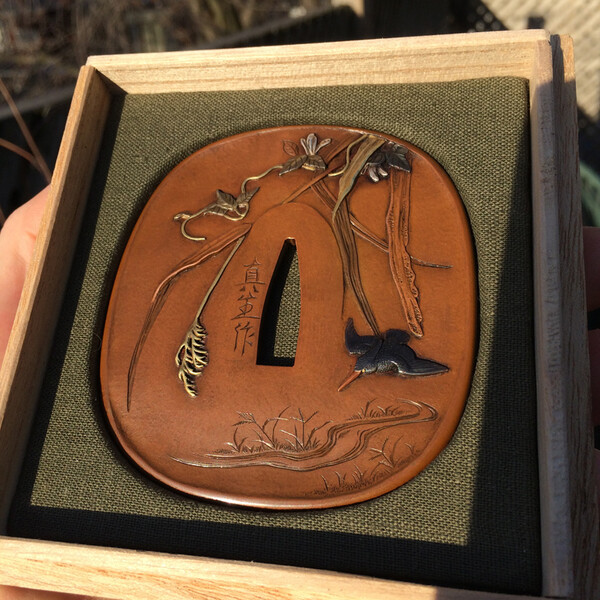
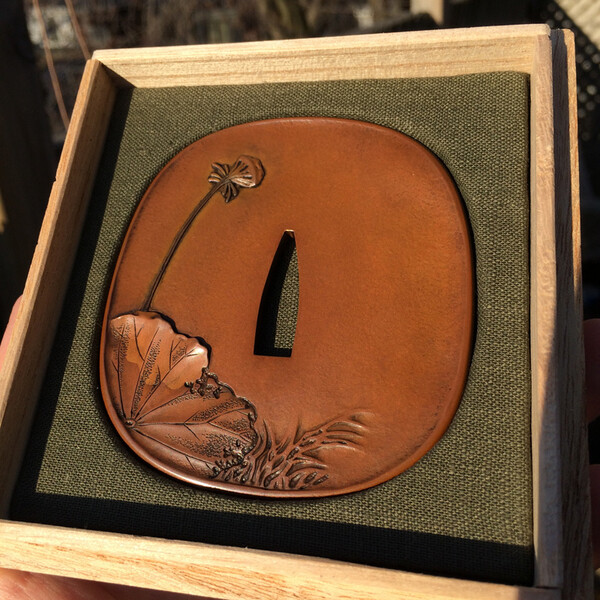
-
Buy books, peruse the MFA and MET online collections, learn as much as you can about the technique and Japanese art, mythology and culture. These are critical tools in being able to "choose wisely" - the rest is just uninformed guesswork and relying on the opinions of others. Develop your eye and equip yourself to be confident in your own opinion, and you'll find that the need to "acquire" will be replaced by a sense of connoisseurship and enjoyment.
-
Nah, just buy it from Grey Doffin's site.
-
Nope, it's pretty rough. The leaves lack any real attempt at shaping or detail - they appear to be mere triangles inlaid into the ground, an inlay practice exercise at best. The crane is very coarsely executed, the background texture is sloppily applied and all of the structural elements are completely "off". The shape of the tsuba appears to be "top heavy" even when viewed from directly in front - imagine how it would look when viewed from an upward oblique angle, as it would when worn on a sword. I can't imagine this being let out of an Edo-period metalworking studio, at least one that catered to serious paying clients. In this case, the MOP is only a curiosity, not a design element of any major consideration.
-
The feather details on that eagle/monkey piece are very sexy.
-
Nice Tsuba With Varous Religious Figures (Any Ideas Who, When Made?)
Kevin Adams replied to ggil's topic in Tosogu
Dunno, I think this is reason enough to keep it, study it more and just admire it from time to time - you've managed to acquire and organize the restoration of a piece that is above and beyond most Soten and Soten-styled work. Maybe instead of handing it off to a museum, you can use it as a springboard into a detailed analysis of the symbology and uses of space. I've noticed a remarkable lack of detailed information about work like this, I think you have a great opportunity for study. And to share your results, of course. -
Perhaps posting photos of the tsubas themselves will help to determine if they are indeed the same. Sometimes it's the small details that make all the difference.
-
I've been following this topic with interest, but I'm afraid you've lost me with the photo just posted. Please explain what you're circling and pointing at, because it isn't obvious. What is it about this tsuba that makes you think it's cast, because you've been dodging around an actual explanation of the aspects that "exhibit modern casting techniques". I'm having a bit of trouble seeing why anyone would make a casting of this piece - do you think it's a casting of a wax model? I would think that it would be a lot easier to remove the tool marks if it were wax. Please explain your assertion more fully, vague commentary about your experience and an unsupported photo aren't accomplishing anything in that regard. I agree with Ford in that the tsuba in question looks to be handmade, just by amateur hands. The close-up photo reveals a lot of uncertain chisel and punch marks, and general work that hasn't been finished with scraper or polishing stone. To the membership in general, I'd like some confirmation as to what we're talking about when the word "fake" is being used, as well. This tsuba is a handmade copy, but the mei is absent - I see this as being made by a student or hobbyist to study the original. It doesn't make the work fake, it makes it a copy...there's nothing wrong with that. The onus is on the buyer to develop an eye for such things, it's too easy to pigeonhole this kind of work as "fake". So what do we mean by "fake"?
-
Count me in.
-
Well worth the restoration, I think!
-
Thank you, gents! This gives me a firmer base from which to research this artist.
-
Morning all - as my mei library is still somewhat lacking, I could use some help with a bit of research I'm doing. I'm pretty sure this is "Toshimitsu", but the script is throwing me off. I'm also having trouble with the kanji on the right of the nakago-ana...Ichi something? Thanks in advance!