Guido
-
Posts
3,242 -
Joined
-
Days Won
99
Content Type
Profiles
Forums
Events
Store
Downloads
Gallery
Everything posted by Guido
-
Luca, it's 100 x 9 mm, shakudō with two-toned gold inlay, the koiguchi a sleeve made of silver. The papers don't say anything about the koiguchi design, so your guess is as good as mine.
-
Dti Yakatabune Party
Guido replied to Keichodo's topic in Sword Shows, Events, Community News and Legislation Issues
:::sigh::: People confuse me for him all the time .... -
I'm a little late to the party, but here's a kozuka of mine - hozon to Kaga zōgan:

-
*deleted* I’m not really sure about what Pete is getting at, but while I obviously have no problem making fun of myself, I don’t want to offend any second or third parties.
-
I‘m undecided yet: do I make it look like an accident, or will they never find your bodies ... ?
-
The UK isn't Europe? Taking the Brexit to extremes, huh?
-
There are some features that point to Enju - especially the bōshi - and also Miike. The bōhi looks indeed very much like Miike, however, in that case it usually extends all the way to the nakago-jiri, so I assume this one was added later. What throws me completely off is the hada, I've never seen masame-nagare in both schools. Kyūshū-mono is therefore as far as I'm willing to guess, with a slight preference for Enju, and excluding Naminohira.
-
Looks more like the hiragana “ke” け and the katakana “mi” ミ to me - not that this would make more sense, though ...
-
http://www.militaria.co.za/nmb/topic/12543-bird-head-tsuka/
-
一、血気の勇を戒XX Can’t read the last two characters ...
-
Attributed to 冬広 Fuyuhiro.
-
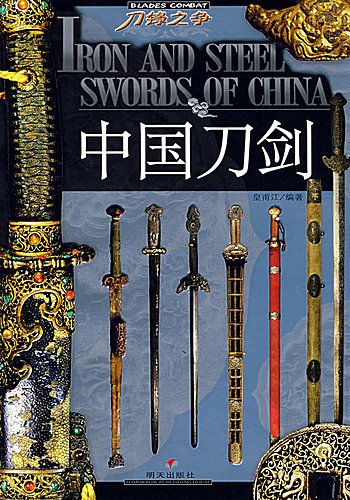
The best book on Chinese swords is IMO 中国刀剑 (ZHÒNGGUÓ DĀOJIĂN) by 皇甫江 (HUÁNGFŬ JIĀNG). Lots of good quality color photos of swords and fittings of all ages. Chinese text (except for the book title ), out of print, and hard to get. Another good source is 清宫武备 (QĪNG GŌNG WŬ BÈI), published by 故宫博物院藏 (GÙGŌNG BÓWÙ YUÀNCÁNG); it’s about military equipment of the Qing dynasty from the palace museum, and has a section about swords. Chinese text with English captions of the photos.


-
After that I stopped watching ...
-
Not really, because you also reduced the size to 1/13‘th of the original ...
-
Thanks for that, Ed ... NOT!
-
両刃 = ryōba (moroha) = double-edged
-
Taking things to the extreme: https://japantoday.com/category/national/niigata-school-superintendent-resigns-over-improper-use-of-Japanese-word-for-you?
-
Funny, I had completely forgotten about that thread, but if anyone would dig it up, we certainly can count on you, Peter. Anyhow, it makes my point again - stay away from mixing English and Japansese, but if you do so, do it properly. Btw, the emperor is addressed as heika, not sama.
-
Interesting article and topic of discussion. IMO, an excessive amount of conclusions is drawn despite the impossibility to consolidate Western philosophy and the proper use of the Japanese language. In Japan it certainly isn’t in the eye of the beholder, i.e. it’s not up to *you* to decide who “deserves” to be addressed as sensei based on your own parameters and/or the number of his publications, but you’ll find that there is a general, unspoken consensus on its usage. It’s these complexities that make the spice of culture what it is. My advice: if you talk to a Japanese person in English, don’t use any Japanese honorifics at all. Mr. Satō, Ms. Nakamura, or Dr. Takahashi will do just fine. Mixing languages and randomly throwing in Japanese idioms usually sounds contrived, fawning, or – at worst – sarcastic. The latter is especially true for the honorific -sensei, but even worse is -sama if the person you’re talking to isn’t a customer/client, or a member of the imperial family. If you’re able to carry complex conversations in Japanese, you probably studied the language well enough to know instinctively which honorific to use, and this entire discussion becomes moot. But still be prepared for nuance. Certain progressive people might ask to not being addressed as sensei although they commonly would be, but those cases are few and far between. This may come off as overly negative to those well-meaning people who think that a little Japanese is better than none, and intend to be what they think is polite, but it really annoys me when people who have a very limited command of Japanese use what I call “Shōgun-Japanese”, i.e. it seems their entire Japanese vocabulary (hai, dōmo!) was gained by reading James Clavell’s novel. As entertaining as I find this author (I actually read all of his books), as cringeworthy is his use of what he thinks was sengoku-jidai period Japanese; or even its equivalent in modern Japanese. Well, this was a run-down of my own take on the matter, and as with anything, it is all anecdotal. That being said, I hope it serves as a data point for those who are in doubt about how to properly address native Japanese speakers, or a wake-up call for those whose cognitive dissonance is strong enough to blind them to the very real cultural differences that indeed exist. End of today’s rant. And here's the flipside for your entertainment :
-
Do you mean sagurigane: http://www.militaria.co.za/nmb/topic/24819-unknown-item-in-tis-set/ ?
-
One of my other hobbies is brain surgery. I’m self trained, and learned most of my skills from the internet, especially the NMB (Neurosurgeon Message Board). I mean, why would people waste money on a trained professional when the pituitary gland can be removed with just a few quick cuts of the scalpel? Just make sure to use sharp knifes, and always wear a surgical mask!
-
I think John got those 4 characters correctly, and as he, I'm at a loss for the first one. The only thing I can contribute is that 國恩 (kokuon) means "gratitude from the fatherland".
-
I'm by no means knowledgeable about armor and maedate, but if I'm not totally wrong, most were made of lacquered paper, leather or wood. At least that's my impression from looking at quite a few period pieces. I've never seen any maedate made of brass that I would confidently place in the Edo period, those always seem to me like later replacements. Again, I'm not an expert, so I would like to hear from those forumites more familiar with the topic whether my observation is correct or not.
-
The maedate next to the tsuba above is not an oni, but a shikami. They are easily distinguished by their horns. Oni have square heads with small, conical, stubby horns. The shikami has the face of a shishi, and the ears and horns of an oxen.