Ed
-
Posts
1,855 -
Joined
-
Last visited
-
Days Won
44
Content Type
Profiles
Forums
Events
Store
Downloads
Gallery
Everything posted by Ed
-
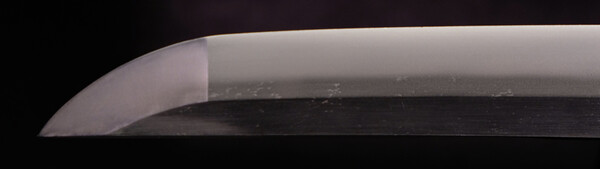
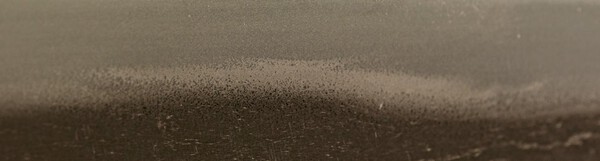
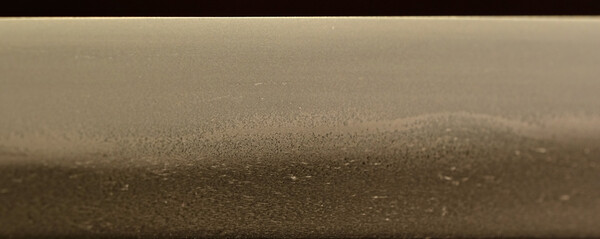
....for sale. Very affordable wakizashi in good polish, lots of activity in excellent condition. Did I mention affordable: $700 plus S/H *If interested please contact me via email: yakiba.com@gmail.com For the complete listing: http://yakiba.com/Wak_Mumei_3.htm

-
I thought I would share an Interesting Manchurian naval sword
Ed replied to brannow's topic in Military Swords of Japan
Look forward to seeing the nakago. -
Justin, I think what you are seeing as nodules protruding into the inside is an optical illusion. Look at the last photo showing the dragon and you see the nodules protruding to the outside. The inside, while it does look to be protruding, I think they are protruding to the outside with the camera producing this illusion. I could be wrong, but that is how it appears to me in the photo.
-
Wow, nice sword. Kudos to the lucky winner.
-
Where did you get Yasutsugu? The papers say Shimosaka, not Yasutsugu. Yasutsugu did sign with Shimosaka early on, but not simply shimosaka. There were many smiths who used the prefix shimosaka.
-
Absolutely! If you enjoy it, that is all that really matters.
-
In the condition it is in, I wouldn't worry with any fancy oil or shirasaya repair. Clean the blade with denatured alcohol and oil it with 3-n-1 or gun oil. Use the masking paper trick, or wrap cellophane tightly around it. Although, shirasaya repair would not be difficult or expensive. If you decide to polish the blade then you will need a new shirasaya and you can use traditional oil if you like.
-
Rich, I do not care one way or the other, but you can not force others to see it your way. They are entitled to their opinion as are you. You see it as evidence, but I would dare say your evidence is based on speculation. There is no concrete evidence to support or refute your claim or opinion. Just as those who disagree with you have no proof of the contrary, again only speculation and opinion. You can not know 100% when or what was or wasn't done by whom before you came into possession of these mounts. At the end of the day speculation is speculation, not proof. Further argument from either side would be futile.
-
Not sure if you can get anything from Fred L. at the moment. He had a stroke a while back and he is slowly recovering, but I don't think he has returned to work. His son was helping him but I do not know if he is helping with the business or not. If you write and get no response, you will know why.
-
JP, I have seen many people try with a few success's, but it is very difficult to find a koshirae that "fits" perfectly as they are made specifically for one blade. If the saya fits, the tsuka can be redone to fit.
-
Piers, Nice koshirae, awaiting those additional photos I have had that happen numerous times over the years, people want to buy the blade but have no interest in the koshirae. It bothers me that they don't want the koshirae and I always try to explain they should not be broken up. Have had buyers want just the blade in koshirae or either the koshirae with no blade or the bare blade with no koshirae. Have bought quite a few koshirae that were victims of this as well. I don't see a problem with buying these already abandoned koshirae, as there is no way to know where the blade has gone. To each his own I suppose.
-
Hmm, doesn't look like a screw to me, just a beat up peg.
-
CHRISTIAN CHAFFEE PASSES
Ed replied to Bazza's topic in Sword Shows, Events, Community News and Legislation Issues
Yes he was a character. A bit full of himself, but really a nice guy. I have known him for many years and am sad to hear he has passed. From the day we met he always called me Eddie. Only person to ever call me that, I will miss speaking with him. He had a lot of stuff, lots of swords and fittings but most of it was mediocre quality. Earlier this year he contacted me about selling all of his fittings, sent me a gazillion photos of everything. I bought a few I wanted, but never worked out all the details for them all. RIP my friend. -
Thanks guys. I picked that up in Japan and had it polished, papered and the new saya made for it. Probably the only sword my daughter will keep since I had it done for her. Tsuba, that's another story, she likes them more than swords simply due the maintenance required for swords. She probably has somewhere in the neighborhood of 30 tanto tsuba.
-
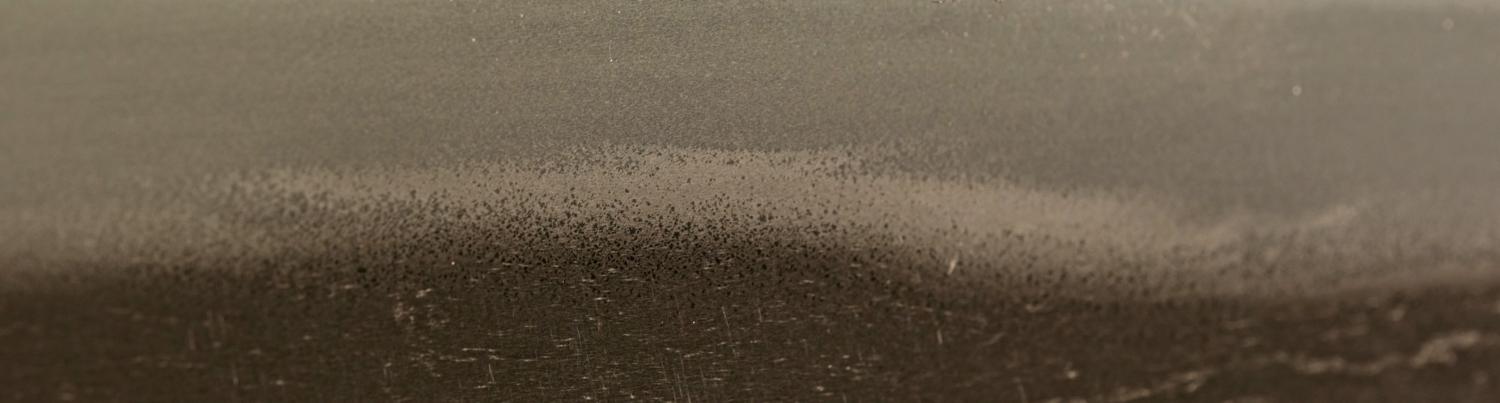
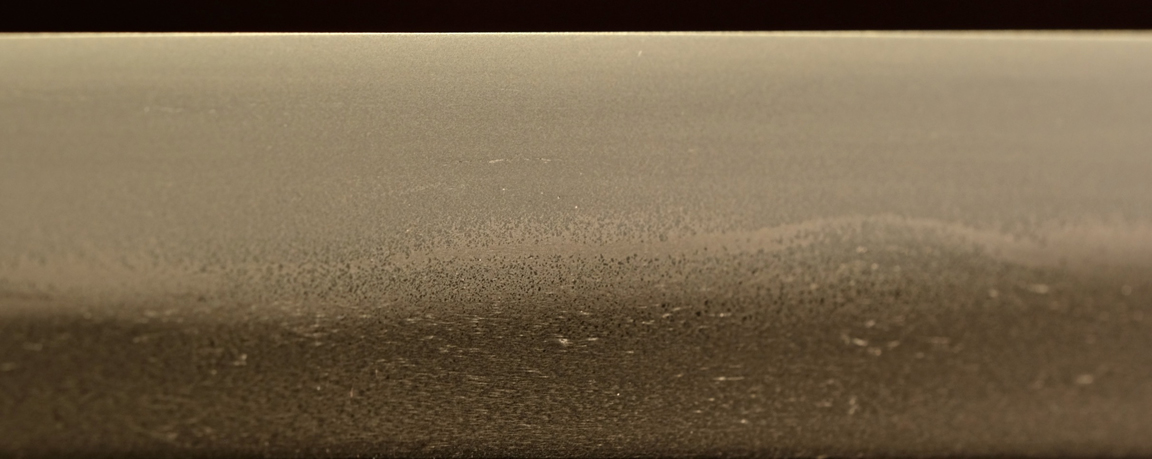
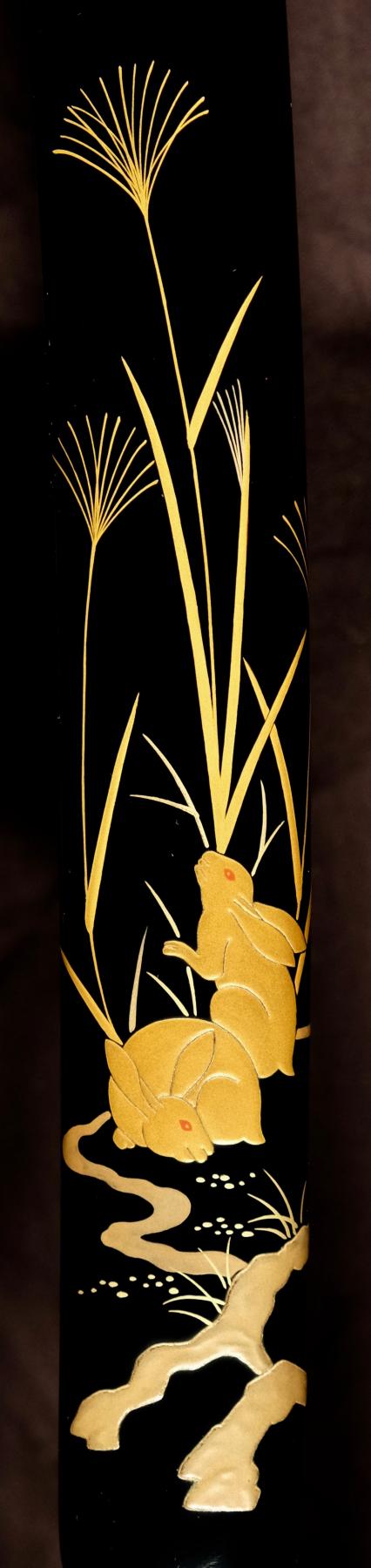
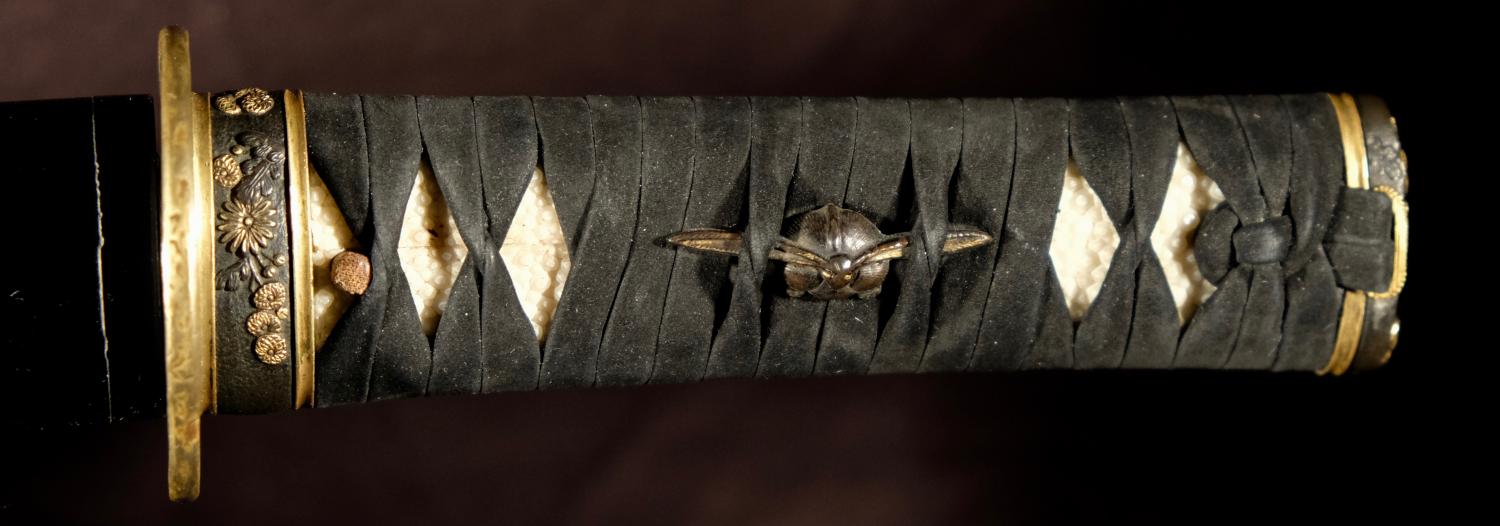
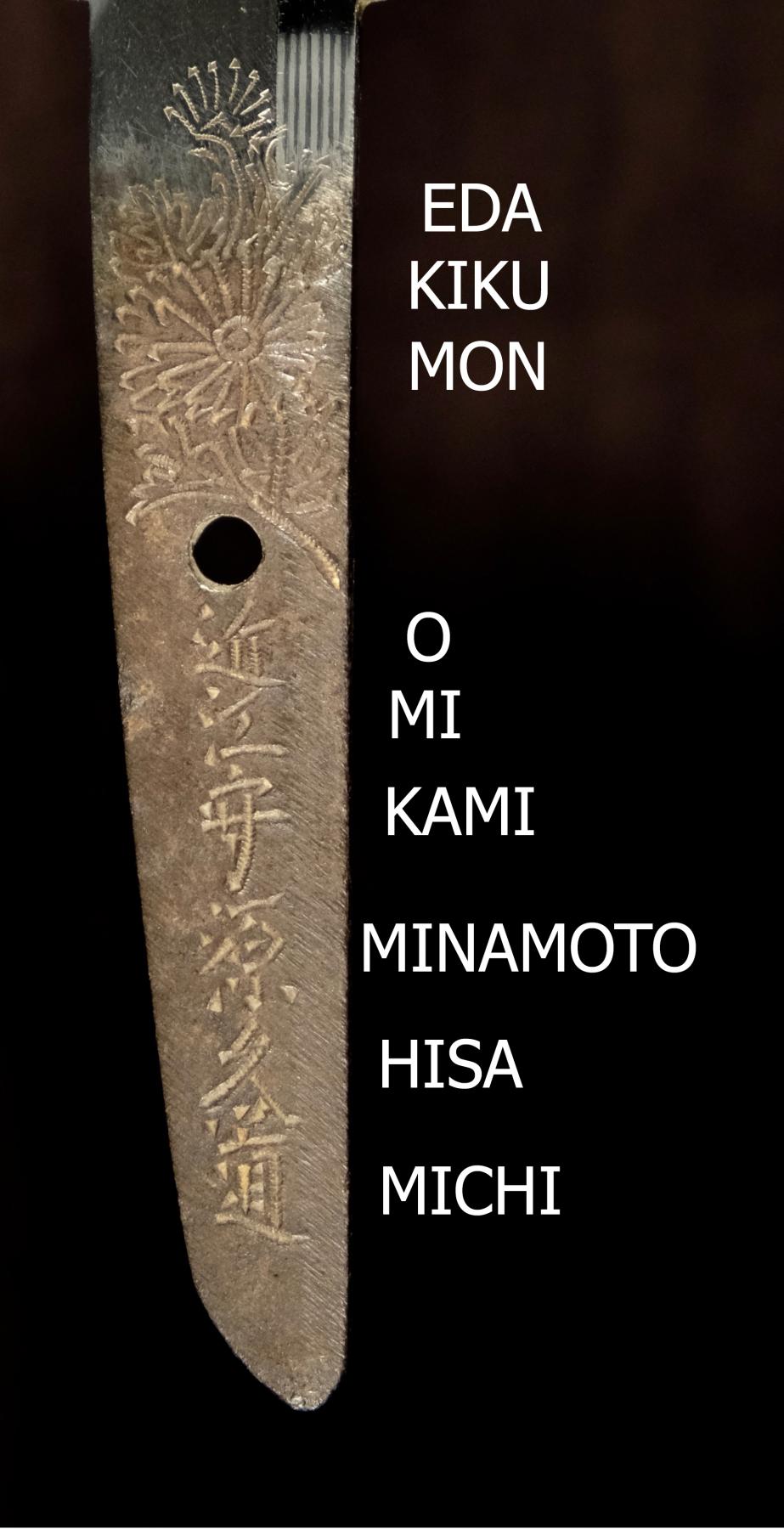
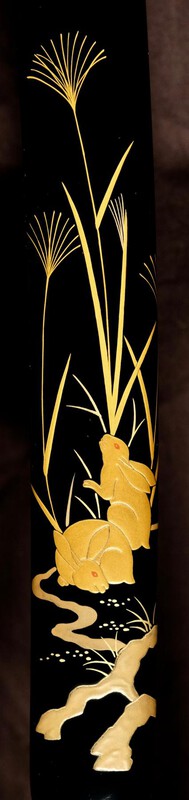
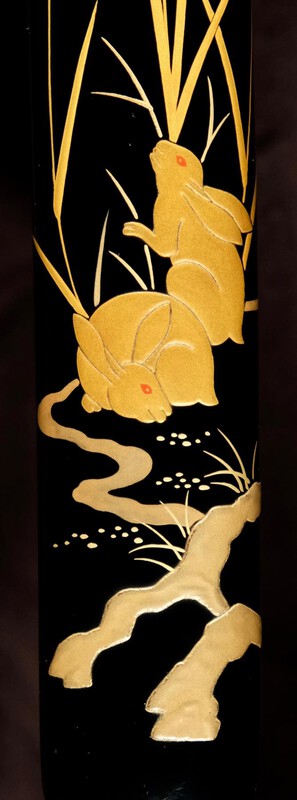
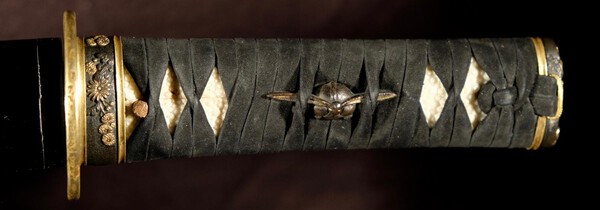
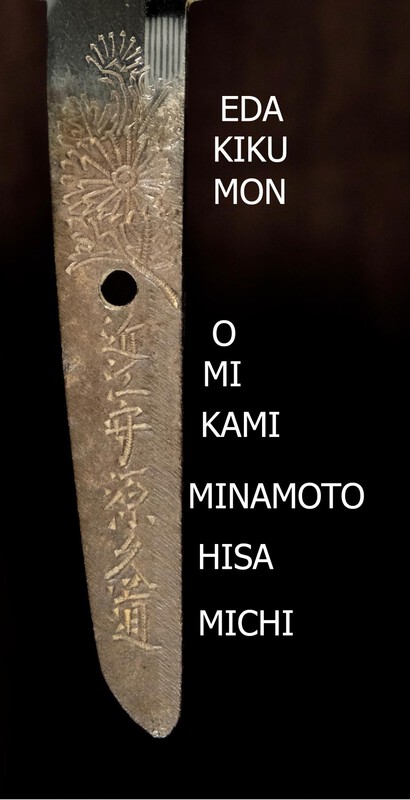
Reading through this thread and realized I never posted any photos of the Hisamichi Boys day sword with Rabbits.


-
My condolences.
-
Moriyama San, Thank you very much for that information.
-
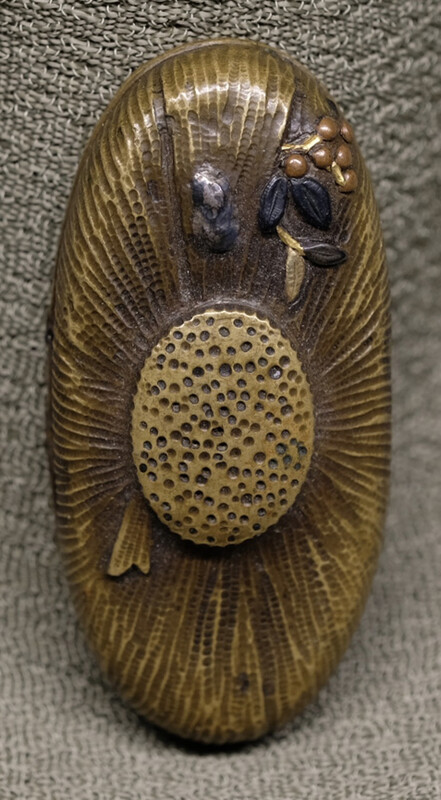
Thanks Ray, that at least gives me a starting point. Probably should have asked if anyone is aware of what this motif may be.
-
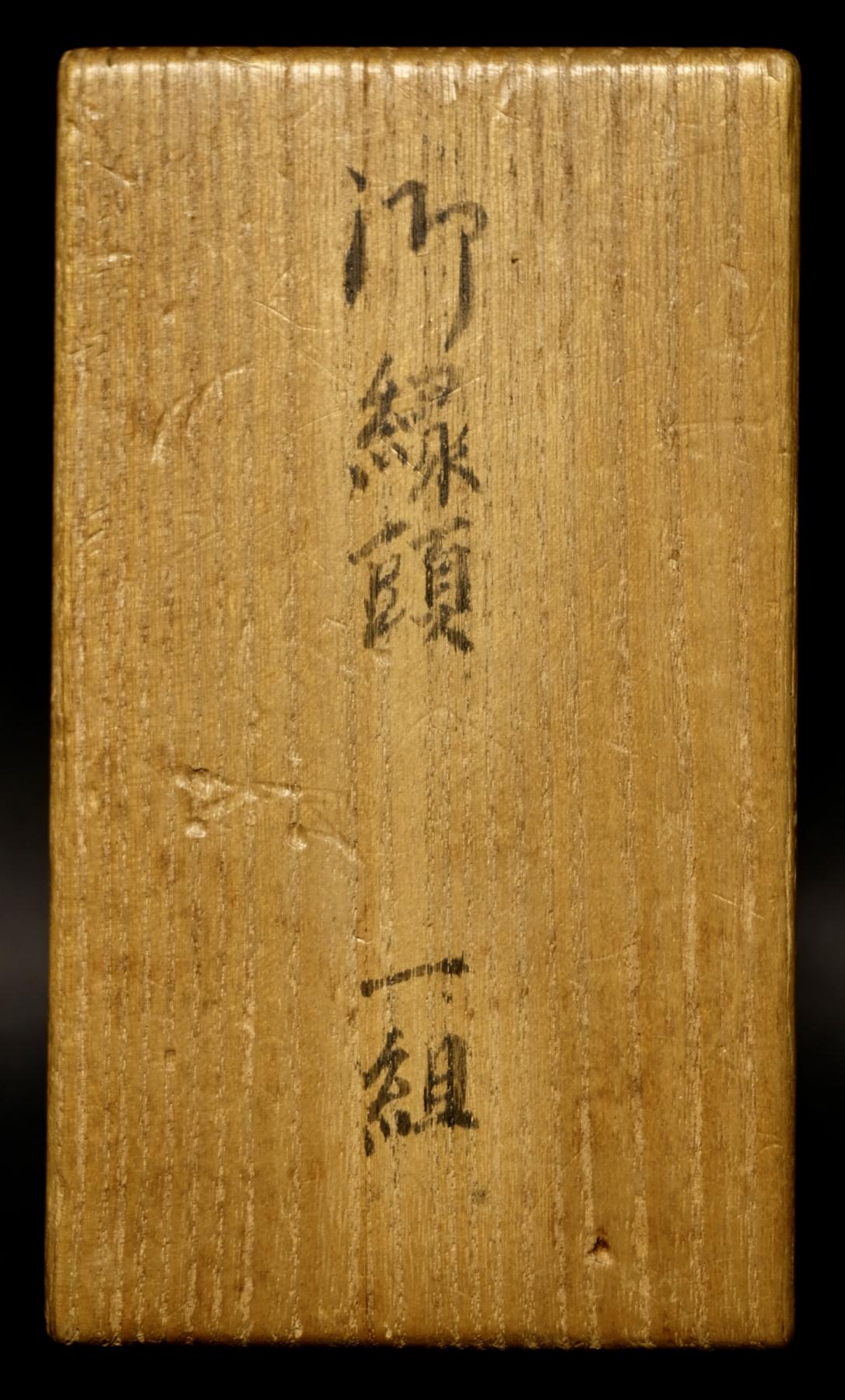
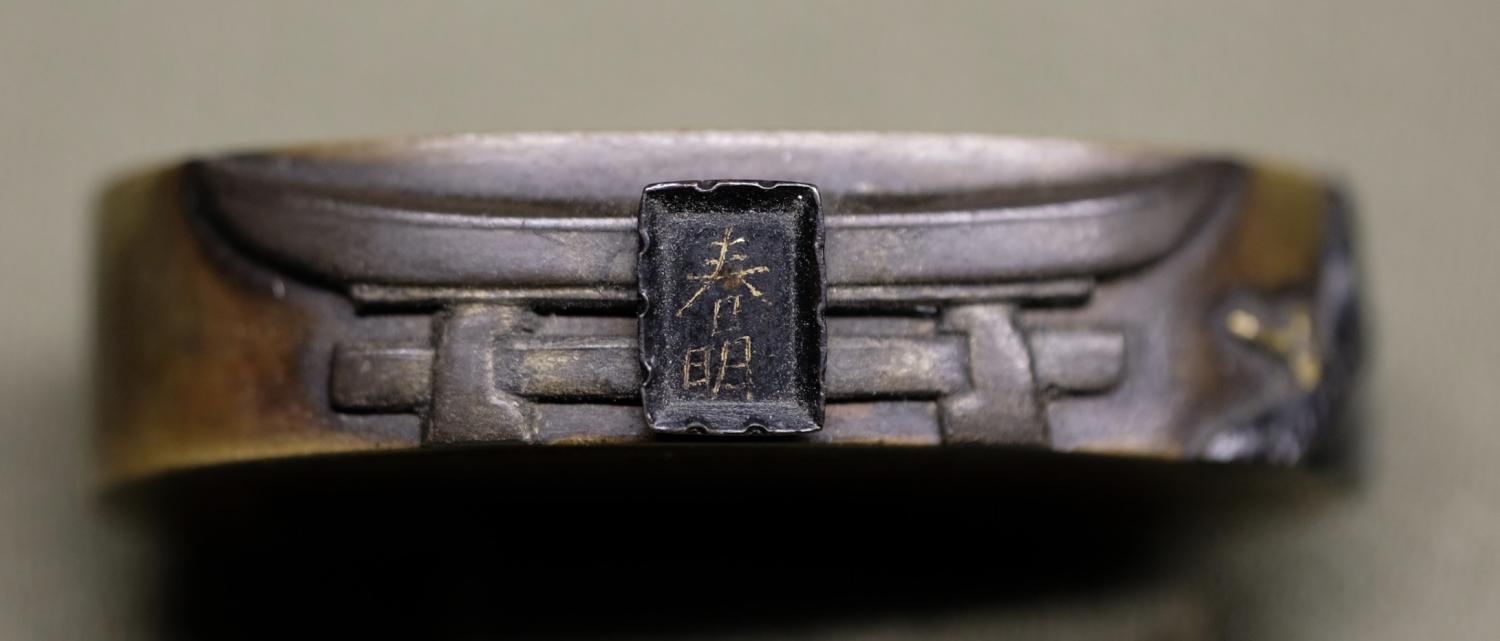
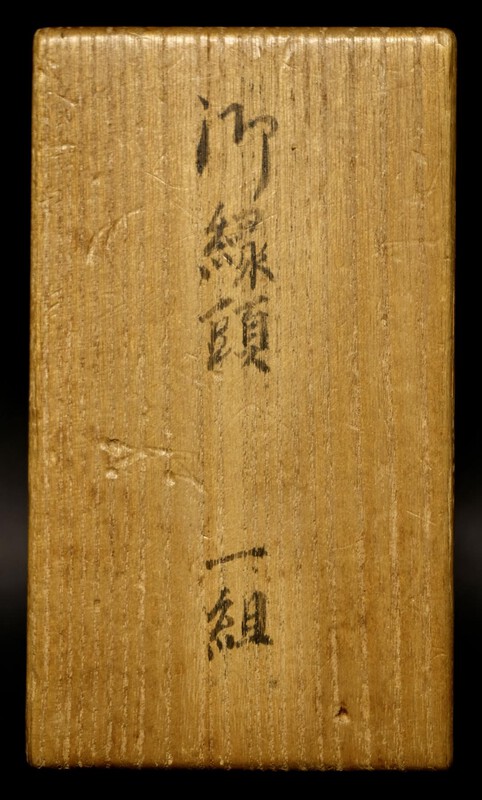
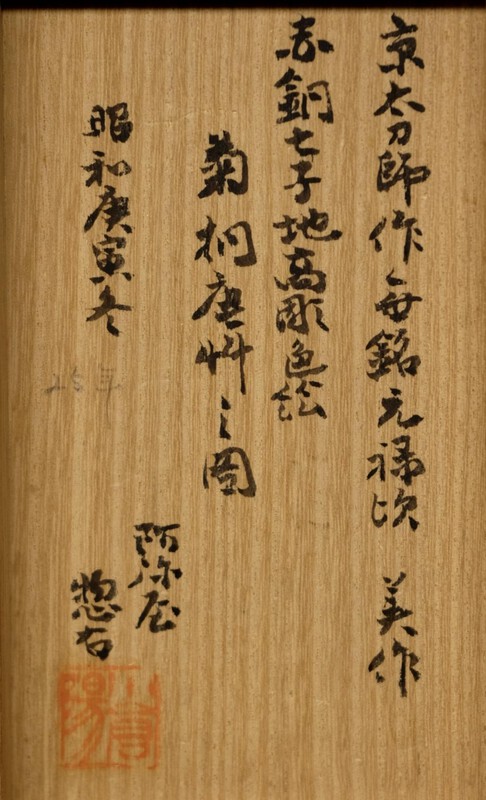
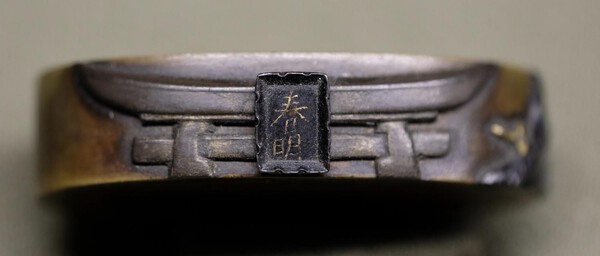
Picked up this F/K and am hoping someone may shed some light on the translation of the hakogaki and the plate on the Tori gate. Also, there is a single Kao with no mei on the fuchi, wondering if anyone might recognize it. Thanks, Ed

-
Hard to say for sure from that photo as positioning, lighting and shadows can affect what you see. If it is punched there should be some taper. Looking at this photo at the 2 o'clock position there looks to be some tapering, yet straight across a the 7 o'clock position there looks to be none. Tried looking at the first photo but it is the same only cropped here. As the lighting seems best at 7 o'clock, my guess is drilled. Look at this photo of a Ko-Bizen blade. The top hole was added later and most likely drilled, note the center hole which was clearly punched as was the bottom hole.


-
Then you need to send it to shinsa for the best opinion. Not much more we can do here.
-
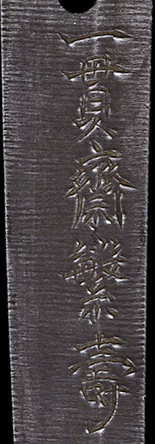
Here is a mei for comparison.

-
Your friend has translated it correctly. Can't speculate on the legitimacy of the mei. The horimono look a bit lower quality than I would expect. What else are looking to find out?
-
Thanks Ray, I figured there must have been some information somewhere. Above was a typo, actually meant to ask why Darius thinks it older than Shinto?
-
I have a couple of questions regarding this sword listing and I was wondering if you might clarify. The listing says: NINTEISHO If there is no Ninteisho, where did the information come from and how do you know it is accurate? Was there a worksheet or photo of the Ninteisho perhaps? Could you explain why you think this blade is Koto opposed to the Shinshinto (Bunka) attribution? Thanks.