
Leaderboard




Popular Content
Showing content with the highest reputation on 08/06/2026 in Posts
-
I was asked if I could jump in and clarify. Its a super confusing topic, but as Jacques pointed out, the general rule is an IS vs. WAS. I will put down my notes below. Traditionally, and currently, the NBTHK uses the following classification. Buckle up, hehe: Tachi (太刀) for a blade that still IS or can STILL BE recognized as such, that is, a blade intended to be a tachi, which means a blade meant to be worn carried edge down suspended from the waist cord. This can, but must not depend on the time period it was made. Tachi were prevalent before the Edo period, but tachi were still made in the Edo period and later. Production time is a major indicator, as is the placement of the signature. First, katana (see definition later) were not common until the late Muromachi period (16th century). Long swords made up to that time were most likely intended to be a tachi. Second, Japanese blades were traditionally signed in a way that has the signature face outwards when worn. Thus, when suspended from the waist cord, edge down, the signature is on the side with the cutting edge facing to the right when you hold the blade tip up in your hand. There were exceptions (Aoe School, etc.), but that is the general rule. Accordingly, when you have an unshortened long sword predating the late Muromachi period, or a somewhat shortened blade that retains its signature on said side, it is classified as a tachi by the NBTHK. An unshortened, but unsigned long sword from the Edo period may still be classified as a tachi by the NBTHK if it is prominently of a shape that copies earlier tachi shapes. Katana (刀) for all long swords in general that measure above of 2 shaku (60.6 cm) and that CAN NOT be recognized as a tachi. (FYI, even after being shortened to an extent that the entire original tang is lost [referred to as ō-suriage], a blade still classifies as a long sword as long as it measures more than 2 shaku.) There is no “katana now, but originally a tachi” in the nomenclature currently used by the NBTHK. For context, katana is the abbreviated form of the term uchigatana, which originally meant “striking shorter sword” (there was no textual distinction between dagger and short sword in early periods, only long sword, tachi; ANYTHING shorter was called a katana). Uchigatana (打刀) for all swords in hira-zukuri measuring noticeably above of 1 shaku (30.3 cm) and to around 2 shaku (60.6 cm) in their ORIGINAL, unshortened condition made before the Muromachi period (when short swords in shinogi-zukuri started to become common). This was the then period term for that kind of sword, or blade, and it is still followed. If a blade from said period and construction measures just somewhat above of 1 shaku, it will be classified as a wakizashi, even if other terms existed for it in the past (e.g., hira-zukuri ko-wakizashi, ō-tantō, ō-danbira, sunnobi-tantō, etc.). NOTE: Even if late Murmachi period long swords in shinogi-zukuri were still referred to as uchigatana in contemporary texts, those are currently classified as katana by the NBTHK. Wakizashi (脇指・脇差) for all blades measuring between 1 shaku (30.3 cm) and 2 shaku(60.6 cm), regardless if made to this length originally or shortened to this length later. If a tachi was shortened to below the length of 2 shaku, it is now classified as a wakizashi. There is no “wakizashi now, but originally a tachi or an uchigatana” in the nomenclature currently used by the NBTHK. See above for the exception of an uchigatana classification. Hope this is helpful.11 points
-
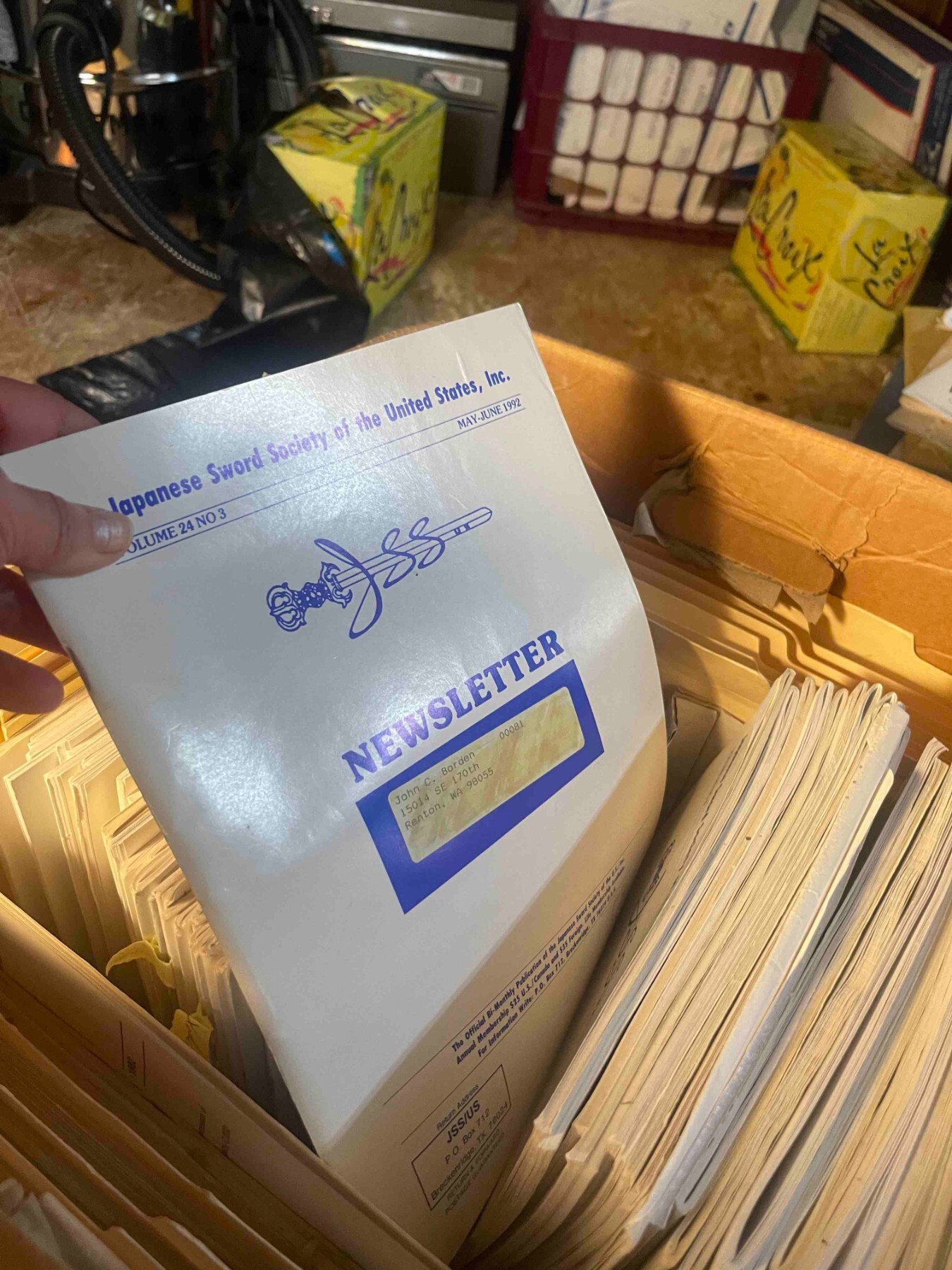
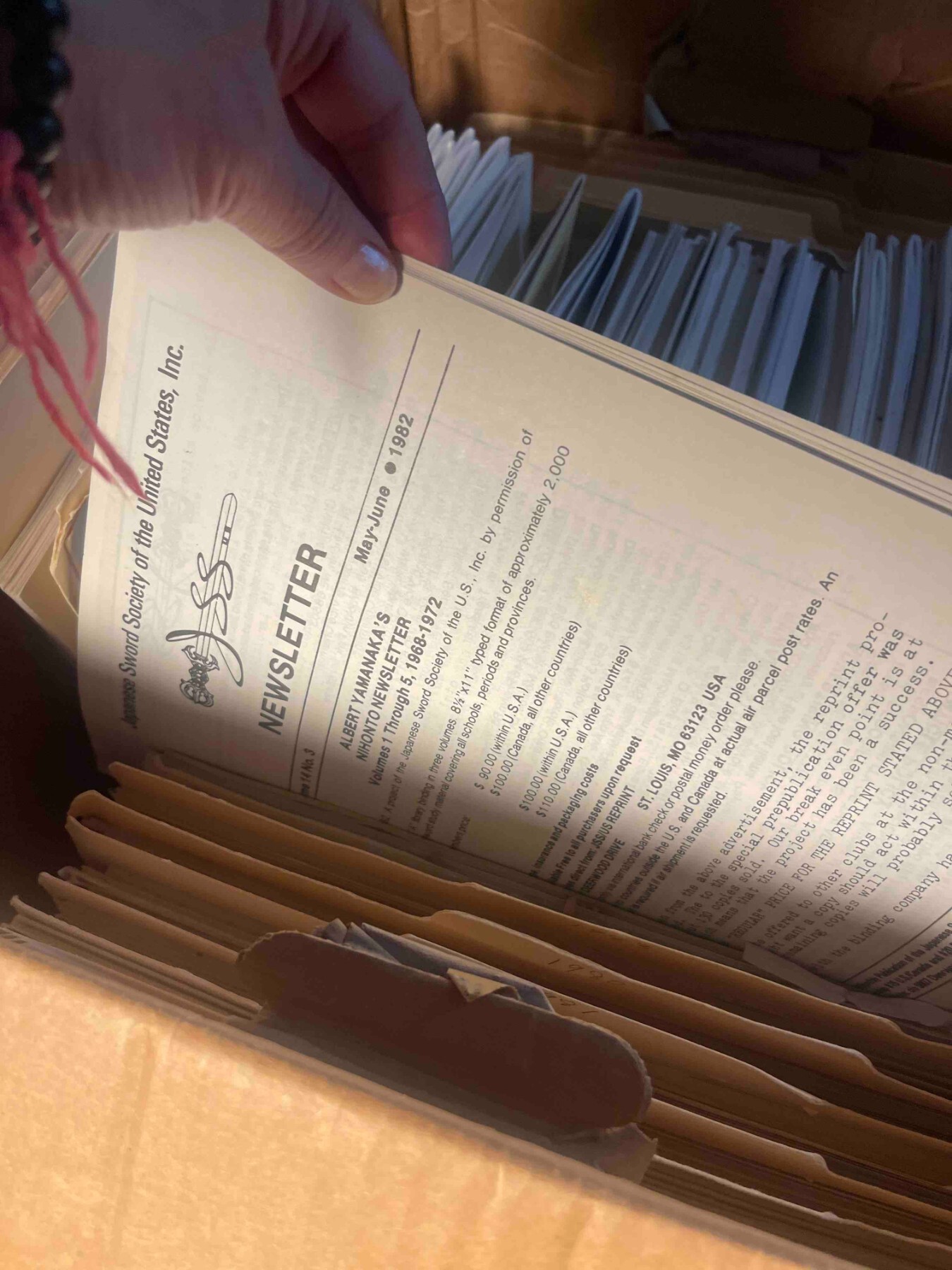
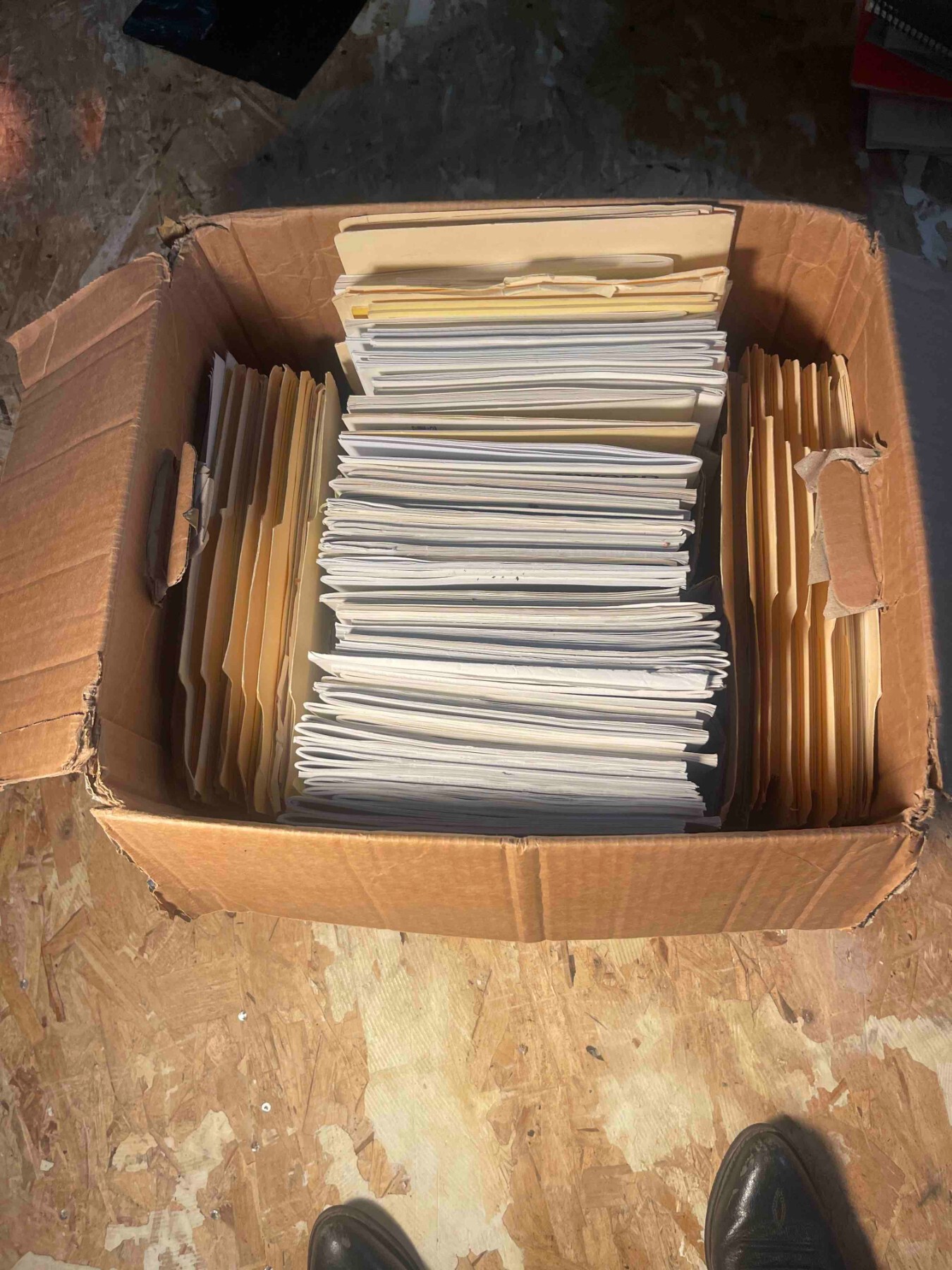
Hello, I am the Daughter of Steve Strauch who was a sword collector- he passed away recently. I have a ton of news letters from various clubs dating back to 1978. Newsletters that I need to give away or throw away. They seemed to be gifted from another collector J. Borden- who I do not know how to contact. I am located in Portland, Oregon. It only really makes sense if you can pick them up- really soon. I do not want to trash them so I'd love to have them be treasured. If you want them shipped I would need to get payed something for shipping and handling. I can NOT provide more pictures, so forth, as they are free. The box is very heavy, most likely over 40 pounds. PLEASE TAKE IT AWAY!!!


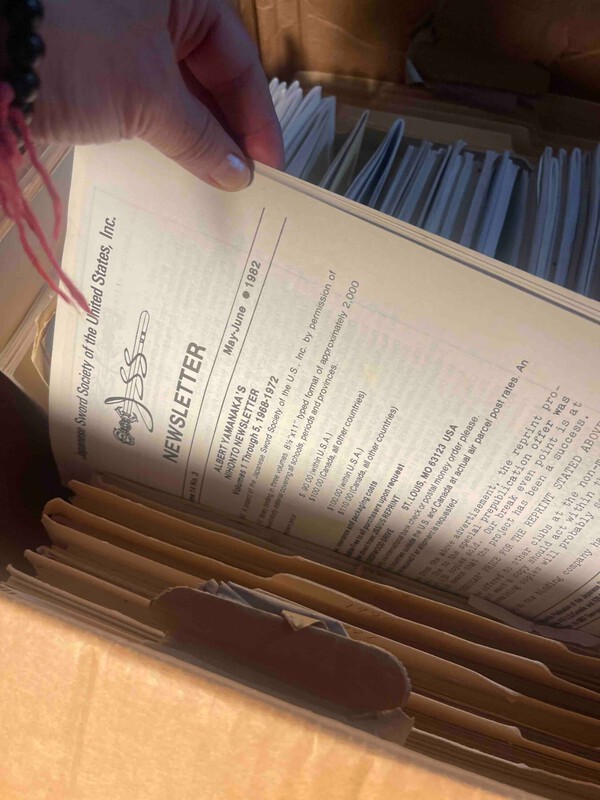
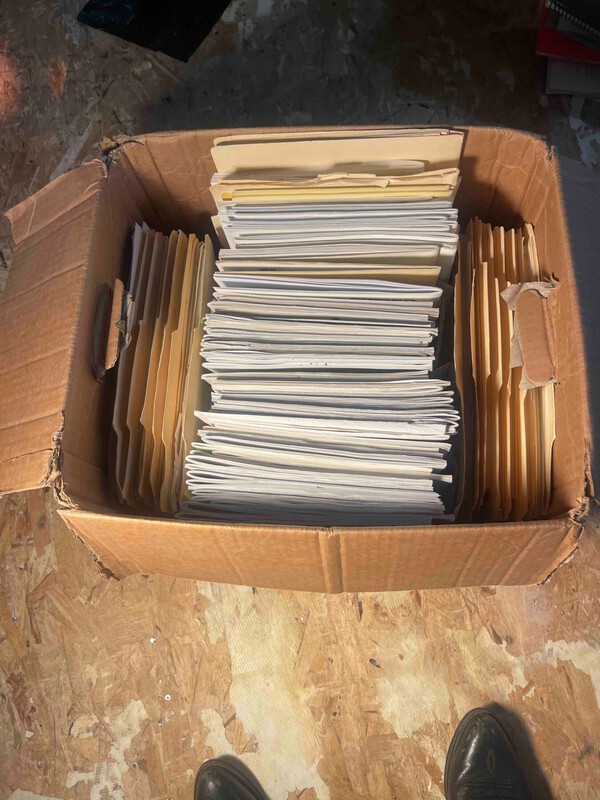 6 points
 -
AFAIK, their definition is: A blade, signed in tachi-mei or unsigned, in shinogi-zukuri that is ubu (or has just the nakago-jiri slightly cut off), measuring around the ballpark of what constitutes a long sword, and that dates not later than Nanbokuchō. From the Muromachi period onwards, such a blade needs to be signed in tachi-mei to classify as a kodachi, otherwise its going to be either just a wakizashi or a katana, depending on the nagasa.6 points
-
Hello Marah, my condolences about your father. I am likely nearby, and would be honored to have them. I have sent you a message. All the best, -Sam6 points
-
I wouldn’t read too much into the spiritual aspects of various Buddhist traditions and sword smiths. What is unfortunately often overlooked, however, is the remarkable economic prowess of monasteries, particularly those of esoteric traditions such as Shingon and Tendai. As some of the largest landowners of the time, they were also exempt from taxes. Temples skillfully established all kinds of businesses and craftsmen near their temples in Teramaemachi. Since they, as landowners—or indirectly through their representatives, the Kuge—could also levy customs duties, monopolies often formed around services, products, and goods produced under their protection and on their lands. Thus, veritable “commercial enterprises” sprang up not only at monasteries but also at shrines, as was the case in Awataguchi. And the famous forges in Awataguchi produced not only fantastic swords but also countless nails for the construction and maintenance of various temples in the immediate and wider vicinity. No swordsmith could simply move from A to B just because he liked the area so much. The trades were clearly organized into guilds, which were generally administered by monasteries or shrines. There were a few exceptions, including Seki, which governed itself. This system was only dismantled by Oda Nobunaga, as the Za’s monopolies and countless tariff barriers hindered the country’s economic development. As for religious motifs on blades, people were relatively pragmatic. On the one hand, it depended on what the client wanted—and that was usually something believed to have the greatest impact. On the other hand, they also used symbolism that did not necessarily reflect the specific school of thought to which they themselves belonged. The “Kamakura Buddha” temple originally had an esoteric orientation. And Masamune was not a follower of Zen, but rather a Nichirin priest.4 points
-
Victors write the history books. They also take whatever they want. That's 'Rules of Warfare 101'. The subsequent perspective on those actions may change decades or centuries later - until, inevitably, there are debates such as this one. Hindsight always has a more finely tuned moral compass than that of combatants who have just defeated an enemy nation in an extremely bitterly fought war.4 points
-
Or the Heshikiri-Hasebe. Or the Honjo Masamune (cut through a helmet). These blades were no cabinet queens. https://japaneseswordlegends.wordpress.com/2015/10/01/the-heshikiri-hasebe/ and the Ishida Masamune (with deep kirikomi)
 4 points
 -
I'm not entirely sure about that. My understanding is that Soshu blades were in fact highly regarded battlefield performers, which is why the particular visual markers unique to their school became held in such esteem by the bushi of the era. The Ishida Masamune in particular has two very large chunks of the mune taken out by other blades; the fact that it was able to survive such punishment without any (visible) structural weakening would have been of great interest to the warriors of the time (and indeed, to both artists and craftsmen today).4 points
-
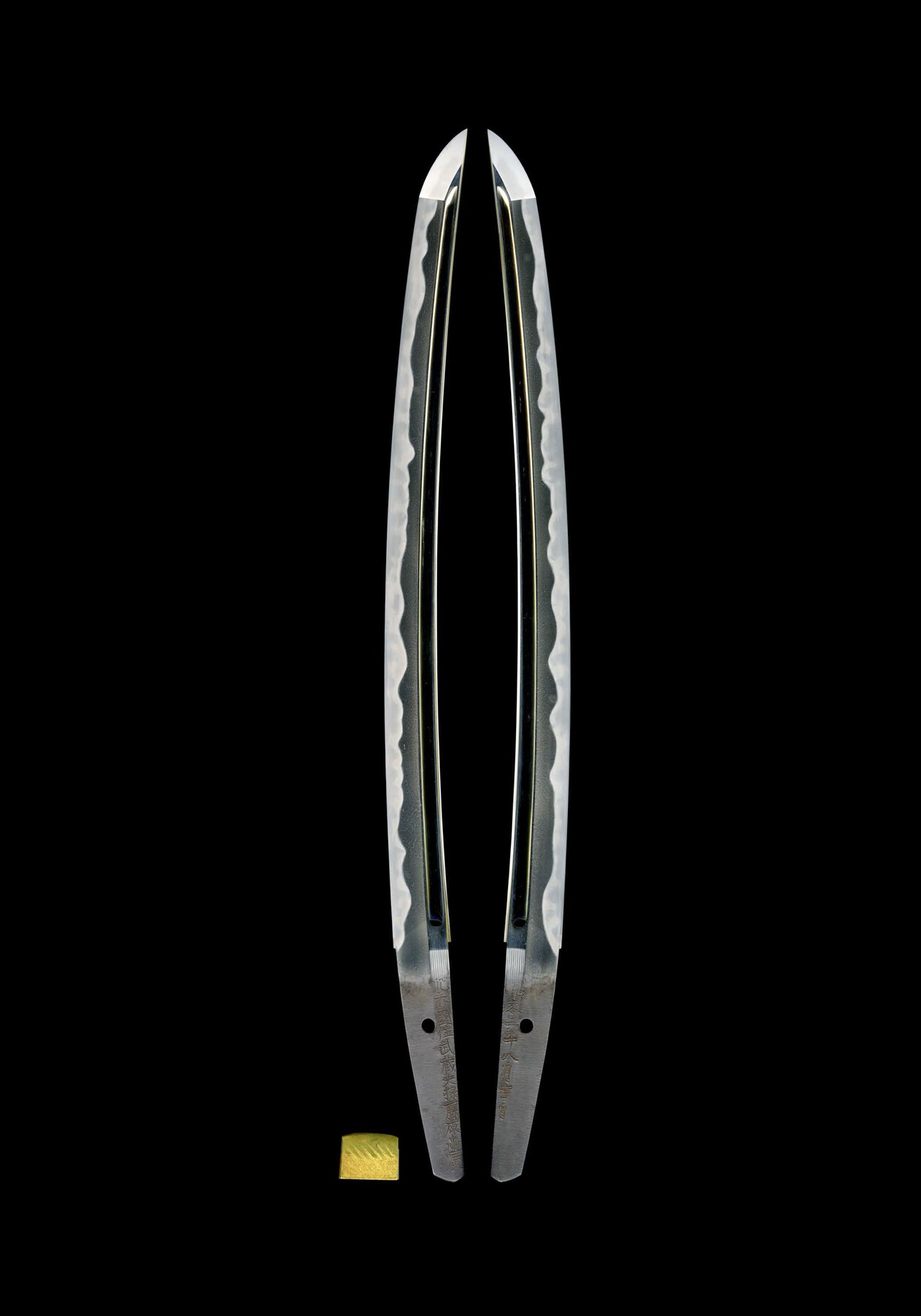
Mei: Kashu ju Fujiwara Kaneshige Date: an auspicious day in the 8th month of 1857 (Ansei 4)3 points
-
Working through it all carefully. Starting to list items here. https://ebay.io/m/DxoRnc and also going to sword shows.2 points
-
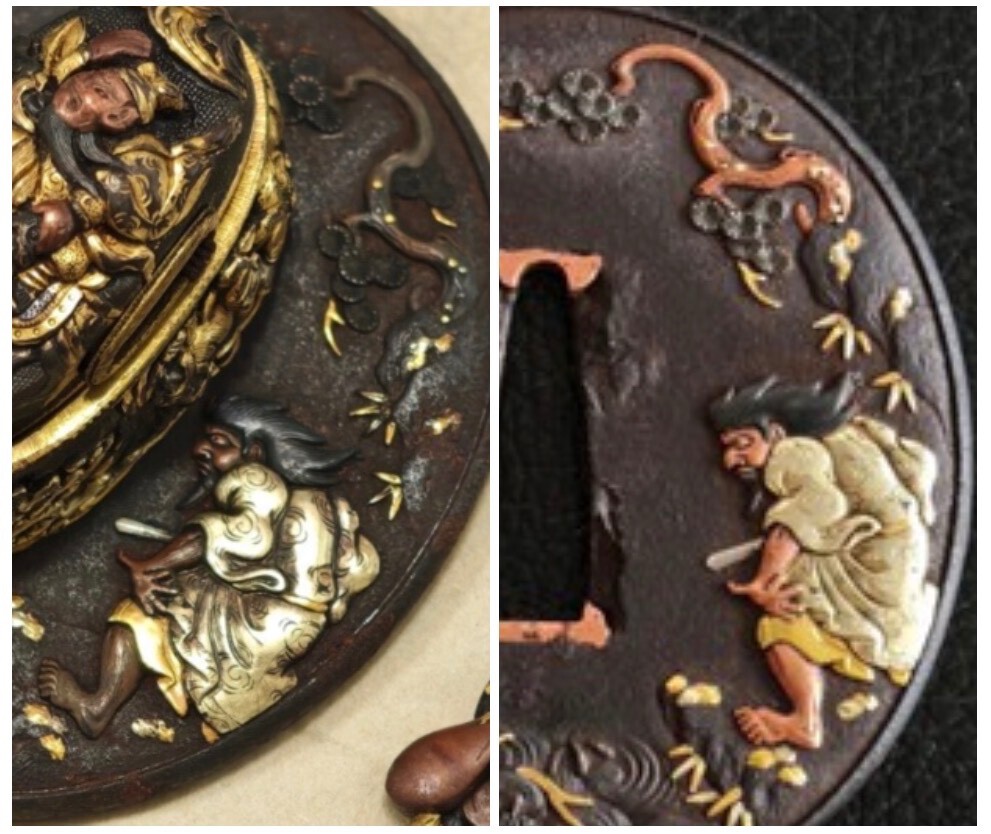
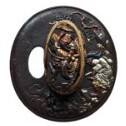
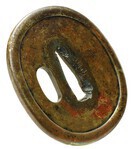
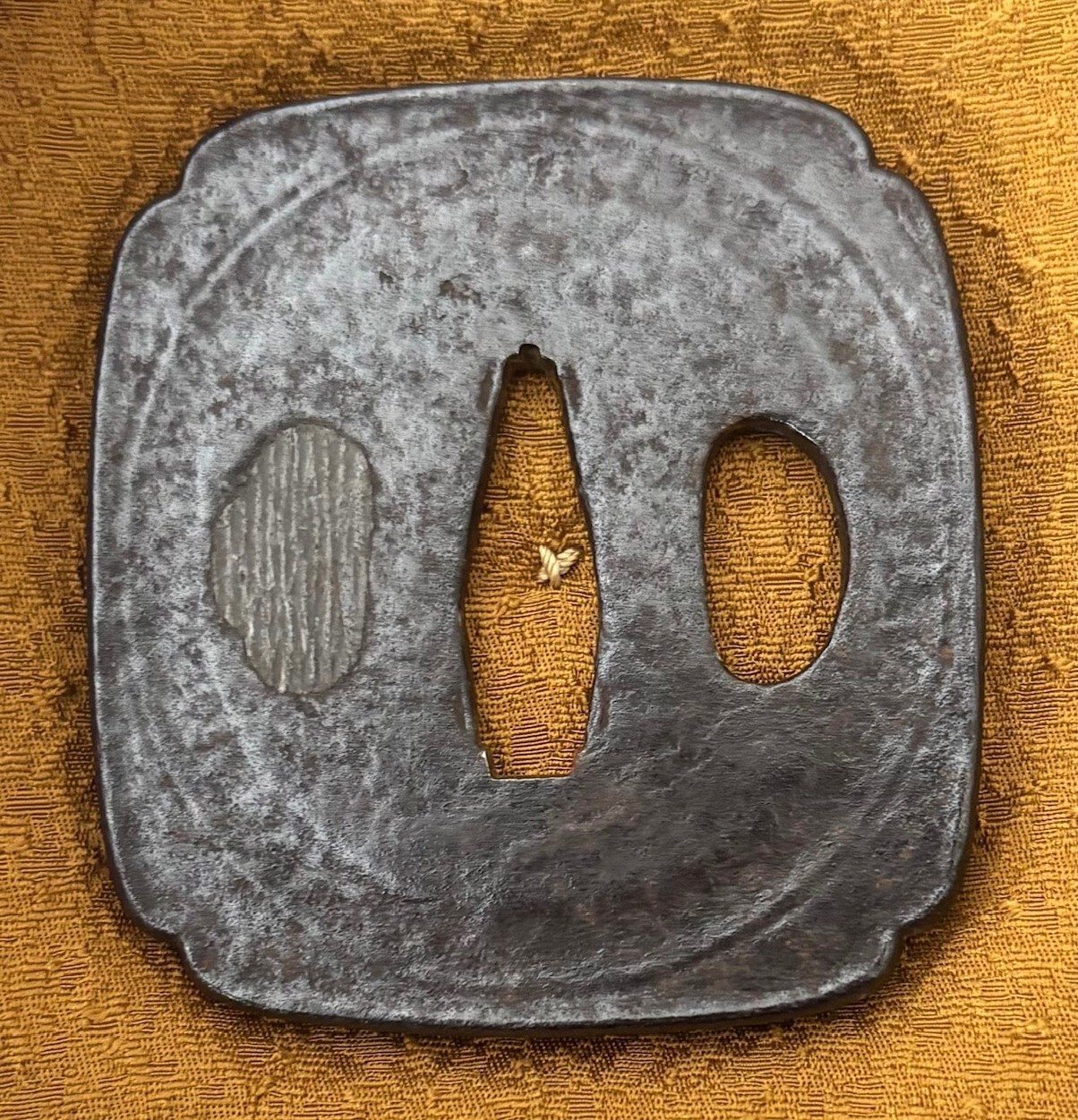
I agree. In this case, the cleaning appears to have been chemical. That's worse than simply losing the patina. The copper color will never be the same again because the top layer of the metal has been chemically etched.2 points
-
The patina is ruined but could be recovered by someone who knows what he is doing. Chen, the copper inlay should be a dark red/plum/brown colour (depending on the alloy content) which is achieved by a boiling/pickling process that coats the metal in an oxide. You have stripped that surface off and it looks horrible.2 points
-
Chen, you have obviously no idea what you are dealing with. All soft-metals in Japanese metalwork are treated in special ways to protect them from corrosion and to make them appear respectfully used (look under WABI SABI) insted of new.. On your TSUBA, the original colours are gone, and so is a good part of the potential value of your TSUBA. It looks horrible, unfortunately.2 points
-
That is absolutely heartbreaking. @xiaopangshizi Why did you remove all the beautiful old patina? 😳
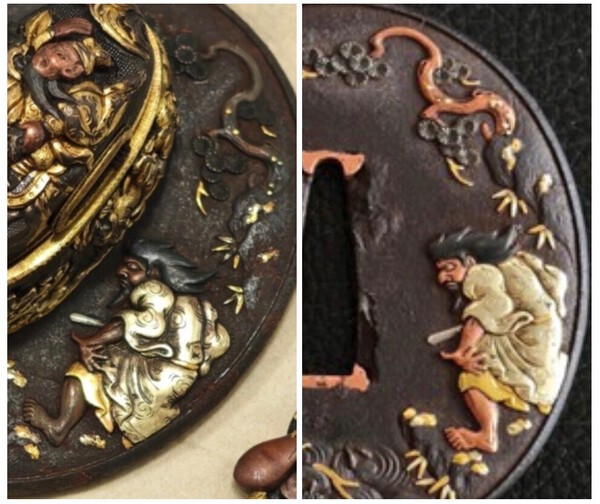
 2 points
 -
Such a strategic flex... Reading into situations where hostages were offered during feudal Japan, there's this entire element of "distrust" that is symbolically displayed when hitojichi are accepted. Almost like a "I don't trust this person, so I'm going to take their son so they don't try me in the future" kind of vibe. So Hideyoshi saying "No" or refusing hostages at the initial offering hits so deep in a way that says so many things here... A) I'm in control, B) I need you, C) You're gonna do what I say... which is similar to A, but a bit more nuanced in the public eye to show supremacy... It's just a slightly more humble way of saying it from my perspective... This is exciting stuff! I definitely think that the art of the strategic flex has been lost over the years lol -Mitchell2 points
-
Interesting to note that the only acknowledged signed Gō blade was a tanto called the Kurikara Gō. Which was lost down a well. The Kamakura Shogunate actually adopted the new Rinzai (Zen Buddhism) when they first got into power and as such it quickly spread and became the dominant religious institution within Kamakura Japan. This was a shrewed political move by the shogunate to draw power away from the Buddhist Temples in Nara and the Emperor in Kyoto. This is the same reason why the Kamakura Buddha (c. 1252) exists today. As the Shogunate practiced Zen Buddhism so did the Samurai and all associated with the Shogunate. Gō as we know was a Samurai. Lay monks became very popular during this time. We know two that certainly would have influenced Yoshihiro and his thinking in Ko-Nyudo Kunimitsu and Goro Nyudo Masamune. The Zen Buddhist belief of denial or letting go of ego is also considered a major reason for the lack of signatures (Mei) over the Kamakura period. Zen often compares the ego to a clenched fist. Opening the hand does not mean destroying the hand; it means stopping the strain of holding on too tight. Fudo Myoo is a major character in Zen Buddhism as it acts as a fierce guardian and a symbol of unshakable mental stability and decisive wisdom cutting through ego and drawing one closer to Nirvana in your everyday. His swift vengeance is reserved to cut through lies, ego and untruth which is why horimono of him or his sword appear on so many swords of the day. As a Kamakura swordsmith and Samurai the image of Fudo Myoo in Gō's forge is very appropriate to the time. Note after the fall of the Kamakura Shogunate in 1333 we start seeing this letting go of ego slowly dissapear and we start to see alot more blades with Zamei, especially from the newer smiths who were not influenced by this religious zealotry.2 points
-
There goes that standout workmanship, the hallmark of the early Hizen tradition... I see blades like this and its a reminder of how I could so easily fall into collecting only hizento. The presence here is balanced and ultra-commanding... A beautiful wakizashi to say the least.2 points
-
For anyone who's interested in an account of a Masamune blade's performance in war, here's one named for a specific battlefield feat: https://markussesko.com/2013/06/25/the-kotegiri-masamune/2 points
-
They do sometimes specify kodachi, as in the Juyo zufu for this one by Osafune Nagamitsu: https://www.nihonto-museum.com/collection/exhibit/bizen-osafune-nagamitsu-ko-dachi Interestingly, the same blade was listed in the Yūmei Kotō Taikan as a tachi, showing that even among experts there are disagreements on how one should classify these things (images for both publications are at the link above).2 points
-
@Scogg or @Ganko Anywhere near you?2 points
-
I would still say they are considered special and a bit rare, considering the vast amount of Hizen swords produced. I have one from Shodai Tadayoshi with mizukage (yakidashi-utsuri) and an interesting hamon incorporating gunome, chōji, pointed peaks (togariba), “crab-claw” formations (kani-no-tsume), and tobiyaki... signed "Hizen-koku-ju Musashi-daijo Fujiwara TADAHIRO, Auspicious day in the 8th month Kanei 3rd". (1626)
 2 points
 -
Condolences on your loss, and appreciate you reaching out to us here. Seems like a treasure trove for folks in the area - hopefully somebody on here will be able to help you out (unfortunately not me, as I am on a different continent).2 points
-
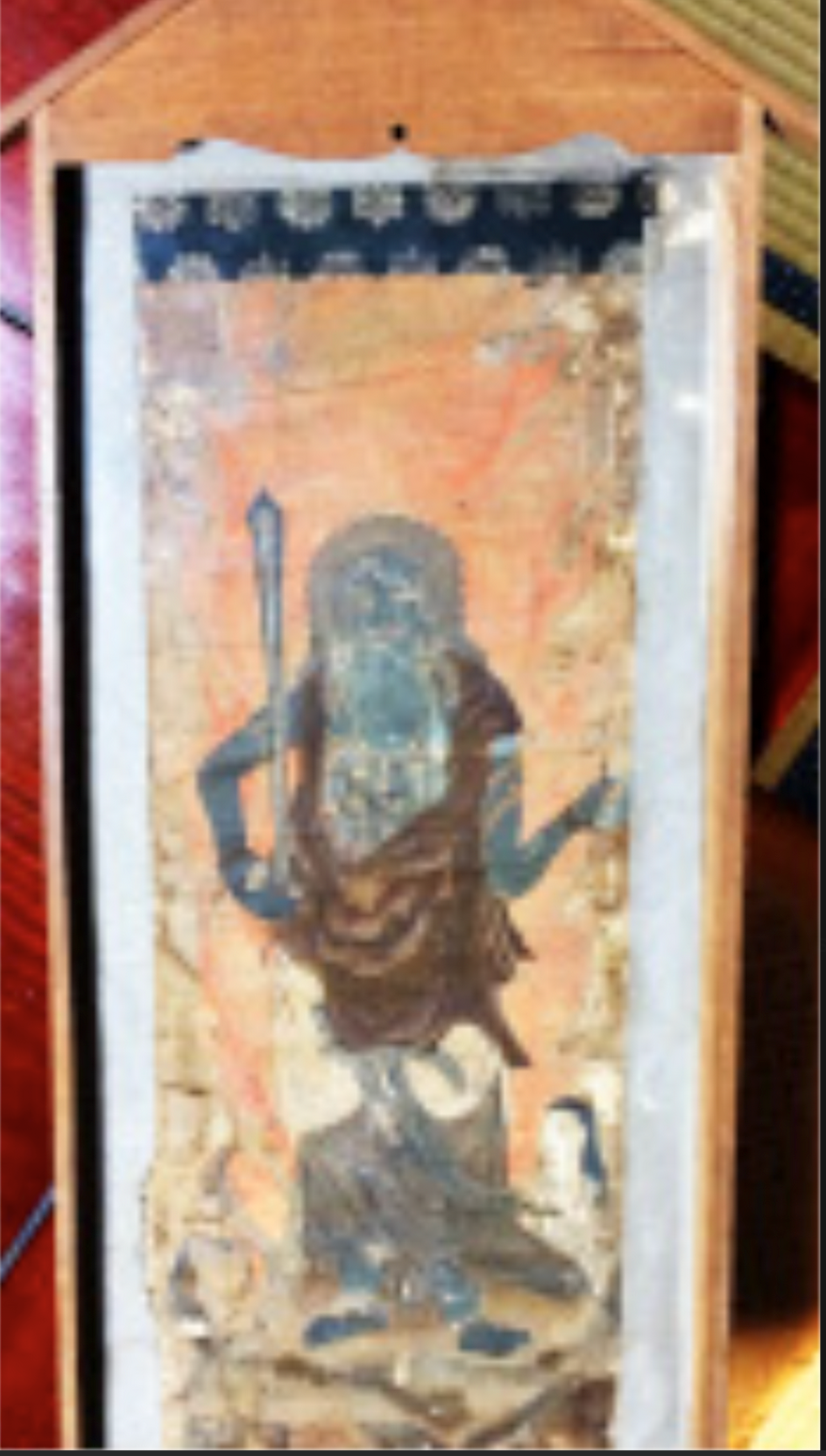
I want to add a little more to this deep dive into the life and time of Go Yoshihiro. I'm fascinated by the imagery of this depiction of Fudo Myoo, a major protector deity in Japanese Esoteric Buddhism and why Go might have had this displayed in his forge. It surely wasn't just an aesthetic choice but one made with deep spiritual meaning and maybe a nod to his earliest mentor. The deity was first depicted in 839AD in the early Heian period in Kyoto's To-ji temple. Some key features of the image: Blue/black body colour indicating wrathful manifestation to overcome ignorance and evil. Right hand holds a 3 pointed vajra sword symbolizing the cutting down of delusions, greed and attachments. (now I know how this imagery translates to the common horimono motif) Left hand carries a lasso to bind negative forces and draw lost individuals back toward the path of clarity. Background. Fiery orange flames symbolizing purification and burning away anger, passions and worldly desires. All very appropriate for a swordsmith dedicated to a goal of perfection. While devotion to Fudo Myoo was widely understood throughout Japan its significance for Kamakura and Nanbokucho era smiths was variable. Logically the deity received most attention in the Monastic Center of Nara in Yamato. These smith's weren't just artisans and craftsmen they were monks or temple servants called monzen-kaji. Then there is Yamashiro, the Cultural seat of Japan where some of the most revered Awataguchi and Rai smiths worked. The capital was surrounded by the foundational headquarters of Esoteric Buddhism including the Shingon sect on Mt Koya and Tendai on Mt Hiei. And then there was Soshuden. The smiths in Sagami would have been influenced by the Kamakura samurai who were attracted to Zen Buddhism for discipline but actively relied on Fudo Myoo for battlefield protection and victory. Thus application of religious iconography expanded, be it Fudo Myoo on the Fudo Masamune tanto or countless blades with associated imagery like bonji, the 3 pointed vajra sword or Fudo Myoo's Kurikara dragon. There could be many reasons why this image of Fudo Myoo would have been important to Go. Important enough that it was preserved according to family legend, from the time when he was working in Matsukura Castle. If its true Go was initially trained within the Yamato tradition, then later as a student of Masamune (himself a lay Buddhist priest), one can see why religious iconography would have been an essential element when undertaking the spiritual process of swordmaking and continued after he returned to modern day Toyama province. @MassiveMoonHeh has already mentioned how its conceivable the nearby Tateyama mountain range provided artistic inspiration for the intensity and structure of his hamon, where he collected high grade masa satetsu iron sand and maybe there is even a direct connection to the Fudo Myoo. In the 14th century Tateyama was the epicenter for a syncretic religious movement called the Tateyama Shinko. These mountain ascetics practiced Shugendo blending ancient shamanism, Shinto animism, Taoist magic, and esoteric Buddhism. The volcanic craters on Tateyama leaked sulfur and steam and they believed this was the physical manifestation of Buddhist hells. Fudo Myoo was the gatekeeper according to local lore where he would subdue the hellish demons and protect the pilgrims. Thus the iconography of the scroll placed in a prominent part of the forge would have had multiple levels of meaning for this young, master swordsmith working in the Matsukura foothills in sight of the Tateyama mountain range. The perfect manifestation for someone in the pursuit of perfection.
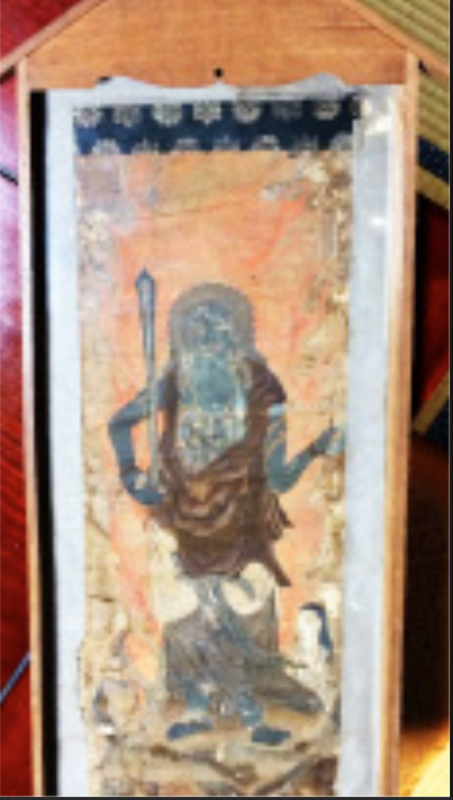
 2 points
 -
What a pity! It has not been restored expertly in Japan!2 points
-
2 points
-
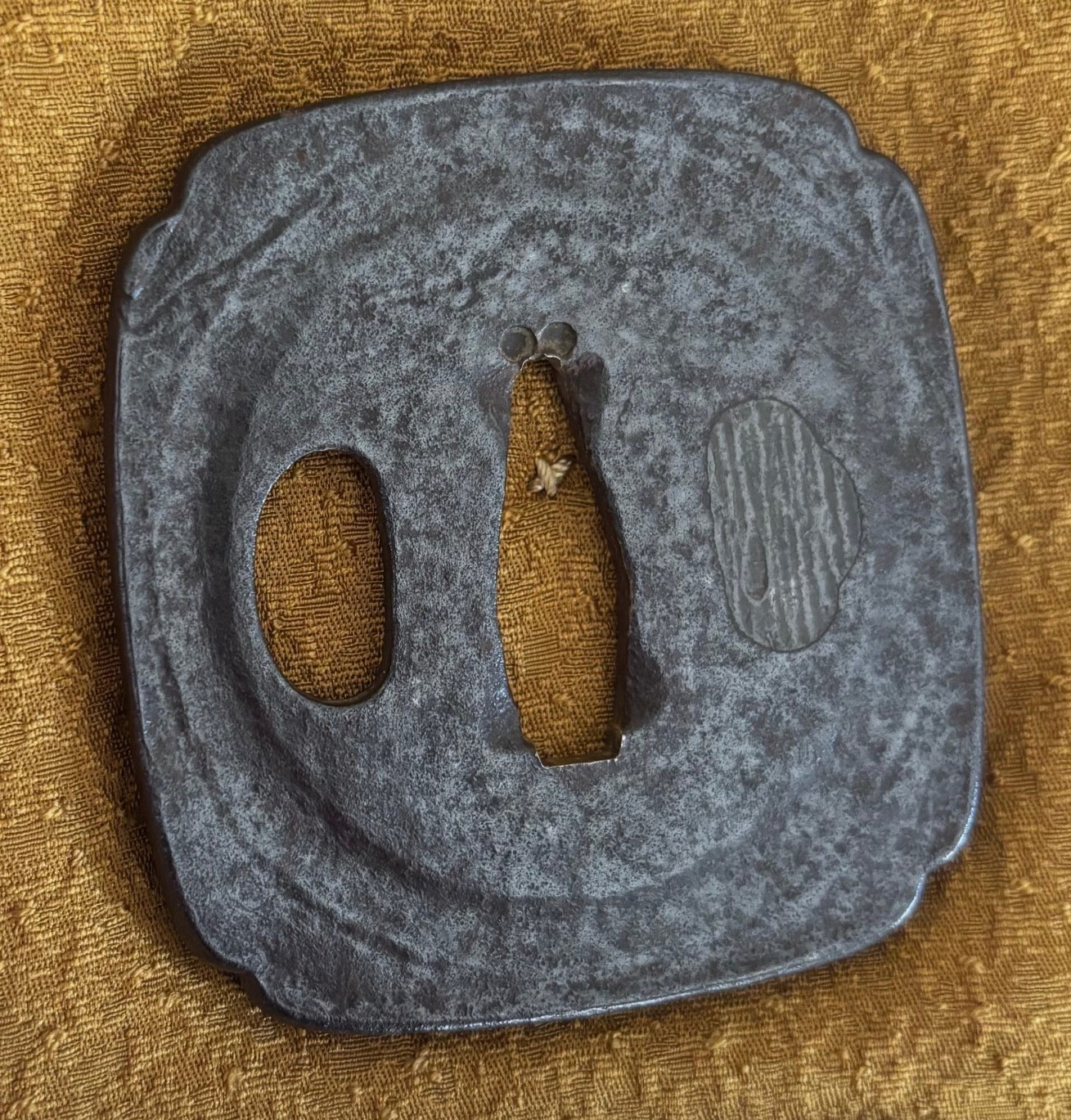
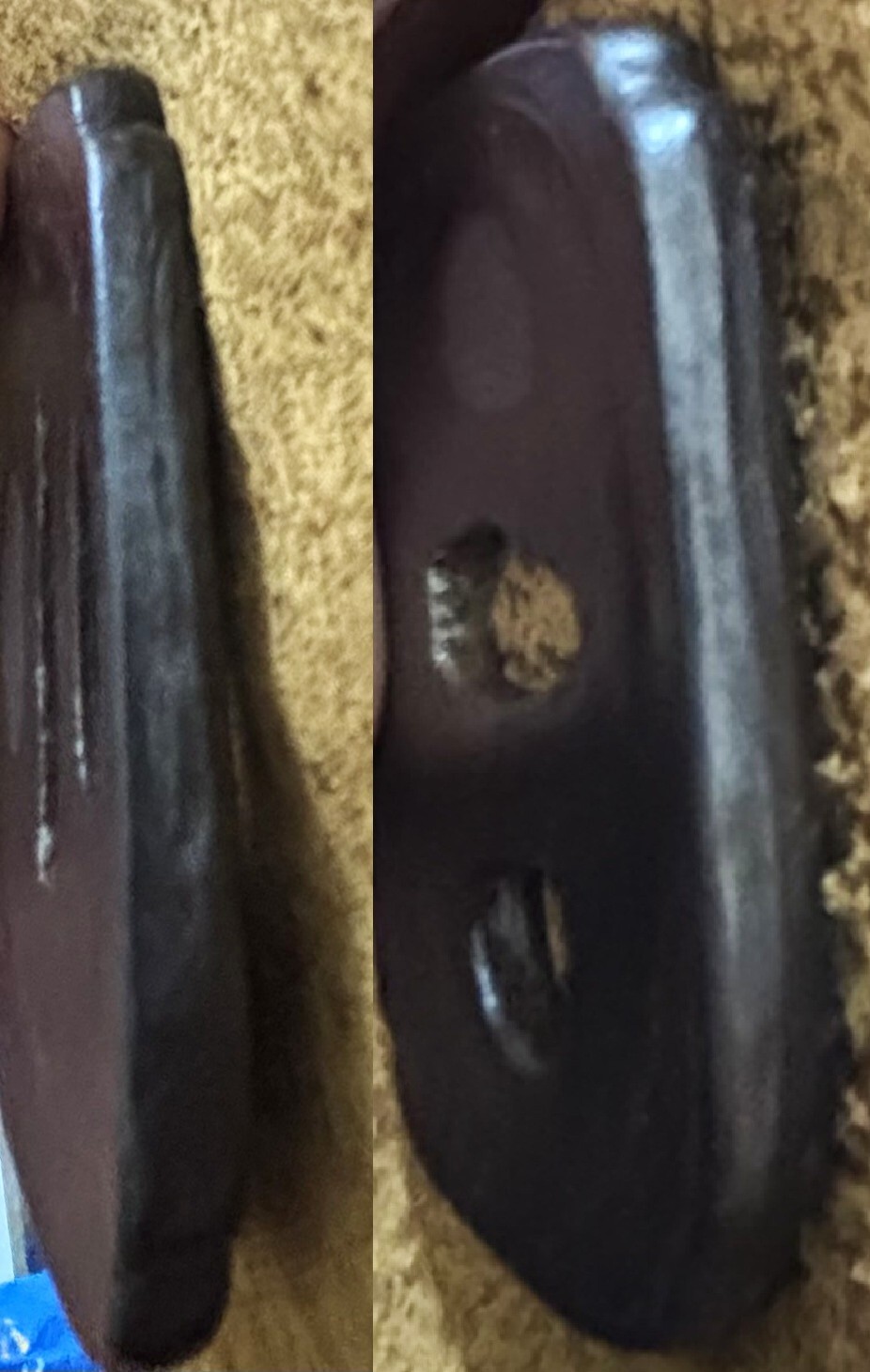
No, certainly not a casting seam. These occur where the two halves of a mold are opening, and they are always single. They are only visible in case they are not carefully removed. Usually, you will not see fissures on cast TSUBA. Casting seams are protruding ABOVE the surface of the surrounding metal, while fissures are going INTO the metal.2 points
-
In the simplest terms, from a US perspective anyway, "spoils of war" is legal because it refers to military use equipment and material from the other side. Looting, the taking of personal property, is illegal and is considered a war crime. So if a sword were carried in battle, then it could be classified as a spoil. But the same sword taken from a home by an occupying force would be considered looting and would be a war crime, under US law. John C.2 points
-
Do not use the white powder (uchiko) if you have never used it before or are unsure of the quality/origin; if used improperly it will damage the polish and can leave long, unsightly lines on the steel. Spray it with some isopropyl alcohol (also called isopropanol), at least 99% pure. Then wipe it down several times with a microfiber cloth, the kind you use to clean eye glasses or a camera lens. Afterwards, apply a very thin coat of the oil to both sides of the blade to prevent new rust from forming.2 points
-
Hello everyone, TLDR: Interested in Japanese swords and fittings? I made this to help the field. Open nihontowatch.com on your phone browser, and add to home screen (Share → Add to Home Screen). Thank me later. --------------------------------------------------------------------------------------------- I have been thinking for quite some time about the future of our field. I have been blessed with incredible mentors and opportunities, most notably the late Darcy Brockbank, who was so generous in sharing his knowledge. Since his tragic passing, I have felt a responsibility to carry that work forward. What I am about to present, I built as an homage to his memory. Our field has problems. We operate in a field of extraordinary depth without being equipped with the knowledge and tools to understand what we're looking at when we browse the market. Refreshing dozens of dealer websites every week, most in Japanese, copy-pasting listings into translation apps, pinching to zoom on sites built twenty years ago — market awareness is just painful and you miss things constantly. You spend an hour and walk away unsure you have seen everything. And this is just the market experience. The deeper problem is access to knowledge. There are no catalogues raisonnés for artists. Yuhindo would have grown into it — it was planned. But alas, Yuhindo is no more. No way to know, with any confidence, whether a price is reasonable without decades of experience or tens of thousands of dollars invested in published references. No way to know why something costs what it does. Communication with Japanese dealers remains daunting for most. No easy way to know who is a reputable dealer. The barrier to entry is simply too high, and this friction keeps our field artificially small. Fine art has Artnet. Watches have Chrono24. Antiquarian books have AbeBooks — markets with comparable depth and comparable opacity, served by platforms that bring transparency and accessibility. These fields have benefited immensely: they have enabled new entrants in droves to collect in confidence. Our field needs more knowledge and transparency to build interest and trust.Japanese swords and fittings. Eight hundred years of collecting history at the highest levels. The category that contains the most national treasures in Japan. The indefatigable search for perfection of an entire civilization. And yet, we have nothing. This had to change. As I write this, there are 3,021 Nihonto and 1,607 Tosogu items for sale across 44 dealers, Japanese and international, in a single searchable interface. Every listing is structured with attribution, certification, measurements, and artist intelligence data. NihontoWatch is on track to follow 100% of the online market for genuine items with NBTHK papers. Refreshed 12 times a day. Everything is translated and structured, as it trickles in live. But what is this worth, if it's so hard to know what you're looking at? Especially for newcomers, it is so hard to tell what you're looking at. This is where the magic is. I am nostalgic of reading through Yuhindo's artist descriptions. It made me deeply appreciate the field. It got me in. NihontoWatch scales this experience and creates something approaching a living catalogue raisonné for every Tosogu and Nihonto artist. It matches every listing against a database combining the complete Juyo, Tokubetsu Juyo, Juyo bunkazai, Kokuho, and Gyobutsu designation data — over 23,000 items at the highest level, with rich text in classical Japanese. This data is then processed, synthesized, and presented into NihontoWatch's artist directory in a way that is respectful of the NBTHK's copyright. With this, you'll be able to discover a maker's historical reputation through quantitative analysis of exhaustive provenance records, in ways never seen before. Over time, all of these artist pages will come alive, forming an ever-expanding knowledge base. - How rare is it? - How many Tokuju? - How many designated works ranked Juyo and above? - Why is this important? - Where does it rank relative to other works? - What is for sale right now? - What was for sale recently? All the answers are in. These are questions that come up constantly in our community, and until now, answering them required years of collecting published references worth tens of thousands of dollars, and patiently indexing them with post-its or one-by-one in a spreadsheet. Only professional dealers or major collectors could afford to do this. This is a BETA, so there are errors. The more obscure the artist, the higher the error rate, and there are still basic errors I need to fix with some famous artists. A lot of algorithmic tinkering and curation ahead. It will keep getting better with your feedback. See the results for yourselves: - Soshu Masamune: https://nihontowatch.com/artists/masamune-MAS590 - Ichimonji school: https://nihontowatch.com/artists/NS-Ichimonji - Yasuchika (tosogu): https://nihontowatch.com/artists/yasuchika-TSU001 - Goto school: https://nihontowatch.com/artists/NS-Goto Click one and explore the designations, the provenance abalysis, the measurement distributions. This is just a first shot — over time this data will grow. Here is one where I have published an item I studied for my Substack article on Mitsutada: - Osafune Mitsutada: https://nihontowatch.com/artists/mitsutada-MIT281 Imagine Yuhindo, but with a page for every artist and every piece ever captured on camera. Saw a national treasure at an exhibition in Japan? Share your photos on NihontoWatch's artist catalogue. In the future, owners of particular works will be able to publish them to the artist's catalogue. Think of it as a growing, community-curated knowledge base for every artist in the field. And so much more Browse and filter: Designation, dealer, item type, school, province — all filterable, all instant. Prices display in JPY, USD, or EUR. Every filter combination is a shareable URL. The sold archive tracks thousands of items for pricing research. And it works for every budget, for collectors at every level. - All Tokubetsu Juyo Nihonto on the market - All Tsuba with Hozon or Tokubetsu Hozon, maximum price $2,000 Setsumei translations: On some items, you can press the floating book icon on any Juyo item to toggle between photos and the Juyo setsumei translated text. For most Juyo and above items, the NBTHK evaluation text from the dealer's page is identified by computer vision and translated into English. It will fail if the dealer has not posted the Juyo Zufu extract, but in the majority of cases they do, and the result is remarkably accurate. Do use responsibly — the quality is great, but not perfect. Always purchase professional translation from Markus Sesko when contemplating the purchase of a Juyo-designated piece. Search alerts: Never miss an item again. Define keywords and filters and save them. NihontoWatch will run your search every 15 minutes, and when something new appears, immediately send you an alert email. In practice, missing a listing that fits your interests becomes almost impossible. Tip: I recommend avoiding overly specific queries. "Juyo tsuba" or "Kamakura signed tachi" are safer than specific artists such as "Yozozaemon Sukesada," which would be more fickle. Broad queries give you the best market coverage. Inquiry emails: Press "Inquire" on any listing to draft a professional inquiry in Japanese. Handles etiquette and formality, and can help you request the 10% consumption tax exemption available to overseas buyers. Did you even know you could get 10% off? How many new entrants lost 10% on this, at least at the beginning? I for one did. I've seen countless high spenders neglect to request it while shopping across Japanese galleries. Glossary: The technical language of Nihonto and Tosogu is deep and specialized — needlessly so for non-Japanese speakers. Anytime a technical term comes up, you can click and see what it means. Over 1,200 terms, searchable, automatically linked from the setsumei translations. Who remembers always keeping an index open to keep track of terms when studying Juyo items? https://nihontowatch.com/glossary How best to use NihontoWatch While it works wonders on desktop, NihontoWatch works most beautifully on your phone. I use it every day — it feels like I have the market in my pocket. Open nihontowatch.com on your phone, hit Share → Add to Home Screen. And voila, you have an app. It becomes something you check with your morning coffee, the way one might check the news. A word of caution The data has errors — always verify independently. This is a tool to explore the market, not a substitute for critical thinking. If it looks too good to be true, it likely is, and this system can't easily correct online misrepresentations. Old listings where dealers have not marked items as "SOLD" will still appear as available. Listing errors will slip through, but data quality improves continuously as the system learns over time. Get involved - Missing a listing or dealer you like? PM me or post here. - Bug? PM me or post here with steps to reproduce. - Dream feature request? Reply in this thread. I will keep this thread active and share major updates when time permits. Everything is free right now, and will remain so until ready for official release. This is no trivial task, and it is expensive to operate — it will need to be covered in some way down the line. It will be tempting to keep it for yourself. But if we want our field to grow, we must share knowledge and expand market access and transparency. The single most impactful thing you can do right now is help others discover and use the tool. Share it with your study group. Share it with your collecting circle. Share it with a friend who has been curious about Nihonto and Tosogu but found the barrier to entry too high. That barrier just got a lot lower. Farewell, Darcy. This is for the teacher in you. Hoshi
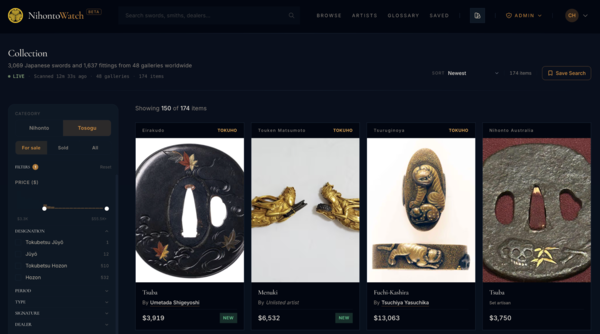

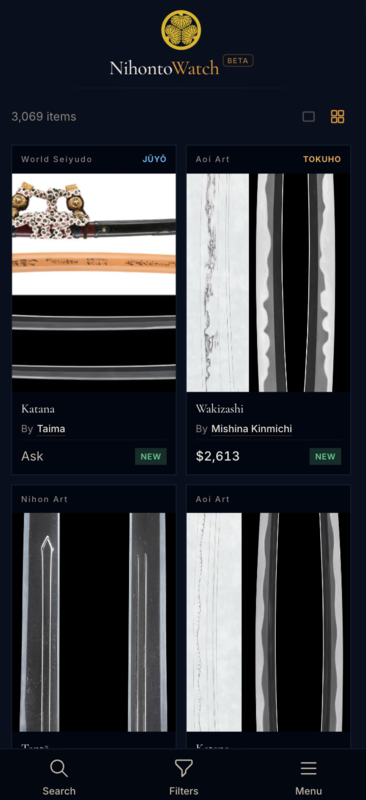
 1 point
 -
If anyone can confirm atribution-translation. I didn't buy it yet I find this piece beautiful in it's simplicity. JD auction id: s1239012464

 1 point
 -
Thanks sam, yes I got slightly confused with orientation, noted. I agree with the 4 flowers, I thought it may be a war piece, but also cast. @Kantaro yes that was my original thoughts, plus the 1st one from the second row.1 point
-
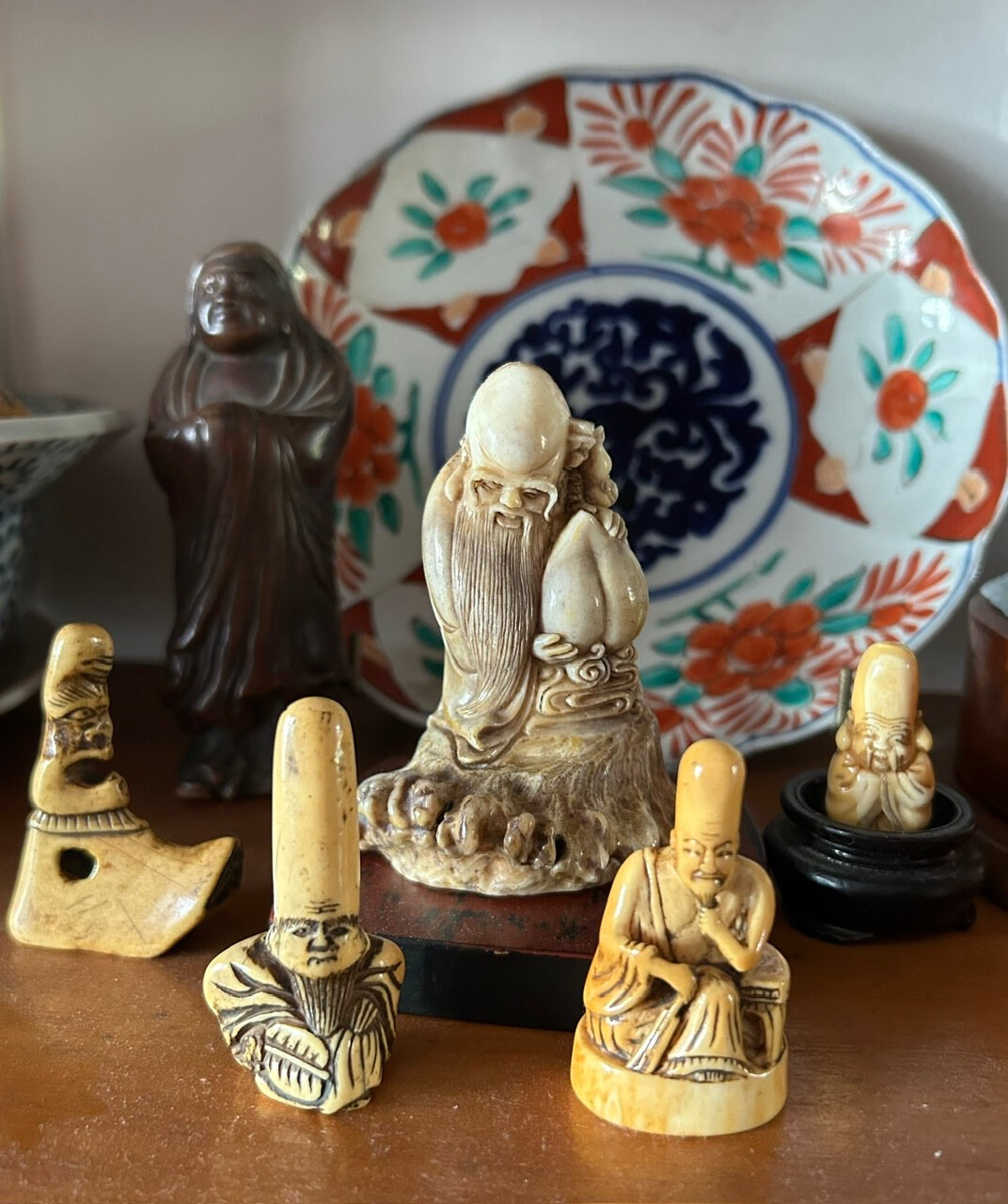
We often decribe Netsuke as tactile objects to roll around in the hands, almost like worry beads. (Shades of the steel worry balls of Captain Queeg in the Caine Mutiny.) Just had an original thought! (All clapping gratefully accepted) These Netsuke of Chinese sages with elongated heads have been explained in one way or another, but last night my daughter handed me a specially-shaped wooden massage pointer that she had bought in Tokyo. As I was pushing it into various acupuncture points in my hands it suddenly struck me that these pointy-headed or other long Netsuke may just have had that very function, for Shiatsu no less, traditional manipulation of pressure points, which would take our understanding a step deeper than that of rolling a Netsuke around in the palm for passive pleasure. Two okimono in background, stag antler Momo Sennin and Bizen yaki Daruma. Four netsuke, one of which is a silk seal. Whale tooth, ivory and stag antler.
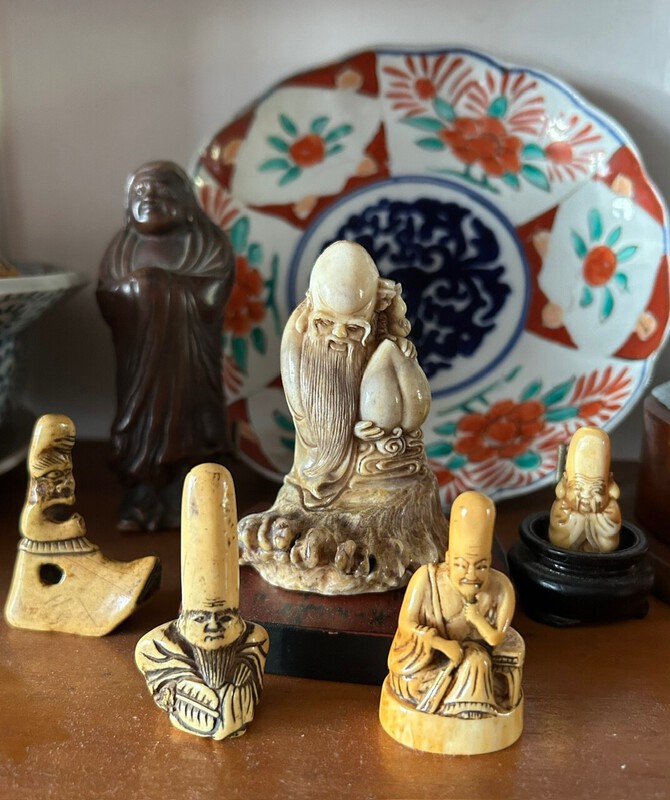 1 point
 -
This is a fascinating series of questions and thoughts... In the limited time I thought about it, this is what I'd say (as a disclaimer I reserve the right to change my mind as I'm thinking and marinating on it lol): I actually think this might deserve a bit more than a binary option set of "spoils of war versus war loot" argument. Personally, I’ve never seen the swords taken by Western troops as either. To me, their confiscation and destruction has always represented more of a dismantling of the spirit or cultural identity... It always read like an intentional cultural attack rather than a simple claim of victory or trophy, or form of theft (this is actuall a little dismissive of the power dynamics regarding how occupying forces needed to maintain a sense of presence)... In short I always kind of thought this was more subjugation than, "look at my souvenir" type of a deal. I don't believe that every soldier that grabbed a wakizashi had this intent, but I do believe that leadership likely had an understanding of what this represented from a much more holistic perspective. Under this context and with these observations I think it's perfectly acceptable for descendants or families to want their heirloom(s) back. I think this is fair as uncomfortable as it may feel. But for the sake of finding my own meaning in the questions, and also saying something of substance that doesn't sound overly contradictory, I’d probably argue for a third category of options to classify what happened historically. I'd lean closer to an option that acknowledges the deeper meaning behind the removal and destruction of these artifacts. It wasn’t just about possession or trophies as much as I feel it was about erasing a symbol of continuity, lineage, and identity... Also, I guess erasing the attitudes associated with the aforementioned. Think something like "Shang Tsung" from Mortal Kombat... The whole "Your soul is mine," type deal... I do also believe that swords choose their owners. Their lifespan often exceeds that of the people who hold them, and in that way, they embody a kind of strategic patience... Much like what we see in another thread regarding the letter discovered between Ieyasu and Hideyoshi. Like Ieyasu, the sword endures, adapts, and survives, waiting for its next opportunity...Or more specifically its rightful bearer. As Scogg insightfully said: That perspective captures it perfectly, we are custodians, not conquerors of the sword. The sword’s journey usually continues long after we end ours... I'm going to think about this some more, but I think this is the stance I would take. I look forward to reading more responses on this! -Mitchell1 point
-
I have a katateuichi, which the NTBHK more generically described as a katana. It would seem the NTBHK tries to avoid granular classifications, in the same way they use naginata naoishi for what are more likely to have been shortened nagamaki.1 point
-
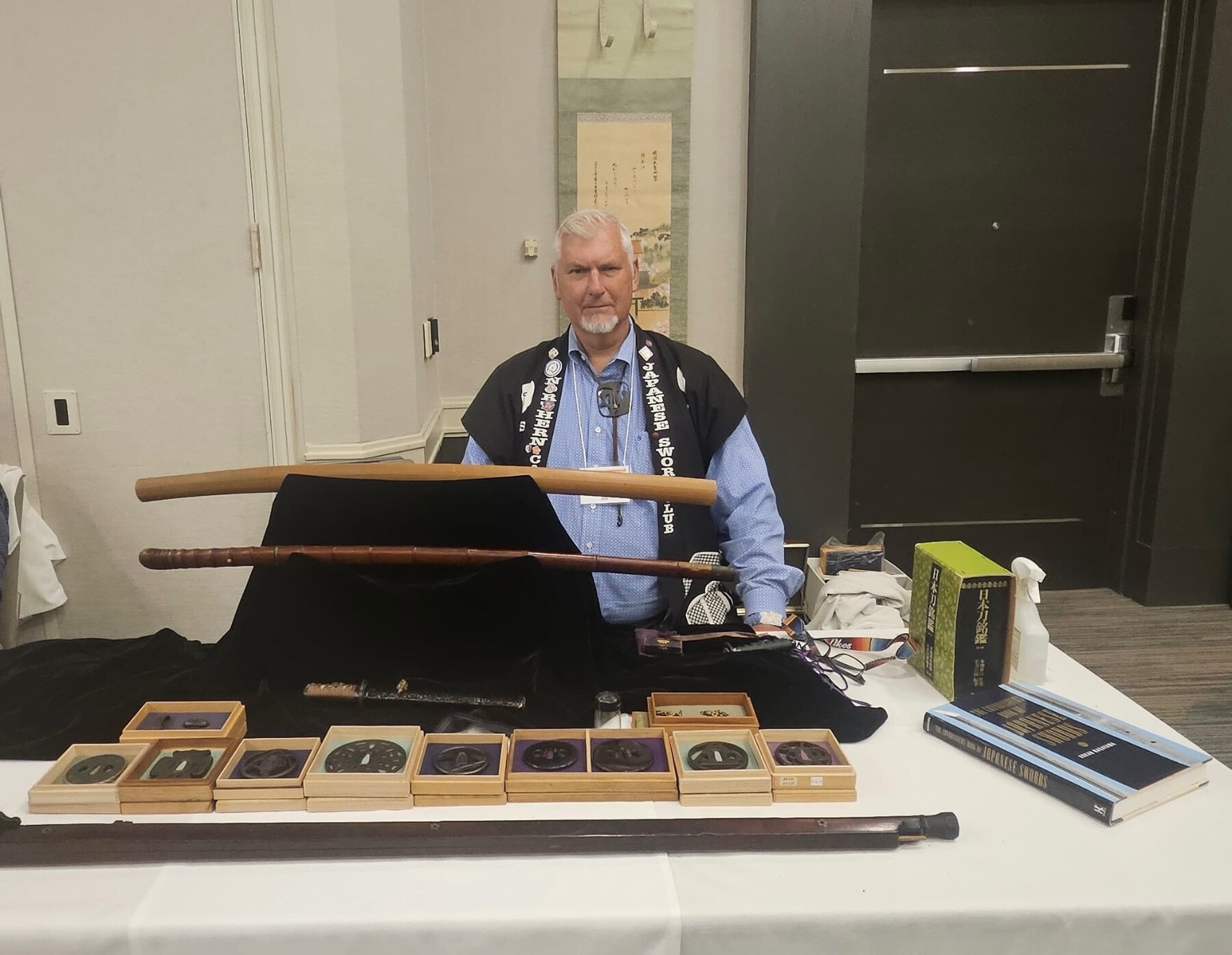
Bruce - I apologize for not recognizing you! My table is in the same corner most years, stop by next time! -toryu
 1 point
 -
@Markus how do the NBTHK define a kodachi (小太刀) as this appears to fit somewhere between a Uchigatana and a Tachi as all three blade types are unshortened?1 point
-
And this one with an "enso" motif... I suspect it's fairly rare because I haven't come across another that I can recall seeing. It's really hard to photograph this one... sorry.
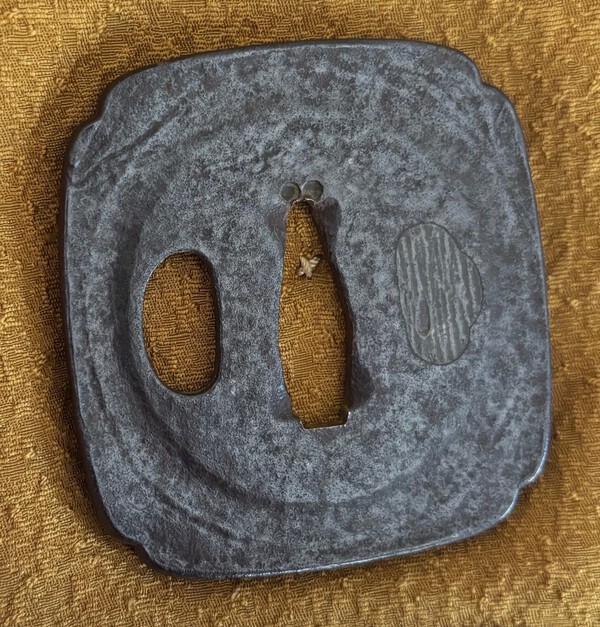
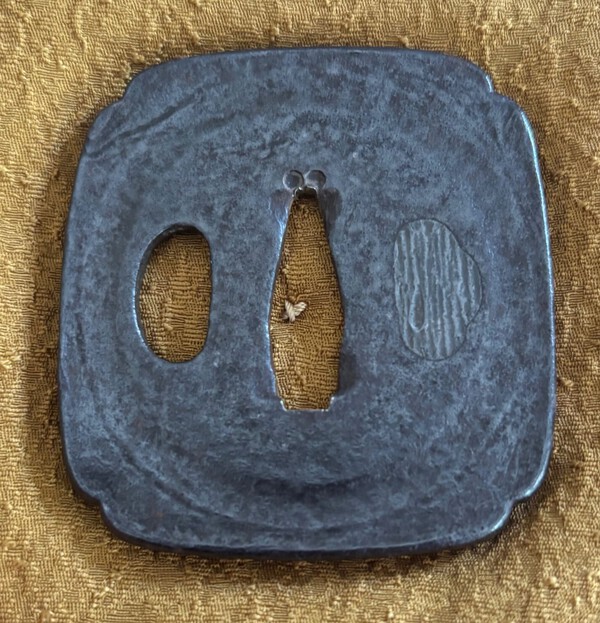
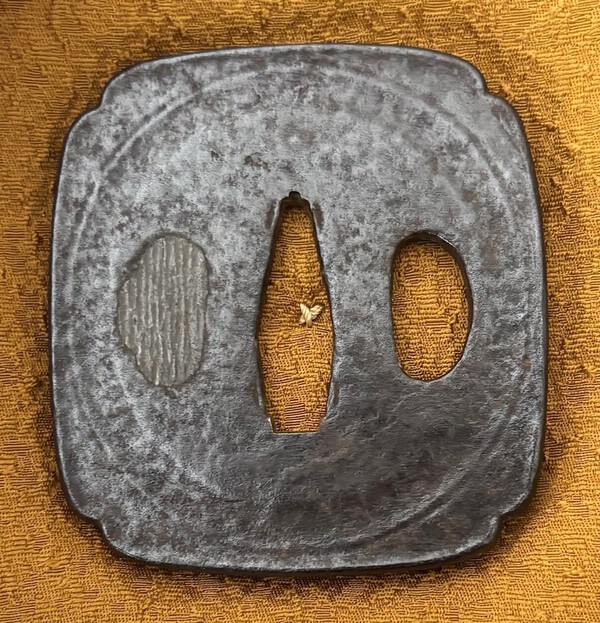
 1 point
 -
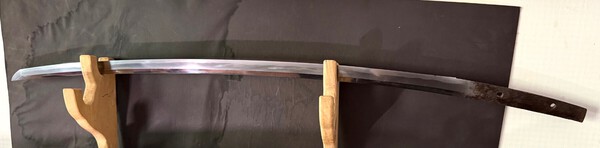
Unmounted Dai-Sho paired koto swords DAI - SHO (Reduced) DAI For the longer blade, I’m offering a fine koto example here, 70.3 cm, suriage (shortened but a signature remains), deep sori, likelyy Bizen, it has lost its papers somewhere along the way but is clearly no more recent than early Muromachi (c. 1394). Deep koshi-zori, small kissaki, active hamon, some visible utsuri. IN OLD (70%) polish, with one notable spot of spider rust at the hamachi and a few faint kitae-ware. While it’s in old polish, it is clean enough that you can still see the polisher’s marks. Comes with a silvered habaki in a shirasaya which began to separate, and which I simply duct taped together (easily be repaired)). Asking $2,500 for the long blade alone and $1250 for the wakizashi or $3,000 for both blades together. Signed: 守俊作 Moritoshi Saku. Nagasa 70.3 cm. Sori 2.2 cm. Motohaba 2.7 cm. Motogasane 0.7 cm. Sakihaba 1.8 cm. Sakigasane 0.4 cm Age: Oei (c. 1394) SHO Wakizashi in Shirasaya, a textbook example of Sue-Bizen craftsmanship by one of the most prominent 16th century Bizen smiths, Katsumitsu. Fine visible hamon with great activity, in old but very presentable polish. In shirasaya. Signed: Bizen Kuni ju Osafune Katsumitsu Blade length:48.03cm/ 18.90 inches Curvature: 2.27cm / 0.89 inches Total length: 70.0cm/ 27.55 inches Blade Weight: 389.0g Total Weight: 634.0g Age: Muromachi era (c. 1530) Asking $1250 for the blade alone or $3,000 for both blades together. I have posted a few photos on my Facebook page (Philip Fellman) and more in the Facebook sword groups. I have also posted detailed inch by inch photos of both swords in my profile page under photos/Albums/Moritoshi Detail and Katsumitsu Detail. You can also email me at shirogitsune@gmail.com
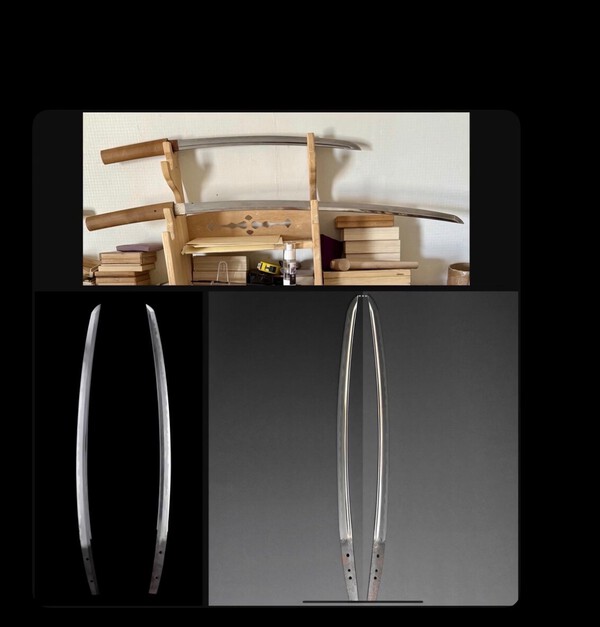
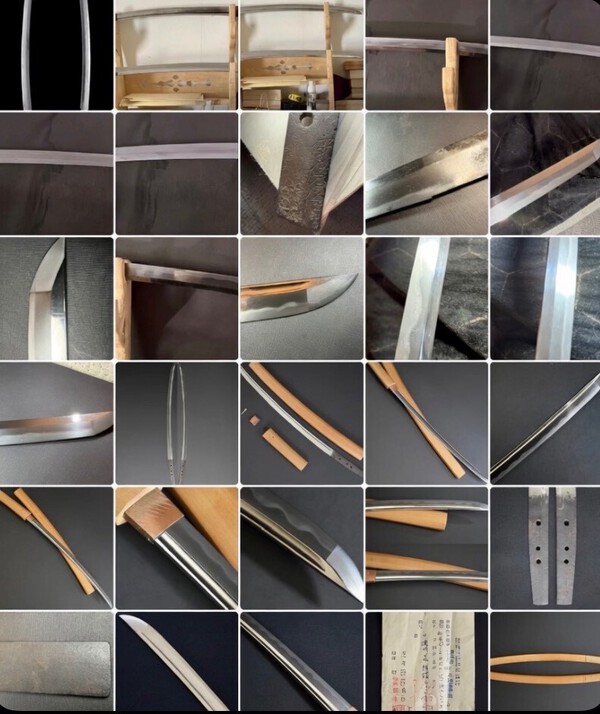
 1 point
 -
It was a tachi before being suriage but NBTHK always name suriage mumei swords katana.1 point
-
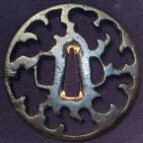
Just the basics here: The design is a long known and recognized Myochin that EVERYBODY copied even back in Edo. So: (0) Originals (1) you get a Tosa Myochin copy of the original..... (2) some other schools copied it too, in their own way (3) a few modern utsushi (4) a lot of fake cast ones. If I were into the design, I'd be careful with them unless I could handle it first and study it myself. There are just too many copies of it around. Don't make a mountain out of a molehill on this one, or digress into an argument about religions and the world. Just learn to recognize it as one of the dangerous designs. There are a few Akasaka designs that are nearly as often copied or faked. etc, etc, etc....1 point
-
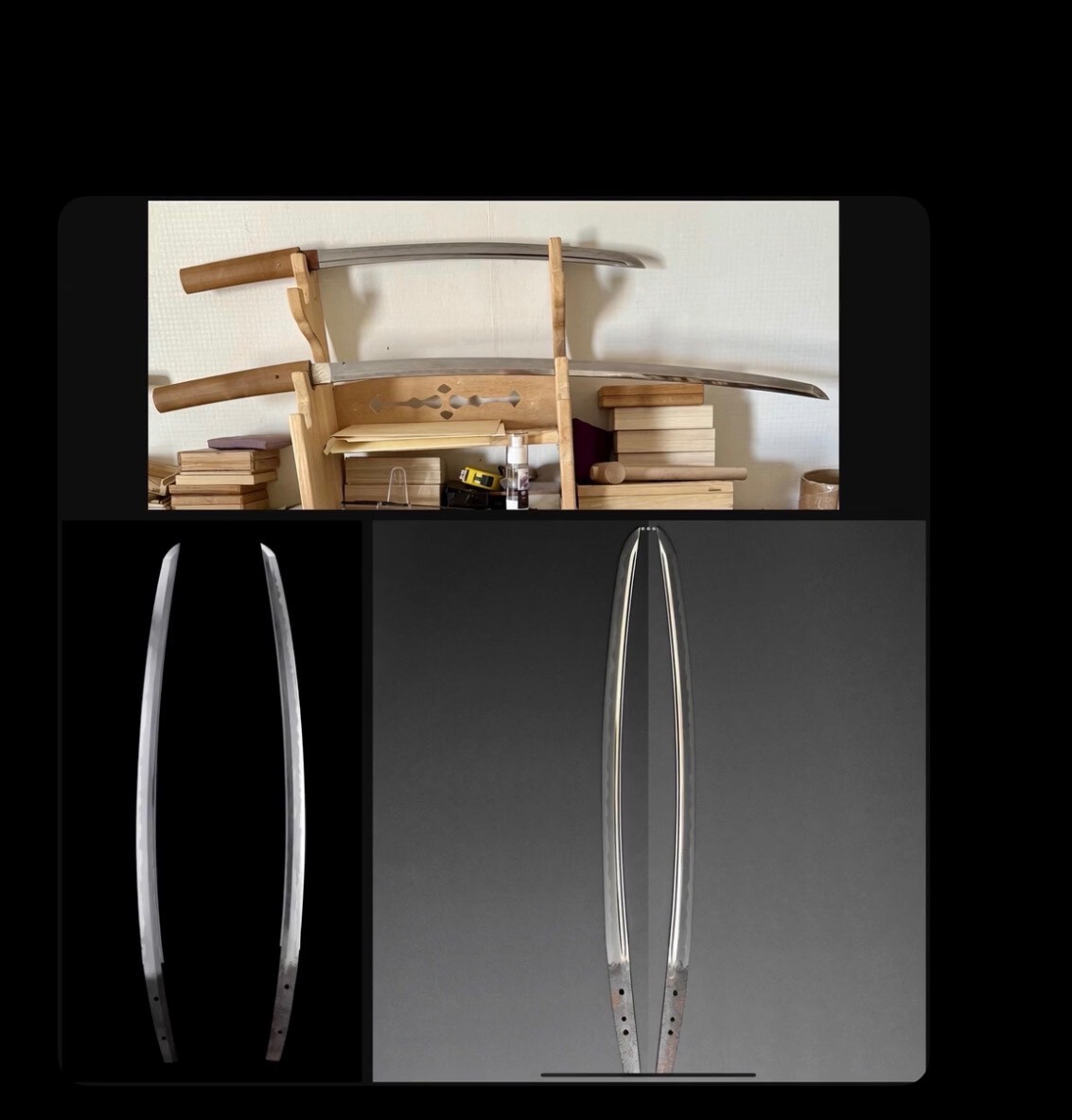
This is a personal take but I don't think den in front of item is too relevant, after all it is for mumei attributions and well they are attributions to begin with. I feel the item itself should be more important than some lines of text in description. The mumei Tametsugu discussed here is most likely very nice sword as it has passed the coveted Jūyō shinsa, congratulations Dustin for getting it. However I do admit I do not understand the sword at all. If I would see that sword without previous knowledge on anything about it I would maybe guess late Muromachi to Momoyama katana for it from pictures, I think I would not be able to figure out it is ō-suriage from these pictures alone. I think it is crucial to see swords in person for proper analysis, even though I admit with my skills it would still be extremely difficult to do identifications for mumei items. It feels crazy that I might not even be able to judge if the sword has been greatly shortened. I tried to do photoshopping for 20 minutes to bring my visualization to reality but couldn't make a proper one so I scrapped it... However I was measuring from the Jūyō book by ruler in old school style as my backup plan As NBTHK identifies this is an ō-suriage tachi and there is no hole below the 2 on the tang, then only logical explanation is that the original hole was removed by shortening. By my visualization if that indeed is the case then this would have been at minimum around 82 cm tachi in original form. I tried to do a nice photoshop side by side with current and presumed original blade in full size to get the idea. NBTHK expert in hand judgement is of course far superior to my personal opinion. For some reason there does not seem to be any long tachi by Tametsugu surviving to this date (just as note I do not believe the smith X only made ōdachi theory, as I do not think they were even that common in the period, and it surely cannot be true for every famed Nanbokuchō smith as there are ōdachi by almost unknown smiths remaining to this day). So far I have only found 2 signed tachi by Tametsugu, both would seem ubu and they are 72,4 cm and 68,2 cm. For comparison I have so far found 86 mumei katana with Tametsugu attribution (length range 75,5 cm to 61,8 cm), out of those 26 are with den prefix. Advances in AI have been so massive, I admit they far surpass my abilities to dig up information, and I think I am pretty good at it. It takes a person very long time to do what AI can achieve very fast. There are some mistakes it can make but it can also provide some information that might not be found by a single person. The difficult thing is that Japanese swords are extremely similar in shape and size throughout ages. Yes there are slight variations but in general I would say Japanese sword has changed quite little through history. It might be a generalization but the vast majority of sword fall within the common range. Identifying by just size and shape alone by AI or by a person can be very challenging. As that is my main identifying method I sometimes hit difficulties like that above. I just lack the skill to identify minor features, and I think AI could excel in this field beyond basic human ability if pictures/videos of very high quality were given to it.1 point
-
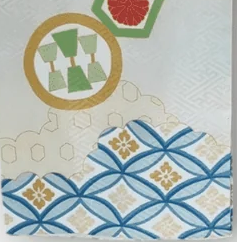
Can I bring up my “fabric pattern theory” (Monjo) again? The whole thing is purely decorative. There are countless variations and combinations. Designers and artists can really let their creativity run wild here. Something else that occurred to me: Tanzaku. Small, colorful pieces of paper on which you write haiku are sometimes designed in a similar way.

 1 point
 -
Today I learnt a thing... The name Hon'ami comes from the words Myohon Amidabutsu, or more fully "Myohon Amida Buddha.” It is a combination of two distinct Japanese Buddhist concepts: Myohon (妙本), means "mystic foundation" or "wondrous truth" in general Buddhist philosophy (where Myo means mystic/wonderful and Hon means basis/root); and Amida Buddha (阿弥陀仏), the principal Buddha of the Pure Land school of Mahayana Buddhism. His name translates from Sanskrit as "Infinite Light" (Amitābha) and "Infinite Life" (Amitāyus). He is venerated for his vow to welcome all who sincerely call upon his name into a western paradise free of suffering. Hon'Ami therefore means Wondrous Truth, Infinite Life. This important line of polishers have certainly provided some wondrous truths over the last 700 years, suggesting their name rings very true. Now you, like me, know.1 point
-
I believe they are simply copying the old Chinese (and other) constellation maps where the stars are joined by lines.1 point
-
Hi, Oh no, you found my old meme. Mino was solving for a different challenge: manufacturing at scale a sufficiently good product while minimizing cost (raw materials, labor). In this, the Mino enterprise succeeded greatly. But one should make a 'carve out' for Nosada. His Rai Utsushi are genuinely impressive works. Kanemoto the 2nd has a few (rare) impressive works as well, but they do not reach up to Nosada's level. The key trait to look for in their highest tier works is the absence of shirake utsuri. Shirake utsuri is one of the hallmarks of Mino in general, and one of the key detriments in the field of Nihonto that marks the great fall as it becomes pervasive in the muromachi period. Shirake is the opposite of nure-gokoro, or uroi. When we say a sword looks "whitish" (Shirake) - we really mean that it feels flat, and that its jigane lacks profoundness (absence of jinie), and therefore, in aesthetic terms, the ability to elicit a sense of Yugen (a gentle form of awe, as unfolding mystery). In purely subjective and poetic terms, it therefore elicits the impression of a "mundane pragmatic object" as opposed to an "mysterious ethereal beauty". As to where this detriment come from, we can speculate that it may be due to the raw materials used and their processing, with shirake marking an industrial advancement in cost of production through material sourcing and processing. Nie utsuri and Shirake utsuri are mutually exclusive, with the former being a positive trait, expressed in the best works of Nosada. An interesting point is that the dreaded Shirake appears also in Sue-Soshu around the same time. However, It was not "invented" in Mino, either, as provincial traditions of the koto period and lesser schools do display it at times. As for Magoroku and sharpness, the key trait is not the hamon, it's the blade profile. The best ones are wide, slim, with high shinogi yet little width (kasane) difference at the the highest point of the shinogi, and and excellently balanced curvature at the mid-point of the blade. By holding one in your hand, one cannot escape the feeling of aggressive sharpness. It forms a cohesive whole with the irregular sambonsugi hamon. I will concede that this draws on a different subjective repertoire centered around pragmatism, which has an appeal in itself. Here is an interesting Magoroku with a Kiritsuke mei and a tradition that it was once owned by the third son of Oda Nobunaga (the tradition is, to the best of my knowledge, not verifiable prior to the pre-war period). https://nihontowatch.com/s/598722?v=1784619665 Best, Hoshi1 point
-
As someone who’s involved in the militaria collecting side of things, I think it’s a really complex issue. I’ve spent a lot of time thinking about it. I generally agree with David’s take that they are spoils. That said, I think each and every item and situation, can and should be viewed individually. Personally speaking, I do not see myself as an owner of my Nihonto, but rather a temporary stop on their journey. My goals are to preserve, study, and learn from what I have while I have it. To me, these swords represent a time and culture that I admire, but is not my own. If a sword could be associated directly with a family who lost it during World War Two, and who wanted it back, I would seriously consider trying to repatriate it. I’ve never encountered a sword personally where that was a realistic option. There’s a local non profit organization near me, who returns good luck flags and non biological remains to Japanese families. It’s widely considered a humanitarian effort, and is run by some very kind and wonderful people. https://www.obonsociety.org/eng/ The way I see it, is if I’m the one most likely to preserve the item for future generations, then I have no problem owning it and collecting it whether it be considered spoils or loot. Especially if the alternative is putting it back into the market where anything could happen to it. To me it’s about intention, and respect, because it is a sensitive topic. -Sam1 point
-
Thank you very much, I will do as you say,1 point
-
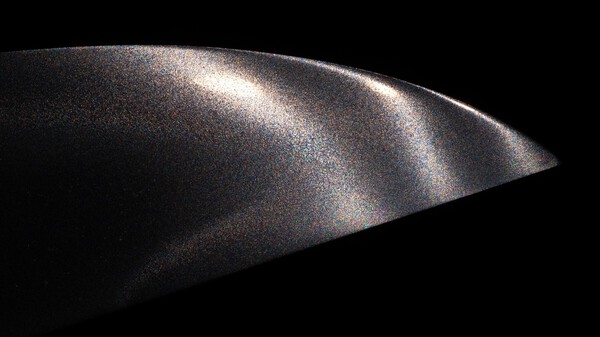
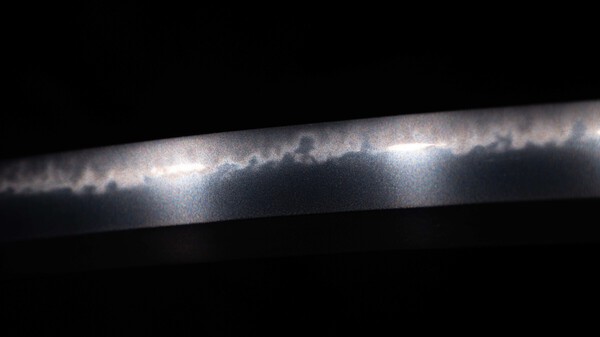
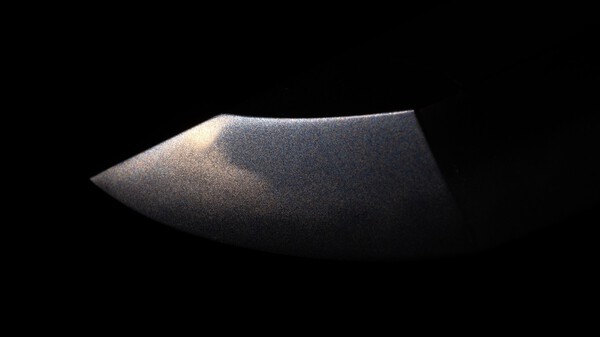
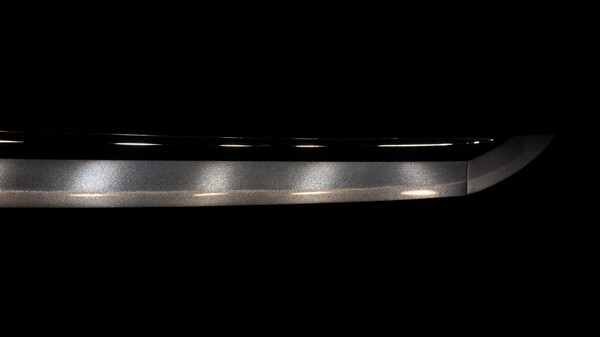
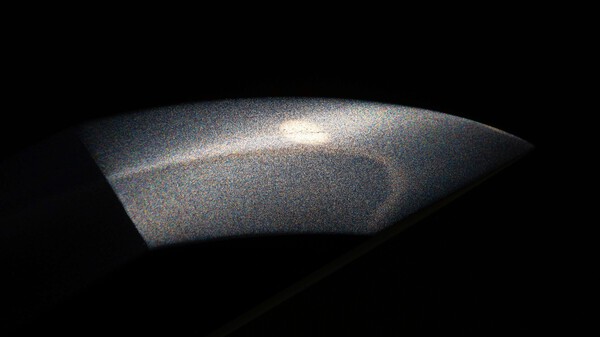
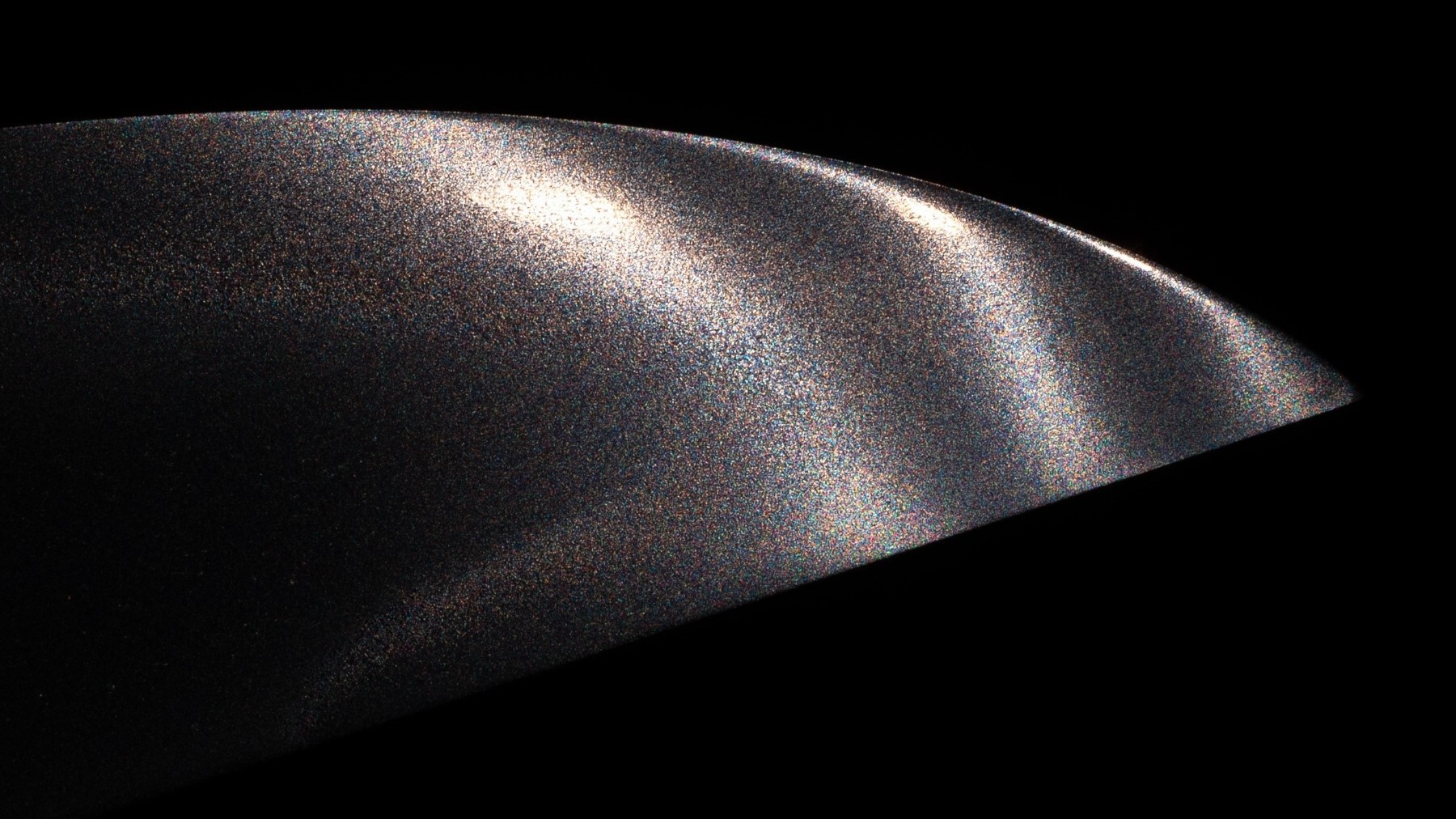
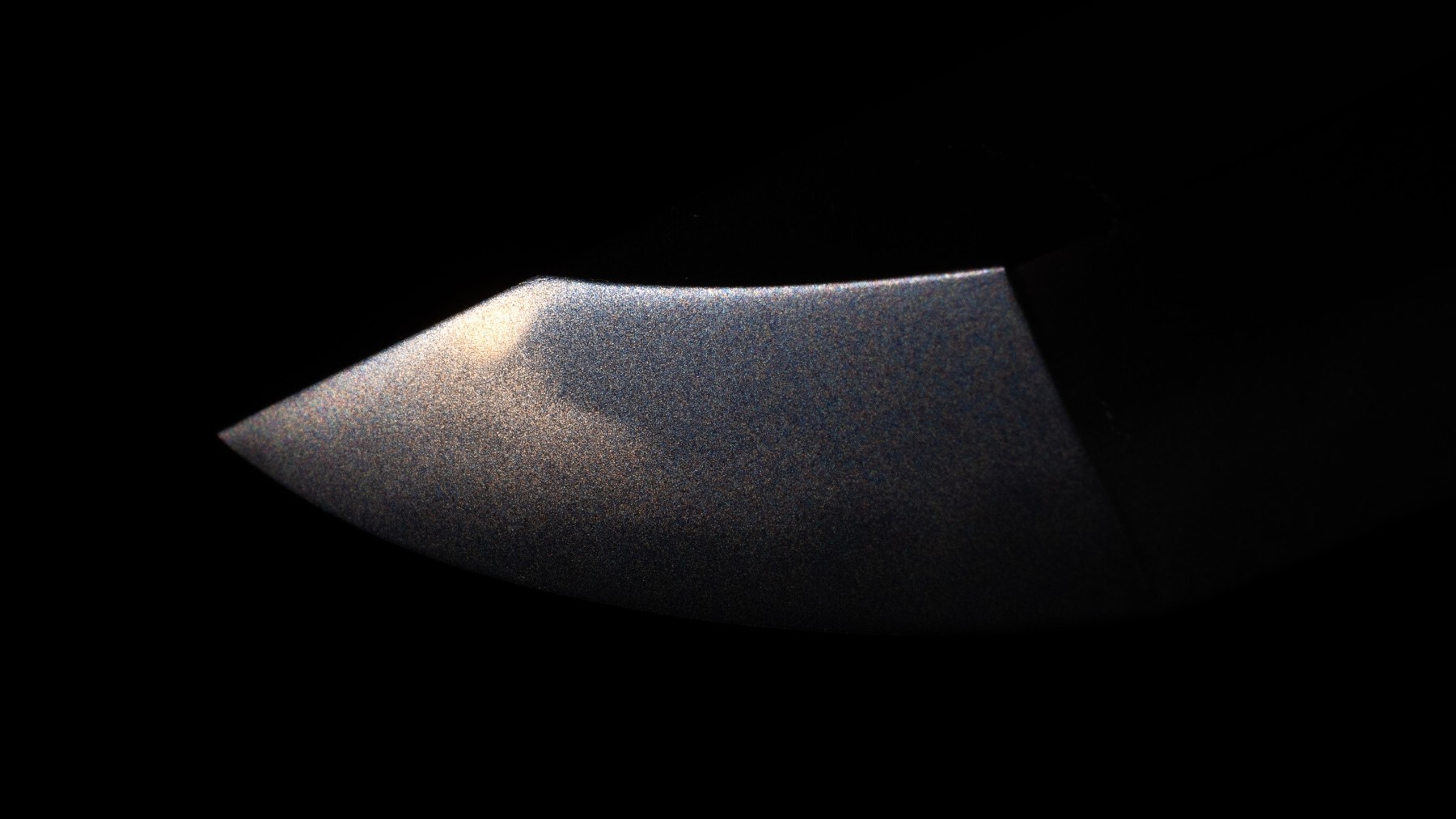
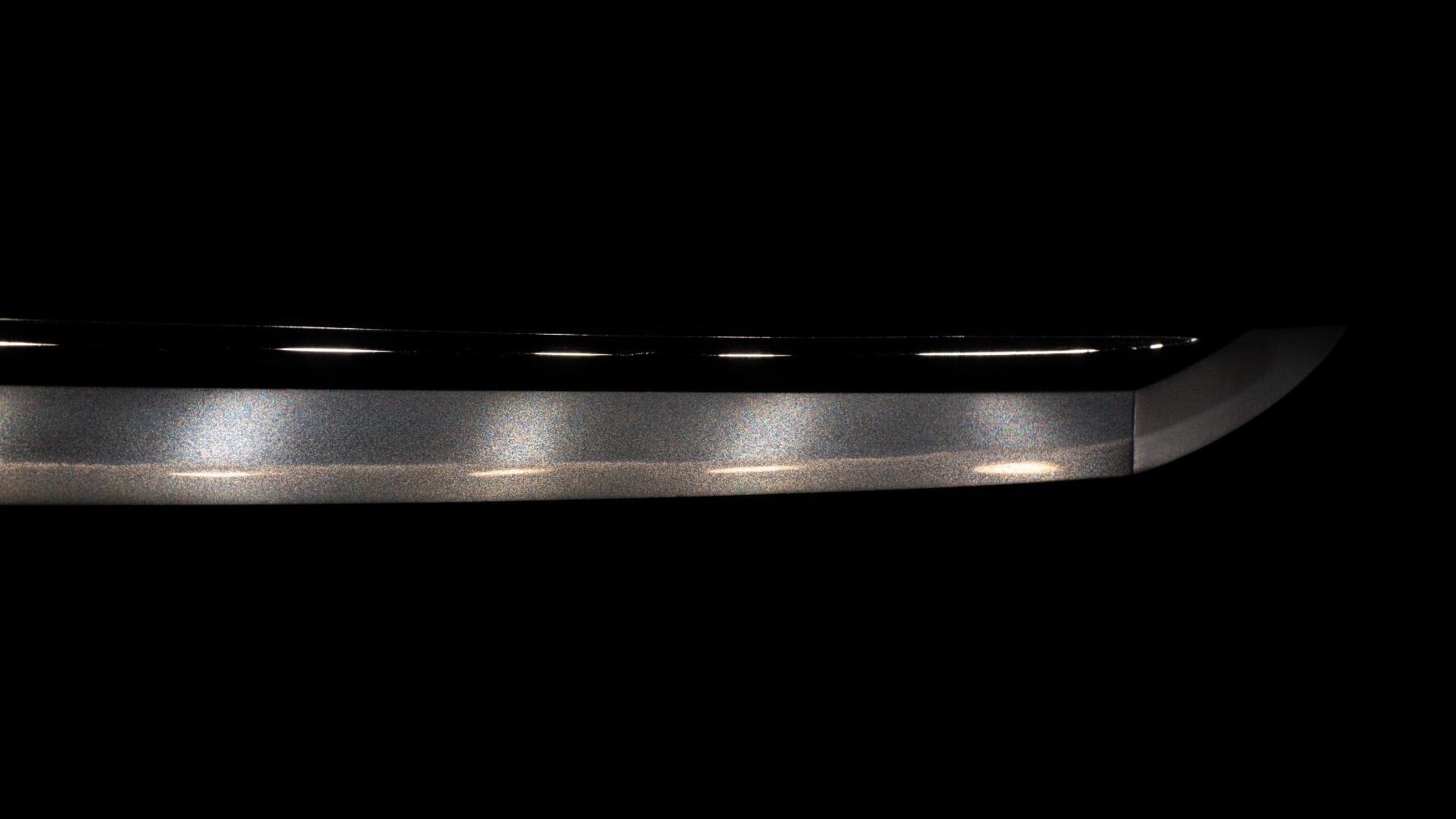
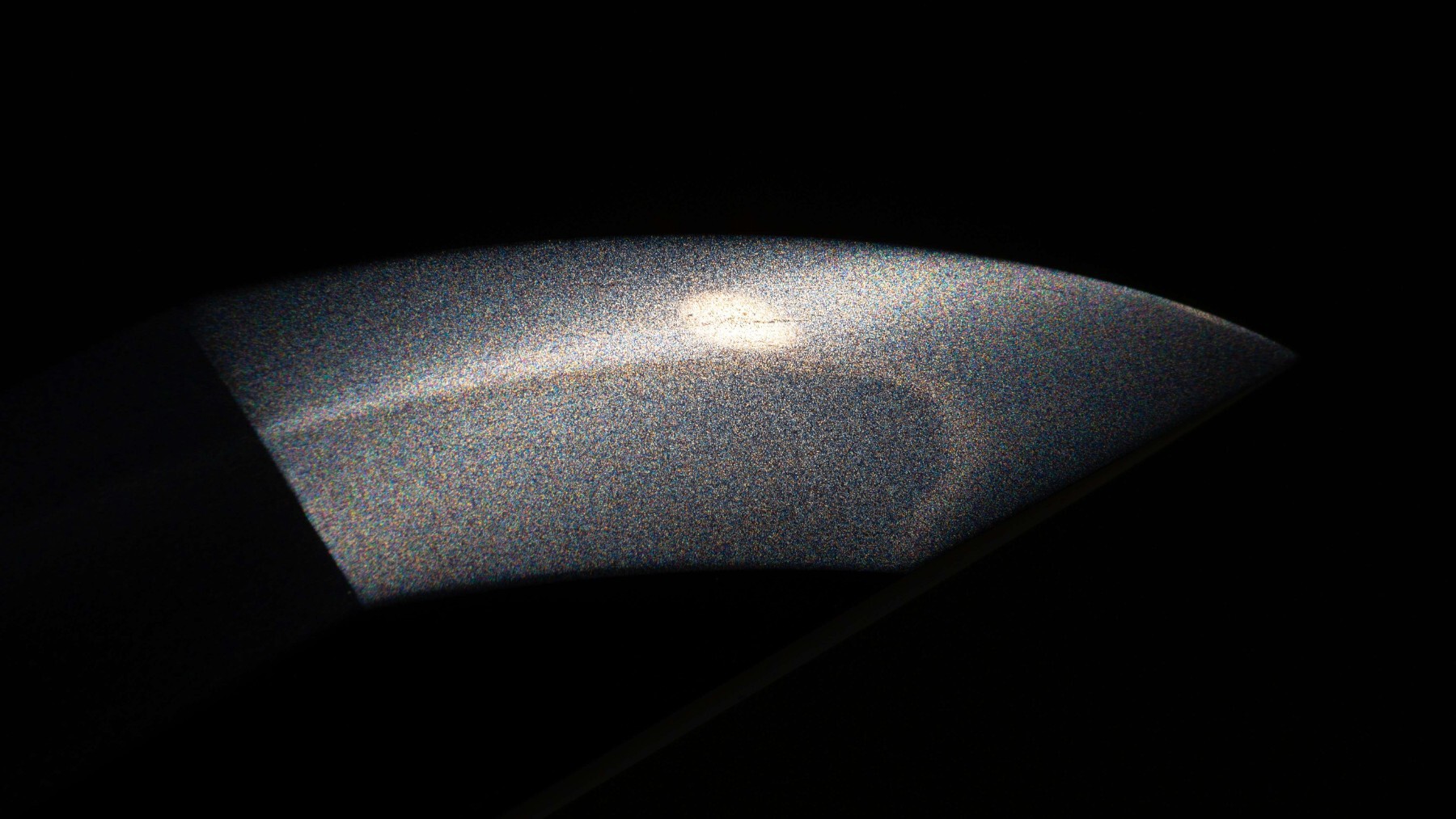
Here are examples of three different blades polished by gaijin BTW - the waiting period is over 2 years for his work

 1 point
 -
This Hatakeda Sanemori sword was not with military mounts, but was reportedly in the possession of General Sadao Araki. https://www.tsuruginoya.com/items/f00670.html
 1 point
 -
Looks newer, perhaps later Shinto.1 point





















This leaderboard is set to Johannesburg/GMT+02:00