
Leaderboard




Popular Content
Showing content with the highest reputation on 03/15/2026 in all areas
-
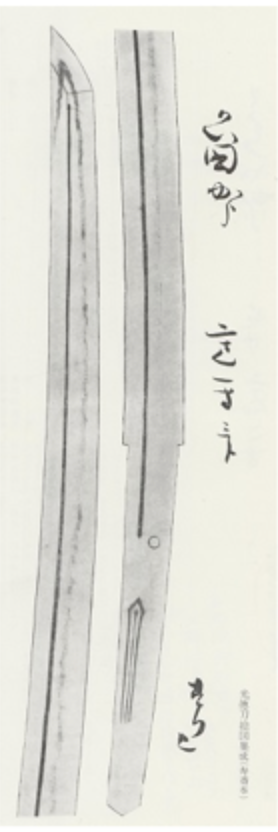
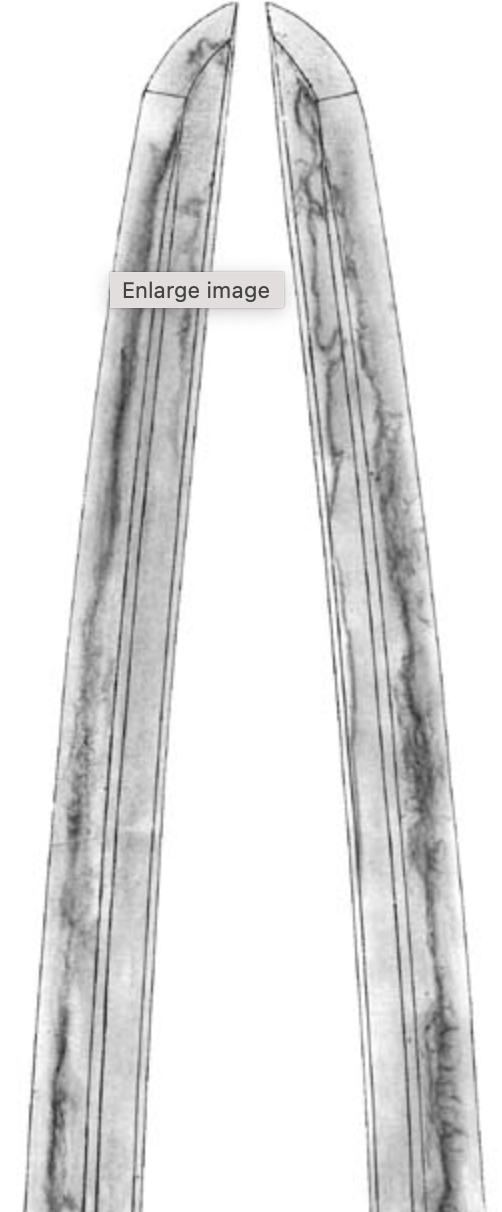
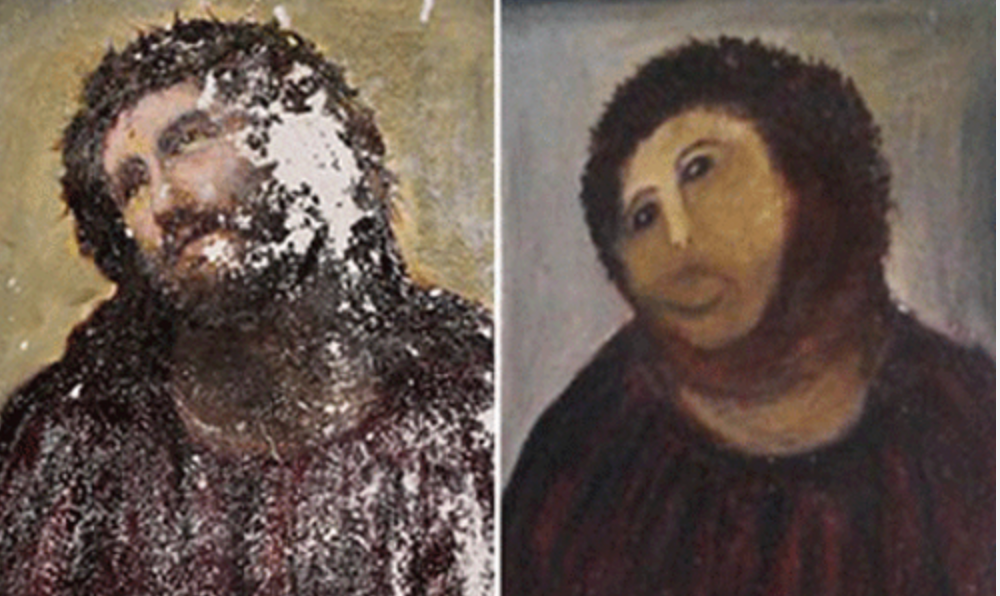
Dear SR. (Can we have a name to address you by please?) The seller may be uninformed or something worse. This was never near the hand of Kawachi no Kami Kunisuke. It seems to be the result of a crude attempt to forge the signature. Genuine signatures are neat and precise for this smith. If the blade were ever a Japanese sword it is now ruined beyond redemption. The shinogi line is gone, the kissaki might have been broken and reshaped but there is nothing here to study or learn from. Don't buiy it, save your money and your sanity. More detail available if you would like. All the best.5 points
-
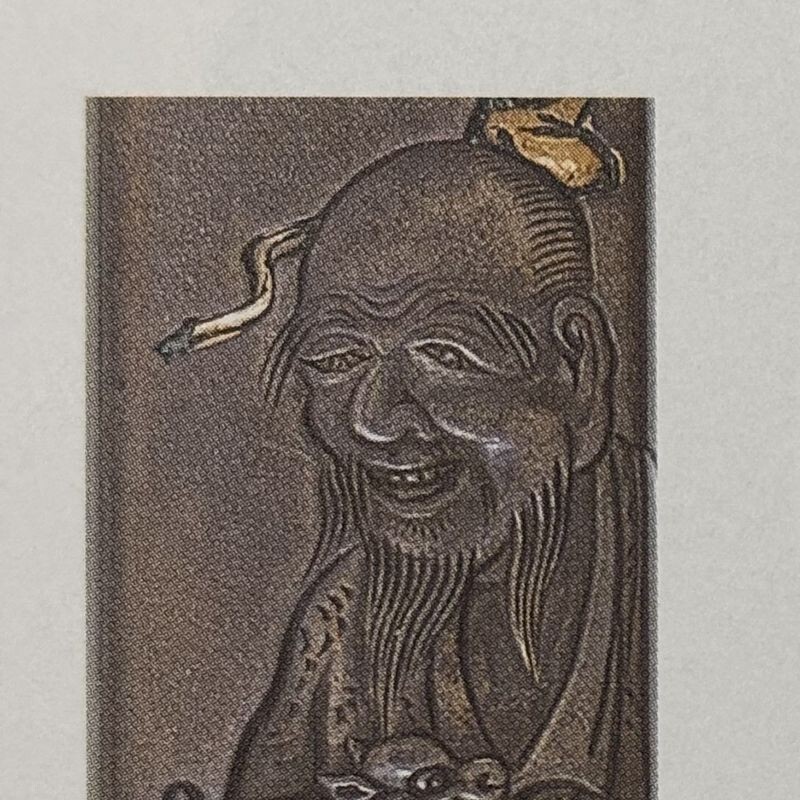
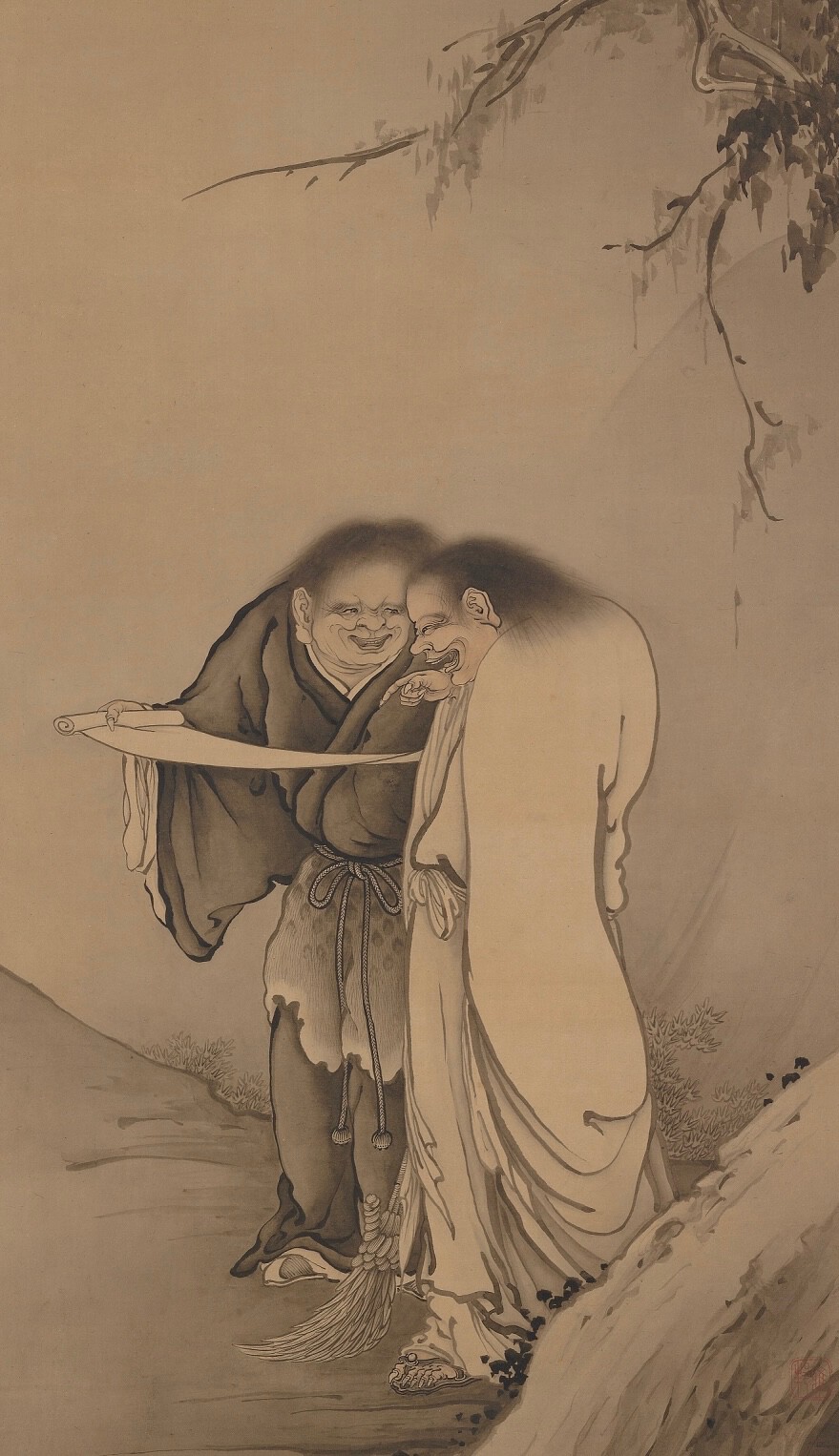
Hello, Jake, If I may, let me add a little background. Jiang Ziya (also known as Jiang Taigong) is a famous figure in ancient Chinese history and mythology. He served as the chief strategist to the early Zhou rulers and helped King Wen and King Wu establish the Zhou dynasty. There is a well-known story about him fishing. When Jiang Ziya went fishing, he used a straight hook and did not put any bait on it. People who saw him thought he was crazy, because of course no fish would bite. But Jiang Ziya replied that he was not trying to force any fish to bite. If a fish truly wished to take the hook, it would come by itself. The saying that comes from this story is: “Jiang Taigong fishes — those who are willing will take the hook.” In Chinese culture the story is actually symbolic. It means waiting patiently for the right person or opportunity, rather than forcing things to happen. Liang3 points
-
I was just at Yuji’s shop in Nagoya visiting with him a few weeks ago. He’s doing great, no problems. Really great person and really into what he does. If anyone is not aware, what he posts on the website is like a fraction of what he carries in store. His store is stocked to the gills with treasures. It’s just him that posts things to his website so he doesn’t post that much. If you want to know more than what he shows on the website, just ask. He brought out his prized signed “-“ Ichimonji tachi for us to view while I was there and it’s a beauty. Apparently not for sale though 😂. Anyway he facilitated the polish of a sword for me that we are submitting for Juyo shinsa this year, polished by Sugihara Hiroshi.3 points
-
Dear Jake, This old man should be Taigong Jiang(姜太公). Jiang Ziya is a figure from Chinese mythology. There is a well-known saying about him: “Jiang Taigong fishes — those who are willing will take the bait.”3 points
-
Yes, it's a welcome change from the otherwise rather dry, phonebook-like standard works ;). After all, when else do we get the chance to catch a glimpse into this otherwise inaccessible world...2 points
-
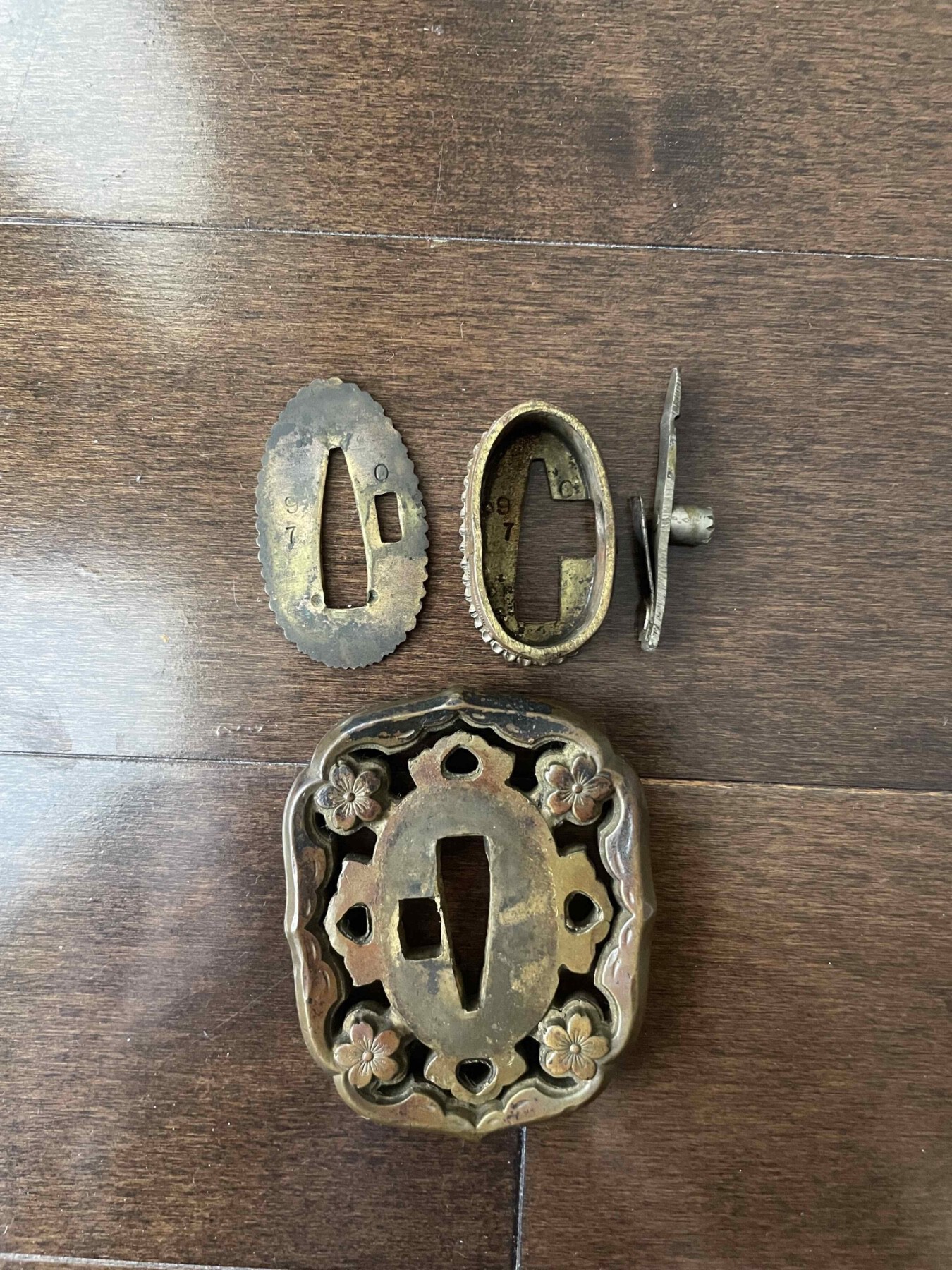
I agree with the comments above. Looks like something severely altered, and put together to deceive potential buyers. By coincidence, I have the exact same tsuba, which came to me in a lot of miscellaneous fittings. Mine is clearly a modern reproduction or fake. It’s made from a metallic material painted black, with copper-colored highlights applied over the paint. Something that, in my opinion, suggests an attempt to imitate the look of a genuine piece. I’m not much of a “fittings guy”, but that’s how I’ve always interpreted it. -Sam
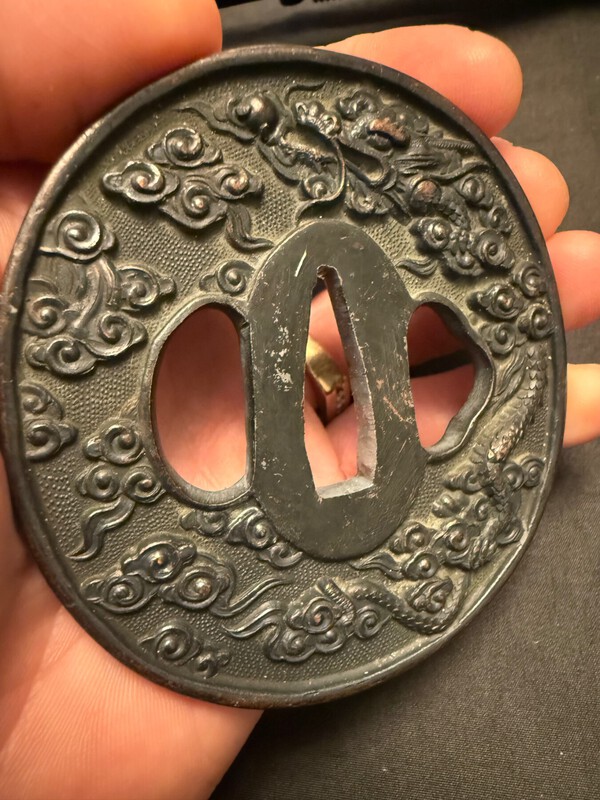
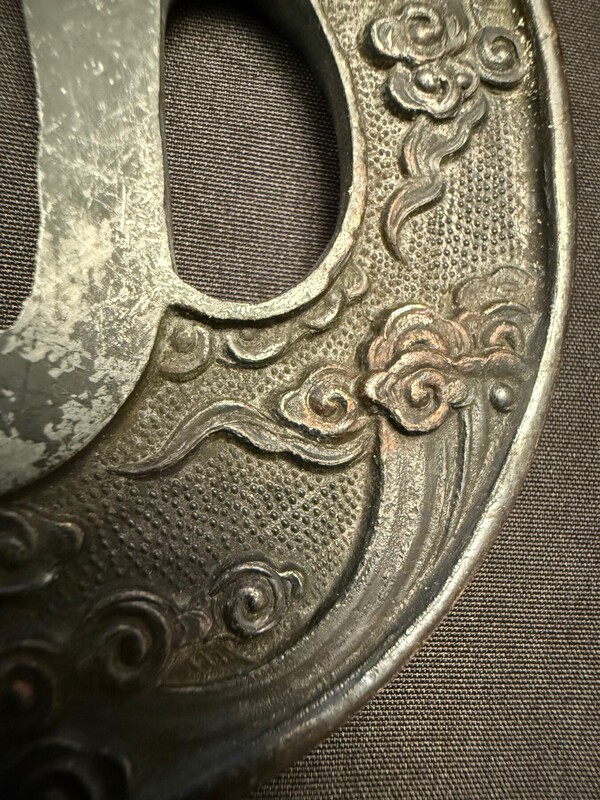 2 points
 -
Wow, that's bad. REALLY badly signed by someone who doesn't know Japanese. As mentioned, the shape is a write off and the whole tang looks to have been modified to deceive....even the extra mekugi ana in weird places. This is one to stay far away from. Is this from an online dealer? I'm guessing it's this one? https://aukro.cz/japonsko-rarita-originalni-rucne-kovana-katana-znacena-mistr-kunisuke-7113242336 Ugh...no. I think it may have been a genuine sword, but has been messed with so much that the value is minimal now.2 points
-
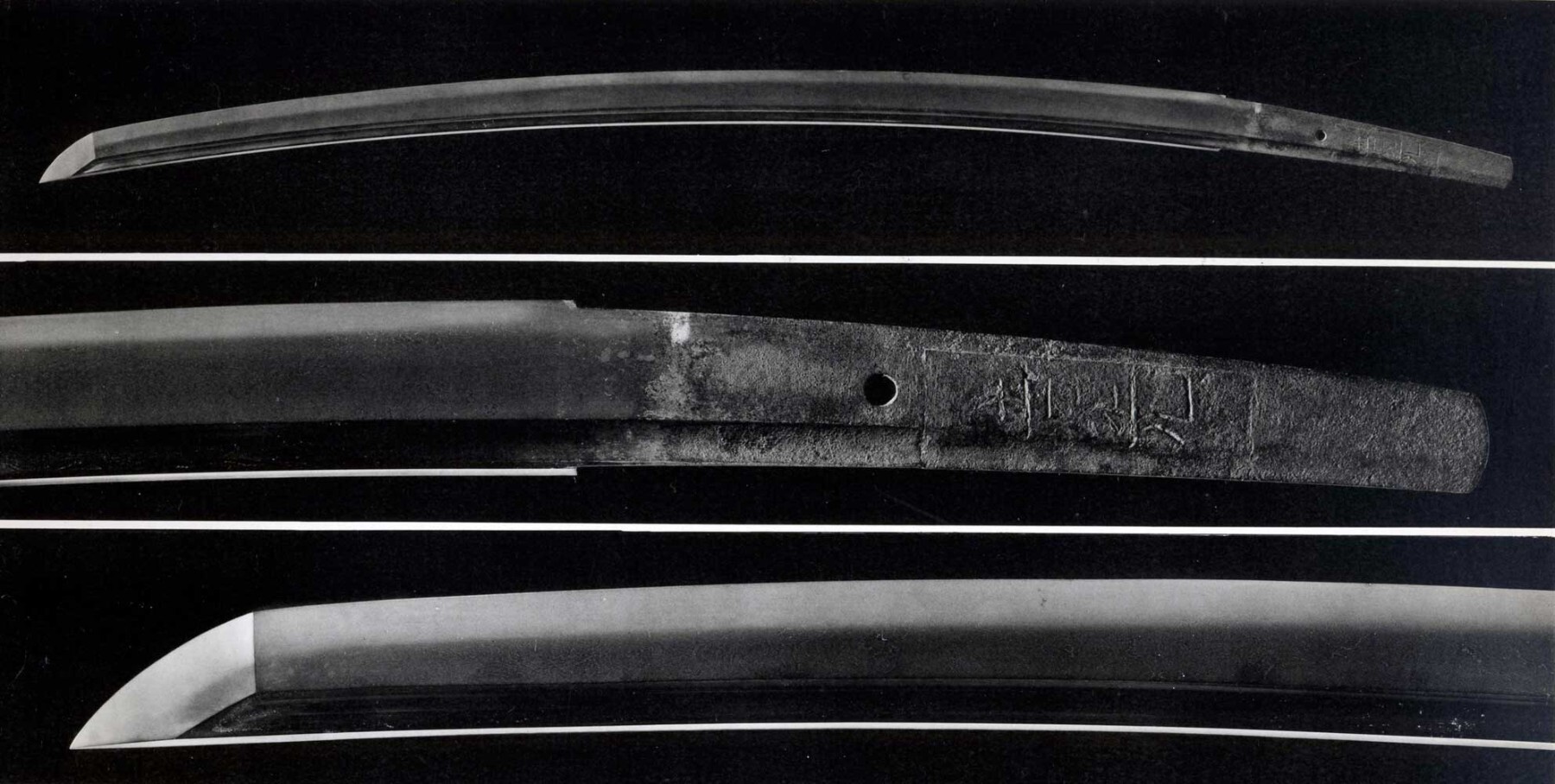
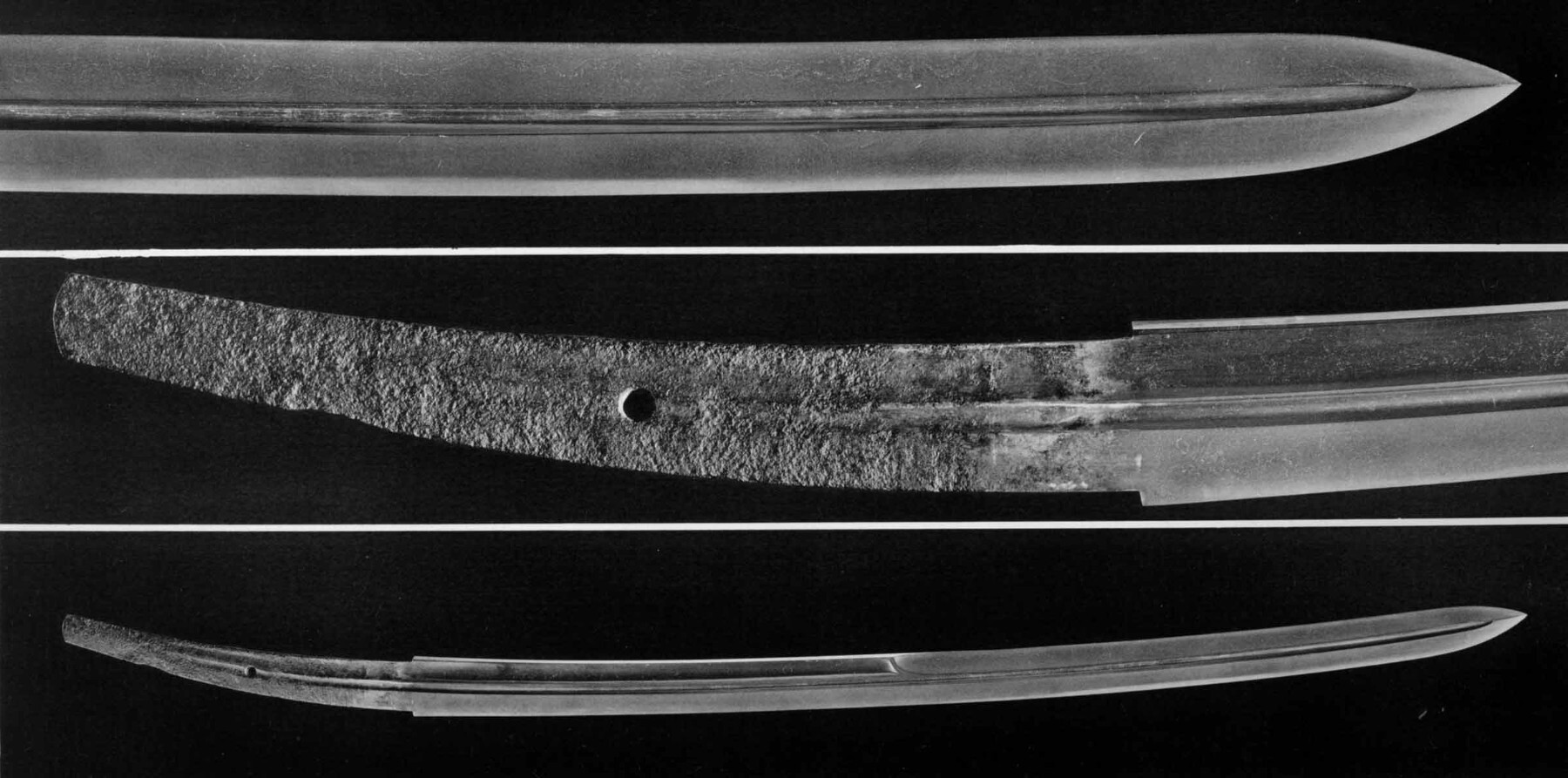
Here is a little side colour to the Tomita-Gō: According to the recollections of Tadamichi, the last head of the Hon'ami family at the beginning of the Meiji era, he was guided by Shunzō of the Kaga Hon'ami (employed by the Maeda in the Edo Period) to inspect swords belonging to the Maeda family, where he participated in an auction and appraisal. At that time, when Tadamichi only correctly identified the Tomita-Gō on his second attempt, he was reprimanded by Shunzō. This sword was different in every way from a typical Gō Yoshihiro, and no one had been able to identify it correctly since the time of Hon'ami Kōetsu (1558-1637). Most people identified it as Bizen Kiyomitsu. It is said that the person who identified it as such was not judging it from the style, but from the knowledge that the Maeda family owned the Tomita-Gō, and therefore it was not a true appraisal. It is strange to appraise something that looks like a Bizen Kiyomitsu as a Gō Yoshihiro, and it is said that Hon'ami Kōshitsu (1583-1625) did not issue a certificate of authenticity because he could not accept the appraisal that it was a Gō Yoshihiro. Then you have Dr Honma Junji only some 50+ years later saying "that really showed the true character of the smith". It is very interesting to read the appraisers views of the generations.2 points
-
Yes, Kinzogan is the gold inlay on the tang. Gō Yoshihiro is the smith. Hon'ami Kōtoku is the polisher and appraiser who would have put the Kinzogan on the blade - although he would not have put the gold in that would have been a gold smith. He would have signed the blade. It does not have a cut test. But as a side fact: The Kitano-Gō does and infact it get's its name from the Kitano Shrine where the cut test was performed.2 points
-
Best pictures on the web, I have found... https://www.tsuruginoya.net/stories/tomitago/ I am not sure where it is being exhibited at the moment. It is owned by the Maeda Ikutokukai Public Interest Incoporated Foundation that was founded by the Maeda Clan. Last I saw it exhibited was the Shusui Museum. I saw Honma say that it left an impression in Honma Talks. I do agree it is just one of the most wonderful blades ever made, but it also surprised me as I wondered if he had seen the Inaba before this blade as he was talking to his experiences in chronological order. Could the Tomita-Gō have been his first encounter with a Gō blade or a great Gō blade? Not that any Gō blade can be called anything but exceptional. These blades do leave an impact and you can definitely see why Gō Yoshihiro is said to be no better nor worse than Masamune (equal to) and features as a member of the Nihon San Saku. For my money and in agreement with those more knowledgable than myself, the Inaba Gō is the gold standard of Gō blades. https://www.tsuruginoya.net/stories/inabagou/ - this blade is just something special!2 points
-
Especially with attributions changing over the times... e.g. Markus theorizes that the "Kotegiri Masamune" may once have been the "Yugakegiri Sadamune".2 points
-
@ChrisTopher10

 2 points
 -
I see... stormy night. Someone is.... looking at yahoo Japan... I see... package... its in white carton box... there is some writing on it... Tsunahiro attribution depends on who attributed it. NTHK might use it as a synonym for better class sue-Soshu, but generally its considered quite a good attribution for mumei blade... Could this blade be by Tsunahiro? Yes. Its probably from 1560-1580. That would be what, sandai? Nevertheless if you submit it to NBTHK its very likely will not be Tsunahiro. His best works have quite good jigane and also stayed rather true to nie when many were trying to do Soshu in ko nie or even nioi - and his nie execution is rather refined, whether its first second or third generation, at least compared to others. Here jigane is tired, though it was not bad it was not first rate, and the work why very shiny is not the first tier and hitatsura does not cover entire blade and its coarse in a way. You'll probably get like Shimada as attribution.2 points
-
Whilst way above your budget, this is a steal for what you are getting.2 points
-
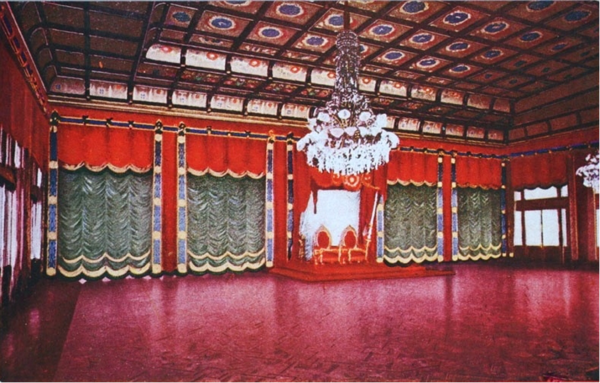
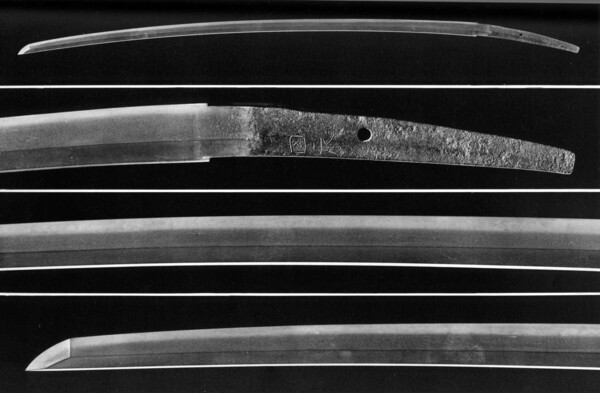
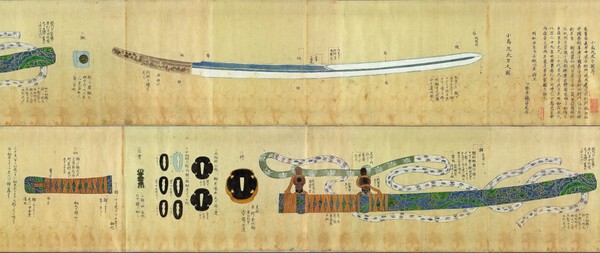
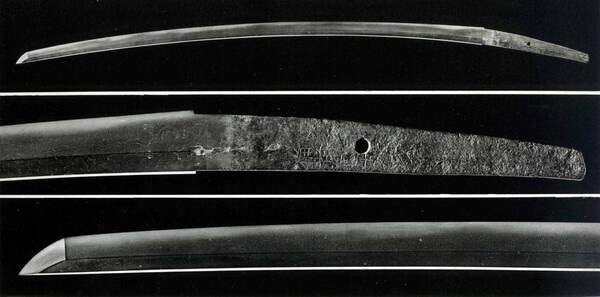
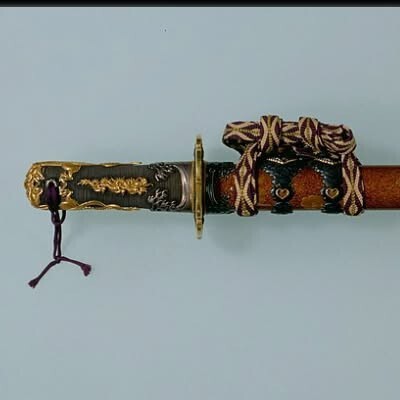
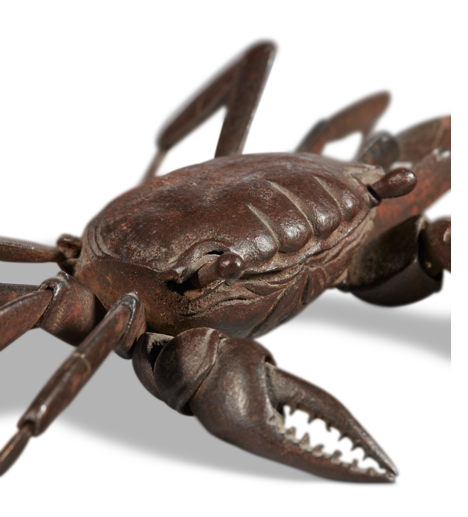
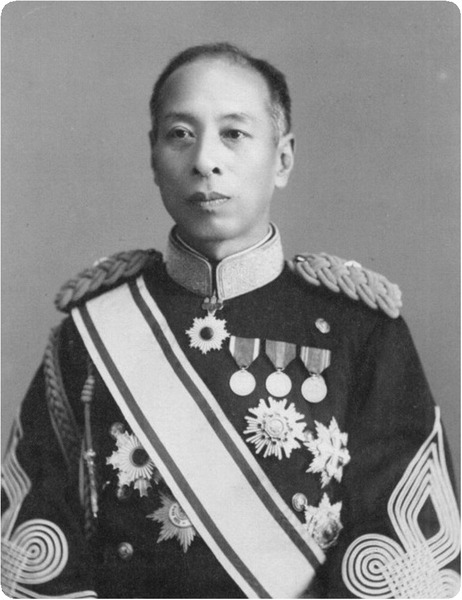
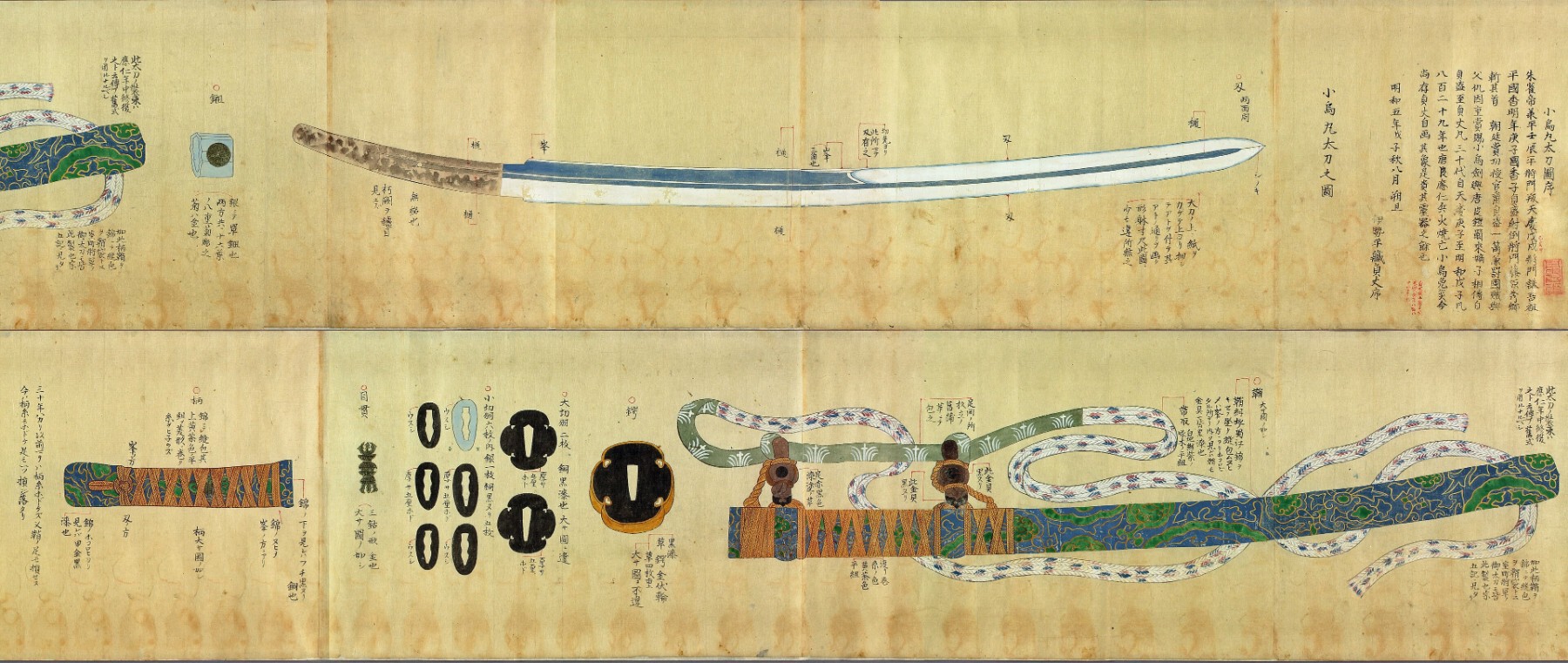
Recently after my last post on the @Wah sent me a fantastic article on many of Emperor Meiji's swords from a special exhibition celebrating a century of the Meiji Restoration at the Matsuzakaya Department Store (Japan's first department store) from January 4-14, 1968, promoted by the Mainichi Shinsha Shrine & Kyoto Shimotsuke Shrine. I enjoyed it so much that decided I translated it and am sharing it here so that everyone else may enjoy it too. From Sword and History Issue 445 (September 1968) Emperor Meiji and Swords (Part 2) Author: Taiko Sasano The Emperor's Military Sword Earlier this year, at the start of the New Year, the "Modern Imperial Family Special Exhibition" opened at Matsuzakaya in Ginza. The number of exhibits was large, and the content was excellent. With such a fulfilling exhibition commemorating the Meiji era opening first, I couldn't help but worry about how difficult it would be for subsequent exhibitions—a concern for others, so to speak. Emperor Meiji's Military Sword, Bizen Province, by Nagayoshi (Chogi) (Tokyo National Museum Collection) In "Modern Imperial Family," two emperors, Komei and Meiji, were avid sword enthusiasts, so several swords belonging to them were on display. Among them were two military swords belonging to Emperor Meiji, exhibited from the Tokyo National Museum. During the sorting of the imperial sword collection immediately after the end of the war, it was initially decided to limit it to fifty swords (according to Mr. Tsunetsujiro Yoshikawa). Since many of the imperial swords have long and distinguished histories, relatively newer swords like Emperor Meiji's military sword were included in the sorting section. It was acquired and is currently housed in the Tokyo National Museum. The first of these gunto swords is a well-maintained large sword bearing the signature "Nagayoshi, Nagafune-ju, Bizen Province." It measures 2 shaku 3 sun and 4 bu in blade length, 8 bu and 8 rin for the curvature and a base width of 1 sun (see photo in black). The jigane (ground steel) has a distinct itame grain pattern and a pronounced shining effect. The hamon (hame) is a mixture of komabure (small swaths) and gonome (five-pointed patterns), with beautiful ashi (astitch) and sunagashi (sand-nagashi) patterns. Small spattered charcoal marks can be seen here and there. The ko (fine lines) have become irregular and have turned into komaru (small rounded patterns). The exterior is saber-style, with the area painted black lacquer in the usual style. As one of the Ten Great Masters of Masamune, this sword has a dignified Eastern appearance and is quite heavy. Therefore, while he favoured it in his prime, he apparently avoided it in his later years. The next sword is a work by Bizen Ichimonji Sukemune. It measures 2 shaku 3 sun 3 bu in length, 7 bu and 5 rin in curvature, and 8 bu in the base, making it appear gentler than the previous Nagagi. The jigane (ground steel) has a finely honed ko-itame (small grain) pattern a fine nie (crystal-like pattern). The hamon (blade pattern) begins with a small, irregular pattern, gradually becoming sparser toward the tip, becoming a straight sword with a slight ashi-iri (foot-like) pattern, but featuring abundant ha-mo (leaf) patterns. The tsuba (guard) is a small katsu (small buckle). The two characters "Sukemune" are vividly inscribed on the blade. The hilt of the saber-shaped sword is made of tortoiseshell, with striking black spots on a yellow background. Count Tanaka Mitsunori According to "Count Tanaka Aoyama" (edited by Sawamoto), this Sukemune was presented by Count Tanaka Mitsunori. The Sino-Japanese War, contrary to world expectations, saw Japan win battle after battle, ushering in the spring of 1928. A high-ranking official from the Imperial Household Ministry was sent congratulations on the victory which in turn resulted in an invite for a representative to visit the Imperial Headquarters in Hiroshima. The representative chosen for the mission was Tanaka Mitsunori, then president of Gakushuin University. A sword lover since his youth, he had a vast collection of famous swords. Among them was a sword by Ichimonji Sukemune, and he decided to use this opportunity to present it. Upon hearing of this, the wealthy Iwasaki Yanosuke requested, "I would also like to present an old Bizen Sukehira. Could you please take it for me?" The two were old friends from the same Tosa domain, and Tanaka readily agreed. Bearing the two swords, he reported to the Imperial Headquarters in Hiroshima on January 14th. Minister of the Imperial Household, Hijikata Hisamoto stood before and abruptly ordered him to bow to the Emperor. There, Tanaka offered his congratulations on the victory and then announced his intention to present the famous sword. Regarding the sword from the Iwasaki family, he said, "This is an old Bizen sword, 800 years old, but it is in excellent condition, as if it had just been made. It is like Minister of the Imperial Household Hijikata, sitting here, he may be old, but he has no grey hair, no hunched back, and is serving His Majesty well. This sword is just like that." He spoke with a touch of humour, and the Emperor burst out laughing, immediately approving the sword. The Emperor seemed to be very pleased with the sword given to him, and he soon used it as a backup. Because, as Tanaka Mitsugao had said, it was in such good condition and therefore it would stay on his waist. The weight was quite a burden though. So, in his later years, he used the Sukemune presented by Tanaka as his military sword instead. It was only 80% of the original habaki size, so it wasn't particularly heavy. Kuroda Kiyotaka Another military sword favoured by the Emperor, due to its lightness, was the Awataguchi Hisakuni presented by Kuroda Kiyotaka. Its blade was 2 shaku 2 sun long, had a 5 bu curvature, and a 8 bu base, making it about the same weight as his previous Sukemune. The jigane (ground steel) has the well-honed Ko-Itame-Hada (small grain) characteristic of the Awataguchi tradition, with a good amount of ji-nie (small crystals in the steel). The straight blade is interspersed with small irregularities, with beautiful foot and leaf markings, and gold lines can be seen here and there. The inscription is powerfully inscribed in the two characters "Hisakuni" at the centre. A typical Awataguchi sword, it truly deserves to be called a famous sword. This is no surprise, as it was originally handed down through the Yanagisawa family and bears a certificate of 3,000 kan from Bunsei 14 (1817). This was a gift from the Kuroda family to the Emperor during his visit to Kuroda when he visited the Capital in Meiji 18, November 1885. Incidentally, Emperor Meiji was well-built. The officer assigned to me during my middle school years graduated from the military academy at the end of the Meiji era. So the Emperor attended his graduation ceremony and said, "I bowed to the graduates, and I bowed to them with the same respect as General Oyama, who was standing behind them." Oyama Gen, a descendant of Saigo Nanshu, was also quite large, but the Emperor was about the same size. The Emperor was also very strong, and in his youth he enjoyed sumo wrestling and horseback riding. He even boasted about it. Consequently, until middle age, he preferred swords with a masculine appearance. For example, the "Kotegiri Masamune" presented by Maeda Sei (Lord of the Kaga Domain) was 2 shaku 2 sun 6 bu in length, which could be considered a standard size, but the blade was 1 sun at the base and 9 bu at the tip, making it quite heavy. There were 12 or 13 military swords, many of which were from the Soshu school, including: Aizu Masamune Aizu Masamune presented by Prince Arisugawa, Honjo Masamune presented by Tokugawa Iesato, (Translator's note: Unsure if there are two swords named Honjo Masamune? The author here is suggesting that a sword by this name was given to the Emperor Meiji by Tokugawa Iesato (1863-1940) and a sword by this name appeared in this special exhibition of Imperial Swords in 1968? Could it be a Hojo Masamune? The special exhibition's catalogue would confirm.) Soshu Masamune purchased from Ogawa Ikko, Samonji presented by Matsudaira Yoshisui, Noshu Kinyuki (unclear) presented by Adachi Masashige. Bizen swords included the aforementioned Ichimonji Sukemune and Nagafune Nagayoshi, Old Bizen Nobutomo presented from Takashima Shinnosuke Meiji 44 (Lieutenant General), Ichimonji Sukeshige presented by Matsudaira Yoshio, Kagemitsu and Kagemasa collaboration presented by Kawamura Sumiyoshi (Marshal). For more information on this sword, please refer to issue 423 of this magazine. The sword used by His Majesty when he supervised the large-scale exercises in Kyushu in the autumn of Meiji 44, 1911 was crafted by Ayanokōji Sadatoshi. It was a large sword with a blade length of over 2 feet and 6 inches, but because His Majesty was tall, it did not seem too long. In addition to the above swords, a naval dagger will also be on display at the "Modern Imperial Family Special Exhibition." It was on display. The exterior is standard, with a white handle and a black front, but the metal fittings feature a 16-petal chrysanthemum crest that shines brilliantly in gold. The blade is a 7 to 8 sun long tanto with an inward curve, and features a typical hamon (temper pattern) with large, irregular five-patterned lines. A favourite sword at his side Each of the Emperor's living rooms had a designated attendant sword. First, in the sleeping room (mikoshi) is the so-called Omakura sword. Its blade is Nagafune Nagamitsu, a 2-shaku 3-sun (approx. 1.5 m) long sword, with a thin golden plate covering the handle. All the other metal fittings were also made of gold, making it a luxurious piece that even the gods shone with golden light. Inner Throne Room Next, in the inner throne room is the so-called Hino-Omashi (sacred seat) sword. This sword was crafted by Kishin-no-taifu Yukihira, and also features a traditional tachi (long sword) design. The metal fittings are made of a quarter-grain alloy, said to have been formed by a mountain that erupted from the ground long ago. Several other swords were also present, but this Yukihira and the previous Nagamitsu were occasionally maintained by the Emperor himself. The Chrysanthemum Thone in the Main Throne room Next, in the main throne room, numerous famous swords were displayed on shelves in the nine-foot alcove and thr next room. Some of the more famous ones include: The one presented by Kuroda which was 2 shaku 3 sun long, and another from Motoda Nagazane, measuring 2 shaku 2 sun 5 bu. The Emperor seemed particularly fond of the latter, and had it fitted with a gold-plated tachi mounting. In the spring of 1893, the master craftsmen of the time, Kano Natsuo and Kagawa Hiroshi, were commissioned to create the koshirae. The gold base used for the sword was excavated from the Sado Gold Mine, with as much gold as possible refined at the Osaka Mint, making it literally pure gold. The mounting was first done by Natsuo, who presented a rough sketch to the Emperor, and the fittings were then approved after it was deemed suitable. Phoenixes are carved into the fittings while other parts are decorated with five-seven and grass motifs. The paulownia wood, in particular, is small, measuring just 2 shaku and 5 sun, so its construction was extremely challenging. Workers reported to the Imperial Household Ministry every day to work on it, but it is said that it took an astonishing 13 years to complete. Sanjo Munechika Odachi: The sword bears the inscription "Munechika," with a blade length of 2 shaku, 5 sun and 9 bu and a curvature of 9 bu and 2 rin. It was presented to the Crown Prince (later Emperor Taisho) by Sakai Tadamichi of the Obama Domain in Wakasa Province during a tour of the Hokuriku region in September 1909, and was subsequently presented by the Crown Prince to the Emperor. For more on this, see issue 429 of this magazine. Tsurumaru Kuninanga Gojo Kuninanga (Tsurumaru): Presented by the Date family during the Emperor's visit to Sendai. For more on this, see issue 429 of this magazine. . Ichigo Hitofuri Yoshimitsu Awataguchi Yoshimitsu (Ichigo Hitofuri) This sword is famous since ancient times and is included in the "Kyōhō Meibutsu-chō", so I will omit its description. Kogarasumaru Yasutsuna Amakuni Yasutsuna Tengu (Kogarasumaru) was presented by Count Sou Shigemasa in 1882. For more information on this, see issues 426 and 441 of this magazine. The Tehata-hosui (SP?) sword was a gift from the former emperor and it comes with a tachi mounting. It is said to have been a favourite of the former emperor, and he was particularly attached to it. The other sword was presented by Marquis Saigo Tsunemichi and has a blade length 2 shaku (approximately 60 cm). It has a high crest, features a grained jigane, and is straight-edged, demonstrating the characteristics of a Yamato sword. It originally belonged to the Honjo family, lords of Miyazu Castle in Tango, but was presented by Tsunemichi, a sword lover. Sōzui Masamune Soshu Masamune (Sōzui Masamune) presented by Duke Tokugawa Iesatu. According to the "Kyoho Meibutsu Cho," this sword earned its nickname from being a favorite of Mōri Terumoto Nyudo Munezui. While in the possession of the Toyotomi family, it was appraised as Sagami Yukimitsu. It was later passed on to the Owari Tokugawa family, and presented to Shogun Tsunayoshi when he visited them in Genroku 11, 1698. It was presented to the Emperor by Tokugawa Iesatu in Meiji 28, 1895, and after the completion of the mounting for the sword presented by Baron Motoda, he commissioned Shakawa Katsuhiro to create a magnificent mounting. Kintano-Gō Gō Yoshihiro (Kitano-go): This famous sword is also listed in the "Kyōhō Meibutsu-chō" Book. It had been passed down through the Kaga Maeda family until it was presented at the Maeda residence by the family in July 1910 during the Emperor's visit. Originally unsigned, it features a gold inlay of Hon'ami Kōetsu in the centre. Uguisumaru Tomonari Ko-Bizen Tomonari (Uguisumaru): This was presented by Count Tanaka Mitsunori. Tanaka Mitsunori, who had previously presented Ichimonji Sukemune, was awarded the title of Count in September 1907 and received 20,000 yen in royal gold. This sword, the famous Uguisumaru, was likely a token of gratitude from Tanaka Mitsunori for this elevation in status, as it was presented in November of the same year to the Emperor, during a large-scale military exercise near Yūki Town, Ibaraki Prefecture. Uguisumaru was originally a long-held sword of the Ashikaga family. In March of the spring of 1489, Yuki Ujitomo of Shimo-no-Kami raised an army, enlisting the surviving son of Ashikaga Mochiuji. By order of Shogun Yoshihisa, Ogasawara Dai Katsutafu Masahan joined the army to fight in the Yūki campaign and fought bravely. He then issued a proclamation to have Mochiuji's surviving son executed. For his service, the Shogun bestowed upon him a letter of commendation and the famous sword Uguisumaru. As the sword has a deep connection to Yūki, where the great battles took place, Mitsumi presented it there at the imperial residence, accompanied by the following poem: "At every battle, I offer the sword that was destroyed at Katsuyama. Not even for a fleeting moment, as I offer the sword before the great master, I will never forget your mercy." After all the battles, the sword is enshrined at Katsuyama Castle. Katsuyama was a castle town in Ono County, Echizen Province, and the castle ruins are now called Nagayama. In Genroku 4, 1691, Ogasawara Tosa-no-kami Sadanobu was buried here, and the ruins lasted until the Meiji period. It was a magnificent sword with a blade length of 2 shaku 6 sun 1 bu and a curvature of 9 bu 5 rin, featuring powerful carvings of the taihi on both sides. For more information on this sword, please refer to issue 43 of this magazine. Bizen Tadamitsu: This swas originally a important sword of the Aizu Matsudaira family, but was given to the Yokami family as a gift from the family. Bizen Mitsutada: There was a 2 shaku 2 sun sword presented by the Hachisuka family as a gift from the family's successor, and another sword with a long inscription "Bizen Province Osafune Mitsutada" presented by Iwasaki Yanosuke. The latter, Osafune, is particularly valuable as a research resource. In addition to the Uguisumaru, another Tomonari was also presented by the Sakai family of Himeji. Keeping a Water Dragon (Suiryuken) (Tokyo National Museum) The Water Dragon ken (Suiryuken) was originally a part of the Shosoin Repository, but was apparently kept at the Imperial Palace during maintenance in the early Meiji period. It is a straight sword with a sharp edge, but the surface is smooth and has been tempered. The exterior was painstakingly crafted by Kano Natsuo, with a golden dragon on the hi-ai and kashira blades and a silver wave pattern on the edge. For this reason, it was named the Water Dragon Sword. While the blade's artistic merit is naturally inferior to the famous swords mentioned above, the Emperor likely treasured it because of its academic value as the birthplace of the Japanese sword. The Golden Dragon the scabbard Contemporary swords—perhaps more for the encouragement of swordsmiths than for appreciation—were also kept in his possession by swords made by Gassan Sadakazu and Miyamoto Kanenori. Sadakazu was particularly highly regarded and highly trusted by the Emperor. While I won't be listing just one Myochin ornament, I'll add a final note about the story of how the Emperor took a liking to an ornament made by Myochin, a renowned armor maker. In 1883, an art exhibition sponsored by the Japan Art Association was held at the office of Hibiya Daijingu Shrine. The Emperor, who loved not only swords but also paintings, sculptures, and other fine arts, attended the exhibition. At the time, most of the treasures handed down through the generations were still kept secret in the homes of former daimyo and nobles. Among the exhibits were some of the finest examples, making for a truly magnificent exhibition. Among the exhibits was an iron dragon exhibited by the Matsudaira family, lords of Mezuyama Domain. It was about seven lengths long, hammered out of iron, and each of the dragon's scales was movable, even down to the tips of its claws. After the Meiji Restoration, when armour orders suddenly dried up, Myochin, who found himself bogged down, created this "stretchy dragon," inspired by armour-making techniques. The Emperor seemed to be very pleased with this, and even after he had retired to the resting place, he ordered Tokudaiji, the Grand Chamberlain, to "call for the dragon." When it arrived, he was playing with it with great interest and desire. This incident was reported to be one of the greatest in Japan. Iron Dragon by Myochin When Sano Tsunetami, president of the Art Association, informed Matsudaira-do, the owner of the work, he was so honoured that he immediately offered to present it to the Emperor. Then, in the following year, another event was held at Tsukiji Honganji Temple. The Emperor also made a visit to that event. After the morning viewing, lunch was finally served in the great hall. There, in a large water basin, five feet in diameter, was a large loquat tree in bloom, with a crab attached to it. After lunch, as he was browsing the room with a toothpick, the crab suddenly caught his eye. He stood up, approached the wooden basin, and picked up the crab. His limbs then began to flap rapidly. With a smile on his face, "Wow, this is well made," he exclaimed in a magical voice. In fact, this was also Myochin's work. An antique dealer named Wakai had purchased it from somewhere for the princely sum of 200 yen (in those days), boasting that he could sell it for 600 yen to a foreigner. The Emperor brought it back to the table and repeatedly praised its quality, prompting Sano, chairman of the association, who was standing nearby, to consult with Minister of the Imperial Household, Hijikata Hisamoto, and propose presenting an offer to Wakai. "It would be a great honour if Your Majesty were pleased," he said. The Emperor immediately agreed. Upon hearing the offer, the Emperor seemed delighted; he put it in his pocket without wrapping it in paper, and took it home. His demeanour was like that of a child buying a favourite toy. Iron Crab by Myochin The Myochin family, whose centuries-old family business had been snatched away by the progress of time and whose fortunes had been sunk, must have felt as if a lost tree had blossomed upon hearing this story.









 2 points
 -
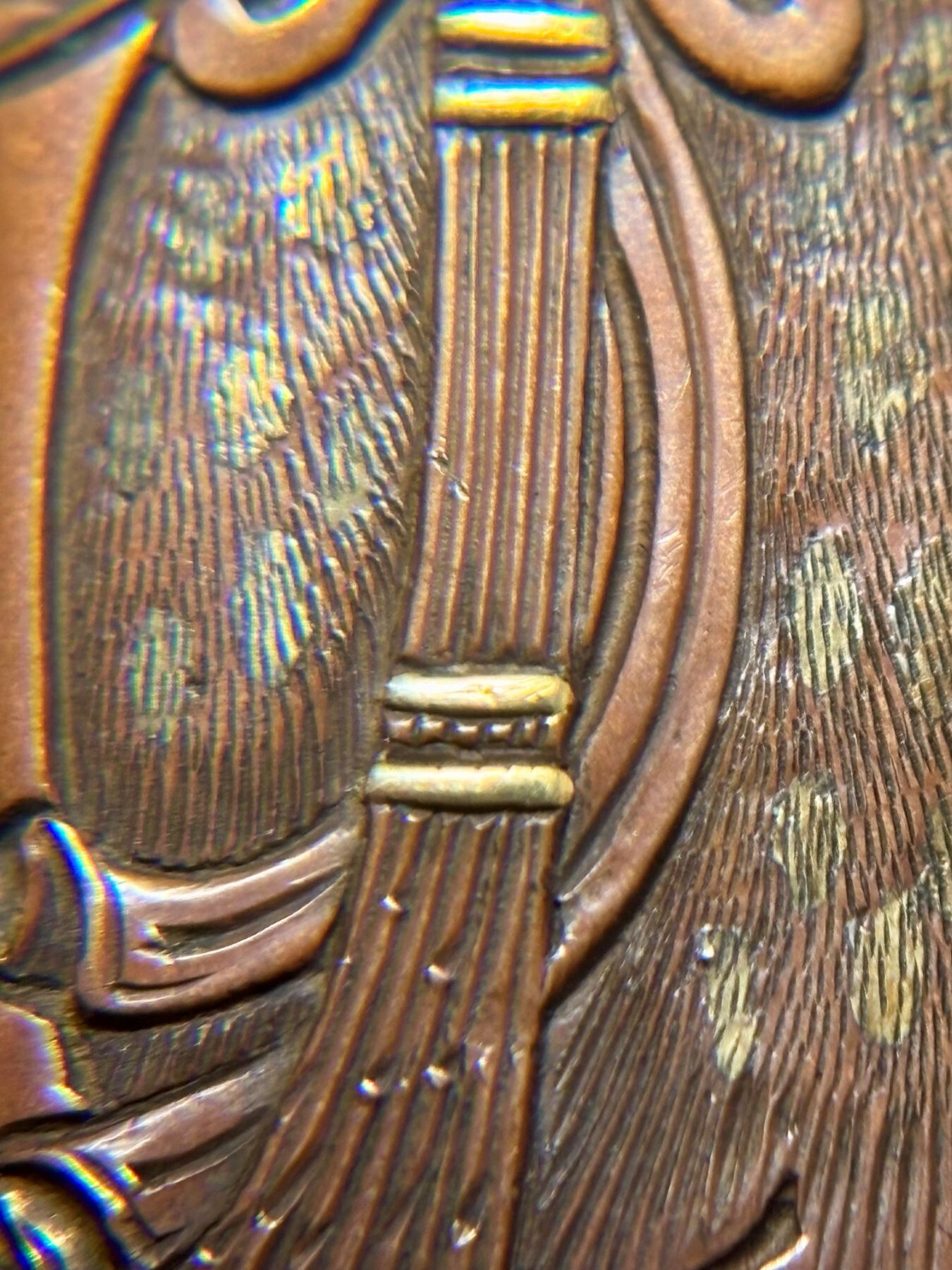
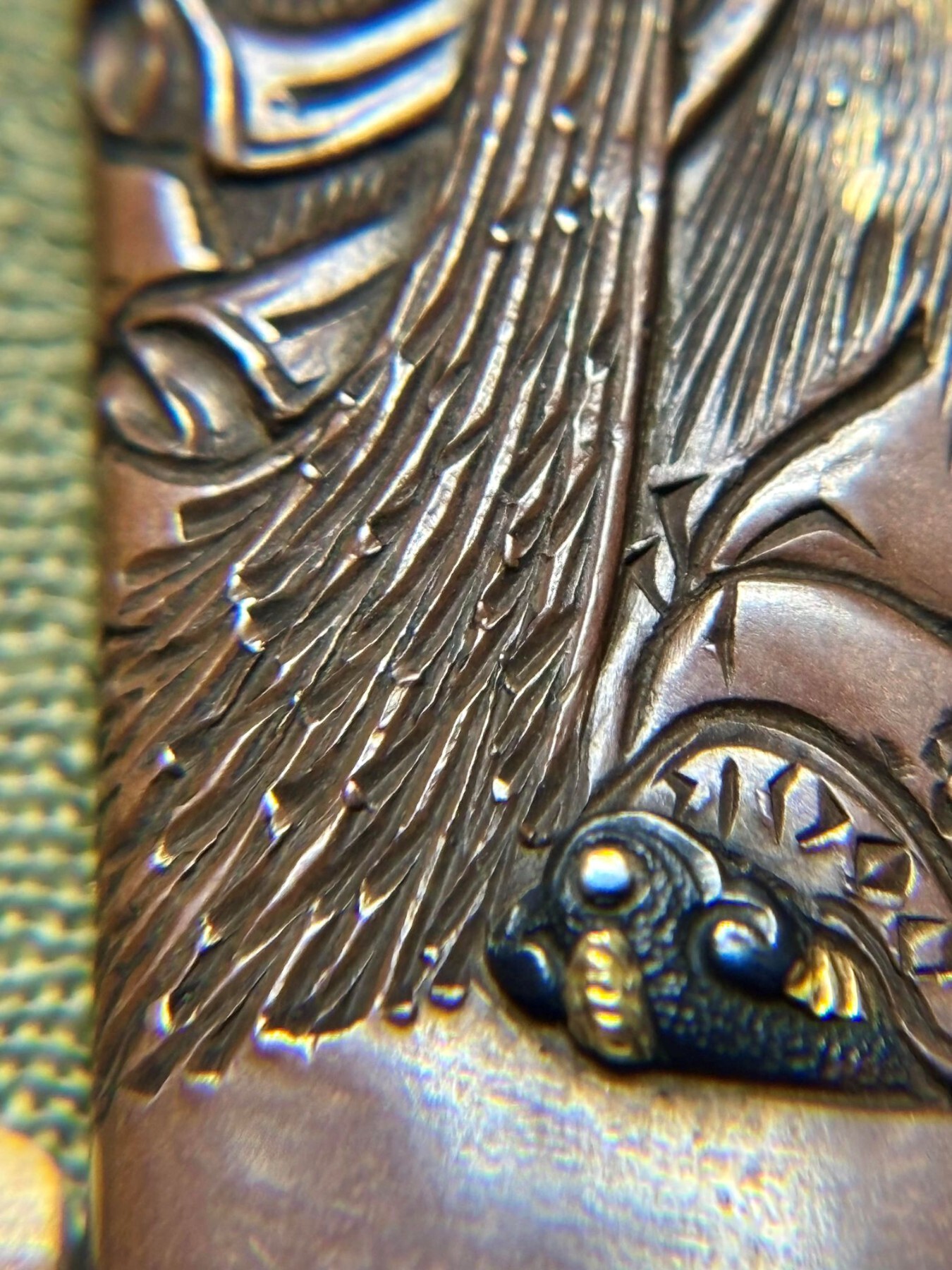
Thank you, Colin, for pointing that out and correcting my mistake once again. Due to limited equipment, I can only take simple magnified photos using my phone together with a magnifying glass. From these images it appears that the lower edge of the robe is indeed not nunome inlay. The inlay there does not seem to be gold, but rather brass or a copper alloy. One can clearly see an oxidation layer on the surface, and the color is noticeably different from the gold inlays nearby. Looking more closely at the magnified images, a number of small details also become visible: the patterns on the robe and the way the garment is modeled, the carved lines of the broom and the way it is bound together, details of the sandals, and the facial features. The eyes appear to be inlaid (likely dark shakudo), with gold inlay used for the teeth. One can also see the wavy hairstyle I mentioned before, as well as the folds of the eyelids. I also noticed for the first time some subtle details of the lips, and even what seem to be small dimples on the face. I am very happy that through this discussion I can discover more details of the piece — thoughtful discussions like this always lead to new observations.


 2 points
 -
Excellent production values, descriptions and offers a good appreciation of the multitude of steps needed to create these blades. Enjoy2 points
-
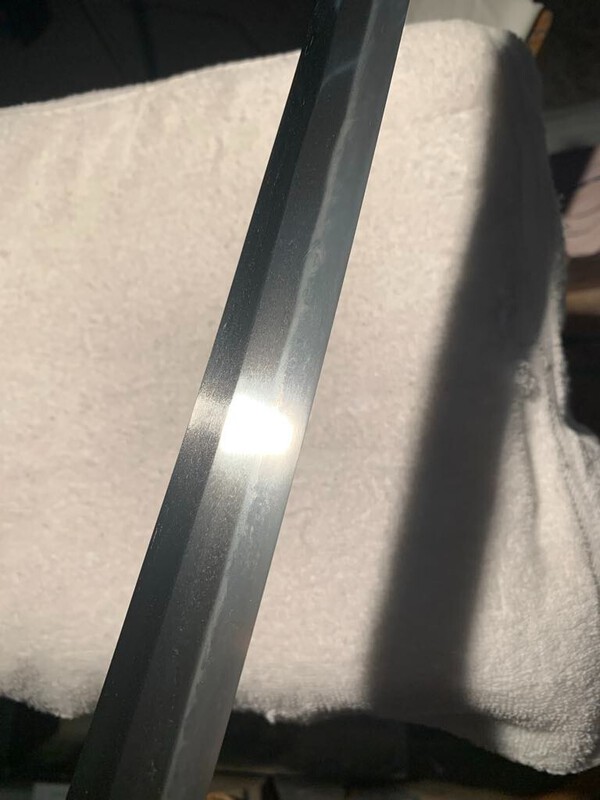
And a big thanks and shout out to Woody Hall for the shiage togi and fast turn around. Im always split on Sashikomi for it s honesty vs Hadori for it s contrast but his work somehow captures the absolute best of both worlds.

 2 points
 -
Just by way of sharing experiences with sellers. I have made two purchases in the last year or so from this seller and have been very satisfied with my dealings with them. I found them to be cordial to do business with and Yuji-san provided excellent and prompt communication. Their prices seem reasonable and the quality, at least in the purchases I made, is there. Of course one should know what one is looking at and ask questions, important in any distance transaction. Michael BC1 point
-
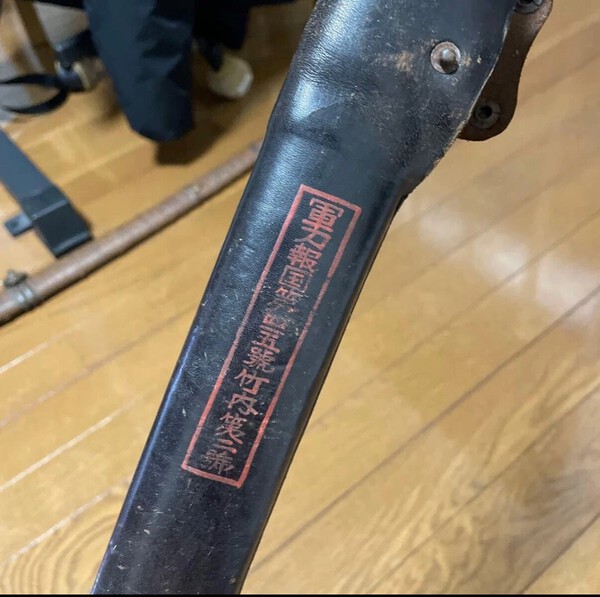
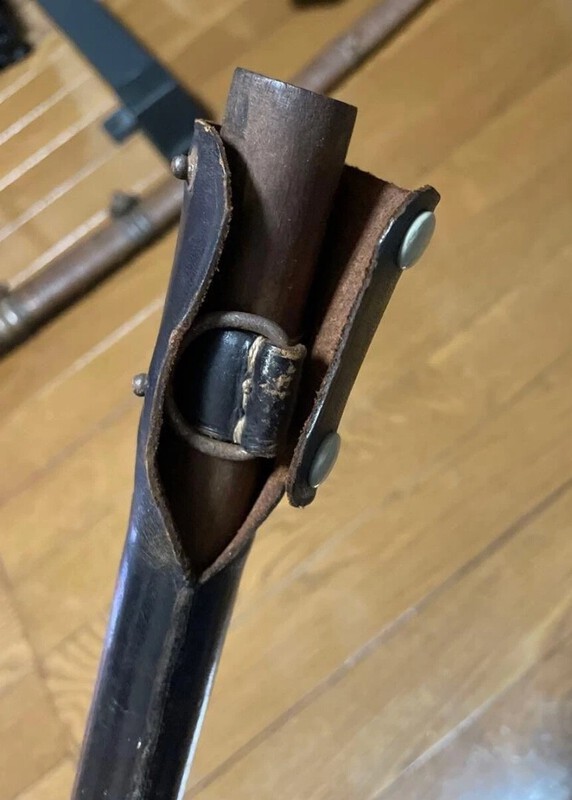
Spotted on eBay this morning. https://ebay.us/m/6KRoOF
 1 point
 -
While looking through another reference, I came across a kozuka with a very similar Kanzan and Jittoku composition in a Russian publication on Japanese sword fittings. The treatment there appears somewhat simpler, but the overall arrangement of the figures is quite close. I thought it might be interesting to share it here for comparison.
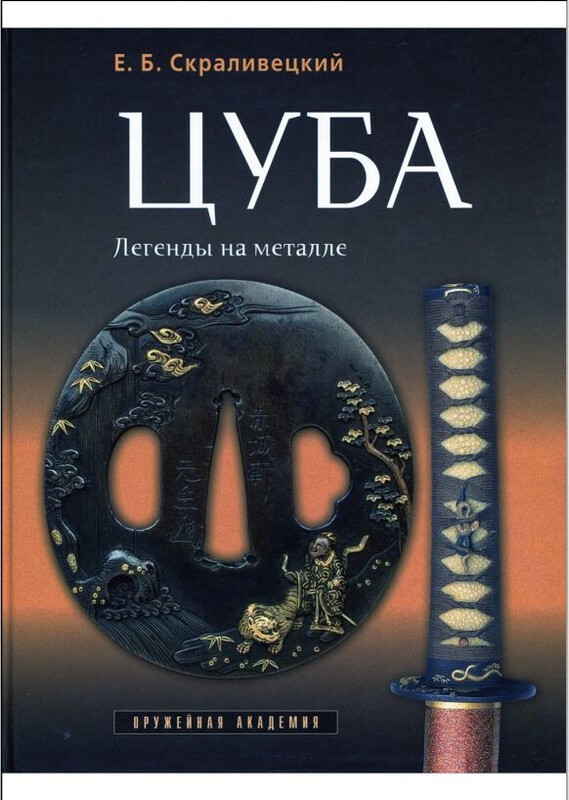
 1 point
 -
Regarding the comments about the inlay appearing rough and the ornament not being perfectly symmetrical, I wonder if this might relate to the carving approach used in some works attributed to Sugiura Jōi (Ichisandō Jōi). In the nikuaibori manner the figure is first established through carving and the inlay applied afterwards, so the edges of the inlay do not always completely disappear into the ground. As for the robe ornament, although the scrolling pattern is not strictly symmetrical, I noticed a very similar treatment in published examples of Jōi’s work. I am attaching a reference image from Fukushi Shigeo’s Machibori Meihin Shūsei (町彫名品聚成), where the illustrated piece is considered a representative work by Jōi and is designated an Important Art Object. Just to clarify, I’m not trying to defend my own piece — I’m mainly interested in discussing the technique itself. Liang

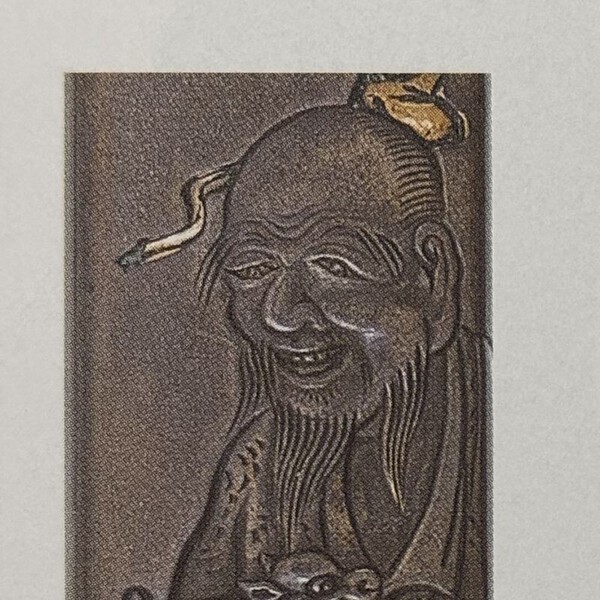

 1 point
 -
Hello, and thank you very much for your reply. Richard1 point
-
These are indeed good kozuka, however I would like to draw attention to a few points. This is indeed a deer hide on the belt, which is often seen in paintings depicting these characters. The spots do resemble inlay, I agree. However, the quality of the inlay in the hair and the golden bows on the head is not perfect, and the surrounding field is also not ideally finished. This is the first thing I always pay attention to: whether there is a gap between the ground and the inlay itself. After that, it is important to level and polish the ground perfectly using different stones and charcoal so that it becomes flush with the rest of the surface and hides the traces of the inlay. This is quite a labor-intensive process, so truly perfect execution is usually found in high-level works. The carving, in my opinion, is rather ordinary; there are irregularities both in the work itself and in the signature on the seal. This is simply the carving technique - almost all Soten signatures are carved in this manner. The Joi signature, in fact, was very frequently copied, and I am inclined to think that this is gimei, although I do like the overall composition and execution! Best regards!
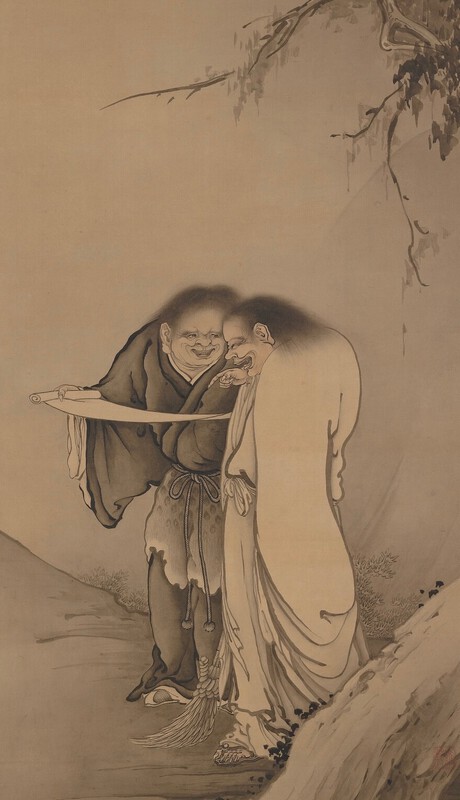
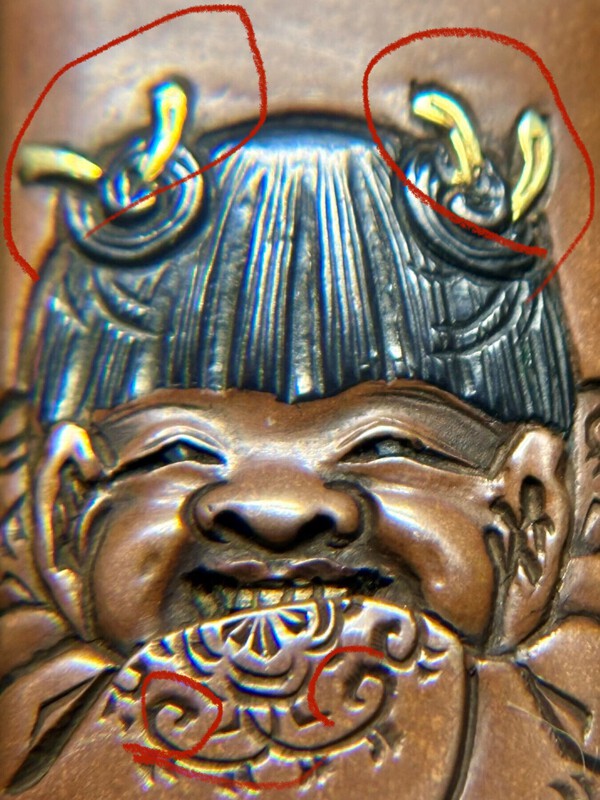
 1 point
 -
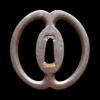
Been asked about Nakago-ana dimensions, so will add here. 28mm x 7mm at widest point. Obviously, looking at the tsuba, it appears to have been mounted on more than one sword. Open to reasonable offers.1 point
-
It is worth noting that when Hon'ami Kōshitsu did not certify the Tomita-Gō as a blade by Gō Yoshihiro that Maeda Toshitsune instructed his tachimochi to take the blade over to Hon'Ami Kōetsu, who operated at the same time, to get his opinion on the blade. Hon'Ami Kōetsu subsequently certified the blade as a Gō... and it has remained such ever since.1 point
-
I think it also speaks to the level of democratization and dissemination of knowledge (no doubt aided by such things as mass-production of reference works and photography) among the more recent generations of sword connoisseurs, even before we get to the public Internet. It is certainly no longer the case that ghosts and Gō are equally rare, assuming you have the desire to view one in person.1 point
-
This is a quote in reference to the Tomita-Gō; "Among the existing works of Go Yoshihiro, this sword is considered to be on par with "Inaba Go" in terms of craftsmanship and soundness, and is said to be one of the "finest Go in the world." During the Kan'ei era (1624-1645), when Hon'ami Kōshitsu saw this Tomita Go, he reportedly did not certify it, deeming it "of unknown value" (a work of such high quality that it is difficult to assign a price). This uchigatana is a shinogi-zukuri (ridged) style, with a slightly elongated chū-kissaki (medium-sized point). The forging shows a tightly packed itame-hada (wood grain pattern), with a thick jinie (small crystals in the ji-nie) and mixed with jifu (patterns in the ji-fu). The blade pattern features shallow undulations interspersed with irregular waves, with both ashi (lines extending from the blade) and ha (leaves extending from the blade), a deep nioi (misty effect), and occasional kinsuji (golden streaks), making it a magnificent sword.1 point
-
I have seen the post before. I guessed something but it was too uncertain to respond.1 point
-
There is an issue that only handful (truly handful) of blades today have continuous history established prior to 1550. So if the name is older than that, whether its indeed the same blade or not is often unproveable. Sometimes it gets funnier - until Meiji it was one (or many) blades that were associated with the name, today its one - but its not obvious that the one selected for the role Meiji and later is actually the best fit...1 point
-
Definitely wakizashi, not only is it far too long for a sunnobi tanto but the sugata doesn't match either.1 point
-
Definitely will once it comes back1 point
-
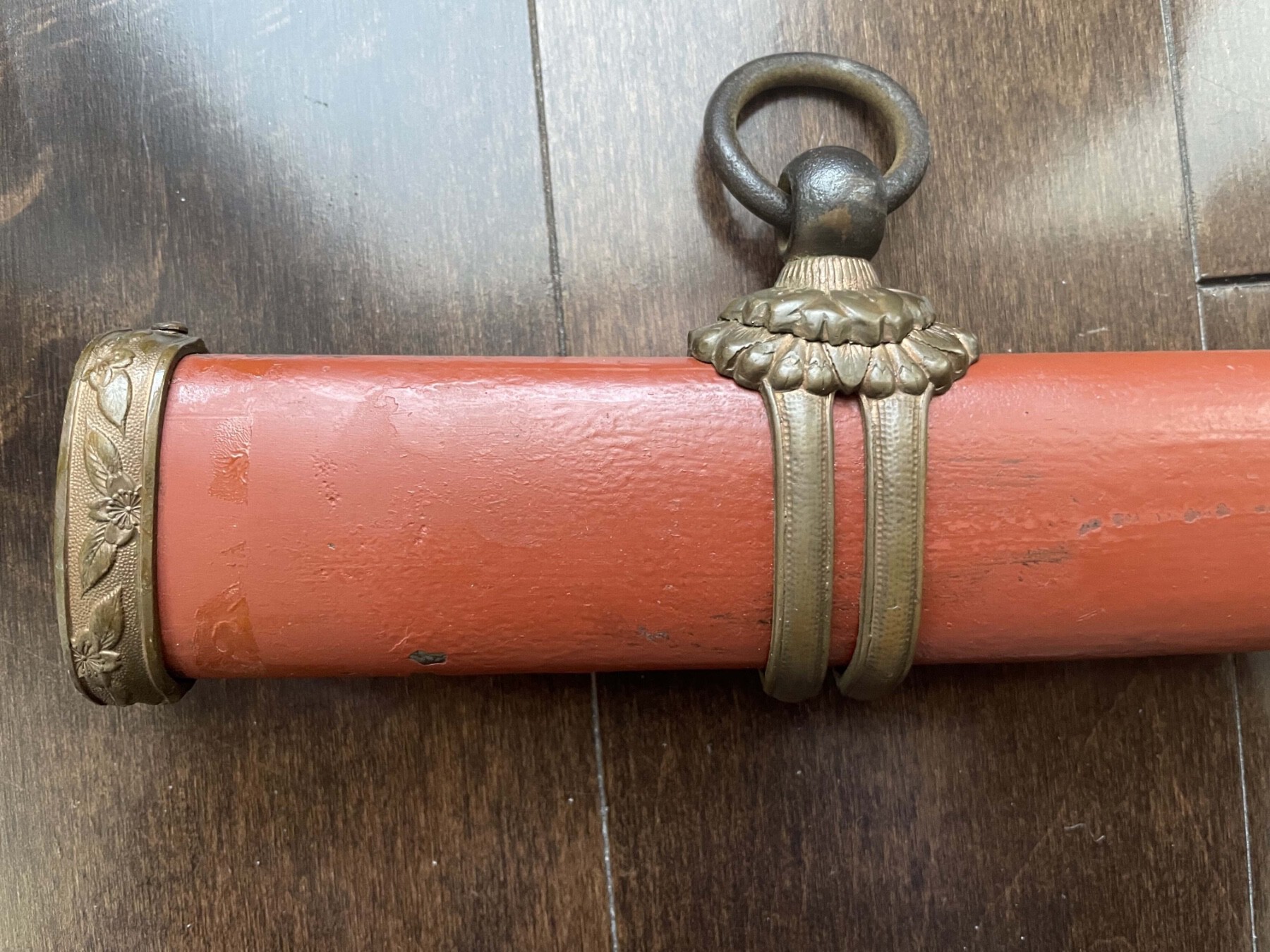
Thanks Con. Here a close up of saya. Only one seppa and it’s marked 9/7/0. No marks on Tsuba.
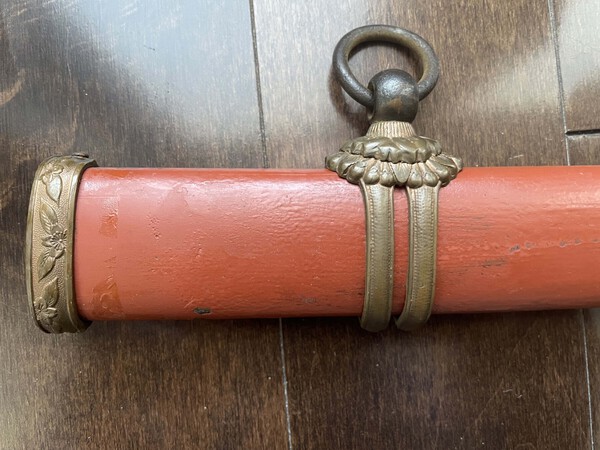
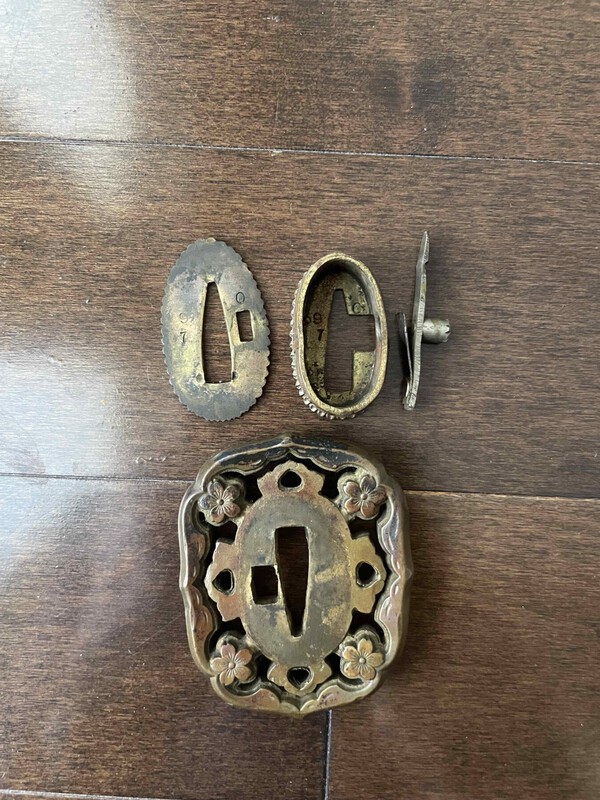 1 point
 -
Hachimonji Chogi; Heshikiri Hasebi.1 point
-
Harvey: The marks circled are 4 3, a common way to mark for assembly. Are there similar marks on the edge of the habaki or the numbers 43 on any other fittings? John C.
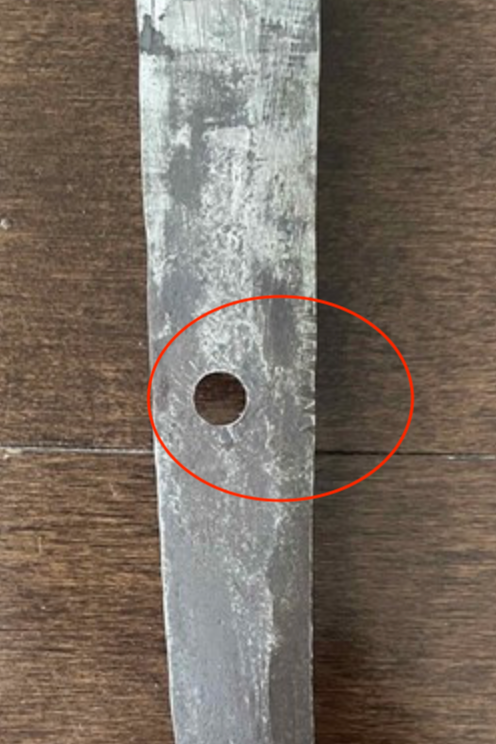 1 point
 -
That's a nice sword. Eisho dated Sukesada nakago always have that look about them, you could have guessed it without seeing the mei and just seeing the nakago. No one likes to see "probably" in a write-up, well i dont. "Sukesada" is top of the mei charts for scribble and its what most will have to accept as owners.1 point
-
I think there are always compromises that you need to make in sword viewing unless you can hold the actual item in person. I am happy I am not interested in small details so I can easily enjoy displays in museums & shrines even if the lighting for example would not allow viewing finer details. Most often we can only view one side of the item in museum displays. I really like the displays where you can view both sides but then the backside is often not lit well. I am not a photographer but I would think you would need several videos to capture the various details because you would need to film at various angles. As you will often need to perform lot of moving around and shifting positions when looking at items in museums. Sometimes the museums in Tokyo for example can be crowded and in good manners the view time for a sword can be bit limited in one go. That is why I love some of the rural shrines as they have items I love and I can spend the whole day looking at them if I want. One extremely good thing about oshigata is that the published ones are mostly made by experts with an expert eye. They can identify small details that I don't see or grasp and feature them in the oshigata. In ideal world I could see all the things featured in oshigata but in reality I am not at that level.1 point
-
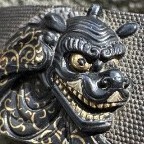
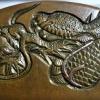
Large Iron Rain Dragon Tsuba 3.47" x 3.28" Outstanding iron example of a rain dragon, the mimi is carved as a rope. The Kogai ana he been filled with a shakudo plug. $2000 plus S/H and any associated fees such as Paypal fees, Wire fees, etc. Sale is final. All photos and information regarding this sword are included here. If you are interested in owning this tsuba, contact me via email only: yakiba.com@gmail.com
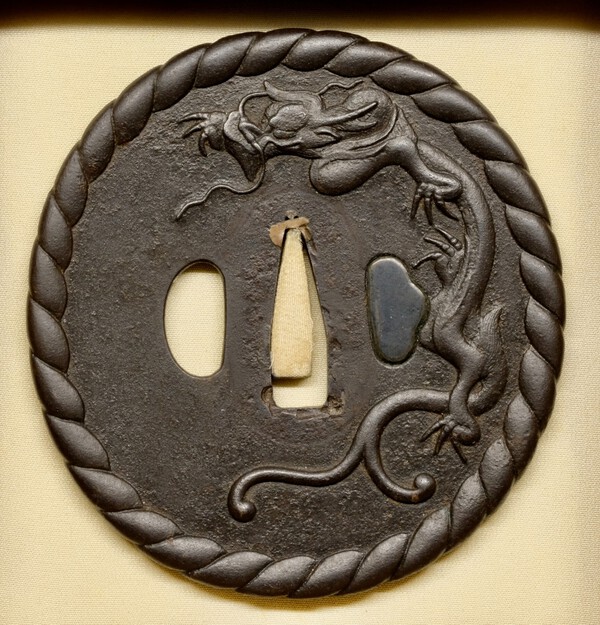

 1 point
 -
朝嵐 - Asaarashi, not Asaraashi1 point
-
Video that Brano took of the sword is incredible. I have viewed the sword in its normal residing place and it is a wonderful sword. The video shows the details very nicely. I think sometimes with high quality video I can see more details than with my own eyes. However as for me the size and shape is the driving factor with swords, seeing them in person can create different effect than seeing oshigata, photos or videos.1 point
-
If this topic interests you, @Hoshi and @Markus have an excellent Substack entry on the Ochiba ("Falling Leaf") Sanekage: https://nihontology.substack.com/p/the-falling-leaf1 point
-
Liang, no I don’t think it is nunome zogan. Nunome zogan is not usually used on a copper base because the adhesion would be poor and also the subsequent carving of the “fur” would tear the delicate foil. It is almost certainly true Hirazogan done in either silver or more likely pale shibuichi. ……(although you have the piece in your hands and I do not!) Also had you noticed the teeth appear inlaid, probably in silver and quite possibly the eyes also. Is that the case? All point to very high quality work.1 point
-
Grev, Hikone is a famous castle town in Goshu (the province of Ohmi) to the east of Kyoto and Lake Biwa, formerly residence of the Ii(ii) Daimyo family. In that castle town area were gathered a line of artisans which came to be known as the 'Soten'. We had a thread here recently on this subject. Authentification advice - Tosogu - Nihonto Message Board1 point
-
Absolute treat to see pictures like this of a beautiful Koshirae! Would take pride of place in any home.1 point
-
I'll play. This is a bit of the curve ball though. The Kaikuni Go has 2 quite different oshigata although the 1st one was probably drawn after it sustained fire damage and 2nd after an unsympathetic saiha. Echo's of this sorry workmanship

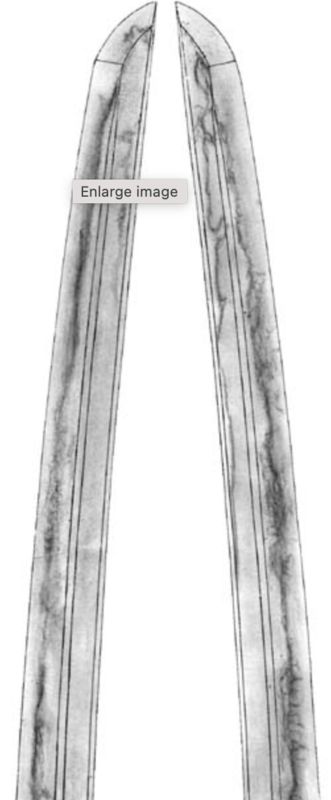
 1 point
 -
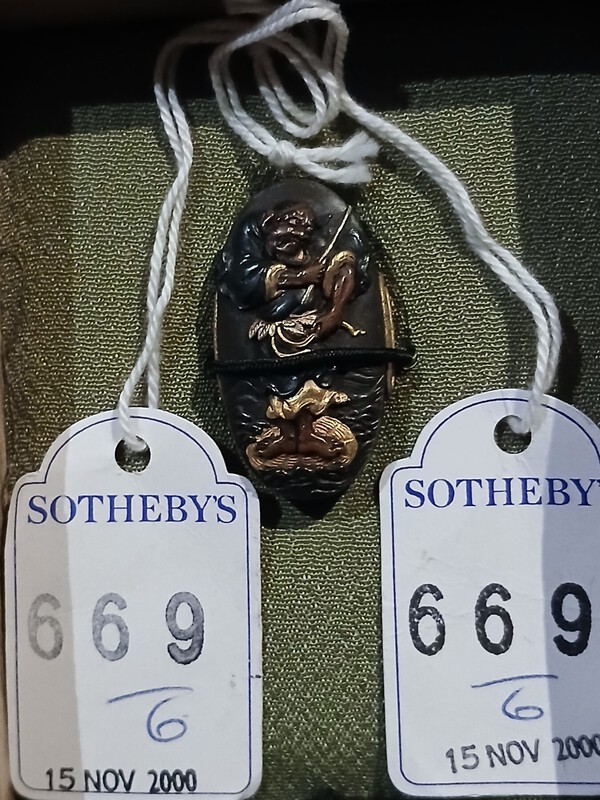
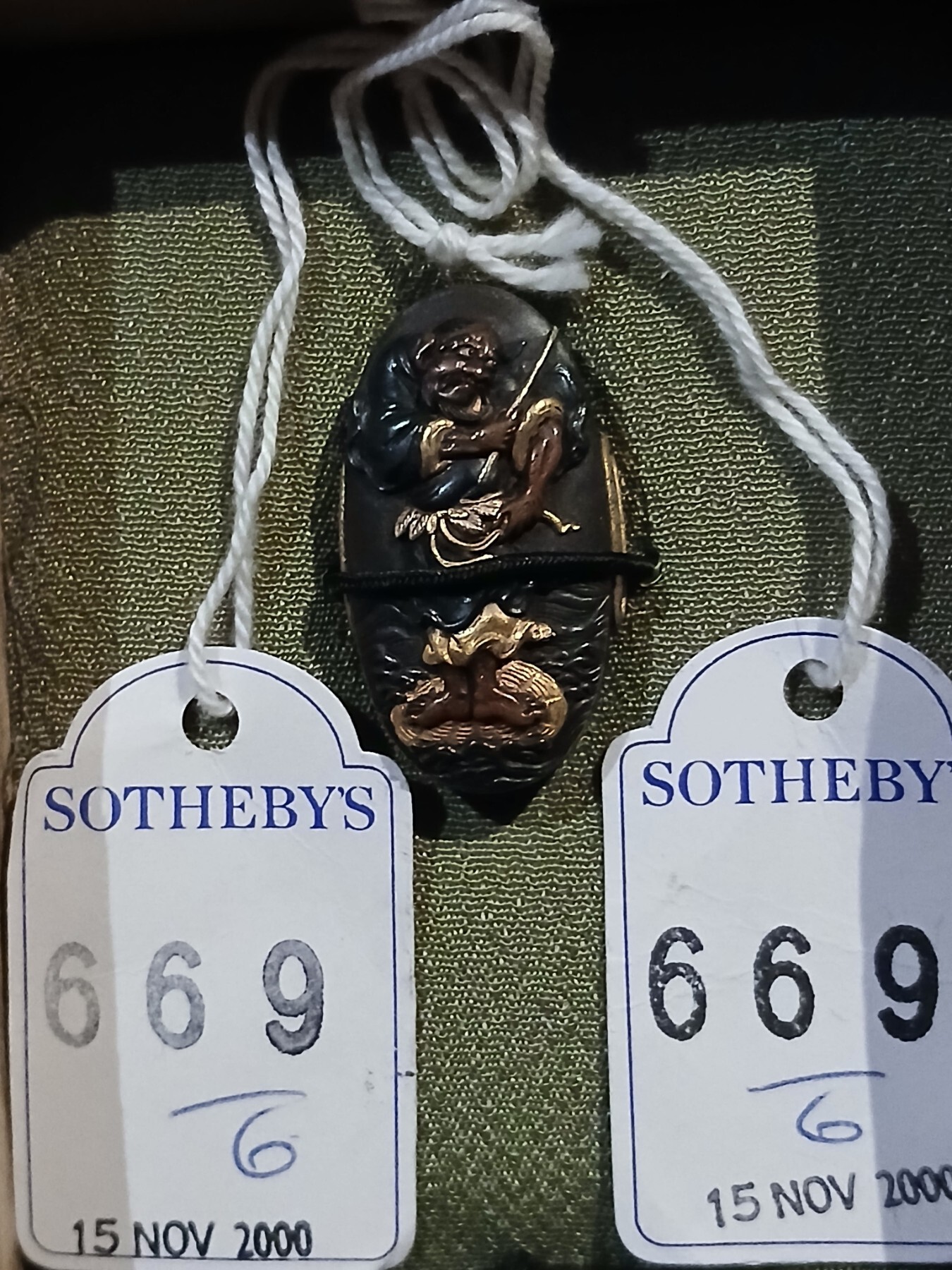
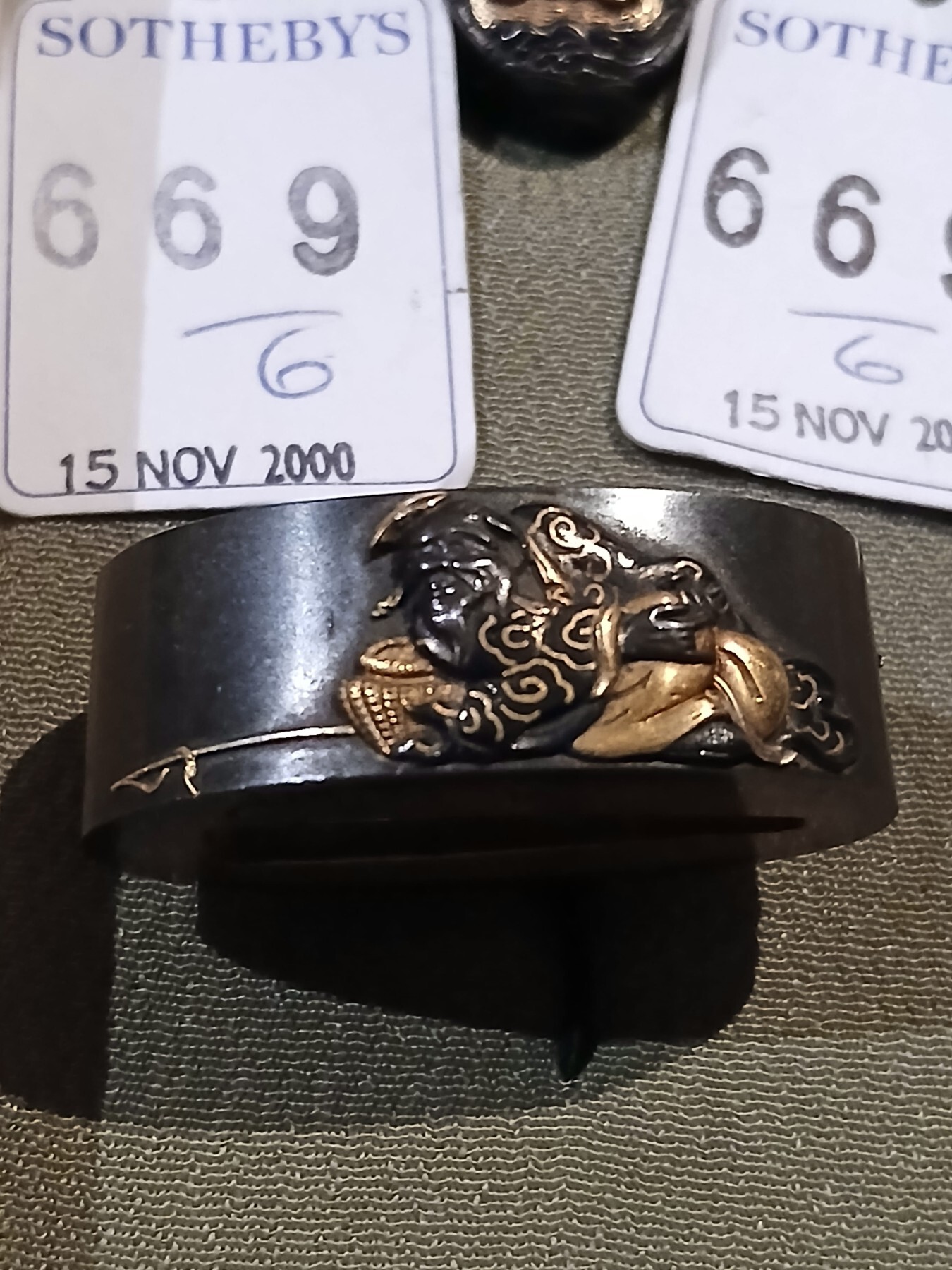
Dear Jake. I happen to have the catalogue for that sale and can confirm that lot 669 was described thus: 'Three Fuchi - Kashira Edo period (19th century) all with iroe takazogan, the First (sic) of shakudo nanako, with sages among pine trees, signed Soheishi Niudo Soten sei, the Second is possibly associated, of shibuichi, the fuchi with Taikobo fishing, the kashira with Shoki (?) riding on his hat over water, signed Tsunenao with kao, the Third is associated, the fuchi of shibuichi, the kashira of shakudo nanako with the race over the Uji river.' The lot sold for £1,200. Lot 675. THree shibuichi fuchi kashira Edo period (19th century) the First bearing an ishime ground and inladi in gold, silver and shakudo takazogan with large peonies and foliage, signed Omori Teruhide, the Second carved and inlaid on the fuchi with a sarumawashi and on the kashira with a boy dancer, signed Tsunenao with kao, the Third bearing a basketwork ground and inlaid with a mass of flowers and foliage in iroe takazogan (3) This lot also sold for £1,200 As was common practice only one of each lot was illustrated, for lot 669 it was the Soten example and for lot 675 it was the peonies. They were part of the sale which was described as, ' The following twenty one lots were collected by a German professor of language in Japan between 1895 = 1920.' Hope that helps a little. All the best.1 point
-
Last but not least, when it comes to my favourite from this set it's between the first Hamano piece I posted and this Taigong Wang design and I can't decide which I like most...
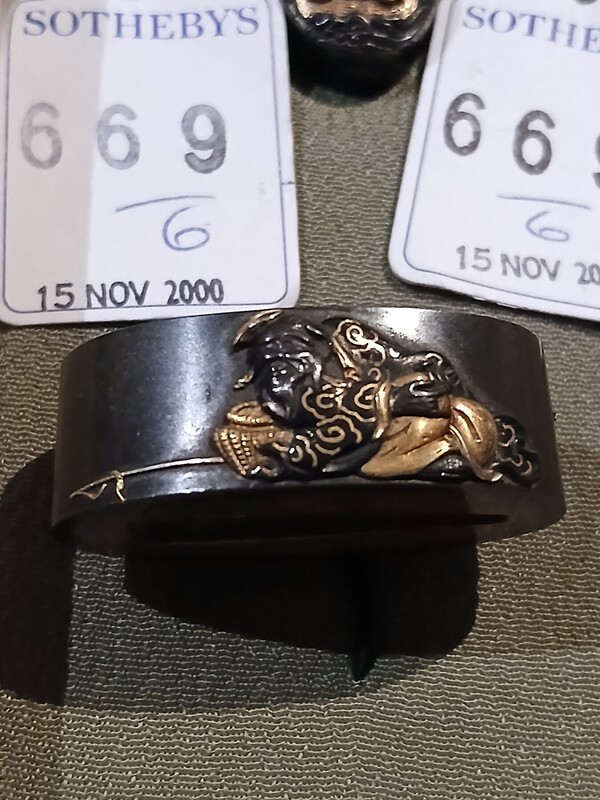
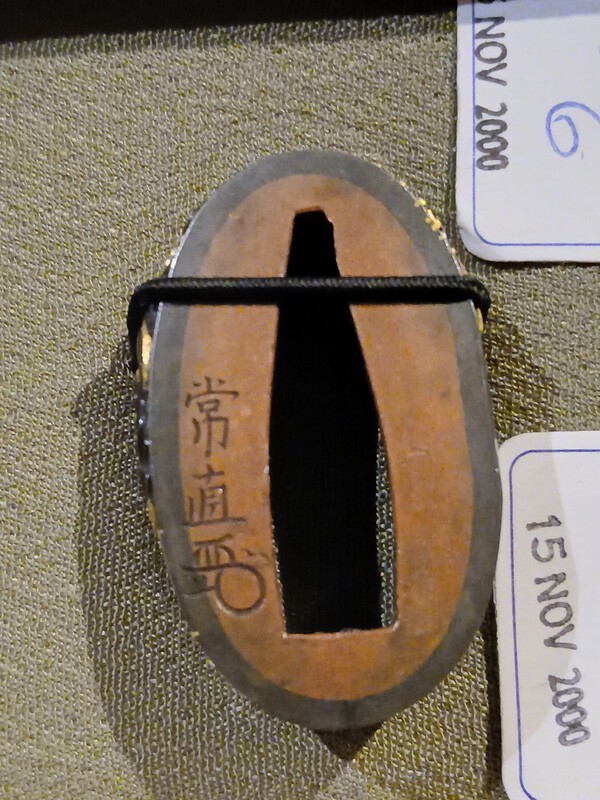 1 point
 -
I’ve found a link to the downloadable catalogue from Finarte, the auction house that Czerny’s is affiliated with. https://aste.finarte.it/uploads/auctions/502-a158catwebnew1.pdf1 point
-
Proving that some incredible swords can carry just the Bishu Osafune Sukesada signature. Here is mine in the same signature + date 1567 - some incredible utsuri in sashikomi polish Length: 71.5cm Curve: 2.5cm Width moto-haba: 3.22cm Thickness moto-kasane: 0.77cm Width saki-haba: 2.55cm Thickness saki-kasane: 0.60cm


 1 point
 -
Hi Vadim, when I said "雁金 karigane is a strange convention to express wild geese", I guess I meant that the two kanji 雁金 are a convention (do you not think *'goose/geese gold' looks strange?) which are used to express the idea of a) wild geese, b) wild geese designs, c) a stylized Kamon? I think it is a strange jump from 雁が音 to 雁金, jumping from the sound of their cries (lovely poetic image) to 金 with no relation to the feathered creature itself. Actually in English there is the story of the goose that lays the golden egg, so maybe there is some connection with gold! Perhaps I should have said: "雁金 karigane is a strange (to me) kanji convention which is used to express wild geese."1 point






















.thumb.png.4c5df79fec171b2dc4a23af38e280a4d.png)



This leaderboard is set to Johannesburg/GMT+02:00