FlorianB
-
Posts
436 -
Joined
-
Last visited
-
Days Won
2
Content Type
Profiles
Forums
Events
Store
Downloads
Gallery
Everything posted by FlorianB
-
Forget about my last remark, didn't read correctly Florian
-
I won't be a nuisance, but I stick to my statement, that - at least on one side - gourds (one of the many symbols meaning luck) are depicted- please compare with this picture: The mentioned roe pattern could hint to a former gilding or silvering. Florian

-
The KOGATANA blades serve as utilitarian knifes and thus the quality isn’t high in many cases. That’s why far more KOZUKA exist instead of KOGATANA. However there are also well forged KOGATANA with authentic signatures by the smiths who made them as a sideline to use up material. I think You will recognize those in the future with Your eyes trained. KOGATANA and KOZUKA don’t belong together inevitably and could be exchanged. Often the tang is modified to fit into another KOZUKA. Sometimes both are offered together to upgrade the attraction of moderate KOZUKA. Of course I agree with Steve to look for better pieces, it will pay off in the long run. BTW many years ago I started with KOZUKA, too, because I was interested in how the artists handle the extreme format. Florian
-
Hello Johan, these emblems are called KAMON or just MON and show the KIRI-motif. KIRI were popular and appear frequently. Yours are different in size so I persume there must be another probably smaller one in the space beside the larger one but fell off. The condition of the KOGAI is not the best either. On the right side gourds, on the left side a flag and a SAIHAI, a commanding baton are shown. Best, Florian
-
An appealling design of a gardening scene on a rainy day. The flower ornament looks like a peony (jp.: botan). Similar forms on an Akasaka-piece: Concerning school and age - IMHO maybe Myochin, middle to late Edo-period. Florian

-
There are a lot of Sukashi Tsuba showing a rotation of horizotal ornaments by 90 degrees. It’s the idea of the maker, mostly with regard to geometry. The suggestion of owls is intriguing, but my first impression was some kind of fruit, maybe a persimmon. Just another offer . Florian
-
The thing in the water is definitely a crescent, representing the reflection of the moon on the water. Another eyxample from Varshavsky-Collection: Best, Florian

-
You will note the ornamentation in the upper part of Mauro's Tsuba (also in some of the other shown tsuba) is similar to the ornament in question. It may be that some temple roof tops could fit to this form but IMHO I doubt a concrete reference to a certain temple. Sometimes an ornament is just an ornament - without a special meaning. But if You need an interpretation I would stick to the initial idea of a flower bud and sprouting leaves. Best, Florian
-
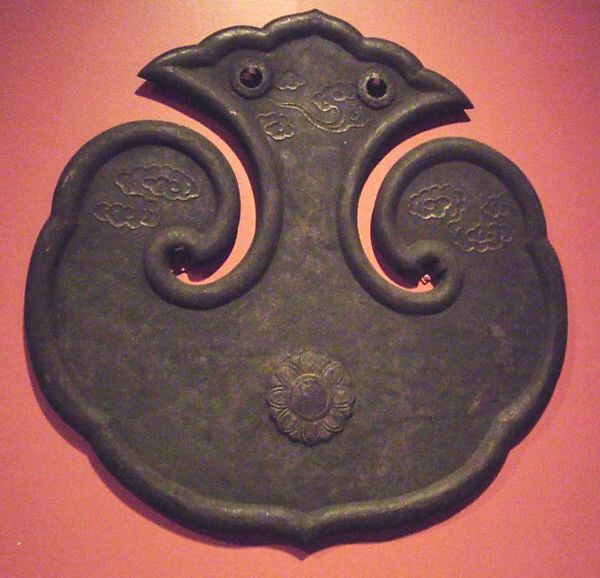
The lower ornament is a variation of an umpan 雲版 , a temple Gong. Best, Florian
-
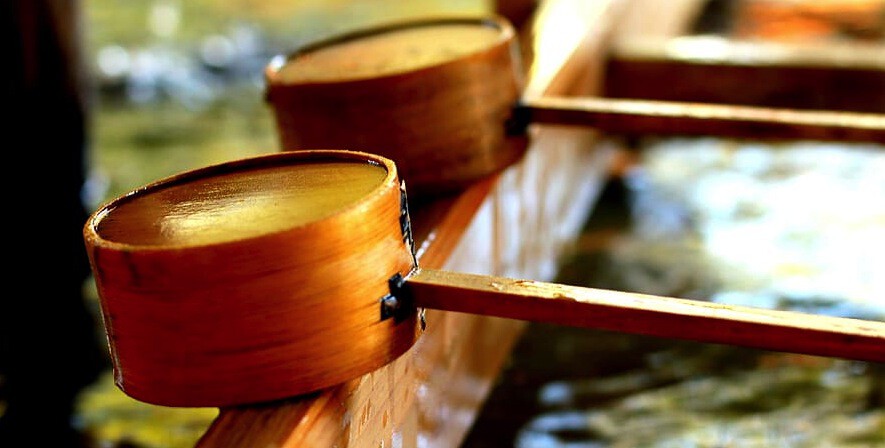
... and a short remark to the initial issue: The crossed objects left and right could be water ladles or hishaku. Just an idea. Florian

-
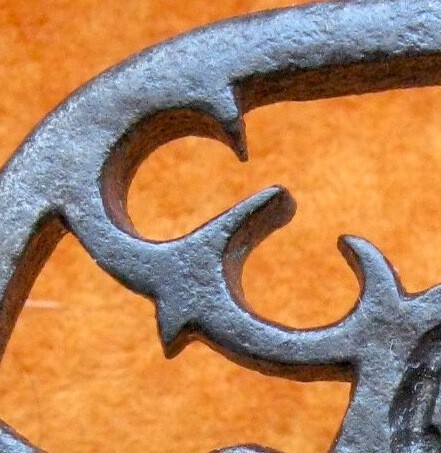
Adam, I see Your point, but I’am not convinced. Karigane on Japanese Tsuba show a lot of variations and I think artistic ideas must taken into account, not bound to realism. Here’s one from Sasano with a karigane on the right having even different formed wings: I doubt Karigane are geese everytimes, I think the general term “birds” would be more appropiate. Here’s a karigane with elongiated body or tail which looks like a bird of prey: As mentioned above geese play a major role in Japanese iconography, bats are only seldom an issue. Japanese art, however, is very tolerant concerning interpretation. Florian

-
Adam, interesting theory. I haven’t heard about this difference yet. Best, Florian
-
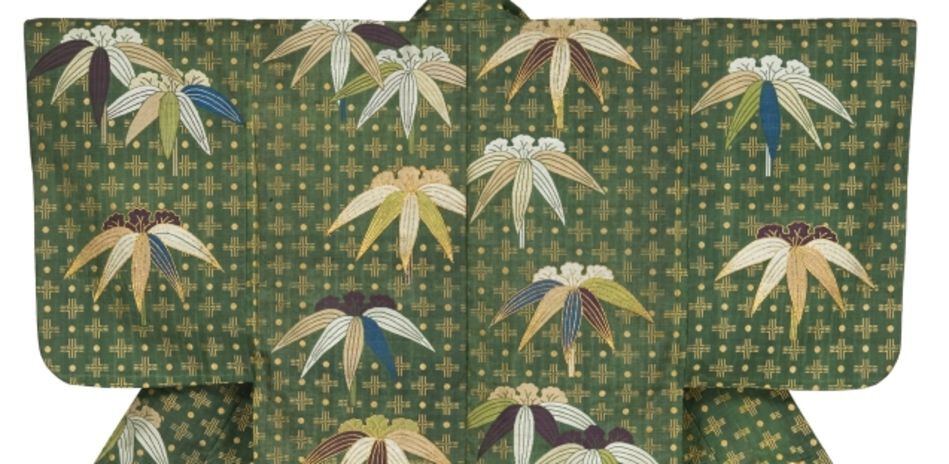
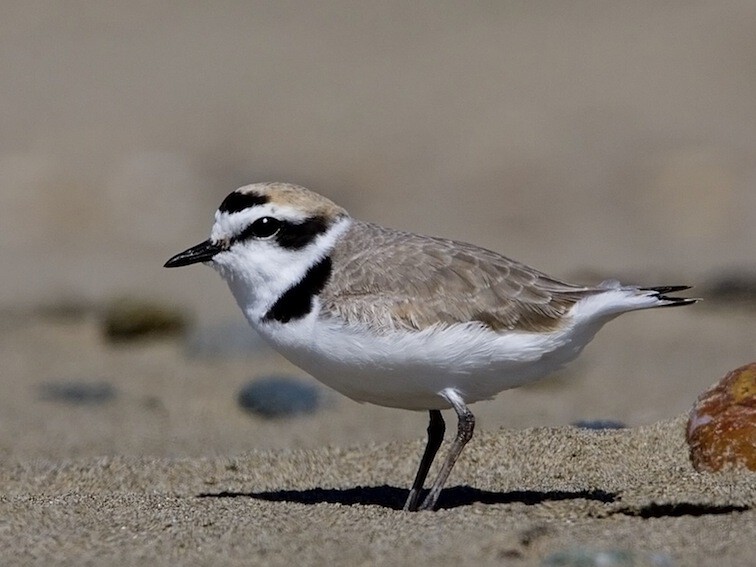
Hi, IMHO the pattern on the right hand side of the ura show Yuki Mochi Sasa, snowflake on bamboo, a traditional motif in a stylised way. Some examples: The bird in the lower part of the omote could also be a plover (chidori 千鳥 ) because of the connection with a stream or shore. Anyway, a very interesting Tsuba! Florian


-
Mr. Hoppen sells some Swords
FlorianB replied to BIG's topic in Auctions and Online Sales or Sellers
Although Mr. Hoppen’s offer seems a little bit unprepared it’s worth to have patience while waiting for pictures. All swords offered here are top-swords shown on several occasions at meetings. Wish I had the money to buy only one of those. BTW: There are two books published by the Nihonto Club Germany. The first one contains the the Sekishu Naotsuna Katana and the Tantos by Hosho and Motoshige. In the second Volume You find the Katanas by Ko-Aoe and Enju. Only the Miike blade wasn't published in here. Florian -
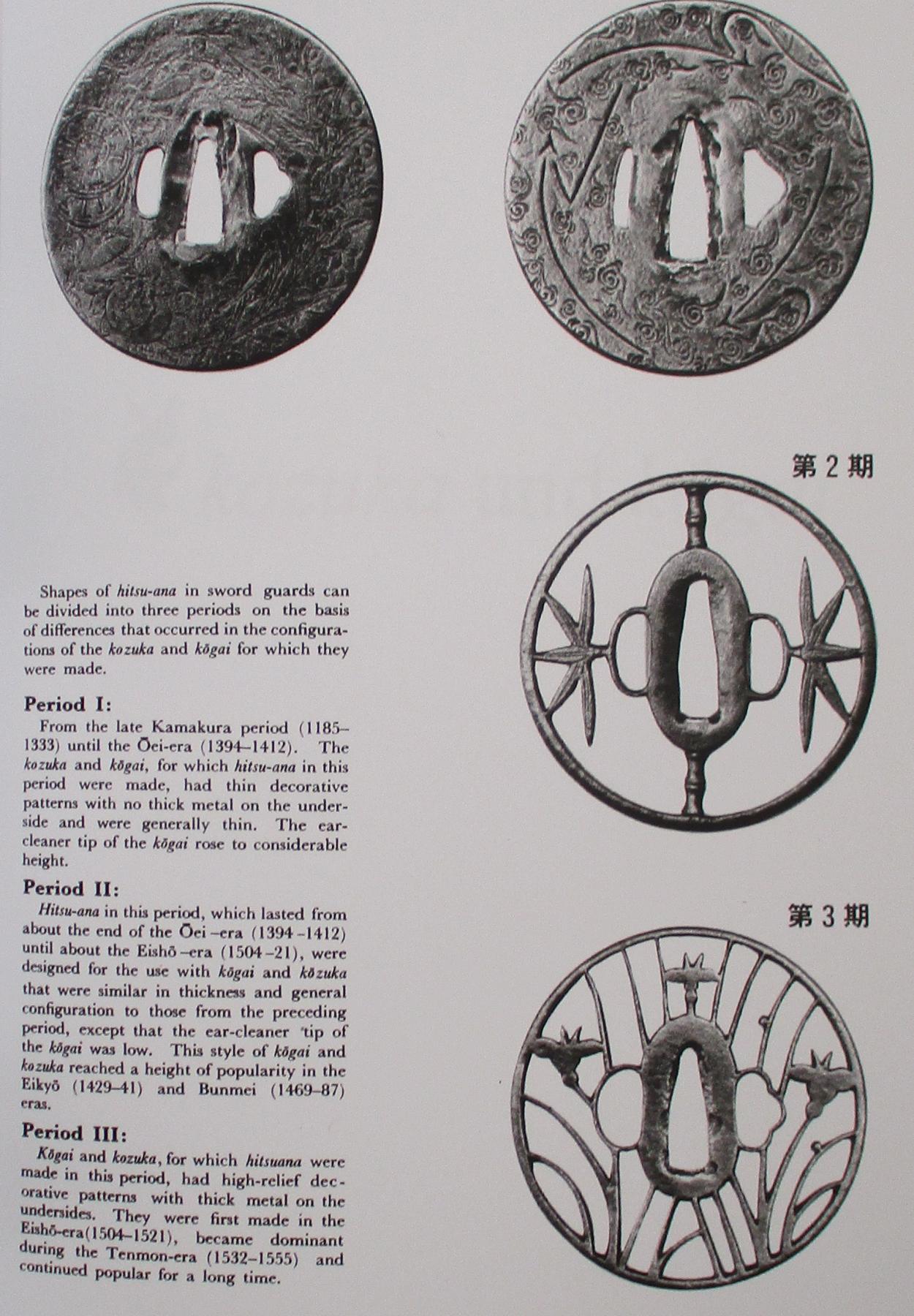
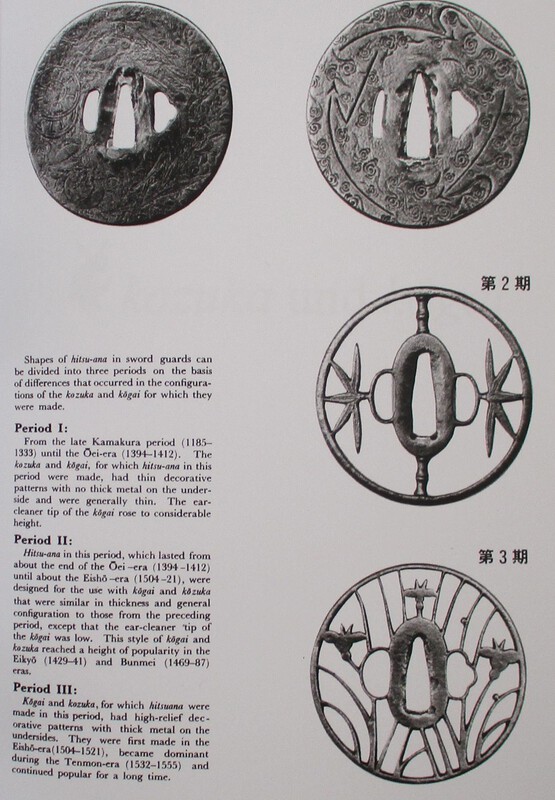
Another quotation from “Tosogu no Kigen”: The first period could be ignored concerning Kyo-Sukashi, due to the assumption they came into existance around Oei-Period. Curran, great piece! Any nearer details? Florian
-
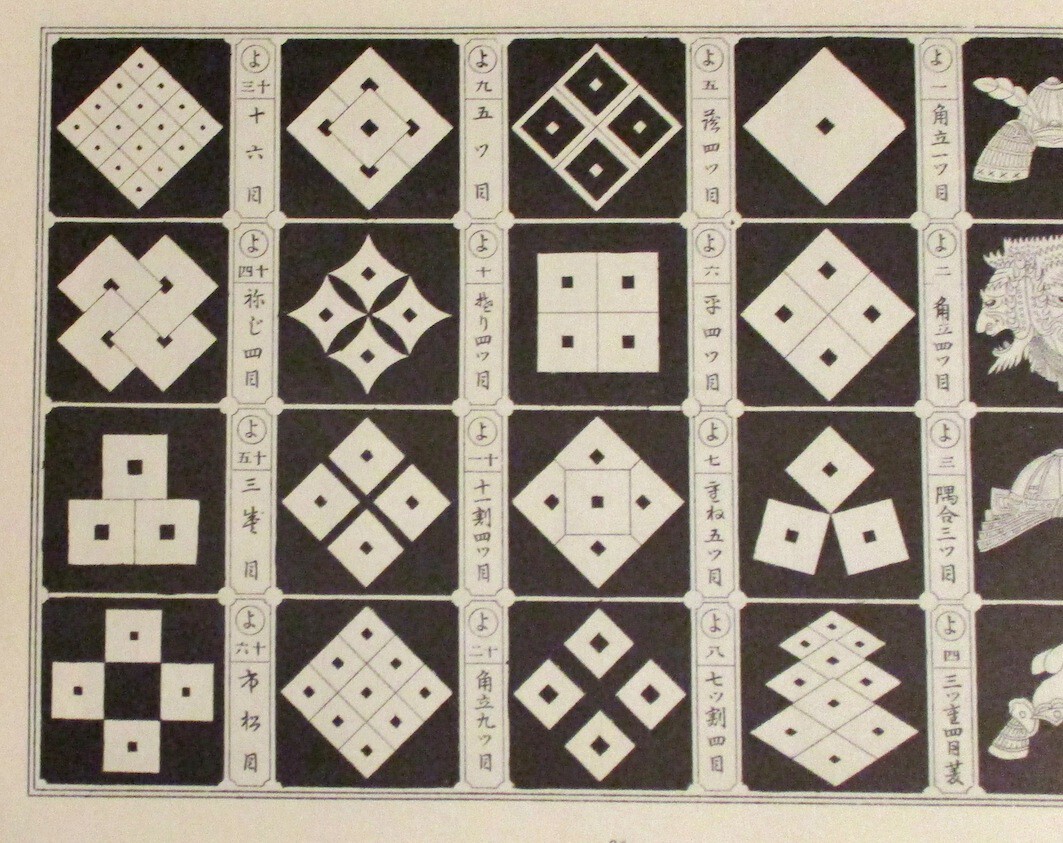
"Masu" is also translated with "growth" and thus it is a symbol for luck and success. In interlaced masu forms these wishes become multipled. Due to this meaning it makes sense to attach this particular design on tsuba. Here's an other example: Florian

-
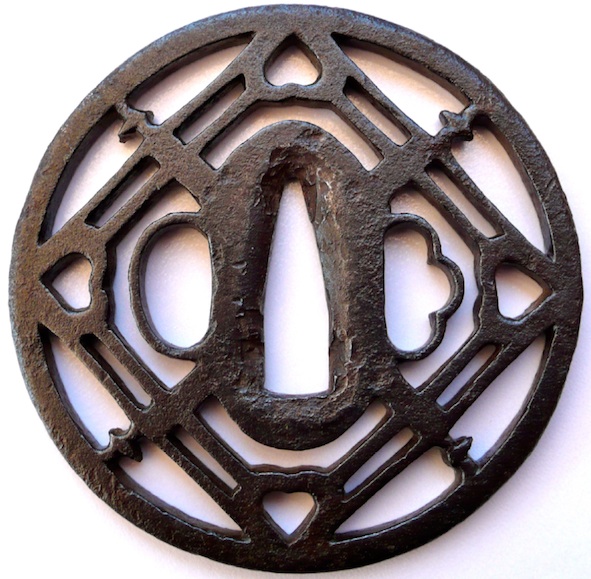
It is said that early Tsuba in general, not only Kyo-Sukashi but also Kanayama, Owari, Ko-Shoami, Ko-Kinko etc., have identical hitsu ana shape in half-moon-form while the kogai hitsu ana was replaced by suhama gata later. In Your case the Eisho aera is late Muromachi and in Sasano's books You find enough examples with suhama shaped kogai-hitsu-ana. BTW concerning Kyo-sukashi guards there are also pieces from Momoyama or early Edo-period showing identical shaped hitsu-ana on both sides on account of geometric design. Textbooks say also that Kyo-sukashi hitsu-ana have an oblong shape which is true but not the rule. There are Kyo-sukashi hitsu-ana in regular shape or even considerably rounded. Alas a generalization seems impossible so a lot of comparing is necessary to get a feeling for this topic. Best, Florian
-
IMHO a cross is at least a basic design, which could be found in tsuba frequently. Certainly it could be interpreted as a christian symbol. I have still no idea about the meaning of the prominent squares. These could be the clue if a christian background is intended. Slight irregularites in geometry maintain a livley design, if drawn by rulers a cross would possibly appear tedious. Florian
-
That was quick! Thank You, Florian
-
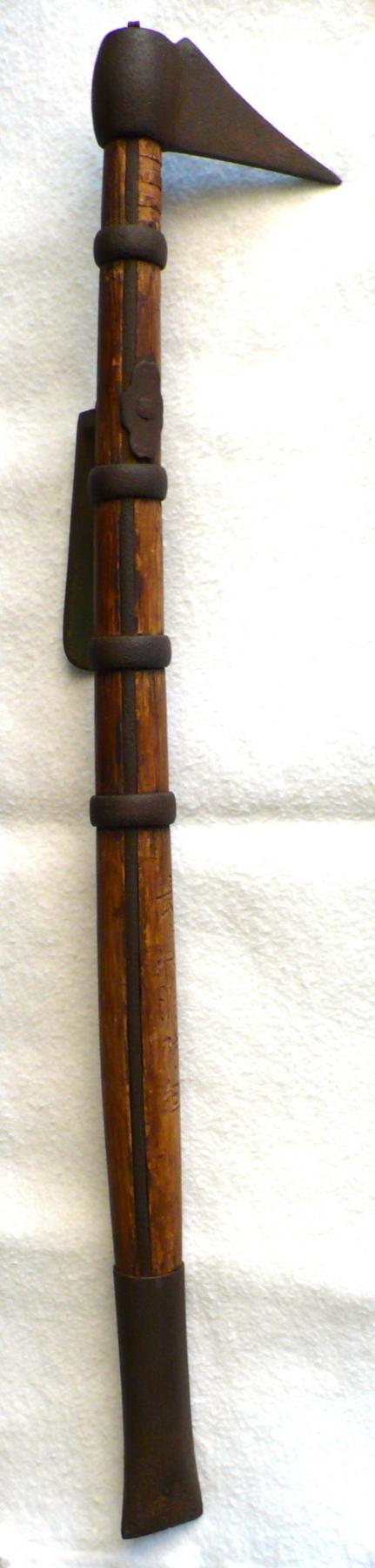
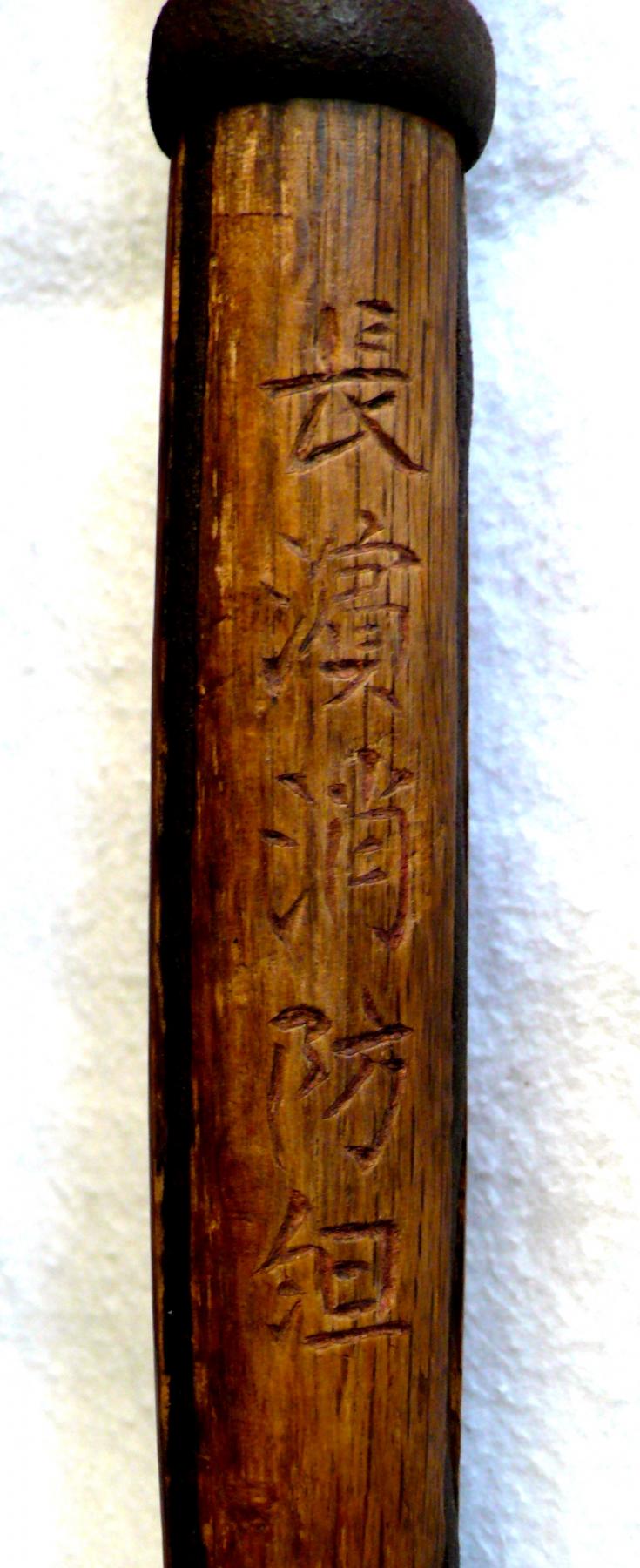
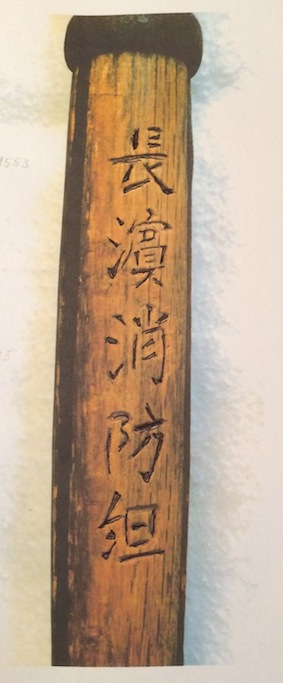
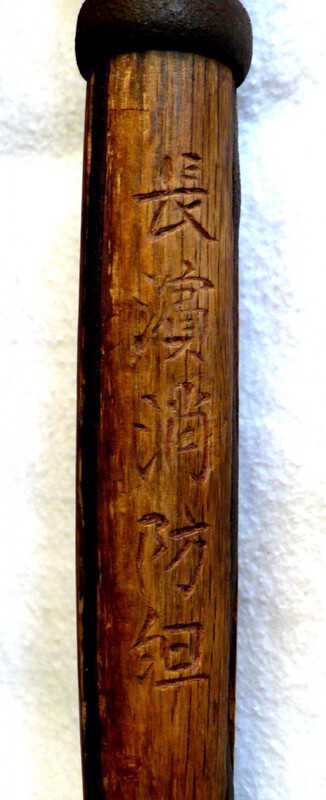
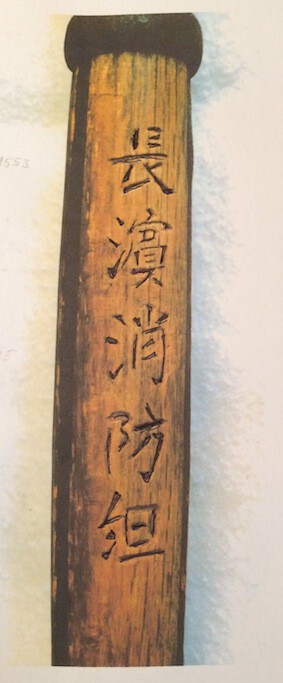
Hello, I need Your kind help in translating an inscription on a firebrigade tool called TOBIGUCHI. The owner (not me) provided me with the following pictures plus a photoshoped variation of the inscription which could be found in the lower half of the handle between socket and ring: Thanks in advance, Florian

-
Have a look at this one: https://www.aoijapan.com/katana-sesshu-ju-fujiwara-sadayukishinto/ An Osaka-Shinto-blade with two huge hagire (Mr. Tsuruta marked them on the picture). I wonder how does this blade (not very old and not by a famous smith) with fatal flaws managed to receive Hozon in the last year? Florian
-
I must admit I got a little bit confused by the wording of this texts (more to read on this site: www.shibuiswords.com/heianjosukashischool.html and www.shibuiswords.com/kyo-sukashischool.html) which seems to be indistinct here and there. So I hope to hear and see more about this proposition which deserves attention. Florian
-
Hello ladies and gentlemen, for all I know Heianjo-sukashi is the pre-Edo-period forerunner of Kyo-sukashi. Sasano’s written in his book “Tosogu no Kigen” that Kyo-sukashi (he does not use the term Heinajo-sukashi) came into existence in between Eikyo- and Onin-period (i.e. MIDDLE Muromachi). Now I read about another idea on the shibuiswords.com website ( www.shibuiswords.com/tsuba.htm#heianjo ), that Heianjo-sukashi and Kyo-sukashi are two separate schools working parallel since LATE Muromachi-period, the former closely connected with (or being part of) the Heianjo-zogan-school. According to this theory the workmanship of Heianjo-sukashi and Kyo-sukashi is similar and during the Momoyama period became more and more identical since then it was labelled only as Kyo-sukashi. Alas the article doesn’t illustrate the differences in their styles. Is this theory to be taken seriously? Thanks, Florian
-
IMHO “finer craftmanship” refers here not to quality itself but simply to thin sukashi lines, a trait of early Kyo-sukashi works, later they become thicker. Florian