Tanto54
-
Posts
858 -
Joined
-
Last visited
-
Days Won
7
Content Type
Profiles
Forums
Events
Store
Downloads
Gallery
Everything posted by Tanto54
-
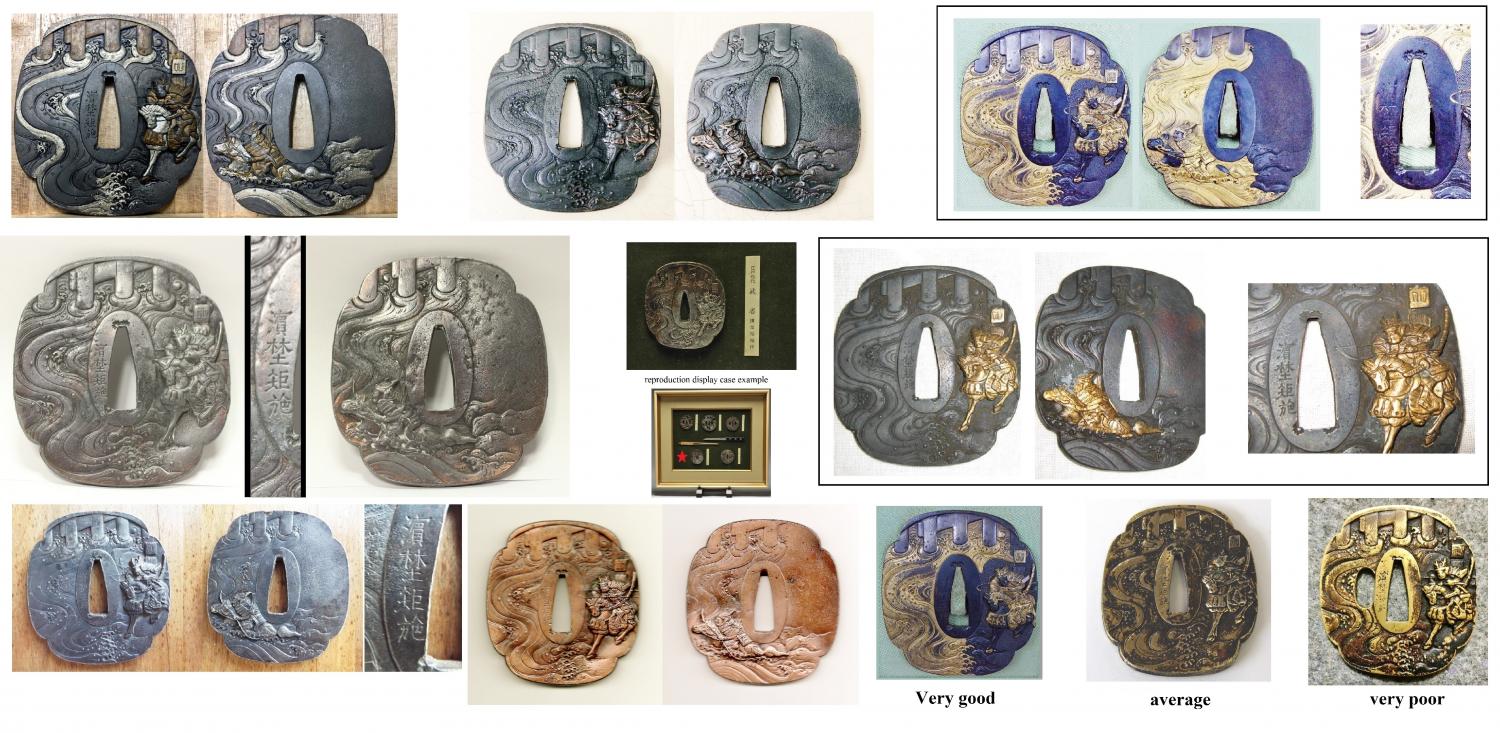
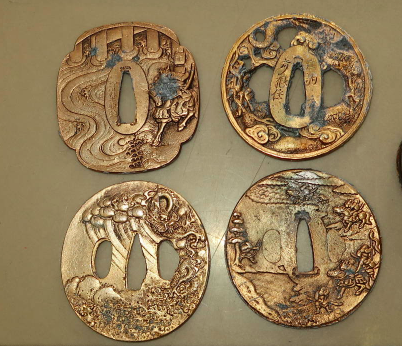
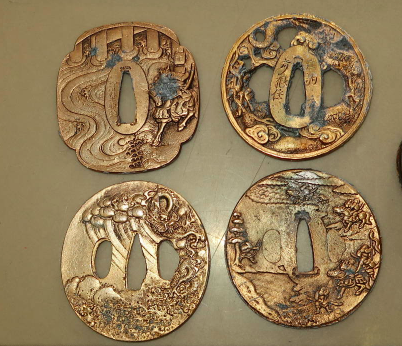
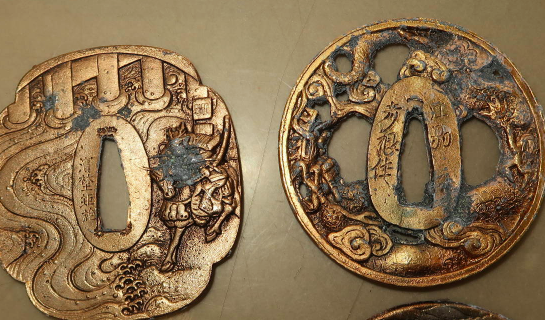
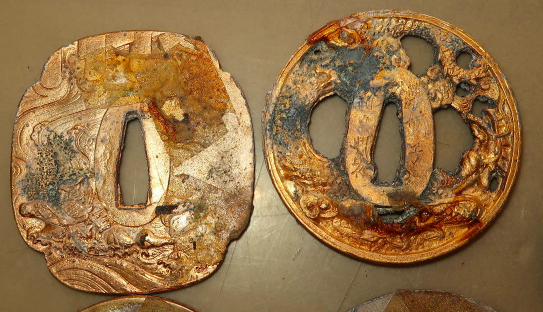
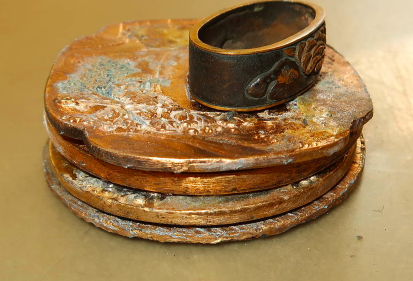
Here are some leftovers/rejects/partially finished fake tsuba that are being sold on Yahoo Japan right now. One of them is the same model that Dale has been following and he posted an excellent photo comparison page above (and reproduced below). These are clearly modern fakes/reproductions and are not antique or vintage school copies or utsushi. You can see the flash from the molding process. As Dale points out, these could be from a reproduction display and are now being sold as "tosogu" on Yahoo Japan. Dale's Page: From Yahoo Japan:
-
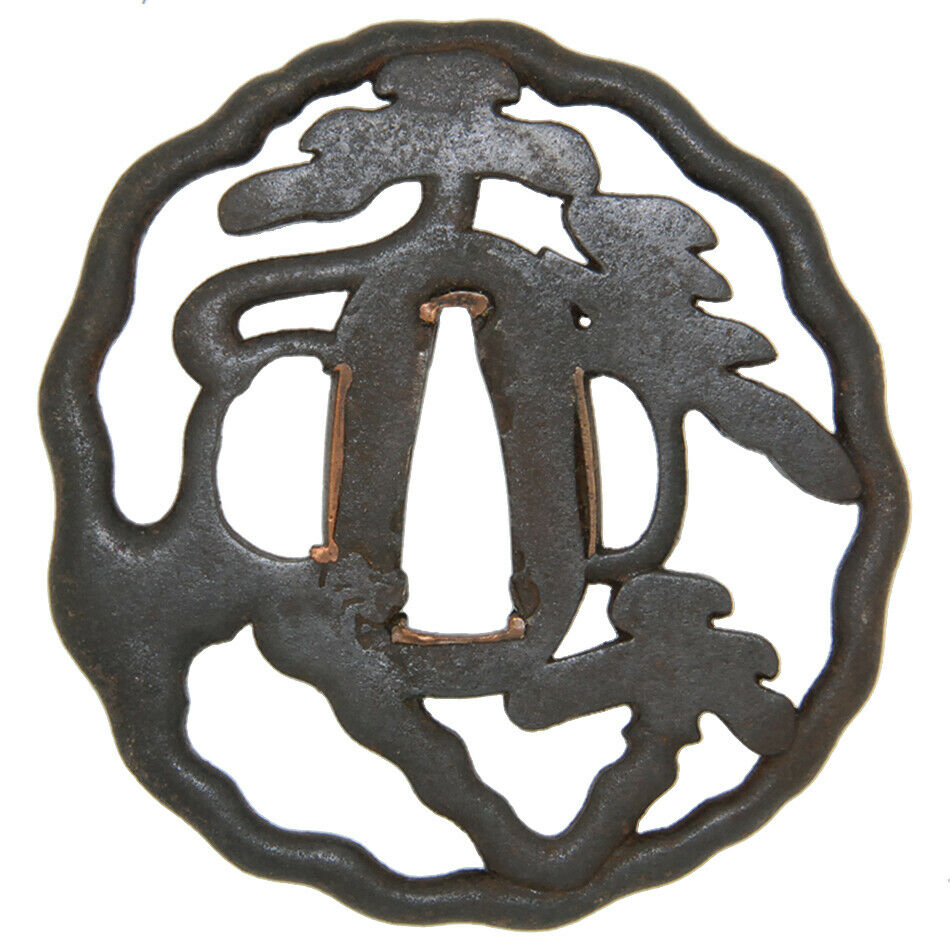
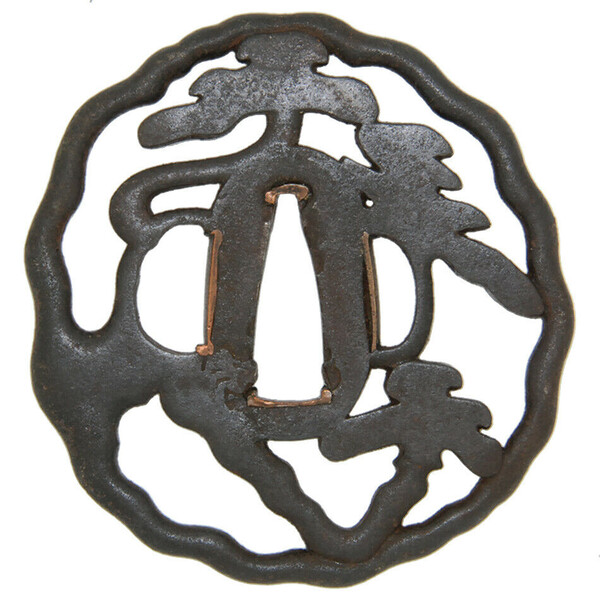
For those that like this kind of thing, noticed one for sale on ebay (not mine and I'm not related to it in any way...) https://www.ebay.com/itm/TSUBA-Japanese-Sword-guard-credibility-genuine-Antique-Original-limited-Matsu/114176467432?hash=item1a9572a1e8:g:uREAAOSw7elePaOV
-
Just a quick reminder that Japanese historically used paper for raincoats and umbrellas. They were coated with lacquer and/or persimmon juice to make them water-proof and strong, so the idea of a paper cover is not so unusual in Japan.
-
Very nice articles - thanks!
-
Following up on what Marius said, other parts of your sword (non-blade parts) may be signed too, like the tsuba (blade guard), fuchigashira (collar and pommel), etc.; however, the sword smith who made the blade would only sign the nakago (tang) as Marius said (however, if your sword is in shirasaya - a plain white/yellow wood scabbard, it will often have sayagaki or back ink writing on it that will include the sword smith's name - usually not in his handwriting but instead in some "expert's" handwriting). The other parts of the sword, if signed, are signed by the various makers of those individual parts (blade guard, etc.).
-
Dear Ray, As mentioned in my PM, I didn't expect to find them, but I looked in Lazarnick and Meinhertzhagen and couldn't find any matching signatures. Nevertheless, here's how I would read them: 1. MitsuTama/Gyoku or Kogyoku 2. Bo[?]taroichi 3. Mizuyama/Suizan 4.Narita/Nariyoshi 5. Gengyoku 6. Nanryu? 7. Yoshi/Kichi? 8. Hogyoku 9. Masakatsu/tadakatsu/seisho
-
I think that only someone who has never worn a sword would think that this could be used without a rim.... Without a rim, there would be too many places where it could catch on clothing (etc.) when being worn, drawn or used. It appears that some of the tail feathers may have been filed narrow as if to fit a furukin or after being cut from the rim. As for the metal going into the stand being too small as you said, couldn't it have been filed down like Orikaeshi-Mei (before or after it was bent down)?
-
Arrrghhhh!!! That hurts. Here's an old thread of many repurposed tsuba, etc. http://www.militaria.co.za/nmb/topic/21022-tsuba-oddities/?hl=repurposed&do=findComment&comment=214120
-
Outstanding & Congratulations!!
-
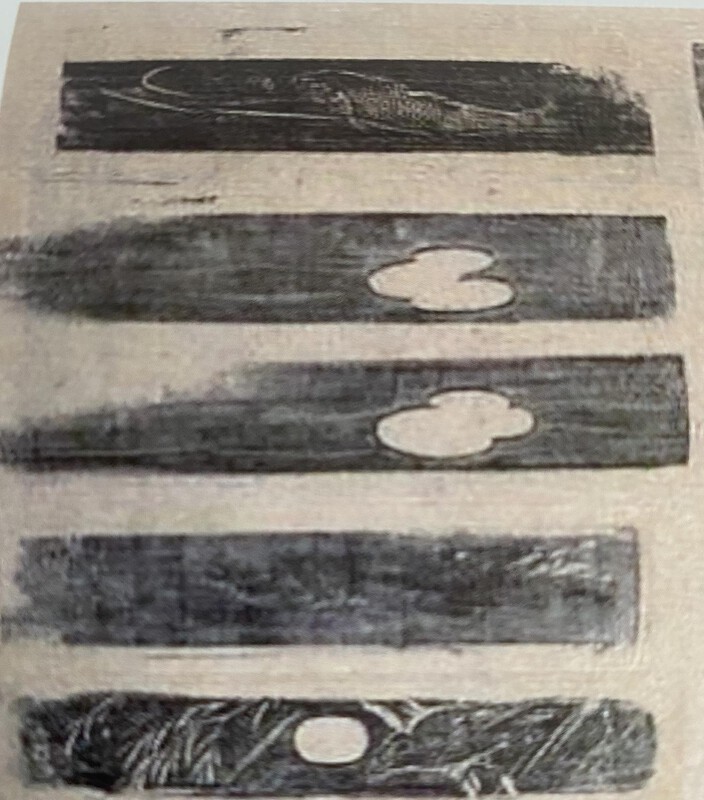
Here it is from Natsuo's sketchbook (looks like there may be another version out there too).
-
Matt, That's beautiful! Would love to hear more about how it "came out of hiding"...
-
Unusual Kaku-Mune - nice...
-
Hi Roger, In addition to the connection that Dale noted above (great story Dale!), the Japanese also believe that the Namazu can predict earthquakes. I remember seeing one in a tank at the top of the Tokyo Tower (years ago), and its purpose was to warn visitors giving them time to get out of the tower before an earthquake hit. In the case of your tsuba, because the Namazu is coupled with a gourd (or two), the meaning is the Zen Riddle that I mentioned instead of having to do with an earthquake.
-
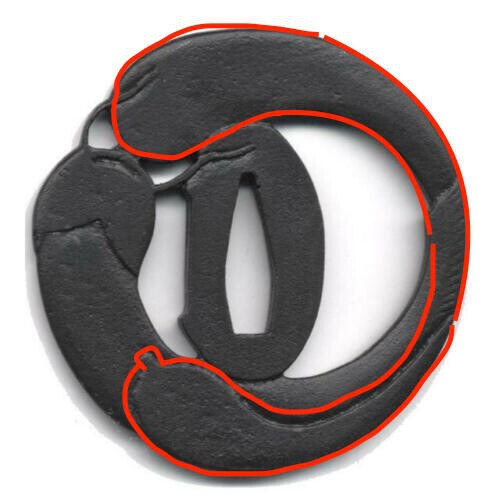
Hi Dale, Actually that's one catfish and one gourd instead of two fish. Outlined (poorly...) the gourd in red:
-
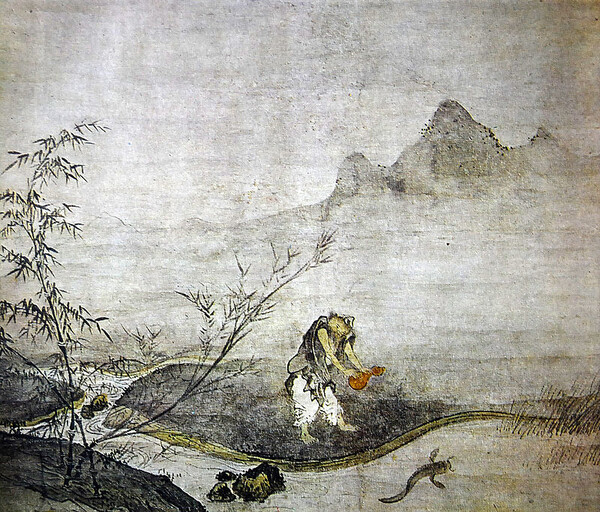
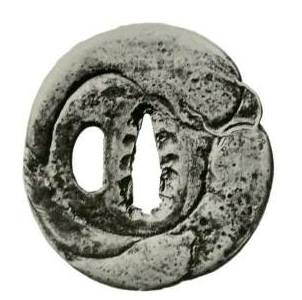
Hi Roger, The first tsuba has an interesting motif - Catfish (Namazu) and Gourd. It comes from a Zen riddle of trying to catch a slippery catfish with a smooth gourd. The image conjures up the idea of being slippery, elusive or overcoming an impossible task. Here's a National Treasure Painting of the Subject: Here's a Tsuba by Miyamoto Musashi of the Subject:
-
Dear Chris, I have to agree with Dale that it looks like your tsuba was cast or "drop forged" (not hand forged and the sukashi were cast in or made by a mold). I think the "dots" are porosity/casting bubbles, and I think Dale is correct about the other details that he points out indicating casting.
-
Outstanding Dale! Thank you again. Can you offer more about how you believe the molding and casting were/are done? The many fake gold menuki that I referred to appear to be made using wax-injected, vulcanized rubber molding combined with the lost wax method of casting (and that combo has only been available for about the last 40 years or so). I believe that some of the newer fake tsuba are being made that way too. I'm guessing that the older fakes are probably sand casting and the better, "middle period" and newer ones are "green sand casting". I personally think that the Kinko copies with all the added "iroe" are from the last 40 years and are not Meji, Taisho or early 1900's (don't remember ever seeing them in the US or Japan before the last few decades).
-
Dear Dale, First, thanks for your efforts to bring these fakes to the attention of our community. Second, two other areas that you may want to look at for multiple fake copies are the area of gold menuki and namban tsuba.
-
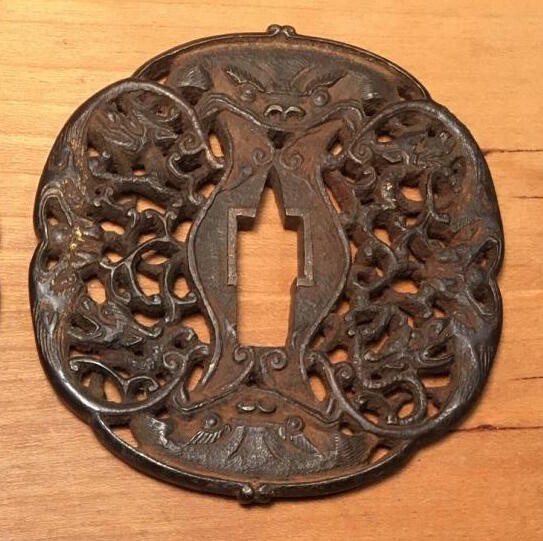
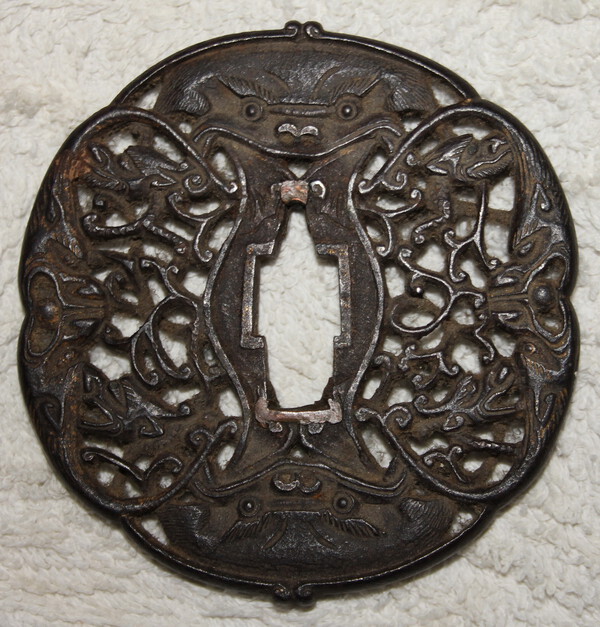
Dear Peter, BaZZa's tsuba is almost identical to one of yours implying some kind of molding was used to make both of them (instead of being chiseled and filed to a similar model). Are they sand cast? Some of the small areas where they are different appear to be places where a sand casting might have failed or caused differences. Perhaps the method of manufacture will assist you in determining the true country of origin.
-
Hi BaZZa, I see a total of 8 dragons, and instead of holding the tama in their claws, I see two dragon heads coming together on each side (total of 4 dragon heads) and holding a tama (one on each side at 3 & 9 o'clock) in their mouths. Interestingly, the 4 dragons on the interior are all oriented the same way (up) instead of the lower two being upside down as is typical on these configurations.
-
Dear Peter, Can I play Devil's Advocate? As you probably know, the Japanese copied and incorporated Western influences into many of their arts: lacquer, painting, prints, ceramics, etc. In each case, they inevitably adopted and executed the Western aspects with very Japanese techniques - always exacting and precise. Most of the "namban grouping" of tsuba do not seem very exacting or precise, and they do not appear to incorporate Western influences in a manner that the other Japanese arts did. Furthermore, all of the non-namban tsuba that incorporate Western influences that I have seen, exhibit the exacting and precise techniques and balance that we usually expect to see in tsuba. Those thoughts make me believe that while they may have been made in Asia, most of the "namban" tsuba were not made in Japan. What are your thoughts on that?
-
The tsuba shows Asahina Saburo also known as Yoshihide (and oni instead of kappa).
-
Thanks Franco!
-
Love the appropriately placed hoof that makes you look twice! Awesome humor.
-
Is Covid 19 going to kill the NMB?
Tanto54 replied to Peter Bleed's topic in General Nihonto Related Discussion
Bruce, I agree with much of what you've said, but as any good instructor/mentor knows: there's a difference between "guiding" and "spoon feeding". I've never seen you ask for "spoon feeding" before... When a noob comes saying "what's tamahagane" and "why do they fold the steel" or "what's the purpose of the squiggly line along the edge", we should probably guide those noobs to books and the search function on NMB instead of answering all their basic questions for them. The noob who comes with "I've searched for this by looking for _______" or "I think I've got one of the five kanji, can you help with the other four?" deserves a little more in my opinion.... And long live the NMB!