
Soshin
-
Posts
2,910 -
Joined
-
Last visited
-
Days Won
3
Content Type
Profiles
Forums
Events
Store
Downloads
Gallery
Everything posted by Soshin
-
I don't think you can get that level of quality craving with such a heterogeneous iron displaying much activity. As to the other points I think Henry is correct. The craving quality is good but the rim is poorly done and well as the shape of the seppa-dai. Both of these things I feel you often seen in late Edo pieces. I do need to restate my opinion and that is overall the tsuba is good due the quality of the cravings but in some respects the tsuba is a "mixed bag" and the quality not consistent. Another possibly is that the tsuba was not made by a professional tsubako but someone who could just do very detail cravings. This would explain the inconsistency in the quality of the tsuba. Just my two cents again. Yours truly, David S.
-
Hi Florian, The detail and deepness of the carving of the dragon is dynamic and intricate the first thing that points to the above average quality. This was noted above by others as well on the message board. The carving of the water waves is also good enough to produce the effect of obscuring parts of the dragon's body indicating that has just about to emerged from the "monster" wave to wreak havoc. Generally speaking there is master work from all time periods but the overall quality of pieces from the late Edo Period is fairly poor compared to earlier times in the Edo Period. You can get an idea of this by looking at many tsuba and start understand the characteristics that aid in determining their age. Having books are also helpful. A more detail discussion is best left to another thread as it is a complex topic. Here is an example of a late Edo period masterpiece produced right at the end of the Edo Period (circa 1855): http://kodogunosekai.com/. Yours truly, David S. Edit: Fix a funny typo between the words carving and craving.
-
Hi Florian, If a student collaborated in making the tsuba often it would bare two mei on the seppa-dai. I have one tsuba like this in my collection and have seen a few others like this as well. I agree the rim does look a bit unfinished or it could of had a fukurin or soft metal cover (like shakudo or copper) that was lost at some point. Overall I still think it is a nice tsuba and above average for the time period it was made. Yours truly, David S.
-
Dear Florian, Nice tsuba the low relief craving is really good. The dragon looks evil and angry possibly coming out of a tsunami wave. Could you show a photo of the tsuba rim? The style reminds me of some of the better work during the late Edo Period and thickness of the plate also points to that time period as well. Thanks for posting the tsuba for discussion. Yours truly, David S.
-
Sorry Jason G., I should have been clearer in my statement. I was only referring to the tsuba you started the tread with and wanted to identify. Yours truly, David S.
-
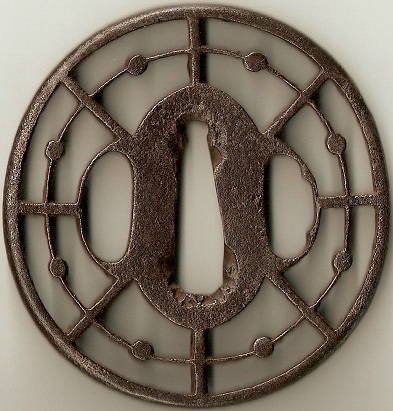
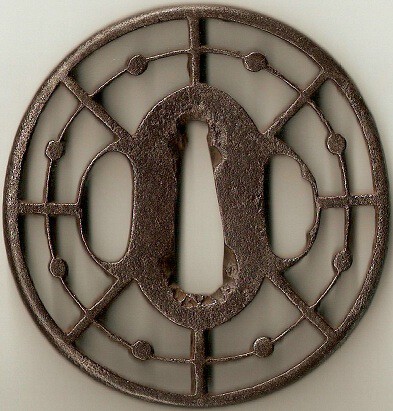
Jason G., I think Grey's and Lorenzo's and everyone else comments about the tsuba in question are correct. Your tsuba is a modern cast copy. Due to the low quality I would say likely it was made in China or Taiwan. Here is a tsuba from my collection of a similar sukashi (open work) design. Notice the differences discussed by Grey. I think my tsuba is a Shoami tsuba and dates to the late Edo Period. I hope you find the information helpful. Yours truly, David S.
-
I would agree with Ford about the attribution to the Kyoto based mainline Umetada school. The overall shape and rim I think indicates Umetada school as well as the use of gold inlays. The middle Edo Period also sounds reasonable as to the tsuba age. Yours truly, David S.
-
I would agree with Ed those type of inscriptions about what iron was used to make the tsuba are rare but are existent. In the recent Robert E. Haynes book focused on his study collection he provides an example if I remember correctly of such a tsuba. Now if the inscription are really truthful is another story. Yours truly, David Stiles
-
Chris, I don't think the website you site in your original post is really that helpful in identifying your tsuba. The website I provided has much more helpful information for the purpose of identification. Popular designs on Sanmai tsuba were often reproduced from the Momoyama on through to the Edo Period with popular designs like a dragon often being repeated. In regards to a fukurin I have seen them on some Sanmai tsuba and not on others. The feature is not characteristic of the group but the construction of the plate and how the design is created are critical characteristics of the group. Just my two cents on the topic. Yours truly, David S.
-
Franco, The article you linked to is consistent with my understanding. Ko-Kinko is a general category for soft metal tsuba dated before the Edo Period. The date 1700 and Ko-Kinko classification doesn't make much sense together. Edo period soft metal tsuba dated from about 1700 would be classified as just Kinko. Chris, Does you tsuba show layers in the inside surfaces of the nakago and hitsu-ana? If so then it could be a Sanmai tsuba which is constructed of three sandwiched plates of soft metal. This construction can be seen on the interior of the nakago-and hitsu-ana. The plate decoration is done by a repose technique, working the design from the back of the plate, sometimes hammered into a pattern mold. Some Sanmai tsuba will have the exact same design on both sides (the same plate design being used on the front and back); others will have different designs on each side of the tsuba. The plates are normally of floral, scenic, dragons or mon design. Some sanmai tsuba have Goto style designs. Commonly the plates will have some type of gold wash on areas of the design. I think you tsuba like the one listed in the website is a Sanmai tsuba assuming layering can be observed along the inside surfaces of the openings of your tsuba. Here is a good article about Sanmai tsuba: http://home.earthlink.net/~steinrl/tsuba/sanmai.htm. Yours truly, David S.
-
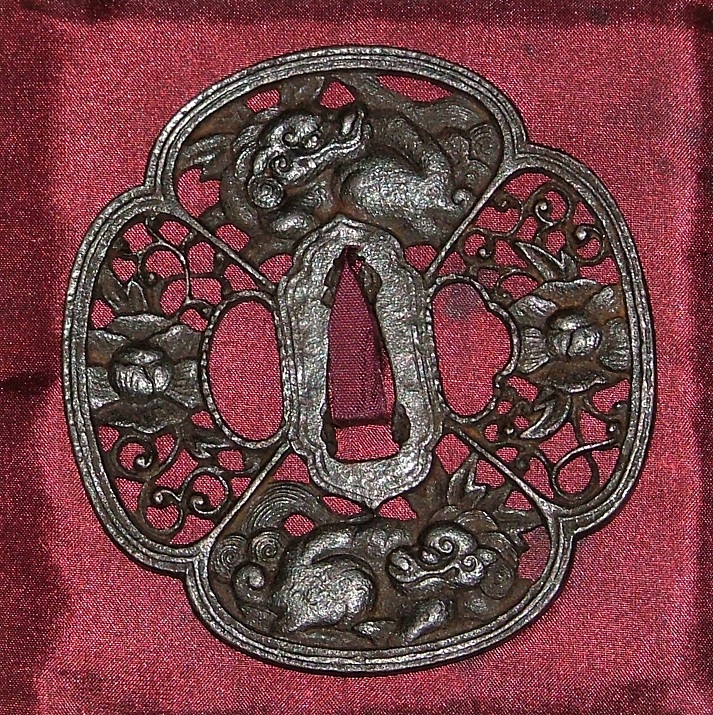
Hi Mariusz K., Not sure as to the tsuba attribution or even the age. The ryo-hitsu ana look like they would be characteristic of a early tsuba possibly Momoyama Period. The thickness of the mimi and lack of tekkotsu might indicate a Edo Period tsuba. Overall I like the tsuba and the sukashi design is well done. Thanks for sharing. Yours truly, David S.
-
Hi Markus S., I checked the UK and its says the following: The book is also not up on Amazon.com webiste as I checked there first as I live in the USA. I am really interested in a book like this as it will help improve my Tosogu vocabulary. Since the book is completed I am hoping this means more time for you to translated the tosogu articles in the monthly NBTHK Token bijutsu magazine. :D Yours truly, David S.
-
I would agree with Mark G. The fitting look nice but the ito or whatever that is on the tsuka doesn't looks like it is in very good condition. The redoing of the tsuka would make the koshirae look really nice in my opinion. Yours truly, David S.
-
彦次郎 (Hikojiro) was the personal name of 3rd generation master Umetada Myoshin and would sometimes sign mei using it. He was the son of Umetada Myoju and was head of family from about 1615 until 1648. The working period of Shigenaga (Myoei) Myoju's younger brother was a little later then Myoju and overlap with Myoshin working period. I am getting most of my lineage information from four issues of the NBTHK Monthly Magazine focused on the Umetada school. I find it interesting and confusing that in Tsuba An Aesthetic Study by Haynes and Torigoye that the name Hikojiro was also used by Myoju. It goes on to state that Shigenaga was Myoshin son and 4th generation master. This is a little different then what I am reading in the translation of the NBTHK article which has Muneyuki as the 4th generation master. Two generations working on the same tsuba or Nihonto is often seen. Thank you so much for the transliteration help of the long mei. Yours truly, David S.
-
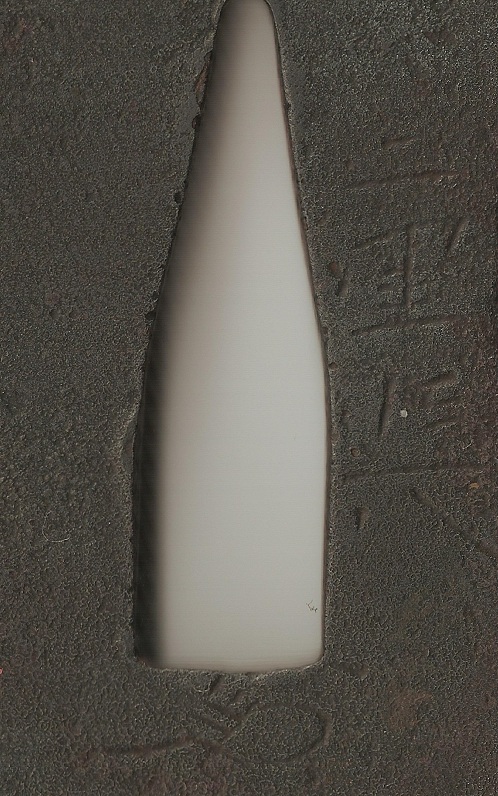
Hi Everyone, I have this tsuba new in my collection as a Umetada school study piece and have taken the time to translate the mei and research the lineage of the Umetada school. I would like to have some knowledgeable feedback by message board members about my transliteration of the tsuba mei. The tsuba as been in a fire in the distant past and I not sure if it has affected the mei but it has made an impact on the consistency of the patina and surface. Omote Right Side of Nakago-ana: Yamashiro Kuni Nishijin Ju 山城國西陣住 Omote Left Side of Nakago-ana: Umetada Shigeyoshi 埋忠重義 Ura Right Side of Nakago-ana: Ni Shigenaga [Kao] 二重長[。。。] I was thinking that the dual mei would indicate and the tsuba was made by two artisan namely Shigeyoshi and Shigenaga. Both were members of the maintain line Umetada school in Nishijin (western camp of Kyoto) during the early Edo Period right after the time of Myoju. The ko-sukashi designs on the tsuba is very similar to designs seen on a tsuba made popular by Umetada Myoju. I need the feedback to help advance my study of this tsuba as well as the early Umetada school in general. I don't have an commercial interest. Thanks everyone in advance for the help. If you require any additional information please let me know. Yours truly, David S.


-
Hi Edward G., I can't offer any more information about the style or motif then you already have. One thing I can offer is an opinion and mine is that the craftsmanship of the whole set is wonderful. Could you provide a close-up of the habaki? From the indirect photos the Habaki also looks like it is of a high level of craftmanship to match the other fittings. Thanks for sharing. :D Yours truly, David S.
-
As John S. has already stated I don't think any mass production of these type of things was accruing any time during the Edo Period. The technology just was in place in Japan until after the beginning of the Meiji Period to support mass production of metal fittings or handicrafts. Popular styles and themes were established in the Momoyama Period or earlier and then were copied and interpreted in different ways all throughout the Edo Period with different degrees of success sometimes even across different schools. You can start to see this if you study enough pieces and I find this fact about Japanese art very interesting. Yours truly, David S.
-
Hi John B., It sounds like a interesting idea. As long as no back scratching is done with a Nihonto... My attempt at some bad humor. I just wanted to introduce myself to the large NMB community after having gained so much from being a member since 2009. I also enjoy working on my website and wanted some more feedback about it. Yours truly, David S.
-
This is a much delayed introduction as I have been a official member Nihonto Message Board since 2009. This is also upon request Mr. Ford Hallam. If this is not the right location for such a introduction thread Brian or one of the other moderators please move my thread the correct forum. I have started to update a website provided by my ISP to talk more about my interests and hobbies. I have included the link it at the end of my message signature. I will be updating as often as I can with more content about myself. I have a professional background in the Biological Sciences as well as biostatistics, statistical data analysis, and laboratory quality control. I am currently working for a genomic services company in the Washington, DC metro area but with work experience as a federal employee and contractor in the past. I have been interested in Japanese culture, art, and history since college around 1999 and started collecting Japanese art in 2001. I have traveled to Japan four different times in the last five years on long vacations to help enhance my understanding of Japanese language, history, geography, and culture. In 2008 I gotten ride of my small Nihonto collection in favor of a more serious approach to collecting of fine tosogu. I would generally regard myself as a specialist collector in the realm of tosogu as I have a deep interest in collecting and discussing pieces that contain cultural references such as religion (Buddhism and Shinto) and original Japanese or imported Chinese folktales. The focus of my collection are iron tsuba of the following schools/groups Yagyu, Owari Sukashi, Nobuie and copies, Yamakichibei and copies, Tempo, Satome, Katchushi, and Tosho tsuba. There are also some Shoami, Namban, and Umetada tsuba I like as well. This is in additional to the normal discussions of connoisseurship which include classification (historical period, geographic location, and tradition) and assessments of craftsmanship/artistry. I have been a member of the American Branch of the Nippon Bijutsu Token Hozon Kyokai (NBTHK) since 2007 and a member of the Mid Atlantic Token Kai (MATK) since 2003. I also enjoy Japanese martial arts in my free time away from work have been active practicing for four years. I am looking forward to many intellectual conversations about tosogu, Japanese history, art, and culture. As well as an analysis of the finer points of tosogu connoisseurship and a free exchange of information allowing members to build better collections. Feel free to contact me any time via private message on this message board and thank you for reading this long-winded introduction. :D Yours truly, David S.
-
Here is a link to a very interesting Edo Period Nanban tsuba in Japan: http://www.e-sword.jp/sale/2011/1110_6021syousai.htm. As a main feature of the Nanban tsuba is the VOC logo for the Dutch East India Company. I really like this Nanban tsuba but it is now sold. Yours truly, David S.
-
I know that some Momoyama Period Nobuie tsuba had signs that the tsuba was intentionality cut by a sword. Here is a link to the website of a Nobuie tsuba which a test cut performed on it: http://home.earthlink.net/~jggilbert/ono.htm. By the nature of how the cut was done the tsuba was not mounted on another sword at the time which indicates that it was a test cut. Thank goodness test cuts are no longer done on original Nobuie Yours truly, David S.
-
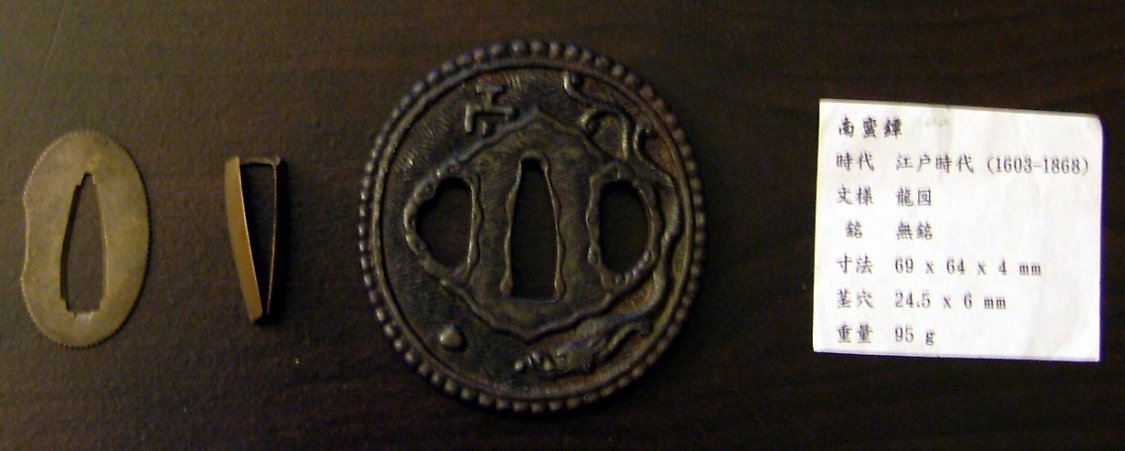
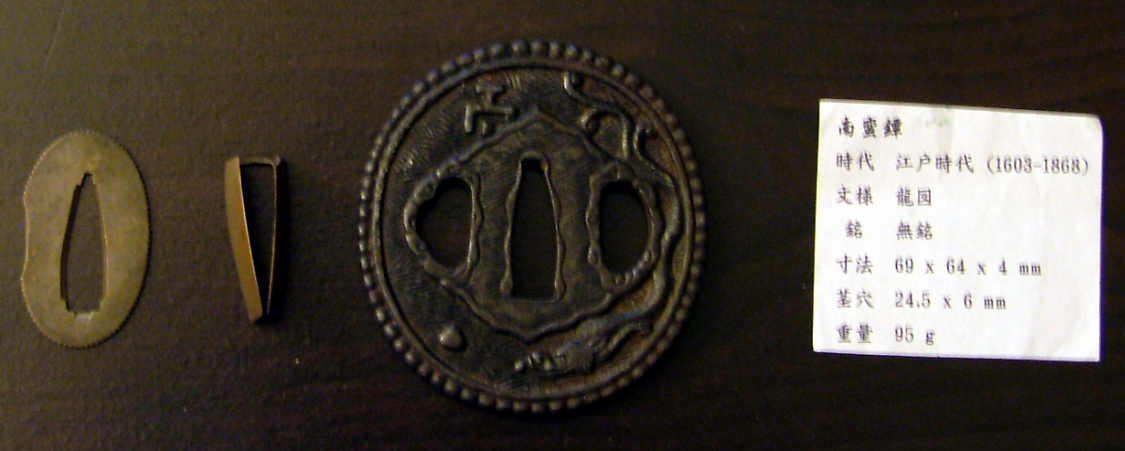
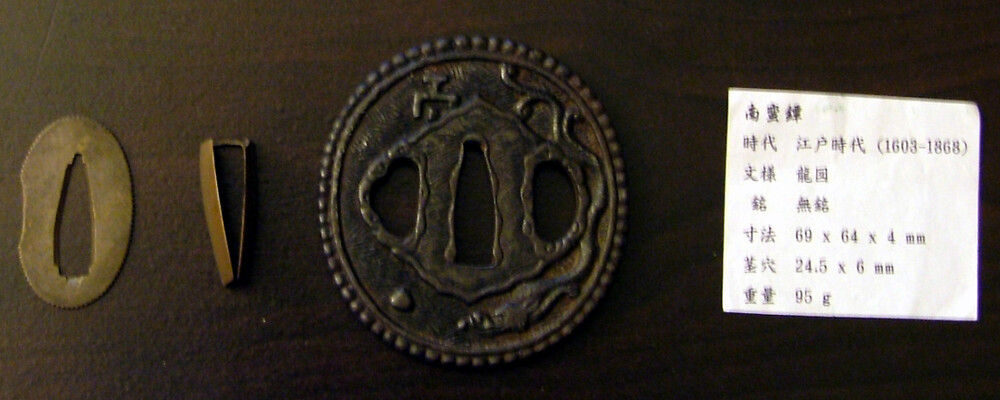
Here is a poor cast iron Nanban tsuba from the Meiji Period I remember selling a while ago on eBay. It came with a habaki and seppa that fit the tsuba. The tsuba example on the book above looks like the nakago-ana has been modified to fit a western saber. I remember seeing a similar type nakago-ana on a Nanban tsuba at the Florida Token Kai this year. Yours truly, David S.
-
Thanks John for the information. I should pick this book up some time soon as I have a deep interest in learning more about Nanban tsuba and collecting them. The three issues of the NBTHK Token Bijutsu magazine I have about Nanban tsuba hasn't been translated by Markus S. of the NBTHK-EB yet. Yours truly, David S.
-
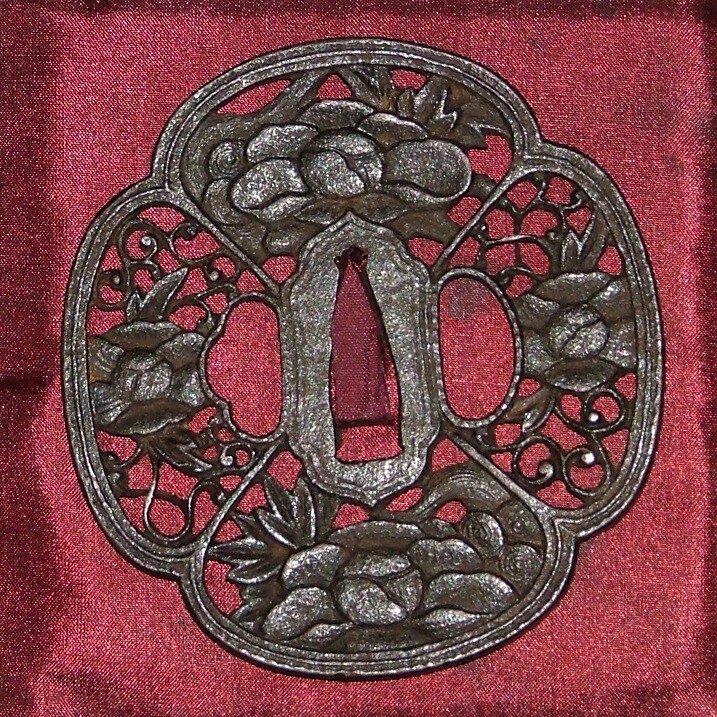
Its a really nice kinko Nanban and would make a nice addition to the collection of anyone who likes Nanban tsuba. On a related note here is some good photos with flash I did of my tsuba that I started the the thread with. The third photo shows the thickness of the rim and the 3D nature of the low relief carving that is wonderful executed. Also some fine granular tekkotsu can also be observed along the rim but I don't have the camera to capture it. I don't think the tekkotsu were intentional by the artisan and is likely due to just natural variations in the forged iron. I came across this recent book on Amazon about Nanban tsuba: http://www.amazon.com/Namban-Group-Japanese-Sword-Guards/dp/1554043654/ref=wl_it_dp_o?ie=UTF8&coliid=I3EVL67AM8RHJ1&colid=ANXGUP86KQV6. Has anyone ever read it? Thanks again everyone for the discussion. Yours truly, David S.


-
Hi Grey, I think some of the later poorer Nanban tsuba were made of cast iron circa the Meiji Period. Here is an example I once owned and I later sold as a Meiji Period Nanban style cast iron tsuba. It had a similar casting seam along the mimi as in photo number three of the tsuba listed on eBay. My tsuba was mounted on a wakazashi as I had a matching seppa and habaki along with the tsuba. The wakazashi that it was mounted on likely had rusted apart as it had come out of Japan. I even include the collectors tag he was thinking it was late Edo Period but I dated it even younger. Yours truly, David S.