
Soshin
-
Posts
2,914 -
Joined
-
Last visited
-
Days Won
3
Content Type
Profiles
Forums
Events
Store
Downloads
Gallery
Everything posted by Soshin
-
Just wanted to bump this thread up about my write up I am doing for my new Saotome tsuba. I was reading in Sasano's second book "silver dust cover" that he believed the mushroom matsutake in Japanese characterized by rapid overnight growth and lack of roots symbolic. The examples he sits are mostly Ko-Tosho and Ko-Katsushi tsuba from the Kamakura and Muromatchi Periods. As I have been reading a book on Samurai history could this be somewhat of a mild form of social commentary of the Kamakura and later Muromatchi Bafuku? While I would date my tsuba to the late Muromatchi Period the same symbolism could be in play here as the mushroom shape is done in a similar manor as the Ko-Katsushi tsuba examples from the Muromatch Period. Just some questions and food for thought. Yours truly, David Stiles
-
Hi Ed F., Q86 is a nice Ko-Kinko tsuba likely dating to the Momoyama Period. I don't think it is Goto. If you have seen examples of Ko-Goto or Goto tsuba you would know that I mean. I mean this with all due respect. Signs of what I think is worn black lacquer can be observed on both sided. These type of tsuba were often lacquered before the Edo Period. Not completely sure unless I can see it in hand. Please do not try to clean this tsuba in anyway! The other tsuba not sure but others have commented on them. I hope you find this information helpful. Yours truly, David Stiles
-
Hi Ed F., Tsuba Q95 I think is likely a work of the Ito school of Bushu (i.e. Edo). From the looks of the tsuba I would say likely late Edo Period. But Looking up the tsubako name Masatsune in Haynes Index of Japanese Sword Fittings and Assoicated Artists would be the next logical next step to find out the production period for Masatsune of (Bushu) Ito school. As for the other tsuba (Q91) I don't know much about it but I also don't think it is very old. I would say it is also very likely Edo Period. This tsuba I think is not made out of Yamagane unrefined copper but Suaka refined copper with a patina applied. If it must be classified I would just say that it belongs to the large group known as Kinko. I hope you find the information I have offered helpful in your research. Just my two cents. Yours truly, David Stiles
-
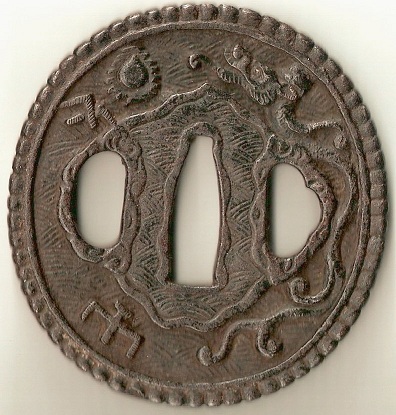
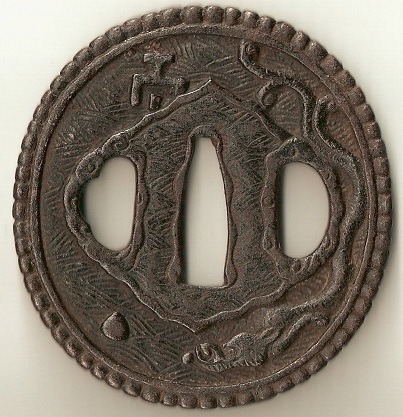
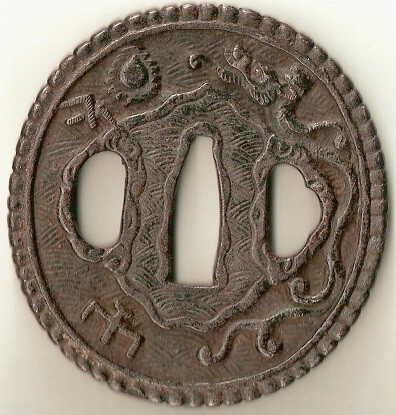
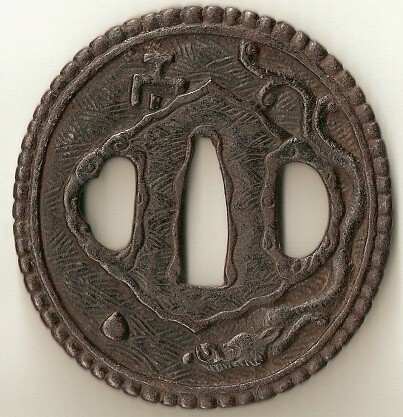
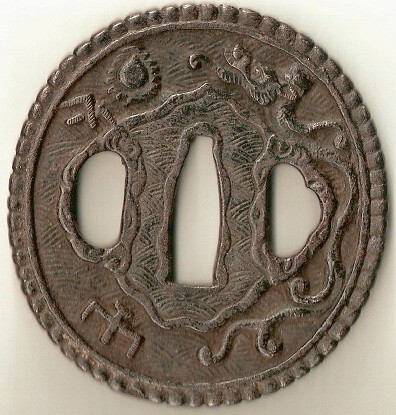
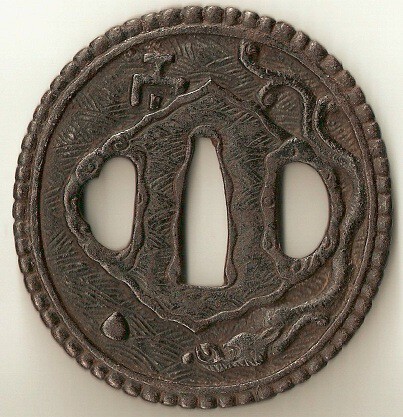
Here are some scans of this "tsuba" I owned at one time. I sold it on eBay as a vintage cast iron Nanban style copy. I orginally purchased in Japan. This one like all of the others are just vintage cast iron copies. Yours truly, David Stiles
-
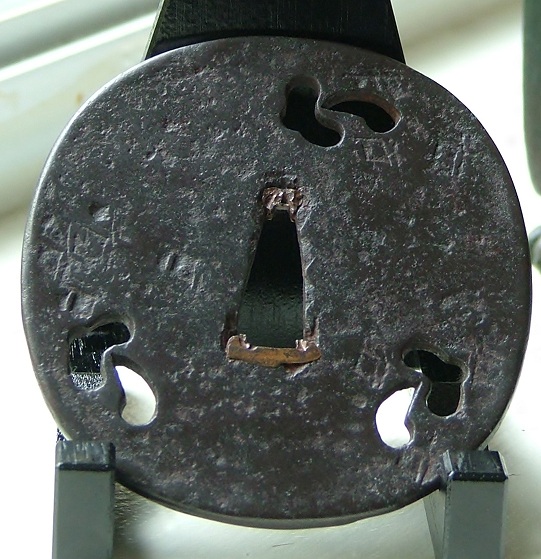
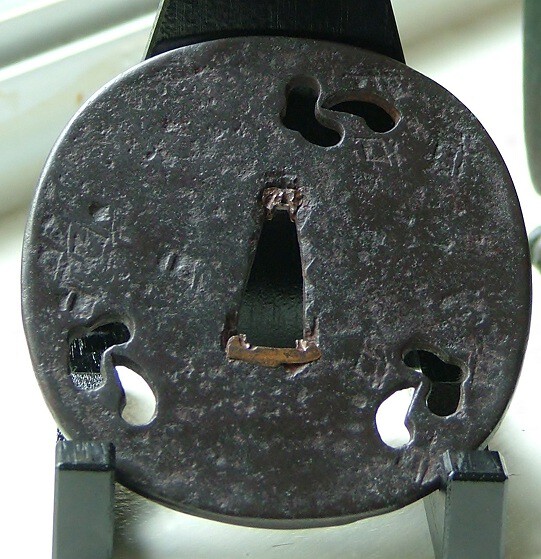
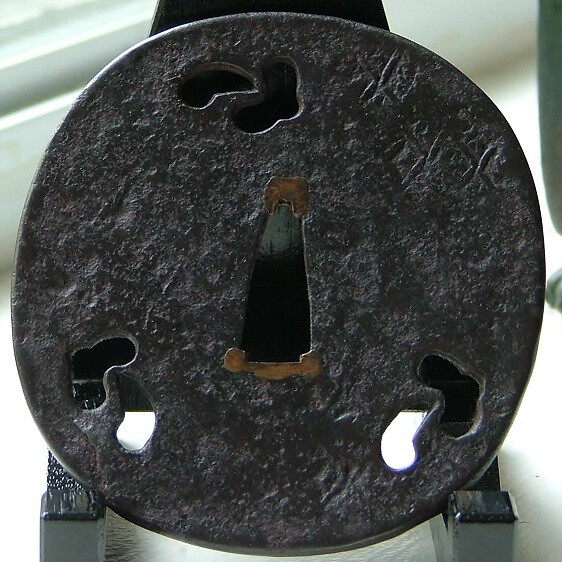
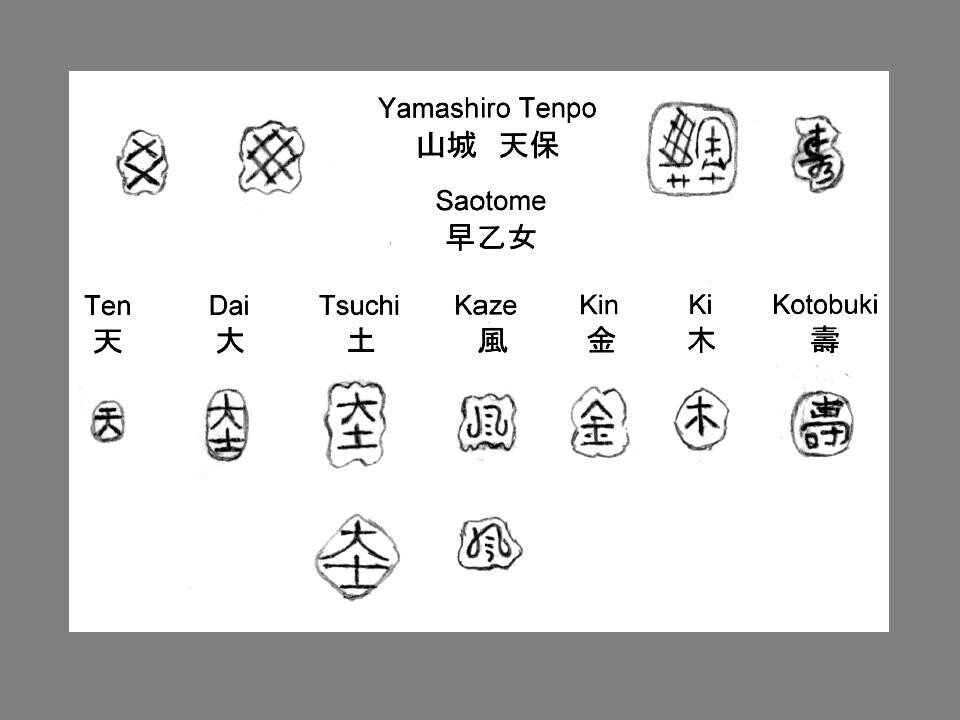
Hi Everyone, Just wanted to post some nice photos of a early Saotome school tsuba I purchased recently. I really like how the photos have turned out using nature sunlight as the light source. The collectors note that came with the tsuba says Momoyama Period but I would like to venture a guest that the tsuba might be as old as the late Muromachi Period. The Ko-sukashi mushroom design along with "net" style kokuin is classical to the early Saotome school. The "net" and Kanji style kokuin or hot stamp was also extensively used later by the Tempo school during the Edo Period. The style of rim is turned up and hammered back is referred to in Japanese as sukinokoshi-mimi and if often observed in Saotome and Tempo school tsuba. The measurements of the tsuba are 8.5 cm by 8.1 cm. The thickness at rim is about 3.5 mm. The thickness at the rim is greater then the thickness at the seppa-dai. Any comments, questions, and discussions are welcome. Thanks for viewing. Attached is a diagram I found of common kokuin or hot stamps found on Satotome and Tempo school tsuba. Yours truly, David Stiles
-
Here is a cast iron Nanban tsuba reproduction I sold on eBay as a cast iron reproduction of a Nanban tsuba that I purchased a while ago. I sold it for about $10.00 USD. I don't think real antique Nanban tsuba were made of cast iron. Mostly for the reasons outlined above. Some might have a look of being cast iron but that is likely just because they are made from wrought iron from foreign sources back in the Edo Period. Again just my two cents on the topic. Yours truly, David Stiles
-
Hi Ford, I have examining both of my Nanban tsuba under low magnification of a hand glass. I can clearly see signs of chisel work on the surfaces most notable the seppa-dai on one of my tsuba and main motifs on the other. The openings of wrought iron surface also show evidence that they were drilled. The two Nanban tsuba in my collection show no signs of being cast. As I have a interest in the Nanban tsuba group I should collect more to examine and study. :D Yours truly, David Stiles
-
From the second image the brass looks of the very old type in terms of the color. I later reproduction would have very bright brass inlays after cleaning the surface with soap and water and not this dull color. The dull color is caused by inpurtites in the imported Chinese brass that the Japanese used originally in their inlay work. Just my two cents. Thanks for sharing. Yours truly, David Stiles
-
Hi Mark G., I have did some research per your request and haven't found any. Nanban tsuba are generally not signed and because they were produced in Nagasaki, Hirado, Kyoto, Osaka, Edo, Aizu, and other places it is often difficult to impossible to determine the origin of a piece. In the Token Bijutsu issue number 646 that I have specifically focused on them the NBTHK don't provide any signed examples. Two other issue I have Nanban related or influenced schools and while some of those are signed none are dated. Here are two quote from the translation of issue that might be useful to the discussion. Historically Nanban tsuba were first discussed in Kinko-tanki published in the year 1839. I hope what little information I have found is helpful. Yours truly, David Stiles
-
Hi Thomas H., I was going to complain about how long this thread is but then I had to reply being a fan and collector of Nanban tsuba. All Nanban reproductions I have seen are made of cast iron. I have observed antique Edo Period Nanban tsuba and are cast iron and others that show signs of forging of relatively homogeneous iron. After reading three issues on Nanban tsuba in the Token Bijutsu monthly magazine I have come to the conclusion there isn't any shortage of wonderful high quality Nanban tsuba out there and likely some of them are made of cast iron. Do I think casting was often used to make tsuba? No. Could it have been? I don't know enough to answer that question completely but some members of NMB have provided some very helpful information. Yours truly, David Stiles
-
I came across this similar tsuba to my recently papered tsuba: http://www.tsubanomiyako.jp/SHOP/T-069.html. The iron, patina, size, and general craftsmanship is very similar to my tsuba. The presence of tekkotsu on the mimi are are also very similar. The tsuba in the link is not papered. Yours truly, David Stiles
-
A good example of what Chris is referring to are the Kyo Sukashi tsuba of the middle Edo Period. Think very intricate and delicate sukashi open work designs made with fairly homogeneous iron often without tekkotsu. The good quality Nanban tsuba are also appreciated for their design, carving, and motifs and iron fairly homogeneous as well. To address earlier posts casting by Kagamishi of Bronze is will documented and know in pre-modern Japan. This doesn't in any way support the use of iron casting techniques in making tsuba. Yours truly, David Stiles
-
Hi Pete, Good to hear from you. I think the green sheets for shinsa fail is a good idea. Let me write a letter to the sword museum in Tokyo. Yours truly, David Stiles
-
Hi Ford, I have done this and have came to the conclusion that if I for example had Mr. Haynes cast tsuba discussed by me above and have submitted it to NBTHK shinsa it would not be issued a shinsa origami and I would likely be told that the tsuba is "worthy of recycling" . This is a attempt at humor as the Japanese word hozon often gets translated as "worthy of preservation" and the Japanese do like to recycle. :lol: The point if it isn't clear is that when reputation is take out of the equation the tsuba would be judged as a modern post Edo Period reproduction of fairly good quality. This in turn would cause it to fail the shinsa test. Yours truly, David Stiles
-
I was reading through Sasano Sensei's second book (silver dust jacket) and it states that the Kanayama school of Owari Province made tsuba from the early Muromachi Period (Oei era) up until the banning of wearing of the dai-sho in public by Samurai (haitto-rei) during the early Meiji Period (1876). In Sasano's book like others sources I only have photo examples that date from the early Muromachi Period up until the early Edo Period. I was wondering if anyone on the Nihonto Message Board can provide me with reference, links, or photos of Kanayama tsuba from the middle Edo Period on up until the end of the Edo Period and first part the Meiji Period? This is for my own personal research and study. Thanks for taking the time to help me. Yours truly, David Stiles
-
I would agree with Steve's points. Japan's climate isn't at all friendly to anything of iron more or less a cast tsuba and if the skill and craftsmanship and artsitic value weren't there in the first place the tsuba wouldn't be taken care of and would quickly be heavily damaged or destroyed if not originally destroyed by use. I think the weapons include poorly made swords of the ashigaryu and ji-samurai of the Sengoku Jidai are no longer with us and are lost to history. Still extant historical records indicate these swords and by extension the tsuba as well as other weapons were very poorly made and show very little if any artistic value. Just think all those swords in movie Seven Samurai hoarded by the farmers and used by the Samurai and farmers trying to save the village. The movie is set in the Sengoku Jidai if I remember correctly. Yours truly, David Stiles
-
Nice story Ford and good food for thought. Thanks for sharing your experience. :D Yours truly, David Stiles
-
Hi Ford, Thanks for the information about Yamagane and I was thinking it was similar to Bronze but I will defer to your technical and "hands on" knowledge. Here is a direct link to the tsuba itself on the web with detail photos: http://www.nihonart.de/scripts/loupe/en_detail.php?id=171&titel=167a. Here is a scan of the text. I am not a advocate for thinking that cast iron was used in pre-modern Japan for tsuba but just wanted to provide some information that I came across in my study. Here is a back and white scan of the text discussing the tsuba. Yours truly, David Stiles

-
I would go with a tachi style tsuba from the late Edo Period. I had one for sale but it went very quickly in the sales section of the message board. On a related note. One shouldn't disregard eBay automatically. My current tsuba just issued NBTHK Hozon Shinsa Origami was purchased originally by me on eBay for about $95 USD. The deals might be rare but they are there and do happen once in awhile but if you are not very experience I don't recommend you buy anything off of eBay. Go with a well know dealer in Japan or someone on the Nihonto message board. Yours truly, David Stiles
-
Hi Ford, I am of the opinion that the vast majority Edo Period and earlier casting was done for soft mental (kinko) tsuba such as the kagamishi school which often used Bronze and Yamagane. In additon to the strength question wasn't it also not possible to generate the necessary heat in a cost effective manor using massive amounts of charcoal to make many cast iron tsuba? In Robert E. Haynes new book Study Collection of Japanese Sword Fittings. He sites a rare example of a cast iron tsuba on page 167 made during the late Edo Period by a tetsubin-shi a caster of iron tea kettles from an original tsuba by Munetoshi of the Myochin school. I think this tsuba is a very rare example and not at all representative. The vast majority of cast iron tsuba are from the Tasho Period and later and had no functional use. Yours truly, David Stiles
-
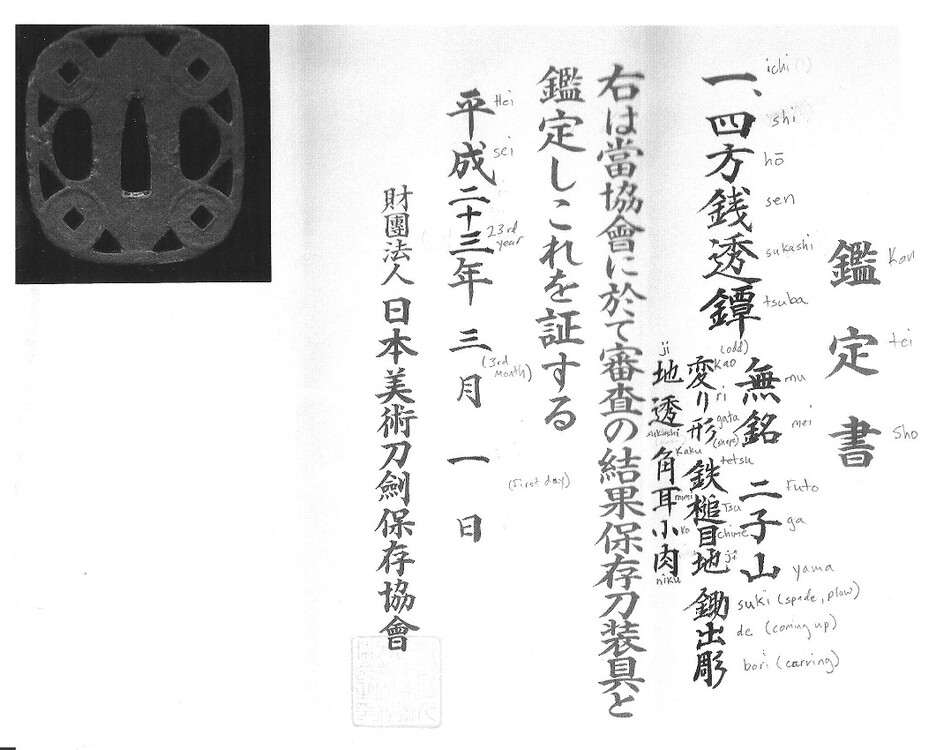
Hi Everyone, Here is more of the translation I did. The Futogoyama school based in Ono of Owari Province was a major center for Yagyu and Yagyu style tsuba production for the third and final period of Yagyu tsuba production during the late Edo Period. The school was headed by two generations of Norisuke (則亮) from around 1797 until about 1883. The date of 1883 I am using as it was the year of death for the second generation Norisuke. Additional informaiton can be found at the following website: http://kodogunosekai.com/2009/07/04/amida-yasuri-no-zu-%E9%98%BF%E5%BC%A5%E9%99%80%E9%91%A2%E5%9B%B3/. Feel free to comment and discuss. If anyone has an questions please let me know. Yours truly, David Stiles
-
Thanks Henry, I found all of the website and Kanji characters very helpful and I was able to translate the remaining sections. I will post what I found out this evening when I get back from work. Yours truly, David S.
-
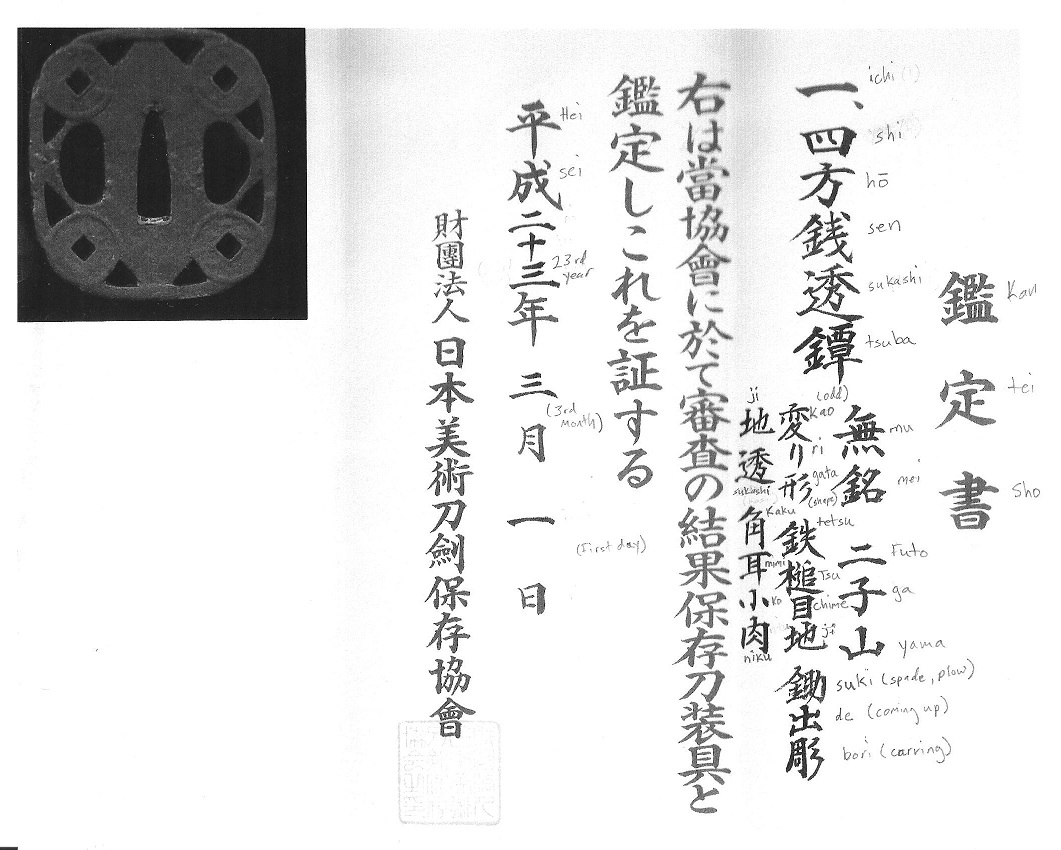
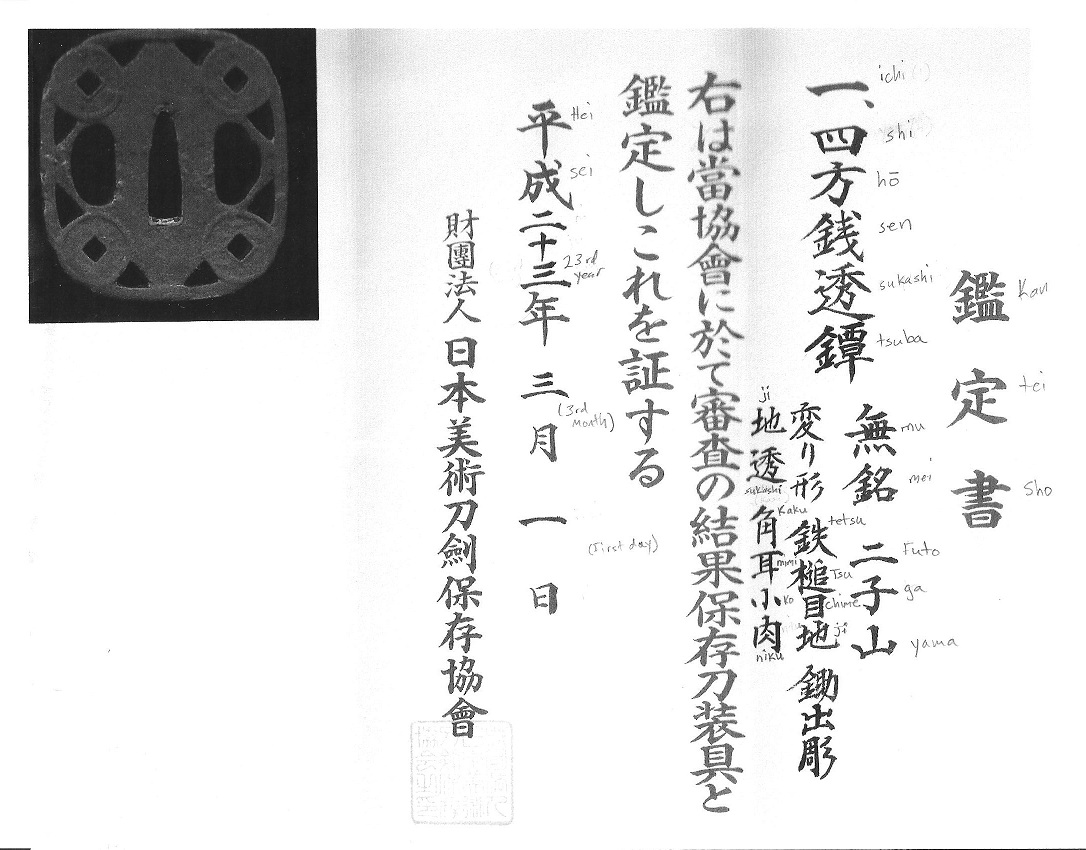
Hi Henry and Christian, Here is what I have of the translation/transliteration so far. I find it interesting that for a mu mei tsuba the attribution isn't in brackets like I have seen on other papers. The Kanji without writting by it I have not been able to translate so far. Yours truly, David Stiles

-
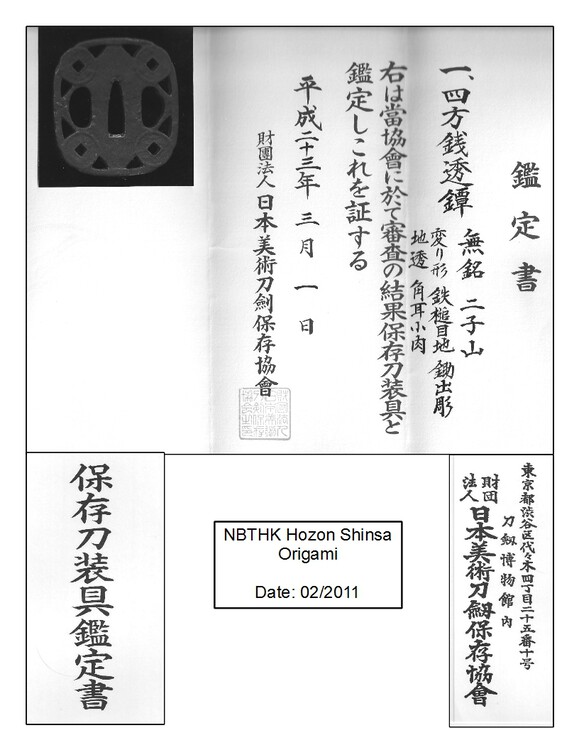
Hi Everyone, Here is a collection of scans of the NBTHK hozon shinsa origami I pick up at the post office today. The attribution for the mu mei tsuba is to Futagoyama (二子山). Futagoyamam is a location in Owari Province. During the late Edo Period the school was well known for making high quality Yagyu and Yagyu like copies. Not sure what the remainder of the origami says about the motif but at some point I will take the time to translate it. If anyone can offer a quick translation to quicken my research I would greatly appreciate it. Thanks again for taking to view my first tosogu shinsa origami thread. Yours truly, David Stiles
-
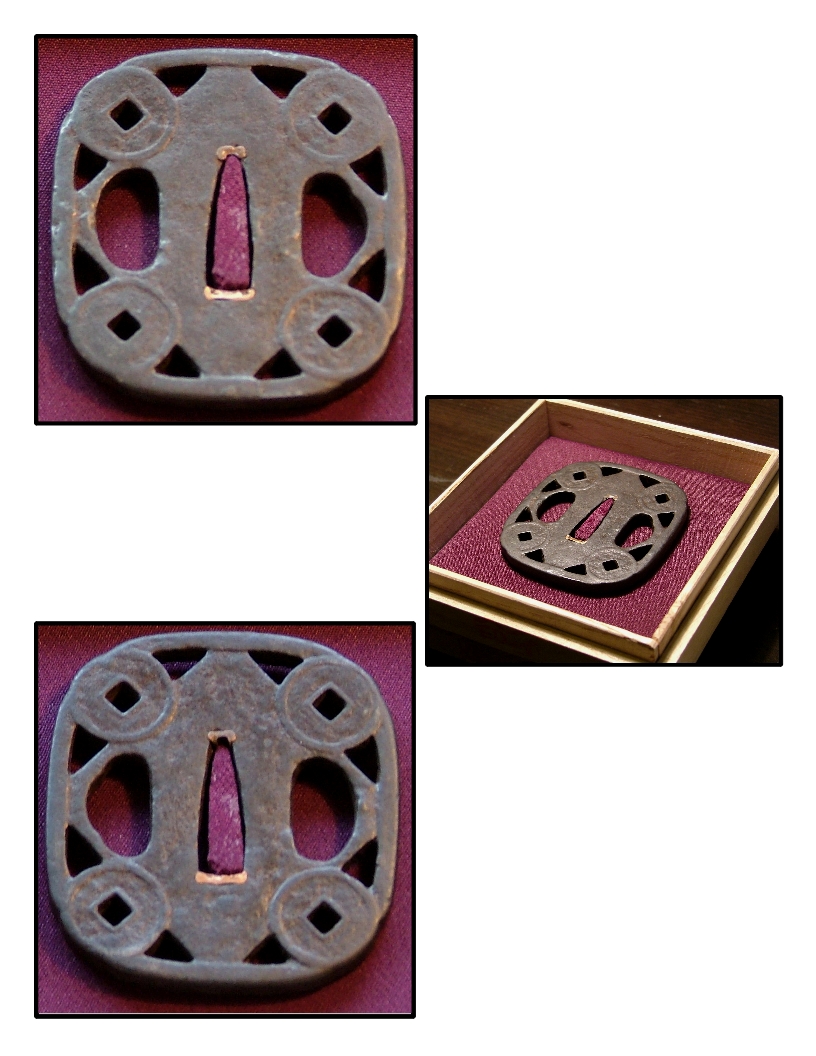
Hi NMB Members and Guests, My first papered tosogu by the NBTHK is currently waiting at the post office as today is a holiday in the USA. I think this is sigificate as I have been a member of the NBTHK since 2007. It is a tsuba posted originally on the message board on a discussion of Edo Period coins and their use as motifs on tsuba awhile ago. Once I get it tomorrow I will post photos of the hozon tosogu shinsa origami. As a starter I will post photos of the tsuba I did before sending it off for shinsa back in December 2010. Enjoy and all comments and questions are welcome and thanks for looking. Yours truly, David S.