
Soshin
-
Posts
2,932 -
Joined
-
Last visited
-
Days Won
3
Content Type
Profiles
Forums
Events
Store
Downloads
Gallery
Everything posted by Soshin
-
Hi Everyone, Heard back from Chris Bowen about the tsuba I started this topic about. The tsuba passed NTHK-NPO shinsa in Minneapolis, MN this past weekend. Once I get it back with the paperwork I will post more information about the shinsa results. Yours truly, David Stiles
-

Minneapolis Shinsa and Show
Soshin replied to Jimmy R's topic in Sword Shows, Events, Community News and Legislation Issues
Hi Everyone, Just heard back from Chris yesterday night. My tsuba that I submitted passed shinsa and therefore was not determined to be a extra large Chinese belt buckle. Thanks for posting photos of the show. I wish I could have made the trip. Yours truly, David Stiles -
Hi Henry, Here is a link to another tsuba made my the same Myochin artisan who I think made my tsuba: http://blog.goo.ne.jp/tsuba_001/e/fab8bff2a87f7f9d4145266da38cd3ed. Notice the similar patina color of the iron and mokume jitate (木目仕立). The resolution prevents the direct comparison of signatures. The tsuba is listed as a Shipo Tsuba because of the Cloisonné inlay designs done by another artisan. The complete mei (銘) on this tsuba is (神道五鐵鍛明珎紀義信). The longer mei might because this is a katana sized tsuba also using the techniques of another artisan. The tsuba came up in a Japanese Google search for of Ki Yoshinobu "紀義信". This might be an example of two different artisans working together to make a wonderful tsuba. The tsuba plate maker being the same person or related to the person who made my tsuba. Just some ideas. Yours truly, David Stiles
-
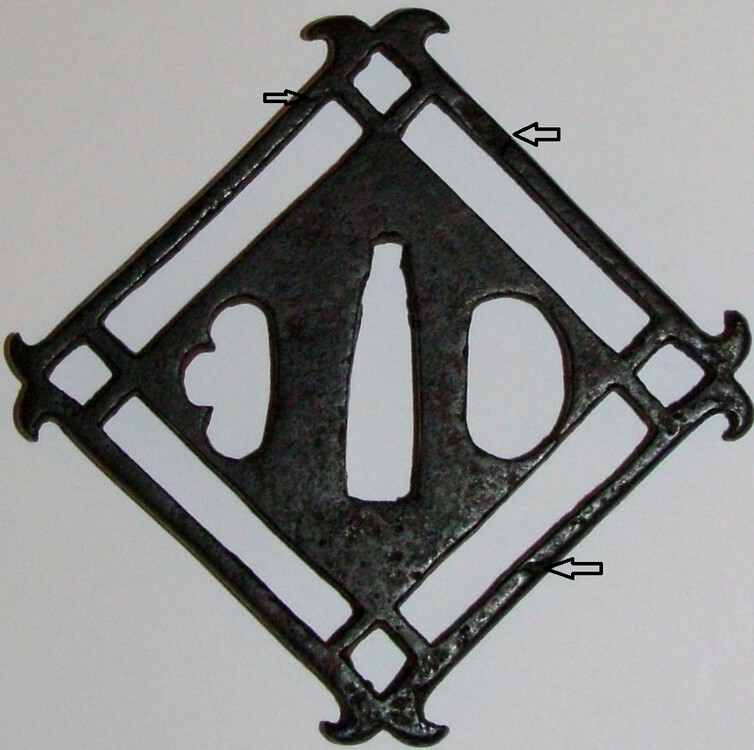
Hi Christian, Thanks for providing a similar example. I would agree about dating my tsuba to a earlier period possible as early as the Late Muromachi Period to the Momoyama Period. Stylistically I would include it in the Ko-Shoami school. There are medium sized concave shaped tekkotsu along the rim as well. A interesting note about the ura side of the tsuba is that there are three places that look like there are are some very old sword cut damage to the rim. Here is a photo with the damage highlighted with black arrows. Additional comments are always welcome. Yours truly, David Stiles
-
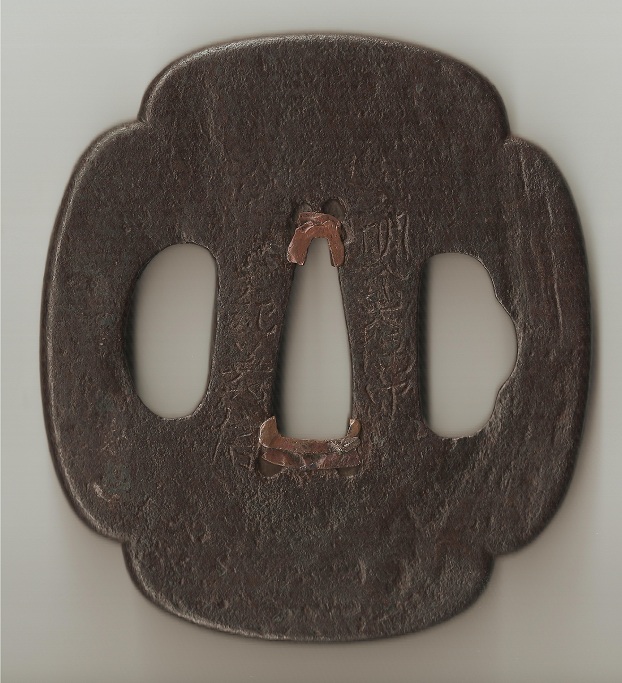
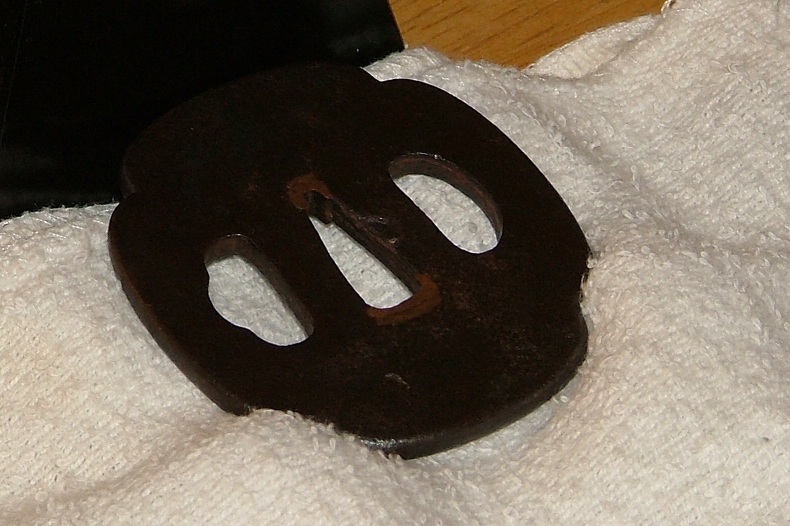
Hi Justin, I did some research on Kunihiro as I have a late Edo Period tsuba made with the same name but signed differently then Grey's example. Bob Haynes in his index on page 744 lists the name Kunihiro but thinks that the massive number of tsuba with that name is likely the work of four or five different people signing the name Kunihiro and mostly working in a Tosho style during the late Edo Period in Bushū province (i.e. Edo). I don't think I necessary agree with Skip's note about the tsuba being from a member of the Myochin School. Thanks Henry and Curran, Here is a quick scan of my late Edo Period Myochin school tsuba. It was made for a tanto or a ko-wakazashi and measures 6.5 ✕ 6.0 cm with a thickness of 0.4 cm at the rim. In the inside of the nakago-ana and ryohitsu-ana a total of eight different layers can be observed. Here is another photo I have that shows layering I was talking about in the inside surfaces of the nakago-ana and ryohitsu-ana. Layers can also be observed in the rim as well. Yours truly, David Stiles


-
Hi Henry, Thanks for the reply and the help. I really don't know about this tsuba. The bold abstract geometric design doesn't look Kyo Shoami to me as they would often make designs that were much more naturalistic. Searching the Museum of Fine Arts, Boston website http://www.mfa.org/ for "Kyo Shoami" and you would get more of what I am talking about featured in the two issues of the NBTHK monthly magazine discussed above. The author of the article in the NBTHK magazine classified the Kyo Shoami into two major groups a early group from the Momoyama Period and early Edo Period that didn't sign their work and a later middle Edo Period group that would sign their work. This transition with the school lead the designs to me more and more refined and naturalistic with increased use of gold and silver nunome-zogan "fabric inlay". Yours truly, David Stiles
-
Hi Curtis R., I must disagree in part with Henry analysis. Myochin often made tsuba in the late Edo Period with this type of mokume "wood grain" pattern. I have a signed Myochin tsuba with this type of design. The only problem I see is that the mei (i.e. signature) isn't consistent with what I normally see how the Myochin school would sign their tsuba. Normally they would have a personal artist name along with the school name of Myochin. They would also include some honorfic title such a Osumi Kami (大隅守) along with personal artsit name and the school name. If the signature is authentic then tsuba night have been below the standards of the person making it and therefore he didn't write his personal name of the tsuba. Just some possible ideas to explain the strange signature other then it being just a gimei made by someone trying to copy Myochin style. My impression is that acid etching looks a bit over the top even for the Myochin school of the late Edo Period. I hope you find this information helpful. Attached is a photo of a tsuba in my collection that I think the mei is real. Here is a typical structure of a Myochin signature: Right of the Nakago-ana: Myochin Osumi (no) kami (明珎大隅守), Left of the Nakago-ana: Ki (no) Yoshinobu (紀義信) Yours truly, David Stiles

-
Minneapolis Shinsa and Show
Soshin replied to Jimmy R's topic in Sword Shows, Events, Community News and Legislation Issues
Hi Everyone, Good to hear that the show and shinsa when well. Wish I could have been there. Maybe next year's show. That's assuming it becomes like the other regular shows across the USA. Still waiting to hear back from Chris about my tsuba being confirmed as a extra large Chinese belt buckle by the NTHK-NPO. Yours truly, David Stiles -
Hi Curtis R., Could you take a photo of the complete side with the signature? Being able to see the complete seppa-dai as well as the signature is important. I think this would be helpful. Also listing the measurements of the tsuba including the thickness is important as well. Yours truly, David Stiles
-
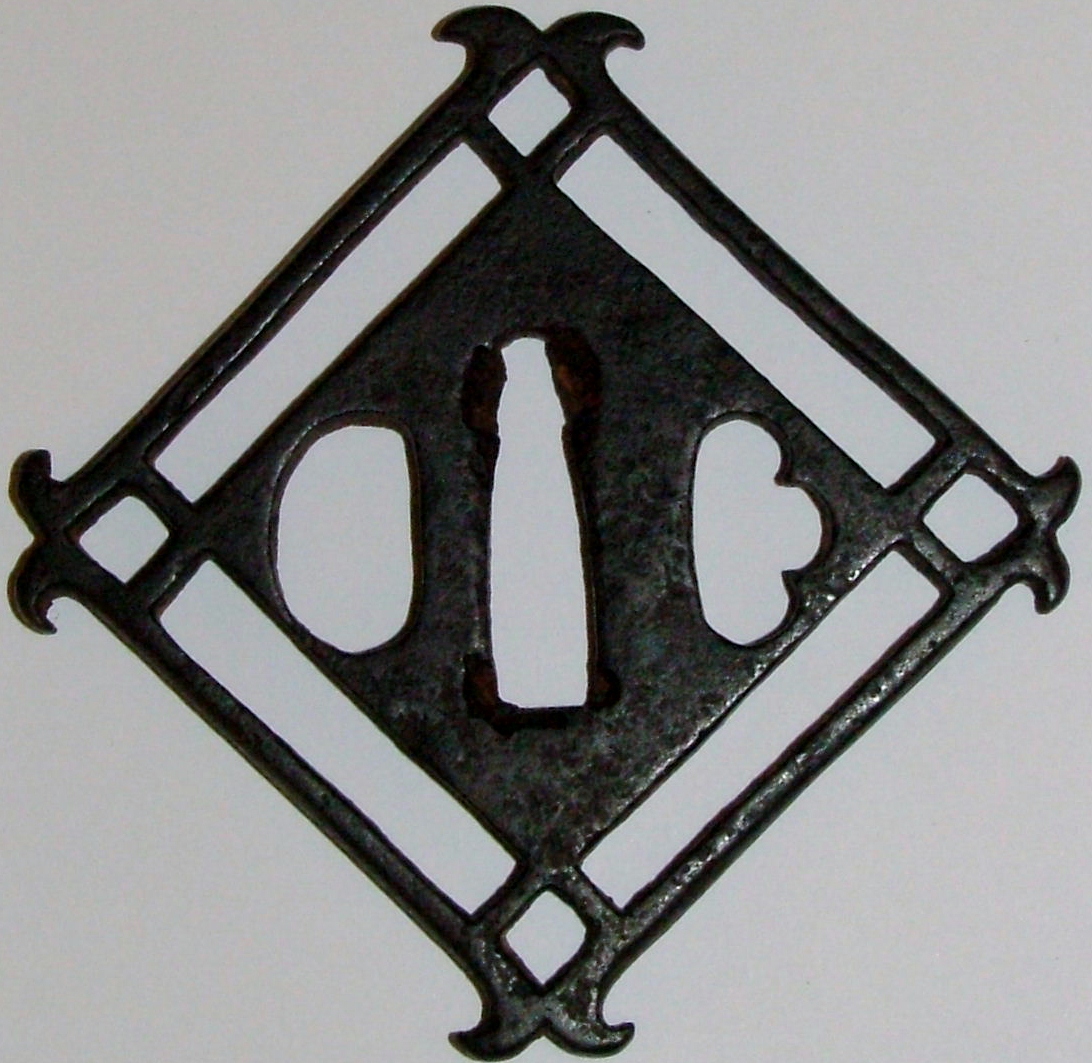
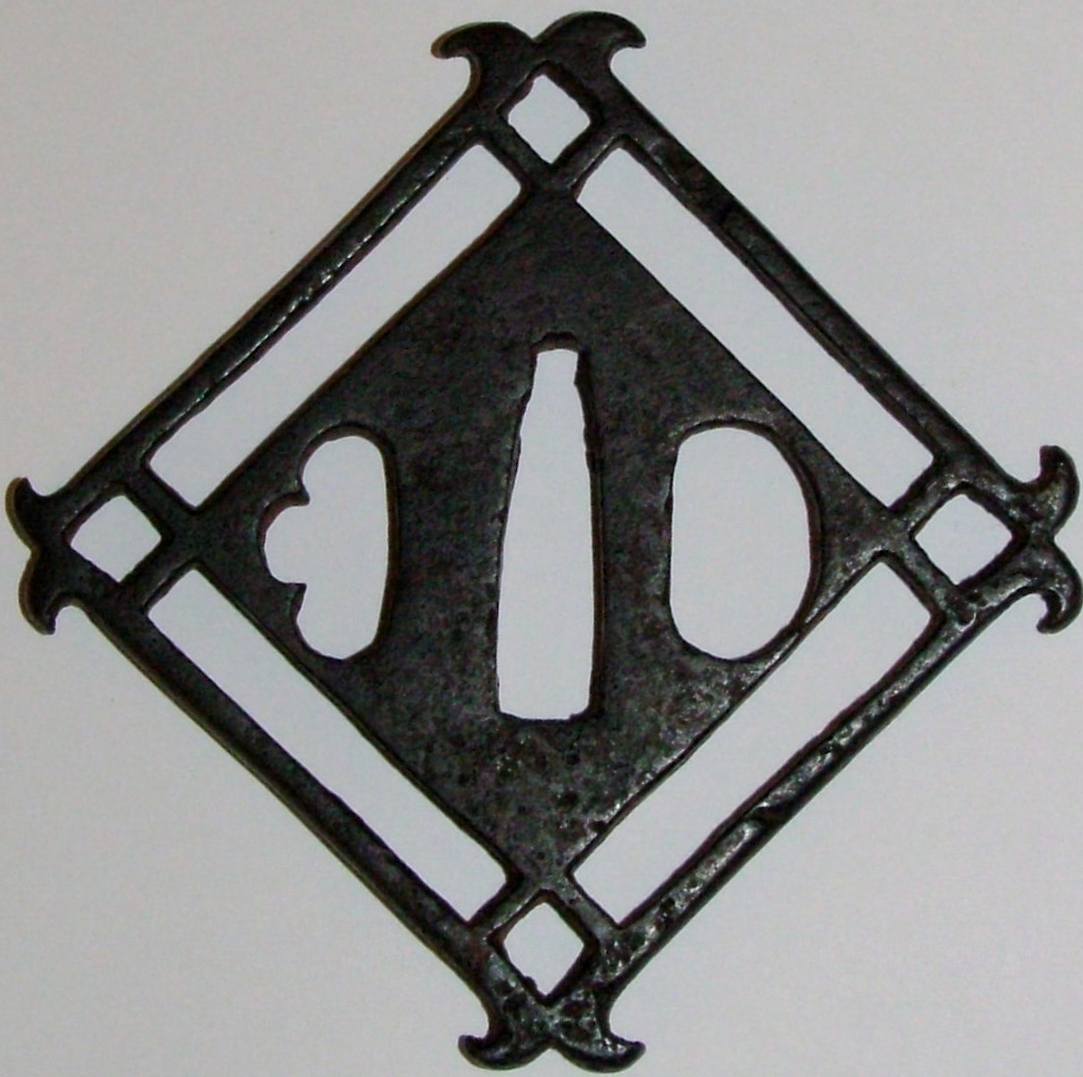
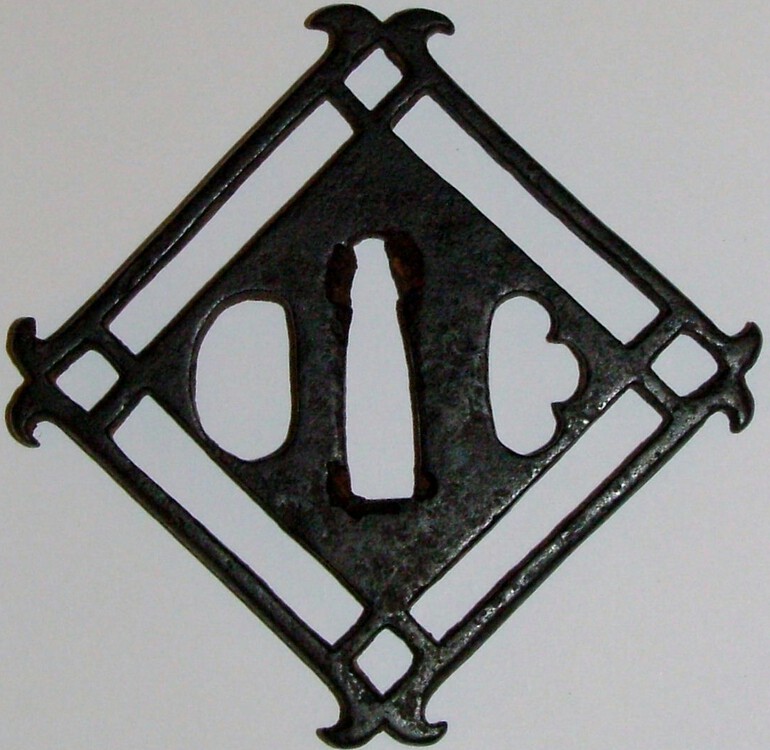
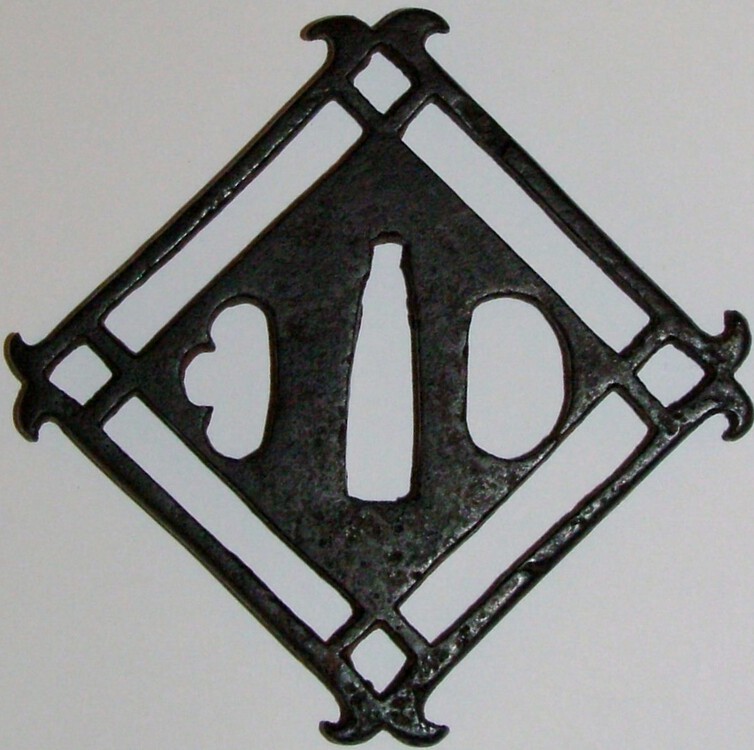
Hi Everyone, Here is a new tsuba I am doing some research on as well as a write up about. Here is the information I have now: Item Name: ? Japanese Title: ? Material: Iron (tetsu 鉄) Age: ? Size: 8.8 ✕ 8.8 cm ✕ 0.40 cm, rim (0.50 cm, seppa-dai) Signature: mumei (無銘) Shape: Tate kaku-gata (竪角形) Openings: Ryohitsu ana (両櫃孔) Surface Finish: Tsuchime Ji (槌目地) Attachment: None The shape of the rim is kaku-mimi (角耳). The kozuka-hitsu ana looks much larger then the kogai-hitsu ana. The tsuba was once part of the Skip Holbrook collection. Here is what I have in terms of his hand written notes. I am not sure of the Kyo Shoami attribution comparing the tsuba to other identified Kyo Shoami tsuba from the Momoyama and early Edo Period found in issues #642 and #643 of the NBTHK Token Bijutsu magazine. To be honest I think this tsuba has more in common with the Ko-Shoami tsuba listed in issue #640 of the magazine. I would like other members feedback about the tsuba in terms of school attribution as well as what the design motif could be. Thanks for taking the time to help me with my research. Yours truly, David Stiles
-
Interesting Akasaka tsuba on eBay...
Soshin replied to Soshin's topic in Auctions and Online Sales or Sellers
Hi Curran, Thanks for joining the discussion. Your idea might explain what looks to be the very poor condition of the patina. I was looking at transverse views of the tsuba and I don't see any luster just dry rustiness to me. This poor condition of patina could be the result of someone taking a legitimate modern tsuba (aka. a copy of a original Akasaka school work) and trying to artificially age it to make it look like it was from the Edo Period. This might also explain the over done alternation of the nakago-ana. Yours truly, David Stiles -
Interesting Akasaka tsuba on eBay...
Soshin replied to Soshin's topic in Auctions and Online Sales or Sellers
Hi Bob H., Thanks for the name of the design. I have seen in other Akasaka tsuba before. It of a chashitsu (茶室) or outdoor small tea room in spring time. The kebori along the sukashi isn't as good as you typically see in Akasaka school work. It could be a Shoami copy or a later generation (i.e. Akasaka, Ko-dai) work. The seller doesn't list the thickness of the tsuba and if the seppa-dai is thinner or thicker then the rim. All of these are important bits of information. Yours truly, David Stiles -
Interesting Akasaka tsuba on eBay...
Soshin replied to Soshin's topic in Auctions and Online Sales or Sellers
Hi Tobias H., I am aware of the fact that the top and bottom of the nakago ana (i.e. tang hole) gets altered via a hammer in such a way to fit it to a new tang when a tsuba is mounted on a new sword but I have never seen this done to such an extreme. That was one of the reasons I was pointing that fact out. There also appears a fair amount of interest in the tsuba on eBay due to the number of bids versus the time remaining. Here is a more typical example of what we are talking about from a tsuba in my collection. The design and the sukashi style I would consider to be classic Akasaka school. The only thing strange is the alteration of the nakago-ana. The consistence of the patina and presence of rust doesn't look good as well but I don't see any major rust damage. This can be really hard to judge accurately sometimes from photos. Yours truly, David Stiles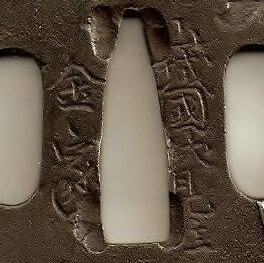
-
Here is a link to a intresting Akasaka? tsuba being listed on eBay: http://www.ebay.com/itm/TSUBA-IRON-Japanese-SUKASHI-AKASAKA-STYLE-SHIGURE-TEI-DESIGN-/120775481725?pt=Asian_Antiques&hash=item1c1ec7997d#ht_2720wt_1271. Wait I forgot to use the correct official NMB approved name for the site evilBay. Some strange alternations has happen to the seppa-dai on the ura side of this tsuba. Has anyone seen this before? I don't see it on other Akasaka tsuba comparing it to some published examples I have in books. I have never purchased from this seller from Japan. Any help or comments are welcome. Yours truly, David Stiles
-
Hi Everyone, I would agree with Henry about the age of work. The detail of the inlay works really good. Often with tsuba like this I often say late Edo Period but include the beginning part of Meji Period before the Haitto-rei of 1876. After this major historical event the tsuba that were being produced became more and more just decorative metal handicrafts with little to no use as a real sword guard. They were made mostly for sale in the new Tokyo or for export to USA and Europe from the docks of Yokohama. Yours truly, David Stiles
-
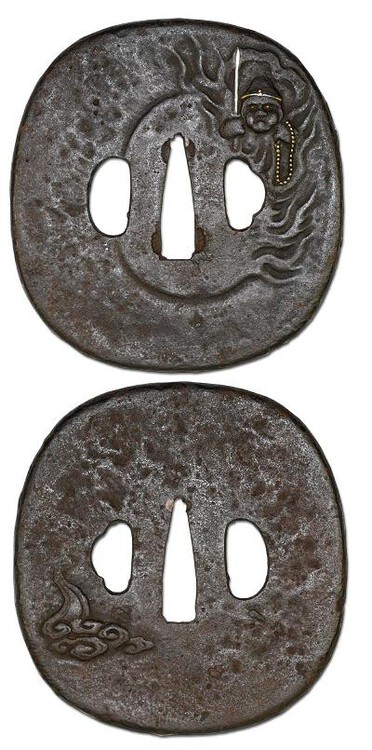
Hi Curt R., Thanks for the kind words about my tsuba. The motif is Buddhist Immovable Wisdom King known as Fudo-Myo-O (不動明王) in Japanese. It looks like he is stepping out of the flames of a homa (Jpn. Goma (護摩)) fire during a Buddhist esoteric ritual. Here is a link more about homa ritual if anyone is interested: http://en.wikipedia.org/wiki/Homa_(ritual). There is more then enough to see at the Tampa show at the very low cost of admission. I would love to get together meet people from the NMB at the show. I was able to meet a few people at the show last year. :D Yours truly, David Stiles
-
Hi Curt R., I would hold off with the NTHK shinsa. I am planning to attend the Tampa show as well. Its a good place and would recommend it as you will get a chance to see many different nihonto and tosogu. Last year I looked at many fine tsuba and tosogu sets and just a few high end nihonto. Your tsuba I would agree with Herny and say Aizu Shoami circa late Edo Period. The craftsmanship in terms of plate iron, patina, and inlay work reminds me of this tsuba I have in my collection. My tsuba is in a little bit better condition and is intended to be mounted on a katana. Yours truly, David Stiles
-
Minneapolis Show and Shinsa
Soshin replied to Ed's topic in Sword Shows, Events, Community News and Legislation Issues
Hi Everyone, I will not be able to make it to Minneapolis show and shinsa. I have already sent my tsuba to Chris B. to be submitted for me for shinsa. I have a thread about it in the NMB tosogu forum. Here is the direct link to the thread: http://www.militaria.co.za/nmb/viewtopic.php?f=2&t=10760. I also posted a write up about the tsuba on my personal website the link to it on my signature. I hope those that do attend will post some photos of the event. I am planning to attend the Florida Show next year. :D Yours truly, David Stiles -
Hi Fred G., You need to check out the NBTHK Token Bijutsu issue #647 (12/2010). They have the whole issue focused on the tosogu works of Hirado Kunishige. I can email scans of the issue if you don't already have it. I was meaning to send you a email about your custom tsuba boxes for sale anyway. Take care and I hope I was helpful. Yours truly, David Stiles
-
Hi Henry, After closer inspection you are right about the ito. I think it is made of lacquered hemp cloth. Yours truly, David Stiles
-
Thanks for the information Henry. I will take a look at it tomorrow when I have some free time. Yours truly, David Stiles
-
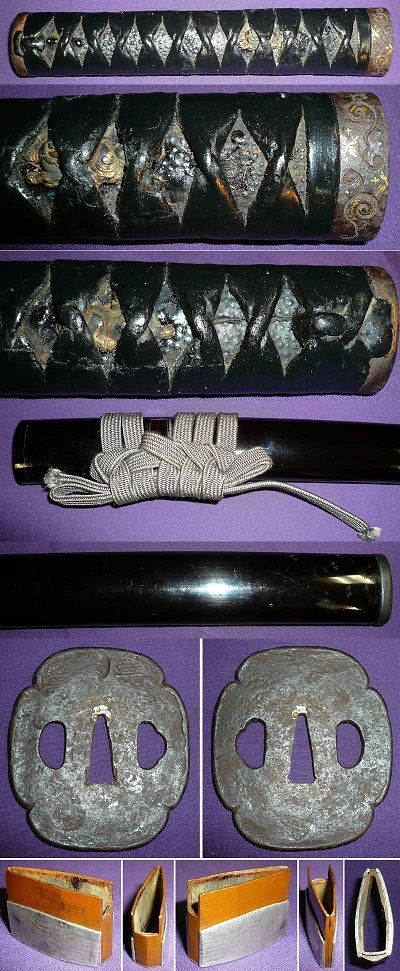
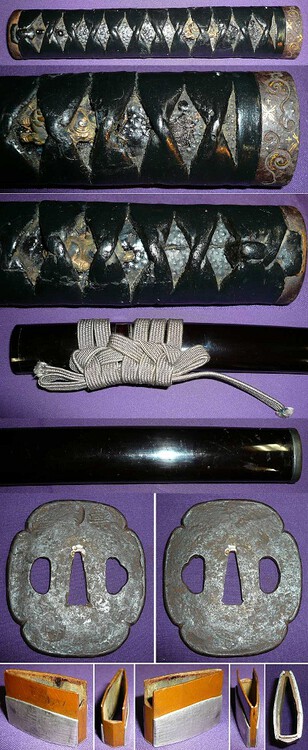
Hi Dr. Stein, Nice to see you on the NMB. It was way back in 2003 that you introduced me to my local sword club the Mid Atlantic Token Kai via your wonderful website. I found your website very helpful for my study. Your site along with Jim G. website here http://home.earthlink.net/~jggilbert/tsuba.htm I have been trying to model with my own non-commercial website about the art and history of Japanese sword fittings. Attached is a koshirae that I have that is centered around a large Tempo tsuba. I place the age of the koshirae to around the early Edo Period. The ito looks like leather but is in fact black lacquered silk. I have cleaned much of the rust of the Tempo tsuba using piano ivory and dried bamboo since the photo was taken. Yours truly, David Stiles
-
Hi Everyone, Just wanted to update everyone about this Saotome tsuba. I decided to send it off to a Nihonto broker for the the upcoming NTHK-NPO shinsa at Minneapolis, MN early next month. Here is a link for more information about the show: http://www.ejapaneseswords.com/Arts_and_Arms_of_the_Samurai.html. I can't make the show but next show that I will be at in the Florida Show in Feb. 2012. I will post the results good or bad once I know on the thread. Thank you for reading and comments are welcome. Yours truly, David Stiles
-
Hi Everyone, Lets all just cool down the weekend is almost here. I only posted the Ko-Kachushi tsuba because it had a identical design and that I was thinking my tsuba a later copy of the same design. To answer your question Henry. The only reason I was thinking it was a Owari Sukashi tsuba was that the former owner thought so therefore I was using this as just a starting point for my own research. The crack not sure if it is "fatal flaw" but in terms of dept it is superficial and the structure of the tsuba is strong. Yours truly, David Stiles
-
Hi Henry, My tsuba a latter copy is 8.1 cm round and is 6.0 mm thick and is of the same identical design. The tsuba I posted a photo of I am not sure of the size. The identical tsuba in Tsuba An Aesthetic Study on page 26 is 7.0 cm by 6.8 cm and is dated in the book as circa 1400. Hope you find the information helpful. Yours truly, David Stiles