Scogg
-
Posts
2,227 -
Joined
-
Last visited
-
Days Won
28
Content Type
Profiles
Forums
Events
Store
Downloads
Gallery
Everything posted by Scogg
-
Hi @JMRICH53, I'm going to relocate this to the "Military Swords of Japan" section. There is a lot wrong with your diagram; and it looks a lot like something put together with Ai. The proper designation for this sword should be Type 95 Guntō, (without the "shin"). The kojiri is pointing at the kissaki, the latch mechanism and internal is completely fabricated, tang is pointing at the habaki, there's no grommet screw or sarute, and the wrap around the menuki has a weird center part and the menuki has big silver circle on it. The hanger is on the wrong side of the scabbard. The fuchi should be called a ferrule in this case, and has a chūkan of which houses the “spring” and holds the clip. It’s not a coiled spring, it’s more a little angled piece of metal that holds tension against the clip. Also, these swords do not have hamon. Also theres just some incorrect terminology like John C has said above. In addition to the Ohmura study guide which is one of my primary source materials for all things Type 95 Guntō; I also wrote a document here for the forum that has a glossary of correct terminology around page 73. This type of sword evolved throughout the war, and the peices parts and locations of them can be different depending on the variation, arsenal, and subcontractor. My paper can be found here: https://www.militaria.co.za/nmb/files/file/207-Japanese-type-95-military-sword-variations-1936–1945/ I'm actually working on a similar diagram for my document, but I still have a few months of work to do until another update. Regards, -Sam
-
I'll check out my mon book when I get home. Although, this one looks pretty unusual
-

Sword in koshirae on display in local museum
Scogg replied to Scogg's topic in Military Swords of Japan
Small update: It sounds like the curator is willing to talk to me about the sword, and they seem very interested in adding information about it. Although, they're opening a new wing to the museum this fall and are swamped currently. They've requested that I hold any curator inquiries until after October. So stay tuned in November! Maybe I'll get some more images and hopefully some nakago, and nakago-mune photos for you Bruce. Always fun to find an interesting sword. Thanks for all your help guys, and especially @charlesf for your keen eye and memory. All the best, -Sam -
Looks like the large tsuba in Chen’s first picture
-
Sword in koshirae on display in local museum
Scogg replied to Scogg's topic in Military Swords of Japan
Oops sorry I forgot to address this. I’m not sure about the saya, it was not displayed with the sword. But neither was the saya for the Type 98 displayed above it. Hopefully both saya are still with the museum somewhere. I imagine that they are. This museum is right on the coast and the blades are in good condition. Must be in some climate control, or have been well cared for and kept oiled. -Sam -
Sword in koshirae on display in local museum
Scogg replied to Scogg's topic in Military Swords of Japan
That looks just like it! So much so, I would be surprised if it were something else. I wonder if this is the one that Ted has seen, or a new one entirely. I have requested more information about the sword and to connect with the curator. Apparently, the building next door is named after Daniel E. Barbey, so his estate or family must be involved in the area and museum somehow. I will keep y’all updated! Looked to be a nicely made sword. -Sam -
Spoils of War or War loot?
Scogg replied to MassiveMoonHeh's topic in General Nihonto Related Discussion
Let’s stay on topic guys -
My understanding mirrors Jean’s. The goal of a togishi is to restore a blade as closely as possible to the smith’s original intent and highlight the smith’s workmanship through polishing, not modify its geometry. Inevitably material is lost through polishing, but that does not mean the general form should be altered. If a different bevel were appropriate, I would think it would be adopted as part of the smithing tradition itself, rather than introduced later as a polisher’s alteration. @John John I’m going to move this to the general section since I think it fits better there. I’m no expert, and maybe we can get some more eyes on the topic in that section. Best, -Sam
-
Expert restoration by a qualified Togishi is perfectly acceptable. In that situation, though, I would defer to the Togishi’s expertise regarding the proper geometry and bevel for that particular blade. I cannot imagine requesting a specific bevel on a traditionally made Nihonto simply because it is supposedly better for cutting. These are objects we study and preserve, not tools we are trying to optimize for modern day performance. That's how I see it at least. -Sam
-
Sword in koshirae on display in local museum
Scogg replied to Scogg's topic in Military Swords of Japan
Considering the context, and that we've already got input on the fittings. Maybe I should relocate this to the military section -
Sword in koshirae on display in local museum
Scogg replied to Scogg's topic in Military Swords of Japan
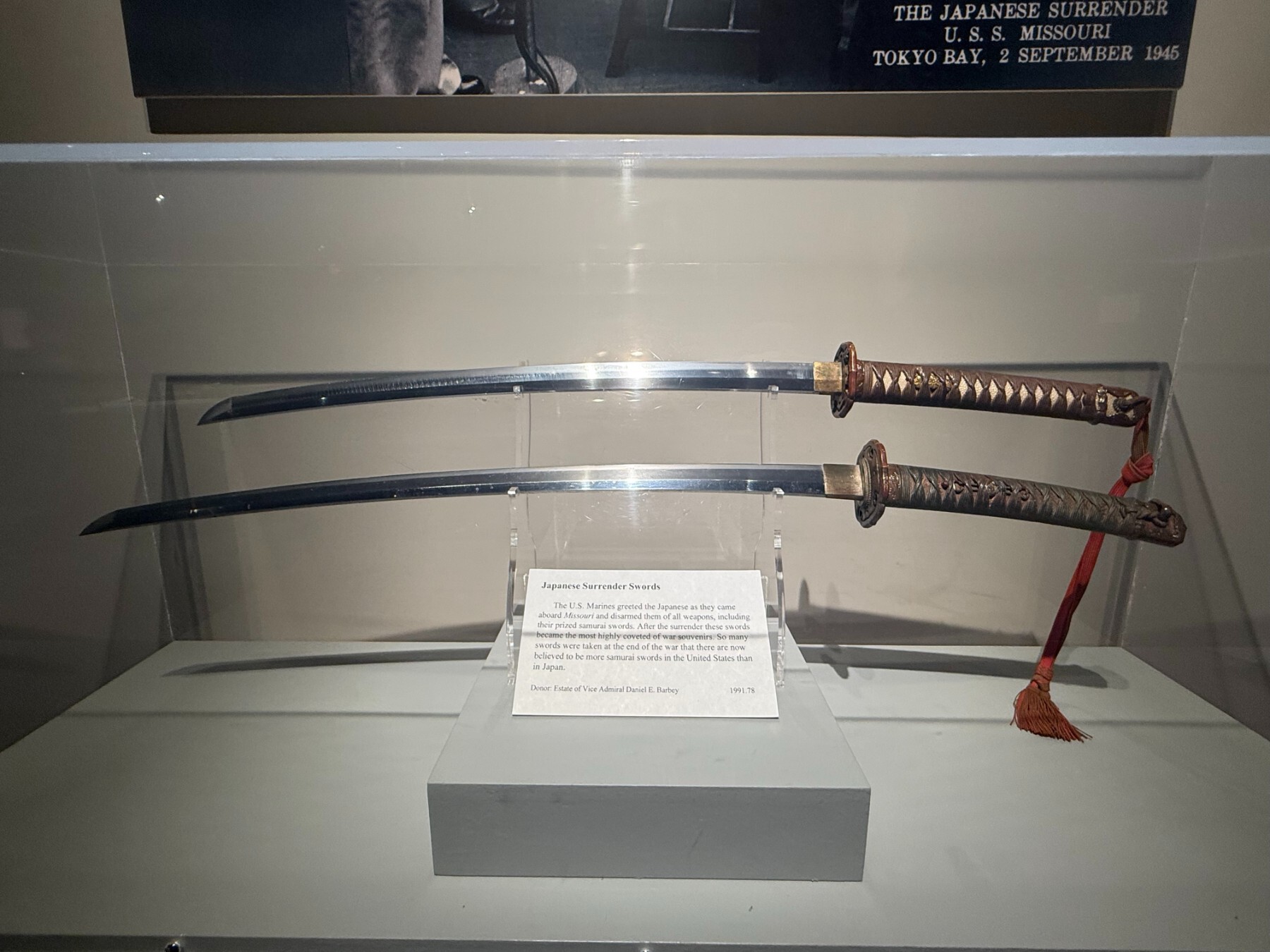
Fascinating, John. Thank you for that. On the plaque under the swords, it states that these were donated from the estate of "Vice Admiral Daniel E. Barbey". https://en.wikipedia.org/wiki/Daniel_E._Barbey " Promoted to vice admiral on 9 December 1944, Barbey directed 30 more assaults in 1945, mostly in the southern Philippines and Borneo.[4] He conducted the last amphibious operation of the war, the landings at Balikpapan, Borneo on 1 July 1945.[1] In all, "Uncle Dan", as he was known, planned and conducted 56 amphibious operations, landing more than one million Australian and American soldiers and marines.[25] For his wartime service in the Southwest Pacific, the U.S. Army awarded Barbey the Army Distinguished Service Medal.[26] On Australia Day in 1948 the Australian government honored him with an honorary Commander of the Order of the British Empire, which was presented at the Australian embassy in Washington by Norman Makin, the Australian Ambassador to the United States.[27] " -
Sword in koshirae on display in local museum
Scogg replied to Scogg's topic in Military Swords of Japan
Thank you Colin and Jean! That's very interesting. I flipped my image below for better vewing. I wish I took better/more photos of it. Blade in suguha with fine consistent nioiguchi, with very tight/fine jihada. A little hard to see behind glass. No views of nakago. Nice polish, no rust, lots of what looked like more recent scratching in the monouchi area. If it's an old blade, I agree it could be very exciting. It definitely caught my attention. I wonder if the curator would flip the display if I reach out to them. I'm building a relationship with the OBON society, so maybe I can get a better look at it someday in the future. Thanks again! Ya'll are the best. -Sam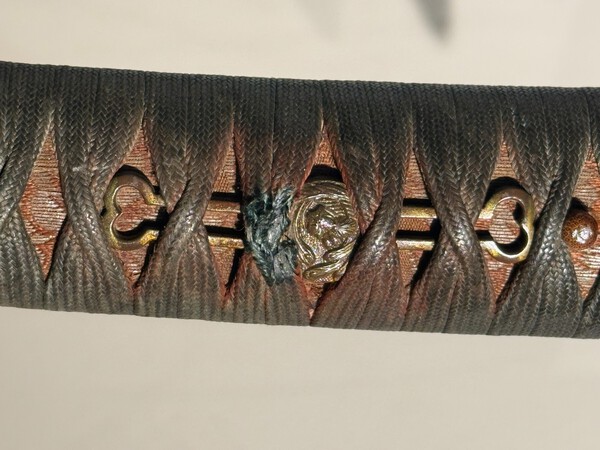
-
Additional WW2 Sword pics-looking for any information on sword
Scogg replied to Snpr41's topic in Military Swords of Japan
My copper has a distinct rounded shape. My early aluminum (Variation#2) with unserialized unit armor replacement scabbard, has a slightly rounded shape like Johns above. My others are more square. Here is a rare Variation#2 Iijima with a slightly rounded opening as well: https://www.ima-usa.com/products/original-wwii-Japanese-army-type-95-nco-katana-sword-with-leather-cover-and-matching-serial-numbers?variant=29377861288005 Here's a very near Tokyo scabbard, SUYA #40961 with rounded opening: https://www.ima-usa.com/products/original-wwii-Japanese-army-type-95-aluminum-handle-nco-katana-matching-number-40961?variant=39595377360965 I have begun collecting data on this, but I do not have a large enough sample size to make a good determination on the opening. I suspect, like many things Type 95, it's more complicated than meets the eye and depends date, range, contractor, arsenal or some combination. I'm seeing a pattern develop but nothing concrete yet. Best, -Sam -
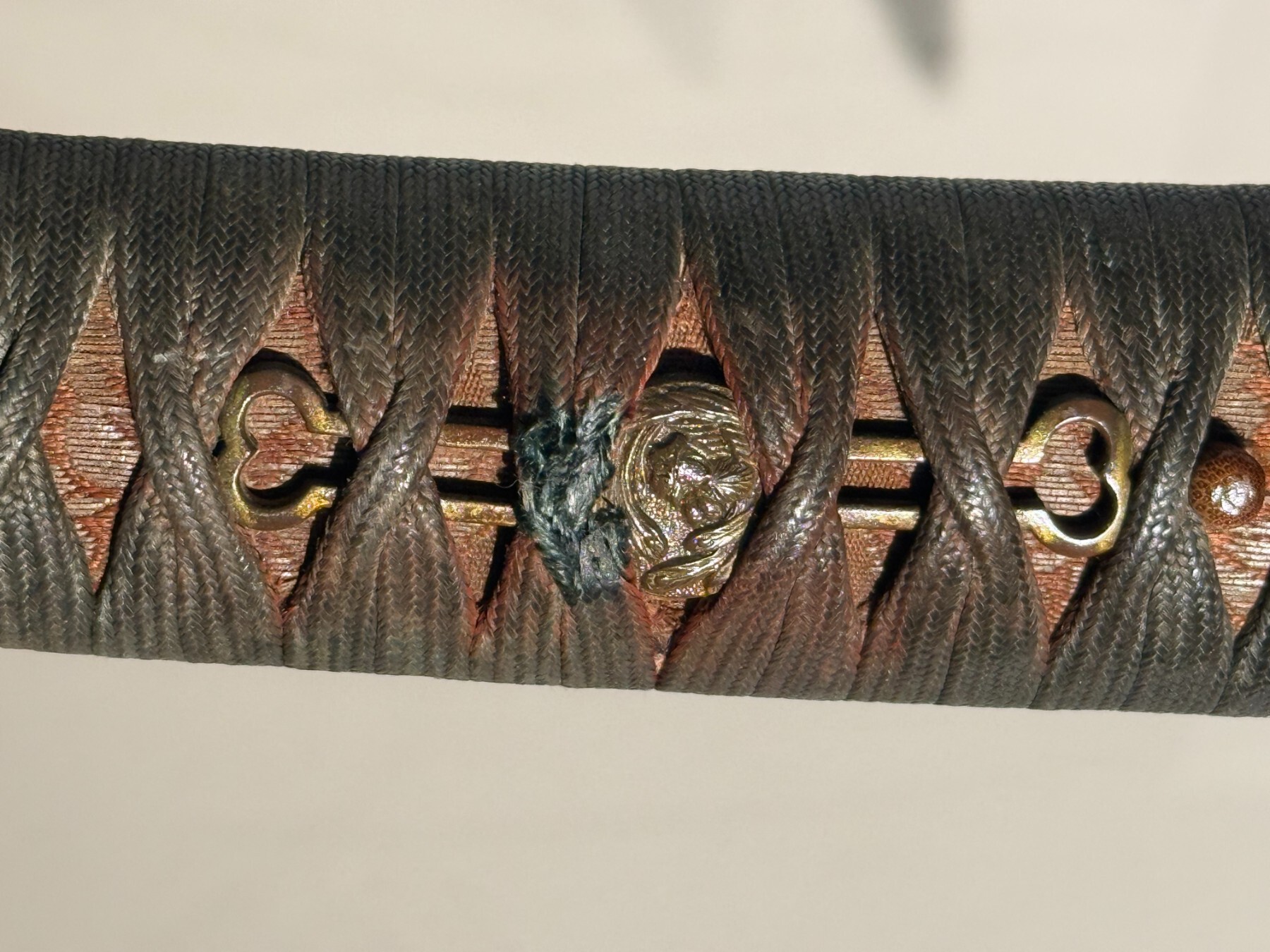
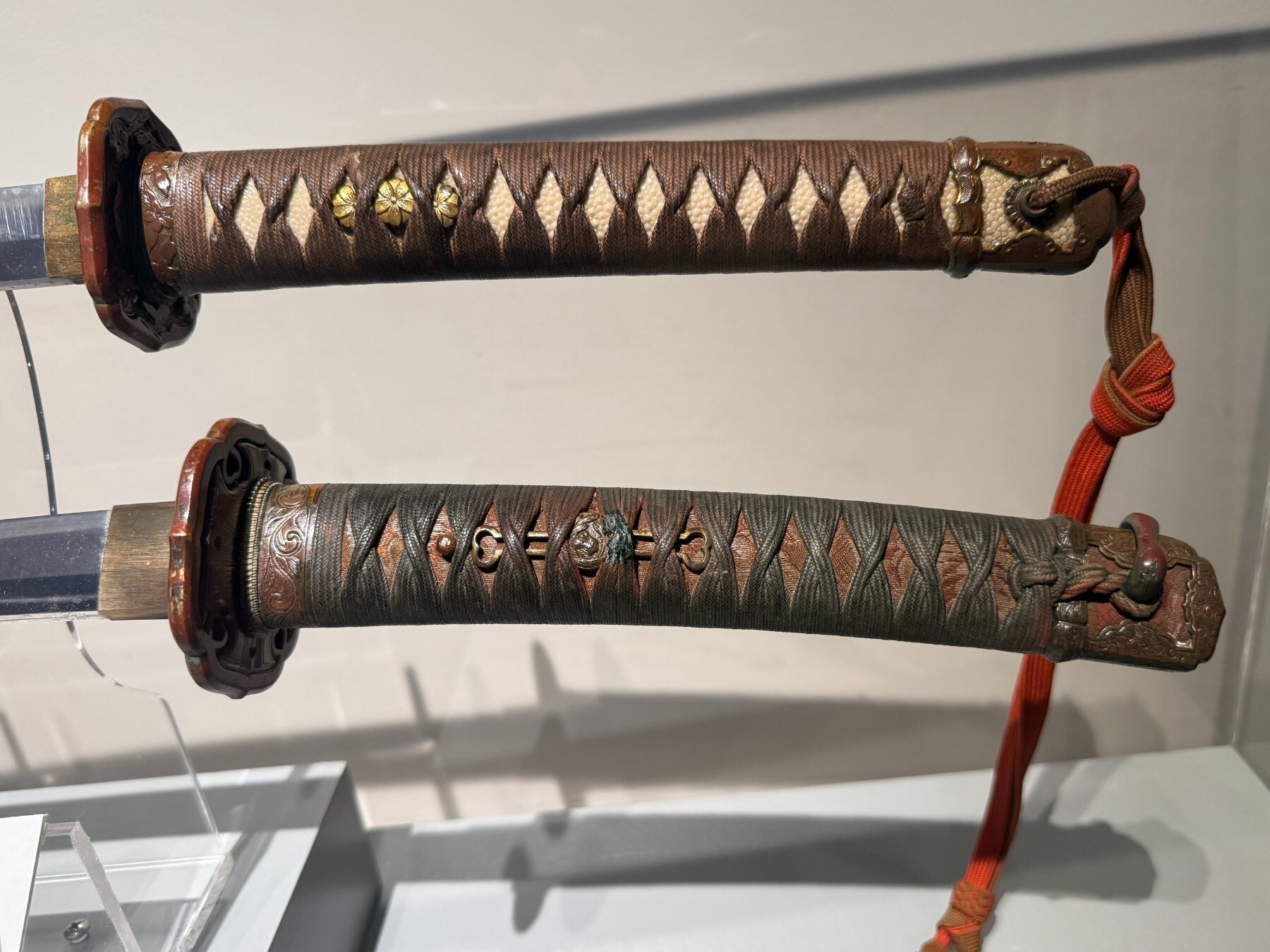
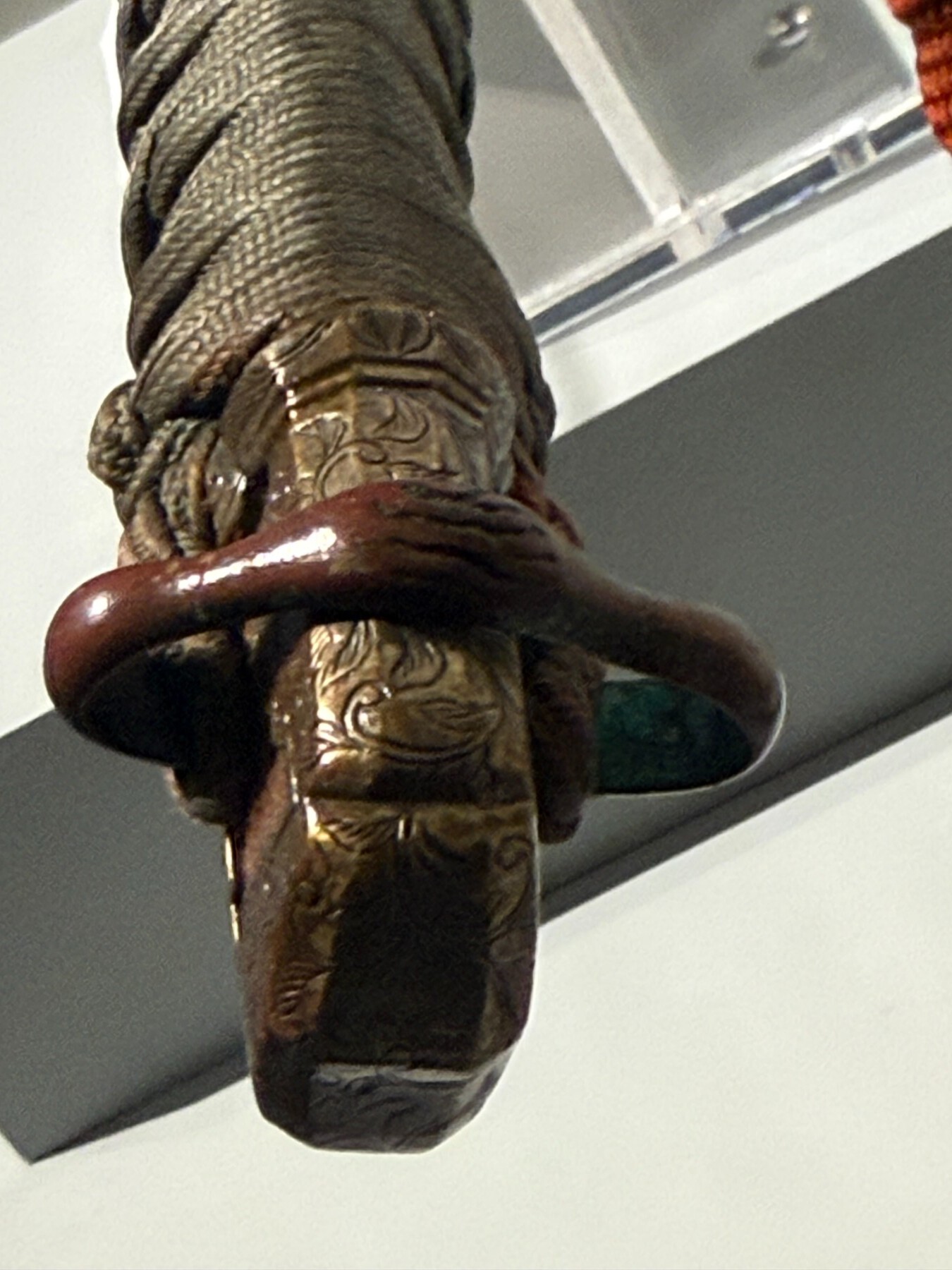
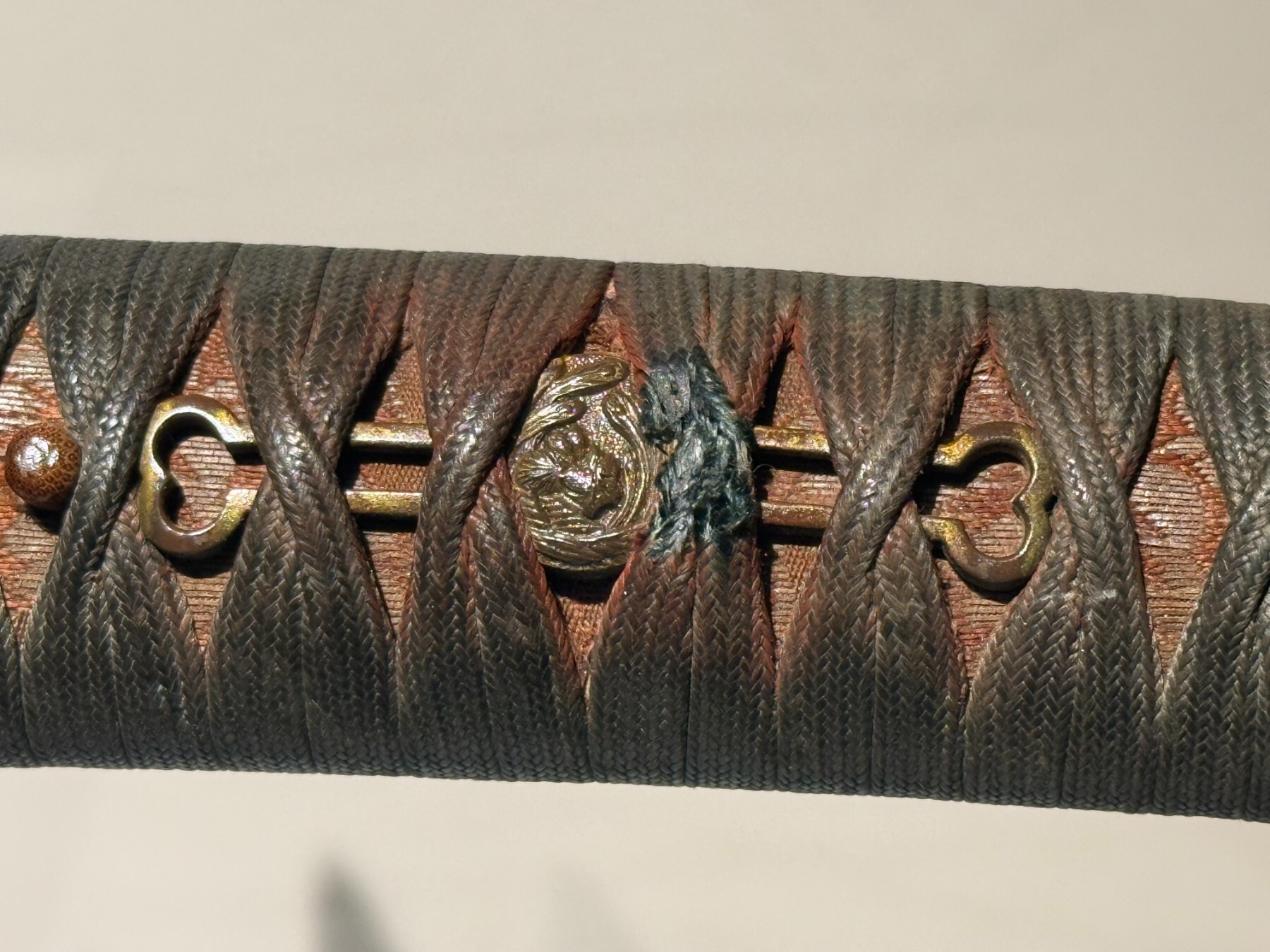
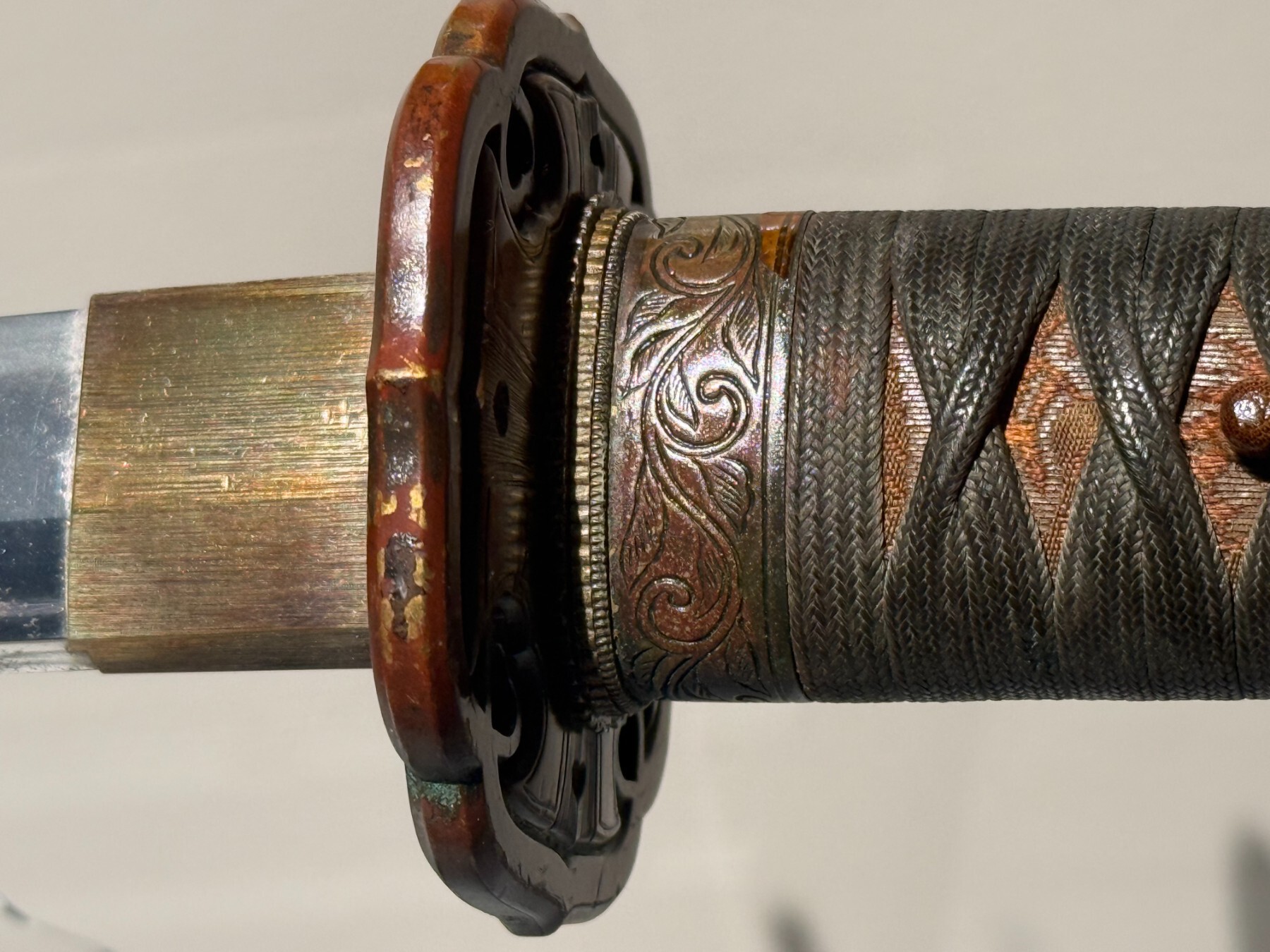
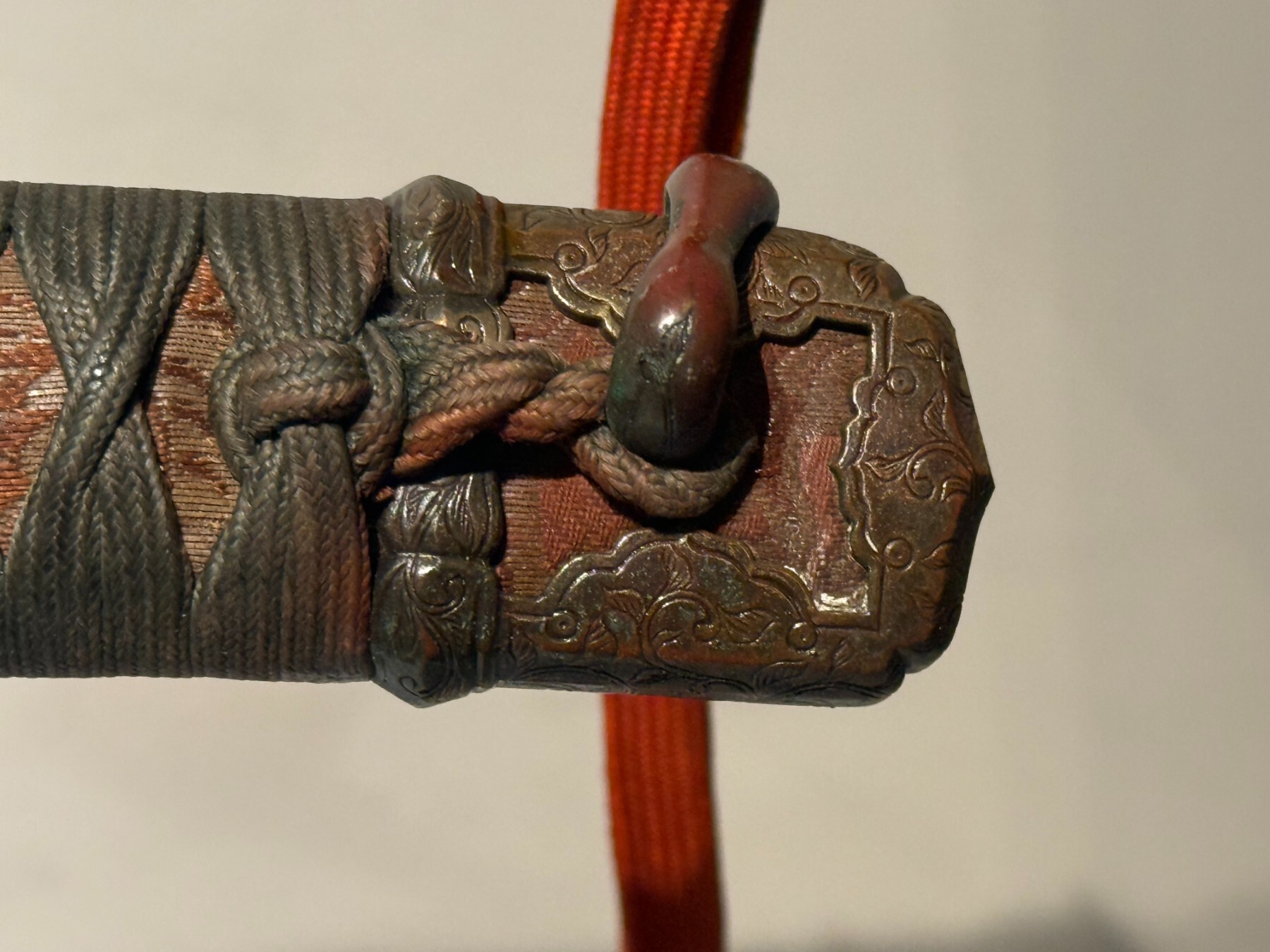
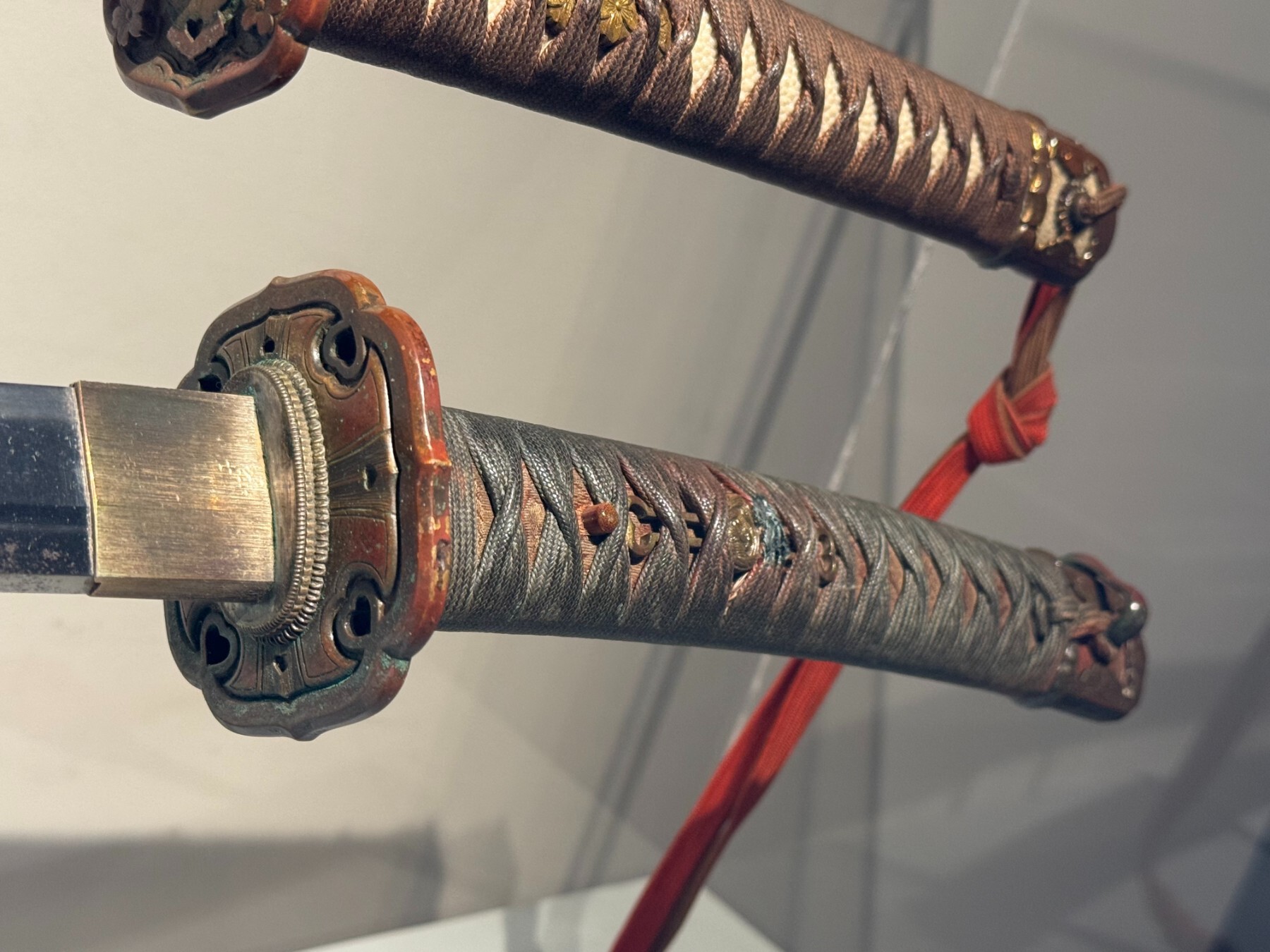
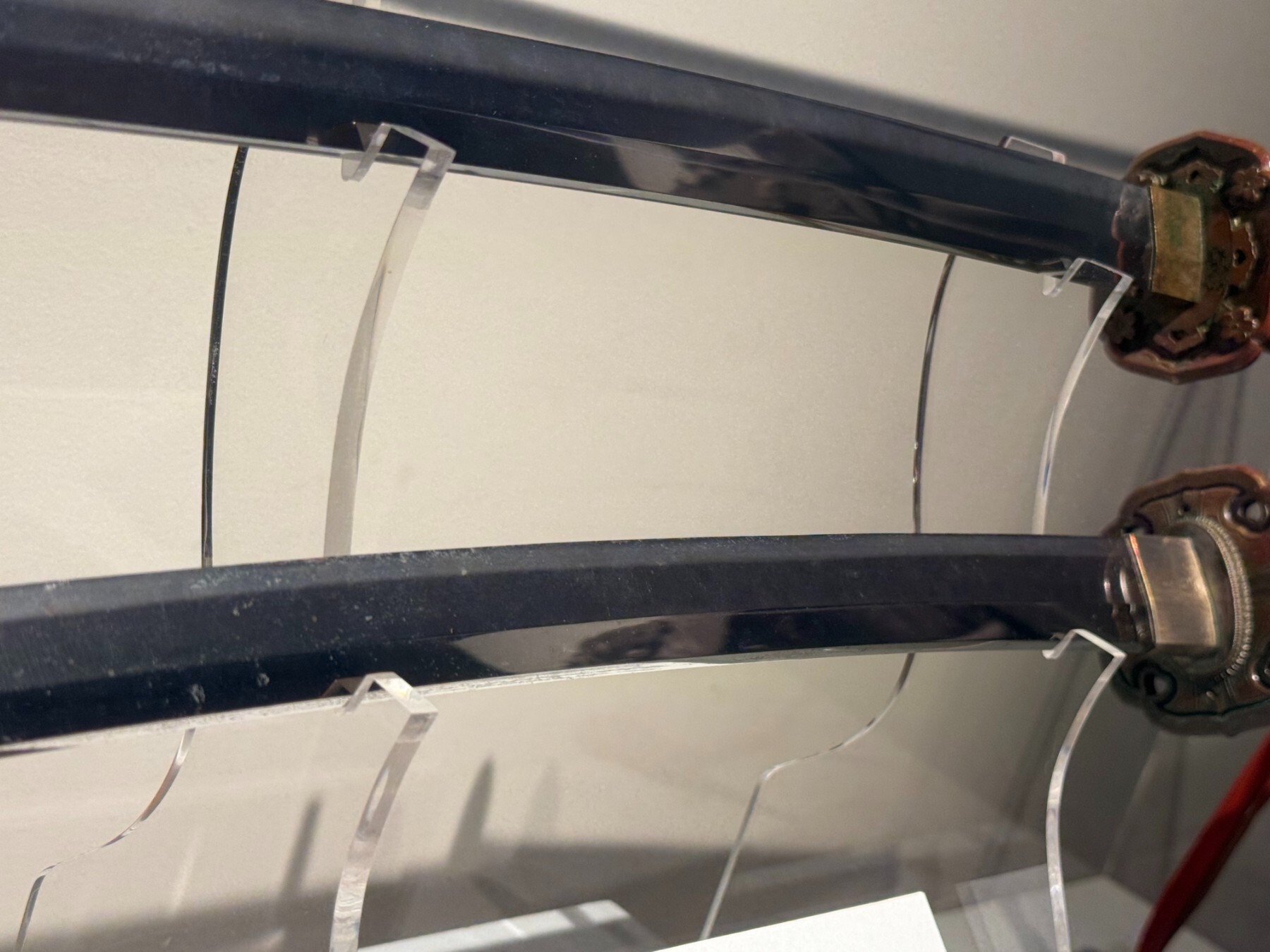
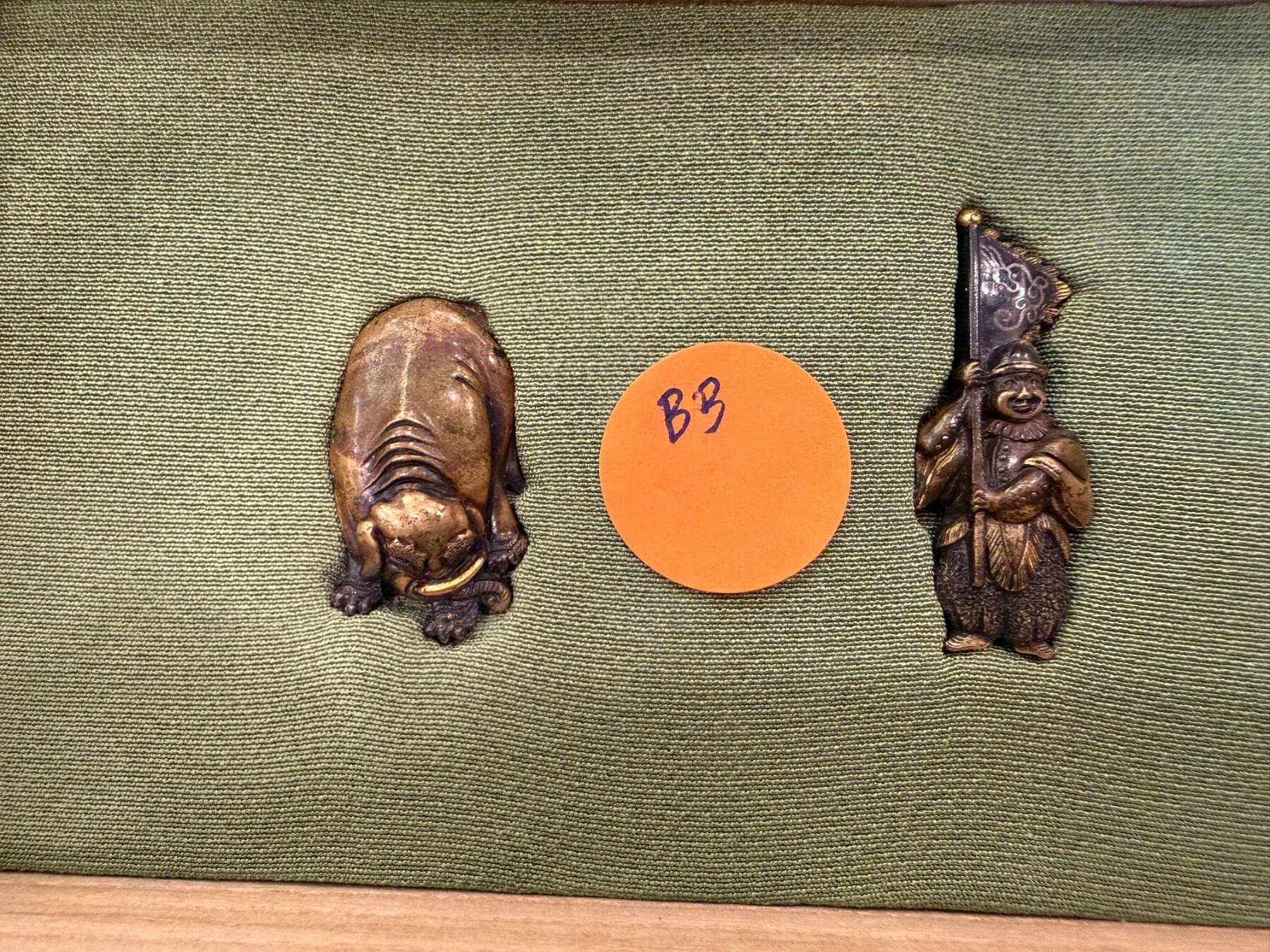
I donated a flag to the OBON society this weekend, and had the opportunity to tour their WWII display in the Maritime Museum in Astoria. I was surprised to see this sword on display. I’m no tosogu guy, but it immediately stood out to me as looking pretty nice and predating WWII. No saya was displayed unfortunately. I was hoping some of the tosogu folks here might be willing to offer their opinions on it, particularly regarding its quality, age, and any other details that might be apparent from the photos. What is the material under the ito? Also, I cannot tell what's in the center of the menuki for the life of me. Just a curiosity because I was immediately attracted to it. Behind plexiglass, so I did my best with photos. Thanks for taking a look! -Sam
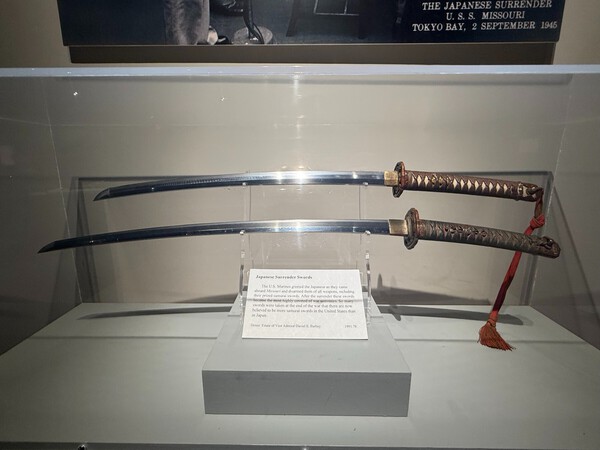
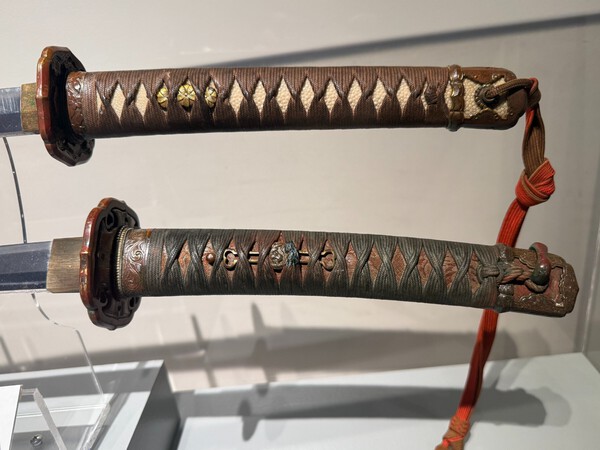
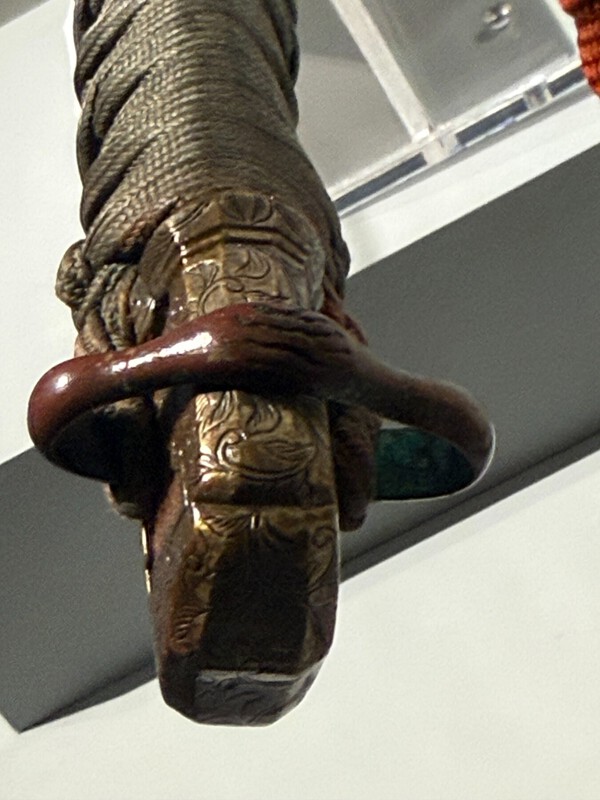
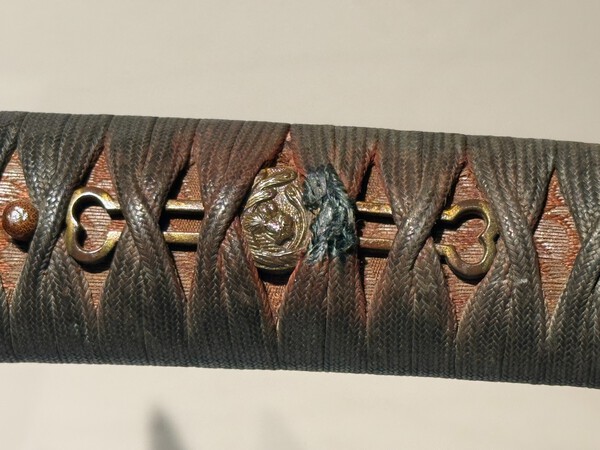
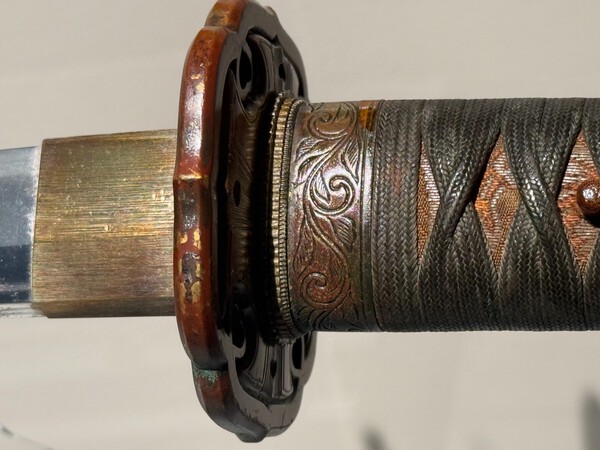

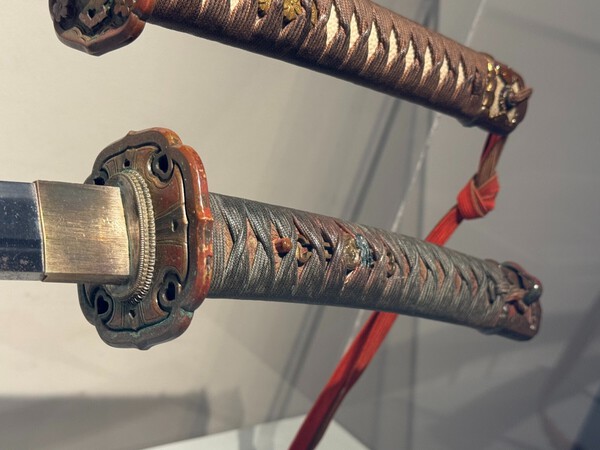
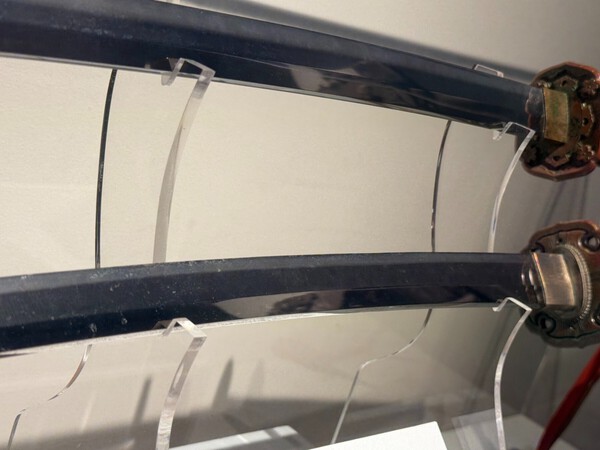
-
Additional WW2 Sword pics-looking for any information on sword
Scogg replied to Snpr41's topic in Military Swords of Japan
Bruce is likely referring to this users other post where he mentions his grandfathers service I considered merging these two threads, but the other looks like it highlights a Nihonto, and this one a showato https://www.militaria.co.za/nmb/topic/56383-ww2-swords-in-the-family/#comment-591194 -
Additional WW2 Sword pics-looking for any information on sword
Scogg replied to Snpr41's topic in Military Swords of Japan
Hi @Snpr41, Because of the presence of what looks like a SEKI stamp, I’m going to relocate this discussion to the “Military Swords of Japan” section. The scabbard looks like it was originally for a Type 95 gunto. Does it have a serial number near where the blade inserts? Best of luck, -Sam -
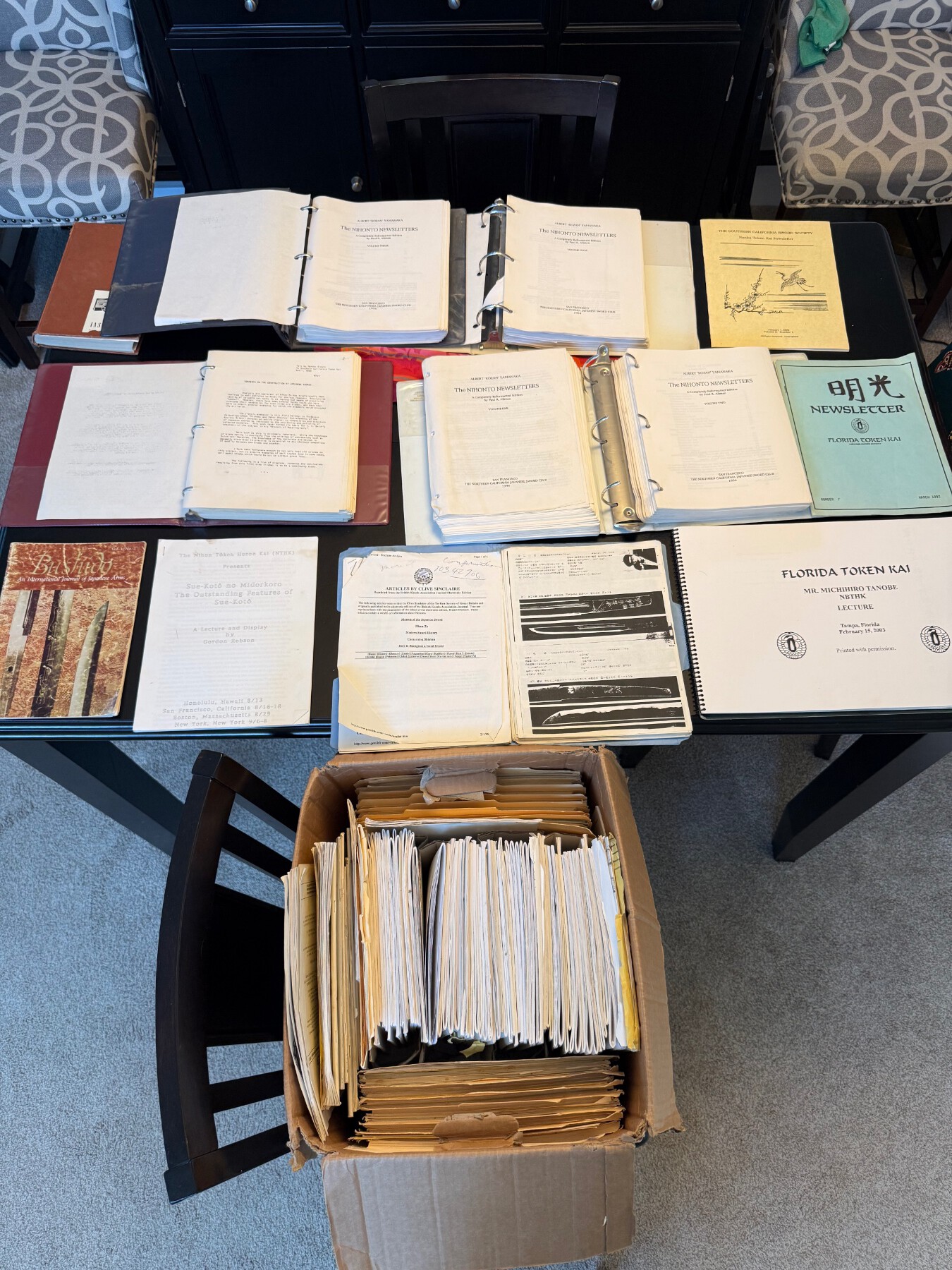
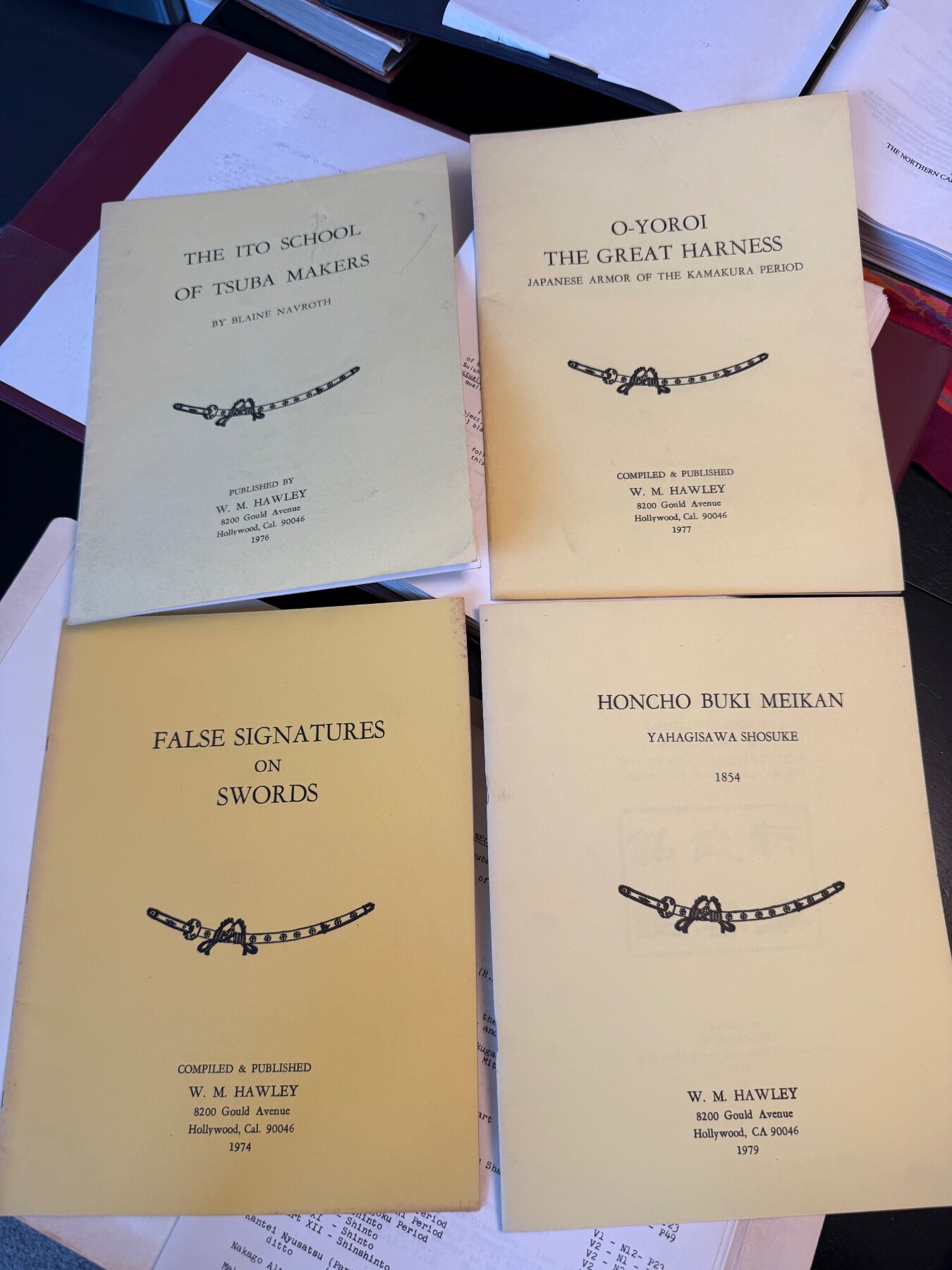
My sincere thanks to Marah. This is a serious “mother lode” of newsletters, documents, and study material. Not only JSSUS newsletters, but also newsletters from the Florida token kai, Northern California and Southern California clubs, bushido magazines, old internet printouts, and dozens of other articles and lectures from scholars ranging from the late 1960s to the 2000s. There’s even a JSSUS member roster from 1979. - Edit: -Japanese sword society of the United States newsletters from 1978-2006. -Yamanaka newsletters volumes 1-4. -4 Hawleys pamphlets. -Michihiro Tanobe lecture, 2003 Tampa Florida. -a small variety of Northern and Southern California material. -A binder full of a couple dozen papers written on a wide variety of Japanese sword related topics from a variety of authors. -A variety of loose material, some written in Japanese, and a bushido magazine. - Good thing I have a love for printed material and organizing! Going to try and get it in some sort of “order” and begin investigating and studying from there. If anyone sees anything they’re particularly curious about, I’ll take a closer look and share. All the best, -Sam

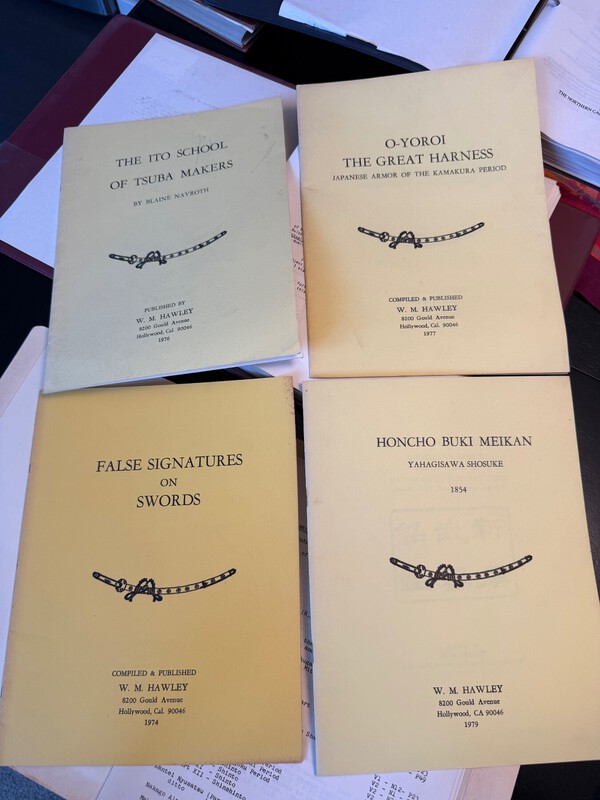
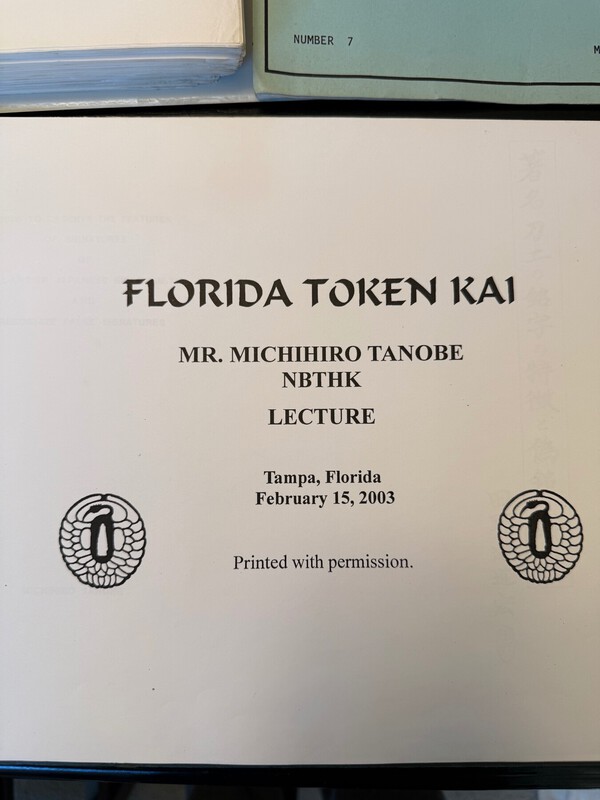
- 7 replies
-
- 11
-

-

-
WW2 gunto brass tsuba were all cast as far as I know. Many workshops made them, and they can vary in style and quality quite a bit. Theres is some debate about whether or not poorer casted examples are repros or late war. I actually have one just like yours, and I’m not certain if it’s a repro or not. See some similar examples here: https://www.militaria.co.za/nmb/topic/47106-fittings-thread/page/6/ Food for thought, -Sam
-
Just for future reference, your tsuba photos are oriented upside down. I agree that some look more promising than others, although I'm not qualified to determine if theyre cast or not. I think some better photo might be needed for the tsuba folks to make a determination. That brass one, with the 4 flowers, appears to be a tsuba for a World War Two shin-guntō (shown from my screenshot below): Best, -Sam

-
Hello Marah, my condolences about your father. I am likely nearby, and would be honored to have them. I have sent you a message. All the best, -Sam
-
Doh! I appreciate the correction Thomas. I spent some time talking to Nicholas, and really enjoyed the Bensons table. Don't know where I got Chris from; probably from meeting so many people. Edit made. Much appreciated, -Sam
-
The owner/seller told me every little detail about it. Although, I only remember so much. I'll do my best below, and I must emphasize, my version of the info/story pales in comparison to the version originally told to me. The original story was long, and much more specific. The Odachi is massive, must have weighed close to 10 lbs, and was polished by Chris Benson Nicholas Benson. Story goes (from the seller) that they had to make a special rig to properly polish a blade of this size. From my poor memory: The blade was forged in the late 1800s. Made for a man who fought and returned from the first Sino Japanese War. Allegedly, it was made by the family for the soldier, in a way to say "thanks for your service, and we love you thiiiiis much" . Some of that information is on the Nakago, of which I did not personally see. Wish I could remember more details about the soldier, the family itself, or the smith. Maybe someone who attended the show heard the story and remembers more than me. All the best, -Sam
-
I'm probably one of the biggest skeptics of AI. That said, what Chandler and Hoshi are doing with it is genuinely impressive, and in my opinion, the right way to use the technology. I'm continually impressed by their work. That's where I think AI shines; gathering source material, organizing large amounts of data, and helping researchers study more efficiently. Not replacing the research itself or becoming a substitute for learning. What drives me crazy is when people use it to copy and paste questions and answers, then treat its output as unquestionable fact. We've all seen it on this forum, "But ChatGPT says otherwise!" As if the rest of us couldn't ask ChatGPT the exact same question ourselves. That's neither here nor there. I also agree with Chandler regarding photographs and that images are the limiting factor. Unless the AI is working from 100% clear, high-quality photographs, and even then it will inevitably have to make assumptions based on incomplete visual information. That doesn't make it useless, but it does mean its conclusions should be treated as a starting point for investigation, rather than the final word. When photos get that good, I'll stop traveling around to see swords -Sam
-
Indeed. I wish I could have taken better photos, but being behind that plastic barrier made it difficult. Those blades were also right at the entrance, and I didn't want to get in peoples way taking a bunch of photos . Those three amazing blades were on Fred Weissberg's table. Best, -Sam