Scogg
-
Posts
1,934 -
Joined
-
Last visited
-
Days Won
20
Content Type
Profiles
Forums
Events
Store
Downloads
Gallery
Everything posted by Scogg
-
From the same member too, @Kanenaga, are these two separate posts about two different copper-alloy tsunagi, or is it the same one? Would love to see the whole thing -Sam
-

type 19 kyu gunto dress swords, i love them.
Scogg replied to lonely panet's topic in Military Swords of Japan
Woops, my misunderstanding. Of course, in typical fashion, it looks like I neglected to photograph one of the most important parts! (The entire backstrap). I will get a better photo later today or when the general-grade arrives. For now, here’s what I’ve got. -Sam

-
type 19 kyu gunto dress swords, i love them.
Scogg replied to lonely panet's topic in Military Swords of Japan
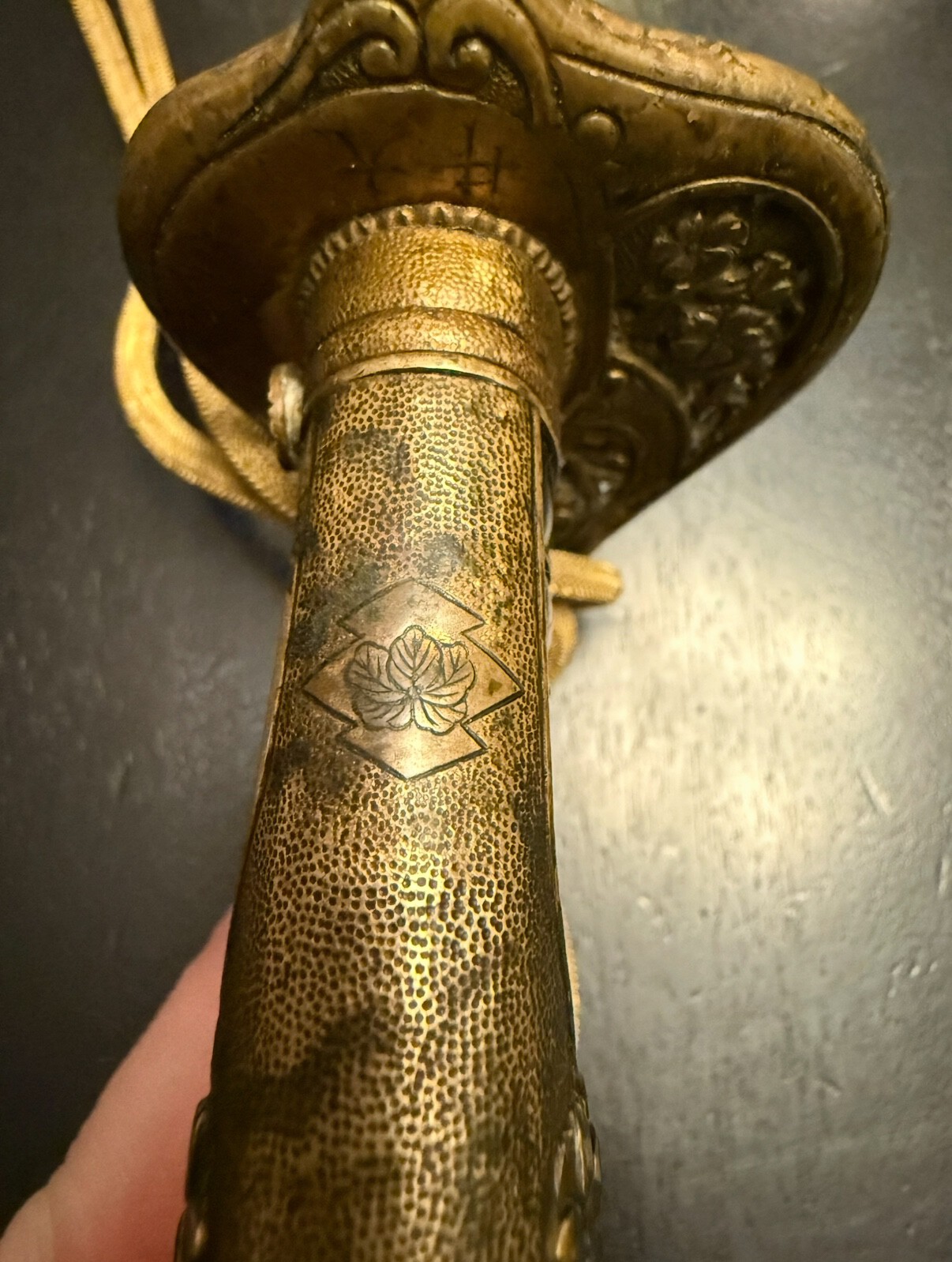
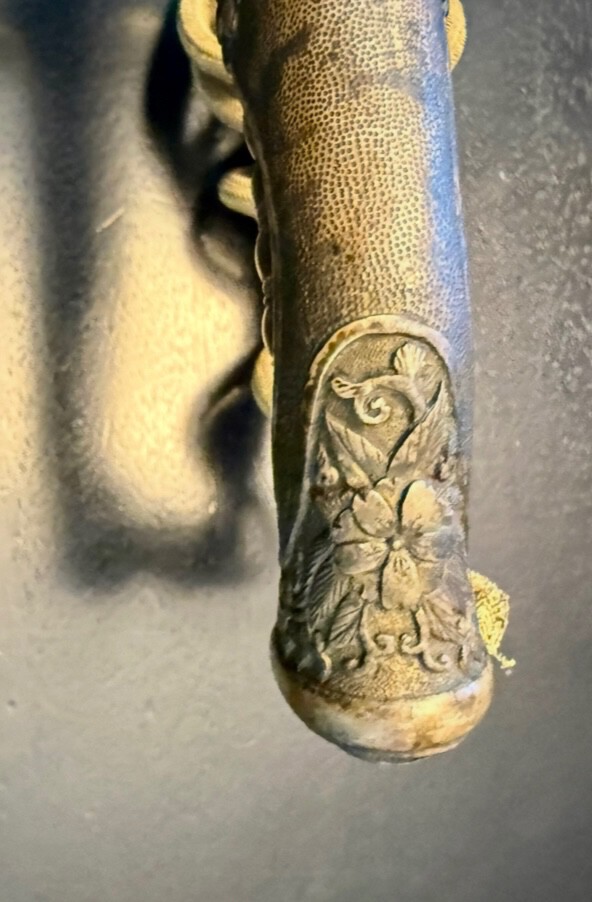
Hi @Kantaro, The engravings in question are shown above, and highlighted by Hector. The engraving is of the kanji: 大井 = Ōi or Ooi I recently won a bid for a general grade dress sword. It is a pretty standard one, no mon or blade engravings; but it has some interesting stamps and the nice tortoise handle. Hoping to complete my collection with a Company, Field, and General grade saber. I will share photos of my three side-by-side when/if it arrives. I don't think I will try for the Emperor grade -Sam -
Photographs Illustrating the Wearing of Japanese Guntō
Scogg replied to saemonjonosuke's topic in Military Swords of Japan
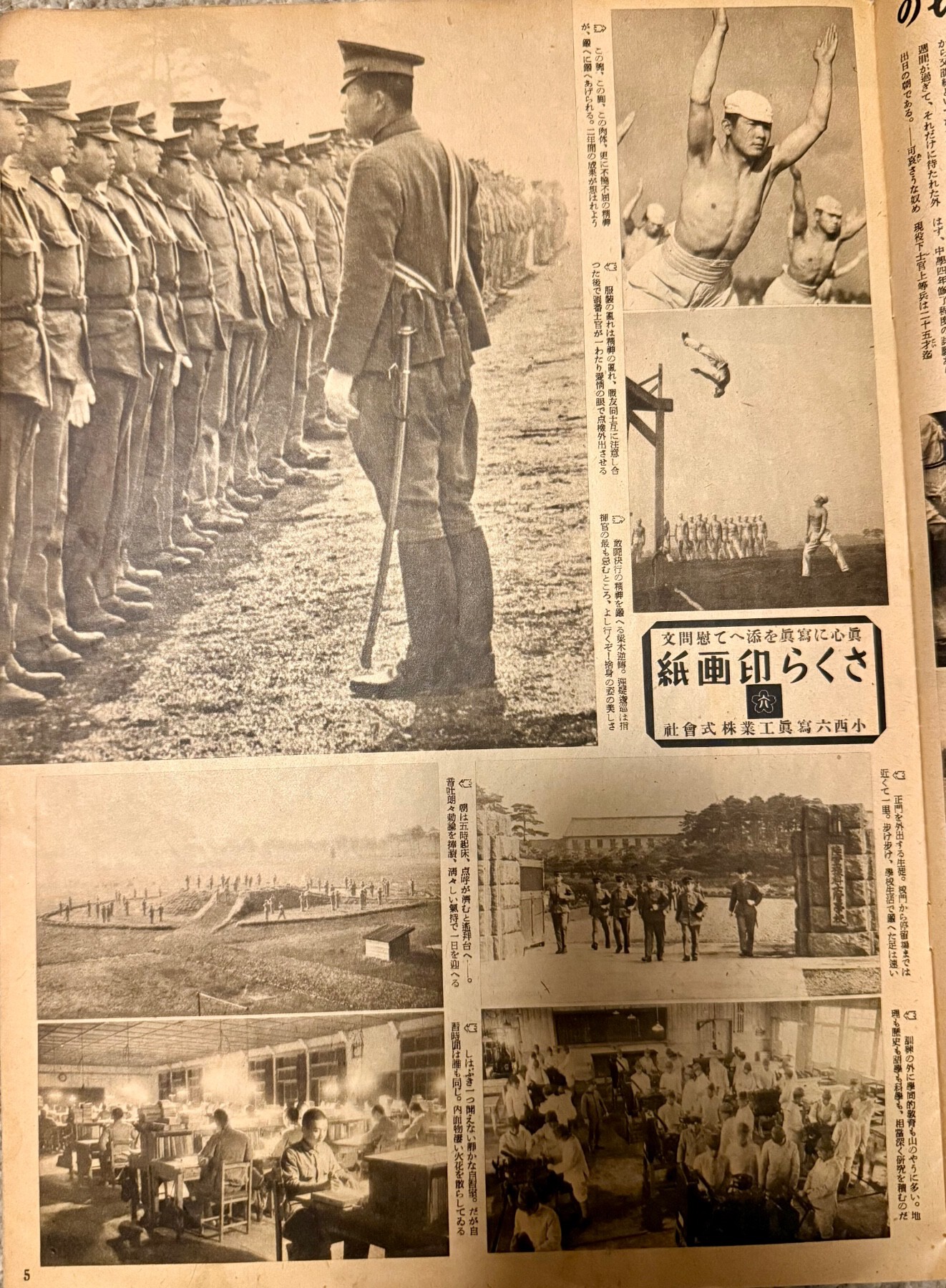
Another one from one of my magazines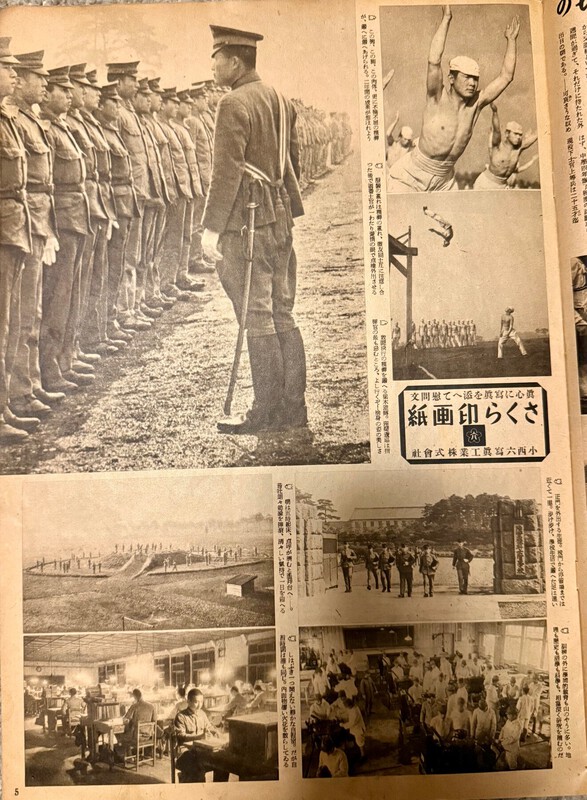
-
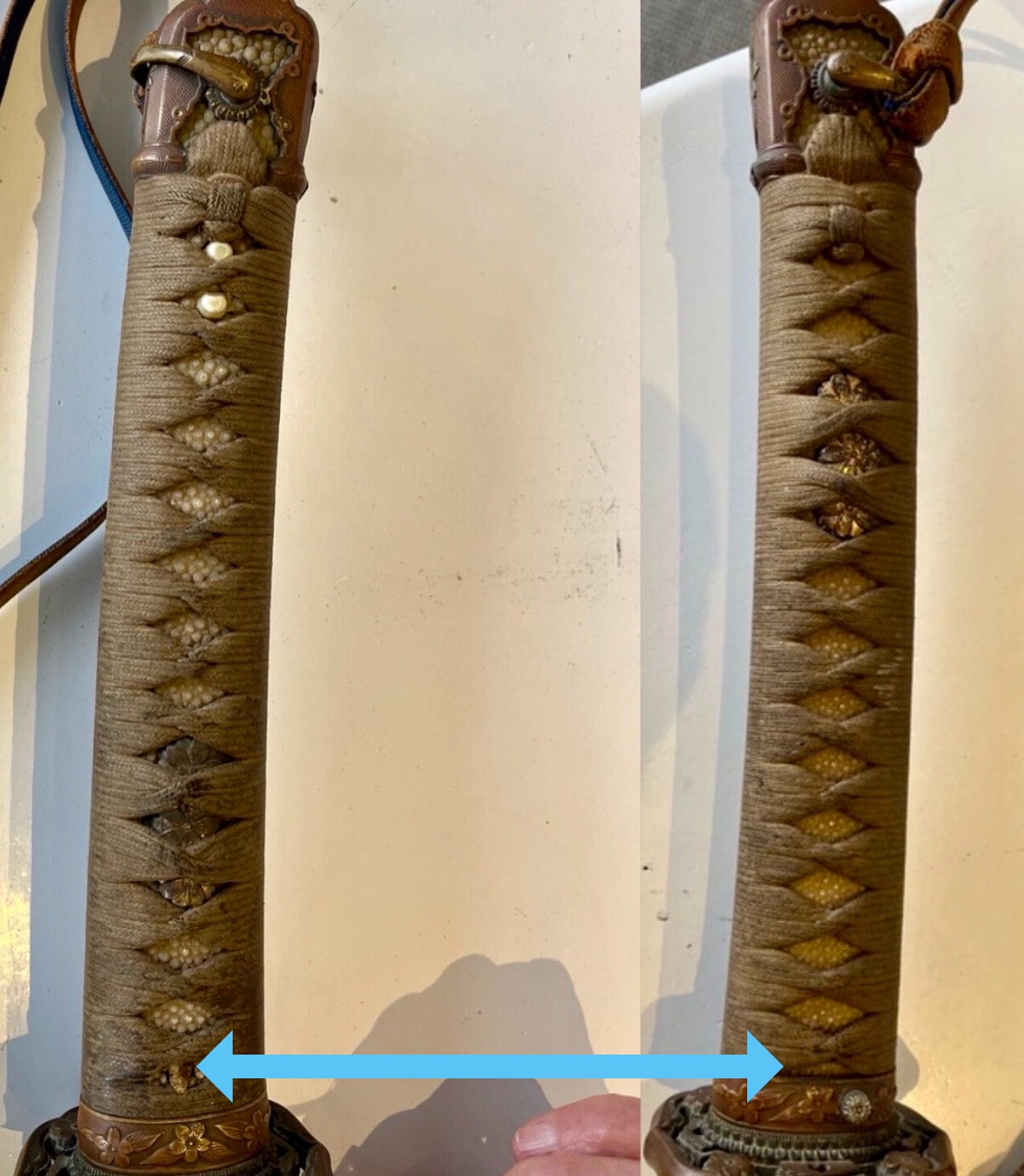
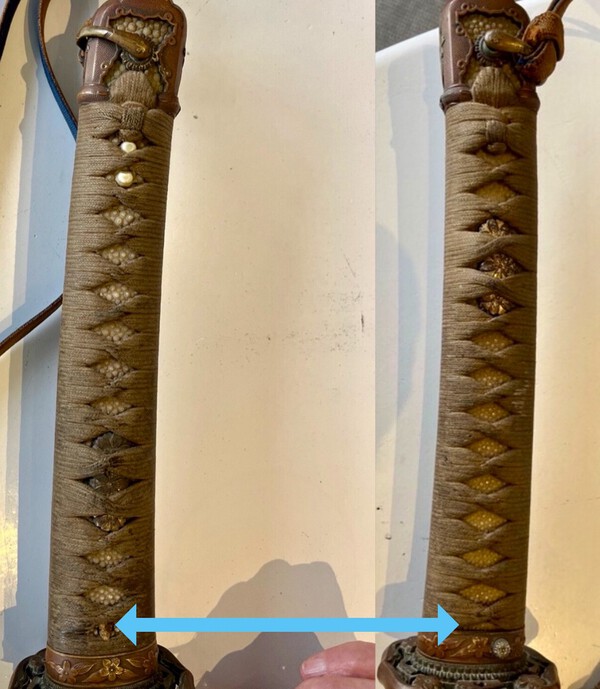
Hi @Gelotti Im going to relocate this topic to the military swords of Japan section; where I think you will get better feedback. It appears to be a real Type 98 Gunto tsuka. If you can show the blade and tang it will help get you the most information. The white “buttons” are nodes from the samegawa (ray skin), and you do not want to remove those. The part you want to remove is the bamboo pin indicated in the image below. In the right image it appears to be partially covered by the ito (silk wrap), so removing it may require some careful finesse. The bamboo pin is slightly conical, which means it will only come out in one direction. Based on the orientation shown, it most likely needs to be pushed toward you in the left image. Best of luck, -Sam
-
Hi @M Ubertini, I'm going to relocate this to the TOSOGU section. That's where most of the tsuba and fittings people hang out; and they will like to see this one. Lovely looking piece, congratulations! -Sam
-
Photographs Illustrating the Wearing of Japanese Guntō
Scogg replied to saemonjonosuke's topic in Military Swords of Japan
https://www.invaluable.com/auction-lot/saito-makoto-1858-1936-1589-c-e6e9ce8f25?objectID=202806750&algIndex=upcoming_lots_prod&queryID=766a104cadbd61662fc74eecc2847237
-
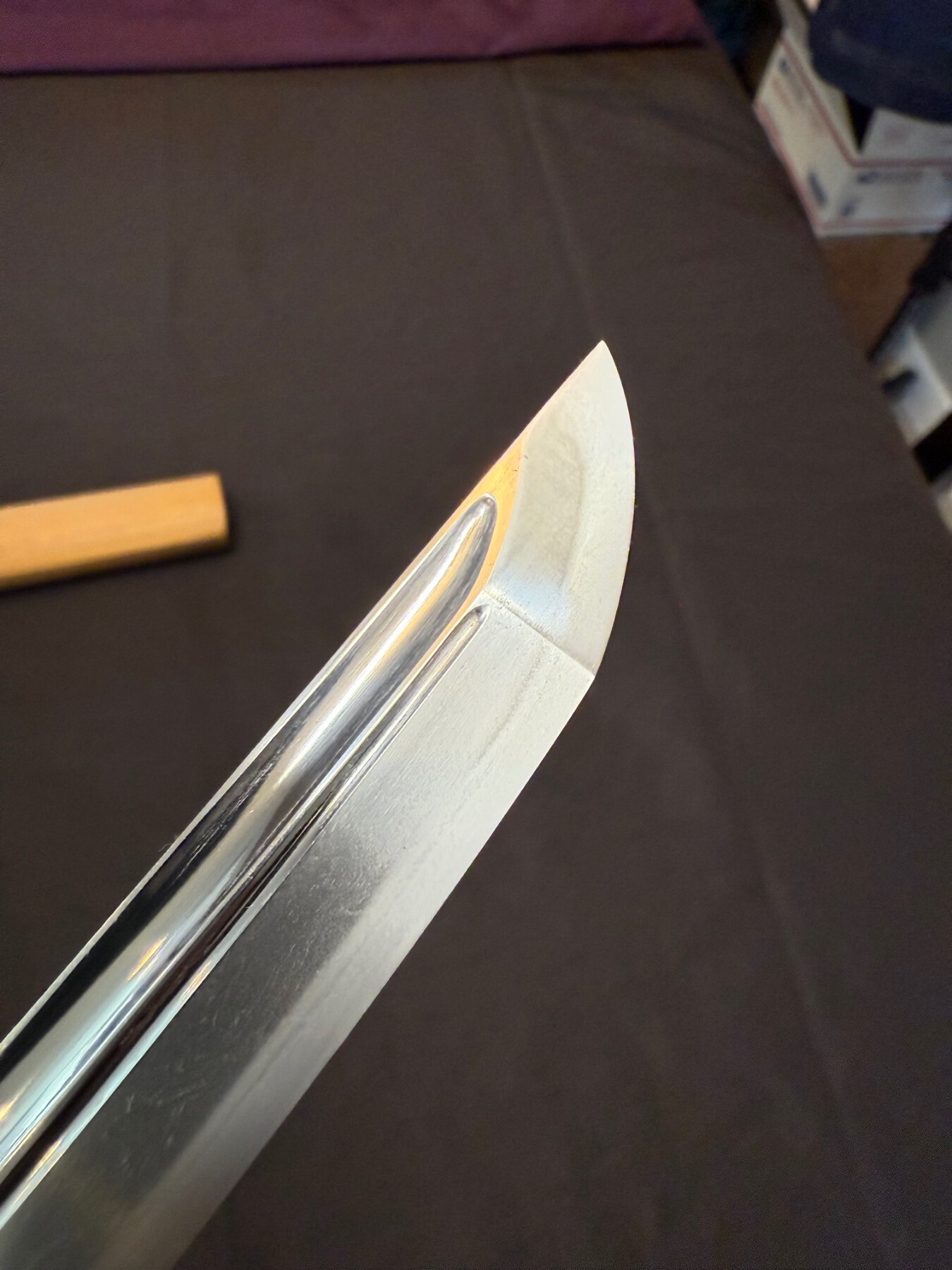
Wonderful explanation @Ed, thank you! @Lewis B, I enjoy the exercise, but please understand this is just my interpretation: I would say that’s enough hakikake and expressed in a way to be called kaen. The way the nie and hakikake are wavy and then feathering away toward the yakote. Looks very flame like to me. Looks nice, -Sam
-
I am looking to buy Type 95 Guntō variations in good condition. I hope to buy each variant, take photographs for my document project in the downloads section, and then resell them to buy another. So please understand that I will be reselling these swords; an arrangement can be made where I sell them right back to you for the same price (and I cover all shipping). Budget 5k USD and under. This is a "long term" project, and I do not expect this to accomplish this quickly All the best, -Sam Variation 1 (Early Copper Hilt horseshoe Saya plug) Variation 1 (Copper Hilt straight Saya plug) Variation 2 Suya Variation 2 Iijima Variation 2 Gifu Variation 3 Variation 4 (Dawsons 2a) Variation 4 Variation 5 (nagoya aluminum side latch) Variation 6 (Unfullered Aluminum Suya) Variation 7 (Fullered Wood Handle) Variation 8 Variation 9 (Jinsen)
- 1 reply
-
- 3
-

-
Would it be fair to say that all kaen is a form of hakikake, but not all hakikake is considered kaen? In other words, is kaen essentially a particular expression of hakikake? That’s how I’ve interpreted it, but I’d like to know if that’s the right idea. -Sam
-
I had this same question a few years ago. It still crosses my mind often. https://www.militaria.co.za/nmb/topic/45639-in-the-boshi-hakikake-vs-kaen/ As I understand it, a boshi is considered kaen when hakikake predominates, rather than simply being present as a secondary characteristic. This link helped me understand: https://markussesko.com/2015/06/10/kantei-3-hamon-boshi-3/ "hakikake-bōshi (掃掛け帽子) – Bōshi whose main characteristic feature are hakikake. However, a bōshi with an even larger amount of hakikake is usually referred to as kaen (火炎)." All the best, -Sam
-
Hi @Ben A Harris, You have what looks like a large and imposing sword in those WW2 military fittings. Are you able to take the handle off, and show us the tang? These swords were designed to be disassembled, so fear not. But still, proceed with care and caution. Skip ahead on this video to the time 6:40, for instructions on disassembling a sword in fittings.
-
Orlando 2026
Scogg replied to stackinnutts's topic in Sword Shows, Events, Community News and Legislation Issues
I'd love to go this year. The Orlando and Chicago shows are still on my bucket list. I doubt I will be at the chicago show this year, but I'm trying to make Orlando happen. But it's a bit further away from Oregon @stackinnutts, I am going to relocate this forum topic to the "Sword Shows, and Events" section. Best, -Sam -
When you say that you are restoring an old sword; what do you mean exactly? Are you doing this yourself, or commissioning the work through an expert? Here on the Nihonto Message Board, we are dedicated to the study and preservation of genuine Japanese swords and fittings. We do not condone or support DIY restoration attempts. These pieces are culturally significant works of art, and attempting restoration without proper and extremely specific training can cause irreversible damage. Any restoration work should be entrusted only to professionally trained craftsmen and qualified togishi. Preserving these swords for future generations is a responsibility we take seriously. Regards, -Sam
-
type 19 kyu gunto dress swords, i love them.
Scogg replied to lonely panet's topic in Military Swords of Japan
Great example, Conway! It looks like the measurements of both our swords are a bit different, and also different than the combination sword example on Ohmuras site. Although, yours is a bit closer to those specs. I believe the tang of mine is probably threaded, and I suspect it's threaded into that decorative Sakura flower at the pommel. I do not dare risk taking it apart, out of fear of damaging it. I hope @Kantaro is OK... We haven't seen him in a while. All the best and thank you for sharing, -Sam -
SOLD That was quick! Thank you to the buyer. Donation incoming to the board. Will archive in a day or two. All the best, -Sam
-
If sold, a 10% donation will be made toward the forum.
-


-
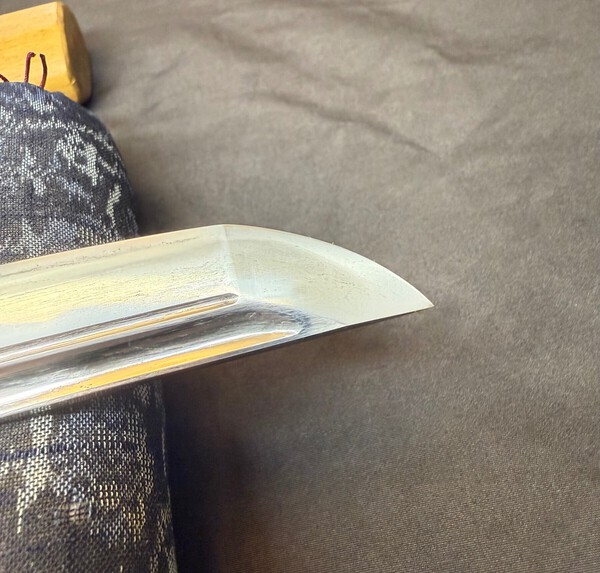
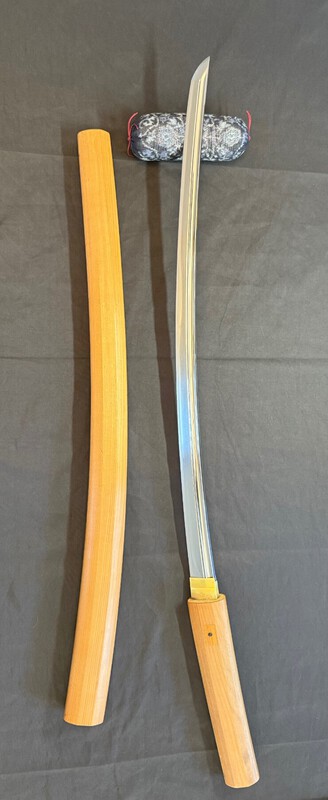
More photos:


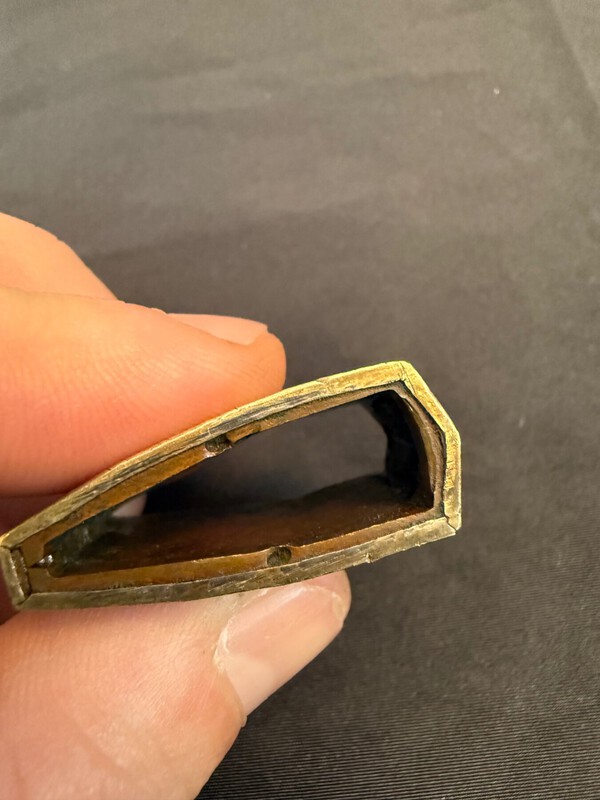
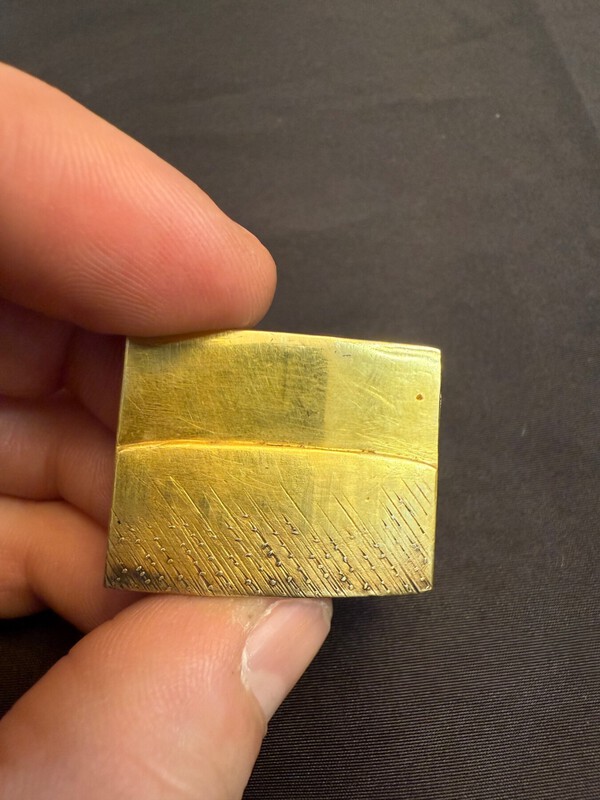
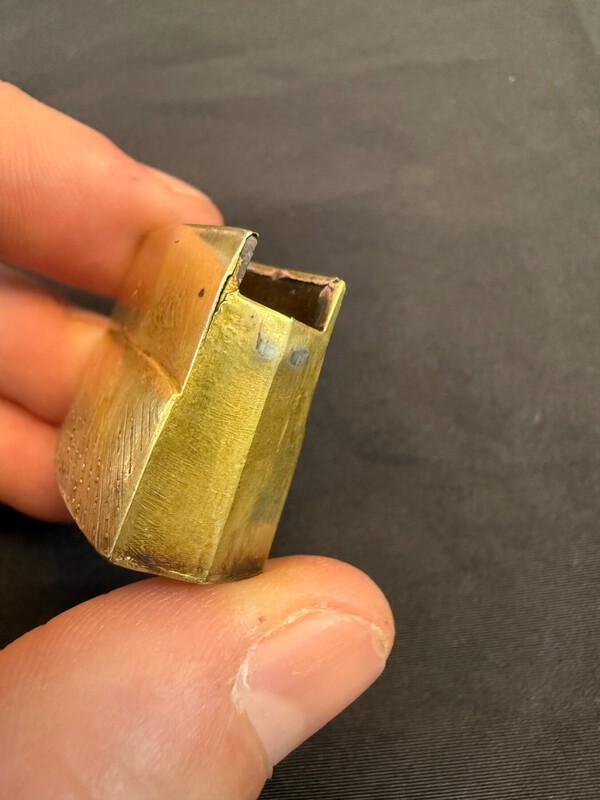

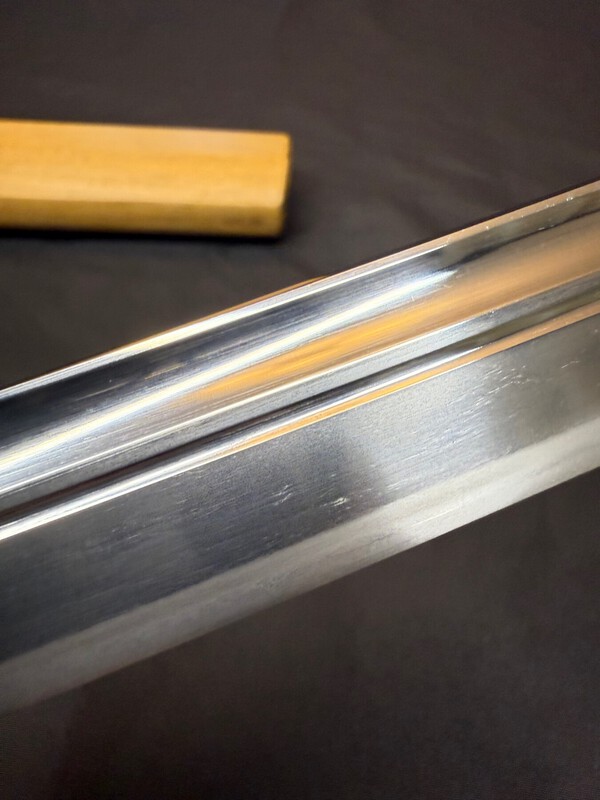




-
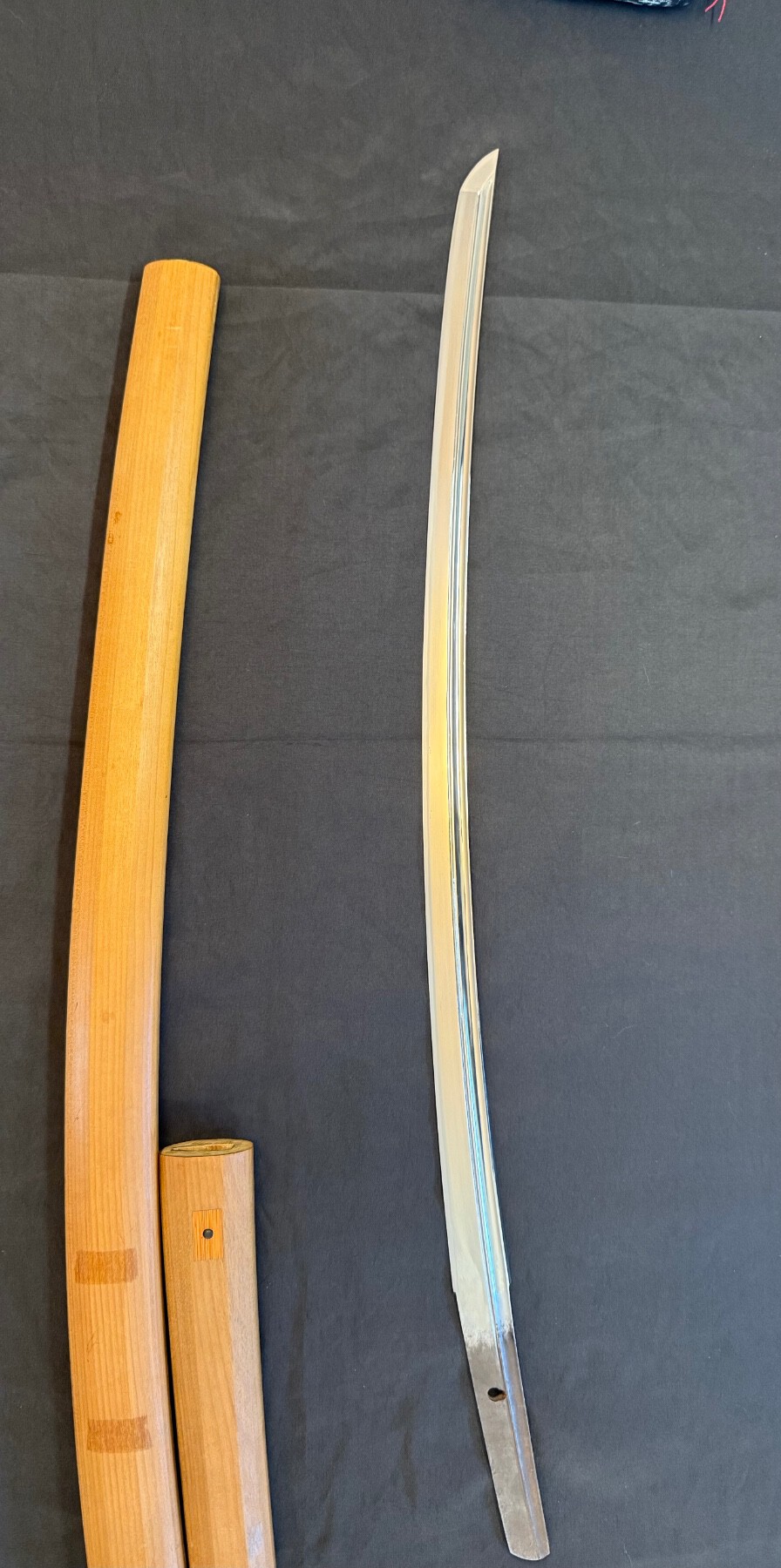
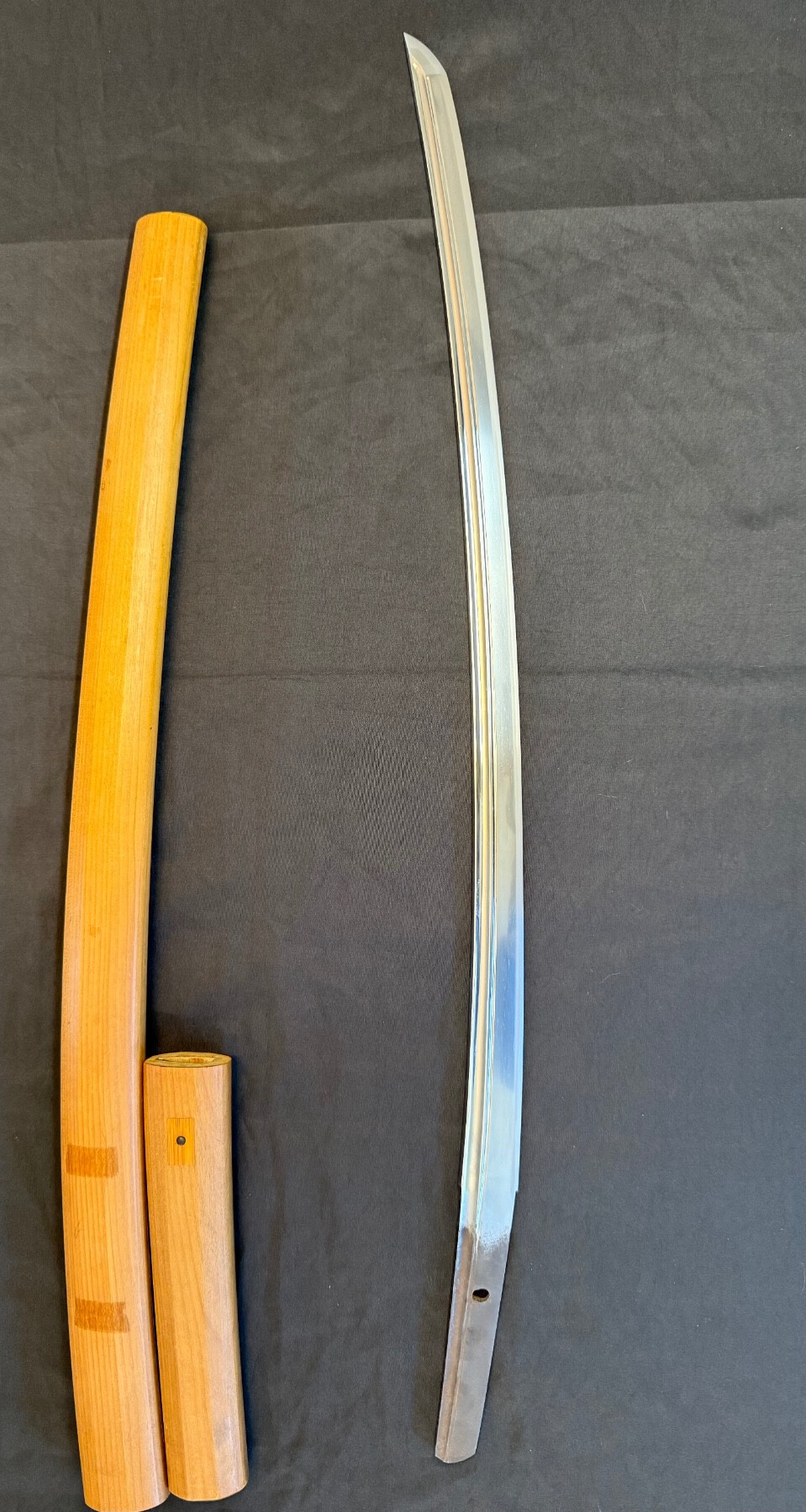
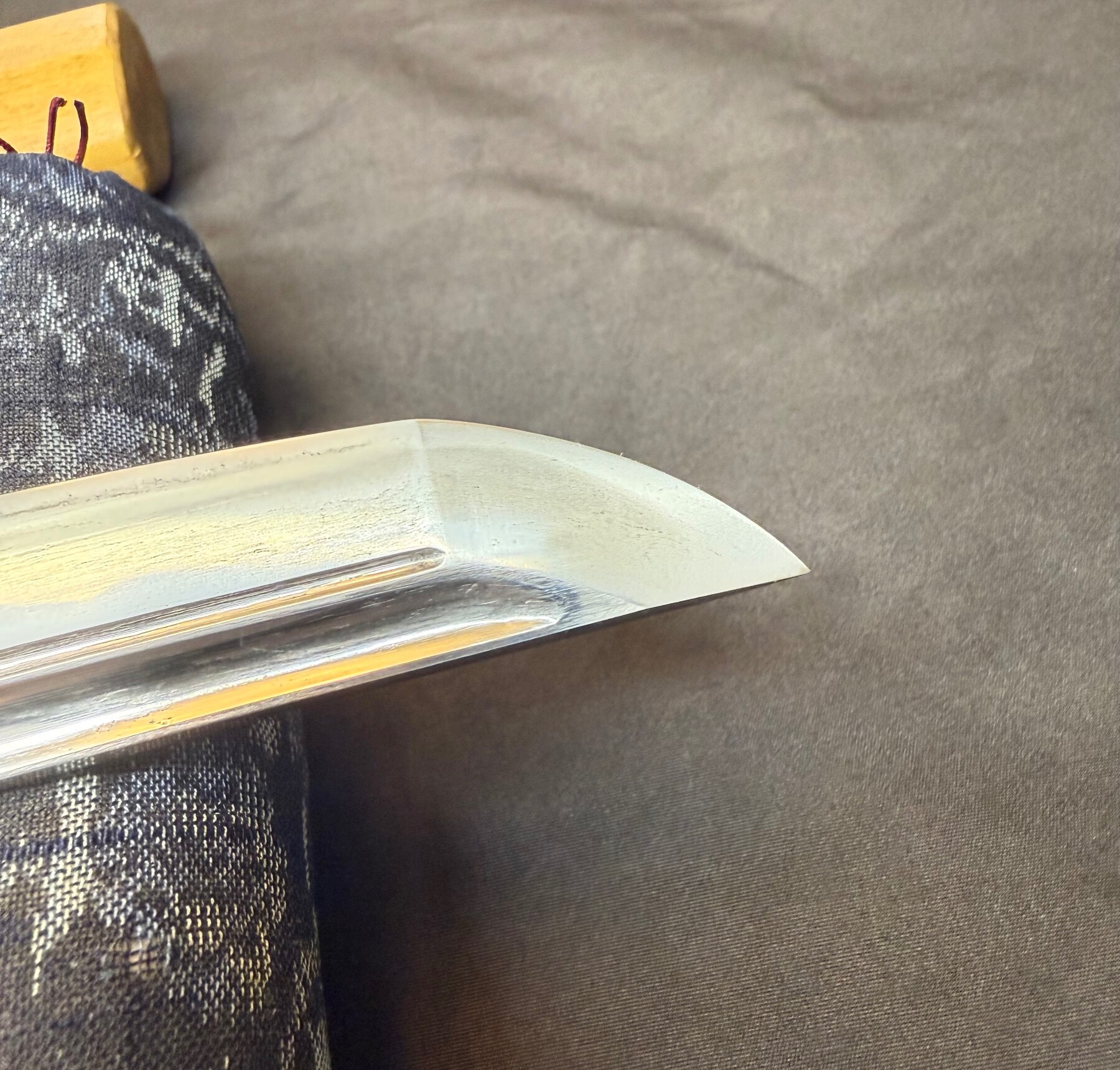
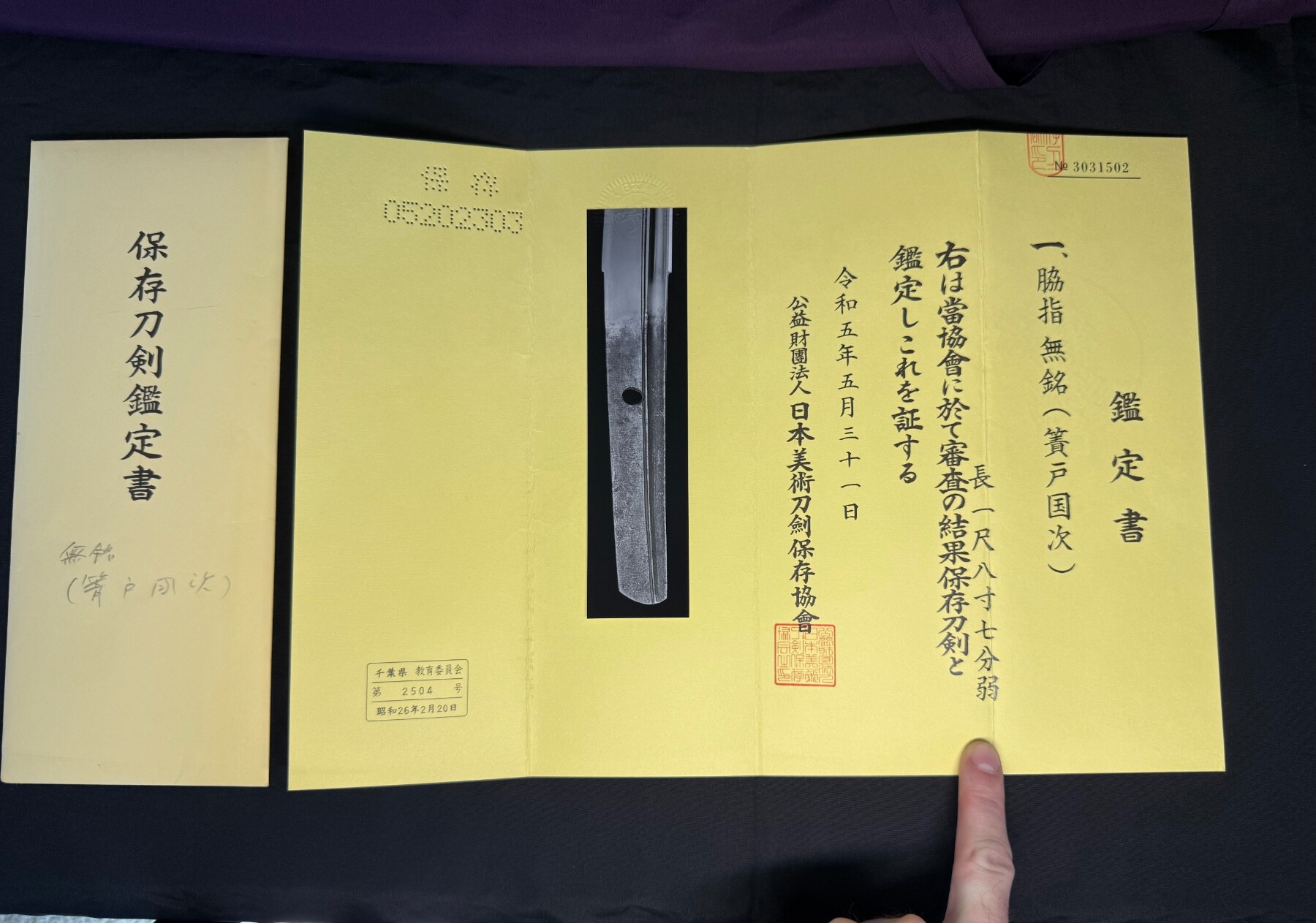
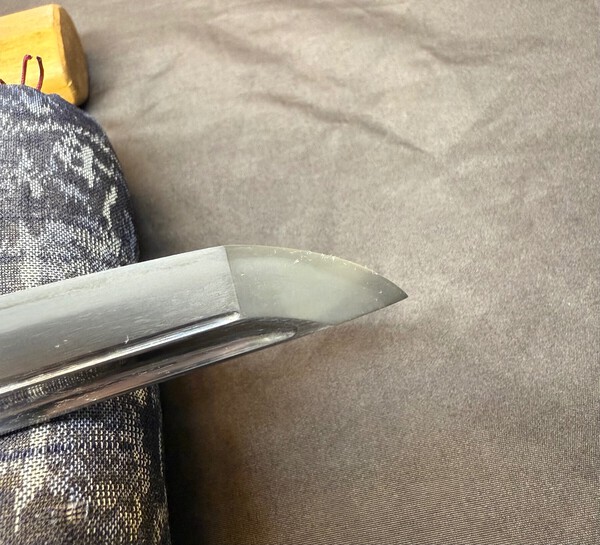
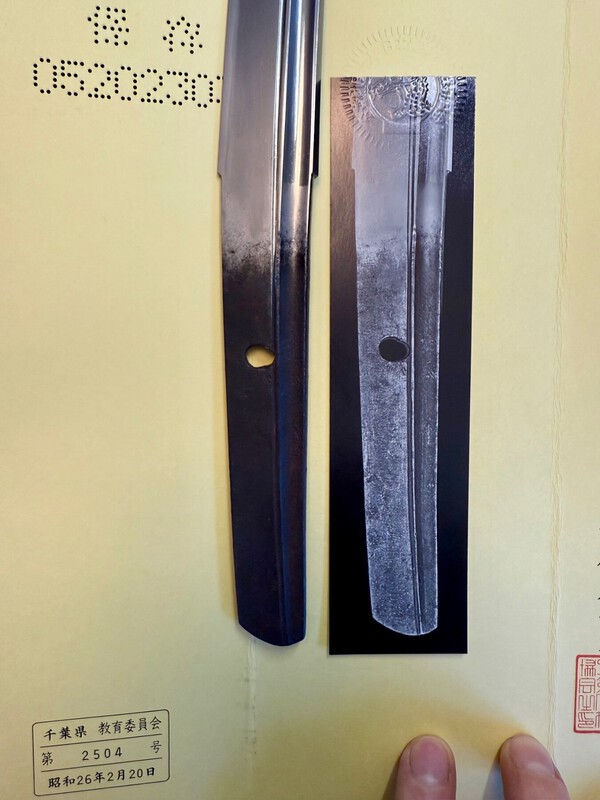
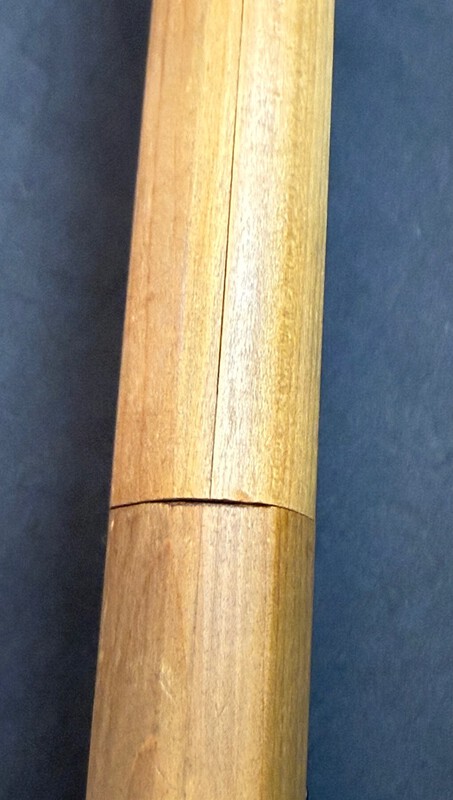
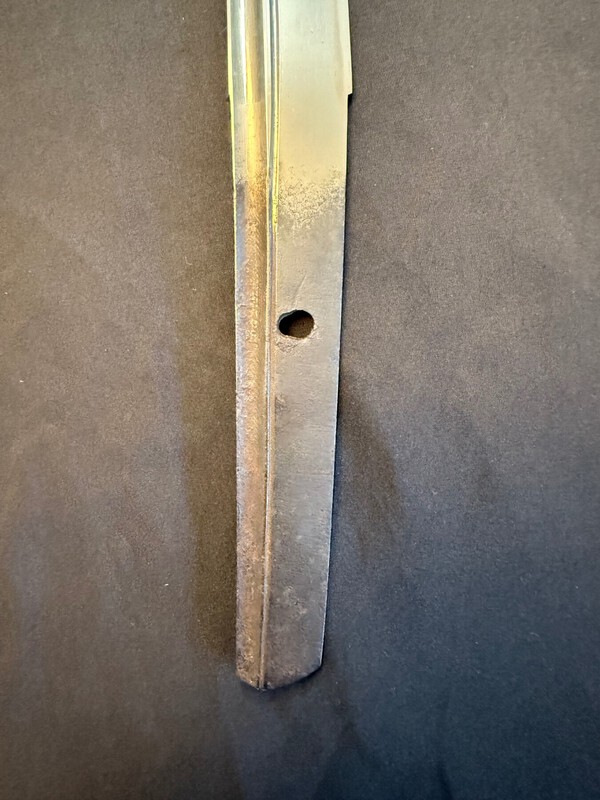
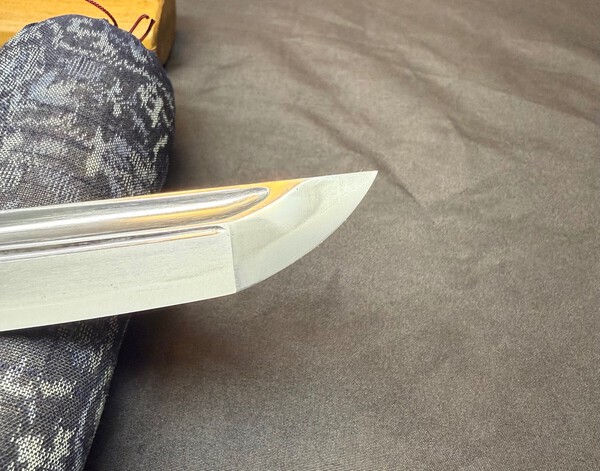
Hello, I am selling my mumei wakizashi that I bought through the forum a year or two ago. I am hoping to sell some things to fund buying variations of the Type 95 to photograph. My photos, and especially my lighting, are far from perfect… I’m more of a collector than a seller. Let me know if you’d like to see anything specific and I will do my best to capture it. Type (Tachi, Katana, Wakizashi, Tanto, Naginata, Other) : Wakizashi Ubu, Suriage or O-Suriage : Ubu? Mei : (Mumei, Signature) : Mumei Papered or not and by whom? : NBTHK Hozon Era/Age : Muromachi Shirasaya, Koshirae or Bare Blade? : Shirasaya Nagasa/Blade Length : ~566mm Hamon Type : Suguha Jihada : Masame and Itame Flaws : Some open grains. Small tarnish/rust spot Sword Location : USA Will ship to : USA Payment Methods Accepted : PayPal Friends and family Price and Currency : SOLD, Free shipping within USA Other Info and Full Description : See archived listing where I bought it from here: https://www.militaria.co.za/nmb/topic/49205-kaneharu-katana-sudo-kunitsugu-wakizashi-nbthk-hozon/ Sword is in older polish, but otherwise good for study. It’s my understanding that Sudo Kunitsugu moved from Yamato province to Kii province, and the blade has a lot of characteristics showing that Yamato influence. First attached image is from Marcus Sesko’s swordsmith index "Swordsmiths of Japan AKI-KUNI". PM if interested. -Sam




-
Interesting find, Ed! Is the shaping of the leather on the saya formed over underlying metal fittings, or is the contour created solely by the leather itself? I imagine it may be difficult to tell. Thanks for sharing this with us. All the best, -Sam
-
Hi Jean, Only moderators or admin are able to relocate threads. Brian has already commented on the post and could have moved it if he felt it was necessary. Since the topic is about selling the item online, specifically on eBay, it doesn’t seem to be significantly out of place. Also, given the content of the posts, this new member may not be a frequent contributor, and we generally try to allow new members a bit of leeway as they get familiar with navigating the forum. All the best, -Sam
-
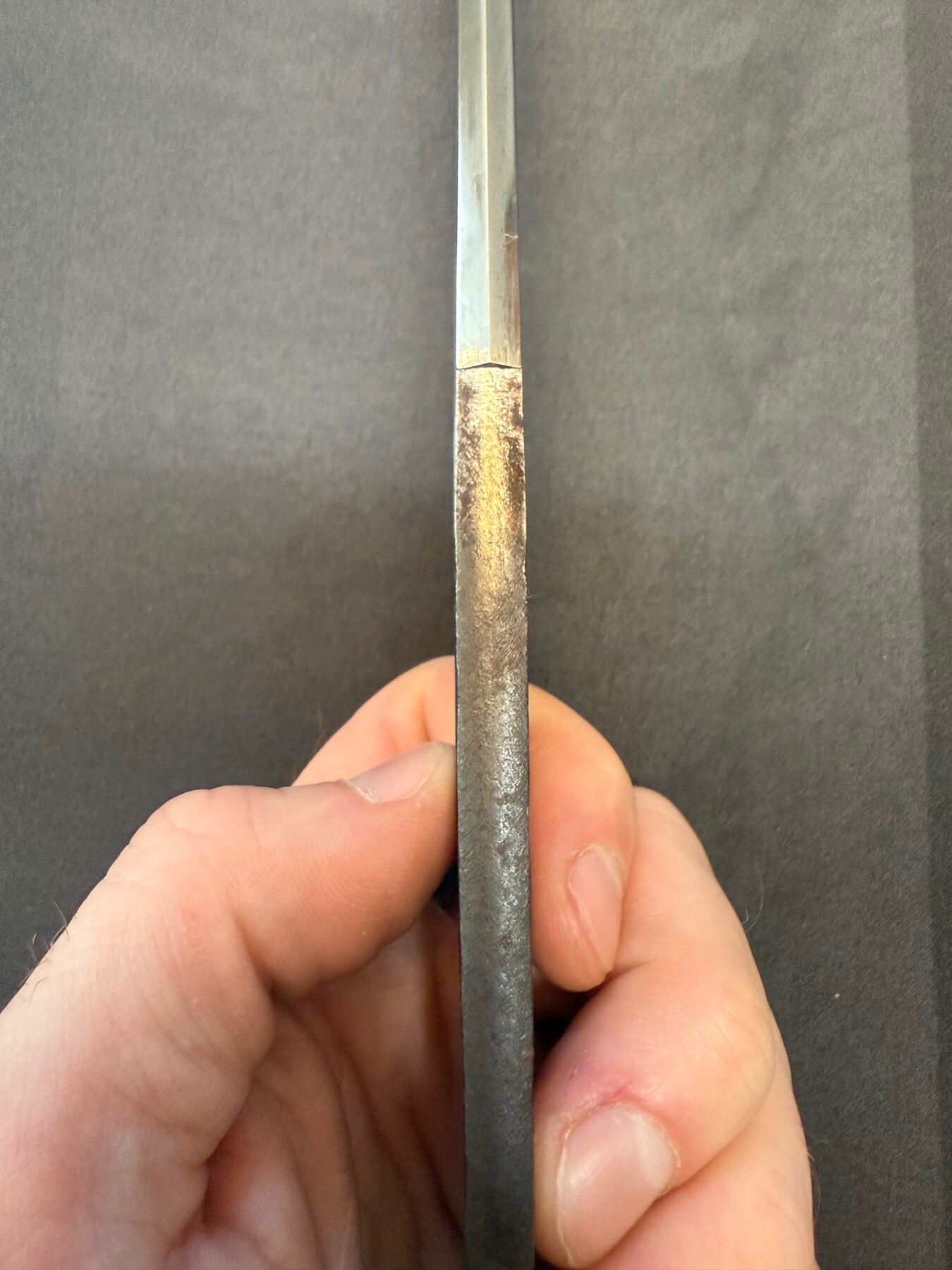
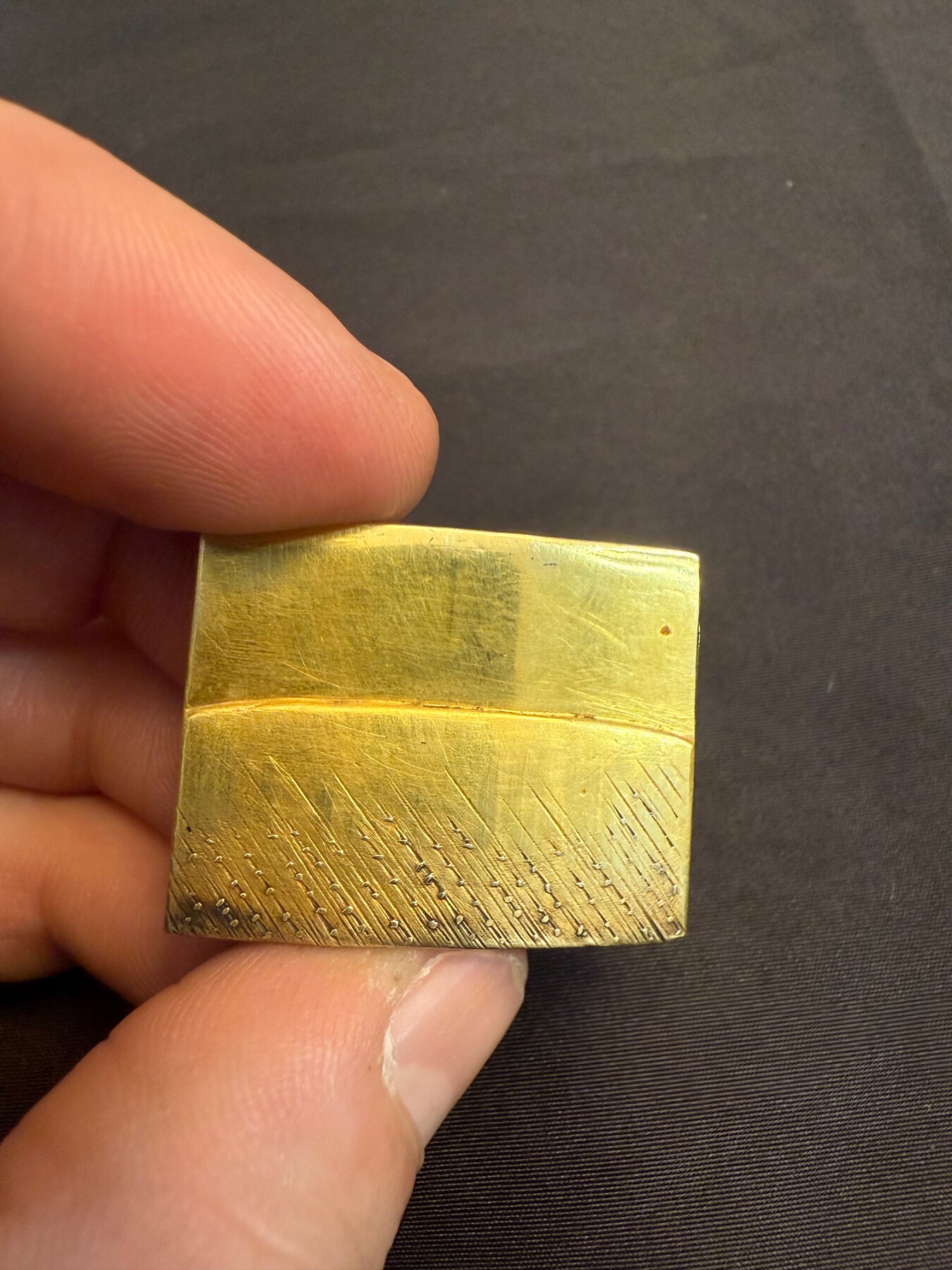
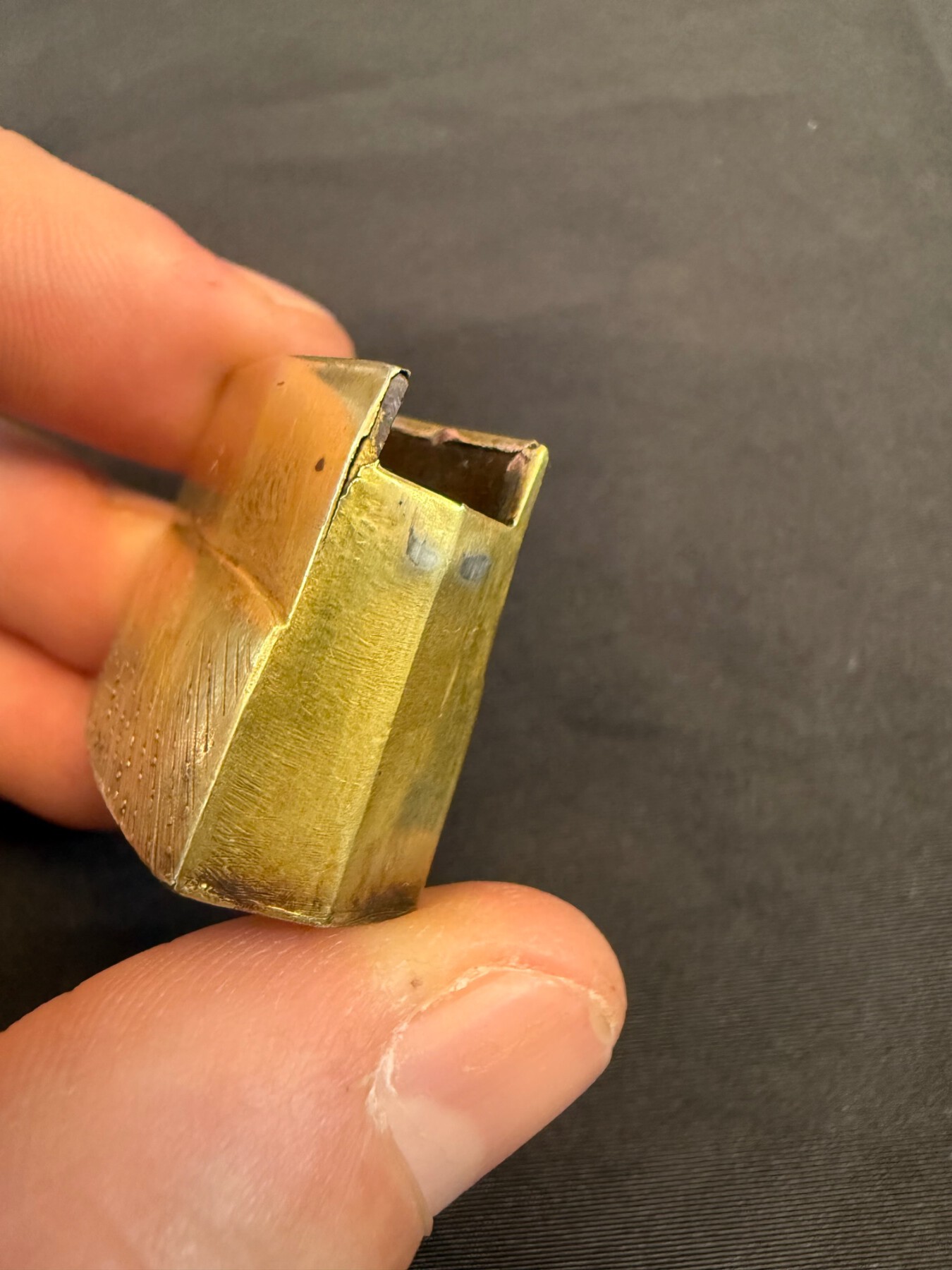
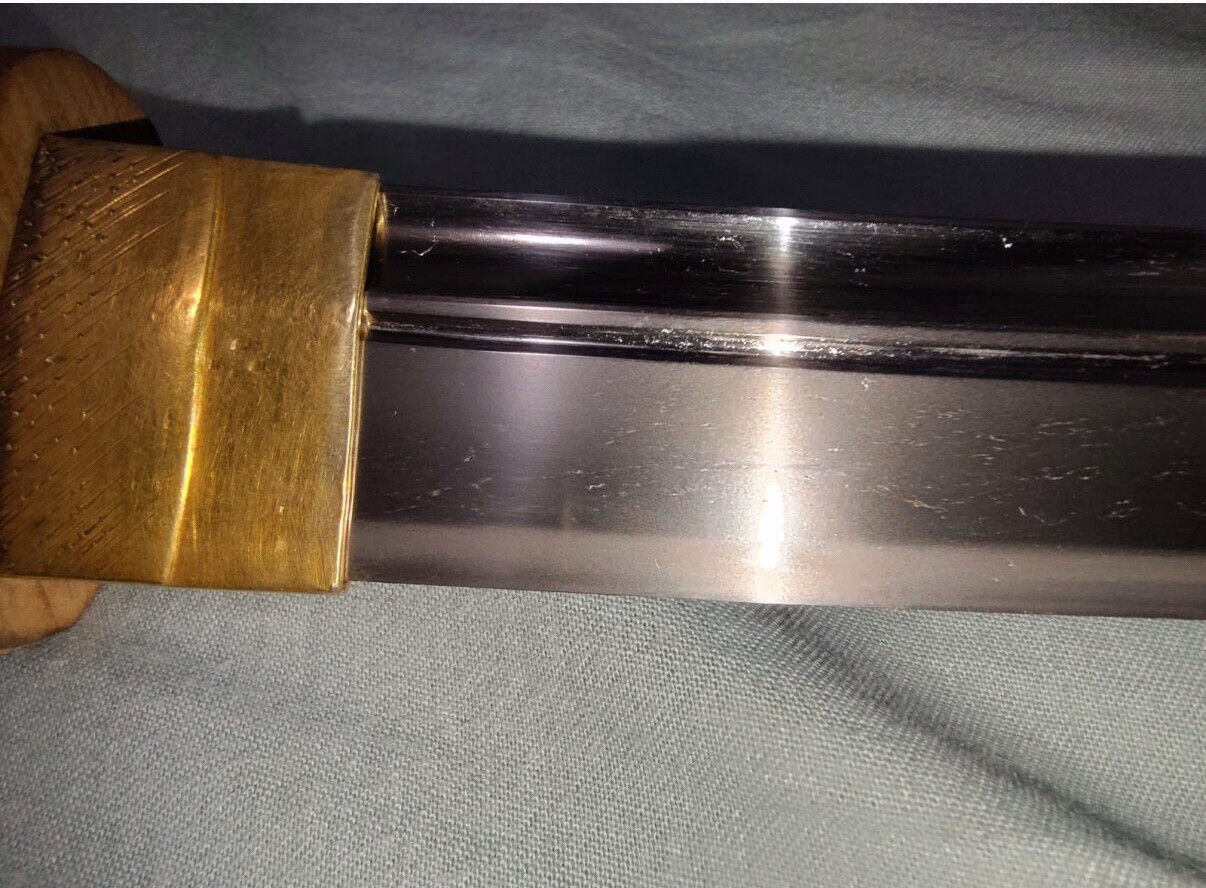
Very interesting, Can we see the tsunagi in its entirety? Can’t say I’ve seen one made of a copper alloy. -Sam
-
I suspect that the scabbard was swapped and painted after the war. The glossiness/finish of the handle also leads me to suspect post-war alterations. The serial number on the scabbard, if original, makes it hard to imagine how this came together. Perhaps a couple occupation men, or friends after the war swapping parts and “blinging” up their bring-backs. Without a time machine, it’s hard to know for certain and I’m merely speculating scenarios. All I can say is that it did not leave the manufacturer that way. Interesting piece, and thank you for sharing. A unique one for sure. -Sam
-
Hi Kris @Krzysio, Really interesting Variation 8 (or pattern 5), Type 95. There’s a very light stamp from the Seki Supervisory Unit of Nagoya Army Arsenal forward the serial number. These swords are believed to have been made around June/July 1944. I don’t think the scabbard is original to the sword, because this variation had a flared metal drag at the end of the scabbard. The mouth of the scabbard can be removed, so it’s possible the mouth of the original scabbard was removed and put onto one that is reminiscent of a Type 98 officer sword scabbard. Can we see some more photos of the scabbard, particularly the scabbard end (the ishizuki), and the hanger? Is the hanger loop welded in place? Never seen anything quite like it with those ornaments. I wonder how they are affixed to the metal scabbard. Thank you for sharing. Regards, -Sam