
Babu
-
Posts
950 -
Joined
Content Type
Profiles
Forums
Events
Store
Downloads
Gallery
Everything posted by Babu
-
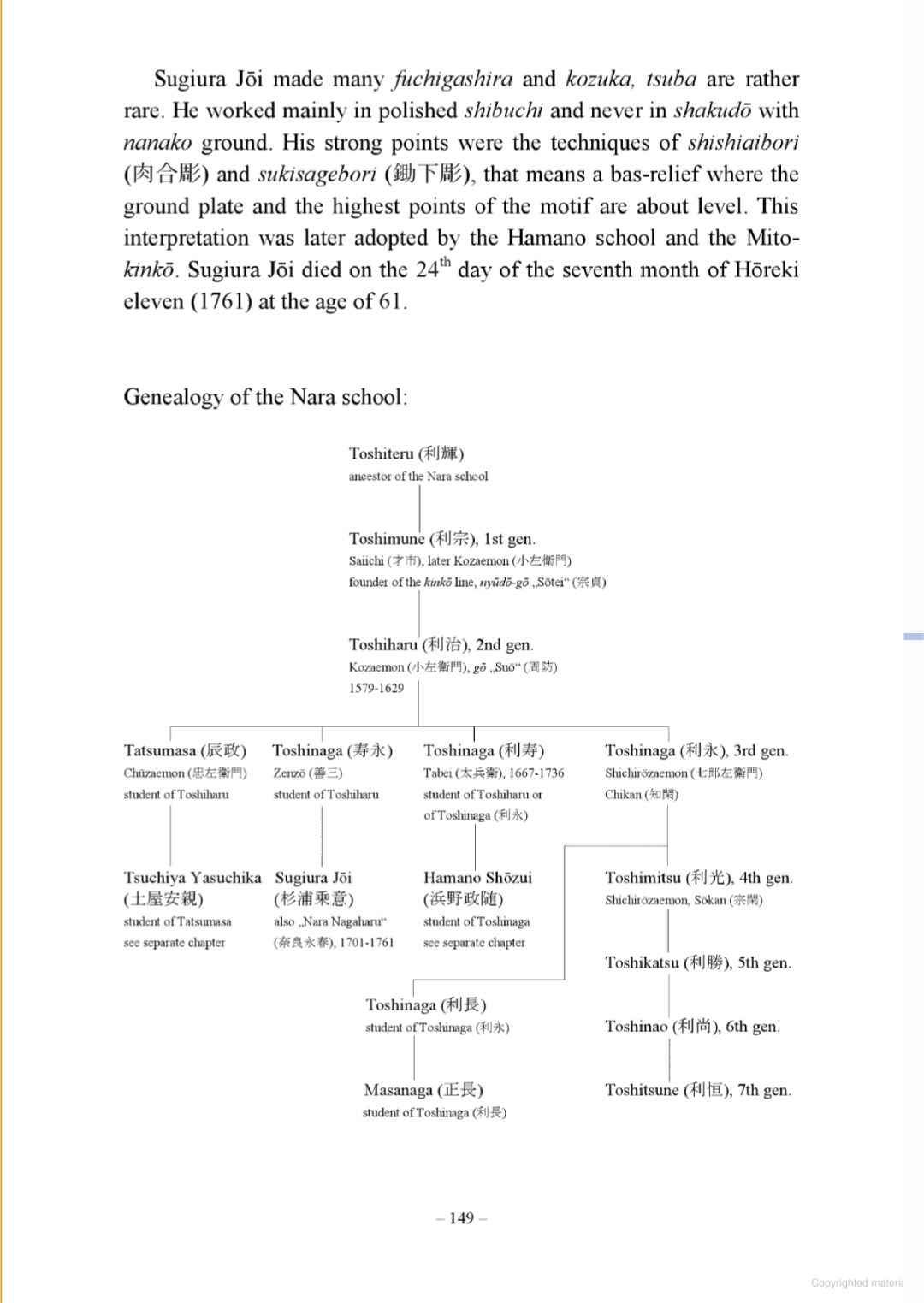
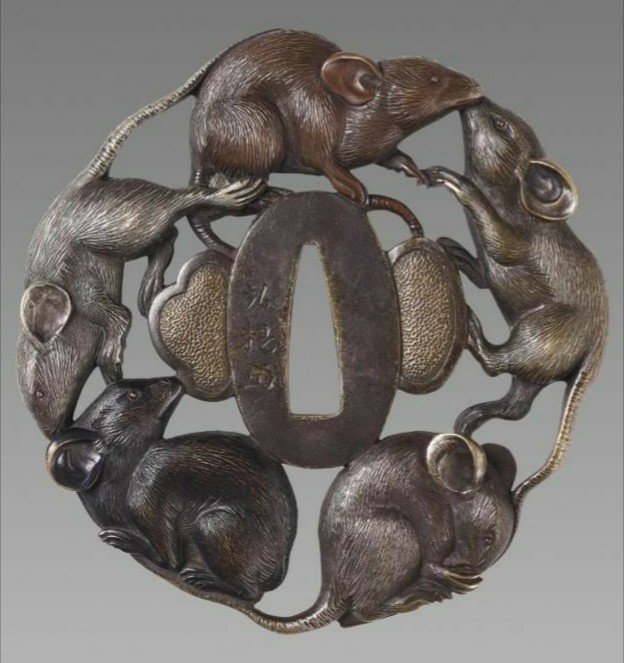
 Well that opens a whole different perspective. It may be they were made by the same person at the same time but as a special request using two techniques. . I've come across over the years the special order sets that were selected from books of hand drawn designs Confirmed by existing studies of books in the Metropolitan museum. I've got at least three sets myself that have a form of cohesion but are very different in the application of the design. This is because you can pair up anything that takes your fancy when you're a special order customer its your rules. We don't know what elements that customer might marry together that is special to them but no other. So they may not be mismatched, just special order as long as their is something that ties the two together and offers that cohesive element. This is my opinion based on my studies alone. Sagiura Joi was a pupil of Nara Juyei and was associated with Toshinaga and Yasuchika as one of the three great artists of the Nara school. His manner is very easily distinguished from the others as he worked in low relief on Iron, brass and copper taking animals for the most part as his subjects. His signatures are remarkably clear cut. He signed in many names including Issandō, Nagahara and Joi.
 -
I don't see why not,he was well respected and introduced styles later adopted by a few well known schools....Odd the two very different styles though. Extract from Markus Seskos book.

-
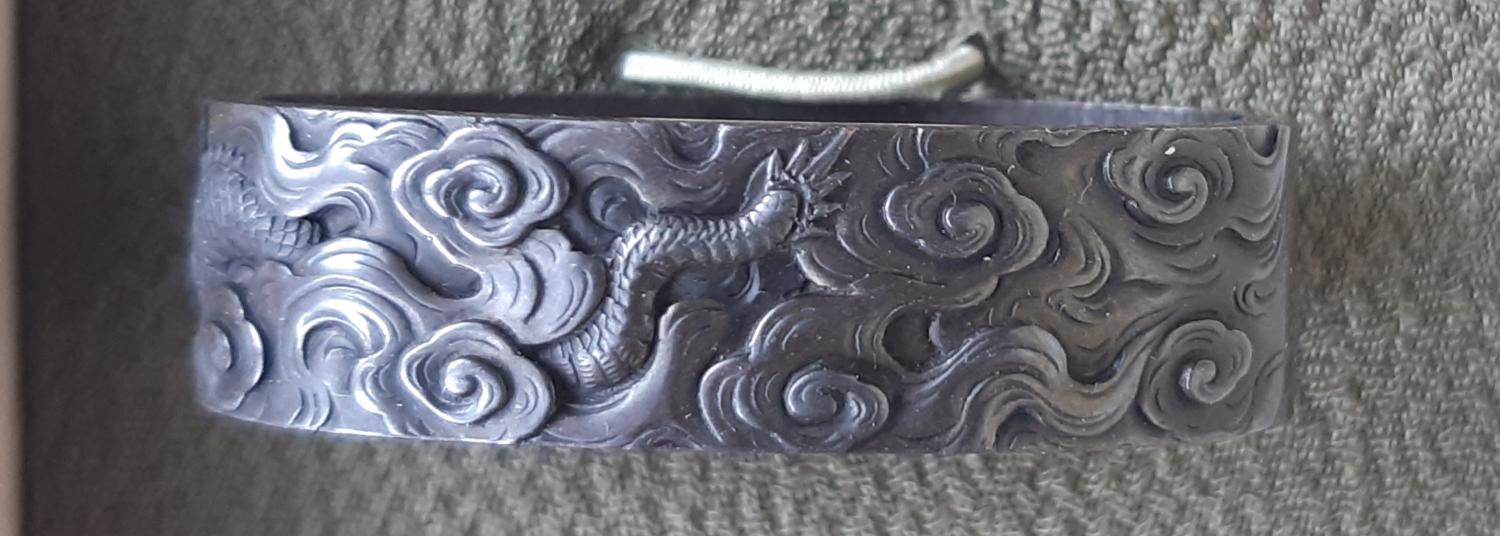
Hmmm whilst clearly Nara style of workmanship, I'm not getting high end work from the Fuchi but the kashira looks better.This could be a condition thing I guess as it's not in fine condition. It's not quite good enough workmanship for me although I appreciate it.I guess I was expecting more finesse from this fine student of Toshinaga. I'm on the fence sorry. If it's him it's nice, but not one of his best works.
-
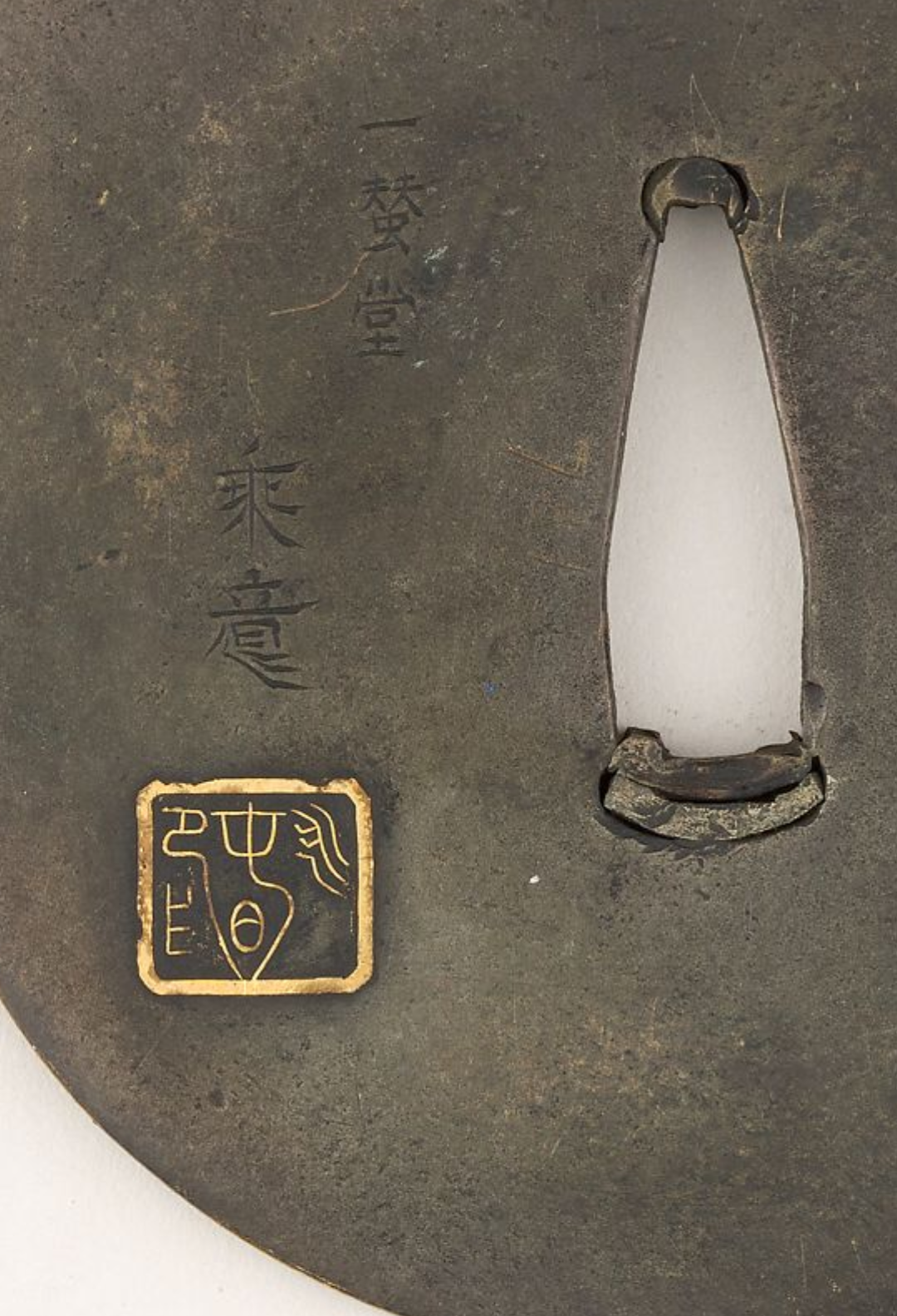
The artist Jōi (乗意), real name Nara Tashichi (奈良太七), later Sugiura Sen’emon (杉浦仙右衛門), was born in Genroku 14 (元禄, 1701) as son of a retainer of the Toda-Matsudaira family (戸田松平) in Mino province. Having arrived in Edo in the early years of the Kyōhō era (享保, 1716-1736), Jōi studied with the Nara School master Toshinaga (寿永). He signed with the name Nagaharu (永春) and the art names Issandō (一蝅堂) and Jōi (乗意) and died in Hōreki eleven (宝暦, 1761). I would say the mei is quite close but would like to see the workmanship before committing.

-
Can I see that Fuchi kashira? Thank you Adam
-
Thank you very much. That's excellent.
-
Doesn't ”Den" mean made by someone at around the time of that master and likely a student rather than by that master? Or am I miles away from the truth?
-
More clouds along the same route as George M.love the way the Sun seems to be in the background.
-
More clouds along the same route as George M.
-
I would be put off by the lack of activity. Its been polished a bit since the horimono was done that's evident but a poor amateur polisher could do this in one sitting. You will have to make your own decision I guess, as I couldn't consider buying anything without seeing the Nakago. It could for instance be totally polished off of all patina and yasureme . Not saying it is, but there are key musts to buying by images. Sori, blade condition, hataraki, kissaki and Nakago should be the primary must have.
-
Hi when we say blade it's more with everything off. No habaki and shots of both sides of the Nakago. Regards Adam
-
Polishing removes surface materials you cannot avoid this. A good Togoshi will sympathetically restore but some depth of the carved kanji will undoubtedly be lost. I'm concerned by the lack of activity. It reminds me of an oil tempered blade I looked at last week. Can you offer some other views of the blade?
-
Not much help sorry, but that's a dead flat polish lending nothing to hada or hataraki. I hope others here can help translation but it's very thin in places due to polishing.
-
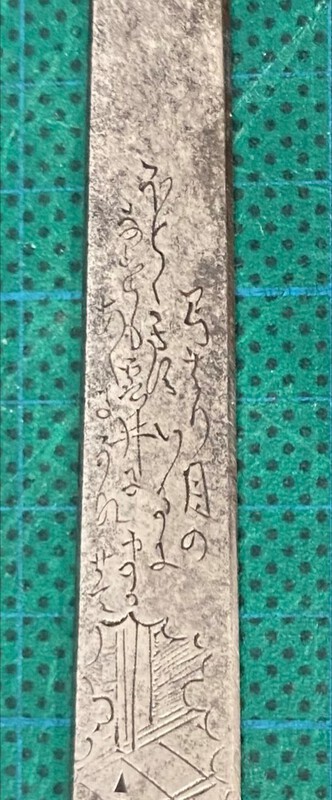
Hi could I possibly ask the more fluent on the board if they can verbatim translate the soshu script for me. Thank you Adam
-
Tell him your seriously considering the offer but your concerned about authenticity.
-
To be controversial the one in Grey's website although similar is not as good quality and it's also in a much different state of preservation. I think we are looking at chalk and cheese but on a very fine level of appreciation.
-
Same image on both links Curran
-
Doesn't look like there's any need to send that one to shinsa.
-
I have a kogatana with the very same and it's just a preference selected by the buyer. Some wanted a smiths mei others a design. I've got one coming with a scene from a noh play on it. I don't believe that it holds any more relevance/significance than personal taste but could be wrong.
-
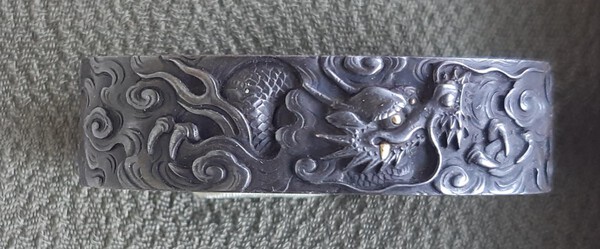
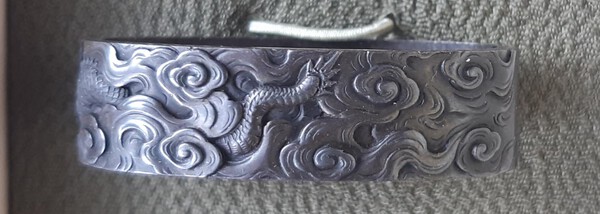
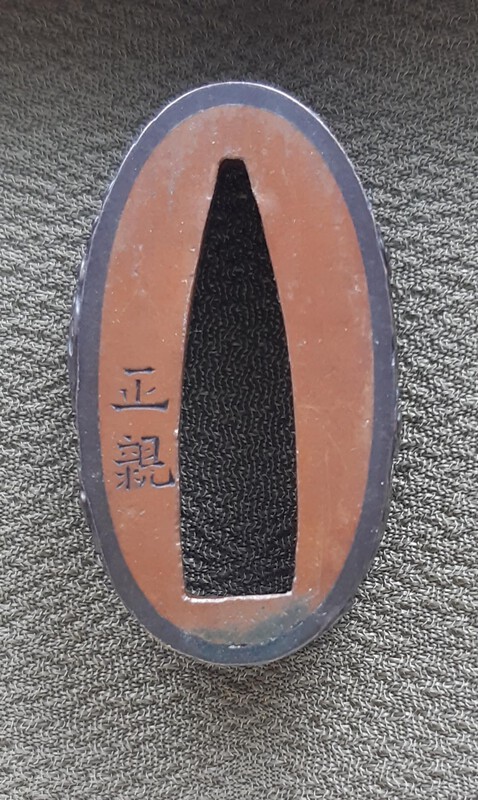
This is by Bushû Masachika (Yasachika) I've never been able to find any real info on him and my images do not do him justice. In hand it's dare I say even better than a goto master. I found a tsuba with which to compare the mei.
-
Hi those images are postage stamp sized. Can you enlarge?
-
Looks like mdf glued together. Or at least the Edo period equivalent of MDF ????
-
I've had good experiences with DHL and UPS. (not so much with USPS) DHL UK to Poland three days and ups similar UK to Europe 3 days including a day hold up. USPS USA to UK 14 days on standard international($18.50). Expedited International (nearly $40) still waiting for it to leave the US 11 days later.
-
Here is another Ryōan-ji (late 16th century) in Kyoto, a famous example of a zen garden which was designed on the principles of Wabi Sabi.
-
The old bamboo fences,and the stone features which are stained by age with subtle Grey and brown tones, reflects sabi, and the contrived rock garden wabi.