Lewis B
-
Posts
2,042 -
Joined
-
Last visited
-
Days Won
11
Content Type
Profiles
Forums
Events
Store
Downloads
Gallery
Everything posted by Lewis B
-
Lost or loss process? Mercury gilding is described a loss process as the Mercury is vaporised leaving a thin gold film on the object?
-
 Nice work @Brano. Do the dots cross-reference to a specific blade? I'd be curious to know who made the outlier 70cm sword with an 8mm motokasane.
 -
Appears to have muneyaki and a very low shinogi.
-
Motohaba is also a narrower at 2.65cm.
-
What a great figure Brano. Did you compile that data? Do you have a similar one for early 14th century Soshuden?
-
Obviously everyone applies their own criteria regarding value added for a particular piece, but I personally wouldn't add much for that Compton connection. I would certainly want to see the provenance, as there are countless 'ex-Compton collection' swords on Yahoo.jp auctions. Regarding the perceived value for a mid-Kamakura Bizen sword in top tier condition. Wouldn't such a blade have a motokasane between 7.5-8mm? This example is 6mm and heading towards a blade that would be classed as tired @5.5mm or less.
-
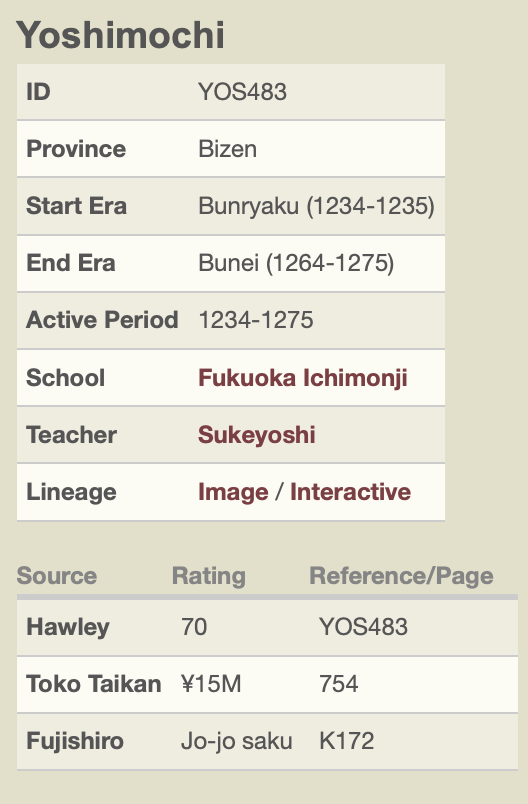
Haha, I was about to post this blade here too but you beat me. The most expensive TH blade I've encountered to date. Seems quite ambitious. It's not in the Christies 100 Masterpieces Compton Collection, but I assume there is a paper trail to confirm that connection. The Mei is in poor condition with the 2nd kanji barely legible per the papers. I'm not seeing where this valuation is coming from. Sesko says his work is not uncommon. And Yoshimochi isn't highly rated. Is this dealer known for outrageous pricing?


-
I don't see any "Fujiwara Yukishige" referenced in Markus Sesko's eSwordsmiths.
-
Information sought on Noh Mask
Lewis B replied to Kmad's topic in General Nihonto Related Discussion
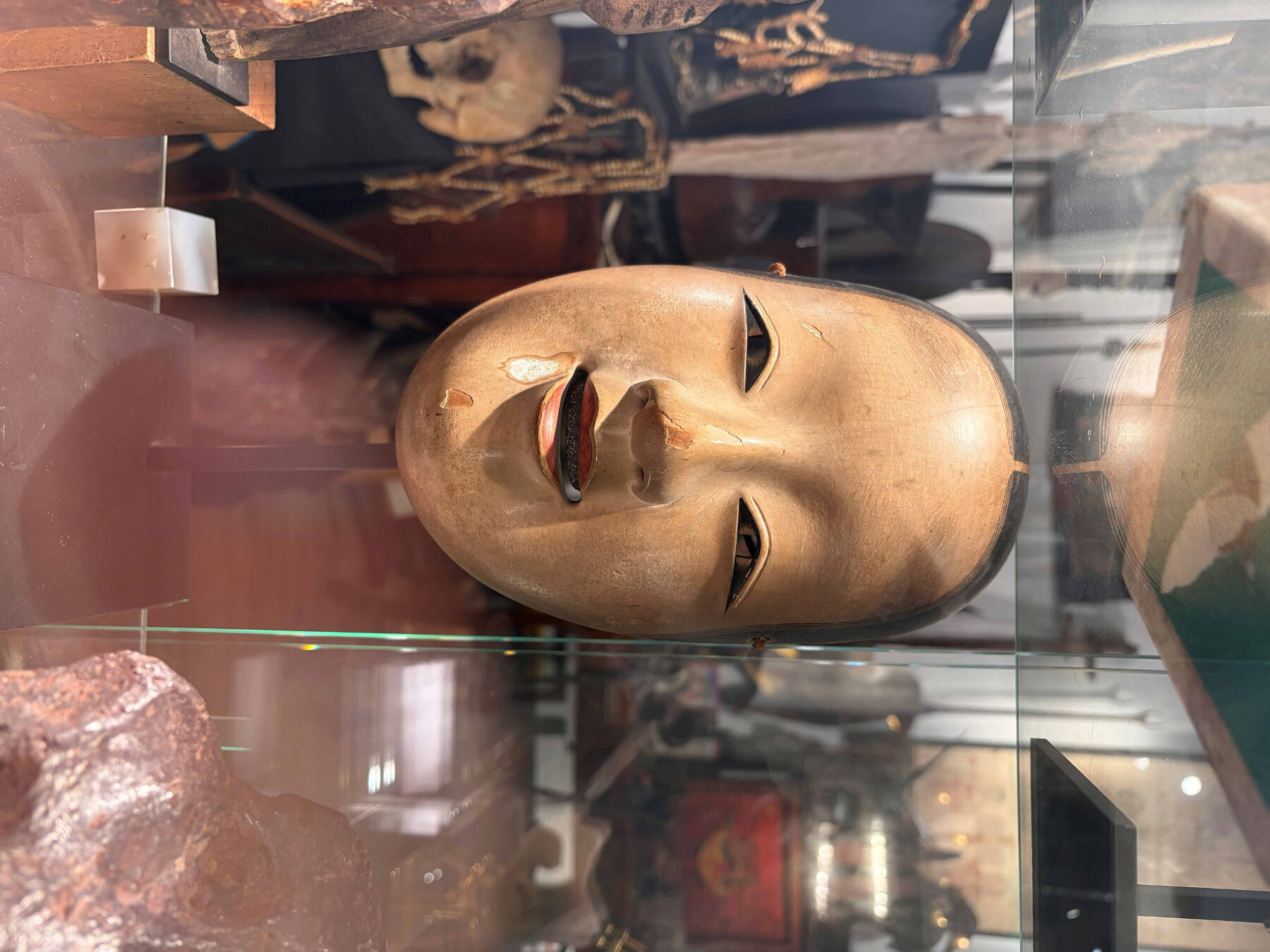
Nice piece. And if you didn't pay much even better. I was eyeing this Noh mask at a fancy flea market in Paris a couple of months ago. The carving and coloration on the inside are comparable. I probably know about as much as you, but I find them to be aesthetically attractive works of art. I'm sure there are ways to date them, especially if signed but I don't have those references. Edit: Not sure why the images are formatted like this when uploaded on a PC. I'll correct this when I get on my Mac.

-
Keisuke Nakamura gave an interesting treatise on the subject of these 2 blades exhumed from Mitsutomo's tomb. By comparing horimono carving styles with other Sadamune attributed blades and historical oshigata he is a little skeptical and reserves judgement. https://note.com/katana_case_shi/n/ne850e4972025
-
I think you're right. I was using a Mac with Safari. On the PC with Firefox its legible. Must be a Safari specific issue.
-
Why do you have this bar across your posts? It's obscuring the text.
-
True value of this Katana
Lewis B replied to Elias6677's topic in General Nihonto Related Discussion
Very true, and that only comes after doing the hard yards researching the literature and more importantly experiencing high end swords in hand. Elias, since you are in Germany you should seriously consider attending an NBTHK-EB meeting either in Solingen or Manching. There are many members in Germany who have some magnificent Juyo and up swords, and are only too happy to share their knowledge and collections. -
True value of this Katana
Lewis B replied to Elias6677's topic in General Nihonto Related Discussion
Very interesting Jussi. A couple of things that immediately raise a few red flags. The setsumei states the blade has iori-mune, but the AOI description says mitsu-mune. It's lost 5g of weight and gained 3mm motohaba. Obviously these discrepancies, especially the mune should be clarified, as the staff at AOI have already shown themselves to be prone to errors. That said, the current oshigata clearly shows mitsu-mune. The blade appears to have been polished between 2021 and 2026 as hadori(?) finish and oshigata look very different. Makes one wonder why the owner felt it necessary to have work done to the blade post-juyo shinsa. -
True value of this Katana
Lewis B replied to Elias6677's topic in General Nihonto Related Discussion
This is a translation of the setsumei giving the opinion of the shinsa panel. Worth reading carefully. 65th Jūyō Tōken Designation Summary Designated on November 7, Reiwa 1 (2019) Classification & Attestation Item: Katana (刀) — One blade (一口) Signature: Mumei, attributed to Sa Yoshisada (無銘 左吉貞) Submitter: Paul Martin (ポール マーティン) Measurements (Sugata) Blade Length (Nagasa): 66.7 cm (2 shaku, 2 sun, 0 bu) Curvature (Sori): 1.6 cm Motohaba (Base Width): 2.8 cm Sakihaba (Tip Width): 1.8 cm Kissaki Length: 2.9 cm Nakago Length: 18.5 cm Nakago Sori: 0.1 cm Appraisal & Technical Description Shape (Taihai) Shinogi-zukuri with an iori-mune. The blade exhibits standard width proportions with a typical differential between the base and tip width. The curvature is shallow, culminating in a slightly elongated chū-kissaki profile. Forging Pattern (Kitae) An itame-hada foundation seamlessly intermingles with areas of mokume-hada. The grain characteristically flows (nagare-gokoro) toward the cutting edge. The entire steel matrix is densely packed with fine ji-nie, displaying an excellent jigane clarity that yields a faint, soft utsuri (reflection). Temper Line (Hamon) A masterfully restrained ko-notare(small wave) serves as the primary motif, interspersed with ko-gunome(small undulating steps). The overall temper is intentionally low-profile, exhibiting active ashi (legs). The steel displays brilliant metallurgical activity near the cutting boundary, where yubashiri (drifting mist formations) fuse with sunagashi (streaks of sand). The nioiguchi remains bright, crisp, and exceedingly clear. Tip Temper (Bōshi) The temper line runs true (sugu) into the point, executing a shallow, rounded turnback (komaru-gokoro). The apex of the curve terminates with a delicate, swept hakikake (brushed) texture. Engravings (Horimono) A classic bōhi (wide groove) is cleanly carved into both faces of the blade, running entirely through the tang. Tang (Nakago) Ō-suriage (significantly shortened). The heel profile is finished in kirijiri (flat cut) with indistinct, faint yasurime (file marks). The tang features two mekugi-ana (retaining pin holes) and remains strictly unsigned (mumei). Official Commentary & Historical Context Yoshisada was an elite bladesmith belonging to the Sa lineage of Chikuzen province. Historical scholarship positions him alternately as the direct son or primary student of the legendary founding master, Sa (Samonji). His production era can be confidently contextualized through existing dated examples, notably a signed companion piece from the 13th year of the Shōhei era (1358). While signed long swords (tachi) by Yoshisada are vanishingly rare, his signature is primarily preserved on short daggers (tantō) and sidearms (wakizashi). His styling on long blades typically trends toward a highly controlled, narrower hamon footprint compared to his peers. This specific mumei katana perfectly captures those defining school traits. The blade's overall width is classical, paired with a sophisticated, gentle curvature. The hamon centers around a subtle, low-profile wave pattern. While the upper and lower halves show variation, the upper section resolves into a quiet, uniform temper line. Enhanced by vibrant nie activity, a flawless jigane, and remarkable health from tip to tang, this piece stands as a premier, highly dignified exemplar of the Sa Yoshisada tradition. -
True value of this Katana
Lewis B replied to Elias6677's topic in General Nihonto Related Discussion
The pass rate for Juyo in 2019 was only 10% so can be considered one of the recent 'tough' years to pass. That speaks highly to the quality of the blade as Joe indicated. Just look at the storied grandmaster names it joined that year: https://www.militaria.co.za/nmb/topic/30248-juyo-2019/#findComment-311599 But if one of your criteria is that this is a solid investment I think 6milJPY is too much for a Yoshisada. I doubt you will recoup that if you had to sell. There is also an early March 1951 registration. And AOI made a mistake the sori is 1.6cm not 0.6cm -
Type 98 Shin Gunto and Kai Gunto - Ancestral blades?
Lewis B replied to xreflections's topic in Nihonto
Tsubaki oil specifically for blades is recommended after initial cleanup with isopropyl alcohol. Amazon sells it. -
True value of this Katana
Lewis B replied to Elias6677's topic in General Nihonto Related Discussion
Hi Elias, Welcome to NMB. I'm assuming this is the one AOI has on hold. Nice tachi koshirae if you like blingy mounts. Believed to be a student or son of O-Sa. Not the best of the nidai smiths but still highly rated at jojo-saku. I prefer Sa-Kunihiro. From Sesko's eSwordsmiths. YOSHISADA (吉貞), Jōwa (貞和, 1345-1350), Chikuzen – “Chikushū-jū Yoshisada” (筑州住吉貞), “Yoshisada” (吉貞), “Yoshisada saku” (吉貞作), “Mononobe Yoshisada” (物部吉貞), Sa school, according to tradition the son or student of Ō-Sa (大左), there exists a tantō with a date signature of the Shōhei era (正平, 1346-1370), no tachi are extant by Yoshisada, his tantō have a wide mihaba and some sori, the jigane is an itame-nagare with ji-nie and thick chikei, the hamon is a slightly undulating notare mixed with gunome and sunagashi, the bōshi has a rather long kaeri, we know smaller and larger signatures but it is assumed that they go back to the changes in the active period of a single smith because nothing indicates a 2nd gen., jōjō-saku As to value you have to also factor in the ~20% importation tax so after shipping costs its more like 6mil JPY you'll be paying. I personally would not pay that figure for this blade. -
Looking for Ko Mihara, Hokke, Kongo Hyoe, Sue bizen
Lewis B replied to klee's topic in Wanted to Buy
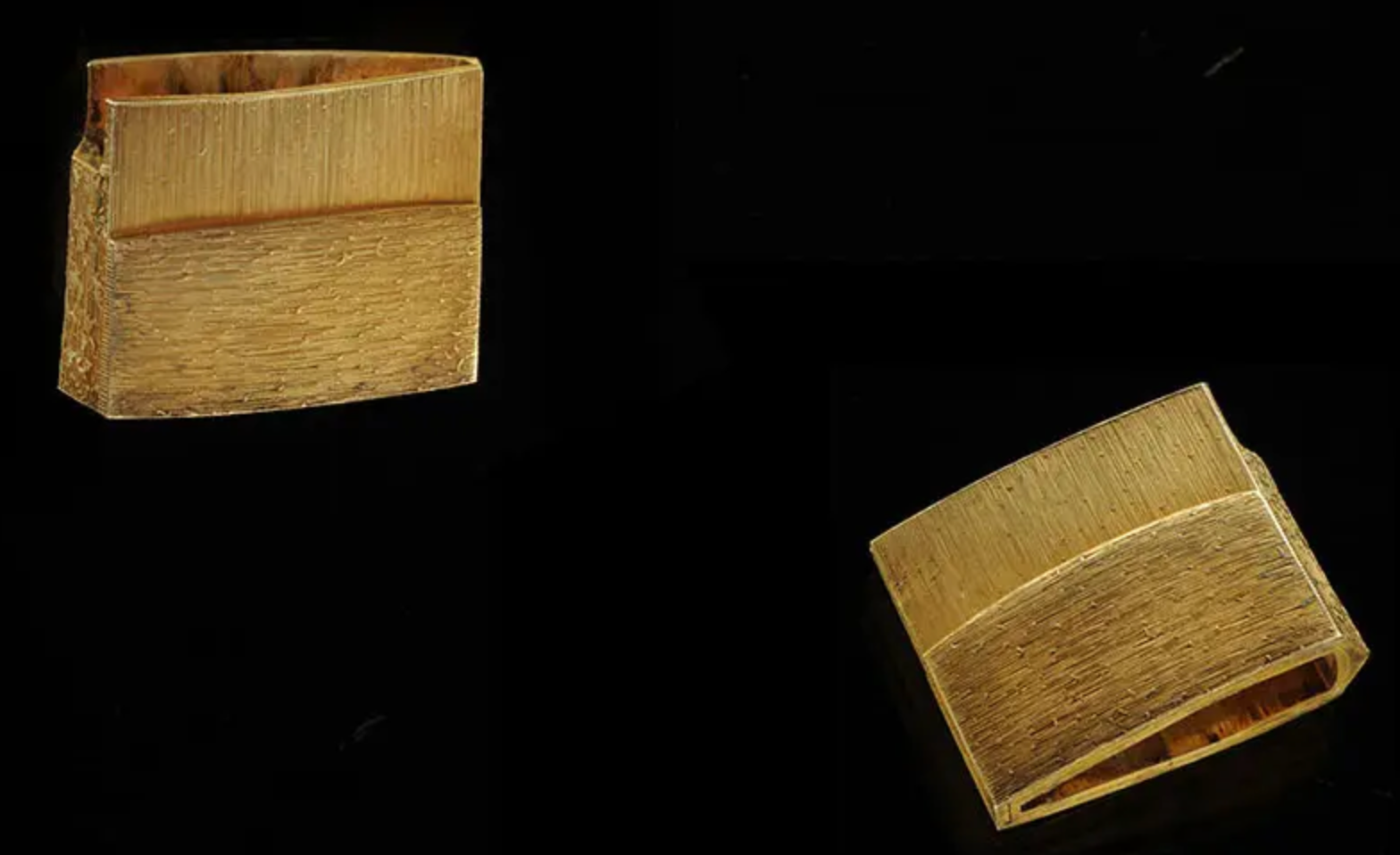
Can anyone confirm it had a solid gold habaki? Appears so given the colour of the core. At todays prices the scrap value alone in the habaki would be worth several thousand $, assuming its gold and not a yellow metal like brass.
-
That hasn't been a reliable request for many many years, thanks Photoshop
-
Looking for Ko Mihara, Hokke, Kongo Hyoe, Sue bizen
Lewis B replied to klee's topic in Wanted to Buy
Someone made a very smart decision. Well priced for what was being offered. -
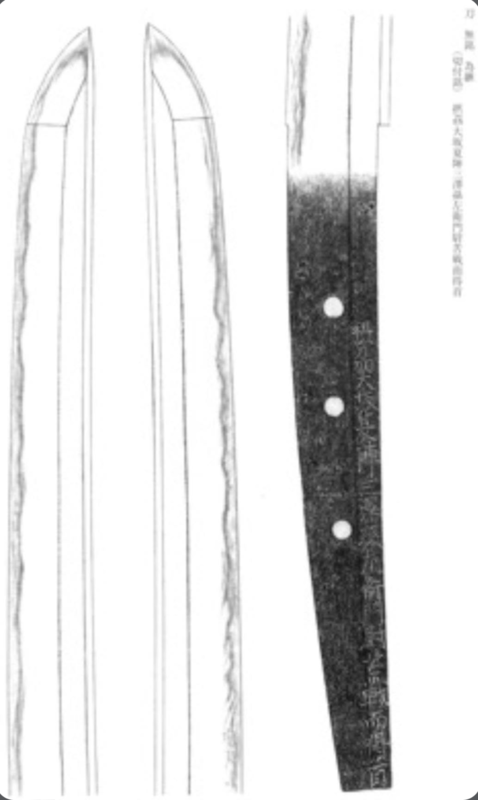
Reminds me of this Tametsugu that was put on sale last year. I agree I also prefer a historical context to the carnage and annihilation attached to a particular blade. Kiritsuke-mei At the summer battle at Osaka Castle in Sesshu province Mizawa Magozaemon no jo "Took a head in a fierce battle".
-
Even better opportunity. Was the Shinsa option selected This is what I found on the JAS site. All tickets are non-refundable and personal. Visitors may be required to show valid proof of identity upon entry.
-
Thats very generous and a great opportunity for someone who can make the show. Might be worth mentioning which days are covered. The tickets are personal so it is probably necessary to contact the organisers to transfer the new attendees name prior to the Show. Not long now. Can't wait.
-
Hi Dan, I think you mean 'mitsu'