Lewis B
-
Posts
1,892 -
Joined
-
Last visited
-
Days Won
10
Content Type
Profiles
Forums
Events
Store
Downloads
Gallery
Everything posted by Lewis B
-
Another interesting tidbit is that the Midare-Shintogo has iorimune, thus strengthening the notion this was not a piece directly made by Shintogo. Atypical Mei, atypical mune and atypical hamon. I would say that was quite compelling evidence for daimei-daisaku.
-
Pretty much sums up my recent experience. Blade was purchased from Choshuya and they organised delivery and retrieval after getting Tanobe's Sword was returned in less than a week. I've heard it said that the length of the Sayagaki is directly proportional to his interest in the blade, but I have my doubts about that urban legend. I think it's more to do with time he has available with other competing responsibilities. Since retiring the sayagaki seem to have gotten longer
-
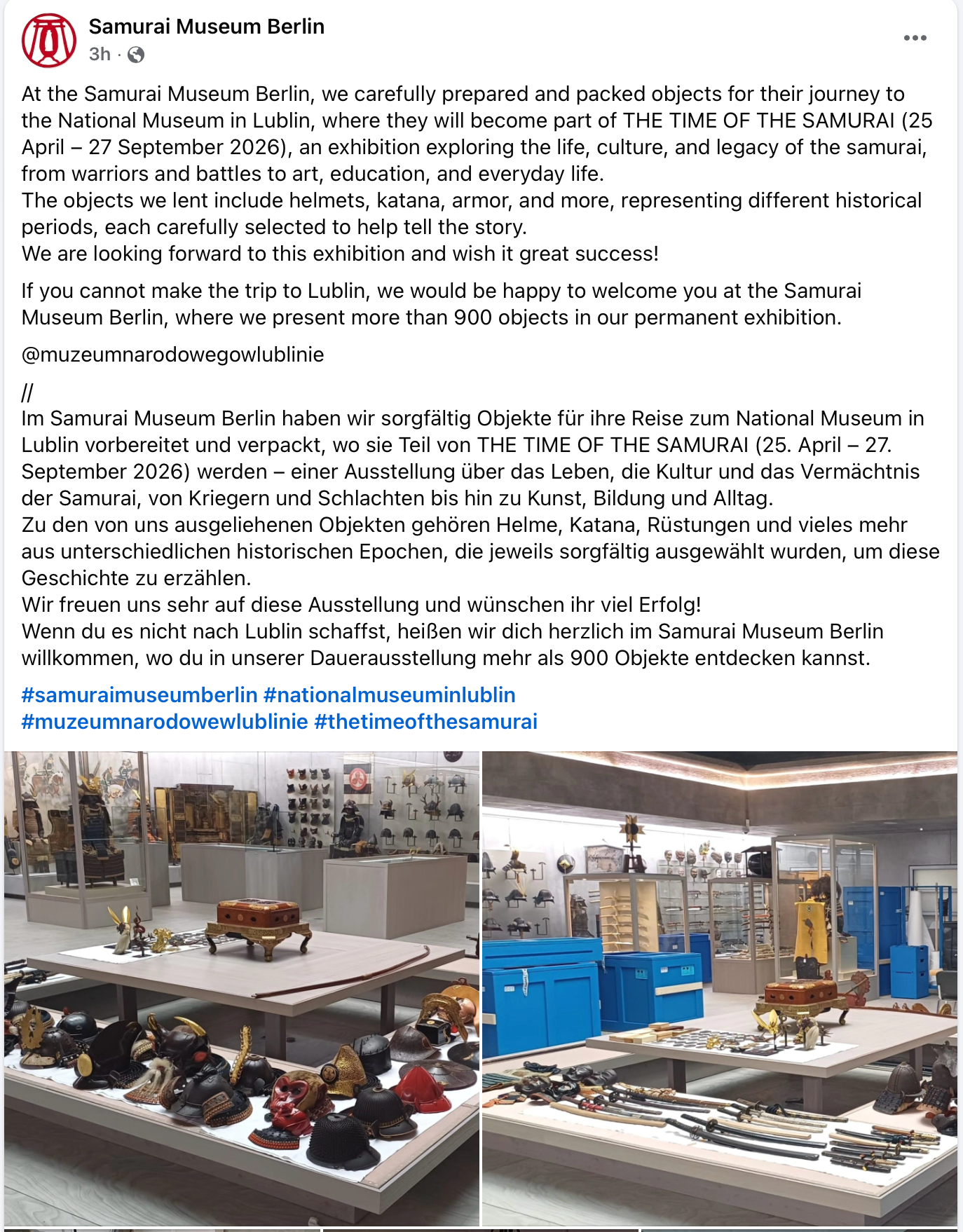
 Items provided from the Samurai Museum Berlin collection. Definitely worth making the trip if you can.
-
- 2
-

-
Caveat emptor, I don't have much experience with tosogu. But I thought the punch marks around the seppa dai were to fine tune a fitting to a particular blade. Wouldn't the 3 strikes on the left and upper one on the right have little effect in this respect. Or would enough force have been applied to cause the metal to bulge into the nakago hitsu ana space. Were non circular punches used often? I'm asking to calibrate my observations in case I come across a similar tsuba.
-
Paper level for big names / attribution
Lewis B replied to klee's topic in General Nihonto Related Discussion
Not something you see every day. NBTHK papered Mogusa tachi from the late Heian period. Almost 80cm https://eirakudo.shop/651823/
-
Paul, nice find. Thought you might like to see what Markus wrote about this 2nd Gen Kanesada. Interesting story and name evolution that fits with the 1684 date. KANESADA (包貞), 2nd gen., Enpō (延宝, 1673-1681), Settsu – “Sesshū Gorō Terukane” (摂州五郎輝包), “Echigo no Kami Kanesada” (越後守包貞), “Sakakura Gonnoshin Terukane – Echigo no Kami Kanesada kore o dōsaku” (坂倉言之進照包・越後守包貞同作, “joint work of Sakakura Gonnoshin Terukane and Echigo no Kami Kanesada”), “Sakakura Minamoto Terukane kore o saku – Echigo no Kami Kanesada” (坂倉源照包作之・ 越後守包貞同作), “Sakakura Gonnoshin Terukane – Echigo no Kami Kanesada inkyo” (坂倉言之進照包・越後守 包貞隠居, “joint work of Sakakura Gonnoshin Terukane with the retired Echigo no Kami Kanesada”), “Sakakura Gonnoshin Terukane” (坂倉言之進照包), “Sakakura Echigo no Kami Terukane” (坂倉越後守照包), “Terukane saku” (照包作), real name Sakakura Gonnoshin (坂倉言之進), he came originally from Mino where he had been a student of Terukado (照門) who was active around Manji (万治, 1658-1661), later he went to Ōsaka to study under the 1st gen. Echigo no Kami Kanesada (= Yamada Heidayū), first he signed his name Terukane with the characters (輝包), he was eventually adopted by the 1st gen. Kanesada and signed from the second month of the sixth year of Kanbun (寛文, 1666) with “Echigo no Kami Kanesada” too, when Iwamatsu (岩松), the natural son of the 1st gen. Kanesada came of age in the first half of the seventh year of Enpō (1679), it was Iwamatsu who took over the name Kanesada (包貞) and “Gonnoshin-Kanesada” had again to sign with “Itakura Gonnoshin Terukane”, this return to the name of Terukane can be dated to the second month of the eighth year of Enpō (1680), but from the second month of Tenna four (天和, 1684) onwards he once again added the honorary title Echigo no Kami in the form “Sakakura Echigo no Kami Terukane” to his signatures, one theory says that he officially received this title in Tenna four and that he had signed it before as a kind of trademark that he had taken over from his master and father-in-law, he made blades in Yamato-style with a wide shinogi-ji and a high shinogi, the jigane is a dense and finely forged ko-itame with masame in the shinogi-ji, the hamon is mostly a gunome-midare, chōji-midare or tōran-midare, sometimes he also applied a suguha or ō-notare, in his early years he tempered mostly a chōji-midare, from the time when he signed again with Terukane he focused on a tōran-midare in the style of Sukehiro (助広) whereas the valleys of the yakiba have a striped appearance because of the hakikake, he was superior in quality than the 1st gen. Kanesada, ō-wazamono, jōjō-saku
-
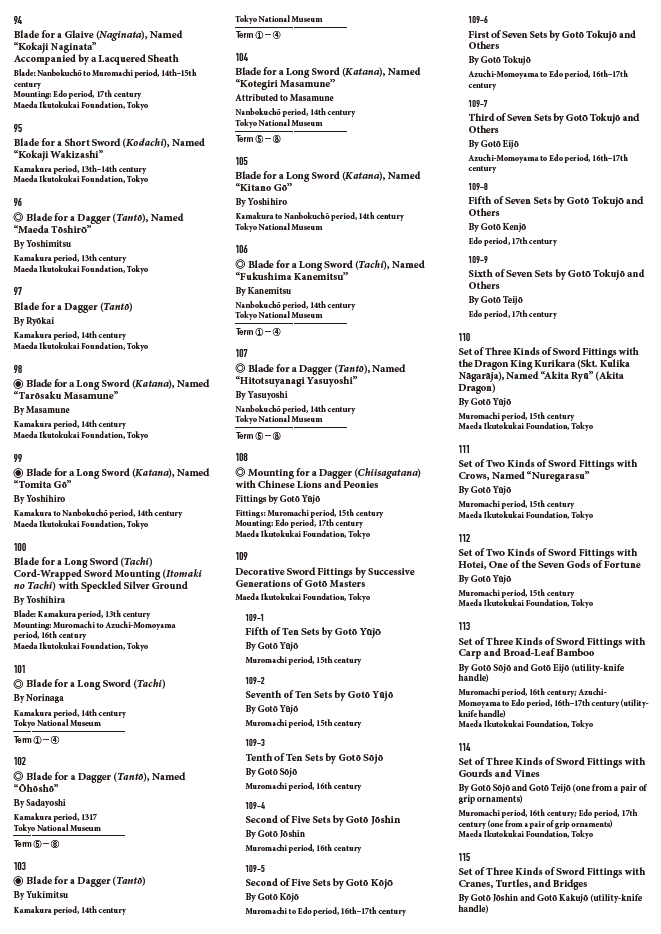
Hiro kindly informed us of a major Maeda Exhbition at the Tokyo National Museum. Here are some details of the swords on display. Not mentioned in the other thread is the Tarosaku Masamune. Wish I could attend. Hopefully some skilled nihonto photographers will be in attendance.
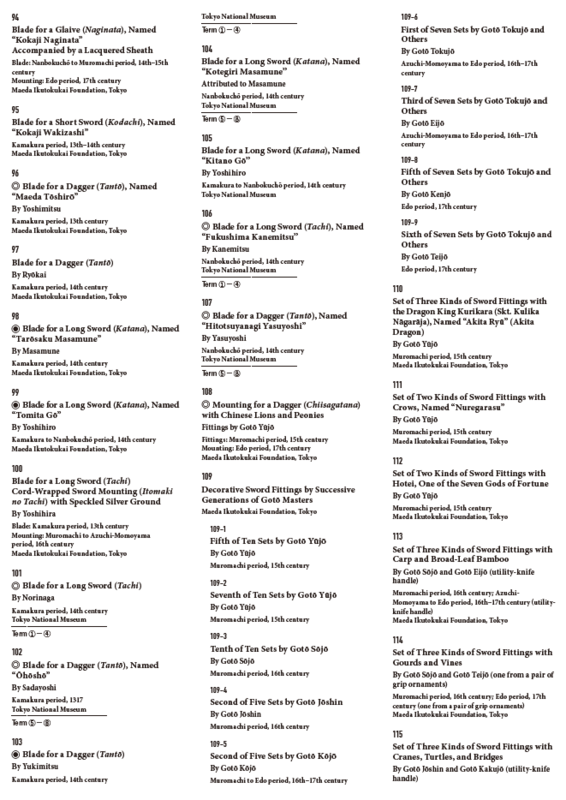
- 1 reply
-
- 4
-
-

-
WOW. Thats an unmissable All-Star lineup.
-
Assistance Requried: Kai (Kunie) Gō
Lewis B replied to MassiveMoonHeh's topic in General Nihonto Related Discussion
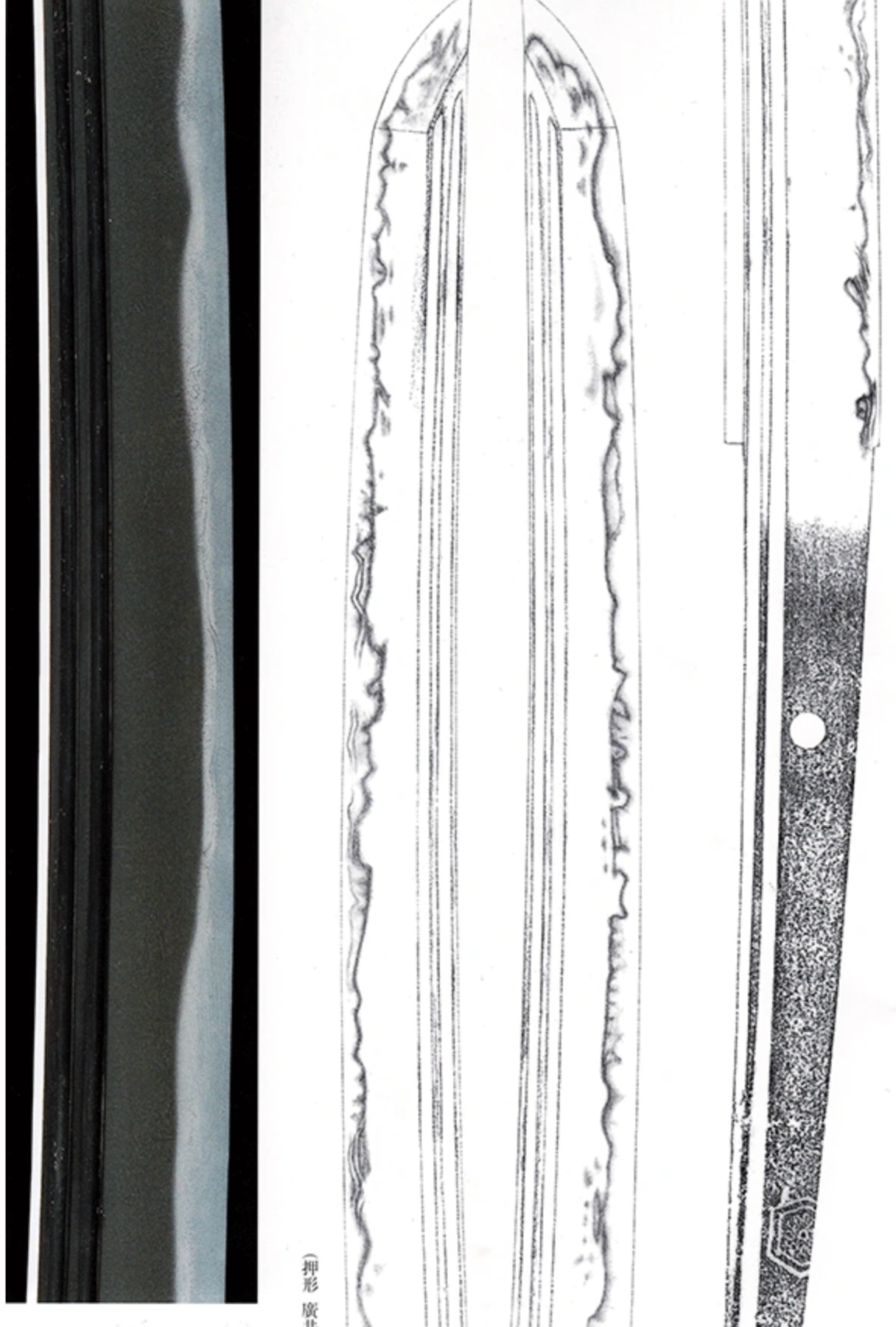
@MassiveMoonHehI'm sure you saw the 2 posts in a thread in the Nihonto section with Kunzan's opinion of the blade when he examined the Kaikuni-Go in June 1973 (I assume shortly after the rediscovery). Compare with this much earlier oshigata while in its fire damaged state before it was saiha. -
Just watched the video and I think it nicely represented the quality of the armour and artwork. The Hokusai painting of Minamoto no Tametomo and the Oni was wonderful.
-
Fully Mounted Early Shinto Katana in Good Polish
Lewis B replied to ChrisW's topic in Swords and Edged Weapons
Baking soda is abrasive. Do not use baking soda. -
Looking forward to seeing what you bring to Utrecht in June. Apart from my uchiko You have one of the most interesting tables at the Show
- 1 reply
-
- 2
-
-
The power of a good polish...
Lewis B replied to MassiveMoonHeh's topic in General Nihonto Related Discussion

-
The power of a good polish...
Lewis B replied to MassiveMoonHeh's topic in General Nihonto Related Discussion
A few more images and an oshigata.
-
The power of a good polish...
Lewis B replied to MassiveMoonHeh's topic in General Nihonto Related Discussion
Are those nie crystals in the Hi or an artifact of the scanning. If the former thats impressive. Peak Soshu? -
The power of a good polish...
Lewis B replied to MassiveMoonHeh's topic in General Nihonto Related Discussion
Is it possible the kikko mon was added much later after a suriage? -
There is nothing on their website. And if you weren't told in writing before commissioning their services that is a huge red flag.
-
My brother visited the exhibition yesterday since he had several hours to kill in London. Was quite disappointed saying there were only 4 swords and not notable ones either.
-
This is very poor service. Shipping without insurance is unbelievable. Do the Bensons published T&C's categorically state they accept no liability in case of handling damage or shipping issues or that shipments aren't insured? I have seen this exclusion written by other intermediaries in Japan and this immediately excluded doing business with these individuals. Blades are moved around frequently (to togi-shi, saya-shi, Shinsa, sayagaki etc) and I expect some due care and attention and not I-wash-my-hands, if your valuable blade goes AWOL. On the upside no to very low value might deter potential opportunistic thieves. I still think USPS have it somewhere in their system. I would start contacting USPS immediately. Some info here: https://www.usps.com/help/missing-mail.htm And some phone numbers To investigate lost USPS mail, file a Missing Mail search request online at USPS Missing Mail after checking tracking. For assistance, contact USPS Customer Service at 1-800-ASK-USPS (1-800-275-8777) or submit a help request form. For potential mail theft, contact the U.S. Postal Inspection Service at 1-877-876-2455. Key Contact & Investigation Steps: File a Missing Mail Search Request: This is the primary method to find missing items. Submit a Help Request Form: Submit a form online at USPS Email Us to have your local post office look for the item. USPS Customer Service: Call 1-800-ASK-USPS (1-800-275-8777) Monday–Friday 8 AM–8:30 PM ET, Saturday 8 AM–6 PM ET. Mail Theft/Fraud: Report to the U.S. Postal Inspection Service (USPIS) at 1-877-876-2455 or online at USPIS Report. Employee Misconduct: Contact the USPS Office of Inspector General (OIG) at 1-888-877-7644 or USPSOIG Hotline. Don't give up hope. It's going to be a bit of a frustrating journey but there is a lot at stake and worth the effort. Packages go missing regularly and turn up months later. The important thing is to be in direct contact with the last sorting office.
-
Looking for a Tameshigiri Signature Sword
Lewis B replied to Hooting Mandrills's topic in Wanted to Buy
Try contacting Nick Rupero at Nihontoart.com Nick regularly gets interesting blades with Tameshigiri inscriptions. This is currently available https://nihontoart.com/shop/10th-generation-retainer-kanesada-with-difficult-2-body-test-cut/ This is a 2 body test cutting inscription done by the famous Asaemon family dating to latter part of the 17th century. Well priced I think for a gold tameshigiri inscription by a well known family of testers, although price reflects the condition. https://www.nipponto.co.jp/swords11/NT335063.htm -
Sorry to hear this. But I'm not so sure this package was stolen. Have you filed a missing package report with the Postal Service and an insurance claim? What was their response? I sent a bicycle wheel to my brother in San Diego last year from Germany. It reached CA within the expected time with regular updates, but then went to AZ for some weird reason, then back to CA, then nothing. The tracking remained dormant for 7 weeks. About 8 weeks in I filed a missing package report with DHL and they contacted USPS. The package was eventually located and made it on to my brother. Whats important is to be proactive. Contact the sorting office responsible for the last scan as well as the dept handling missing/overdue deliveries. Keep pestering them and file a police report. The box is probably sitting somewhere in a sorting office/warehouse same as my brothers bike wheel. Good luck.
-
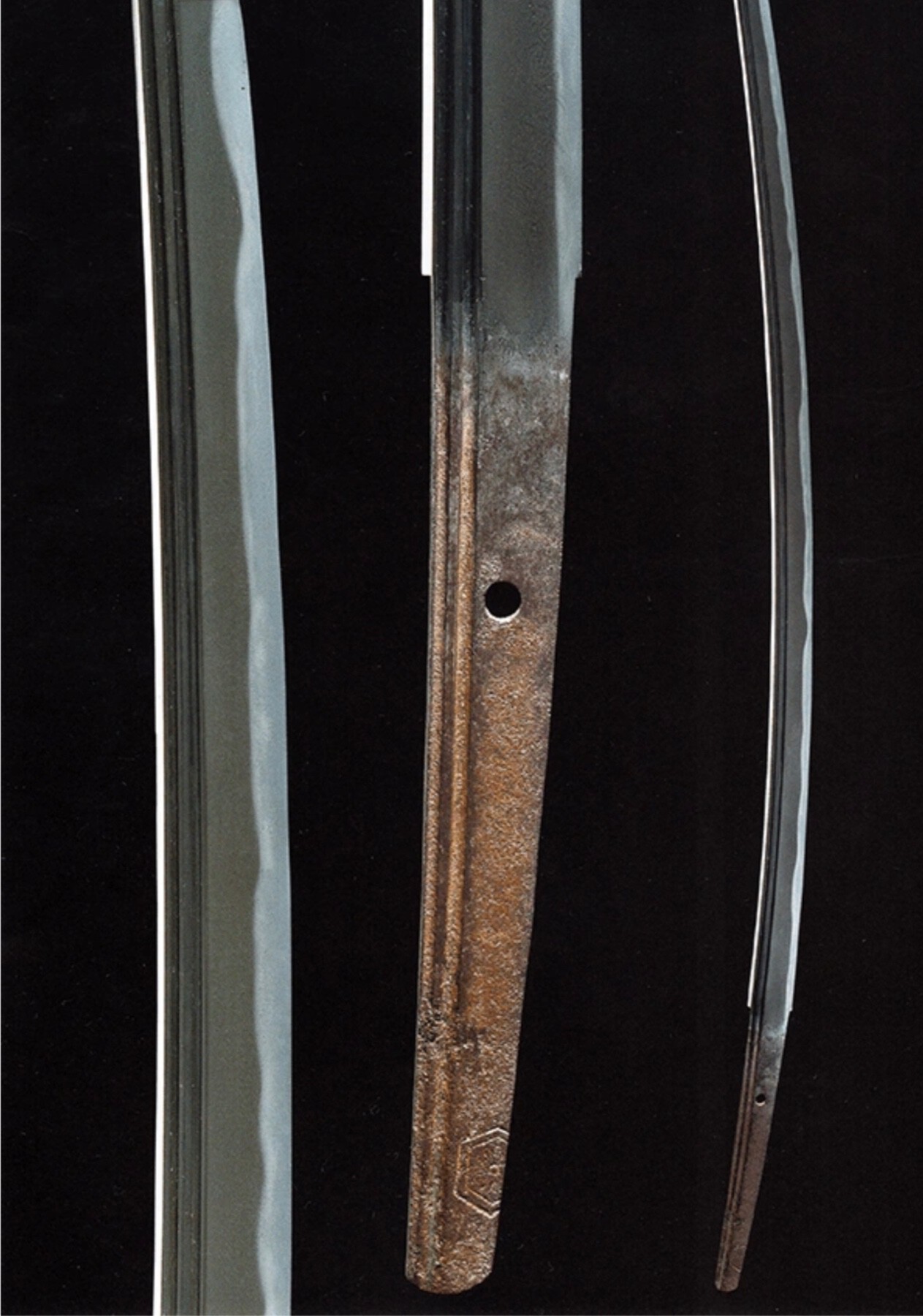
Kunzan believed this to be a signed Go tanto. Although attributed by the NBTHK in mid 70's to Senjuin Yoshihiro, the quality of the jiba exceeds that of the SY blades he had examined. An important reference work.
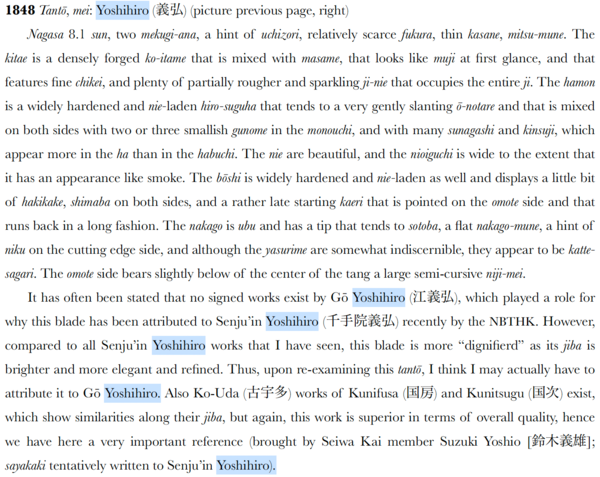

- 1 reply
-
- 5
-
-
Setting up the notifications I find the options a little generic and not adequately customisable. Like if a want to receive notifications for specific rather obscure makers eg Senjuin Yoshihiro. A keyword search function for notifications would be useful. Or maybe I've overlooked this option.
-
Hi Hoshi, They eventually arrived but had expired by the time I input the codes. Can you extend the allowable time to say 30 mins?
-
@Hoshi FYI Seem to be having an issue logging in. I had previously registered my account in early March. Now when I try to log in the platform says it's sending a code which never arrives. Tried twice over a 20 min period. OK, they eventually arrived but had expired by the time I received them.