Lewis B
-
Posts
1,888 -
Joined
-
Last visited
-
Days Won
10
Content Type
Profiles
Forums
Events
Store
Downloads
Gallery
Everything posted by Lewis B
-
 The article seems to have created a bit of controversy back in 2011. Even so I would love to read it if anyone has a copy. The link is dead and I can't find it in the archives. TIA
-
Japanese Sword Museum Juyo Exhibition
Lewis B replied to Sukaira's topic in General Nihonto Related Discussion
Thats the feeling I got. Typical AI polish. -
Did someone ruffle his feathers?
-
"Tsuba: The R. E. Haynes Study Collection" Auction
Lewis B replied to Promo's topic in Auctions and Online Sales or Sellers
Ouch, that's bad -
Yamatorige @ Bizen Osafune Sword Museum
Lewis B replied to MassiveMoonHeh's topic in General Nihonto Related Discussion
I think I see shintetsu -
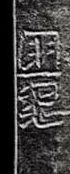
Something that has always made me think is why Shintogo would sign his Mei the way he does in that unique style. The books suggest his father was Awataguchi Kunitsuna and that connection may explain why for example he strikes the vertical radical for kuni in a centrally positioned, straight line. Maybe because this is how his father chiselled the kanji? The positioning and dimensions of the tachi mei are also very similar placed, being placed high up the nakago near the munemachi and along the shinogi-ji. Here is one example from the famous Onimaru Kunitsuna tachi.
-
PS You don't need to give your 'actual' name.
-
I thought this was an exceptionally rare early koshirae and fittings that the NMB might like to see. Posted by Keisuke san of the katana_case_shi shop. The blade is a Heian period Ko-Naminohira tachi. https://www.instagram.com/p/DWfMwIpGO3G/?img_index=1
- 1 reply
-
- 4
-

-
The impression I got was the book was printed in Italy on demand. So not a limited production run.
-
Excellent resource with opinions expressed from a different period. Not so great for Soshuden and Yamato but for Bizen the reference is quite thorough. I did see a 1305 Shintogo Kunimitsu tanto which wasn't in my records for dated pieces. And the authors emphasised the relative importance of the Shintogo (I assume through the close connection with the Bakafu) and Yamashiro ateliers during this period, and a downplaying of Yukimitsu's contemporary relevance. Only later, after his death, did his work gain significance and appreciation (like Van Gogh).
-
Nothing new. Tamahagane production was centralised back in the Edo period (as a means of controlling sword production by the Bakafu), often said to the detriment of the blades produced since then.
-
Colour me impressed. Always admire a westerner who has mastered Japanese
-
I think Martin divides his time between Japan and Slovakia(?). He may be away from the swords and unable to ship until he returns, although this doesn't excuse the ghosting.
-
What an amazing coincidence to be rediscovered exactly a century later.
-
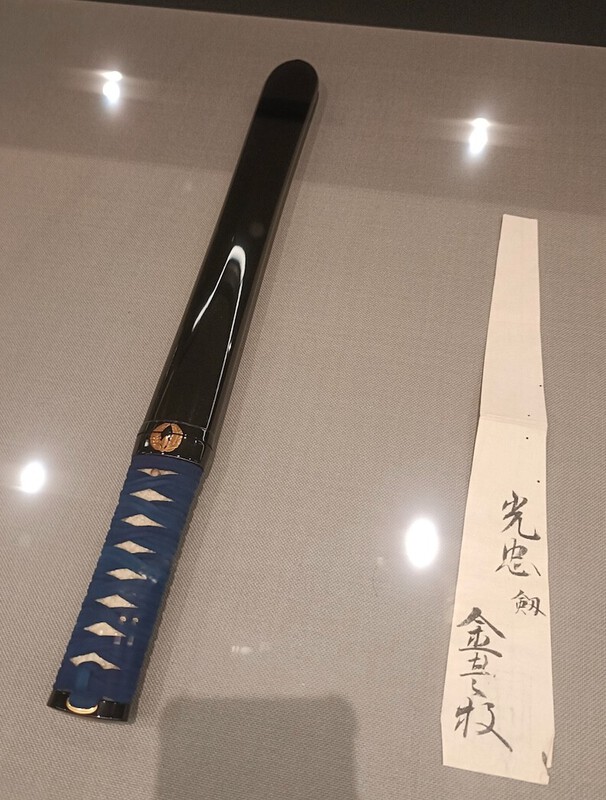
For anyone with FB. Here are Shiotsuna's images of the Mitsutada Ken. What I don't get is why the plaque said it's the only known sword by Mitsutada, there are others. Maybe the only known Ken. https://www.facebook.com/photo/?fbid=2025021488070415&set=a.2025022978070266 And the koshirae
-
Yamatorige @ Bizen Osafune Sword Museum
Lewis B replied to MassiveMoonHeh's topic in General Nihonto Related Discussion
Thanks for the photos. That blade has had a tough life. A chunk out of the edge and a nakago that is shall we say...interesting. Certainly not something I've seen on another blade from the era. Unfortunately Shiotsuna, the local photography GOAT can't travel to record these blades. Such a shame. -
Is it common blades to lose National Treasure status? I thought that attribution would be a forever thing.
-
Yamatorige @ Bizen Osafune Sword Museum
Lewis B replied to MassiveMoonHeh's topic in General Nihonto Related Discussion
When I visited a year ago they had an extraordinarily healthy Rai Kunimitsu sword in the display booth. A couple weeks later I saw it in hand as part of a special NBTHK-EB event at the Museums research centre and took this video. It had marumune and Hon'ami Kochu Kinzoganmei
-
Yamatorige @ Bizen Osafune Sword Museum
Lewis B replied to MassiveMoonHeh's topic in General Nihonto Related Discussion
When the Yamatorige was purchased by Setouchi City the US$ was much weaker. 500mil JPY was around $5mil (just over $3.1mil based on todays FX) making it a far better headline. Speaking of visually impressive swords, do any of these big name sword museums in Japan use the macro observation system successfully employed by the Samurai Museum in Berlin? There is nothing like viewing these blades under a macro lens (like observing pond water under a microscope). -
You will have to contact Chris directly. He withdrew the listing and the photos disappeared.
-
katana 1637 Gashu Kanazawa Junin Kanemaki
Lewis B replied to fozz's topic in General Nihonto Related Discussion
You're welcome. Contact info for a couple of habaki makers can be found in this thread https://www.militaria.co.za/nmb/topic/15473-i-would-like-to-buy-koshirae-or-shirasaya/ -
katana 1637 Gashu Kanazawa Junin Kanemaki
Lewis B replied to fozz's topic in General Nihonto Related Discussion
You're welcome. Contact info for a couple of habaki makers can be found in this thread -
This may still be available
-
katana 1637 Gashu Kanazawa Junin Kanemaki
Lewis B replied to fozz's topic in General Nihonto Related Discussion
An older thread but the suggestions are probably still valid and worth pursuing. I would suggest you start with John Bolton. https://www.militaria.co.za/nmb/topic/23338-habaki-maker-uk/ -
"Tsuba: The R. E. Haynes Study Collection" Auction
Lewis B replied to Promo's topic in Auctions and Online Sales or Sellers
I hope the buyer knows what he bought when he gets them in hand and demands a refund. ~11k Euro after fees is a big hit. Got to wonder how many other pieces in the collection are suspect.