Lewis B
-
Posts
1,890 -
Joined
-
Last visited
-
Days Won
10
Content Type
Profiles
Forums
Events
Store
Downloads
Gallery
Everything posted by Lewis B
-

Books for beginners in English
Lewis B replied to Ikko Ikki's topic in General Nihonto Related Discussion
The route to enlightenment is never easy, so we're told. Books, the internet, NBTHK publications all play a key part in the journey. They provide a taster and allow us to interpret what we see. BUT there is no substitute for seeing and handling blades in hand. Unfortunately in Europe the options are limited. Museums in Europe are poor for this subject matter (although for paintings arguably the best), but there are bimonthly NBTHK-EB meetups in various locations, plus the fantastic Japan Art Expo in Utrecht. Both opportunities offer the Nihonto student ample time under good lighting conditions (key) to observe and contextualize the multitude of features and characteristics for specific Gokaden and schools. I have learned more at the two venues so far visited plus the trip to the Steyr City Museum than I could have imagined. But the books and external reference material lays the groundwork. Good food consists of many ingredients harmonizing together to create the experience. Same is true for most collecting too, including Nihonto. -
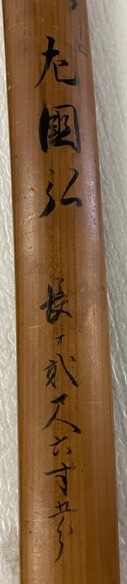
And just to complete the reference matter, in case anyone is interested. First one is on the Masamune.


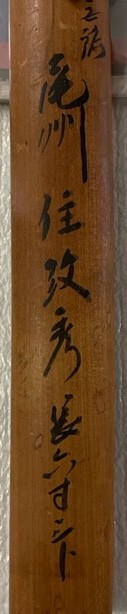


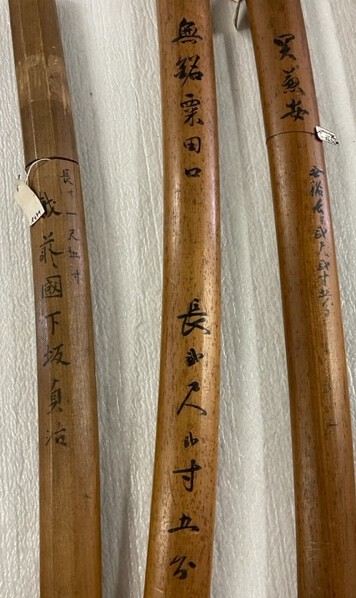

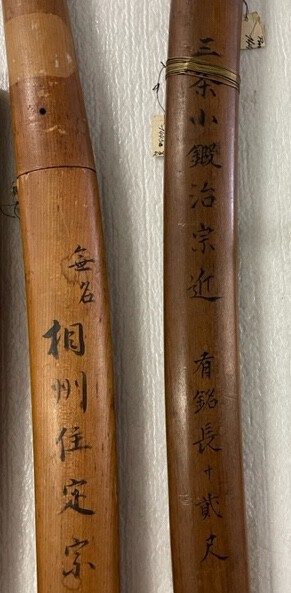





-
Confirmed by another very respected expert. Shame, it really seems that dealers were offloading blades with gimei to unknowledgeable buyers. The expert inspected a "Sadamune" from the Petermandl collection that was also gimei. Regarding the Masamune he said it was highly suspicious that all the mekugi ana are of a similar size. The suspicion being that the holes were punched at the same time rather than at different points in its history. This had never occurred to me but makes sense if you wanted to deceive and give a blade more historical context than it really experienced. So rather than being a red letter day, its turned out to be a rose coloured one. At least the museum won't feel the pressure to invest large sums to polish the blades.
-
Surely its a rare samurai bread knife.
-
Placed an order for 7 books. There is a difference between seeing and seeing & understanding. Good reference sources are key for the latter, as well as attending meetings to discuss specific blades and fittings. Hope my HD has enough memory
-
Currently continuing my vacation in Austria and Slovenia but will get to this when I have some time. Its a little more involved than posting a pic. I got video of the Masamune, the Bishu Osafune (#2) and the Sadatsugu (#3). The trouble is that these blades have 100 year oil residue smeared on much of the blades which is now solidified and sticky. They really needed a wipe with isopropanol.
-
Yes truly an exceptional and unique experience, probably once in a lifetime opportunity to see a 150 year old collection that really hasn't seen the light of day. Bit of an Indiana Jones moment But I think Kirill hit it on the head. There were a lot of low/mid range quality pieces that might have been upsold either through sayagaki attribution or gimei. I'll post the attributions and they should add a little more seasoning to the broth.
-
Thanks. So could #4 be the "Demonic Yukihira"? Yukihira (行平), who is traditionally dated to the Genkyū era (元久, 1204-1206) He seems to have been quite a character I took some video footage of 1-3, and these had some nice activity in the jihada visible even though in poor polish.
-
Katana/tachi #1 Katana/tachi #2 omote Katana/tachi #2 ura Blade 3 Tanto. This one had some age. My favourite short blade (sorry for the blurriness? \


-
Well you could well be right. Even so I had an absolute blast and got to see the entire collection of 60 blades of which 40 I removed from their shirasaya and inspected. The overall condition I have to say was a little upsetting. The blades have been languishing in a storage room since Anton Petermandl donated them to the museum in the late 19th century. The curator was more than gracious and allowed me to remove the tsuka and inspect the nakago of the 40 blades. I spent 3 hours in the room with the swords that were stored in 4 pull out drawers and could have enjoyed 3 days. When people say old polish that would have described these blades, probably rarely out of their saya in over 100 years. There were 2 Heian era blades and a total of 4 or 5 blades that had signatures. Then we can judge if Albrecht von Roretz had been taken for a ride. The Masamune is in desperate need for a polish. So much Ware and uchiko like scratch patterns it was almost impossible to see the finer detail hiding underneath. At first blush it looked like a good blade, whether it is up to the standard of the top Soshu master is yet to be determined. The motohaba was approx 2.9cm. I will post the photos I took of the sayagaki for the 30 or so blades that had attributions and the Mei on the Nakago. Maybe those more knowledgeable will be able to say who wrote the sayagaki. My first cursory inspection suggested there were maybe 5 blades that could benefit and justify the post of a proper polish. One Bizen blade and what might be a Go seemed especially worthy. Here's a teaser. I was a little perturbed a Masamune would have a copper habaki though.

- 26 replies
-
- 10
-

-

-
This was the subject for the NBTHK-EB meeting back in June. Some amazing pieces were available for viewing.
-
Good news, Tanobe sensei has agreed to write the sayagaki.

-
Its not often an opportunity presents itself to handle a blade by arguably the most famous Japanese swordsmith, Masamune. The owner was Albrecht Von Roretz and he brought this blade along with 60 others from Japan in the late 1800's, after several years spent establishing a modern Western health system during the Meiji period. He had a keen interest in Nihonto which makes this particular Masamune worthy of a hands on viewing. Markus Sesko was supposed to inspect the collection but left for the USA before getting the chance. There are certainly some questions as to whether this is a genuine blade by the Master but given Dr Von Roretz's status, knowledge around the subject etc, its worth giving it a careful look. I will ask if I can take some photos and if possible, view the Nakago.
-
Excellent timing. There are 5 or 6 publications that are of immediate interest. Thanks for posting
-
Same ken? Hozon papers, Heian era. Seems likely. Sold again in 2023 for $3,840. Not sure how that compares to the price it sold for several times over in the late noughties. In todays market that doesn't seem like a bad price. https://www.bonhams....4-1185-10th-century/
-
Ubu Yoshimasa Tachi from the early kamakura period
Lewis B replied to ChrisM's topic in General Nihonto Related Discussion
Senjuin is considered the oldest of the 5 Yamato schools. -
Whatever it says it doesn't appear to be chiseled in a traditional manner. Looks more etched, which I assume is a more modern way of marking blades.
-
I'm very curious to whom Tanobe will attribute the blade. There was a sword that achieved Juyo status a couple of years ago with a very similar jitetsu. The Zufu papers even said it would have been attributed amongst the best of the Soshu Gokaden had it not had a sugata that was more characteristic of early Kamakura. This blade has a similar sugata and is my 2nd Nihonto purchase. I will post more details when Tanobe sensei has written the sayagaki.
-
Sent you a PM
-
A nice video about types of Grain Patterns
Lewis B replied to Pierre F's topic in General Nihonto Related Discussion
This is the Norishige you reference. To me the artistic focus is quite different. The DNA is unmistakable though. -
Japanese Swords Face Challenges, Says Expert
Lewis B replied to Kiipu's topic in General Nihonto Related Discussion
I think this is true for the majority of ancient artisanal skills. Increasing governmental control of bladed items is another pressure not mentioned in the article which will have a knock on effect on the demand. Glad I don't live in the UK anymore. -
A nice video about types of Grain Patterns
Lewis B replied to Pierre F's topic in General Nihonto Related Discussion
Yes, the crazy hamon is the result of the hardening or Yaki Ire when the blade is tempered. Probably the effect of his clay treatment. Certainly quite unique for the period. The jihada are not comparable to that of Norishige. I had the opportunity to handle a Norishige blade at the last NBTHK-EB meeting. It appeared to be from his earlier phases whilst the one in that Bill Rannow vid is from the end of his career when he focused more on making the Matsukawa hada more of a prominent feature. Personally I prefer his earlier work and this is a great example. I will have the honour to view a Masamune blade on Monday. So excited as there are very few outside Japan.
-
This is quite an old reference book from the 1970's but if anyone has a copy there is something I would like to check. Thanks Interesting review from an NMB who visited a few years ago. Something to checkout if you happen to be passing through Sakura. http://www.intk-toke...x.php?showtopic=9500
-
A nice video about types of Grain Patterns
Lewis B replied to Pierre F's topic in General Nihonto Related Discussion
Full name Hasebe Kunishige (長谷部国重) . He is considered to be one of the Masamune Juttetsu.