Lewis B
-
Posts
1,880 -
Joined
-
Last visited
-
Days Won
10
Content Type
Profiles
Forums
Events
Store
Downloads
Gallery
Everything posted by Lewis B
-
Thanks. An excellent example of the vertical radical for Kuni. The tanto shown shares many of the characteristics commonly found for Shintogo. Mitsu-mune, sugata, uchizori, nakago shape. Even the length of the futasuji-hi horimono is very similar to the koshibi carving on the 1306 and 1308 tanto. Something else I noticed is how the horimono carving on Uwe's tanto extends quite far past the machi and well into the nakago. The 1308 tanto has a similar extension which has had me perplexed but appears to be deliberate based on the Norikuni example. Norikuni's son, Kuniyoshi adopted a similar unique style for kuni although there are many examples of his Mei that are carved in the more traditional way with right slanting central radical. One thing is clear that Shintogo learned from the some of best smiths of the day and the style of his work establishes a connection to the Awataguchi school and, in particular, the individuals who moved from Kyoto to Sagami during the Kamakura era.
-
My bad. Edited the post with the correct acknowledgement.
-
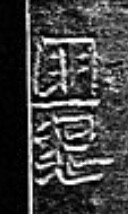
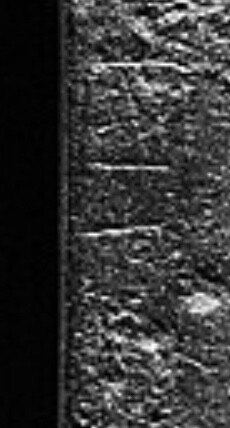
An update on progress. Habachi has been restored and a shirasaya is being made by the sayashi now that the togishi has removed the surface corrosion on the blade. I hope this will be completed in the next 1-2 months and given back to the togishi so he can begin the polishing. I have to admit I've become a little obsessed by Mei and the stylistic forms of kanji adopted by smiths in the Kamakura period, especially. It seems to be quite quirky to alter the regular form of kanji and it got me wondering why Shintogo adopted the unique strokes that are peculiar to him. I doubt it was something done in isolation. Likewise Norishige also carried on this practise, probably influenced by his Sensei, in the characteristic style he adopted when carving Nori and Shige. Many theories circulate around Shintogo's origins and his teacher(s). The Soshuden Museum offers some interesting theories. https://www.nihonto-museum.com/blog/shintogo-kunimitsu I'm reading the catalog @MassiveMoonHeh made available from the Art of the Samurai exhibition at The Met in 2009/10. In there a National Treasure tachi by Awataguchi Norikuni caught my eye. The character for Kuni has that distinctive central vertical strike. Could this smith have been the inspiration for Shintogo's Mei? One theory is that Shintogo's father was Awataguchi Kunitsuna, who was uncle to Norikuni, making Norikuni and Shintogo cousins. Both Norikuni and his father Kunitomo were two of the Gobankaji from the Awataguchi school. A young Shintogo might have held these guys in very high esteem and adopted some stylistic designs for his Mei in recognition and respect, as well as adding his own flourish in the form of the mirrored 'S' element. Norikuni also worked in narrow suguha. Awataguchi Kunitsuna mei Extant works by Kunitomo are extremely rare (less than 5 known per Markus) and I've been unable to find a really clear example of his Mei. The is the best I could get. Slanted vertical. Did anyone attend the exhibition? What a unique experience that would have been. If only I had been actively involved in nihonto at that time. It would have been unmissable.

-
 Yes, a Pawn Stars regular.
 -
There are fewer meet-ups in Manching, probably 2 per year and 4 in Solingen. What I have noticed is the turnout is a little better down South, usually 30-35 attendees. For 2026 the Manching meetings will take place on 25/4 and 26/9. You are entitled to attend one meeting as a guest and to see if it interests you. I promise you will not be disappointed. Finally early bird tickets for the Japan Art Fair in Utrecht in mid June have just gone on sale. This 3 day event is as serious as it gets, growing every year with dealers from all over Europe, Japan and North America. It's the best event to see and purchase Nihonto, Kodogu and Tosogu this side of the Atlantic.
-
I think you're missing the point. Collectors of top makers from this period expect perfection. Anything less gets a huge ding valuewise.
-
Not an uncommon sentiment around here. Its a really knotty field to collect and we all make mistakes, especially early on. I say this a lot but seriously consider joining the NBTHK-EB. We meet in Solingen and Manching and this is one of the best and one of the few opportunities we Europeans have to study top level Nihonto and Tosogu (incl Juyo and TJ level pieces). Next meeting is 31/1/26 in Solingen (PM me if you would like to attend this event for details or one later in the year). Eckhard Kremers, The President of the European Branch, is one of the foremost experts for fittings, especially tsuba and has written books on the subject. This is where you get your education.
-
I think its safe to say the previous owners 'modification' has significantly impacted the value, especially as it cuts into the Mei.
-
Looks like he's reading a parchment.
-
Appears to be a blade by Naotane. Tanobe likes it referring to it being a masterpiece.
-
Why i dislike this dealer
Lewis B replied to lonely panet's topic in Auctions and Online Sales or Sellers
Interesting you say this. I'm slowly working my way through the excellent Sesko KantoHibiSho volumes. Coincidentally, I just saw this oshigata and immediately it reminded me of the very active hamon, overall jiba and elongated boshi on the Tametsugu. Also has wide mihaba and elongated kissaki. The opinion piece on that particular wakizashi also suggested a later generation work in the style of Shizu. The low starting price was a bit of a red flag and maybe reflects some issues with the blade like the ones Jussi suggests.

-
Why i dislike this dealer
Lewis B replied to lonely panet's topic in Auctions and Online Sales or Sellers
I'd be quite surprised if that blade got Kaneuji or Yamato Shizu. His style appears to show more control of the hamon than is evident here. I could see it getting Naoe Shizu perhaps. But would that be an upgrade from Tametsugu? -
Ah Miyamoto Kanenori. The date and age (84) are consistent. Should be fairly easy to compare other examples. I would guess it was shoshin.
-
Why i dislike this dealer
Lewis B replied to lonely panet's topic in Auctions and Online Sales or Sellers
Had my eye on this healthy Tametsugu. Then bidding exploded in the final 30 mins jumping from the starting bid of 1.6milJPY to 3.5milJPY. Tsuruta says it would benefit from a polish. Based on the photos the fine scratches are quite obvious. It appears to be a Mino period Tametsugu from what I can see. https://sword-auction.com/en/product/29871/as25689-katana-mumei-attributed-to-tametsugunbthk-tokubetsu-hozon-token/ -
Why i dislike this dealer
Lewis B replied to lonely panet's topic in Auctions and Online Sales or Sellers
Doesn't go through to the other side, but still a very ugly kizu -
The exhibition at the British Museum seems to be generating a fair amount of controversy. Even our Luc Taelman has weighed in. I get the impression that if you go expecting to see weapons and armour, you might be a little disappointed. YMMV https://Japan-forward.com/is-the-british-museum-rewriting-samurai-history/
-
Not sure that is correct. The earlier extant work (predating 1423) I was referring to was the one that states Norishige was a student of Shintogo Kunimitsu, a statement that flies against the long held dogma that he was one of the Masamune Juttetsu. That publication is the Ki'ami-bon Mei-zukushi (喜阿弥本銘尽), dating back to 1381.
-
I think you'll be disappointed with the offerings at the V&A. Poorly illuminated cabinets and uninteresting specimens. I would skip unless you wanted to see something else eg ceramics, fabrics, Middle Eastern art etc.
-
Fascinating and what a great discovery. The link to the transcription of the 2 page document is no longer active? Is there another? What was the date of the previous oldest nihonto text? From the 1370's? https://www.militaria.co.za/nmb/topic/24440-early-sword-reference/
-
From Markus Sesko's swordsmiths reference it appears to be by one of these Fujiwara Kinmichi smiths. Most likely 2nd or 3rd generation as they carved chrysanthemum on the nakago. KINMICHI (金道), 1st gen., Keichō (慶長, 1596-1615), Yamashiro – “Kinmichi” (金道), “Iga no Kami Kinmichi” (伊賀守金道), “Iga no Kami Fujiwara Kinmichi” (伊賀守藤原金道). He was the oldest son of the Seki-smith Kanemichi (兼道). He had accompanied his father in the second year of Bunroku (1593) with his three brothers Echigo no Kami Rai Kinmichi (越後守来金道), Tanba no Kami Yoshimichi (丹波守吉道), and Etchū no Kami Masatoshi (越中守正俊) to Kyōto where they settled in the Nishinotō´in (西洞院) neighborhood and where Kanemichi founded the Mishina school (三品). The name Kinmichi was in back then read Kanemichi but to avoid confusion, more and more the reading Kinmichi became common. He received the honorary title Iga no Kami on the 19th day of the second month Bunroku three (1594) and worked also for the Imperial Court from that time onwards. Shortly before the Battle of Sekigahara, Tokugawa Ieyasu ordered 1,000 tachi from him and due to the skillful management of all the workers he was granted with the honorary title Nihon-kaji-sōshō (日本鍛冶惣匠, lit. “master swordsmith of Japan”). With that title, he had a certain influence at court on the granting of honorary titles for other swordsmiths. The title and the advisory function at the imperial court were hereditary and held by successive Kinmichi generations until the bakumatsu era. The 1st gen. Kinmichi died on the eleventh day of the twelfth month Kan´ei six (寛永, 1629). His blades have a sakizori and his rather wide mihaba does not taper that much. The jigane looks hard and the jihada is a standing-out ko-itame with nagare and masame along the mune. Ji-nie and chikei occur. The hamon is a notare mixed with gunome and togariba or a ko-notare mixed with gunome. His works in the Mino tradition are somewhat different from his works in the other traditions, i.e. the hamon is in this case an ō-midare mixed with yahazu-midare or hako-midare with irregular nie. In addition, sunagashi and kinsuji appear and an influence of the Shizu school or of No-Sada can be seen. The bōshi is a Mishina-bōshi. wazamono, jō-saku KINMICHI (金道), 2nd gen., Kan´ei (寛永, 1624-1644), Yamashiro – “Iga no Kami Fujiwara Kinmichi – Nihon-kaji-sōshō” (伊賀守藤原金道・日本鍛冶惣匠), real name Mishina Kanbei (三品勘兵衛), oldest son of the 1st gen. Kinmichi and the older brother of Izu no Kami Kinmichi (伊豆守金道), the 1st gen. received as mentioned the honorary title Nihon-kaji-sōshō but it was the 2nd gen. who signed that title for the first time, he also carved a chrysanthemum onto his tangs which looks like a stylized cartwheel, he died on the 21st day of the tenth month Enpō eight (延宝, 1680), itame mixed with masame, suguha, gunome-midare, often sunagashi, Mishina-bōshi, wazamono, chūjō-saku KINMICHI (金道), 3rd gen., Jōkyō (貞享, 1684-1688), Yamashiro – “Iga no Kami Fujiwara Kinmichi” (伊賀守藤原金道), real name Mishina Kanbei (三品勘兵衛), he received the honorary title Iga no Kami on the 28th day of the first year of Jōkyō (1684) at the age of 30, the title Nihon-kaji-sōshō was granted to him in Kyōhō six (享保, 1721), he changed the characters for “sōshō” from (惣匠) to (宗匠), in the seventh year of Kyōhō (1722) he worked at the invitation of the bakufu in the Edo-bakufu residence Hama-goten (浜御殿), he and all of his successors carved a chrysanthemum on their tangs, because of an illness he was supported by
-
https://www.japanartfair.com/
-
No worries. Hopefully Chris doesn't mind me posting his FS listing. I bought it here... Since you're in the Netherlands I would seriously recommend you attend at least one day of the Japan Art Fair in Utrecht in mid June. Its a unique opportunity for Nihonto, Tosogu and Katchu collectors in Europe.
-
I have a fuchi signed Shoami Masanori (founder of the Kyoto Shoami school), although its apparently difficult to distinguish between shodai and nidai work as they both signed 'Shoami Masanori' and produced similar quality pieces.
-
This is quite an unusual one. Sorry for the poor quality reproduction. Does the design hold some particular symbolism?