Lewis B
-
Posts
1,854 -
Joined
-
Last visited
-
Days Won
10
Content Type
Profiles
Forums
Events
Store
Downloads
Gallery
Everything posted by Lewis B
-
Well, it depends. He won't say in writing but the person who collects it after getting the sayagaki could ask for his opinion and, assuming he has a friendly relationship with the dealer, you should have a good idea where it stands. The sayagaki could also give you an indicator. If he writes it's a masterpiece amongst the work of the smith it's a good start. But obviously its not a sure thing. Recent Juyo Shinsa have been 'strange' to say the least.
-
That great news. Make sure the dealer asks Tanobe sensei if it has a chance at Juyo and you can make an educated decision if it's worth being without the sword for a prolonged period. With the current shipping uncertainty and that the blade is currently in Japan I'd be more inclined to submit to Shinsa if Tanobe responds positively.
-
I assume someone in Japan would act as an agent for submission, retrieval and subsequent relocation. Since Sky is buying from a big name dealer in Tokyo I would hope they would agree to provide that service (perhaps for a fee).
-

Help With Approximate Age and Sugata of Blade with Partial Signature KUNI
Lewis B replied to tbonesullivan's topic in Nihonto
It has katana mei so that would put it early Muromachi at the earliest. Could be an earlier blade but later signature. -
So says the "informed amateur"
-
Looking for thoughts on this Rai Kunitsugu marked blade.
Lewis B replied to Brian Dent's topic in Nihonto
Chicago isn't too far for you. Take it to the next show to be checked out by knowledgeable eyes. -
Juyo shinsa happens once a year in October. If it fails it'll likely be released towards end of the year. If it passes you have to wait for the papers and oshigata to be completed. You won't see it again until early 2027. Obviously worth the wait in the latter instant
-
The Kiyomitsu will be a worthy addition to the collection. Are you planning to submit it for Juyo? Might be worth letting someone like Tanobe take a look and give his thoughts. I can see the ugly umegane on the Nakajima Rai blade. It has a powerful sugata and old NBTHK Juyo papers. Shame.
-
I'm guessing its this one. Nice choice and looks very healthy. What was it about this blade that tipped it for you vs the other 2. A Tanobe sensei sayagaki would be the cherry on the top. https://world-seiyudo.com/product/ka-060123/
-
Artistry is subjective and in the eye of the beholder.
-
Very attractive workmanship and subject. I also think this represents an indigo dyeing scene under moonlight with the final bolt of fabric on a roller.
-
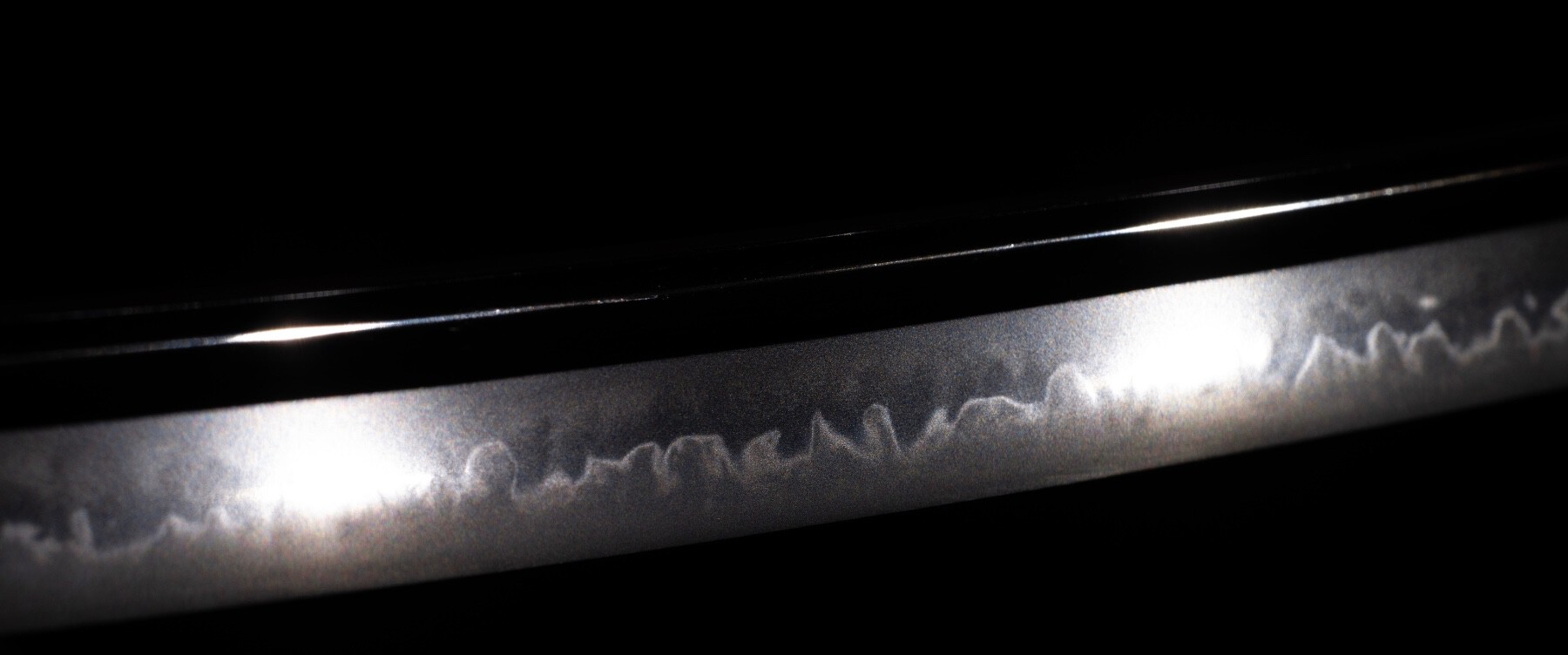
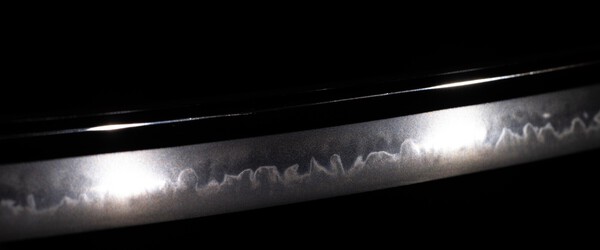
Not true. I've seen this sword in hand and I can say emphatically, this photo is a good representation of the quality of workmanship the blade exudes. What is true is that photos are only as good as the photographer and his equipment, as this example demonstrates. The midare utsuri is just as vivid in hand as it is in the image, as is the nioiguchi in the hamon.
-
Is this for sale. If yes, you forgot the price. Might be a good idea to post measurements and some closeup photos as well as one without the tsuka (handle). Does it have modern NBTHK or NTHK papers?
-
Bo utsuri?
-
The Mei is for Nagayoshi.
-
Looking forward to hearing more about the blade and the smith.
-
These are invaluable resources and being ebooks means the reader can use the very practical search feature. It was primarily access to these reference volumes that I was able to purchase my last sword. Books like the eSwordsmiths volume should be on every nihonto collectors computer. Thanks for making this generous offer available again.
-
Maybe Mr Brannow can hook you up. https://www.artswords.com/2003_dai_token_ichi_catalog_091513.htm
-
If you're correct about masame in the DTI blade Nicholas, it could be by Hasebe Kunishige (Markus indicates a connection with Shintaro Kunimitsu, same smith?). The data is inconclusive although the masame points to Yamato influence. The 'wet' appearance of the steel also fits. KUNISHIGE (国重), 1st gen., Kenmu (建武, 1334-1338), Yamashiro – “Hasebe Kunishige” (長谷部国重), real name Hasebe Chōbei (長谷部長兵衛), it is said that he came originally from Yamato province where his ancestors lived in Nara´s Hatsuse (初瀬), there exists the tradition that the family name Hasebe was, over “Hase,” a modification of the pronunciation of “Hatsuse,” another theory says that he was the son of Senju´in Shigenobu (千手院重信), so it is assumed that his roots were in the Senju´in or in the Taima school, some sources state that he moved to Kamakura to study as late student under Shintōgo Kunimitsu (新藤五国光) before he finally settled in Kyōto/Yamashiro, this is supported by the tradition that Kunimitsu too bore the family name Hasebe, some even assume that Kunishige was the son of Shintōgo Kunimitsu, however, he moved around Kenmu to Inokuma (猪熊) in the Bōmon district (坊門) in the vicinity of Kyōto´s Gojō axis (五条), he is listed as one of the “Ten Students of Masamune,” unfortunately no signed works are extant by the 1st generation Hasebe Kunishige, his most famous work is the meibutsu Heshikiri-Hasebe (圧し切り長谷部) which was once the favourite sword of Oda Nobunaga, this and other ō-suriage-mumei blades have a wide mihaba, a thin kasane, a shallow sori, and an elongated kissaki, the mune is iori or maru, the jigane is a dense ko-itame which tends to masame towards the ha and the mune, the hamon is a notare mixed with gunome with plenty of hataraki within the ha like ashi, yō, sunagashi and kinsuji, towards the upper blade section also tobiyaki appear which can turn into a hitatsura, the bōshi is midare-komi with hakikake and a somewhat pointed kaeri, unsigned blades of the 1st and 2nd gen. are hard to differentiate, the jigane of the 1st gen. looks more “wet” and “sticky” whereas the ha is more bright, jōjō-saku ⦿
-
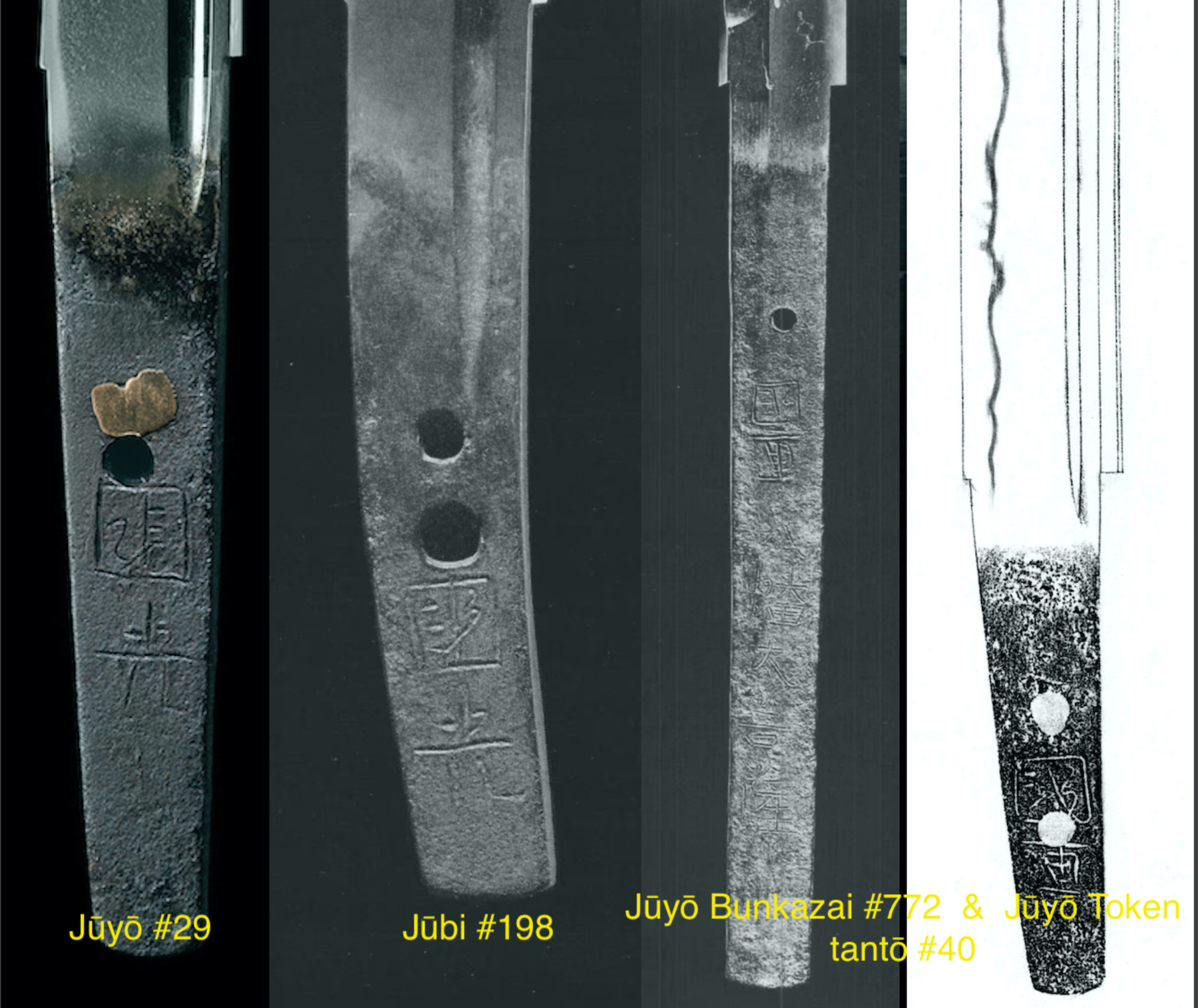
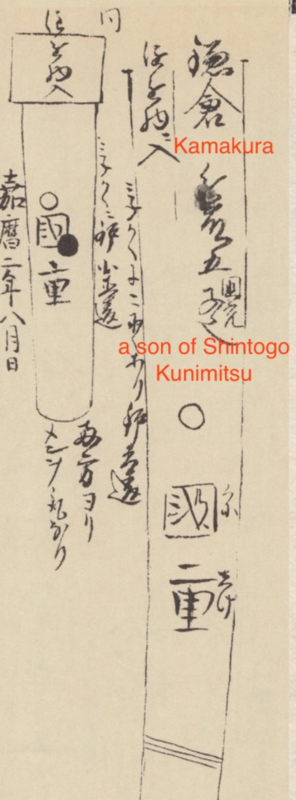
I don't think thats correct. This is the date inscription which I interpret as a year in Showa (Showa 2? [1314]). Such a late date certainly raises some concerns. As Nicholas says this 'Kunimitsu' is going to be an interesting study piece. If I was a betting man my money would be on daimei daisaku by Shintogo's oldest son, Shintaro Kunishige (tanto on left dated Karyaku 2 [1328]). At least a couple of historical references state both he and Kunihiro signed Kunimitsu. KUNISHIGE (国重), Karyaku (嘉暦, 1326-1329), Sagami – “Kunishige” (国重), “Hasebe Kunishige” (長谷部国重), “Sagami no Kuni Kamakura-jūnin Hasebe Kunishige” (相模国鎌倉住人長谷部国重), son of Shintōgo Kunimitsu (新藤五国光), he signed in early years also with Kunimitsu (国光), first name Shintarō (新太郎), it is unclear if he was the same smith as Yamashiro Hasebe Kunishige The Jubi #198 is interesting. Nakago shape is quite similar to the DTI Kunimitsu


-
How so? I've used the system on occasion, most recently to purchase a bicycle helmet from the UK with shipping to Germany. The price included the customs fees based on a percentage of final price and then a shipping fee on top. On the 34 uk pound helmet I paid 12.70 shipping and 11.03 duties/tax (19% GST plus customs duty which I think applies to both item and shipping totals plus maybe some small processing fee). Not sure I would call this a scam and i think its actually a convenience not having to go to the PO, queue and pay on delivery. It aslo gives sellers the opportunity to ship overseas without having to deal with the customs forms and associated hassles, even if they only ship locally.
-
That Morisuke was discussed at length here with mixed opinions.
-
Yes, one of the better pieces shown here recently. My guess is its coral
-
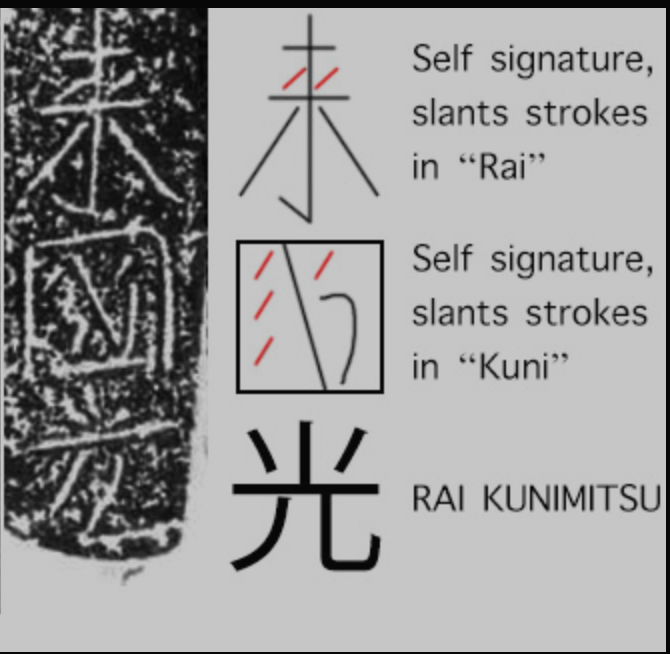
The mitsu character is very similar (horizontal crown strikes), although not a perfect copy of the dated Awataguchi Kunimitsu tanto (no upward strike on lower right radical) and also divergent from the exemplar Shintogo signatures. I will ask if the dealer is willing to send a copy of the TH papers. I'd already sent emails regarding a couple of his other offerings but yet to get a reply. This Shintogo Kunimitsu tanto dated 1315 and part of the Masamune Sano Exhibition also contains many of these anomalous features. Not the usual left-handed kuni character, but more similar to kuni by Kunitsuna and Kunimune. Absence of Mitsu north crown feature. Suggests daimei by someone connected with the atelier (Kunihiro ?).


-
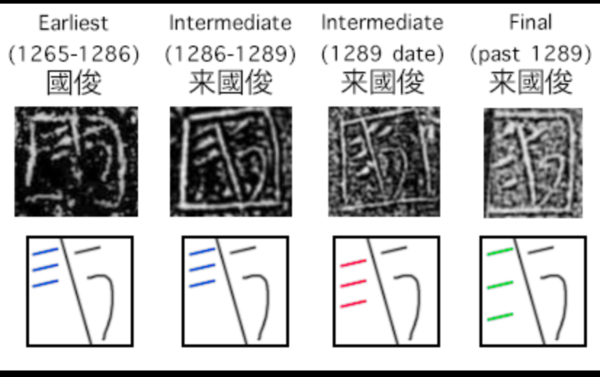
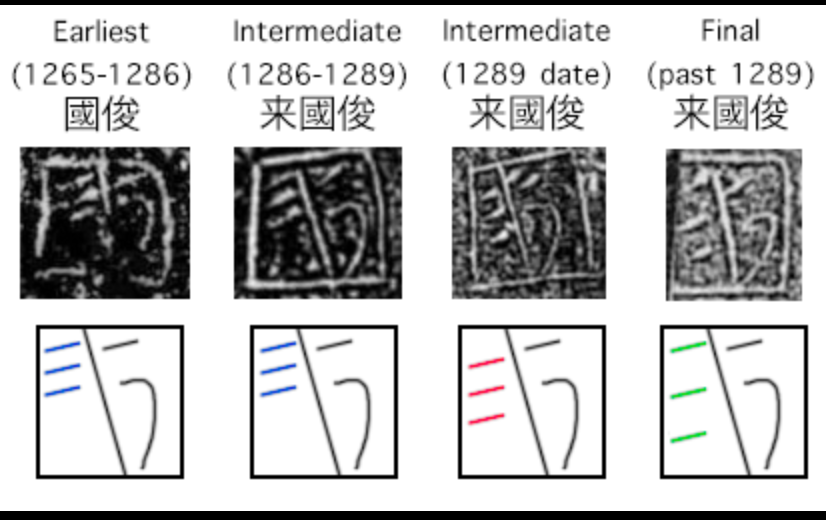
Hi Nicholas, I completely agree. Something is not adding up. My immediate thought was the Kuni Mei was more in the style of Awataguchi school and Rai Kunimitsu than Shintogo. But then I looked at a few examples and thought they were too different eg the curved right element never intersects the vertical strike and he signed with 3 kanji. Daimei Kunitoshi Daimei Awataguchi Rai Kunimitsu Another option as you pointed out is this could be an earlier generation Awataguchi Kunimitsu. The Setsumei for the tanto you posted states This piece is tanto that should be judged as being by AWATAGUCHI KUNIMITSU, and has a date of manufacture of 1st Day of the 5th Month of 1288. He (the maker) was a toko that was said to be the son of Norikuni and the younger brother of Kuniyoshi, confirmed examples of work he left behind are rare, and besides this, there are but two Juyo Bunkazai tachi, and a ken which has SABEIJO (SABEJO) above his name, As for the portion of this tanto with the niji-mei KUNIMITSU, commonalities with the Juyo Bunkazai can be seen. I wonder if we are looking at a rare Awataguchi Kunimitsu tanto with Mei that is remarkably similar to the tachi you posted and mentioned in the text above. The suguha hamon is remarkably Shintogo-esque, although the Tachi demonstrate AK was capable of similar control of the hamon. What would be the preferred attribution? Rare Awataguchi Kunimitsu or Shintogo Kunimitsu? Could the attribution change at Juyo?