Lewis B
-
Posts
1,907 -
Joined
-
Last visited
-
Days Won
10
Content Type
Profiles
Forums
Events
Store
Downloads
Gallery
Everything posted by Lewis B
-
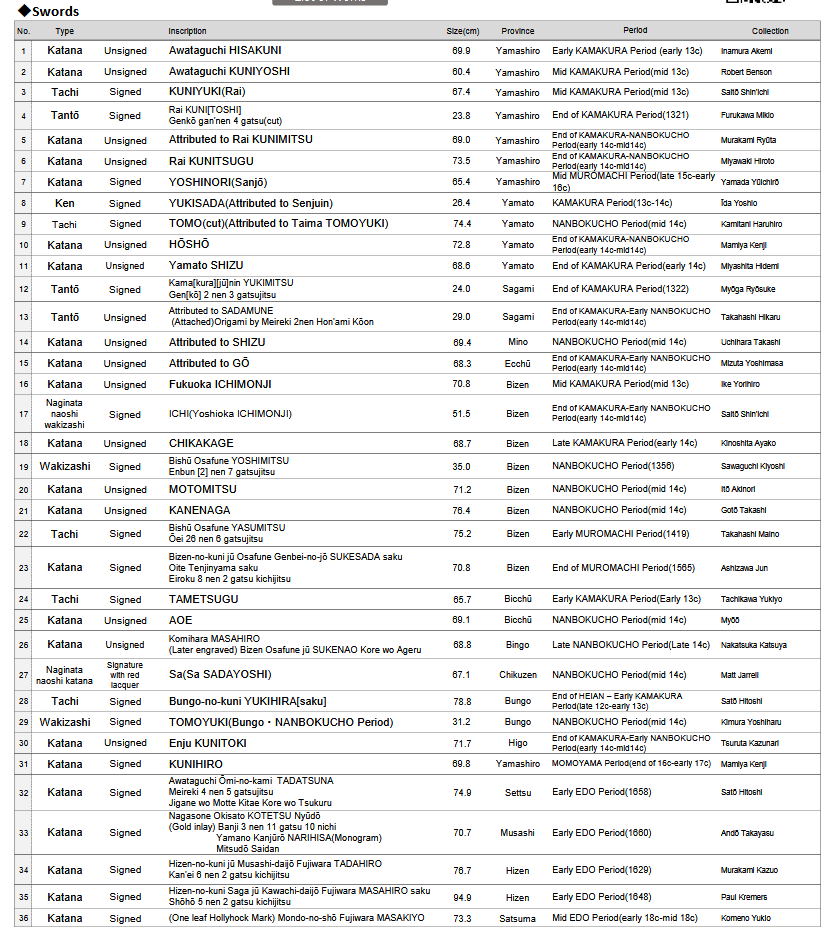
 Shame photography isn't allowed but understandable since the swords are privately owned. I would like to have seen the Go, Yukimitsu and Sadamune tanto and the Fukuoka Ichimonji katana in particular. Only 3 non-Japanese owners are represented including Bob Benson and Paul Kremers (congratulations to those gentlemen).
-
Adam Savage checks out a sword
Lewis B replied to Brian's topic in General Nihonto Related Discussion
The kozuka and tsuba are exceptional quality. Mr Mansfield had a very good eye for the aesthetic. -
Photographing nihonto is one of my most enjoyable aspects of the hobby. A good macro lens mounted on a tripod is definitely the way to go. The lens sees more than the eye although as Brian says the flaws appear far more significant than to the naked eye. Try different light sources, incandescent vs LED vs high intensity metal halide or halogen. Each will bring out different features on the blade. Having access to high quality photographs of swords only helps us to appreciate the finer qualities. I recommend people to check out FB "Shiotsuna" who regularly posts high quality photos of masterpiece blades and koshirae from major exhibitions in Japan. This koshirae for a Shintogo Kunimitsu tanto owned by the Date Clan is a case in point. Incredible workmanship.

-
Translating fuchi and blade inscription
Lewis B replied to Ecclesiastical's topic in Translation Assistance
I get decorative wallhanger vibes. The carving is very crude. -
"mrtierney50" is making my spidey senses tingle.
-
Adam Savage checks out a sword
Lewis B replied to Brian's topic in General Nihonto Related Discussion
We always remember our first. I was fortunate to be invited to visit the home of a German collector in May 2024, where I was given the opportunity to study 3 Juyo blades in hand. I held the nakago of the first blade so tightly and so intensely, the owner even commented on the heat transfer. He was probably hoping I wasn't related to Uri Geller.- 22 replies
-
- 10
-

-

-
Kissaki has been slightly reshaped. Still a nice sword in a very nice koshirae. The price reflects the condition so you would be getting a fair deal.
-
I met him at the Japan Art Expo last June in Utrecht.
-
Need help identifying and getting do's and don'ts for this blade
Lewis B replied to majorFALfan's topic in Nihonto
Similar features, Mei placement, futasuji-bi to this rare Bizen Ugan school Sumimoriji sword. https://www.touken-sato.com/event/katana/2014/03/TC-moritsugu-01.html I would get this blade in front of a top US based togishi. Could be well worth the investment to restore it. Nick, I'm sure I speak for many here, but we would love to hear the story of the blade and how comes to be in your possession. -
Yes, it does look to have been modified slightly. The kissaki might have been tipped or chipped at some point. Some better images of the boshi would be worth acquiring before making a decision.
-
I really like the fittings on this koshirae. The signed tsuba, fuchi, kashira and menuki would not look out of place on a much higher priced blade. The quality of the workmanship is very clear.
-
Agreed. So long as we know what we're talking about it's all good. Whats the saying don't let perfect be the enemy of good. In any case I get the impression that some here have dyslexia, making things extra troublesome.
-
Forging looks a little too proficient for Mino Senjuin. The mitsu mune cannot be ignored, again not a feature for Senjuin. My guess is Yamato Shizu, (after further research, quality is lacking for Shodei work). My final answer is the backup => Naoe Shizu.
-
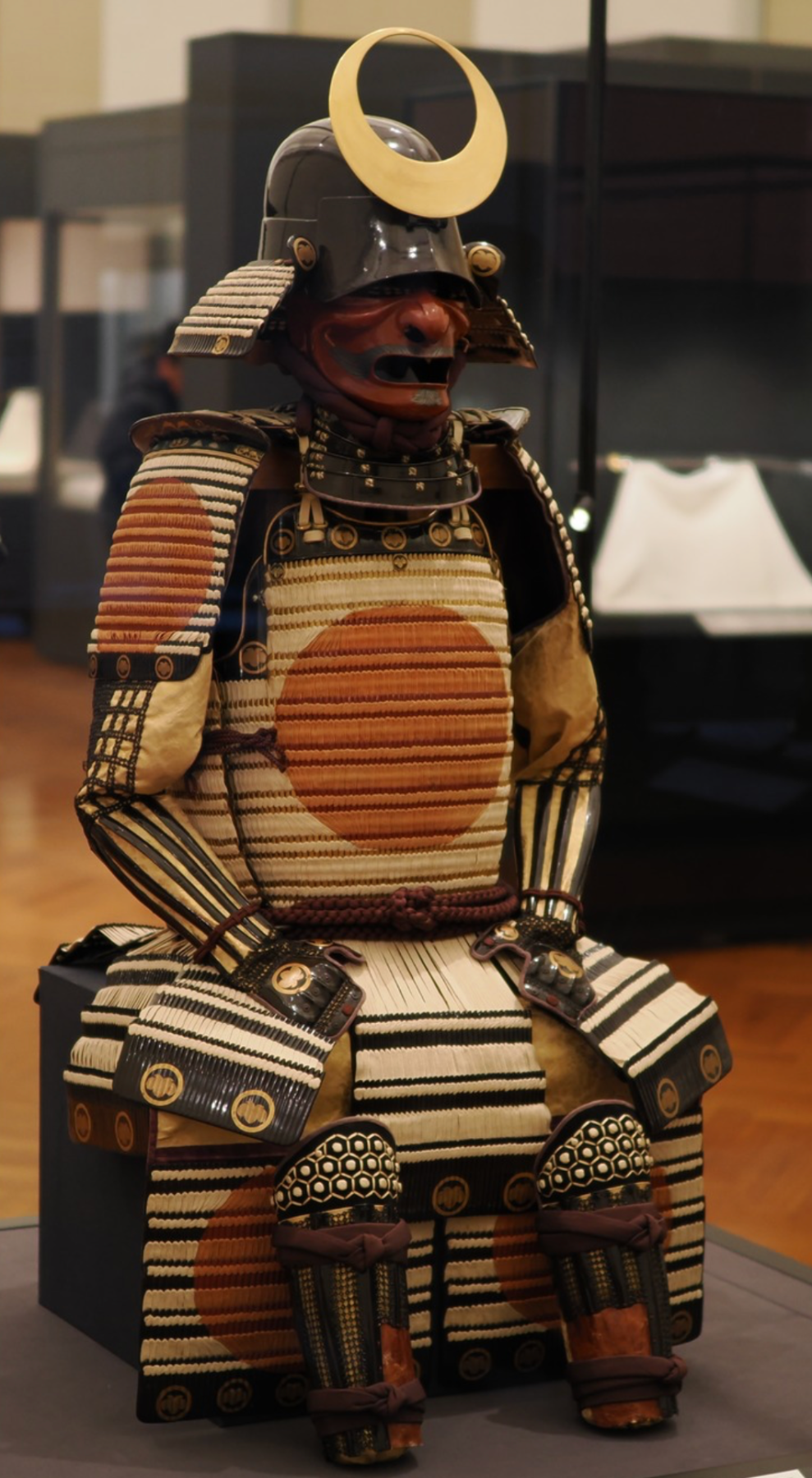
Sure, currently exhibited in the Tokyo National Museum and purportedly once owned by Matsudaira lenori (1575-1614), a Samurai lord from Central Japan https://www.instagram.com/p/C0TZLMDpUss/?hl=en&img_index=3 And you're correct it's the gapping gap to the sides and rear that caught my attention. Looking at other high level suits it's not uncommon. Perhaps because these leaders were unlikely to see combat so maybe its a case of comfort over protection.
-
What makes me curious is the length of the shikoro. Doesn't seem to offer much neck protection even if the kabuto is sitting slightly proud on the stand.

-
And bronze. It looks really good when polished up.
-
Thoughts on a promising blade with soshu-den influence
Lewis B replied to BjornLundin's topic in Nihonto
I’ve seen mino era Tametsugu that share a lot of the features exhibited here. Does the blade have a wide shinogi ji? -
My apologies to Kevin. Samonji does indeed refer to a line of Smiths. Founder being Saemon Saburo Yasuyoshi or O-Sa. I particularly like the work of the early generations from this Kyushu-based School.
-
If you're referring to the one Kirill highlighted that was a Sadayoshi not Samonji. Sadayoshi was his student.
-
Ubu Mumei Wakizashi in original koshirae for Sale:
Lewis B replied to Salvatori Moretto's topic in Swords and Edged Weapons
Well it could be a sunobi tanto and they can be well over 30cm. Need to see the blade in its entirety. -
From Sesko KUNIYOSHI (国吉), Bunmei (文明, 1469-1487), Bingo – “Bishū Kuniyoshi” (備州国吉), Mihara-school, suguha, gunome, wazamono
-
It's on the Ha side of the nakago. Given the angle of the strike it could have been struck while in its saya and being worn. Either way not a good day for its owner.
-
Thanks Colin, it came back on the market so I was wondering where the market was for a piece like this. It is attractive in a rustic kind of way.
-
Was this for sale in the UK or USA? What was the price (PM me if you prefer)? Any further thoughts on the Mei and general condition?
-
Incredible blade, incredible price .... for TH. Must be one of those instances where those who know, know.....This is one blade I would love to see in hand. But it must be capable of higher Shinsa pass, with all the plusses, such as big name Daimyo association, strong push by Kanzan and Tanzan for an attribution towards Go, excellent polish, so wouldn't this be the perfect candidate to send forward? Would the possible risk of reattribution to Hasebe Kunishige or Kaneuji or ? and a consequent desirability/financial hit be causing some hesitation?