Lewis B
-
Posts
1,725 -
Joined
-
Last visited
-
Days Won
7
Content Type
Profiles
Forums
Events
Store
Downloads
Gallery
Everything posted by Lewis B
-

Importing Nihonto through US Customs and Tariff info
Lewis B replied to MEENag's topic in General Nihonto Related Discussion
Ohhh. Well there is always that. Thought it was a new HS Code or something. -
Importing Nihonto through US Customs and Tariff info
Lewis B replied to MEENag's topic in General Nihonto Related Discussion
Don't leave us hanging..... -
Another wakizashi for evaluation
Lewis B replied to Nazar's topic in General Nihonto Related Discussion
I'm not an expert but my gut feeling is that the last 2 kanji were inscribed at a later date by a different hand (see the kanji for kuni). Not sure why. The yokan-iro has developed to a higher level on the other kanji affording some protection. The lower 2, especially the penultimate were likely chiseled later, thus exposing the bare metal to corrosion and red rust took hold after the work was completed. IMHO. -
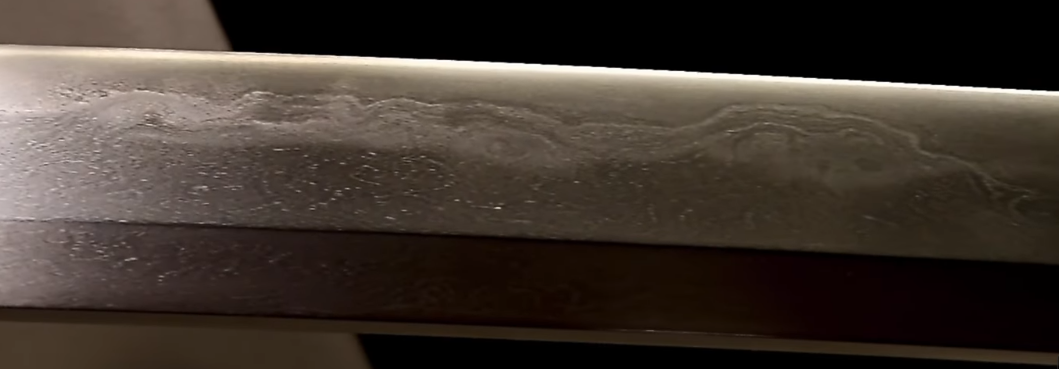
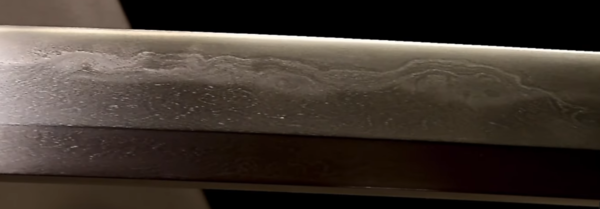
Speaking of Norishige what do people think of this early Juyo Norishige tachi that just dropped on Eirakudo? Are the cloudy areas utsuri? https://eirakudo.shop/928608
-
Quite surprised by the Tametsugu attribution. I would have thought Sanekage would be a closer fit given this hamon. Some very nice nie formations highlighted in the YT video.
-
A couple more examples of Norishige mei with the kuni kanji showing some consistencies and inconsistencies in the style of chiseling. This time one with a sloping centre line and the other like the example above with a vertical line ala Shintogo Kunimitsu. What is consistent in all 3 is the sloping horizontal of the 2nd strike and the gaps between the 1st to 2nd and 3rd to 1st strikes.


-
Some useful and current info for artisans in the USA doing this kind of work contained in this thread.
-
Japan art fair, the Netherlands
Lewis B replied to Leen's topic in Sword Shows, Events, Community News and Legislation Issues
Nice little after show presentation in case anyone is thinking of attending next year June 12-14, 2026. Highly recommended. https://youtube.com/shorts/DrrY8G1-4T4?si=U3V_2lzIJNAU-9FG -
I enjoyed reading that treatise Okan. Certainly provides more food for thought and some hypotheses regarding the organization of the Kunimitsu atelier. I thought what was especially interesting was the use of a thin chisel between 1306 and 1308, and the differences in forging style with pronounced masa-gokoro during this period. It will be interesting to see if this forge welding pattern is present in my 1308 tanto after polish. Another useful datapoint is that the Buddhist koshin inscription was posthumous. Given this fact, did Shintogo Kunimitsu die in 1310 or earlier (the 2nd character for the tachi nengo is a little unclear)? I like the idea of a collaborative/cooperative working environment. This would fit many of the theories that connect the different smiths, both directly as apprentices and possibly later as a partnership with 2+, more or less independent groups, working in the same atelier. Headed by the master Shintogo Kunimitsu with his own apprentices, Kunihiro, Kunishige, Norishige and Kuniyasu (Daishinbo), whilst on the other side there's Yukimitsu and his son by birth or adoption, Masamune.
-
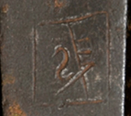
I've been checking other entries in the Kotō Meizukushi Taizen and found a Norishige tachi mei with some similarities to the kuni kanji on the 1308 tanto. The upward sloping angle of the upper box element appears to be quite similiar. Furthermore the left side vertical and horizontal line placement is quite different to the regular Shodai and 'Yukimitsu' daimei examples posted earlier in the thread, where they connect the lines. Norishige leaves a gap top and bottom. But I don't know enough about Japanese calligraphy to know how individualistic, as a writing style, this could be. The kanji, from my understanding, is closer to the normal character for 'kuni' 国. Is it possible the handedness can be determined from the archaic mei examples and that this might factor in the stylistic anomalies? The tachi mei dates from the Karyaku 嘉暦 period (1328)

-
To my eye this looks like a deliberate strike of the chisel. Why would this be here in the tachi mei above but no other examples I can see..... except the 1308 tanto? Both also have the horizontal strike (shallow but present) above the mirrored 'S' which is absent in most mei.
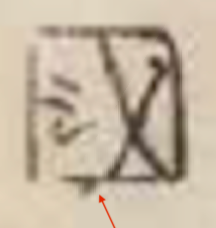
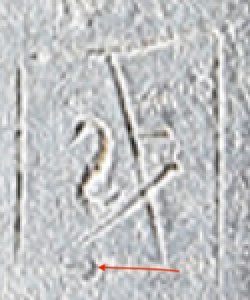
-
Nice detective work Okan. So much for the notion that Shintogo Kunimitsu always signed in an identifiably consistent manner. Unless of course these later inscriptions are daimei or the blades themselves are daimei-daisaku. I do find it odd he would add the buddhist name himself. All these discrepancies occurring late in his career raises question marks too. Just because the blade is dated 1315 does not necessarily mean it was forged then. Are there any other examples of smiths inscribing their atelier name AND a buddhist name on the nakago? Masamune was also a priest so this may have not have been an uncommon situation in the 13th and 14th centuries. If not, perhaps it was a sign of reverence and respect by whomever signed the blade.
-
All very curious. One might think that these later period, embellished Shintogo Kunimitsu Mei examples were created by a third party, especially with all the differences in the kuni 国 and mitsu 光 kanji, which are a clear departure from the Masters earlier signing style. Looking closer I would even say the 2nd character in the Kunimitsu Mei in the blue box is atypical. Looks like the same Mei as on the 1306 tanto. Checking Jussi's reference database the 1315 Kurokawa Research Institute tanto (# 3631) has Juyo Bijutsuhin papers so this was passed as authentic? Another blade with partial Mei 鎌倉住人 (Resident of Kamakura) dated 1312 passed Juyo 34, although which Shintogo is not specified. Certainly seems like a pattern is emerging, many dated blades exist between 1306-1315 (besides the Kurokawa, none of the other blades pictured in the Kotō Meizukushi Taizen are recorded in Jussi's list). Another trend is that the later dated extended Mei examples tend to be longer, a feature that is more characteristic of Kunihiro's output. Shintogo Kunimitsu's tanto were mostly shorter in comparison.
-
Thank you. I would not have figured that out.
-
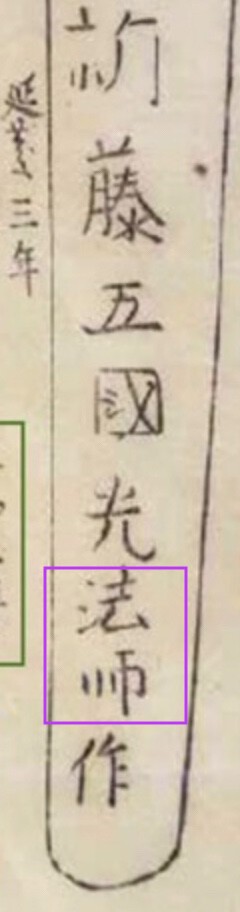
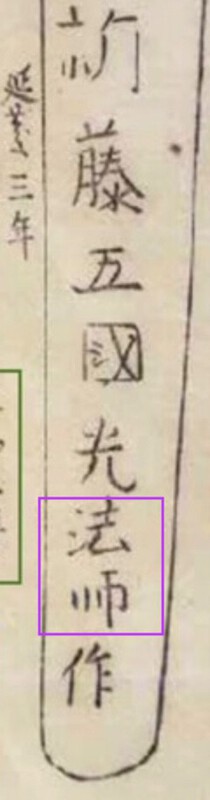
What do the 2 characters in the purple box mean in relation to the complete signature? Am I right in interpreting the date as 1310?
-
Returning to the tachi mei in the Kotō Meizukushi Taizen. The 2 characters in the purple box don't represent Shintogo's buddhist name. Could this be an affirmation or confirmation that the blade was made by this person ie Shintogo Kunimitsu? The upper character translates to 'law' but the lower kanji makes no sense. Does the date refer to 3rd year of Enkyō (延慶) or 1310?

-
Yes, I had a conversation with Andrew before I decided to purchase the tanto. That option is certainly an avenue to consider, but he is also heavily in demand and for good reason.
-
Good questions. Ultimately the blade has to speak for itself irrespective of the mei. Tanobe has seen the blade in its current state and I was relieved this was the first time in his hands. He commented on the current poor condition (not surprised), primarily regarding the hamon. As for the mei, he agreed with the 2018 Shinsa that more research was needed, that the mei has an archaic style and most importantly at this stage, that the mei was not obviously gimei. Regarding the blade itself, what ticks the boxes for me?: 1) sugata is typical late Kamakura (confirmed by Tanobe) 2) referencing the 1306 tanto also with atypical mitsu kanji. The style and positioning of the boshi relative to the tip and Ha, the length, form and position of the single koshi-bi horimono on the omote side, the sugata and the nagasa. All these aspects closely match the 1306 blade. A reviewer of this blade in the 80's stated the style of mei reminded him of Yukimitsu thus opening the possibility the 1306 tanto might be daimei-daisaku Yukimitsu (its also been argued the Midare-Shintogo tanto is Yukimitsu's work). All this evidence suggests to me both blades originated in the same workshop and around the same time. The coincidence is too strong to ignore. 3) the boshi and deki from what I saw in the dealers photos is typical Shintogo. Flowing bands of chikei, nie-rich kaeru boshi tending to hakikake and thin nie-based suguha hamon. Couldn't see any kinsuji under the poor lighting and through the oxidized surface outer layer. Hopefully the polish will reveal a lot more subtle detail eg ji-nie, for which Shintogo is renowned. A full polish has been requested. I'm just waiting to hear back from the togishi after he has inspected it to know if he will accept the commission. If my first choice is reluctant I will find another top level togishi with experience polishing Soshuden blades. One way or another it will be polished to preserve it going forward. If the polished blade really does have an air of the Soshu grandmaster it will be submitted for Shinsa together with as much supporting evidence as I can find to give the panel a reason to accept the sword as daimei. My goal is that it passes Hozon, at best TH but that might be expecting too much, however I will have a better idea of its potential after a sympathetic polish.
-
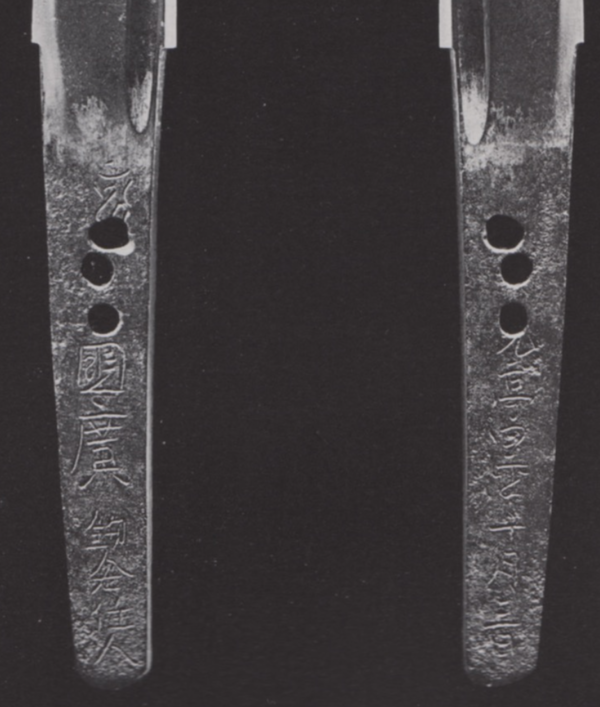
Right again. To go from nijimei to a more complex and comprehensive signing style seems unusual if chiseled by Shintogo himself who appears to have been more of a traditionalist (very few dated blades with archetypical nijimei signatures). This is more in keeping with Kunihiro as in the following example. Full inscription on the omote is Bonji + "Kunihiro Kamakura-jūnin"(Kunihiro Resident of Kamakura).
-
Fascinating. Close examination of the Mei shows how close it is to the depiction in the Kotō Meizukushi Taizen The nengo looks pretty worn in comparison to the Mei on the omote side, so not that surprising a mistake occurred. So this appears to be dated 1314. What intrigues me are the 1 or 2 characters below the Kunimitsu kanji. 'something' 'something' mitsu? Why would there be 2 separate names here? Owner and maker?
-
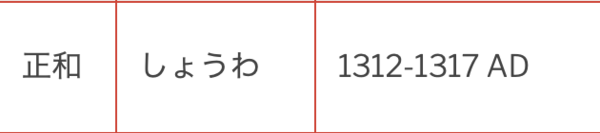
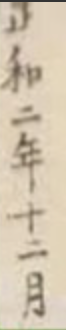
That one also appears to be dated Shōwa 2 (1313). Which begs the question why Shintogo would sign with 5+ characters around this time? The Mei for kuni & mitsu are quite atypical taken together. Could Kunihiro have signed with his father's Mei around the time the Master was supposed to have died (1312/13) and him taking control of the atelier? Could there have been a commercial benefit to have signed in such a way? Kunihiro was yet to establish himself as an artisan in his own right in the early 1310's and perhaps doing this might have bought himself some time to develop a reputation in his own right. The earliest known pieces, signed Kunihiro, date around 1317.
-
Thanks Jussi. I think you're spot on.
-

-
Another interesting data point from the historical records. This time a page from the Kotō Meizukushi Taizen. On the same page the author shows examples of the archetypical Shintogo Kunimitsu Mei (blue) and hybrid (purple) with a semi-slant to the central line in Kuni. Clearly the author is differentiating between some diverse signature styles or, hard to believe, just sloppy. The Mei in the red box has a slanting line and atypical mitsu kanji, yet there is full zaimei inscription for Shintogo Kunimitsu. Are either of these nengo (green) 1293, which would be the earliest known dated blade signed by Shintogo? And then we have the tachi Mei on the right. All very curious. While there is much debate surrounding the dates and attributions to generations of related swordsmiths, the Kotō Meizukushi Taizen is said to be a reliable resource for accurate depictions of blade engravings.

-
Just to update the archive. Here is a Norishige tachi mei showing what appears to me to be the application of a fine chisel with a light chiseling style. Characteristic tilting of the kanji following the contour of the nakago.