PietroParis
-
Posts
784 -
Joined
-
Last visited
-
Days Won
4
Content Type
Profiles
Forums
Events
Store
Downloads
Gallery
Everything posted by PietroParis
-
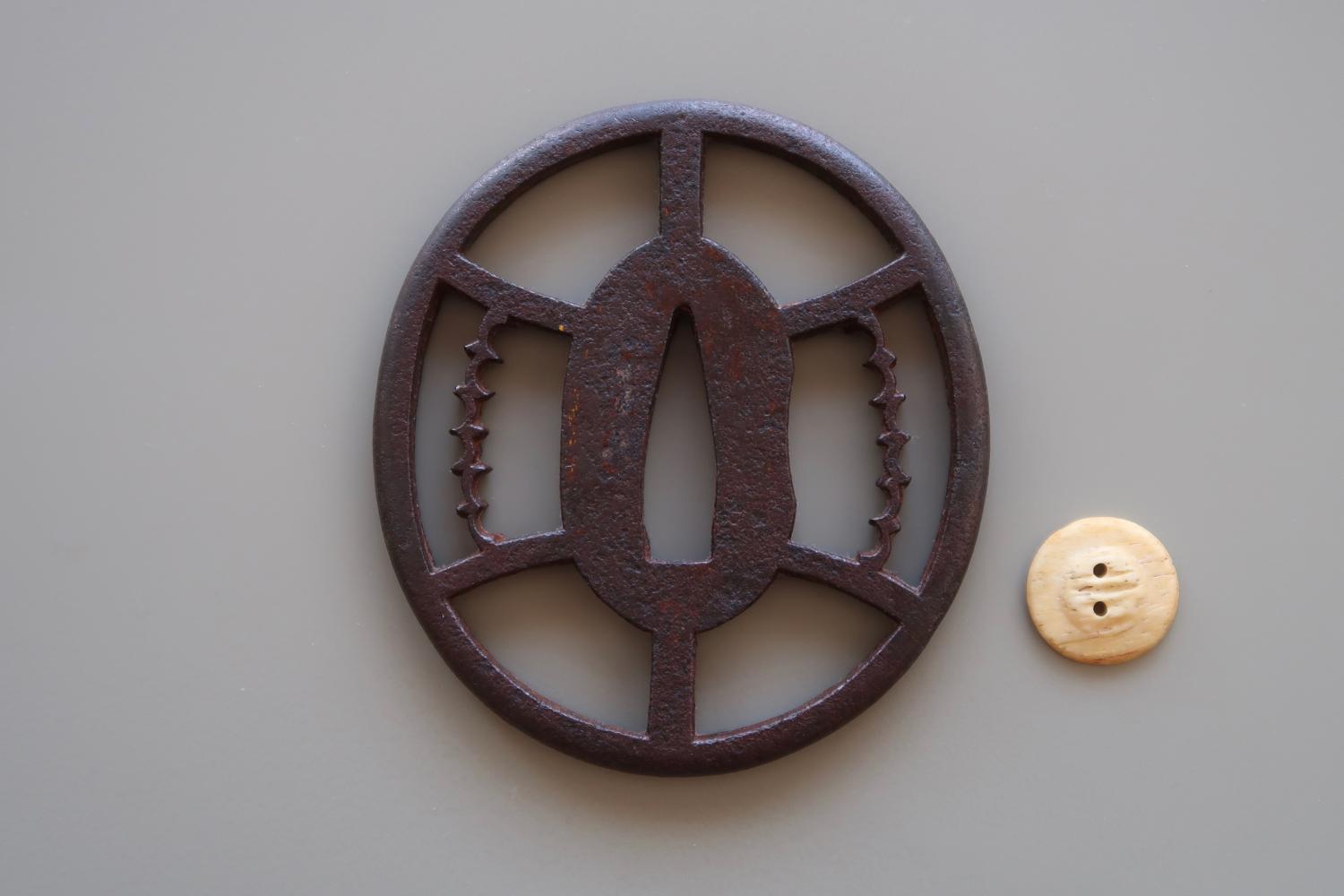
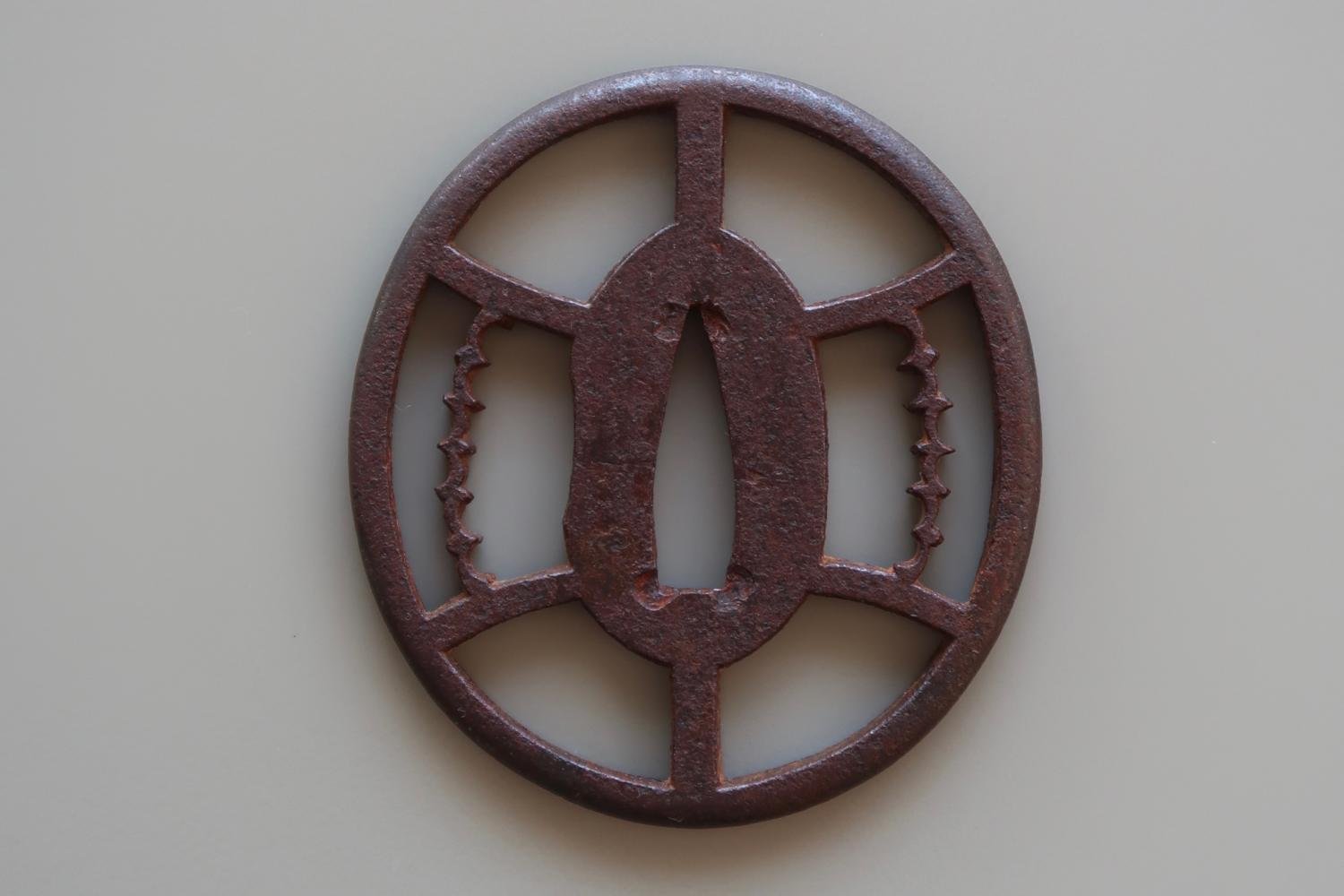
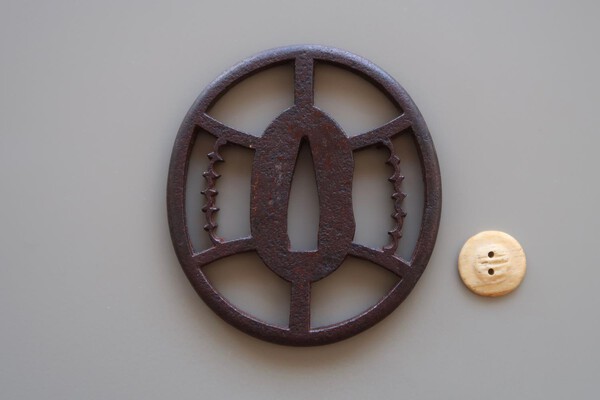
I gave it another try, with repeated cycles of dabbing with camellia oil, letting rest for a few hours, scratching with a bone button and wiping with a cloth. However, I am not too pleased with the result: The "before" and "after" pictures show that quite a lot of red rust came off, but the patina appears to be damaged in one area (see the whitish spots on the left of the nakago ana). Did I scratch too hard? A more-charitable interpretation could be that the red rust had already eaten through the patina: indeed, the whitish spots showed up quite early in the process, and other areas that I scratched just as hard were not damaged. Anyway, it's just as well that I tried this procedure on a low-quality tsuba that I had bought for 26 EUR on eBay. I don't think I'll dare to try it on my "good" tsuba, I guess I'll stick to oiling and wiping... BTW, is there anything I can do now to reduce the damage to the patina, apart from waiting a few decades? Cheers, Pietro
-

Visiting Aoi Japan - First Nihonto Ever
PietroParis replied to radicalrad's topic in Auctions and Online Sales or Sellers
In fact, I've seen examples of this "sliding deadline" even in online sales from French auction houses, and I am told that Catawiki works the same way. It makes sense to me, I'm not a fan of eBay-style snipe bidding. It is also closer to the way regular brick-and-mortar auctions work. -
Could it be Mitsutama 光玉 ? In that case, it is a signature that appears to be associated to rather dodgy 20th-century carvings, see e.g. here, here and here. The pictures in your other post do not suggest particularly high quality to me (but I get why the sword-making subject might appeal this forum's members). Cheers, Pietro
-
For those too lazy to copy the link: https://www.youtube.com/watch?v=ng04KxAT0ek
-
Book recommendations on deciphering kanji/calligraphy
PietroParis replied to PietroParis's topic in Translation Assistance
Thanks for all the suggestions! For Koop-Inada, I also found this: http://www.militaria.co.za/nmb/topic/22476-Japanese-names-and-how-to-read-them-koop-inada/ Cheers, Pietro -
Hi All, "Give a man a fish, and you feed him for a day. Teach a man to fish, and you feed him for a lifetime" Suppose that I want to learn the minimal amount of written Japanese that is necessary to decipher signatures, NBTHK certificates, and so on. Is there a magic book that I should buy to get started? Thanks in advance for any input, Pietro
-
Translation help on "woodblock print" much appreciated
PietroParis replied to barnejp's topic in Translation Assistance
I don't know much about this kind of prints, but a google search does yield artists, such as e.g. Kono Bairei, whose coloring was similarly sparse. Greg, do you know who the author of the print is? -
Translation help on "woodblock print" much appreciated
PietroParis replied to barnejp's topic in Translation Assistance
Would there be colors on the paper in that case? -
Do the small holes on the two sides on the nakago ana suggest that it was once mounted on a lock? Cheers, Pietro P.S. following up on Stephen's suggestion above: what happens if you just flip the central plate? Do you still get a meaningful (but different) decoration?
-
Thank you all for your comments. My bone button (combined with wd40) doesn’t seem to be effective in scratching away the rust, maybe I should try to break it to get a sharper edge.
-
From a total noob: are we looking at thin scratches?
-
OK, thanks for the tip! I am not a gun person but I can use wd40 as suggested by Alex above. Cheers, Pietro
-
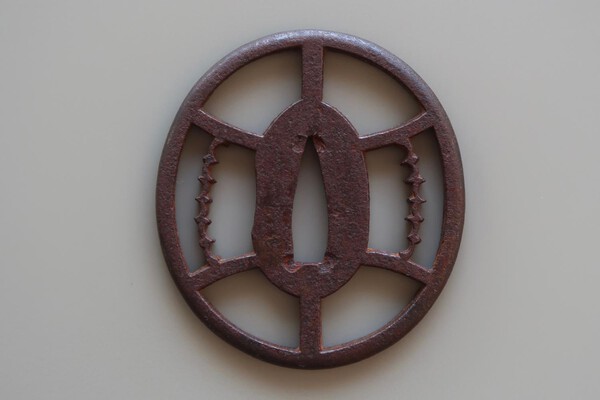
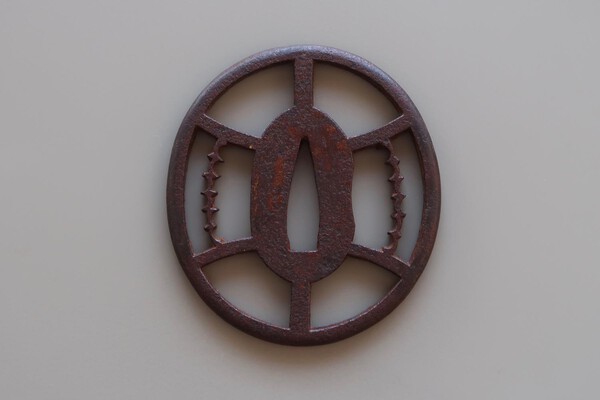
For the record, these are my pictures of the rusty tsuba, after some days of light wiping with a soft cotton cloth (which did not have any noticeable effect): The front looks already acceptable to me, but there is some very red rust on the back. I have found some old ivory-looking buttons that passed the "hot needle" test, as soon as I get my hands on proper choji (or camelia?) oil I will get to work... Cheers, Pietro
-
Shipping success
PietroParis replied to Alex A's topic in Sword Shows, Events, Community News and Legislation Issues
I'm guessing he refers to this. Cheers, Pietro -
Ishiguro Teruaki tsuba, last successor of the Ishiguro school
PietroParis replied to terminus's topic in Tosogu
For the record, it's this one. -
Thanks for the advice. I do have wd40, is it considered an acceptable replacement to choji oil?
-
Thanks for your assessment! I guess that for 28$ (including shipping) I should not expect too much... Any idea of what style they were trying to imitate? Cheers, Pietro
-
Pictures of the older one can be found here. The rust is concentrated in spots, but appears to be somewhat more "raised" than in the new one. Anyway I'll get a better idea of the (dis)similarities when I receive the new one. Does anybody have any guess on age and provenance of the tsuba? Cheers, Pietro
-
Hi Ken, I may have just been sloppy in my language. When I bought a nice tsuba with a few rust spots a couple of months ago, I received a lot of advice from NMB members on how I should remove those spots by soaking them with oil and then rubbing them with a piece of bone or ivory. This is what I meant by "rust removal surgery". Before touching the nice tsuba – which I am very hesitant to do, as I cannot convince myself that the procedure won't leave scratches – I thought I should try it on a cheap one. Cheers, Pietro
-
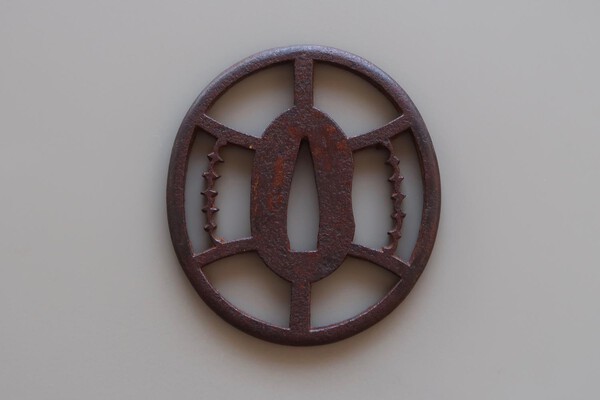
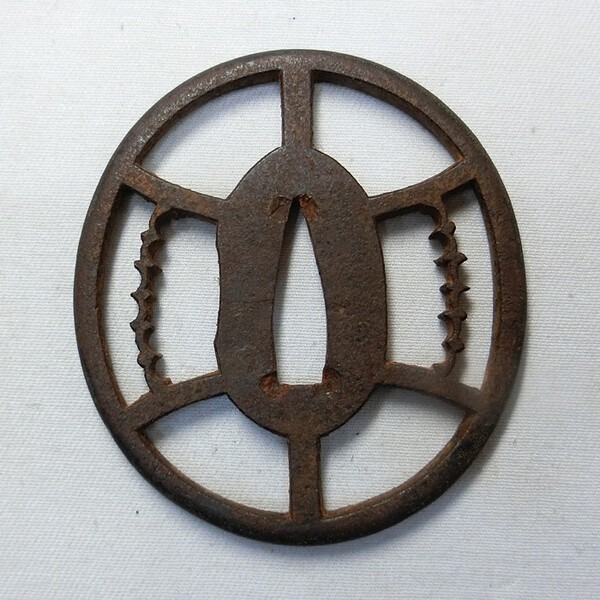
Hi All, I thought I would buy a cheap rusty tsuba to practice "rust-removal surgery" and I ended up with this one: The picture is from the seller, more pictures – with more visible rust – can be found on eBay. Do you think this tsuba has any age or merit (apart from the one of being dirt cheap)? Can it be associated to a school? Many thanks in advance for any insight, Pietro
-
I guess he means this. Cheers, Pietro
-
here is another “Shoki and Oni” tsuba signed Issando Joi that this board appeared to consider gimei. Cheers, Pietro
-
Interesting story! Do you think the buyer made up an excuse because directly questioning the blade might have embarrassed the seller?
-
OUCH, my only papered item is a tsuba with NBTHK Hozon certificate issued in 2014... What were those rumors about? Cheers, Pietro
-
I guess the dimensions are those marked in the last photo above, 7.5x13.8x11.9. Is this what you would expect for the real thing? Cheers, Pietro P.S. may I ask again who was selling this beautiful (and expensive) chawan?