PietroParis
-
Posts
784 -
Joined
-
Last visited
-
Days Won
4
Content Type
Profiles
Forums
Events
Store
Downloads
Gallery
Everything posted by PietroParis
-
Hi All, Apologies for the slightly off-topic question: where does one buy the bone (?) to remove rust from metal? Cheers, Pietro
-
Well then, it should be priced at one million dollars!!!
-

For a cool $1 Million....
PietroParis replied to PNSSHOGUN's topic in Auctions and Online Sales or Sellers
As suggested by "Surfson", it is probably just a ploy to advertise his shop. Indeed, the description of the sword ends with: "Please see the many unique items we have for sale on eBay at THE SAMURAI MONKEY 42" Cheers, Pietro -
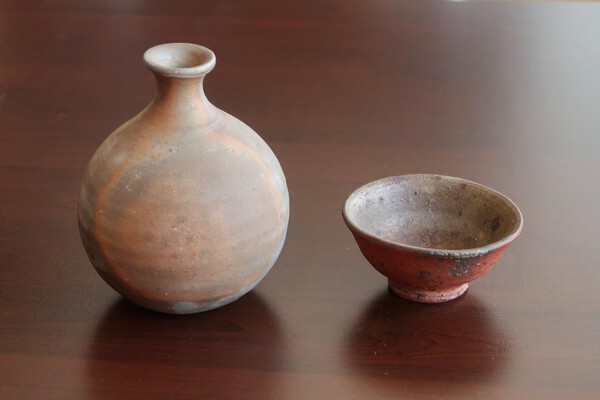
To give some company to my tokkuri, I bought an affordable sake cup in an art gallery in Paris: The maker of the cup is one Shigeyoshi Morioka (b. 1948), from a village named Amano near Mt Koya in Wakayama Prefecture (I could not find it on google maps, but I did find a place named Shimoamano 下天野 ). Here is a blog post by somebody who visited that potter. Cheers, Pietro
-
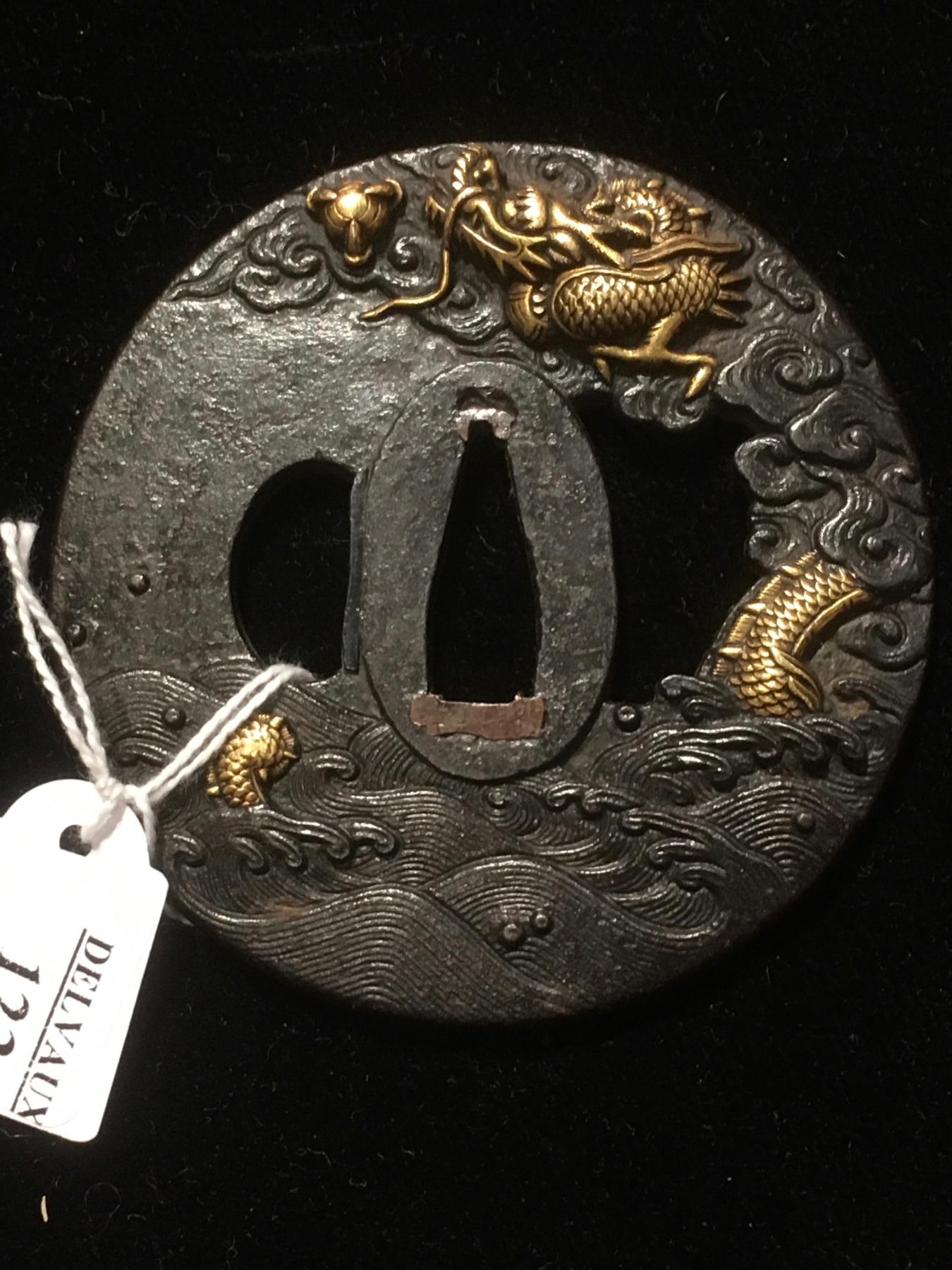
Can you? It seems to me that the scales of the dragon are exactly the same (position, shape, orientation) in both items, only differing by the color (and by the reflections of the light). Cheers, Pietro
-
For the record, here is the link to the page selling the second tsuba (at 96000 JPY). Cheers, Pietro
-
Grant, you must click on "view original item" on the top-right corner of the page. Cheers, Pietro
-
Just by chance, I found a website with a description of the very same crab tsuba of Marius' original post, stating that it is a modern copy dated 1991. This thread is old and I do not expect anybody to care about it any longer, but I thought it might be useful for future reference. Cheers, Pietro
-
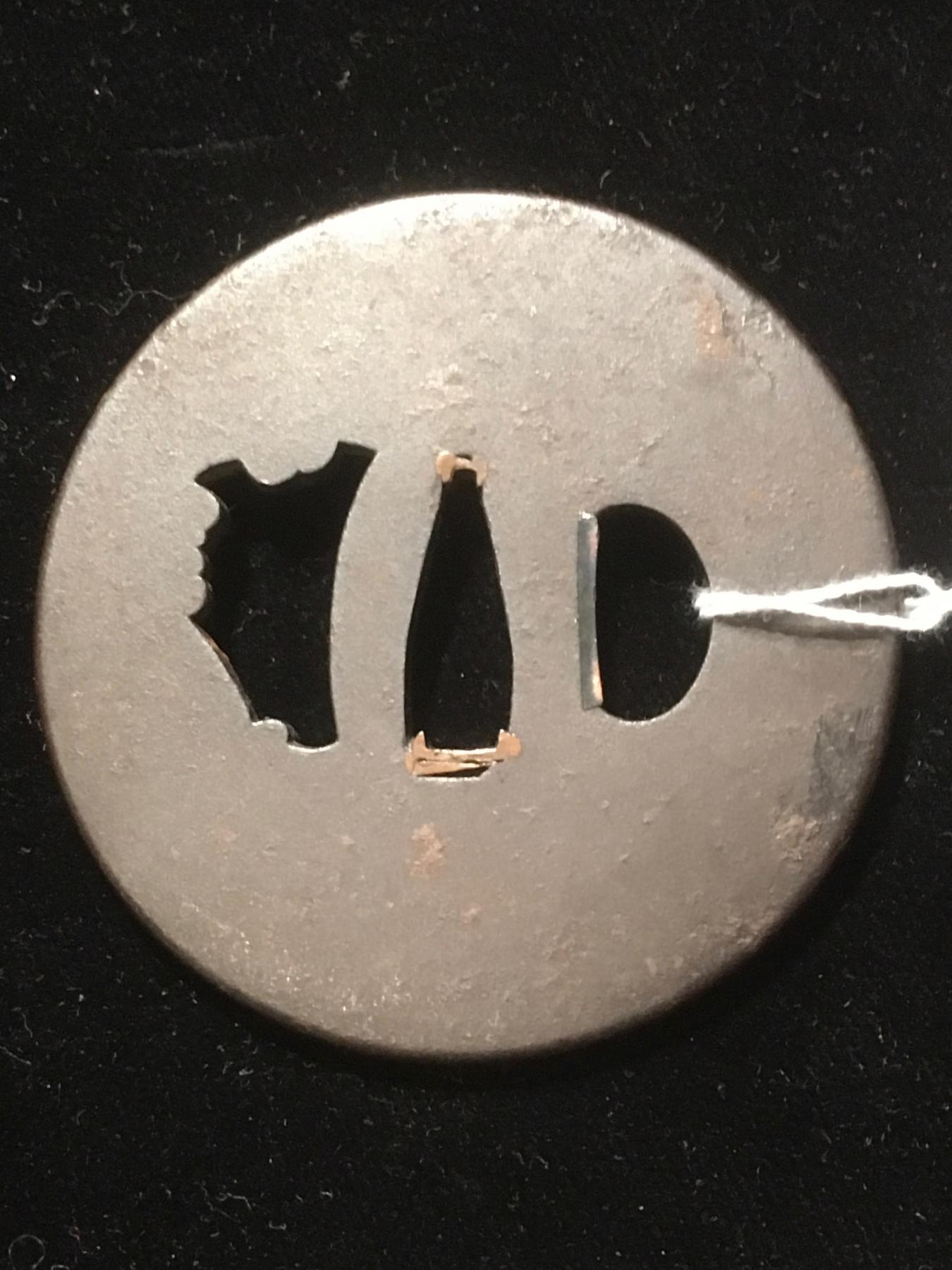
For the record, the tsuba was sold to a phone bidder for 375 EUR (including fees). The auctioneer’s description did not mention the blank side at all. I hope the buyer had examined the tsuba in person, otherwise they are in for a surprise... Cheers, Pietro
-
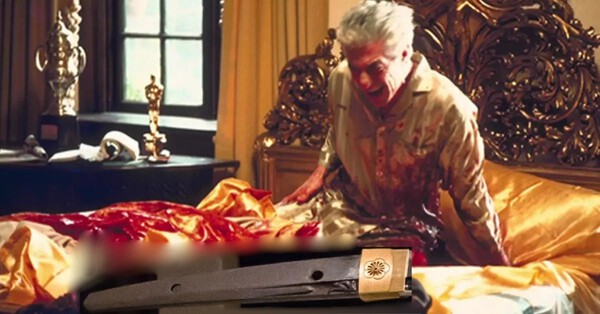
P.S. I guess that, in this community, the "horse head" scene would play out differently...
-
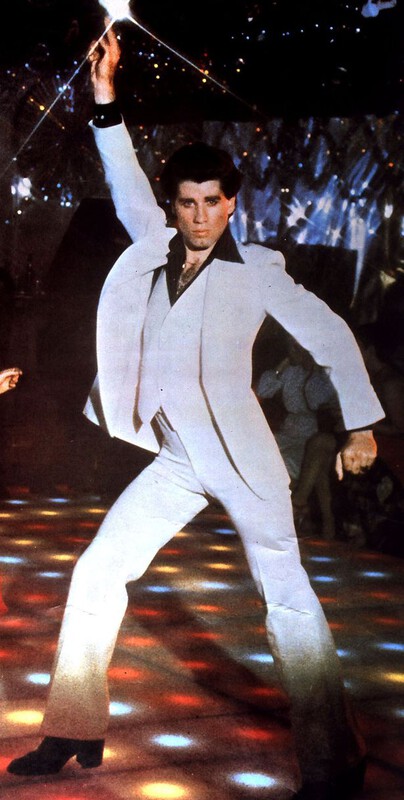
I must assume Stephen means that he is of Italian heritage himself. And I had not noticed before that the line "Interests" in his profile reads "staying alive"... Cheers, Pietro
-
I really appreciated when a few days ago somebody reminded a new member that "Japs" is a derogatory term which should not be used in this forum. How are "Goomba" and "Guido" considered acceptable? Having said this, I do get the picture
-
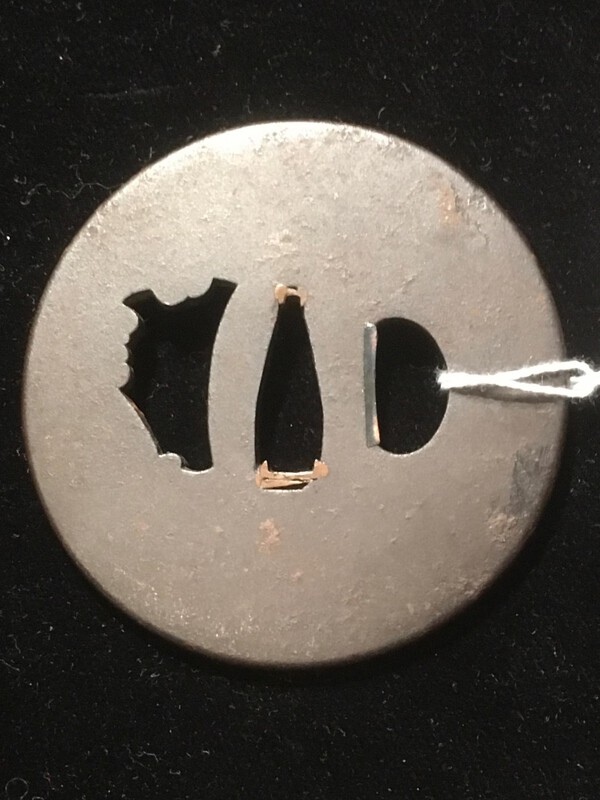
Thanks for your replies! On a second thought, the blank side is the one facing the opponent, so maybe it was meant to make him depressed and less likely to counter the attack...
-
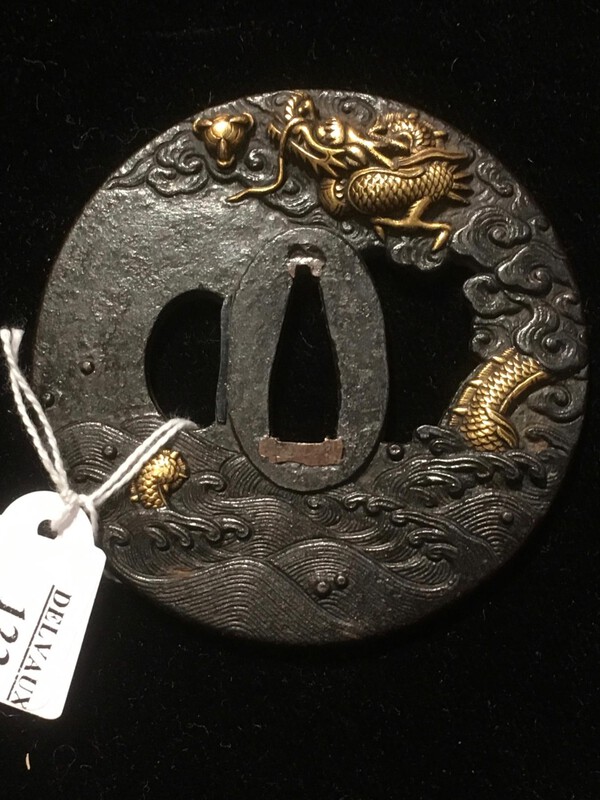
Hi All, I was checking items at an auction and my attention was drawn to a tsuba (not exactly my kind, but it seemed one of the nicest on show). When I flipped it, I was surprised to see that the ura side was completely blank! Is it something known to happen or it denotes an unfinished work? Thanks in advances for your comments (to be clear, I am not planning to bid on this tsuba anyway). Cheers, Pietro
-
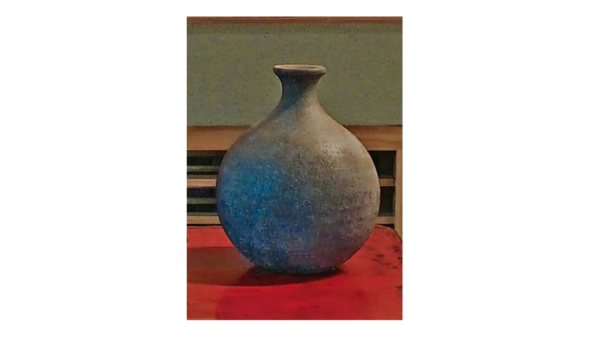
I just found that my tokkuri may have a somewhat illustrious provenance. It really looks like this one, which was sold ten years ago in Paris from the collection of Kenzo Takada: (for the record, I paid much less than the price it made at that auction) Cheers, Pietro
-
Sorry, I appear to have messed up something. Duplicate thread and no photos! Let's try again: Cheers, Pietro

-
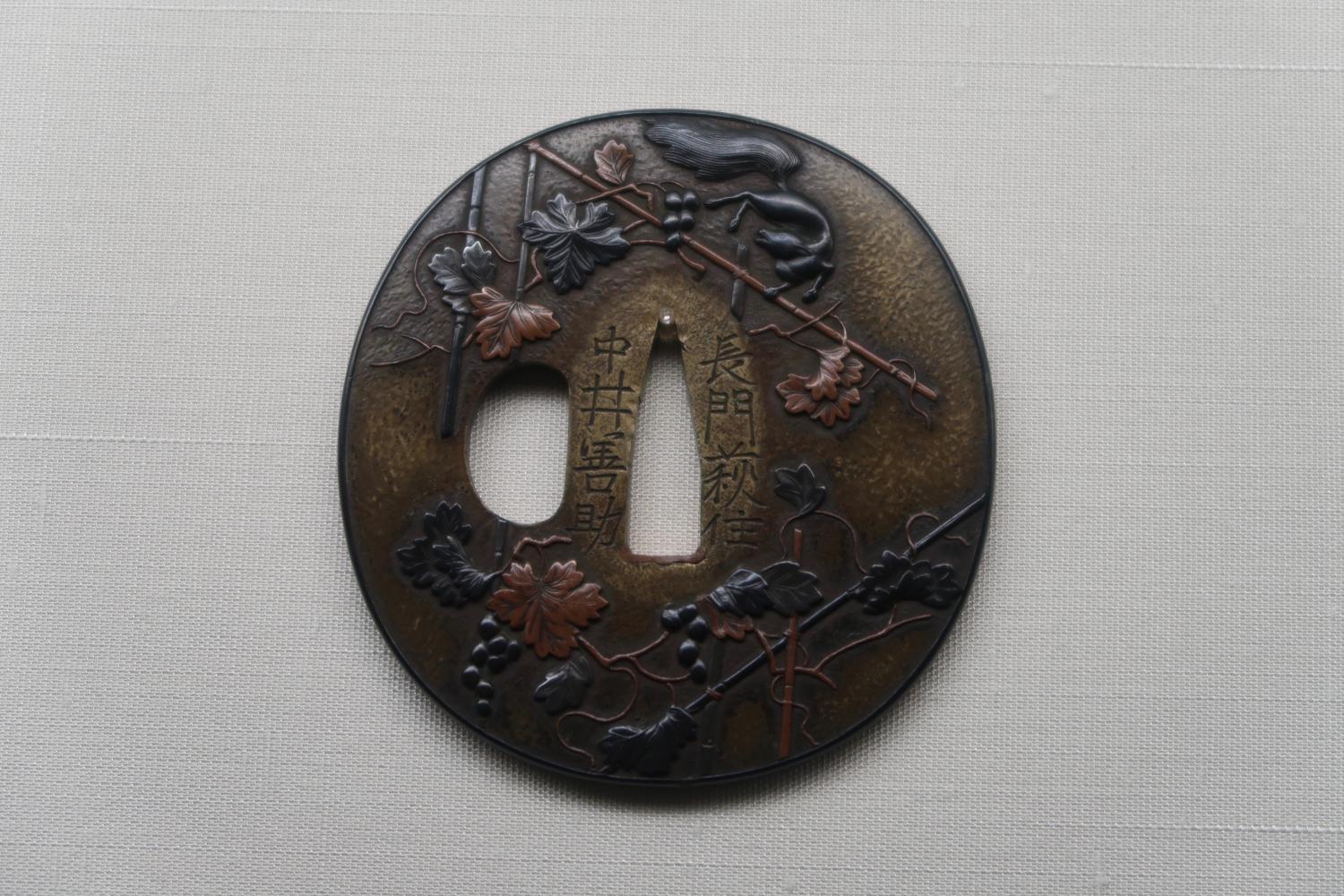
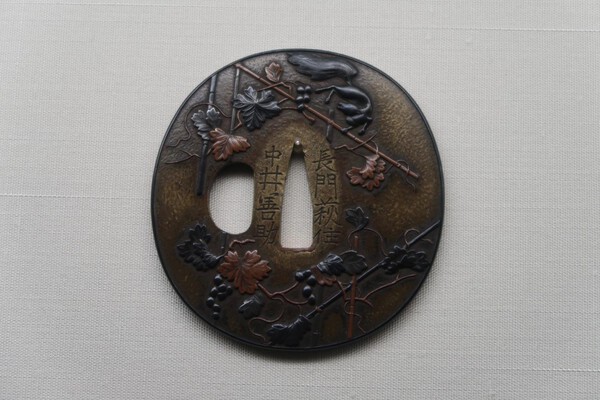
Hi All, browsing through some old pictures I found these three tsuba which I had seen last November at Tokyo National Museum. I guess someone will appreciate them: Cheers, Pietro
-
Translation Help needed on this "Woodblock"
PietroParis replied to barnejp's topic in Translation Assistance
P.S. These links can help: http://shinhanga.net/doiseals.htm http://www.ukiyoe-gallery.com/doipage1.htm -
Translation Help needed on this "Woodblock"
PietroParis replied to barnejp's topic in Translation Assistance
Hi, Usually the author’s name and seal (within the image) and the title (on the right margin) are part of the woodblocks, so they are just as “legit” as the print as a whole. What you might want to determine is whether this is an early or late printing, and whether it is from the original blocks or from recarved ones. The editor seals (which are added after printing) may provide some help on this. Cheers, Pietro -
Hello Ford, I am a novice in this field and I am following this thread with great interest, because I would like to learn how to tell whether a tsuba is cast. Could you please elaborate on what are the crisp details in the pictures above that make you conclude that this one is not cast? Thanks in advance for your help! Cheers, Pietro
-
Hi Jean, thanks for your comments! I suppose you are right about the age. There is some very light wear along the rim of the foot (?), but nothing that would indicate many years of real-life use. I guess I will have to drastically increase my sake consumption to give the bottle a more respectable look... Cheers, Pietro
-
Hi Robin, thanks a lot for your advice! Cheers, Pietro
-
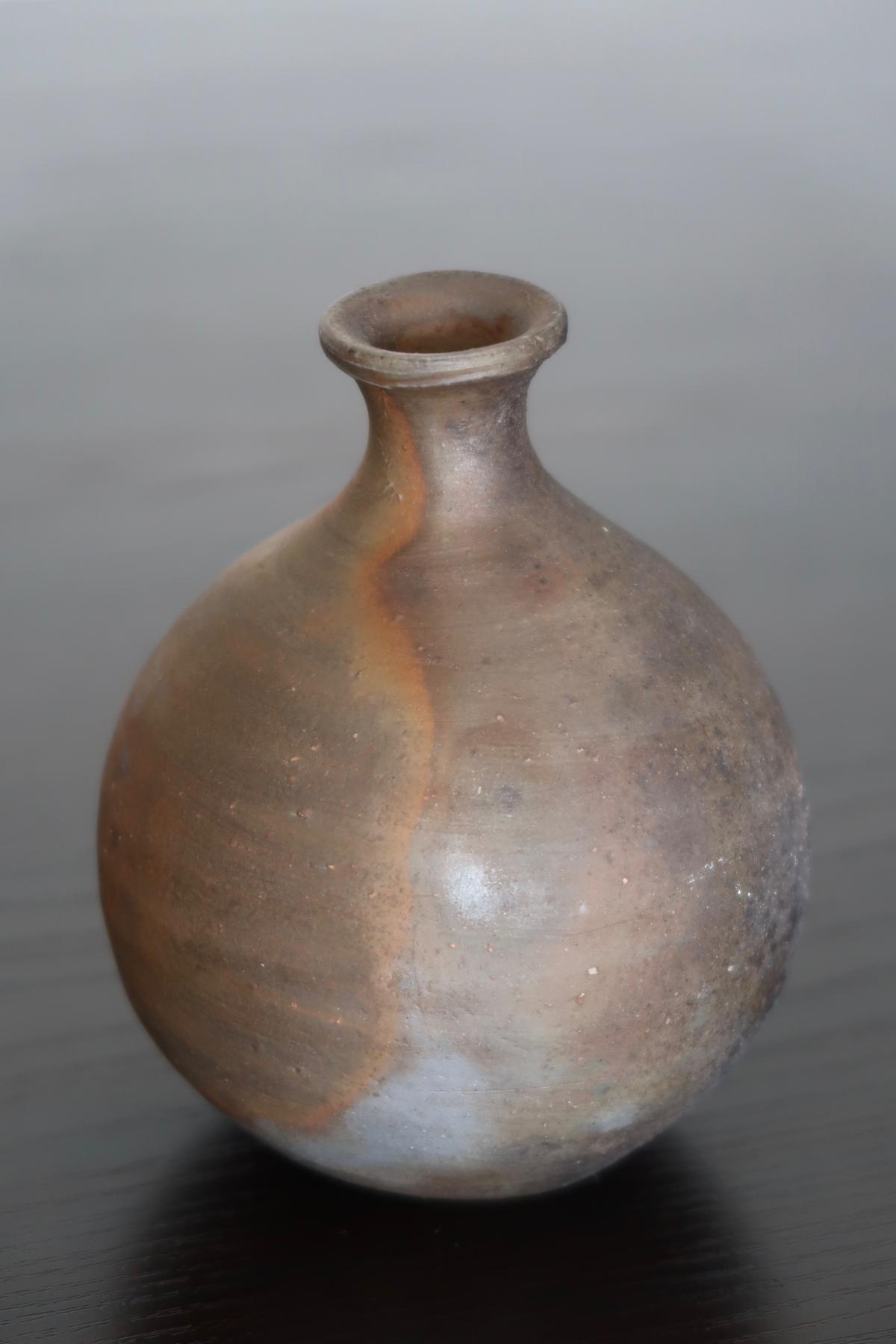
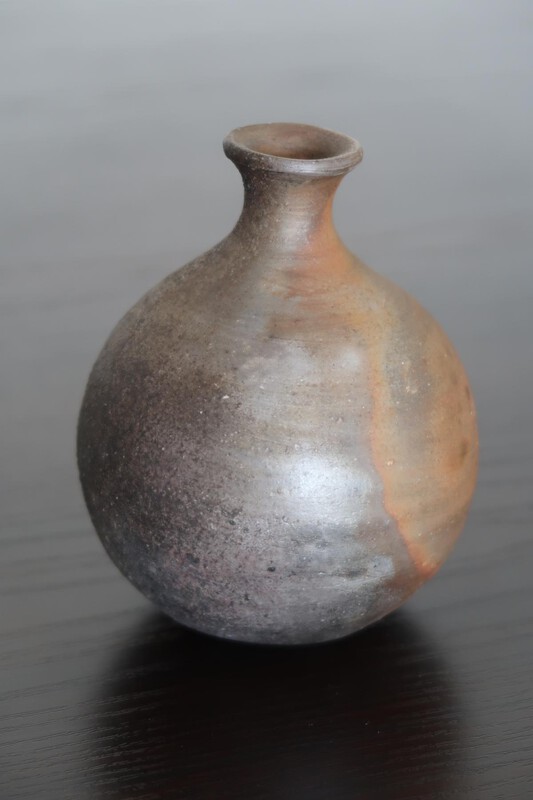
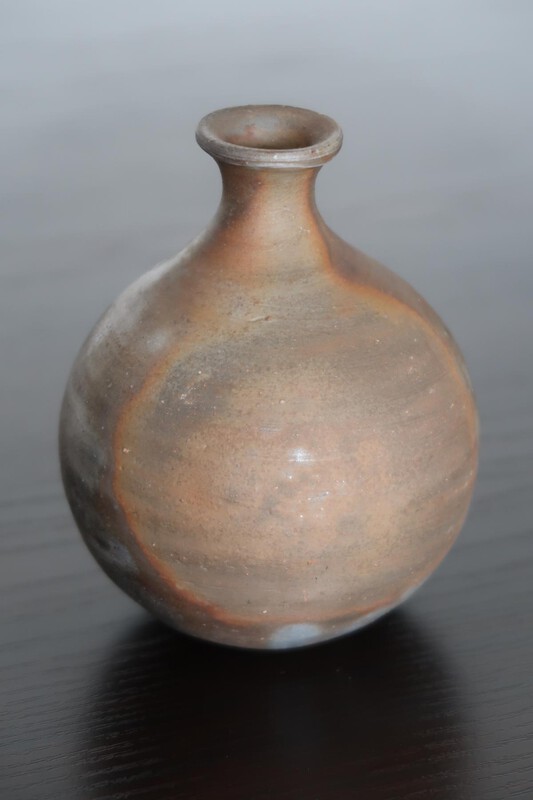
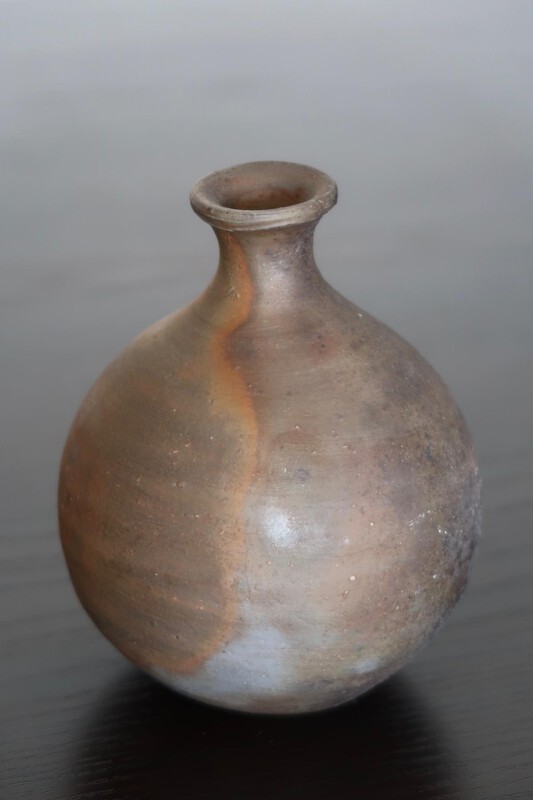
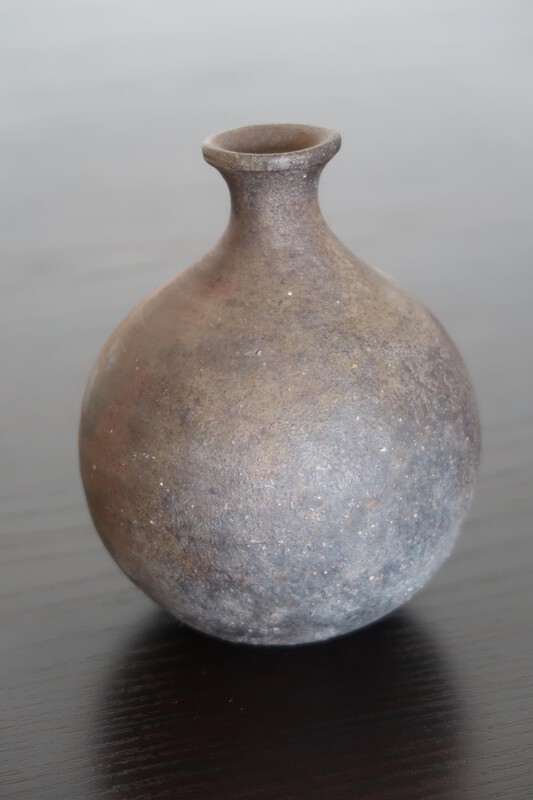
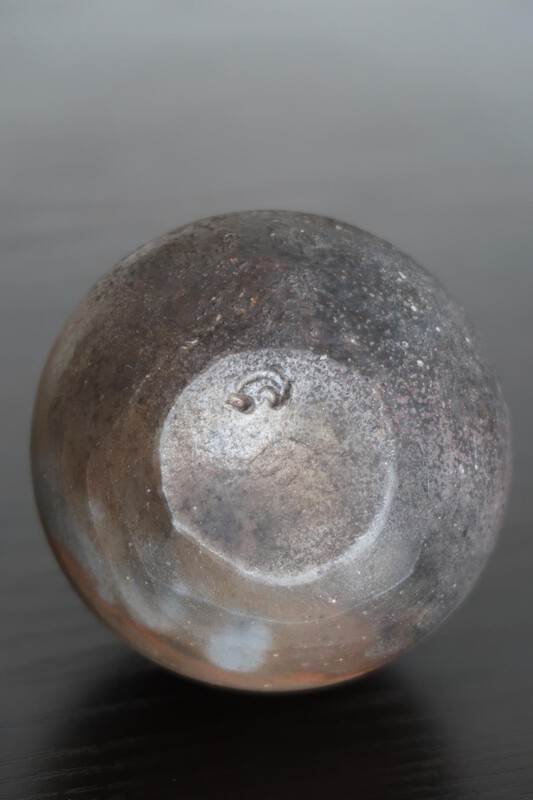
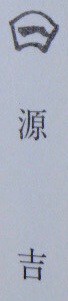
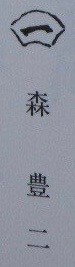
Hi All, Recently I bought a sake bottle at auction. It was among the cheapest items on sale and I was the only bidder, thus at least I did not get ruined. The auctioneer's description "stoneware bottle, 13cm" was (as usual) not very helpful, thus I am turning to the learned members of this forum in the hope that somebody will help identify what I have: From a quick look around the internet it believe it is of Bizen style, is that correct? I also embarked in a rather hopeless quest to decipher what I presume to be the kiln mark in the last picture above. I found a webpage with a long list of Bizen marks, but none of them corresponds without doubt to the one on my bottle. The only two that - to my untrained eye - might vaguely resemble it are on pages 20 and 31: Google reads 源吉 as "Genkichi" and 森豊 as "Moritoyo" or "Moriyutaka", but all searches of those names in the context of Bizen ware end nowhere. Of course I realize that mine is an absolute shot in the dark, and many things could have gone wrong (e.g.: it's not Bizen at all; it's not one of those marks; Google's translation is incorrect). Maybe some eagle-eyed member of the forum has a better suggestion? Do not worry about hurting my feelings, I like the bottle anyway and I got it relatively cheap, thus I will not be devastated if it turns out to have no age or artistic merit. This said, I have one more question: before using my bottle to actually pour sake, I would like to clean it (after all it was in some stranger's collection for who knows how long). Is there a proper way to do it to avoid damage? Thanks a lot in advance for any comments and/or help. Cheers, Pietro
-
I presume you already have this, but just in case...
-
Hi, I think that tanzaku refers to the narrow format of the print (see e.g. this page). Cheers, Pietro