16k
-
Posts
2,391 -
Joined
-
Last visited
-
Days Won
35
Content Type
Profiles
Forums
Events
Store
Downloads
Gallery
Everything posted by 16k
-
...This was a great exercise and we need more in the great atmosphere this one took place. But Rayhan's remark makes me ask a question: Aren’t Muramasa's roots in Mino and Soshu?
-
It’s called "hako Midare" if memory serves.
-
I believe it is real too. Takanome yasurime points towards Seki. Not very old going By the patina. WeirD machi. Perhaps some bubba modified it. Strange sword.
-
I'm back with another cool sword, tell me about it, please
16k replied to Karenfc's topic in Military Swords of Japan
He is asking 5.2! But he isn’t selling. He probably will in the end, but even if I want one, I don’t think I’d be ready to shed that much into a machine made sword. Imho, 3000 is more reasonable, even if those are scarce. I don’t think you can ask the price of a man made sword for a machine made one. (Well, actually, you CAN ask...) -
Excellent document! Saved! Thank you Peter!
-
Actually, it is the reverse. A yakidashi is often the telltale mark of Shinto. But of course, nothing is ever that simple, unfortunately...
-
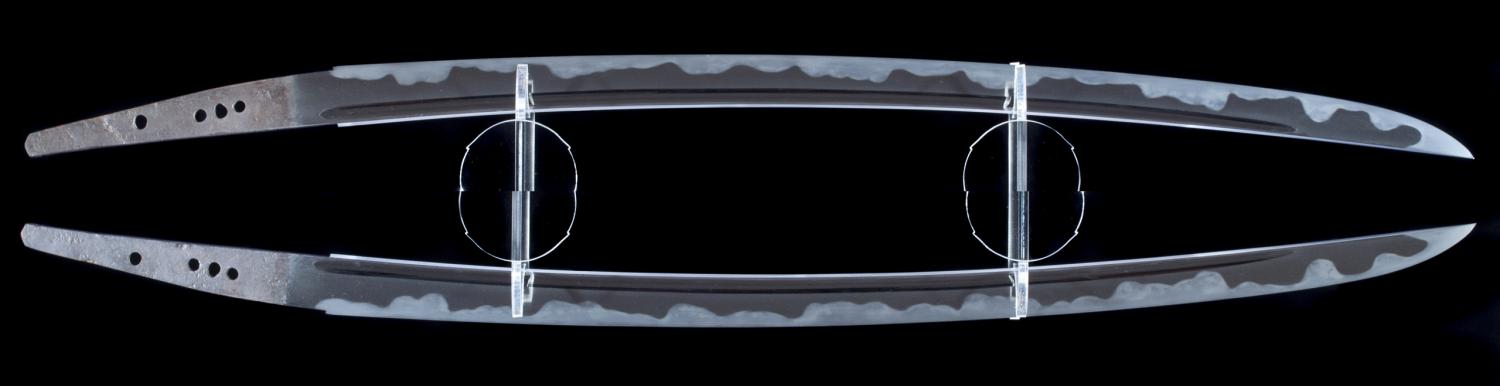
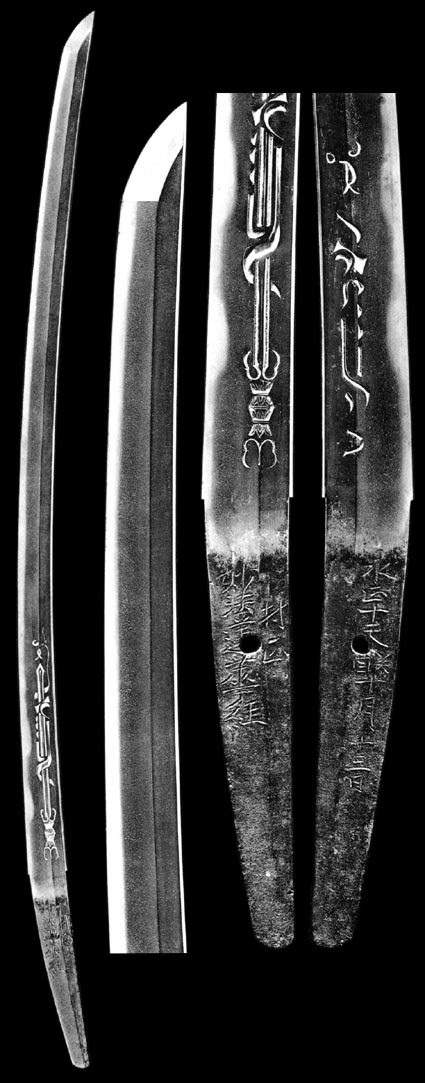
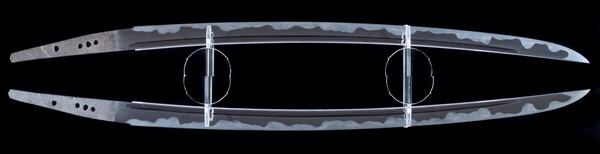
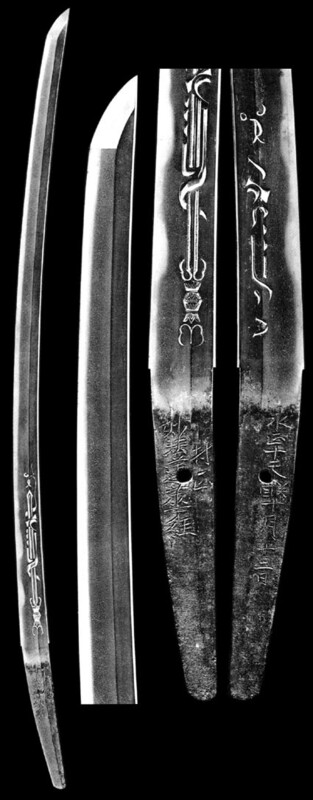
Look at the blade from the Sandai here. Typical box shapes similar to that one. http://www.nihontomessageboard.com/articles/Muramasa2.pdf actually, my lack of knowledge may be why I thought about it. Having a Sengo, I’ve studied this school more particularly and know it much better than others. So for once, limited knowledge proved helpful. Though I dismissed it all the same as I thought it was to easy and Jacques was tricking us both with Sengo and Shinto. Two other examples where those shapes are typical:
-
Well, Sengo was mentioned on the other page, I said it looked like it but dismissed it as too obvious and said it should be closer to the ha. But the box shaped, three gunome features, followed by a gently undulating Suguha is found again and again in the Sengo school.
-
Yes, Momoyama is the logical choice, but I’ll go with Shinshinto because I think there is too much here than seems made in order to "trick". As for Kajihei, I was just joking. However, this looks like a very nice sword and I don’t see why someone tried to deceive with it. It is perfectly adequate as it is. Now, maybe the suriage wasn’t a trick at all. Length is on par with WW2 swords, so it could be a Shinshinto sword with what was deemed as a fake mei and as such, judged serviceable for the war, but shortened And re-drilled because it was initially too long and to fit WW2 mountings. Then after WW2, someone tried to Submit it, got a fake judgment and had the mei removed. Who knows maybe attribution papers lie in an attic somewhere. I guess we’ll never know.
-
Incredible, Muramasa looked so obvious I dismissed it immediately!
-
Shape + suriage nakago + punched ana = Momoyama .... BUT.... Very tight Hada + light clear patina+ fake mei removed (so intention to cheat buyer) = Shinshinto Kajihei?
-
1667, a lucky day in January, between the hour of the Dragon and the Snake! (I’m sure I’m right! Try to beat that!)
-
I'm back with another cool sword, tell me about it, please
16k replied to Karenfc's topic in Military Swords of Japan
That’s a type of WW2 sword very sought after Karen, congratulations! -
yes, I thought about that too, but I think the Hamon should reach closer to the ha with Sengo.
-
I’d go with Kanbun Shinto too. But I guess this is a "trap" sword!
-
Thank you Dave. Yes, big and thick. I love it!
-
Late Sue Enju? That’s a possibility I hadn’t anticipated and will have to check. I think the quality is good too. I was really surprised to enjoy it that much.Thanks for the input, Tom. EDIT: I have to say that there are indeed a lot of similarities between Enju and what I have in hand. Definitely a possibility. Hi Alex. I agree that it’s got characteristics from different schools. A Meikan More perhaps? So far, Bizen late Muromachi see,s to be the most likely. I hope others will give their opinion. Thank you For your help. That era seems to be the most consensual for the moment, Ken. The photos are actually pretty good and I look very much like the actual piece. The only one that I think is not representative of the blade is the 6th one which exaggerates the Hada and makes it look tired. Otherwise, it’s a really beautiful Hada. If you look closely at the first picture, there is an area in Middle of the blade that looks like a very thick chikei. It isn’t one, of course, but I wonder if it’s not the telltale presence of mixed steel. Perhaps a clue that could point experts towards a specific direction. I've read Markus' excellent treaty, plus a few others but I don’t know Fred's one. Where can it be found? However, everything I’ve read hasn’t help me much because when you read them, they say and show Tanto shorter and with much More sori for that period. So I’m kinda lost here. Thank you for your help, Ken.
-
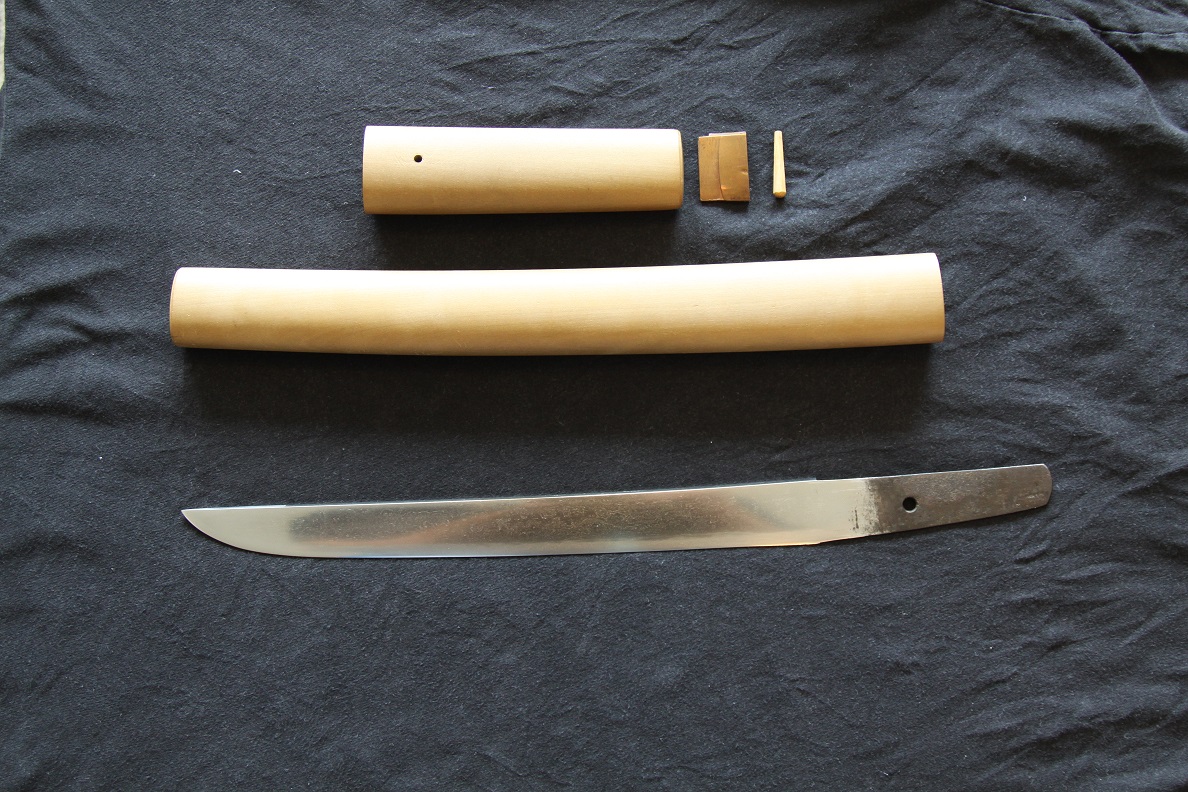
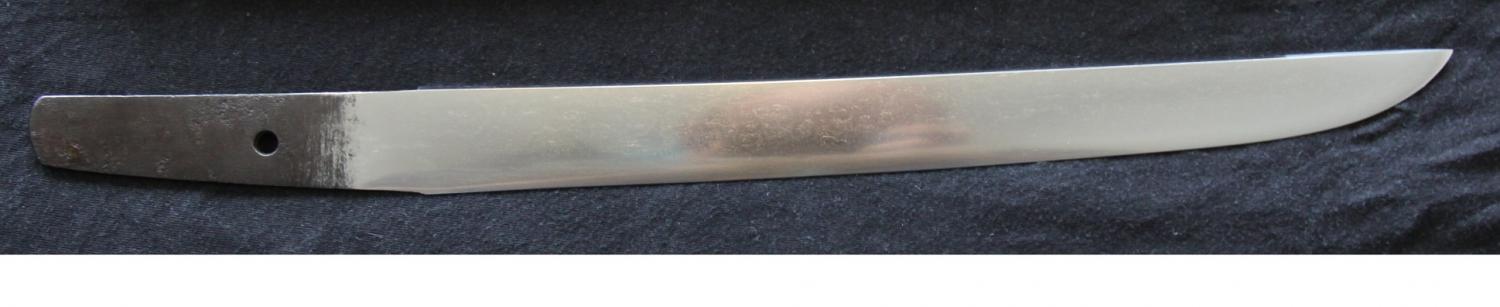
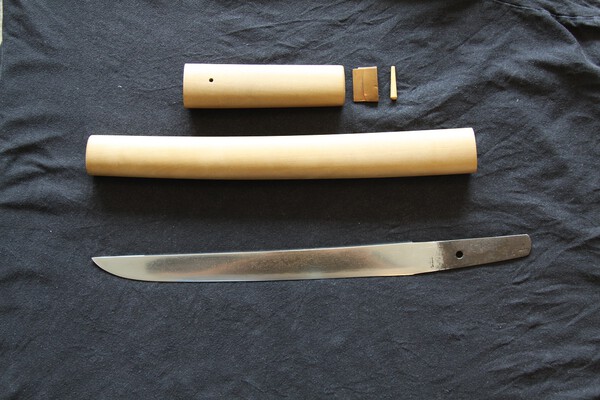
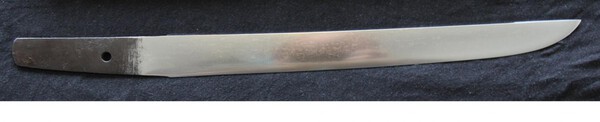
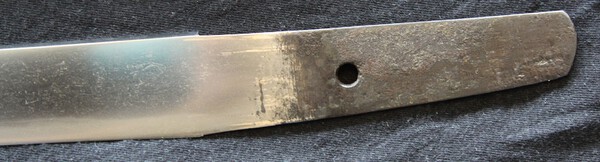
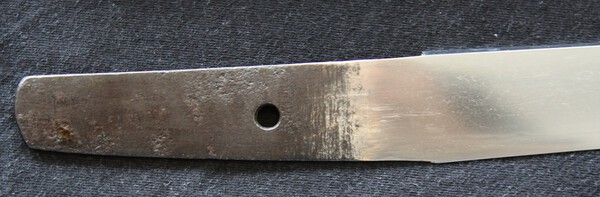
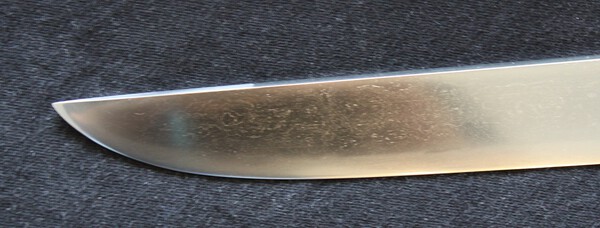
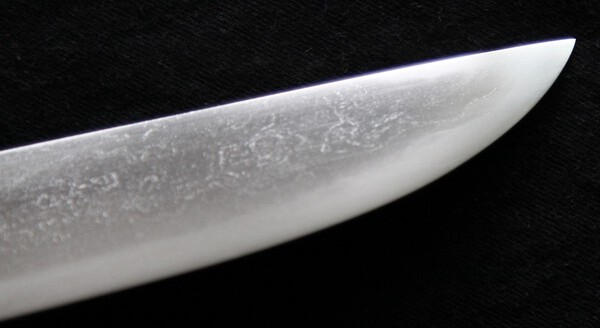
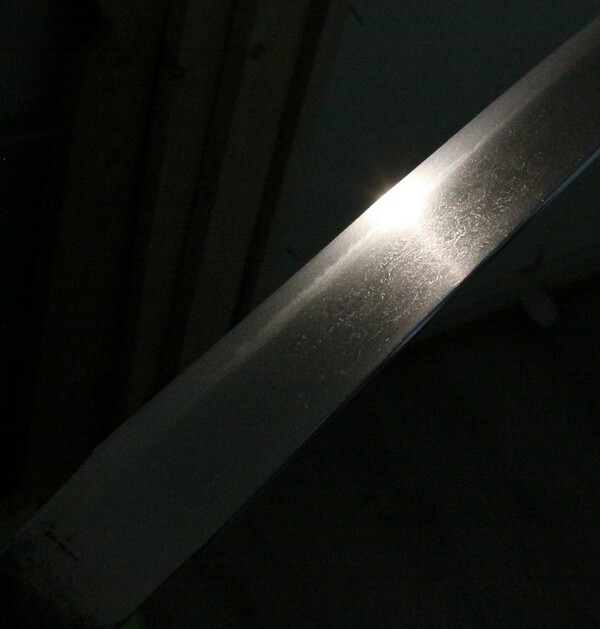
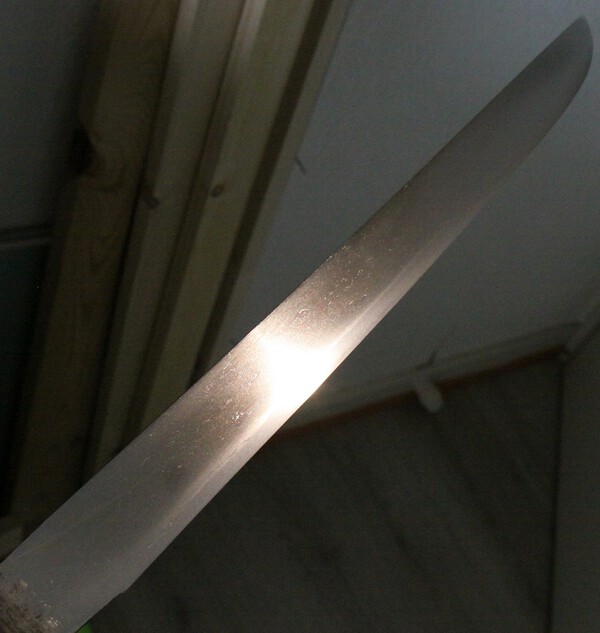
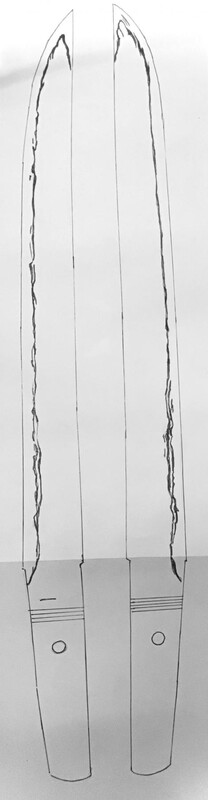
Hi guys, First time I request your help for a sword. I gotta confess that I’ve never been foo much into tanto and only skimmed through the sections about them in books. But I needed one in my collection and so when a cheap one was offered in the sale section, I jumped on the occasion. I know, I know, get the best you can afford, but I didn’t follow the rule and well, here it is! I was extremely surprised because I was expecting something less. Just a big knife, but fou d out a beautiful piece and I have to say if this is the case with all tanto, it may well have changed my mind about them. anyway, since then, I’ve been doing some catch up and read everything I could find about them, trying to label it. But I must admit that I’m still at a loss. When you read the essays, I sounds pretty easy but then I compared with some being sold on sites and dated and realized that exceptions seem to be the rule. So, here I am, needing your help! I may do it another time with a mumei sword I have, but for the moment, let’s concentrate on that tanto. Now, I’ve been around long enough not to ask "who" made it. Yet, if you could give me a rough date and style, I’d be more than happy. So far, I’ve had three opinions: mine, likely false, thinking early Bizen Muromachi because of the length. The seller who thinks Bizen early Shinto and another member who thought Bizen originally then pointed me towards Sue Mino. I checked, and that could indeed fit the bill. The tanto specs follow: Mumei in older shirasaya. Overall length: 40,2 cm Nagasa: 29,2 cm Moto kasane: 6 mm Moto Haba: 30 mm Shape: Hira Zukuri, iori mune with gentle oroshi. Sori: 2 mm, tends to be slightly koshizori Yasurime: kiri. Very visible near the habaki, almost gone the further we get from it. The color of the nakago is very dark grey/ brown, almost black. Hada: predominantly mokume. Hamon: based on Suguha, bright nioi. I don’t see any utsuri or my eyes aren’t trained enough Below, I’ve included pictures and an oshigata I’ve made to help you see the Hamon. I think it is quite faithful. I haven’t had time to take pictures myself, but if required, will do my best. Thank you for your help, JP
-
New York Token Kai Kunio-sensei's passing
16k replied to Curran's topic in General Nihonto Related Discussion
Sad news, sincere condolences to his friends and family. -
New sword bought home by USMC vet from Tsing Tao 1945
16k replied to Dean1981's topic in Military Swords of Japan
There see,s to be a Hamon underneath all this, and there’s enough ha machi for a new polish but is it a trick of the photo or the ha machi and mune machi don’t align? Anyway, the blade see,s healthy enough, but is it worth a new polish? That’s a decision you have to make. -
I was wondering about the retempering, as it would explain the yakiotoshi, but where do you see a mei removal?
-
Indeed! I had missed that.
-
Nagamaki naoshi?
-
New sword bought home by USMC vet from Tsing Tao 1945
16k replied to Dean1981's topic in Military Swords of Japan
Older sword, suriage it seems. Probably used in civilian mountings. Hard to tell much more. The patina doesn’t look too dark and the nakago quite long, there seems to be tapering and little curvature, chu kissaki. So Edo, 18th Century possibly. In its current state, I don’t see Hada or Hamon. -
Yes, so far, mune machi and ha machi are an excellent way to identify Chinese swords, but I dread the time when they start correcting that. Now, they even offer hadori polish..