

Bugyotsuji
-
Posts
15,003 -
Joined
-
Last visited
-
Days Won
320
Content Type
Profiles
Forums
Events
Store
Downloads
Gallery
Everything posted by Bugyotsuji
-
Finded In Militaria Show - Koto Wakizashi With Hitatsura Hamon
Bugyotsuji replied to shibeni's topic in Nihonto
菖蒲造り Shobu-dzukuri is forged into the shape of an Ayame Iris leaf. Inspirational word play. It also sounds like 勝負造り Shobu-dzukuri 勝(Katsu/Sho) Victory, or 負 (Makeru/bu) Defeat! This is it! All or nothing! Do or Die! Great find, Bojan! -
"made From Old Hoe" Inscription Sword?
Bugyotsuji replied to Vermithrax16's topic in General Nihonto Related Discussion
Wow, there is more to a Kuwa than you'd think! There were Hiraguwa flat-bladed ones, and pronged ones were called Bitchu-guwa...! Iron was valuable so many used as much wood as possible. There were cast ones which broke easily, and very expensive quenched forged ones. https://ja.wikipedia.org/wiki/%E9%8D%AC -
Someone cannot count legs! The museum's description does not seem to be 100% accurate, especially as I have often seen these described as upmarket armour boxes, especially for O-yoroi. A flat-bottomed box left for years on a wooden or tatami mat surface during the rainy season can develop mold or invite woodworm. Lacquered though, and on capped legs, they become almost impermeable sealed containers. A lovely box indeed for a period of political stability. Their drawback becomes apparent during transportation. They do not stack comfortably at all, and broken legs can soon appear. It could be that the constant struggles for supremacy between the clans during the Muromachi period began to favour stackable Yoroibitsu, ie flat-sided boxes with foldable metal carry handles, easy to carry from a shoulder pole or to manoeuvre onto carrying carts.
-
Whoah! You sure have...
-
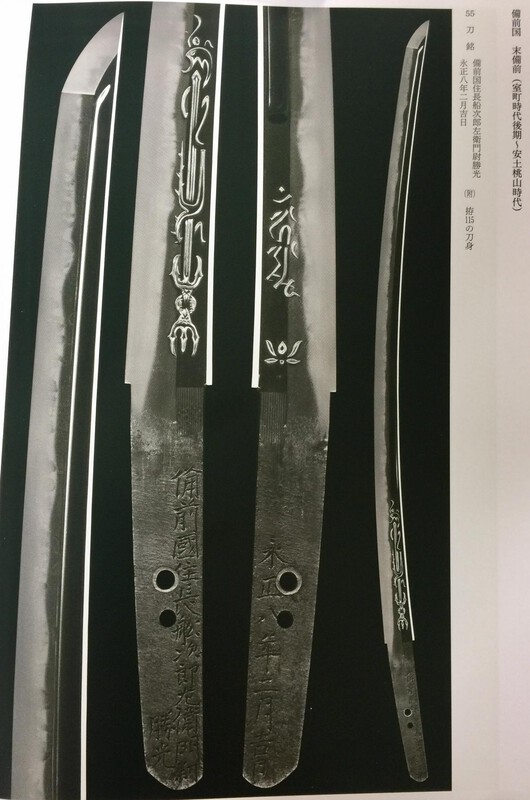
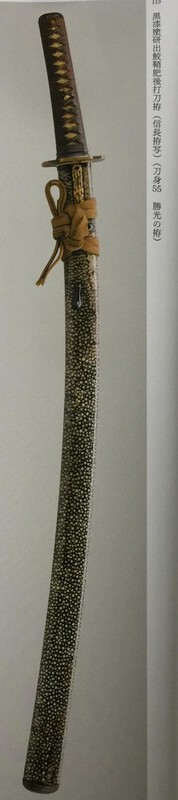
And, by special order... Katsumitsu, Eisho 8 (and koshirae)
-
Love it. Sexy curve there, John. 'sori' even?
-
Phew John, your reply just renewed my faith in humanity! That box sounds great. Perhaps you could put it in the other thread, with the box in the Met for comparison? Not sure how many types of hitsu/ohitsu there were. I have heard of Yoroi-bitsu, ( x 2 set = Ikkabitsu), Meshibitsu, Nagamochi, etc., and now Karabitsu.
-
Two against one, so somewhat reluctantly I went and started one! If no-one else posts a box soon, I will add something. Tebako boxes like the one Urashima Taro opened? A little box with magic drawers that blow open with a puff of air? More black lacquer iron-bound sankin kotai boxes? A funadansu? A lacquer box for lamp-lighting tools? Ladies' cosmetics boxes and containers? Some lovely examples above. Any more? Roll up, roll up, ladies and gentlemen; show us your wares!
-
"ho-No-To Kenma Project"
Bugyotsuji replied to Bugyotsuji's topic in General Nihonto Related Discussion
Matt, my sword teacher said that you often find kogarasumaru swords dedicated to shrines, or worn inside Ebudachi mounts etc., ie court swords. 4th blade, Kozuke Daijo Sukesada shrine rededication following recent polishing. On Friday the local NBTHK members will be visiting Kibitsu Hiko Jinja, hard by but not to be confused with the more famous Kibitsu Jinja. Again the blade in question will be taken from the shrine for 'permanent' safe-keeping at the Prefectural Museum. (If possible I will try and sneak some shots and post them here, but I still cannot figure out how to turn off the loud shutter 'click' with each shot.) -
In the light of Guido's wise post above, I would like to soften the tone of my earlier post. Not everyone has a photographic memory!
-
If you contact the museum they might be able to send it directly to you, Paul. 開館五十周年記念 林原美術館名刀図譜 ISBN-978-4-904705-16-2 C0070
-
Derek. Good ideas. One way or another your appeal should surely reach their ears.
-
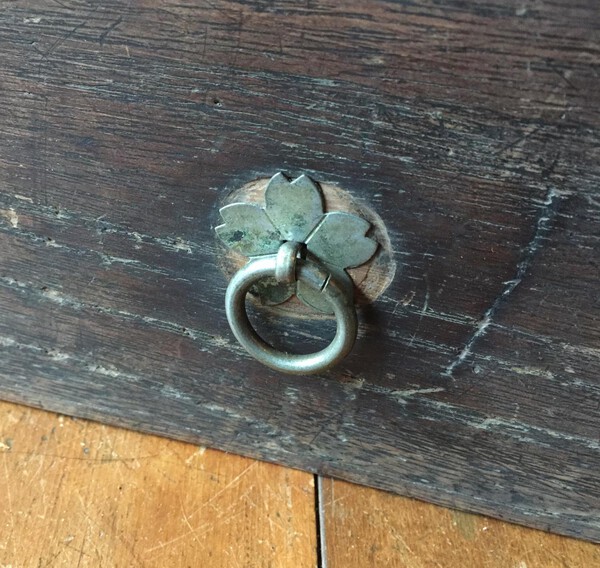
One of my pastimes is wandering round antiques fairs and spotting 'bits'. In April I had found two useful-looking box rings with sakura-flower bases, and they were sitting waiting for some as-yet unknown role. While repairing this box, they came back to mind, and fitted perfectly, in fact even better than the single old one originally in place. Job done!

-
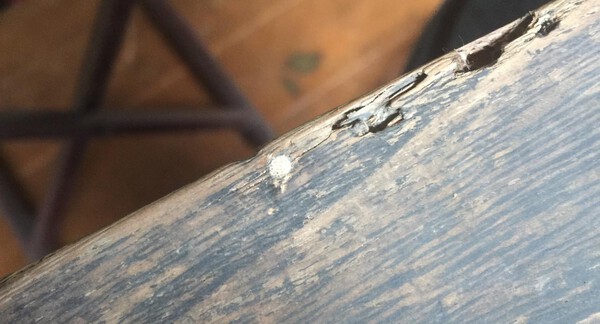
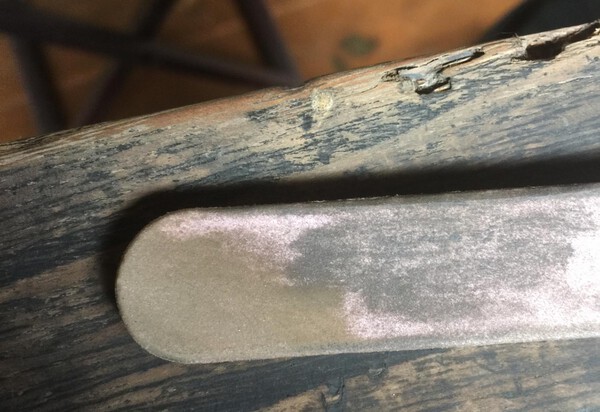
Here you can see a new pin rubbed to blend in. Of course I could have dyed them first, which would have been another way to go. Each job has its own solution! Before and After.
-
As you can see my tools for this job were very basic, indeed quite unprofessional. Apologies. The dirty nail buffer on the left reduces the colour contrast with the new pins, nicely mixing in the genuinely old dust.

-
For an example, as recently mentioned on another thread, my wife had thrown out a large scroll(?) box, and I had kind of agreed that it was not immediately salvageable. Over half of the wooden pins used instead of nails had broken, dropped out or otherwise perished, so the top, bottom and sides were pulling away, leading to general collapse. One of the metalwork ring fittings had gone from one side. Given this box's condition, I felt no worries about using it for experimentation, so the pressure was off. The main job was the pins/pegs. I removed one or two of the old ones to give me an idea of what we needed. As you can see in the photo below, there are many types of skewer or toothpick available in wood or bamboo. Bamboo skewer in Japanese is Take+kushi, = Takegushi 竹串. The kushi kanji is a perfect Shish Kebab. Sadly most of the bamboo skewers used in Japan are made in China, so it depends on how much of a purist you are. Search and ye shall find! In some cases the old pin heads were stuck fast in the holes, so they needed drilling out, or redrilling alongside. There was a pattern to the pin placings, but I felt there were too few originally, so I halved the spaces and doubled the numbers. (About 80% of the pins were successful, but some failed for various reasons.) I used a drill bit slightly smaller in diameter than the pin I was going to insert. Dipping the tips in hardware store wood glue 木工ボンド(Mokko Bond), forgive me this time, Henk-Jan, I hammered them in with a small hammer. Later after they had dried, I sliced off any rough tops with a box-cutter (rough to the finger) and smoothed them off with a sander, actually a dirty nail-board/buffer. Now they have faded into the background and feel smooth to the touch.
-
Saving a life. Precious objects usually arrive wrapped and boxed in the Japanese way, but often the outer boxes are damaged. These boxes in themselves can be a joy to behold, and they beg to be tidied up a little. This thread is for the future preservation of such boxes, ie to stop irreversible damage and give them a normal working life extension. What have you done? Please feel free to add your own tips towards the general knowledge base. Commonsense Disclaimer. The aim of this thread is 'easy general repairs'. Be aware as always that a bodge job can do more damage than good. For broken locks, ripped or missing metalwork, elaborate raden/zogan lacquer repairs etc., it is best to consult a specialist. Be prepared to pay serious money for a serious repair.
-
My #28 answer to your double question was: "Yes, (I mean no, it doesn't make sense) because in my experience these people have close to photographic memories! I have heard stories of the sword then being attributed to the very person whose Mei was on there in the first place." Explanation. Yes = yes, they are able to see. No = No, it does not make sense. The reason, = sword kantei people I have talked with can remember having seen a single blade several months or even years later. Possible way(s) around this, = The only way is to wait for a new generation, or have the Mei professionally erased and try again.
-
Simon: "Does it make sense to send it back later to NBTHK ? Are they able to see that it was already there and failed?" See post #28.
-
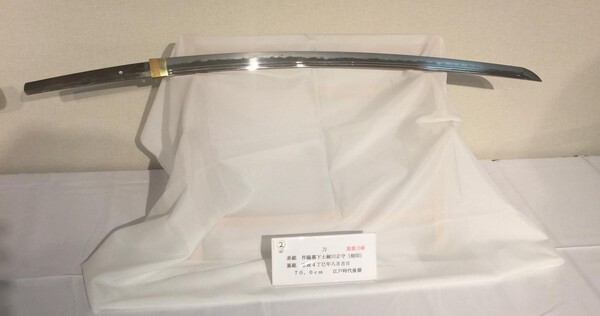
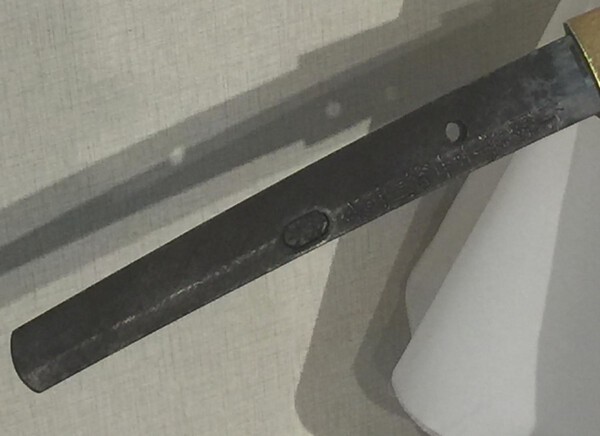
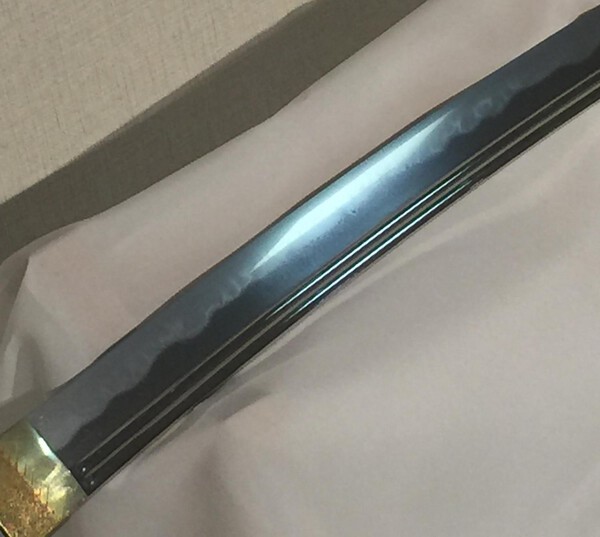
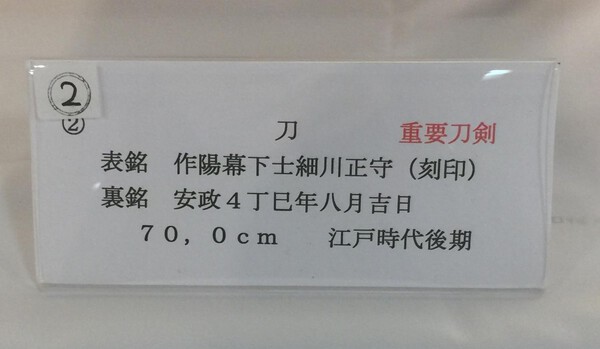
Haha, Joe, no need to be jealous. I am just trying to share what was there. For you, a katana by his son Hosokawa Masamori. Ansei 4. Juyo.
-
Hank-Jen, a separate thread on damage repair to old boxes...?
-
A good exercise Jean to train the eye. Many thanks.
-
Just had a chat with a Ninja. The NBTHK Shinsa team look at anywhere up to 1,000 swords in any one session. Of these on average over the years they have passed around 65% at Hozon and failed 35%. It is in their interest to maintain a strictness about what they do, so they cannot pass everything. Reasons for fail. If you look closely at the postcard, you will usually find a comment or two in tiny writing on the right as to why it failed. If you go to pick up the sword at the front desk, if asked, the curator (Gakugei-in) will generally also give you verbal reasons why it failed. (There are other avenues.) At present the high number of submitted swords has to do with resubmissions following the disastrous blue/green Marutoku papering years. They sit five times a year, and once more for Juyo (?) and above. Their salaries are paid out of the shinsa fees. *****Warning. With the opening of the new building in 2018 they may have to cancel a session next year. For example, they could accept up to double the normal number of swords in November and then accept none in March. Probably not written in stone, but an idea that is bouncing around. This message will self-destruct in five minutes.
-
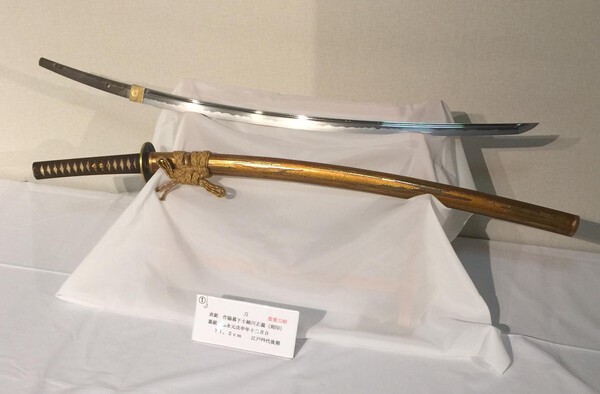
Here is the Masayoshi Juyo blade. Probably not visible in the photo, (yes, right, both the lighting and my photography need serious improvement) but this blade shows his typical choji ha, with ashi at opposing angles. He and his son used an indented stamp in the nakago. (Translation of card.) Katana. Sakuyo Bakkashi Hosokawa Masayoshi (Kokuin seal) Ura Mei Kaei Gan .. Nen 12th month and day 71.2 cm (Edo Period, latter part)
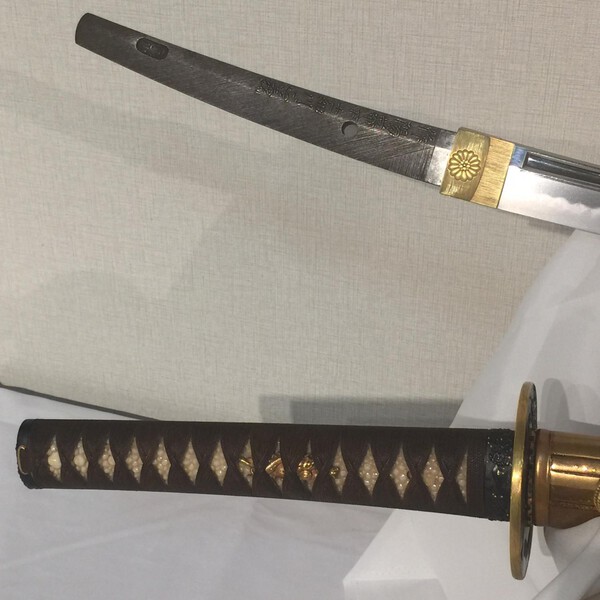
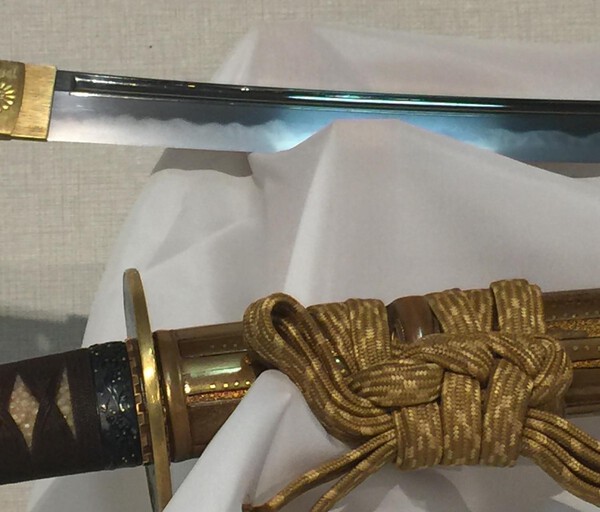
-
This season in the Chugoku area of Japan there are numerous sword shows in the calendar. This weekend was the annual NBTHK exhibition below Tsuyama Castle, a first for me personally, by car about 90 minutes away on the low road. It was interesting to see how they had lined up their blades. At first it seemed pretty random. Number 1 was a Hosokawa Masayoshi, then some other Hosokawas, followed by a new blade or two, and then suddenly a line of Kamakura, Namboku Cho and Muromachi blades, finally ending with 10 Edo blades. Huh??? Gradually it became clear. Pride of place was given to the outstanding Juyo blade and koshirae by Hosokawa Masayoshi , (a famous smith from the Tsuyama Sakuyo/Mimasaka fief) and then a Juyo by his son Masamori, and some fine examples from his other disciples Masaaki, Masanori, and Masatoshi. Next they were showing two present-day blades by smiths continuing the old tradition. (The people of Tsuyama are very proud of thier history.) The rest of the blades along the wall followed the normal old-to-new pattern representing different ages from around the country. They added variety to their sword display by hanging one wall with Ukiyo-e by Utamaro. There were some central tables, with a) iron tsuba on one, B) some old Edo maps on another, c) a glass display case of Hansatsu paper money, and d) another filled with Koban gold coins. In the far corner was a teppo section with some pistols and two or three large-bore O-zutsu. As an NBTHK member I was made welcome with a bento lunch. For me the exhibits were fascinating, but equally so was the interaction between the brother and sisterhood.



