Bugyotsuji
-
Posts
14,967 -
Joined
-
Last visited
-
Days Won
319
Content Type
Profiles
Forums
Events
Store
Downloads
Gallery
Everything posted by Bugyotsuji
-
Why in the second one is he looking at a pair of tweezers?
-
Martyn, give this a few days here. In the meantime the Mei top right looks like "Ga +(?) + to" 我口刀, maybe connection with Garaku?
-
Bojan, a good small Okimono, to which someone has unfortunately added himotoshi holes to make it look like a Netsuke? Enjoy it as an okimono is my advice.
-
Try 信彦 Nobuhiko
-
Hi Justin, Kimura Shiho (or Shio) should probably do it. The same seller on a Chinese? web site had a shinchu one by the same artist.
-
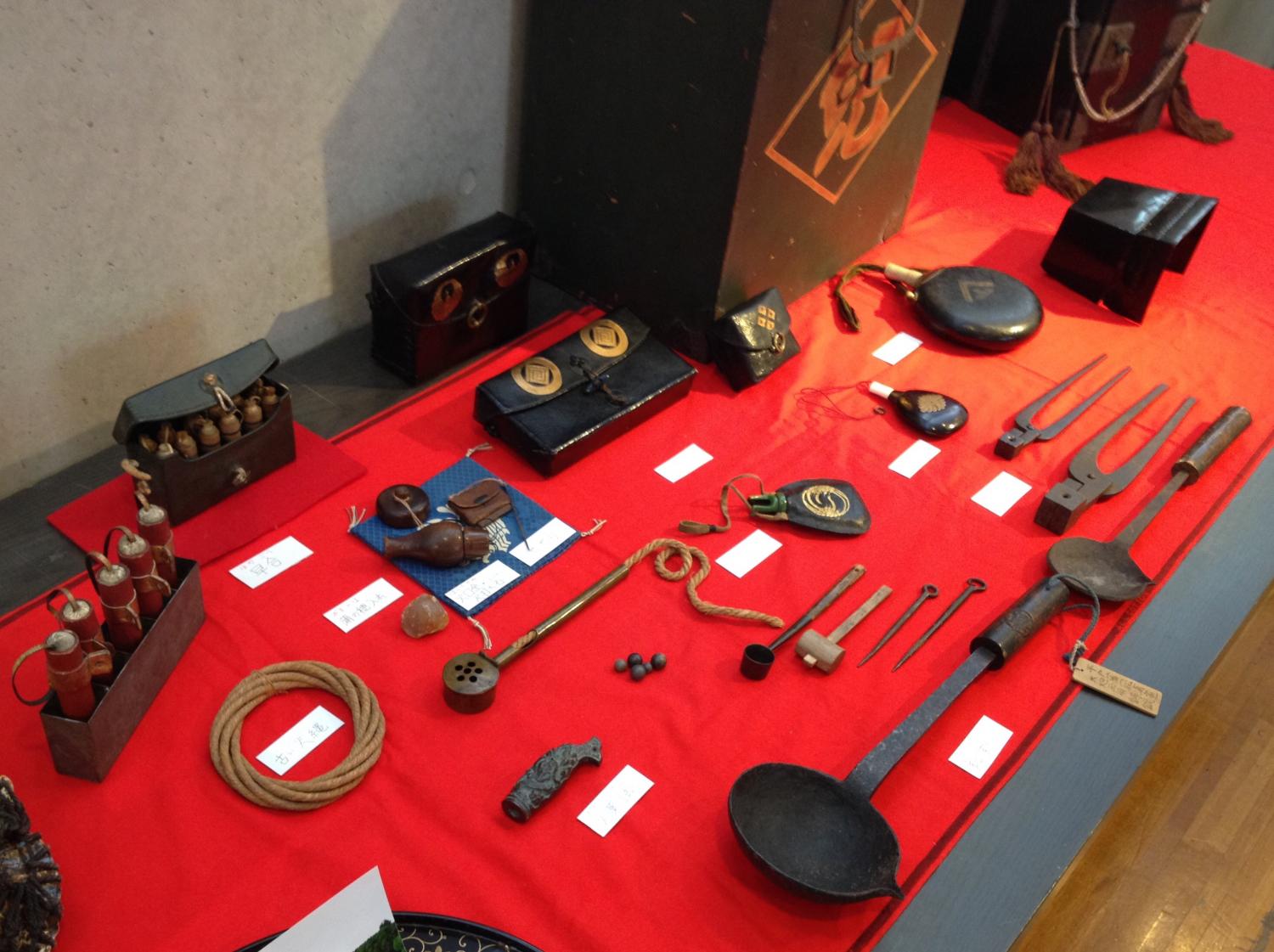
Japanese Matchlock Accessories.
Bugyotsuji replied to estcrh's topic in Tanegashima / Teppo / Hinawajū
Personally I can't use Pinterest, so I avoid clicking on anything linking there. Many images of my own photos do seem to be there though! As in the correct descriptions above, gunpowder is and was 火薬 Kayaku, and retrospectively speaking today, to emphasize the older type, blackpowder is called 黒色火薬 Kokushoku Kayaku. -
Musket Ball Pouring Ladle Pic?
Bugyotsuji replied to yamabiru's topic in Tanegashima / Teppo / Hinawajū
You are correct. It could equally have been made in Hakata. It is described as an 柄杓 eshaku or handled ladle. -
Musket Ball Pouring Ladle Pic?
Bugyotsuji replied to yamabiru's topic in Tanegashima / Teppo / Hinawajū
Hmmm... the example in that link is a Chinese bronze ladle, an example of goods once traded between Hakata/Fukuoka and the continent. As with many rare things, Eric, yes, we need to keep our eyes peeled for more recent reproductions slipping in. -
Musket Ball Pouring Ladle Pic?
Bugyotsuji replied to yamabiru's topic in Tanegashima / Teppo / Hinawajū
PS Rereading your question it was the ladle you were asking about, not so much the mold. Apologies. I guess the twist in Jan's example above would also help to dissipate creeping heat in the handle. A couple here, again both iron: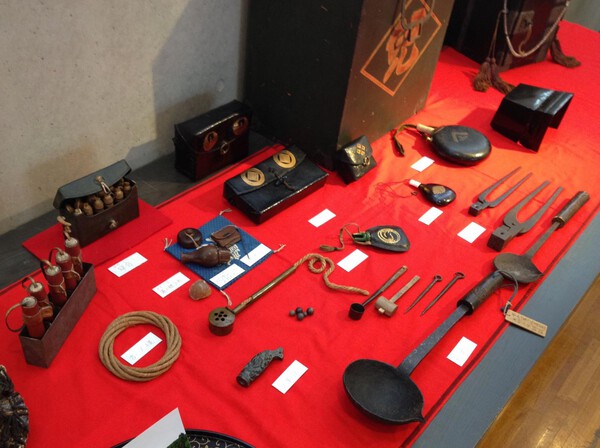
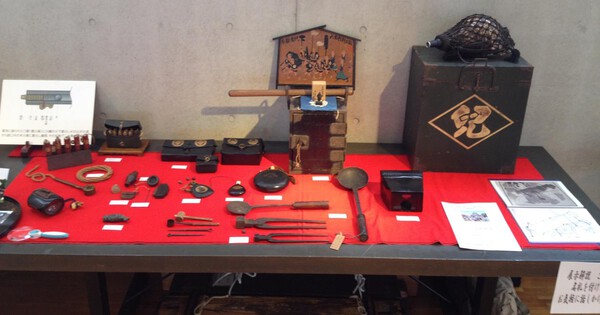
-
Musket Ball Pouring Ladle Pic?
Bugyotsuji replied to yamabiru's topic in Tanegashima / Teppo / Hinawajū
Lead in Japanese is 鉛 Namari. The grinder is a 薬研 Yagen. -
Musket Ball Pouring Ladle Pic?
Bugyotsuji replied to yamabiru's topic in Tanegashima / Teppo / Hinawajū
Yes, those are both good period examples above. I have several myself. Anthony has a fine collection including some exceptionally large ones. Never seen bronze ones in all my years though. -
Translation Needed For Hand Cannon Barrel Engraving
Bugyotsuji replied to Ed Hicks's topic in Tanegashima / Teppo / Hinawajū
It is possible that the inscription is actually a description, added more recently. A classification. 兵器式 can mean "weapon class/type", and 震天雷 is a known category of early cannon. -
Translation Needed For Hand Cannon Barrel Engraving
Bugyotsuji replied to Ed Hicks's topic in Tanegashima / Teppo / Hinawajū
Sweet thing. Almost definitely Chinese. 1300s? Is it fixed to a base in some way? -
Translation Needed For Hand Cannon Barrel Engraving
Bugyotsuji replied to Ed Hicks's topic in Tanegashima / Teppo / Hinawajū
I can see 兵器式 震天雷, which could be Chinese on a Chinese or Korean hand gonne. (Of course it can be read in Japanese too.) Any more background? -
Japanese Marking Inside Of Sword Handle Covering
Bugyotsuji replied to Chasers2's topic in Translation Assistance
That appears to be a stamp authenticating it as top quality leather. -
Netsuke Miniature Matchlock Pistol For Auction
Bugyotsuji replied to Bazza's topic in Tanegashima / Teppo / Hinawajū
Looks somehow new. -
Greg, you mean bottom right, white margin?
-
Fouling Spike For Cannon?
Bugyotsuji replied to Baka Gaijin's topic in Tanegashima / Teppo / Hinawajū
7 1/2 inches, 20 cm? Not seen anything like it! -
Anthony, I think that gun was weighting the planet correctly down under. Very serious collection. Congratulations!
-
A twitching gut can be a useful thing to have! In this case it may have been cleaned, sure, but why would anyone today bother to even attempt to create a gun like this from scratch? The signature does look pretty rough, even amateurish I agree, but again, why forge this particular virtually unknown smith? No added value, IMHO.
-
Nice that the gun is in pristine condition. Quite unusual, especially to have a bright bore! We would need to see a close-up of the rear sight. Sometimes they had an adjustable folding ladder sight fitment. Your front sight has a hole through it, (?) perhaps for longer distance firing?
-
I cannot find a Sakai smith signing only with this short name, but there is one long-name smith ending in the same 清正 Kiyomasa. 芝辻幸五小兵衞清正 摂州住 It could well be the same smith. A fairly early gun of minute bore, well made, with a reputed Sakai gunsmith name on it. What's not to love? Just seen the extra photos. Excellent, both bisen and pan.
-
Gun calibers are measured in Monme, but this one is not even one Monme, just 5 bu and three rin in diameter.
-
Yes, lots of initial thoughts, but a target gun is possible. Too long for a Yashiki or Chigo-deppo. My brain does not work in inches any more so I will need to redo the calculations! The gun is well-made, probably in Sakai, dated and in good condition, although we cannot see the bisen or inside the vent.
-
To start with: Enpo 3, 5 gatsu. So Makibari Shibatsuji Kiyomasa http://jp.yearwiz.com/Japan/enpo/3