Bugyotsuji
-
Posts
15,139 -
Joined
-
Last visited
-
Days Won
324
Content Type
Profiles
Forums
Events
Store
Downloads
Gallery
Everything posted by Bugyotsuji
-
Tanegashima depicted in Japanese Art
Bugyotsuji replied to Bugyotsuji's topic in Tanegashima / Teppo / Hinawajū
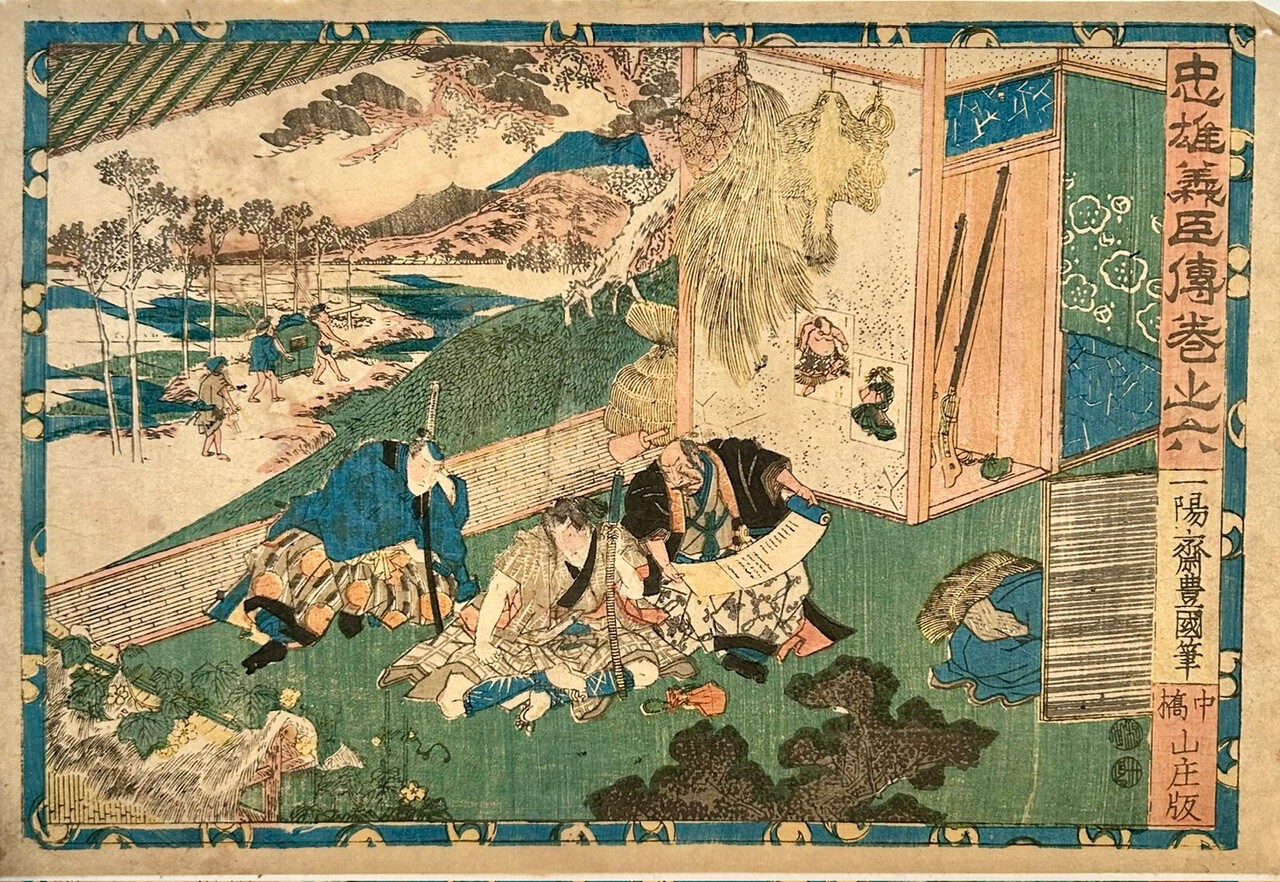
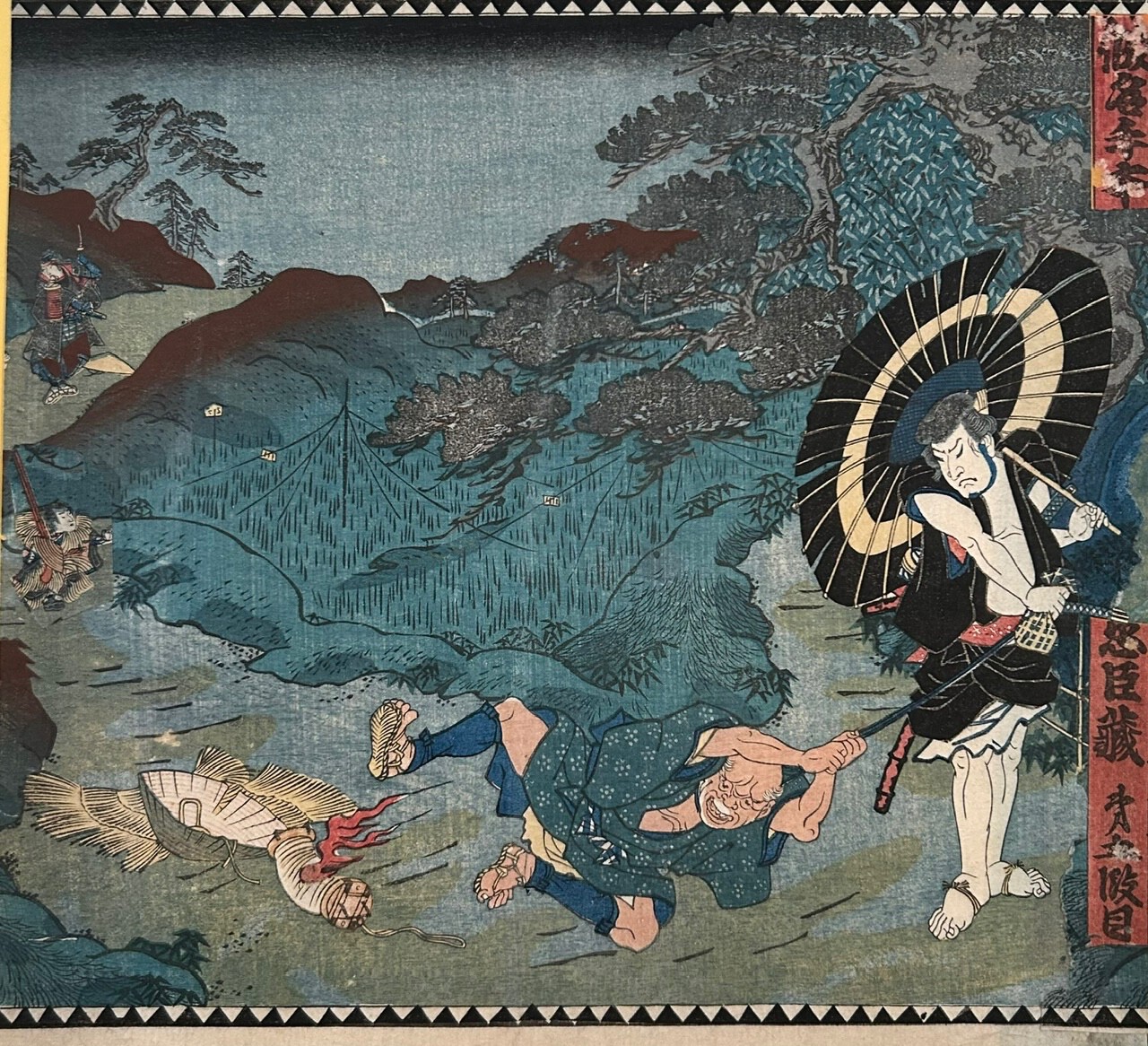
Well none of mine listed there but the closest has this description: ”Hunter Kanpei with a rifle on his shoulder from the Chushingura at the scene of the night hunting accident. The background shows the Tokaido between Sakanoshita and Tsuchiyama.” This is good info. It cuts deep, but not to the quick. (These are not rifles, by the way, if you’ll tell Artelino, and permit me to be a card-carrying grammar nazi.) As for theme-hunting, good shot! A typical hunter in the Edo Period (and around the time of the Ako 47 Ronin incident) would carry a smoothbore long-gun of less than 1.3 cm bore. Use of straw for mino, ajiro-gasa and waraji, as for the match cord also noted, also for the Sumo Rikishi’s skirt or loin decorations. -
Tanegashima depicted in Japanese Art
Bugyotsuji replied to Bugyotsuji's topic in Tanegashima / Teppo / Hinawajū
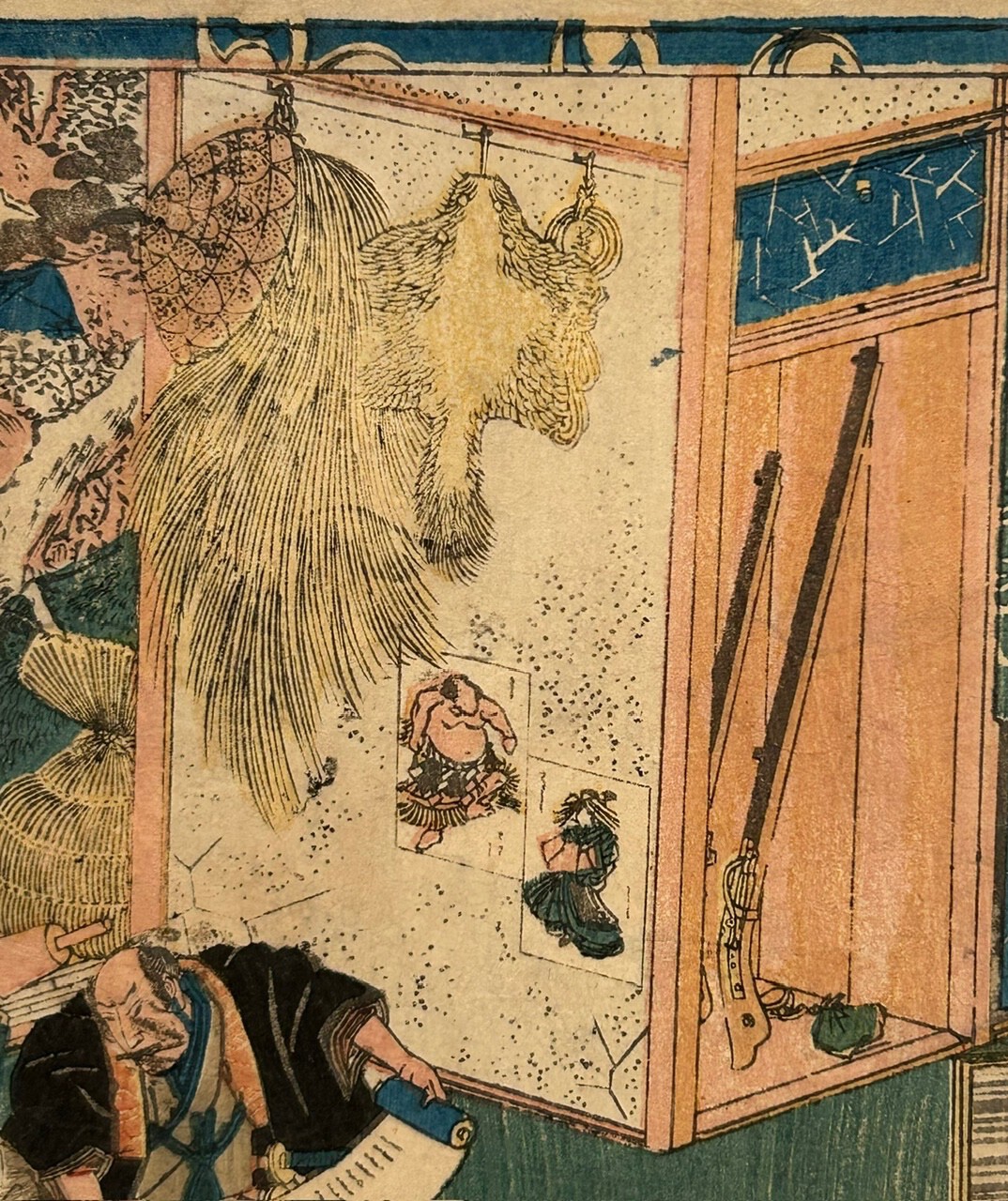
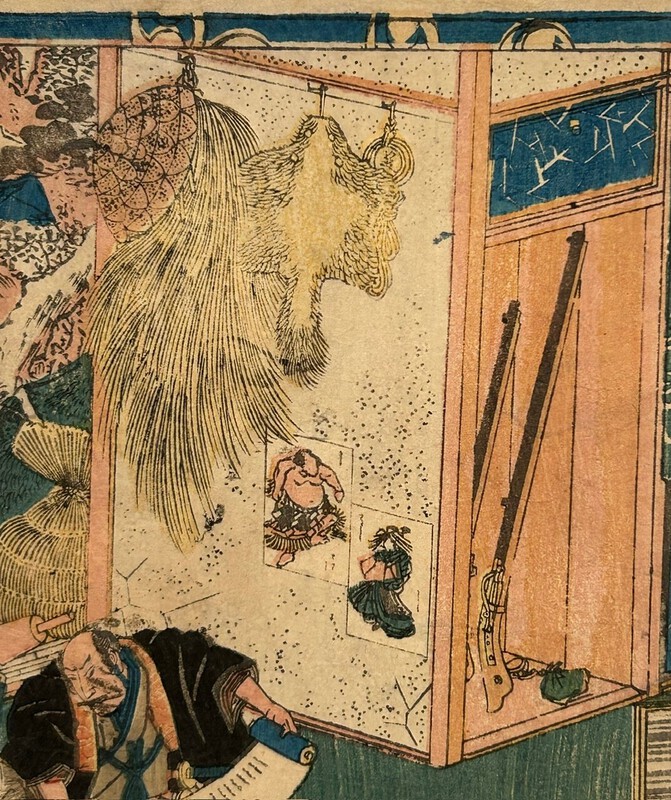
But then I found another single print, a partly equivalent scene by Ichiyosai Toyokuni, different border pattern, 32 x 21 cm roughly. Notice the netsuke and firestarter kit sagemono. Starting to notice some common themes? Detail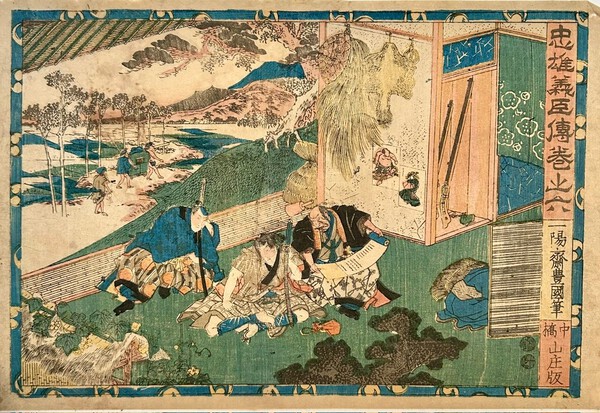
-
Tanegashima depicted in Japanese Art
Bugyotsuji replied to Bugyotsuji's topic in Tanegashima / Teppo / Hinawajū
The second is from a Kanadehon Chushingura set of 12 scenes by Kochoro Kunisada. (Well 13, because the 12th scene is A前and B後 ) Normally these are 22.5x35cm (?) but several prints in this ‘shozuri’ set were worm-eaten or ripped, so I spent many happy hours ‘rescuing’ them. Warning. Heavily doctored. Not really for public consumption. The right side of the page was largely missing. The character with the gun was hanging off by a thread, so I snipped him off straightened him out and pasted him on!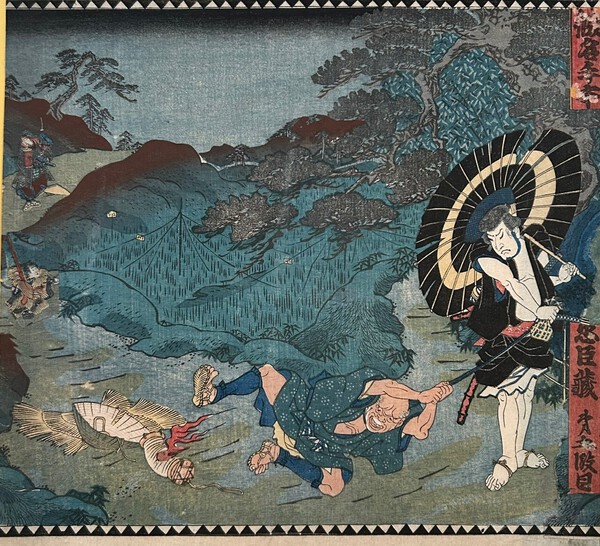
-
Tanegashima depicted in Japanese Art
Bugyotsuji replied to Bugyotsuji's topic in Tanegashima / Teppo / Hinawajū
With this sharp reminder of the evanescence of life, (for which thank you, good sir) we must update this thread with something, anything, so starting right from the bottom up, here are some Ukiyoe hanga woodblock prints in bad condition but linked by a couple of themes. The first I bought at a flea market simply because it showed a hunter’s smoothbore long gun, not for the quality of the print. I have not even spent time working out whose work it is. Is he doing something dreadful? Unframed. Roughly 26 x 18 cm.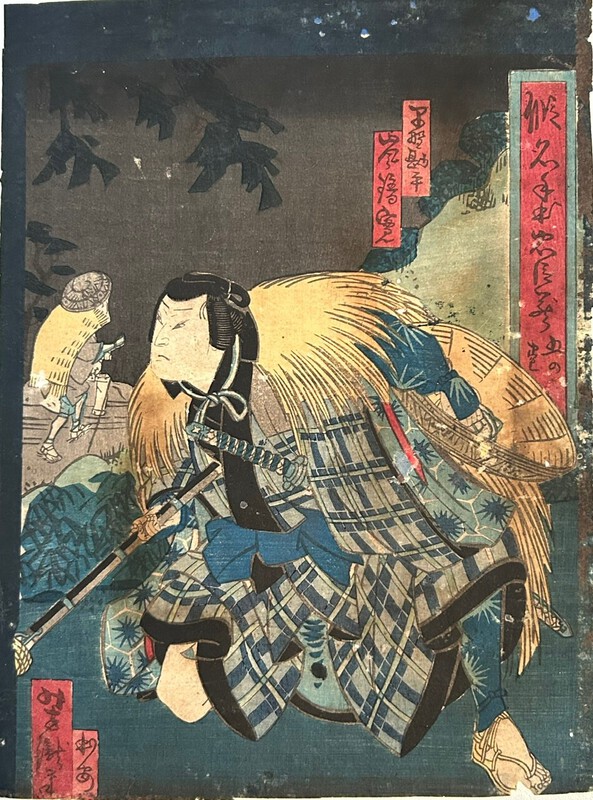
-
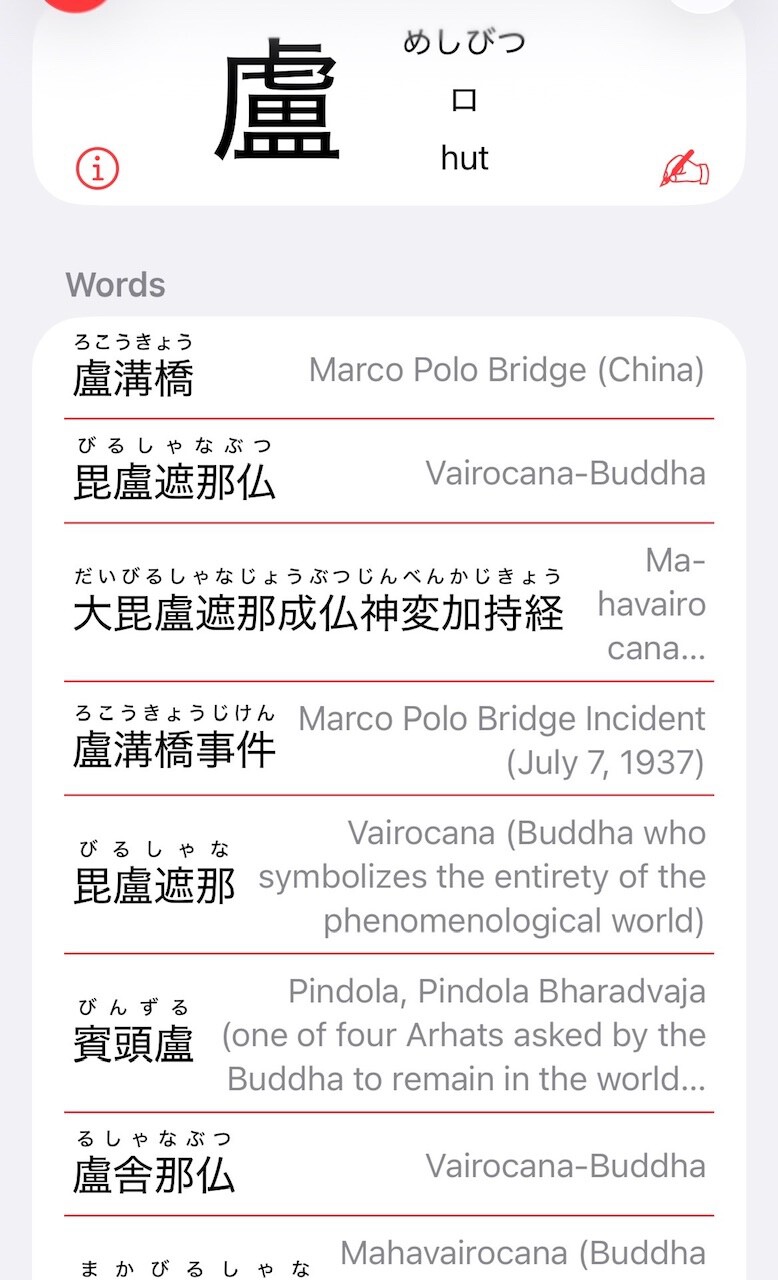
Nobody San, you are very 敏腕! (binwan) to find that 'Toshi' Kanji!
-
Slow loading today anyone?
Bugyotsuji replied to Matsunoki's topic in Forum Technical Details and Maintenance
Now you see it, now you don't. Cloudflare has to be better than this. (I even wonder whether they are sending out the bot armies themselves!!!) The JAS armo(u)r site uses it. -
Xxxてですか That is part of a question in modern Japanese Hiragana writing, something that you would never find on a legit blade.
-
Wonderful example. Very small objection though with 袖 Sode, which meant upper arm shoulder guards (shields) for a set of armo(u)r. This would suit the battlefield scene better, surely. Sleeves were 籠手 kote. (Sode 袖 are sleeves on kimono.) The partly covered-over explanation above seems to say that just as snow falls off (your shoulder guards) at a touch, (... your enemy will fall with the lightest touch of this blade, or his body will fall into two halves?). I know this goes against the theory of the meaning given by the NBTHK, but the above is just my private feeling.
-
Slow loading today anyone?
Bugyotsuji replied to Matsunoki's topic in Forum Technical Details and Maintenance
This was a bad one for me today. Cloudflare? On two other sites now that I use regularly, so I hate the damn thing with a vengeance, with the extra silly jiggle to log in, but maybe Cloudflare just starts to make sense here too, unfortunately. -
Help Translating part of a NBTHK Kichō Paper
Bugyotsuji replied to zanilu's topic in Translation Assistance
Hoping that someone will come along to further clarify the above for you Luca! -
Help Translating part of a NBTHK Kichō Paper
Bugyotsuji replied to zanilu's topic in Translation Assistance
XX 一 (殿) Respectful name of the owner, 'Something Hajime(?) Dono' but sadly I can't be sure of the reading. P.S. Nothing to do with the price of fish, but 座頭市 is Zatoichi, and they called him Ichi-Sama! -
By the way Howard, notice how the detailed design on front has been added (at some personal effort) to cover the crack, i.e. to follow the belly line.
-
Help Translating part of a NBTHK Kichō Paper
Bugyotsuji replied to zanilu's topic in Translation Assistance
Not 室町 but 毛彫 Perhaps… (?) And 無銘 -
Modern, not a Netsuke and the signature added (in China) to give a ‘casual’ grass-written Japanese impression, imho. No benefit therefore to trying to decypher the deliberate squiggle. (Plus it’s ivory, a giant no-no, unfortunately.)
-
If Shinro, then the ro comes from here…

-
Ko-Shoami Iron Tsuba - NBTHK Tokubetsu Hozon
Bugyotsuji replied to Takezo's topic in Fittings/Tosogu/Kodogu/Koshirae
Two Kamon in there! 縦ニ引 Tate ni hikiryo 蛇の目 Ja no me (‘Katō’ connection?) -
Thoughts on this Tanto #2
Bugyotsuji replied to Tsubafan's topic in General Nihonto Related Discussion
Loving the Koshiraé. Sometimes in Japan dealers add a ‘throwaway’ Tsunagi blade to complete a nice Koshiraé, but yours looks better than that. Once I bought a Tanto because I really liked the Koshiraé and one of my Japanese friends had a look and said in a serious voice, “I’d recommend throwing that blade into the river.” -
Thoughts on this Tanto #2
Bugyotsuji replied to Tsubafan's topic in General Nihonto Related Discussion
Comparative examples from a Japanese search, hours of fun! 泉州住正清作 - 検索 -
Taking it all back, Colin. My goof! Watanabe Kanenaga indeed! Humblest apologies. I would invite you round for a generous slice of this delicious crow pie (humble pie in the UK), but I hear you are on a diet...
-
Hector, now we're talking!
-
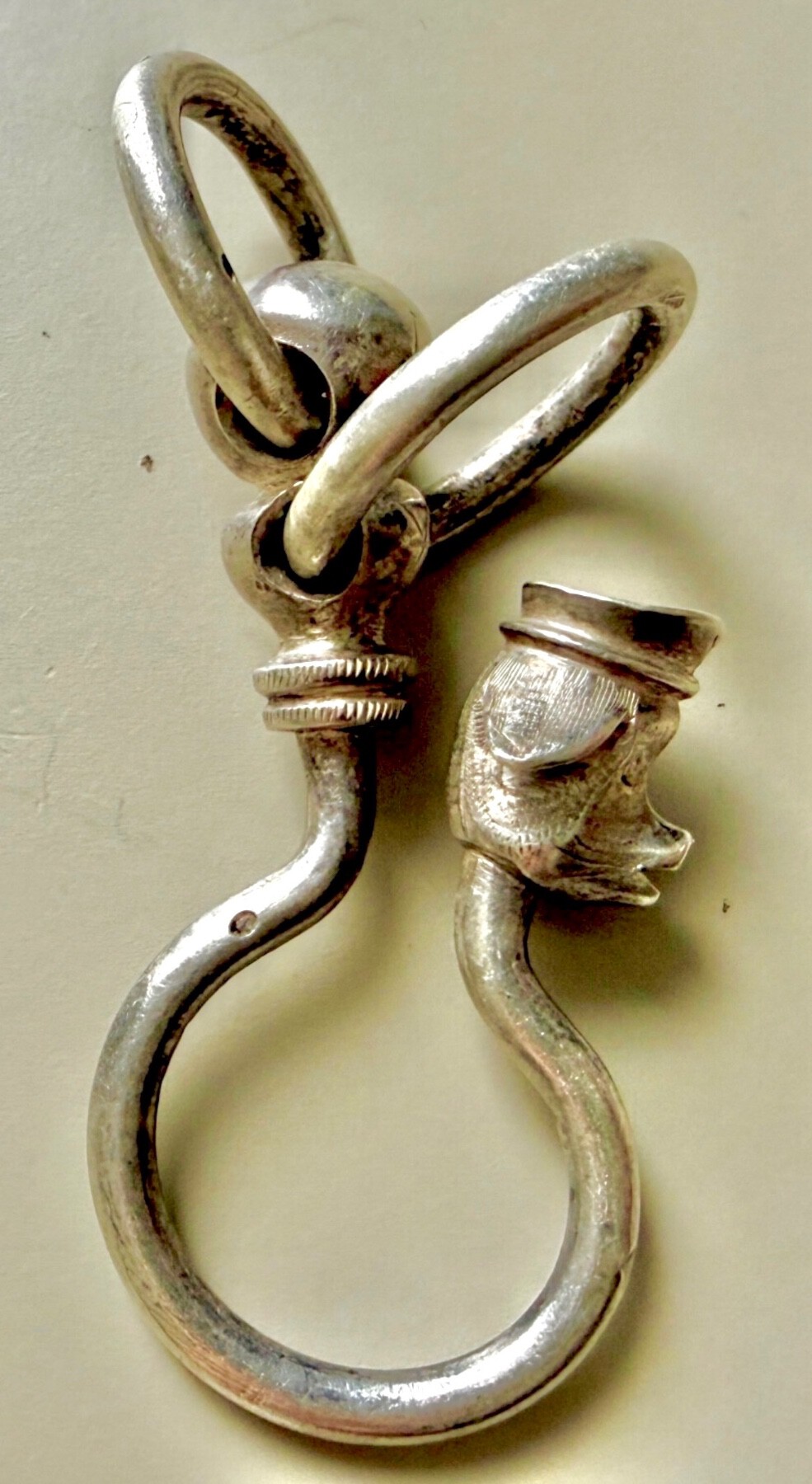
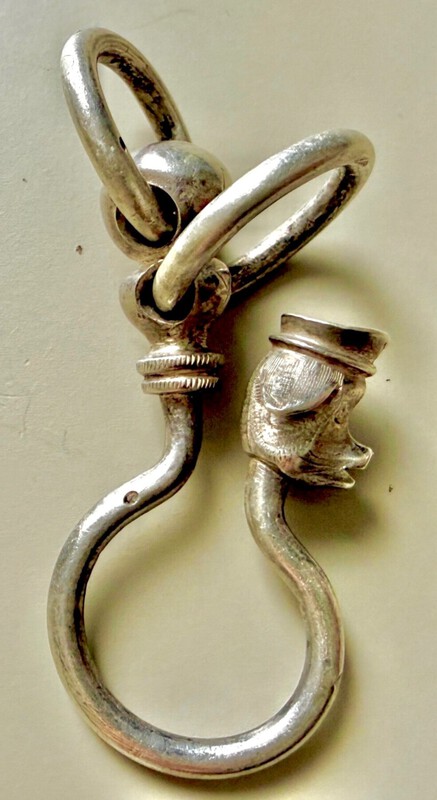
That’s pretty neat! (But when would a pig wearing a captain's(?) hat have first appeared?)
-
Although the 4-word saying 'Daikichi Dairi' is Chinese in origin, it would have been understood in Japan and elsewhere in Asia with Chinese influence. 大吉大利 Good fortune and good wealth! And this face, (?) just editing it slightly.
-
Colin, does 渡造 mean 'made abroad', e.g. China, Manchuria, etc.?
-
Just hedging my bets, Louis. I can see what you are saying though. To me it was the small size and the quality of carving that most attracted me, and to forestall potential criticism from Pietro I was careful how I phrased it!
-
Join the club!