Bugyotsuji
-
Posts
15,011 -
Joined
-
Last visited
-
Days Won
321
Content Type
Profiles
Forums
Events
Store
Downloads
Gallery
Everything posted by Bugyotsuji
-
Judgement on small Bonsai pot
-
The trick is that 田 can work both ways!!! Grrrr... :nuts:
-
Finally got it, it is LEFT to RIGHT?!?!?!? Hahahaha.... I got a seriously cricked neck trying to read it vertically!............... Aaaarrrrgggghhhhh..... I want my life back!
-
Steve, how do you get 澤 out of that shot?
-
Wow, now that is one particularly lovely example, Brian. Congratualtions! (Will swap when you get bored!)
-
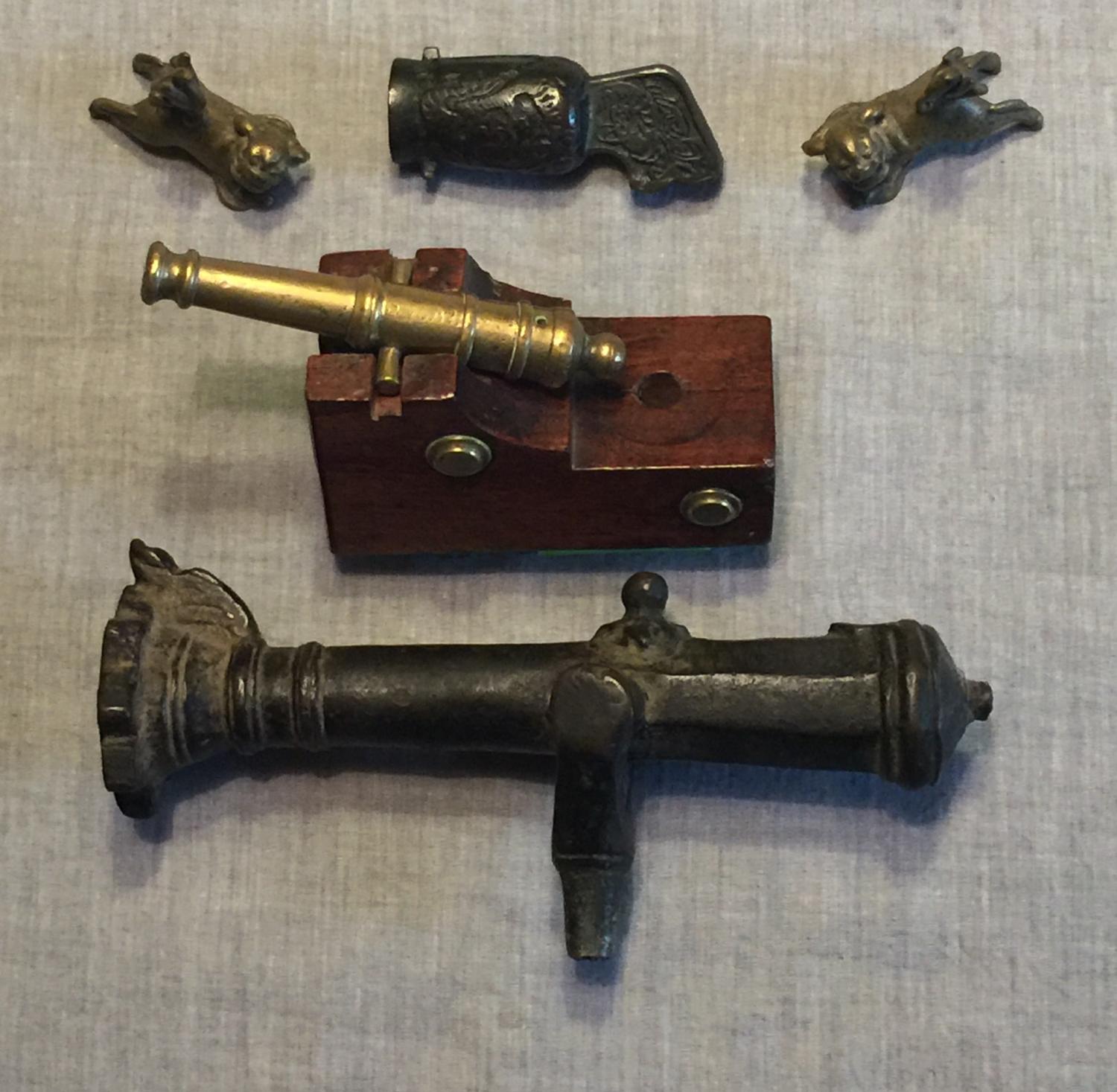
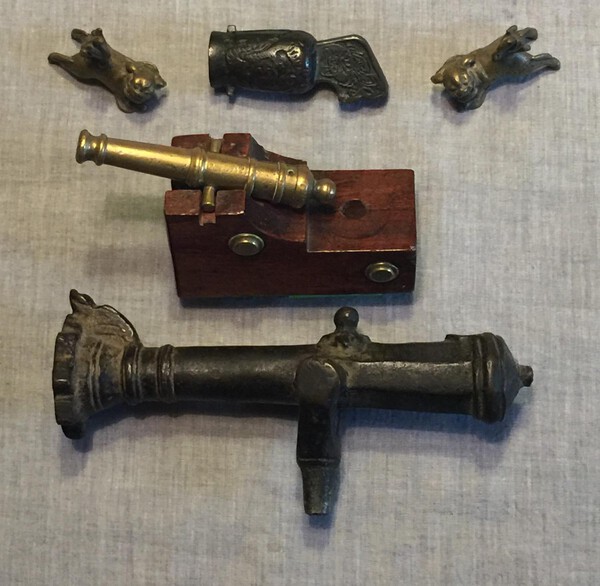
Not all okimono per se, but from top: One Japanese bronze powder tester Two Japanese Shishi One European bronze gun carriage One SE Asian lantaka boat cannon
-
You mentioned Momoyama, Mike, which is why I suggested ‘after’ the floods.
-
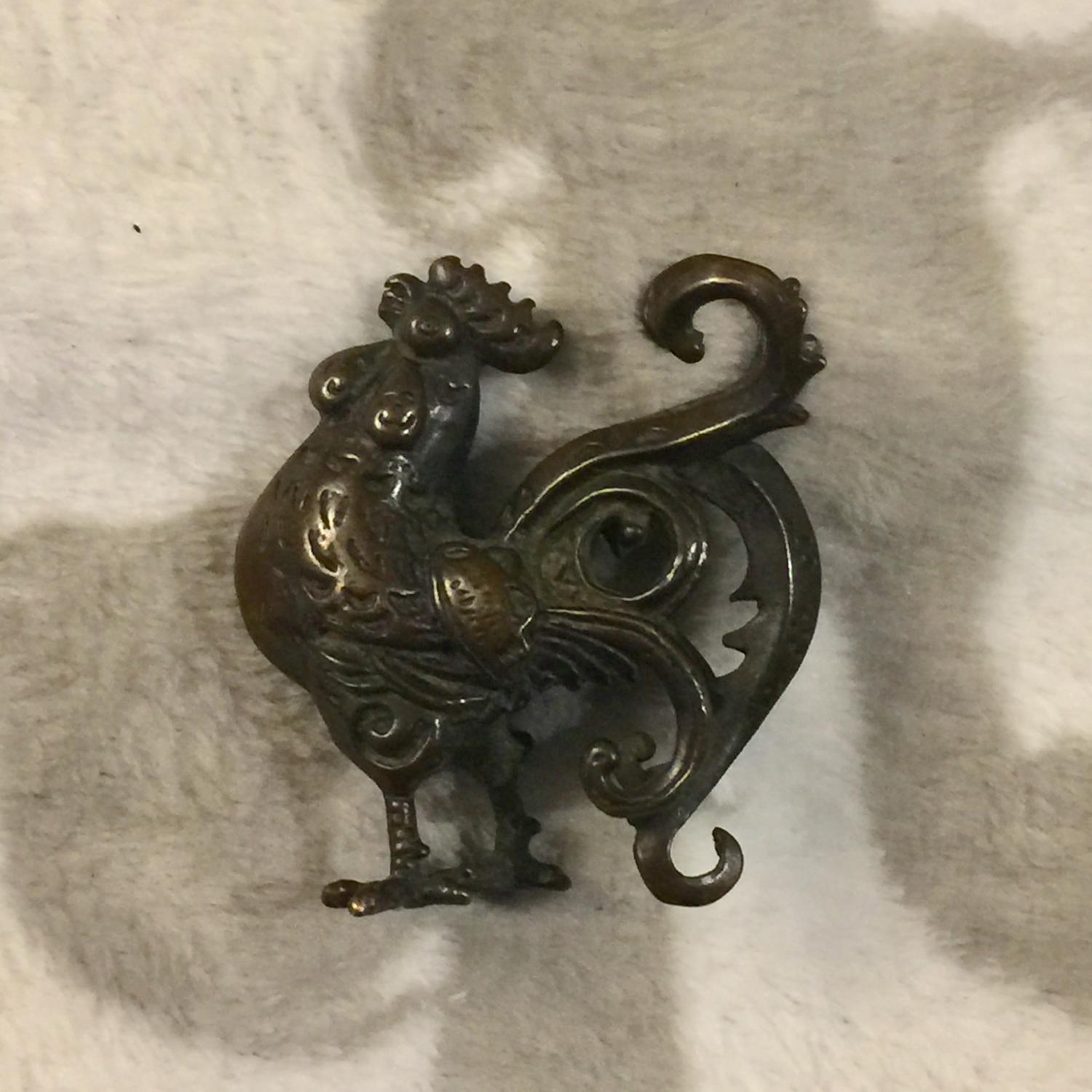
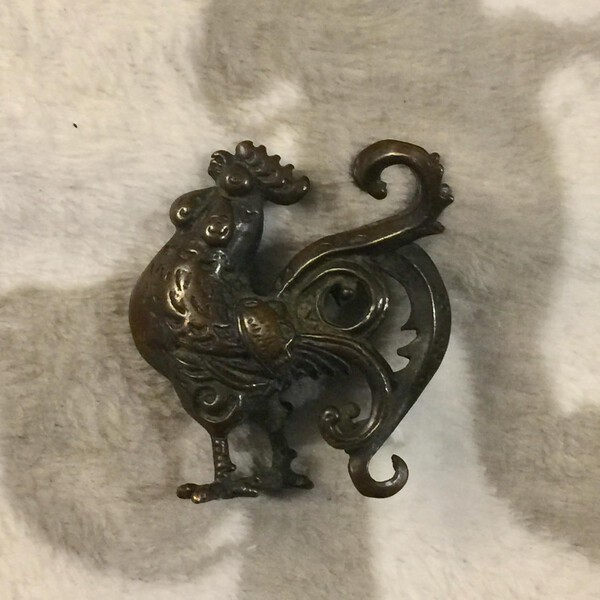
Hmmm... this thread could be the start of something for me. The other day visiting the antiques market at Kitano Tenmangu in Kyoto I spotted a small bronze cockerel/rooster. Normally it would have stayed on display there but somehow this one decided to go home with me. This is probably the first time I have ever consciously bought a bronze as a decorative piece, although I do have a small pair of shishi bunchin (if that is what they are), rather like yamabiru above. (In a pair, though, so brush holders, chopstick stands, incense stands?) In the UK I have three duck-shaped weights, S,M,L, which must be bronze. Here I have two gun-metal gunpowder testers and a small bronze(?) Lantaka cannon, but now, I am the proud owner of a strutting male chicken! Fits in the palm of my hand.
-
Really clear and considerate photography, Eric. A pleasure to behold.
-
Keep it away from "moist, children" (Jean C.) Moist children would be even worse! A good-looking blade. (I personally did a double-take there, seeing 'keep it away from Maoist children...")
-
Sword Given By Putin To Pm Shinzo Abe
Bugyotsuji replied to Brian's topic in General Nihonto Related Discussion
Maybe a listening device in the saya? -
備前国多門兵衛藤原正成 一尺七寸 For Romanization see invisible writing below: Here: Bizen Koku Tamon Hyoei Fujiwara Masashige Isshaku Nana Sun
-
Not paid these much attention, but I will certainly keep my eyes peeled. Do you have Sawada's Japanese reference book? I seem to remember somehow that you do. I will also have a quick flick through my books. Towards the end of Edo, so many different guns were washing around Japan, as you may have discovered in Jan's excellent chapter. The common word at the time for a breech-loader was 元込 Moto-gome, and everyone wanted one. There were single-, three- and even seven-shot versions to be had if you were lucky. Yours too looks like a modified Sakai gun. The breech band has been cut at the top for the bolt slide, and screwed in from the sides.
-
Sword Shown To Admirals Nimitz And Mitscher
Bugyotsuji replied to David McDonald's topic in Translation Assistance
Morita Sama, wonderful! -
I Wonder If You Could Help Me With This Musket....
Bugyotsuji replied to redhugster's topic in Tanegashima / Teppo / Hinawajū
Peter, the gun in the Hakodate Ainu postcard looks like a smallbore gun being used against bird or very small game. Great photograph! -
Ken must be referring to the great Yoshii River floods which washed away Bizen Osafune Fukuoka Castle and much of the sword making community around. その後も浦上氏が守っていたが、大永年間(1521年~1528年)の大洪水により廃城となった。"Urakami continued to be masters of the castle until it was destroyed in the great floods of Ooei (1521-1528)." http://www.hb.pei.jp/shiro/bizen/fukuoka-jyo/ Actually, I have heard that such floods continued for much of the middle of that century, until a proper embankment was built on the south of the river to contain its encroachments. Sword maanufacture must have continued throughout, to a greatly diminished degree, but then it would have picked up again towards the end of Muromachi and Momoyama. From the same page: 福岡城は現在の長船町福岡付近の吉井川に築かれていたと考えられている。 現在長船カントリークラブの中にある丘陵と、対岸の寺山にある丘陵(本城山)が福岡城に関係する地となっているが詳らかではない。長船カントリークラブのクラブハウス脇に「福岡城跡の丘」と刻まれた石碑がある。また、福岡には鎌倉時代の「一遍上人絵伝」に記された「福岡の市」、長船の名刀「福岡一文字記念碑」、妙興寺には宇喜多興家、黒田高政の墓がある。
-
I Wonder If You Could Help Me With This Musket....
Bugyotsuji replied to redhugster's topic in Tanegashima / Teppo / Hinawajū
A Sakai conversion, an interesting object in its own right, missing some of the inlay, but largely in good condition. Notice how the top of the butt has been shaved off so the action can slide backwards. -
Just had word that he is flying back from Lapland(!)and will communicate when he gets back.
-
Showa 53, 11 March, 'Tokubetsu Kicho'. Kozuka 欠, kake(ru), often read 'ketsu'. Sometimes that kind of saya is called Inro kizami, I believe.
-
Manuel, actually yes. I think he said he came from Worcestershire. I will pm you his contact details.
-
Mike Hickman-Smith makes saya and I have seen some wonderful examples of his lacquer work.
-
Japanese Matchlock Accessories.
Bugyotsuji replied to estcrh's topic in Tanegashima / Teppo / Hinawajū
Hi Alton The ‘Netsuke’ looks like a toy, (what does the pan look like?) but the powder flask looks genuine, and it could well be Japanese, although granted it is an unusual shape. A Nasubi shaped Kayaku-ire, hmmmm....we like that idea! (Hard to see properly and a shot of the opened stopper would be great if possible.) -
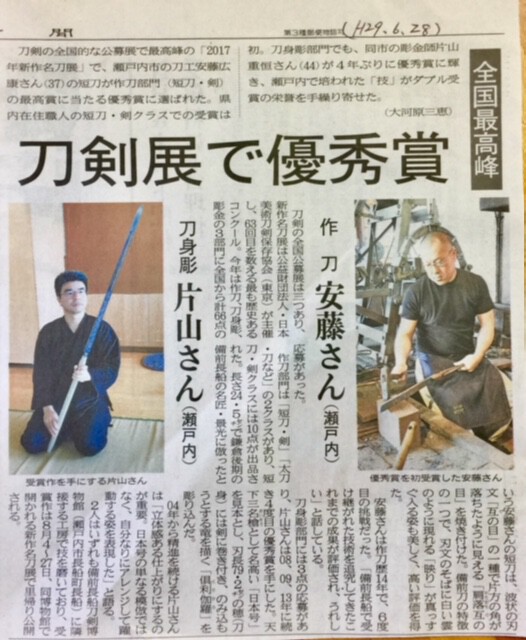
On Sunday a friend showed me a newspaper clipping from earlier this year (28 June) with an article I had not seen before. It concerns two up-and-coming artisans who have been recognized nationally by the NBTHK in this their 63rd event. (Apologies if this has already been mentioned on the NMB site.) One is the younger To-ko swordsmith Hiroyasu Ando, on the right at the anvil, who was given the top prize for a tanto, a first for this region. The other is the Chokinshi carver Mr Katayama on the left with a dragon he carved into a long yari blade, winning the most excellent award again after a gap of four years. What impressed the judges about Ando San's tanto were the Kataochi-gunome, and the straight line of his Bizen-style utsuri which they found particularly beautiful. A first for Mr Ando after six attempts, this was a fourth first prize for Mr Katayama. This is the younger Mr Ando, who has made swords, kozuka and tsuba with meteorite iron, including a generous meteorite sent by our esteemed member Ken all the way from Hawaii. Mr Katayama carved some cherry blossoms for me onto the brass plate on my Kunitomo pistol. Anyway, local artisans need all the help they can get, and recognition for them has to be heart-warming. Gambare! Photo of article...
-
- 1
-

-
Edo Period Corner Part II
Bugyotsuji replied to estcrh's topic in General Nihonto Related Discussion
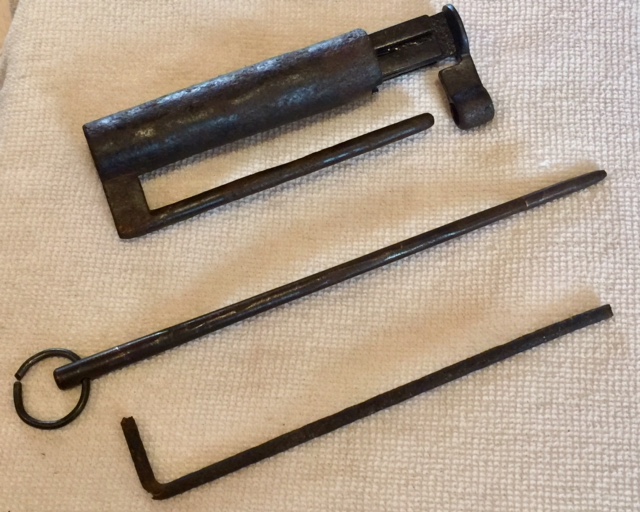
Closeup. Which came first, the chicken or the egg? You can see that it fulfills all the requirements to the letter. Were these locks invented just to sort the vulnerability of safe doors?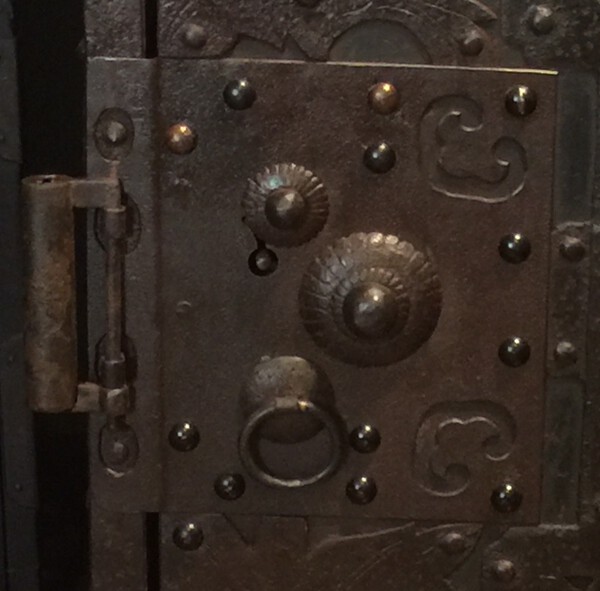
-
Edo Period Corner Part II
Bugyotsuji replied to estcrh's topic in General Nihonto Related Discussion
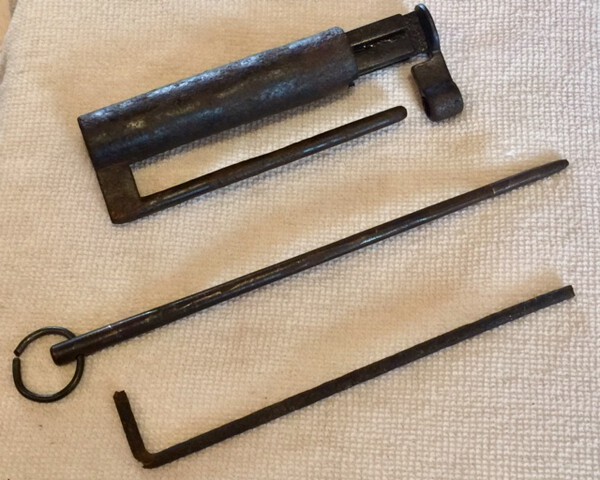
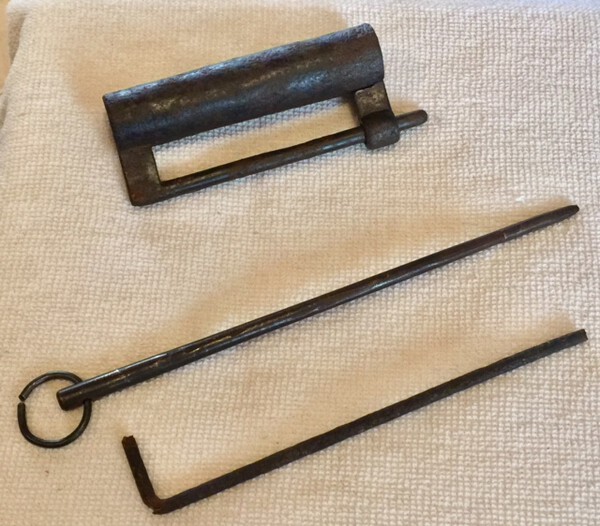
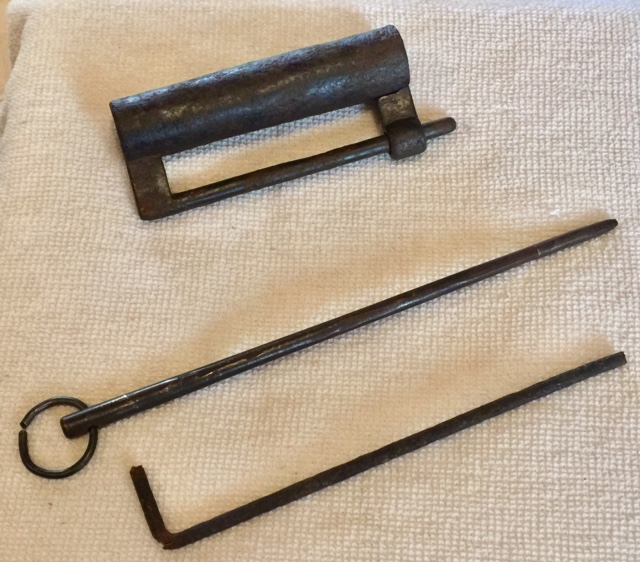
Open and closed positions, vs iron pins I used for 15 years.