Bugyotsuji
-
Posts
14,781 -
Joined
-
Last visited
-
Days Won
309
Content Type
Profiles
Forums
Events
Store
Downloads
Gallery
Everything posted by Bugyotsuji
-
Meiji smith, Nagamasa 永正 tsukuru kore造之(?)
-
Yes, (I mean no, it doesn't make sense) because in my experience these people have close to photographic memories! The only way is to wait for a new generation, or have the Mei professionally erased and try again. I have heard stories of the sword then being attributed to the very person whose Mei was on there in the first place!!!
-
 1. 太刀Tachi. 正恒 Masatsune, 重要美術品 Juyo Bijutsuhin. 2. 刀 Katana. 無銘 (Nagamitsu) 3. Tachi. 国宗 Kunimune 4. Tachi. 雲次 Unji 5. Tachi. 備前国長船住近景 Chikakage 6. Tachi. 備前長船康光 Yasumitsu 7. Tachi. 備前長船経家 Tsuneie 8. 刀 Katana. 備前国住長船源兵衛尉祐定作 *Sukesada 9. Tachi. (古青江 Ko Aoe) 正恒 Masatsune 岡山県指定文化財 Okayama Prefecture designated Juyo Bunkazai 10. Tachi. (古青江) 助次 Suketsugu *This Genbyoei/Genbei no Jo Sukesada might be the son of Yosozaemon, or possibly the grandson (Nidai Genbei). Will ask.
 -
Yes, Paul. I bought mine @ JPY 3,000 that same day. Are there any Token meetings in London in August or September that you might be attending? I could hand it to you then if you like. Not sure whether to start a new thread, but we have another one of these hands-on events coming up next month at the Prefectural Museum. Not nearly so lofty content, though. I'll post a list here of what they will roll out for us.
-
Just shot those directly from the museum booklet... ssshhhh...
-
Agree with both of the above posts. Great shots. (With Netsuke too, you have to be careful not to get too close, beyond what the artist's own eyes could see!)
-
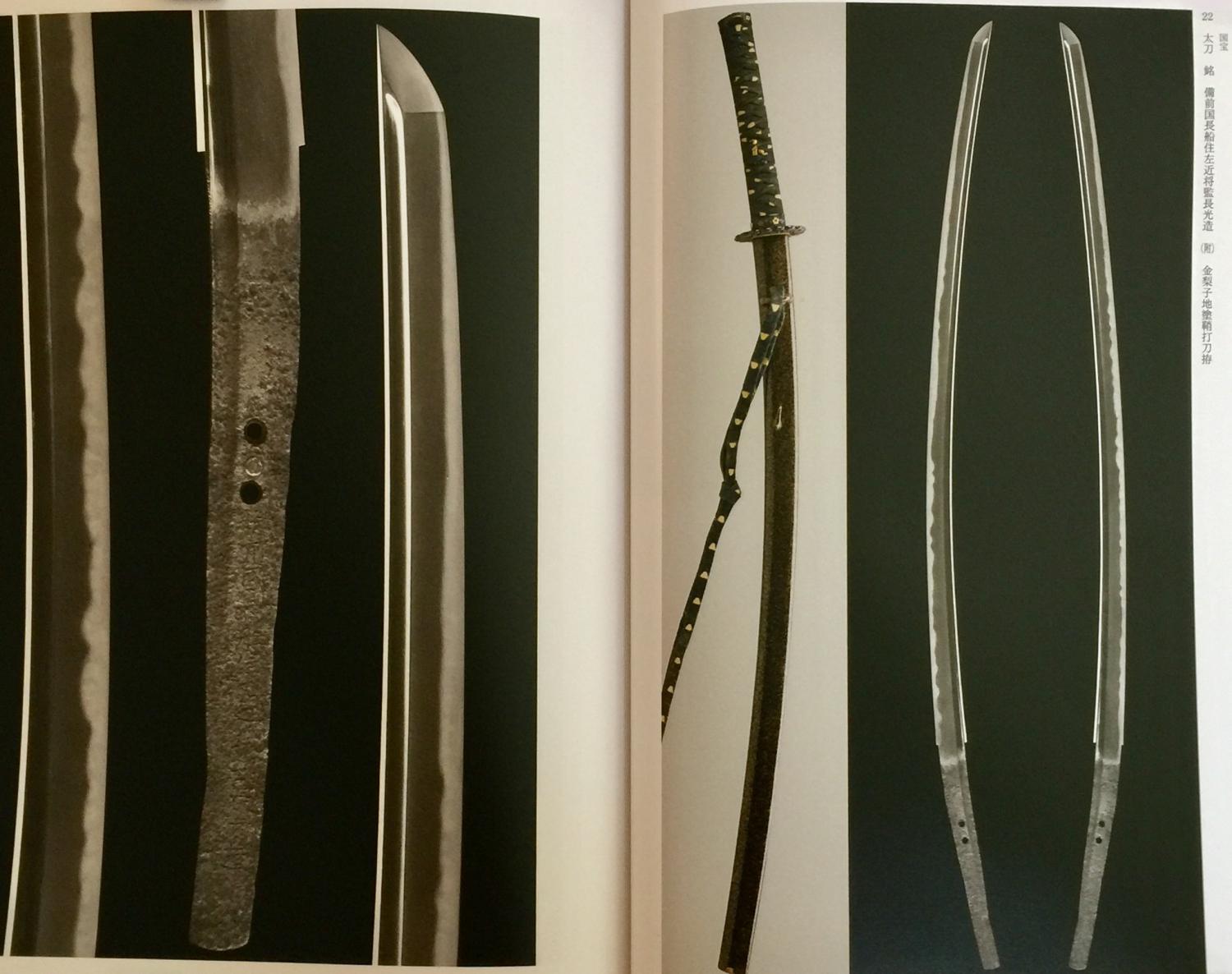
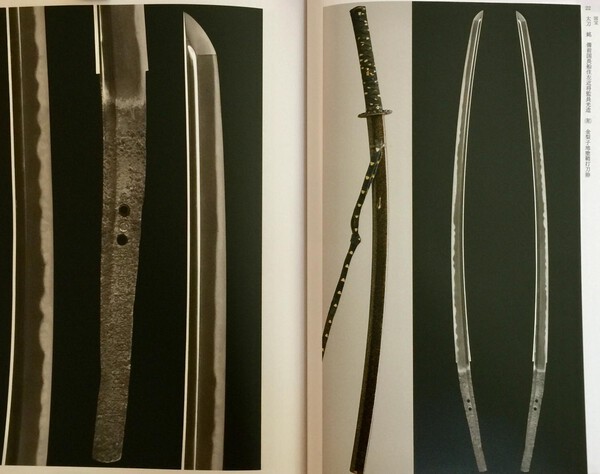
Nagamitsu Tachi Mid-Kamakura 13 C. 国宝 備前国長船住左近将監長光造
-
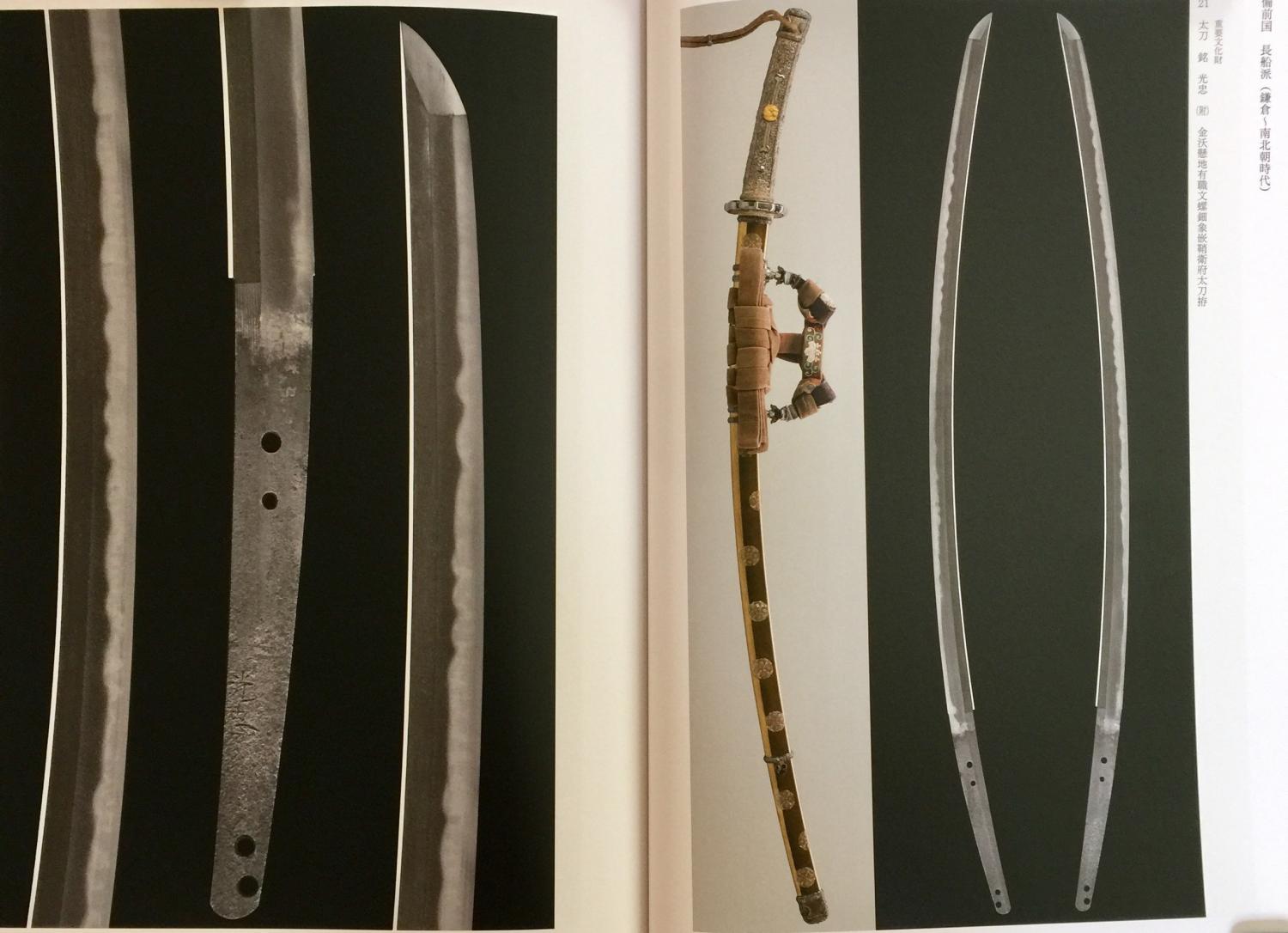
Mitsutada Tachi, founder Osafune School, Mid Kamakura 13th C. Juyo Bunkazai

-
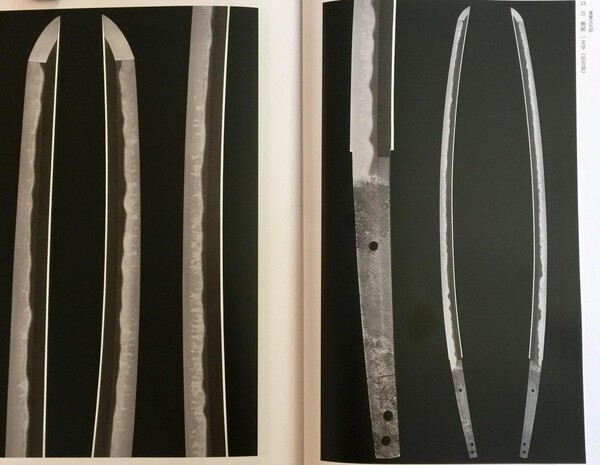
無銘 Ichimonji (Yoshifusa?) mid Kamakura 13th C. Juyo Bunkazai
-
Yoshifusa Tachi Mid Kamakura 13th C. 国宝 Kokuho

-
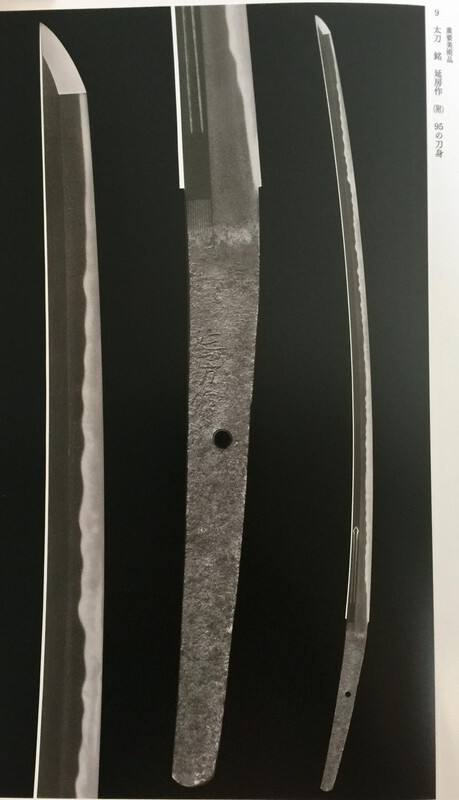
Nobufusa Saku, Tachi Early Kamakura, 13th C. Juyo Bijutsuhin
-
Haha, Joe! For Michael, starting with Masatsune Tachi, Late Heian, 12th C. Juyo Bunkazai (Hoping this works)

-
Simon, I just had a chat with someone well aware of the workings of the NBTHK board, and asked him some of your questions above re the March shinsa in Tokyo. He says that the judges really do take their work seriously, and they do allot proper time to deliberate over each sword individually. He also said that the standard is pretty much the same; in his experience it has not been getting noticeably stricter recently. If possible, I would go with some of the advice above and try for NTHK papers, even if a second opinion means waiting longer to get them home.
-
Sword And Weaponry Collectors
Bugyotsuji replied to cateburz's topic in General Nihonto Related Discussion
Cate, in order to find volunteers, you might want to offer 1) anonymity by use of a nickname, etc., 2) that at the beginning and end of each episode you will insert words to the effect that for safety considerations the collector normally keeps his/her collection elsewhere at a secure location. 3) Use of a neutral venue could be a good option. In fact 4) you could have a check list for the collector to look at in order to establish mutually agreeable conditions under which he or she would be happy to go on camera! -
An interesting read, Mr Morita. Many thanks. (So he came back from Holland in the Kaiyo-Maru!)
-
An iron meteorite, it was found in 1895 in Shirahagi in Toyama, Ken. See pic here on right of page: <a href="http://www2.memenet.or.jp/kinugawa/museum/yume20/130501.pdf#search="data-ipb="nomediaparse" data-cke-saved-href="http://www2.memenet.or.jp/kinugawa/museum/yume20/130501.pdf#search=" %e7%99%bd%e8%90%a9%e9%9a%95%e9%89%84'"="">http://www2.memenet.or.jp/kinugawa/museum/yume20/130501.pdf#search='白萩隕鉄' Enomoto who was something of a scientist and had been to Holland on the Kaiyo Maru, thence to Russia where he saw a meteorite sword, was fascinated, bought the meteorite and had it made into swords in 1898 by a smith called 岡吉國宗; one long sword was given to the crown prince who later became the Taisho Emperor.
-
Having posted the first link, guess I should take a little responsibility here! Paragraph one should look something like this: 作らせた榎本武揚のひ孫が寄贈 Donated by great-grandson of Enomoto Takeaki who (originally) ordered its manufacture. 明治期の政治家で草創期の小樽の発展に寄与した榎本武揚が建立した龍宮(りゅうぐう)神社(稲穂3)に20日、武揚が隕石(いんせき)から作らせた刀剣「流星刀」が奉納された。On the 20th (of June 2017) a sword originally made to order from a meteorite at the request of Enomoto Takeaki was donated to the Ryugu Shrine (located in Inaho 3), also built by Enomoto, a Meiji politician who contributed greatly to the early development of Otaru. 代々榎本家に伝わってきたもので、武揚のひ孫の榎本隆充さん(82)が同神社に寄贈した。小樽の関係者はゆかりのある地で保管できることを歓迎している。Passed down through the generations of the Enomoto family, Takeaki's great grandson Takamitsu(?) now aged 82 has given it to the aforementioned shrine. Otaru city authorities welcome the fact that an object with such local roots can be treasured here.
-
Yup, well that translation shows just how far the much-vaunted art/technology has progressed. Even so, it has to be better than nothing, though there is nothing like a bad translation to make us quickly lose focus. Thanks though for the nice presentation, Barry. Original Japanese = 短刀は1本が戦時中に行方不明に。 Net translation above = "Dagger is missing to one is during the war." Actual meaning = "One of the tanto went missing during the war."
-
Text in Japanese, but one photo. (Perhaps a translation will follow?) The smith made five blades from a meteorite that was almost pure iron. https://headlines.yahoo.co.jp/hl?a=20170622-00010001-doshin-hok
-
It looks like 忠光作 (Tadamitsu Saku) to me. Good luck!
-
Kama, Jingama, Kusari-gama, Kama-yari etc.
Bugyotsuji replied to Bugyotsuji's topic in General Nihonto Related Discussion
Ah, thank you. You did not specify where you found the image or who wrote the definitive-looking description! The old blue-green NBTHK paperwork says merely 'Kama-yari', whereas it could easily be a jingama etc., as you say. There seems to be a crossover point in the definitions, but where or what it is, is still not clear to me, and probably to most people too. Possibly because of their rarity. BTW Did you get the Kanesaki one above? -
Kama, Jingama, Kusari-gama, Kama-yari etc.
Bugyotsuji replied to Bugyotsuji's topic in General Nihonto Related Discussion
The one above! -
Hamfish, I believe 90 seconds is quite generous. At the NBTHK national meeting in the Keio Plaza Hotel in Tokyo some years ago, we were given 60 seconds per blade, I seem to recall. With classical music playing in the background, we were transported to some finer plane where time melted away. In both cases though, the organizers generously offered a second round!
-
Thank you for looking. I enjoyed writing it, though it is not easy to be neutral, dispassionate or objective.
-
That sums it up well Jussi. Also I think they will be looking for swords that have been previously hidden from view, i.e. something fresh. The appeal to members is as much to those who naturally prefer not to show anything in public, who think they run the risk of 目垢(めあか)が付く.