Spartancrest
-
Posts
3,902 -
Joined
-
Last visited
-
Days Won
106
Content Type
Profiles
Forums
Events
Store
Downloads
Gallery
Everything posted by Spartancrest
-
 This is way outside my speciality [if I had one] but for the gun enthusiasts I think this might be of some interest. https://www.jauce.com/auction/g1073036673 Regards. Oh and this little piece might interest someone - https://www.jauce.com/auction/p1073034812
-
Difficult to see under all that dirt. I don't think it belongs with the rest of the military koshirae, [some of the sword people will correct me if I am wrong] do you have any provenance on it? Tentative idea is that it is 'Akasaka' or Heianjo-sukashi? Kaku-gata sukashi. [square shape pierced] [If I am way off I am sure I will be told and am very use to it! ] Is it possible to get a larger image? Some text from the Ashmolean Museum collection. "The earlier Akasaka guards closely resemble the pierced work of the Heianjō and Owari workers. Later productions display a number of striking features, such as clean-cut fret-piercing in positive silhouette of designs leaving little of the iron in reserve, the addition of a slight engraving finish, a rounded or rather tapered edge to the guard, and, in some of the more recent specimens, the semi-circular enlargement of each end of the tang-hole, as if to take a plug (not supplied) of abnormal size. Enrichments of other metals are entirely absent."
-
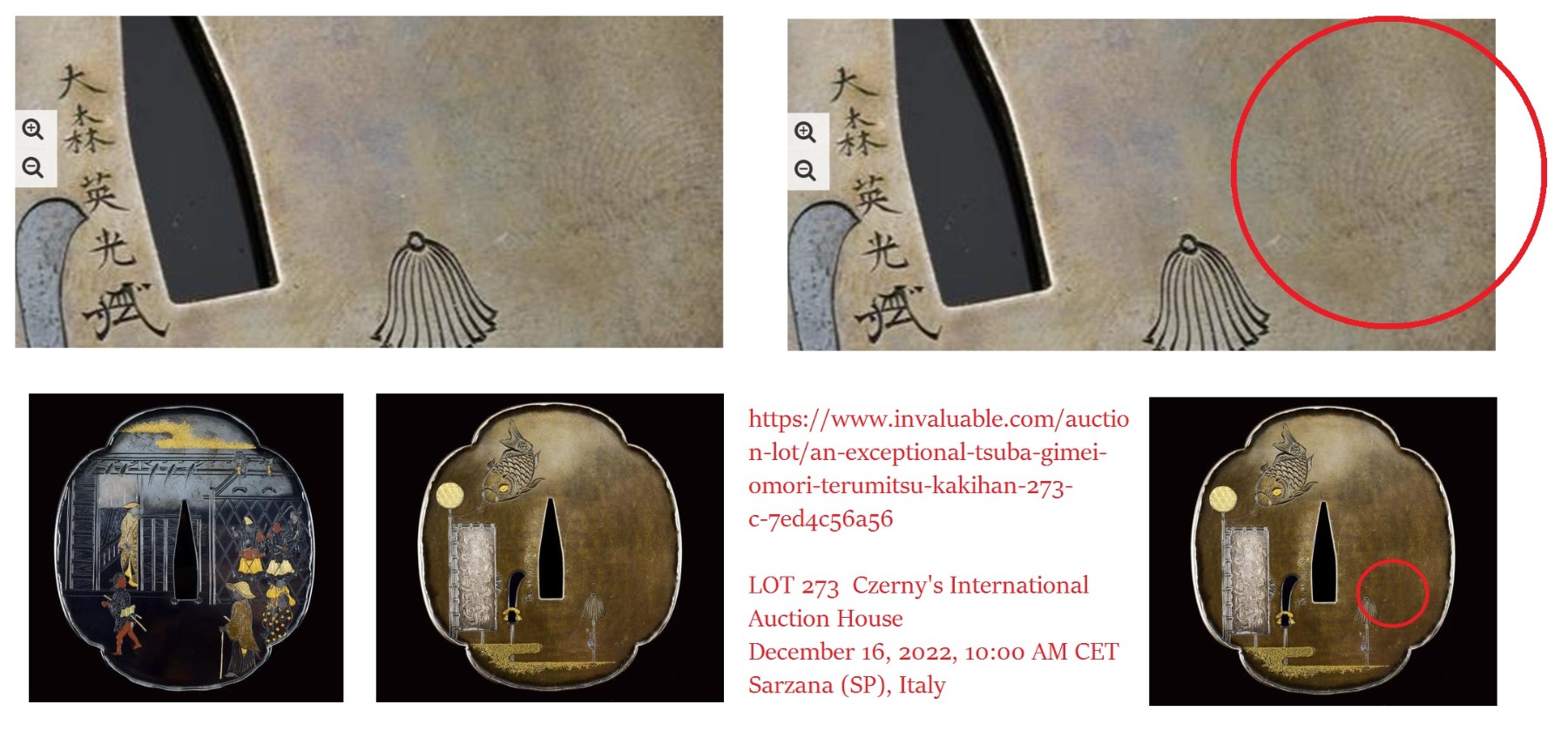
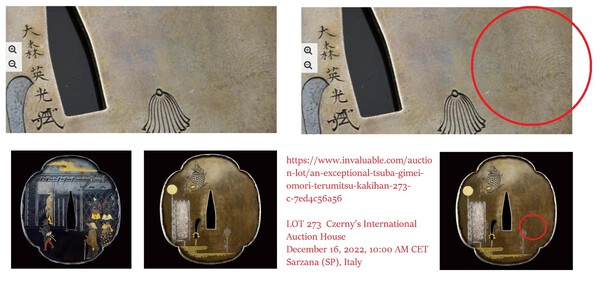
Xander, I see you wear plastic gloves when handling your tsuba. While most people don't bother very much as the tsuba was often meant to be handled and even gets a lot of its patina in this way - some can be damaged by handling Steves87 and I have been doing some research on just that subject and he is forwarding that information to a professor who is doing a paper. I found one example yesterday which shows fingerprint damage in an upcoming auction. So good for going the extra effort in care of your collection.
-
A series of fittings ( or how not to build a collection )
Spartancrest replied to Bob M.'s topic in Tosogu
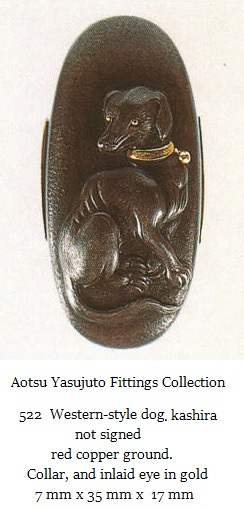
Colin I have seen the same sort of thing - some references call the figure a Tatar "Dattan" or even a "Corean" - I think most are a guess. Pity they don't have something written on the guards This image from my collection of utsushi book. The common feature in this case is the dog. That darn dog is still getting around - this time on a kashira!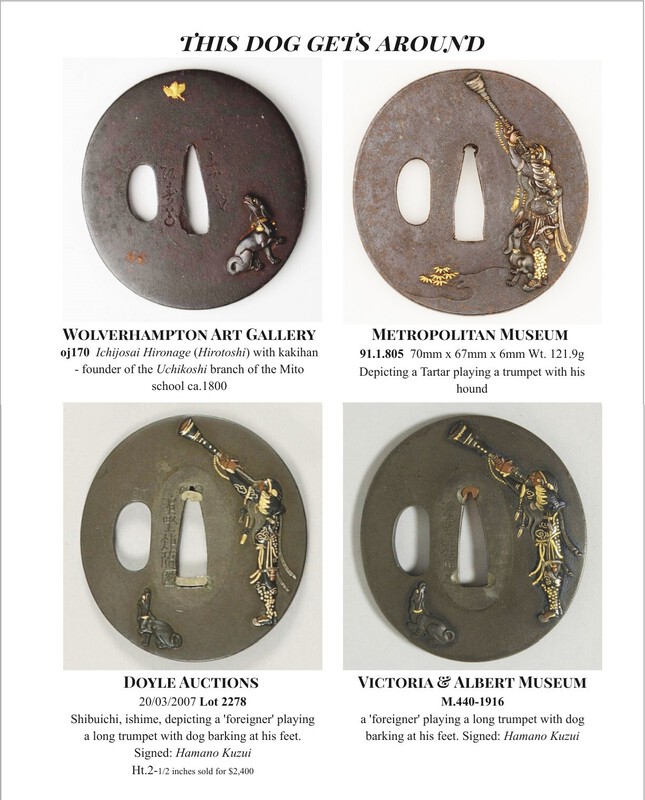
-
References for (ko)tosho or (ko)kachushi or akasaka tsuba
Spartancrest replied to OceanoNox's topic in Tosogu
Arnaud, you may run into a lot of trouble narrowing in on Pre-Edo guards, as such patterns and styles persisted and were made right up to the end of the Edo [and indeed forgeries are still being made today!] Separating very early guards from more modern pieces can be extremely difficult - On the other part of your questions - No museums can not be trusted with their attributions, some are very lazy and ascribe what they were told by their donator who were either guessing or may have passed on the 'sales pitch' from where they in turn procured them. Like Grev. I have done a few museum books and there are plenty of mistakes with descriptions. On a side note you will find some museums that don't even give dimensions, so you are left to your own devices even to work out how large and how thick each piece is. Welcome to the board. -
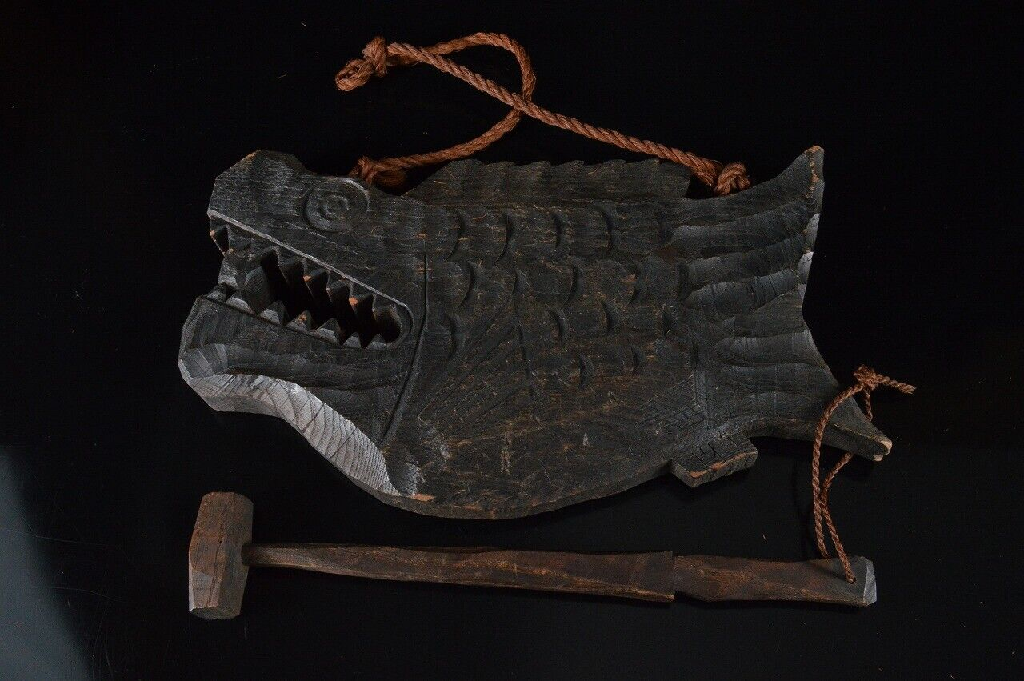
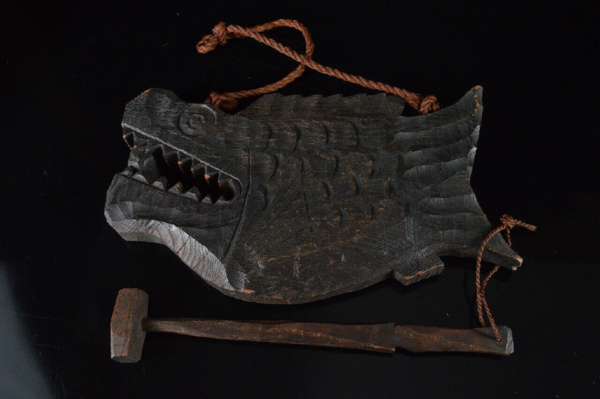
Something out of the ordinary - https://www.ebay.com.au/itm/134330481486 Not a tsuba, but a wooden 'bell' or gong.
-
Another possibility for you - https://www.metmuseum.org/art/collection/search/45222 Monk Renshō Riding His Horse Backwards. A hero of the Genpei War (1180–1185), real name Kumagai Naozane

-
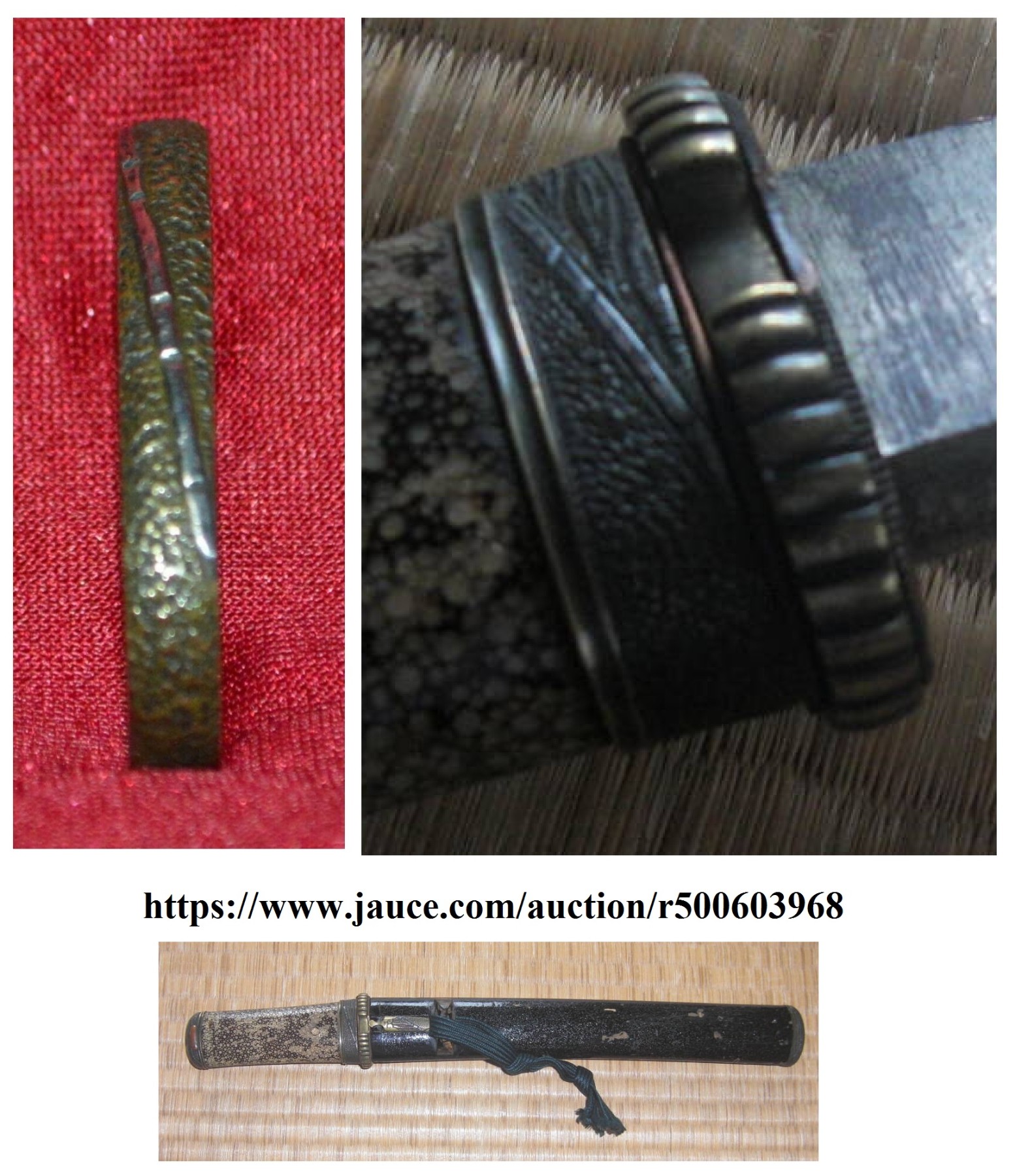
Hi Grev. I have been having the same trouble. I bought a Hamidashi tsuba two years back with the same design and since then have found a few more pieces but no real clues. The image on the left is my hamidashi, edge on - the flat surfaces are plain. The other shows a fuchi with the design as mounted on a tanto. Sorry not much help - but you are not alone.

-
https://www.invaluable.com/auction-lot/sieben-tsuba-schwertwaechter-205-c-6af47fdbb1 This one caught my eye what do you think - Shachi or dragon? Hizen?

-
A cast tsuba [90% sure] with a spurious signature.
Spartancrest replied to Spartancrest's topic in Tosogu
Found yet another but the image quality is so poor there is a possibility it has already been recorded. From a Christie's auction back in 1998.
-
I can't help with number 1 Number 2 ? Like this one - is a Jakushi style. Signed JAKUSHI - this name was used by a famous line of artists (8 generations) working in Nagasaki between 1690 and 1878. Number 3? - Myoga - gingerplant, probably as a Mon or family crest, Heianjo see this link to a similar example. https://www.samuraimuseum.jp/shop/product/antique-tsuba-for-samurai-sword-t-388/ The Kinai were made by a school of people so it is not uncommon to see the signatures vary a little. All look good to me. The plain one may simply have been removed recently from a blade and I am sure it looks correct to me. Pretty good pieces all round.

-
The good old days are always behind us - of course there is the mule, oblivious, moving like time - further away from them. Looking back gives you a horses arse perspective!
-
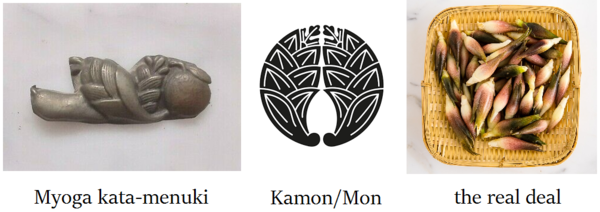
Leonard, well the Menuki are easy [I think?] Myoga - gingerplant, used for food and incorporated as a family/clan Mon. The other leaves are hard to make out, this is the first time that magnifying the image makes it smaller on NMB. Likewise with the tsuba it is difficult [for old eyes] to see the details but it could represent birds in the sky [those two little cross links top right and bottom left]. Also Sun and Moon? The Moon being the small circle and the Sun tucked in under the hitsu? The wavy line spokes either clouds in the sky or sun rays [though most sun rays are represented as straight lines] JMO
- 1 reply
-
- 1
-

-
You are quite correct Jean, this is another of those long held 'myths' - I hope my addendum made that clear in my last post. I was just searching for the sources for Chris, where the idea came from may well have been dreamt up by a meiji era Japanese marketer who 'sold' the story to his gaijin customers.
-
This guard has a nobleman who looks either to be riding backward or looking back over his shoulder?

-
Henri Joly's "Legends in Japanese Art" has - SANKAN. Chinese philosopher, who is represented riding on a horse backwards so as to admire the scenery away from which he is travelling. CHOKWARO: is sometimes also shown riding backwards. This one rides a Bull not a horse, SHOHAKU: was a priest of noble lineage who assumed the name Botankwa (peony flower) for some unknown reason. He is usually depicted sitting on a bull with gilt horns, or decorated with peonies, reading a book, or admiring the scenery. Often enough he does so riding with his face towards the tail of his mount, like the Chinese poet Sankan.
-
A cast tsuba [90% sure] with a spurious signature.
Spartancrest replied to Spartancrest's topic in Tosogu
Well how is this for synchronicity? Another guard of the same design - tucked away in a group of six rather ordinary pieces. https://www.jauce.com/auction/l1072822959 - unfortunately the images are too small to get very much detail. It still amazes me how a single pattern can seem to appear in numbers all at once [or at least over a pretty short time span] Another pattern to add to "Watch out it is likely cast!"
-
One more thing- the use of saws in tsuba making?
Spartancrest replied to roger dundas's topic in Tosogu
Sorry I found the reference from 1915 METALS AND METAL- WORKING IN OLD Japan. by W. GOWLAND. REPRINTED FROM -THE TRANSACTIONS OF THE Japan SOCIETY OF LONDON, Vol. XIII Tuesday, March 2, 1915, "From the twelfth to the fourteenth century the iron guard is still without ornament, except simple geometric perforations. From the sixteenth century onwards, this simple ornament gave place to intricate pierced patterns and richly engraved and inlaid designs. Many of these iron guards, especially of the seventeenth and eighteenth centuries, are marvels of skill and patient work. Forms of the greatest delicacy, often almost microscopic in their details, others with bold contours and sweeping curves worthy of the artist's brush, are alike carved with as much accuracy and freedom as if the material was plastic clay rather than solid iron. In some, the pierced cuts are so fine that they do not exceed 1/250 of an inch in width, and their sides are perfectly parallel. These were produced by a very laborious method of procedure. A minute hole was first drilled in the iron with a fine steel wire moistened with oil and powdered garnets or siliceous rock; the hole was then elongated into a slit by means of another fine steel wire used as a saw, also moistened with oil and the above powder. These cuts were further continued with flat wires, and were then reduced to the extreme degree of fineness required by hammering both sides of the metal until they were sufficiently closed. The sides of the cuts were kept parallel by rubbing them from time to time with flat wires of steel and grinding-powder. Iron guards by the best craftsmen were never cast; they were always of wrought iron." [There is still some dispute over the last line of this extract - see "Tsuba casting molds thread!"] -
If I might add this quote from Louis Gonse 1891 "When one strikes one of Umetada's sword guards, holding it at the end of the finger, it sounds like a crystal bell. I will here remark that fine iron sword guards are distinguished by the purity of their sound. The more ancient a guard is, the more clear and high is its sound. This quality of sound results from the perfect state of homogeneity and density of the metal, resulting from continued hammering before the work of chasing began." I would hasten to say all the other restrictions will still apply regardless of how ancient the tsuba - many will not ring due to thickness, shape or piercings.
-
Just getting back to the 'singing' of good iron. This quote from Marcus B. Huish 1889. "The decoration of the sword furniture showed symptoms of decline early in the present century. Working in hard wrought iron was first of all shirked, and similar effects were endeavoured to be produced by castings; then the decoration ran riot and transgressed all limits, so that many of the pieces made between 1840-1870 could never have been used for the purposes for which they were professedly intended; such products are remarkable in a way, as showing the lengths to which elaboration may be carried, but they can never stand for a day beside the dignified workmanship of an earlier date. Imitations of sword guards are now being imported into the market. These are cast from old specimens, and can usually be detected by holding them at the point of one's finger and hitting them sharply with another piece of metal, when they will emit a dull sound only, whereas a fine old guard will ring like the best bell-metal. It is well to test all guards in this way, but it must be recollected that guards with much piercing will not ring, and that many of those made since the beginning of this century [19th] are of such malleable iron as not to stand the test. It is a question which has not yet been solved whether some of the old guards may not be castings, even some of those which are chased. The difference between wrought and cast iron is that the latter contains from 11/2 to 4 percent, of carbon, the former hardly any; but it is possible to anneal or toughen cast iron by a process known as 'Cementation' [Ed. In metallurgy: a process of altering a metal by heating it in contact with a powdered solid], that is, by a surface removal of carbon. Many of the guards are covered with oxide of iron, to which they owe much of their beauty." This quote was added way back near the beginning of this thread and you might have missed it.
-
One more thing- the use of saws in tsuba making?
Spartancrest replied to roger dundas's topic in Tosogu
There is some historical references to first drilling a very fine hole in the tsuba to be decorated then a very fine wire is threaded through with some form of oil [I am pretty sure it is not stated] the oiled wire thread is then coated in crushed up garnet or other abrasives and used as a fine saw. Mainly used with ito - thread cutting designs. -
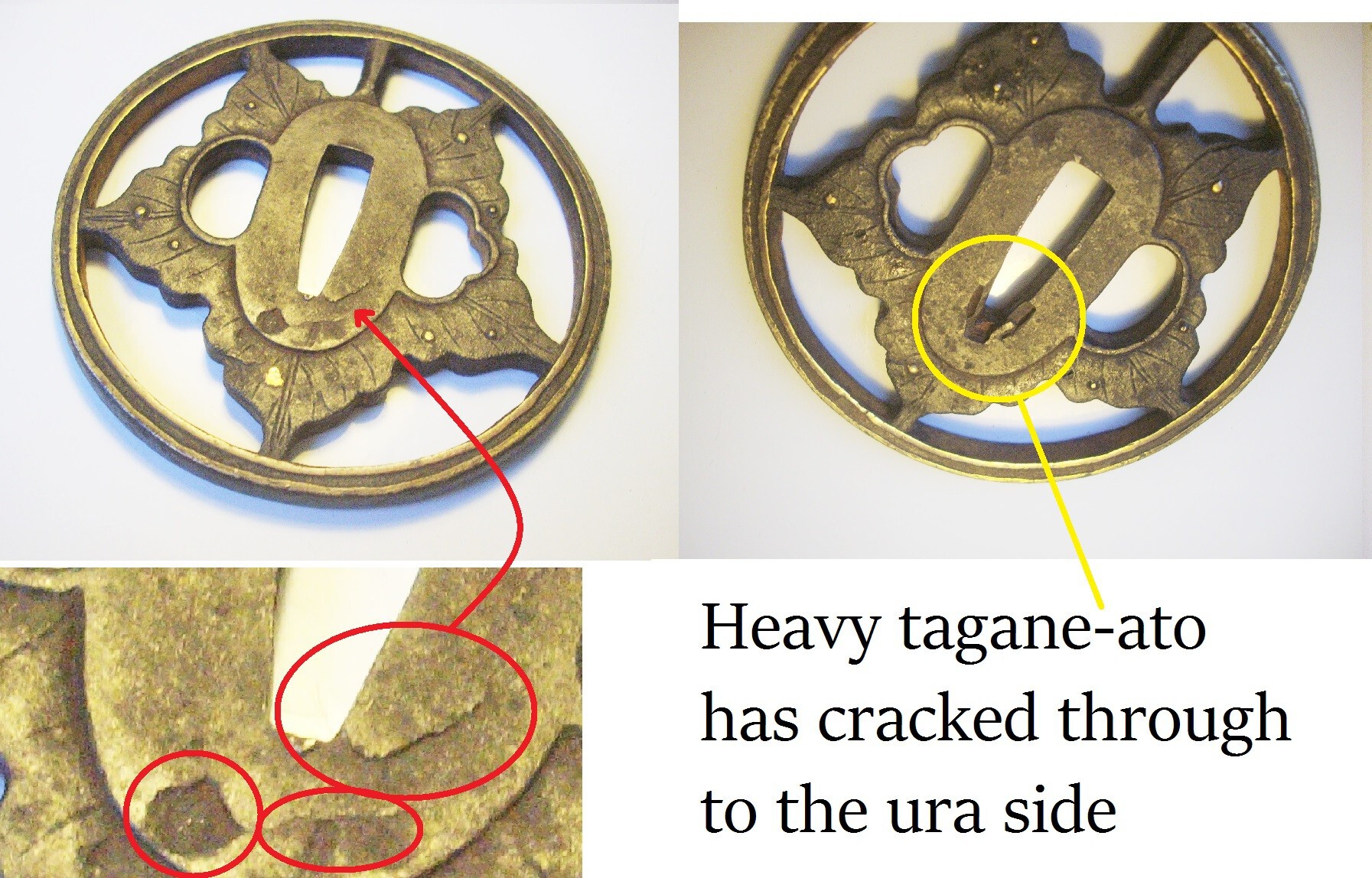
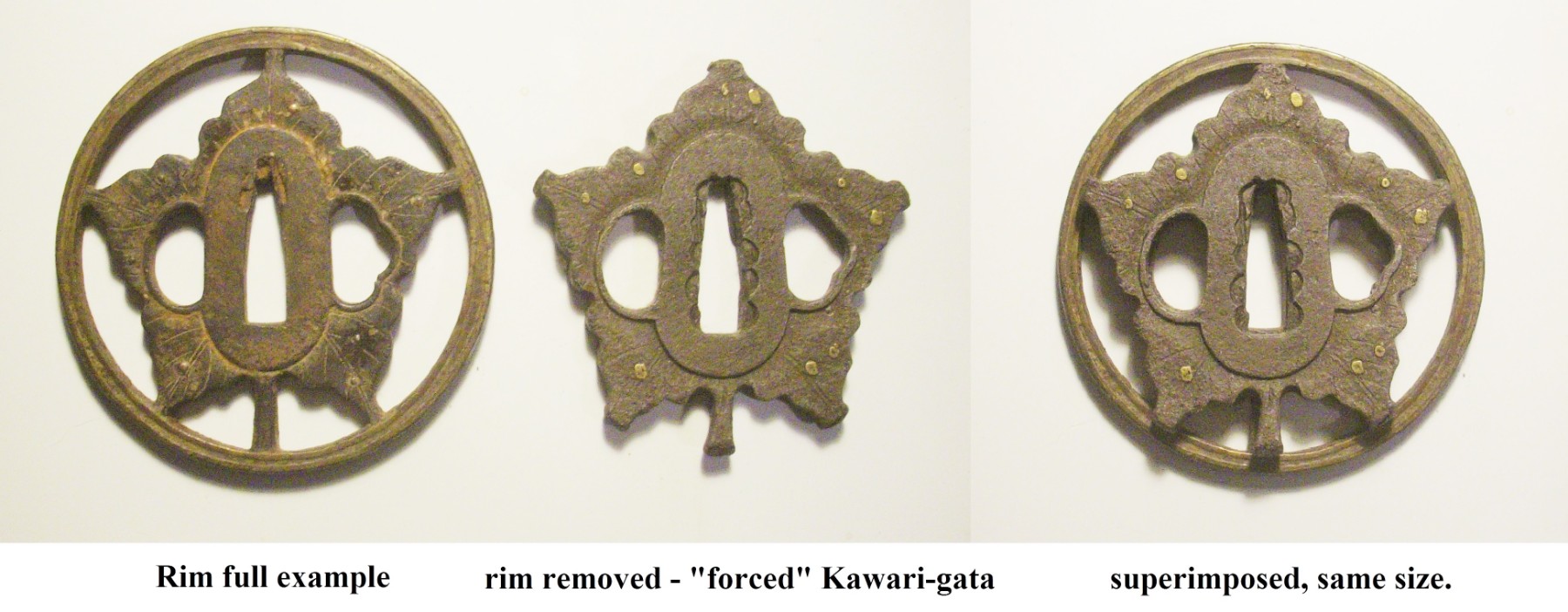
I recently got this 'maple leaf' tsuba and have discovered [under the usual grime that hides these things] that there is a crack on the ura coresponding to the punch marks made on the omote side. I am aware that a 'blister' on a tsuba formed by incomplete welding is called a "fukure" and have seen some on tsuba that have 'lifted' but was wondering if there was a term for damage done after forging? Luckily the damage is restricted to the seppa-dai and the guard was not very expensive.

-
A cast tsuba [90% sure] with a spurious signature.
Spartancrest replied to Spartancrest's topic in Tosogu
You might be right Chris! Could you let the Cleveland Museum know they have another 'dud' in their collection - they have a few and it would be better if it wasn't me telling them again. -
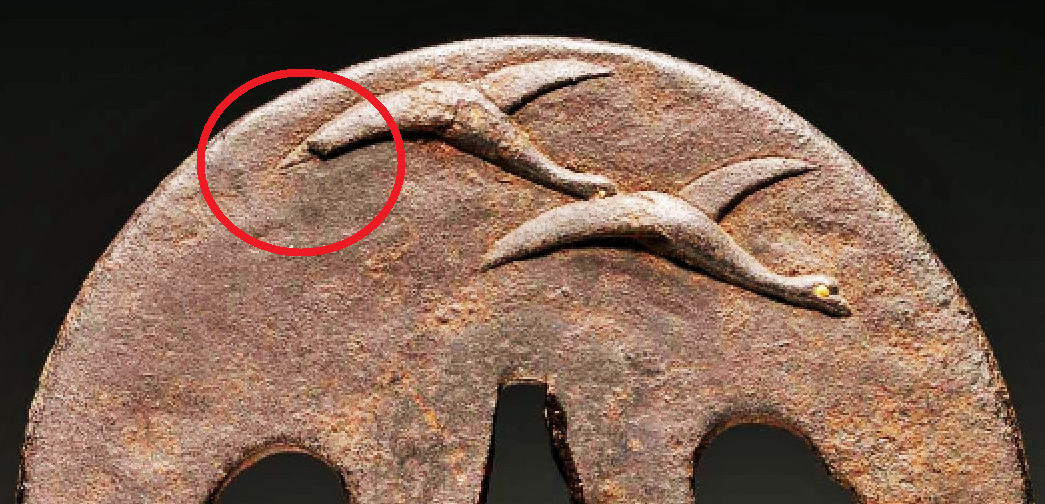
Hi Roger I believe this image taken from a guard in the Cleveland Museum of Art shows an iron on iron inlay. The wing tip on the left appears broken off - not sure how that would happen if it was carved from the original plate - Just my opinion.

-
Chris that was indeed an early "test" and it was reported in a few old English articles - but it does not work on sukashi pieces and from my experience it is far too subjective and you would need to compare a known tsuba of similar dimensions - you might be comparing apples with apples or tomato and capsicum! I tried the sound test on these two - The one with a rim was dull, the cut down was high pitch. [Apples with Nashi?] Dan how many bottles of beer have you got? And what happened to your last bottle opener - worn out?