Bruce Pennington
-
Posts
13,963 -
Joined
-
Last visited
-
Days Won
169
Content Type
Profiles
Forums
Events
Store
Downloads
Gallery
Everything posted by Bruce Pennington
-
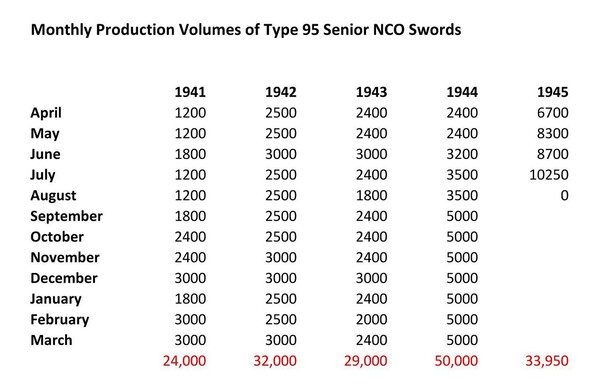
I was going to speculate that the un-fullered blades came toward the end of the war. I read somewhere that since they were under pressure to crank out more blades (they went from an average of 2,400 blades per month to 5,000 in '44, to 6,000, then 8,000, to 10,000 in August of '45), the fuller was dropped to save time. BUT, seeing the fullered "late-war" wooden handled blades makes me wonder about that theory.
-

Attention Mantetsu Owners: A Survey
Bruce Pennington replied to Bruce Pennington's topic in Military Swords of Japan
That’s great news, thank you! I’m anxious to hear what it says. It’s very good to just know that it’s mentioned in a book. It’s the first not 1945 Mantetsu blade I’ve seen. -
Sho stamped blade (Dec. 1939)
Bruce Pennington replied to cisco-san's topic in Military Swords of Japan
Like David said, the orders to begin stamping blades were published in 1938, but it wasn't widely practiced until '40. That doesn't mean that stamping wasn't done before that, though. As it has 2 mekugi ana, it must have been remounted at some point. Maybe the Sho stamp was added during the remount? Both options are possible. -
Attention Mantetsu Owners: A Survey
Bruce Pennington replied to Bruce Pennington's topic in Military Swords of Japan
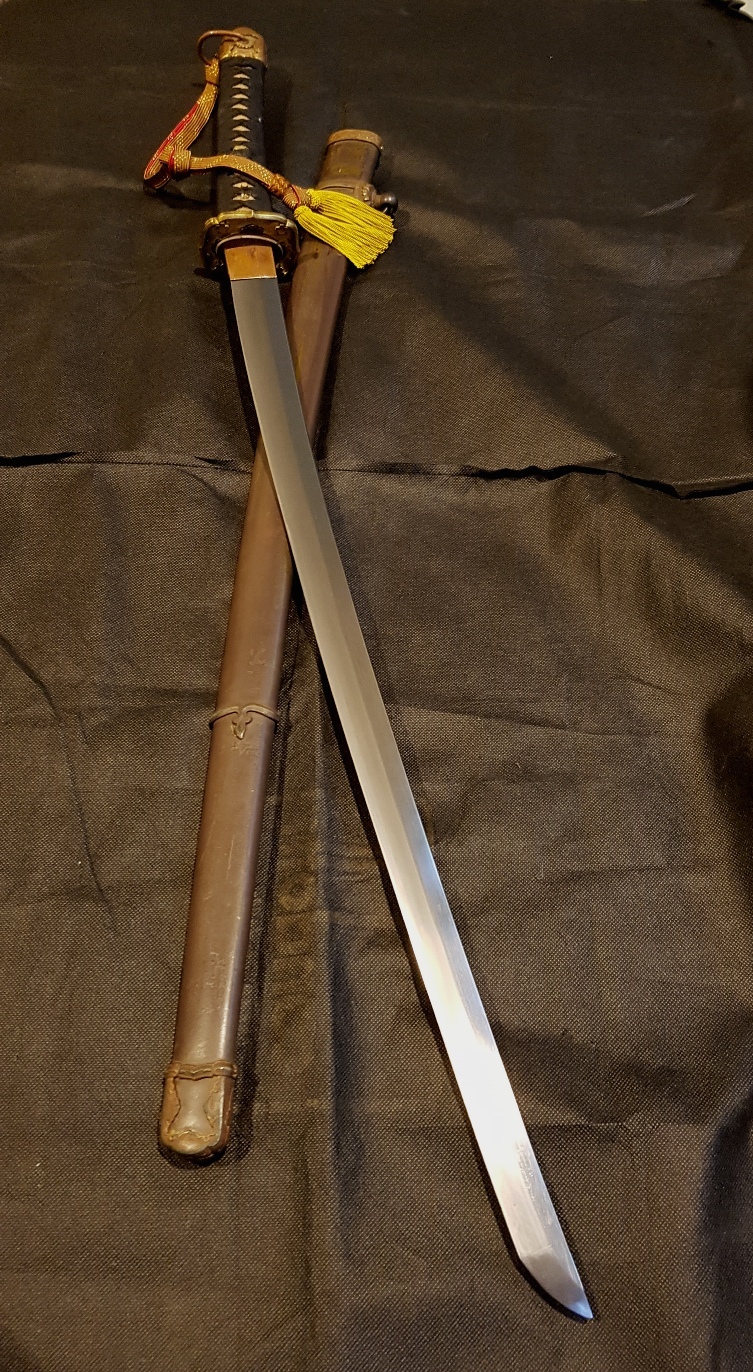
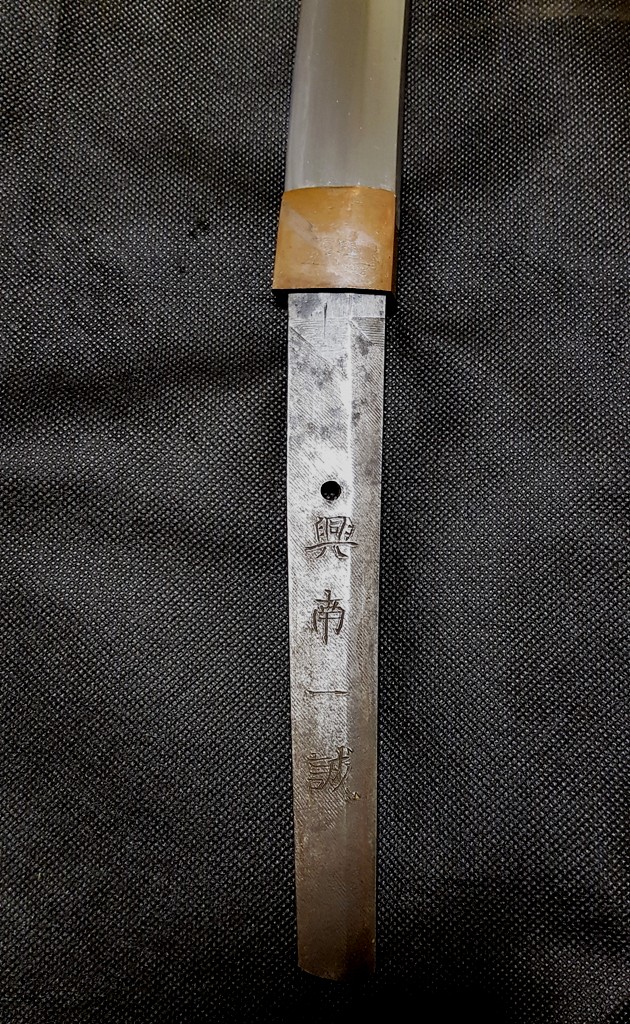
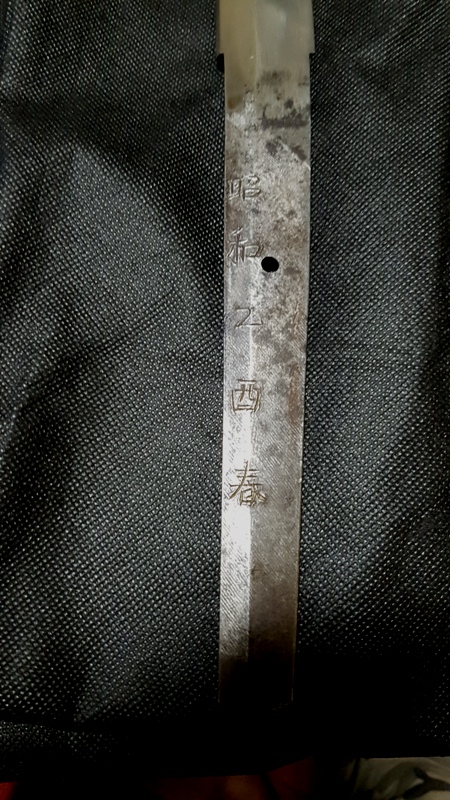
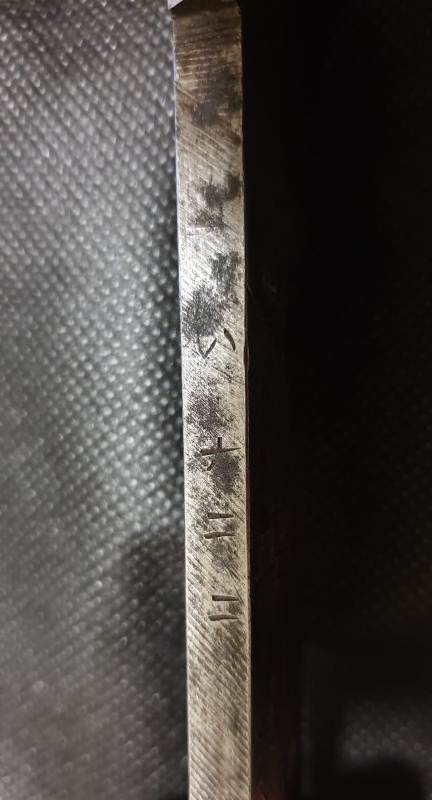
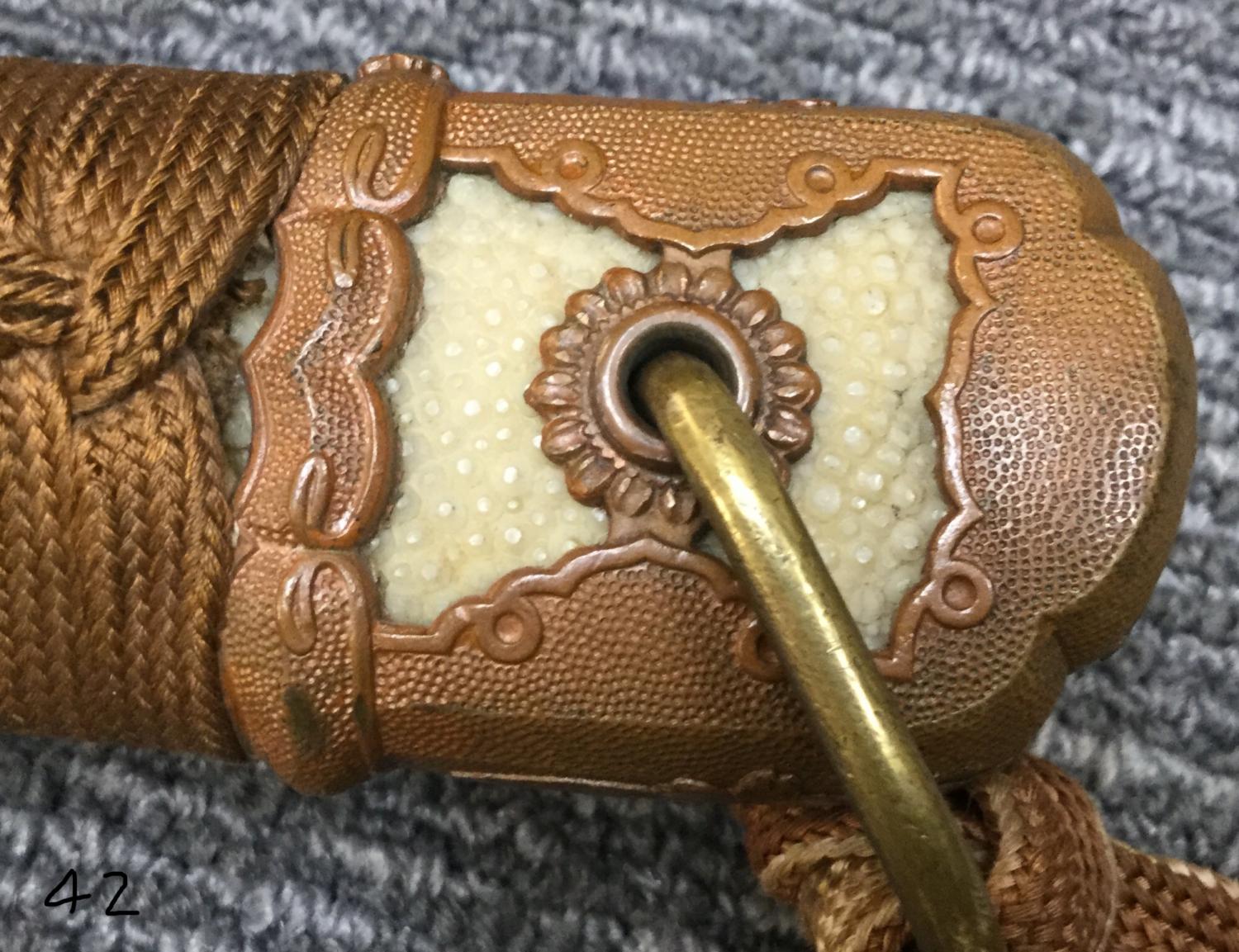
Moritasan! It is an honor. I enjoyed your chart Ohmurasan used on his site! I found this in a collection owned by Beng Chua of Singapore. Here is his page on this one: http://www.kinghouse.sg/collections_frame.asp?cat=8 It came with a general grade tassel (I know,this could have been added later). Here are the pics: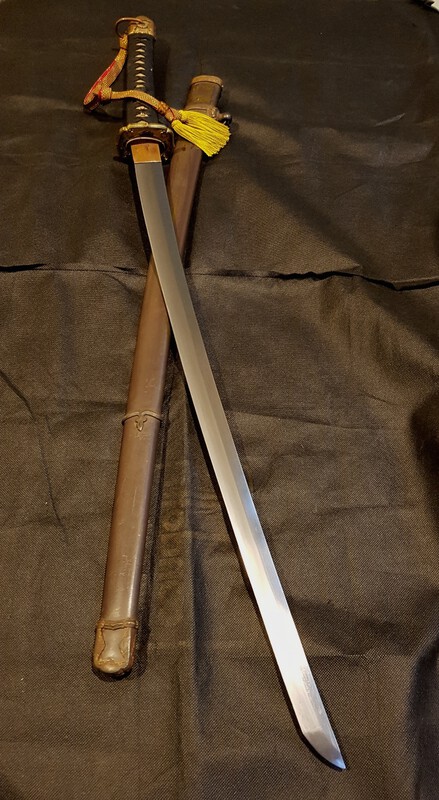
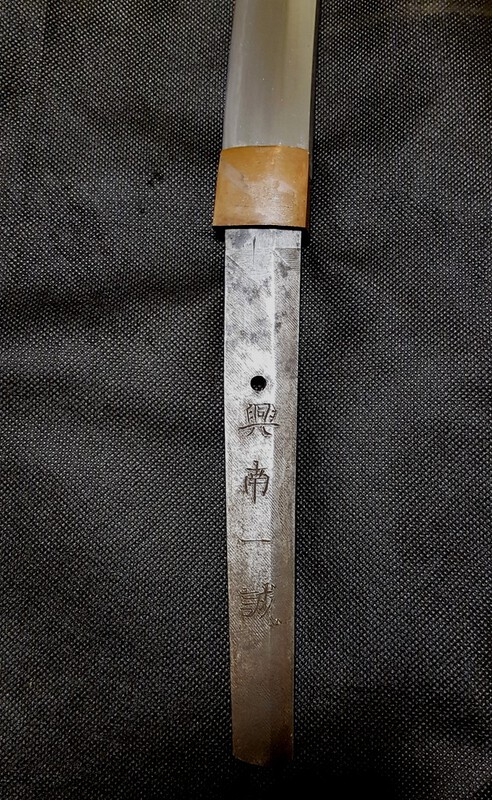
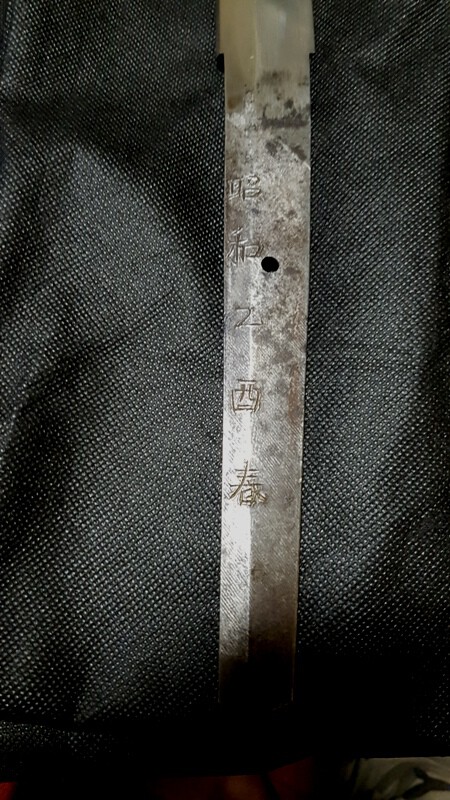
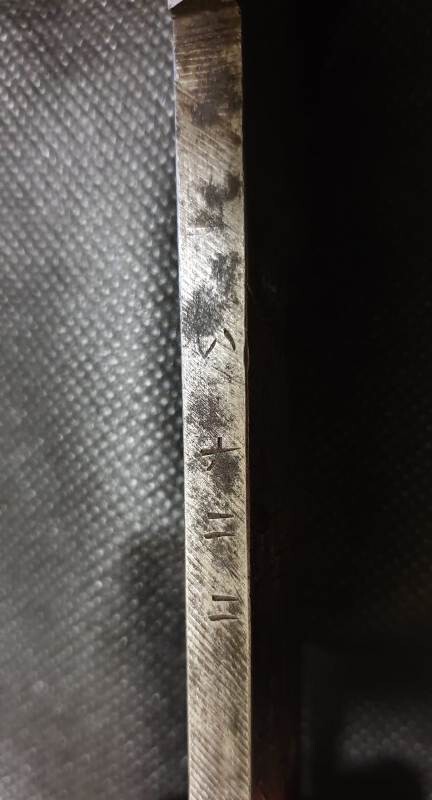
-
Neil, I, too, have seen their mark on numerous seppa and tsuba, but had never paid close attention to the blades they were on. Nick Komiya has a dedicated thread to them here: http://www.warrelics.eu/forum/Japanese-militaria/he-untold-story-suya-shoten-711132/ They were making blades, fittings, banners, uniform items and more. So it wouldn't surprise me to learn that people went to them for a quality custom order. "In this way, the era between the Sino-Japanese War and the Russo-Japanese War, was the heyday for Suya. They had two factories in Tokyo, one in Atago Shita Machi (芝区愛宕下町) and another in Shinsenza, both in Shiba Ward. They had a workforce of 38 floor supervisors and more than 200 artisans, including smiths, polishers, scabbard makers, metal casters, guilders, engravers, leather workers, lacquerers, saddlers, bullion embroiderers, weavers and other specialists. Saber production in Japan was being carried out almost exclusively by artisans in the employ of Suya or by its former employees."
-
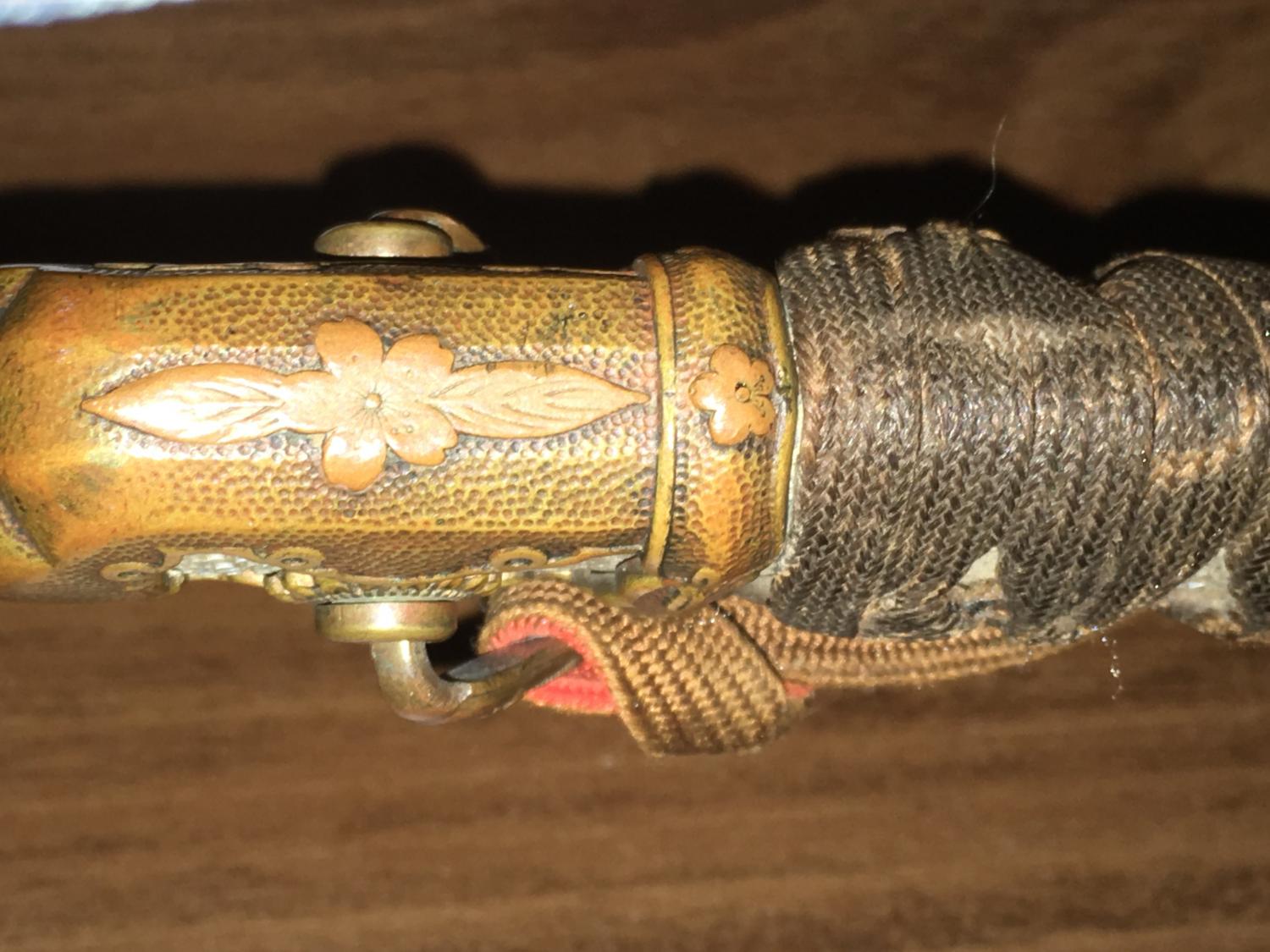
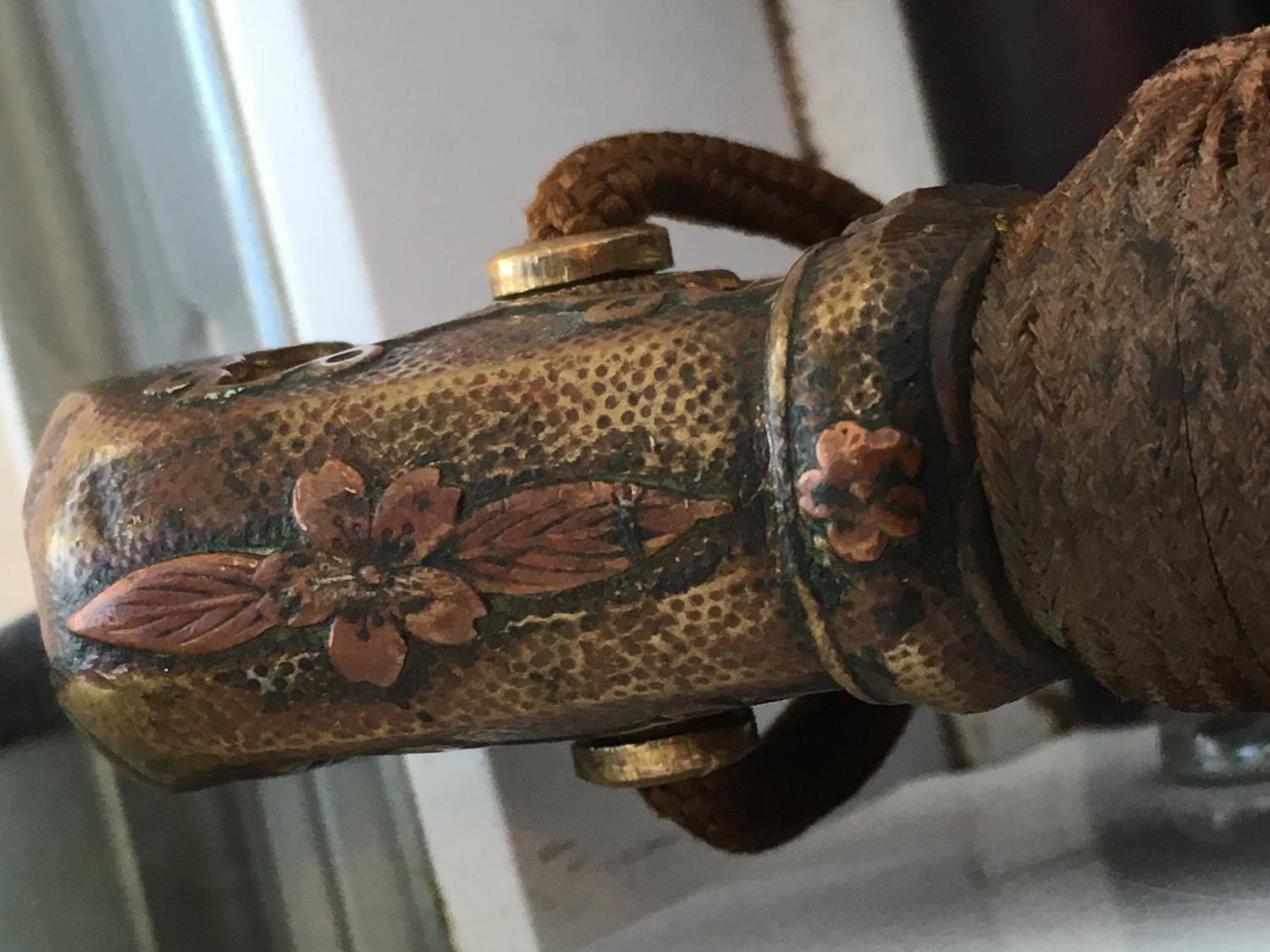
Alex, Yes, due to the ornamentation on the handguard, I'd say it's a 19, but it's an early 19 as it has the 2 belt hangers (one removable). You're lucky to still have the 2nd one as they were often removed and discarded, or simply lost post-war.
-
Attention Mantetsu Owners: A Survey
Bruce Pennington replied to Bruce Pennington's topic in Military Swords of Japan
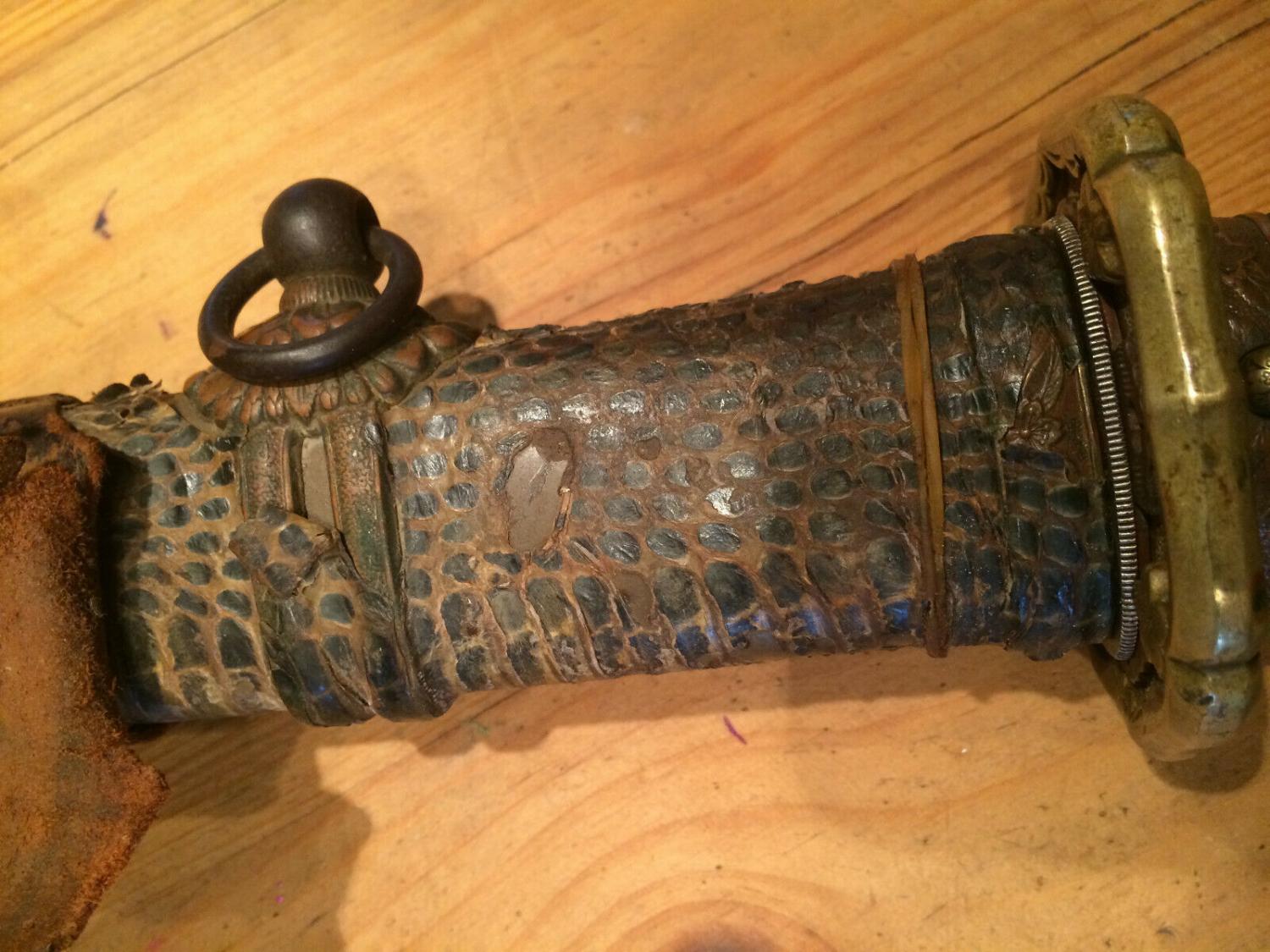
Here's an interesting one, not because it's a Mantetsu, but because of the "snakeskin" saya cover! Very unusual!!! It's for sale on fleabay now.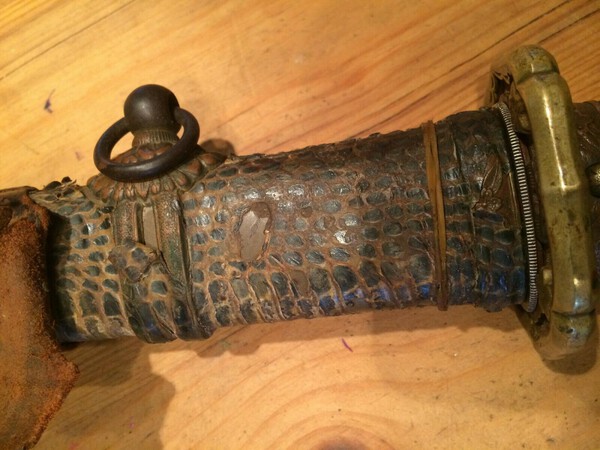
-
Matchlock Certificate Translation, Please
Bruce Pennington replied to Bruce Pennington's topic in Translation Assistance
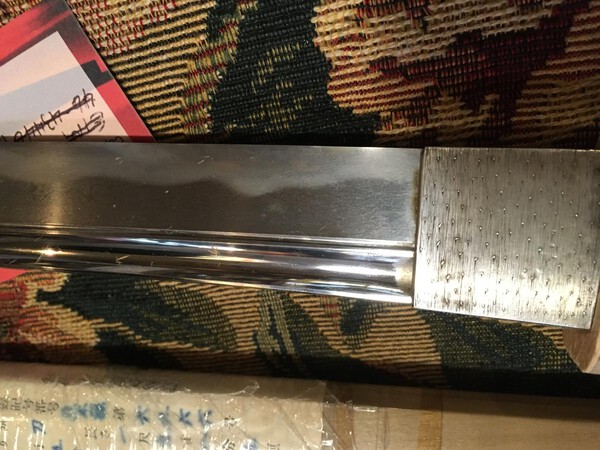
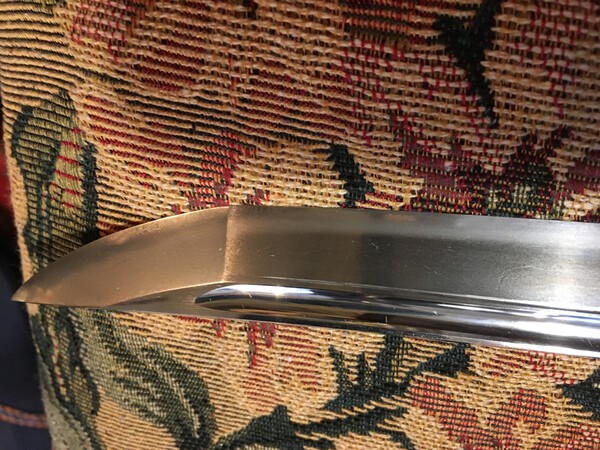
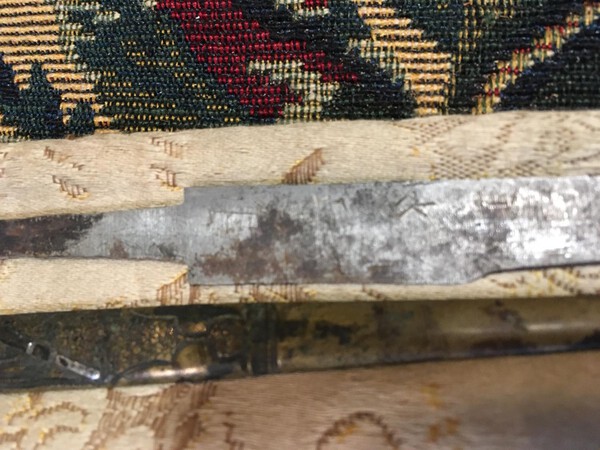
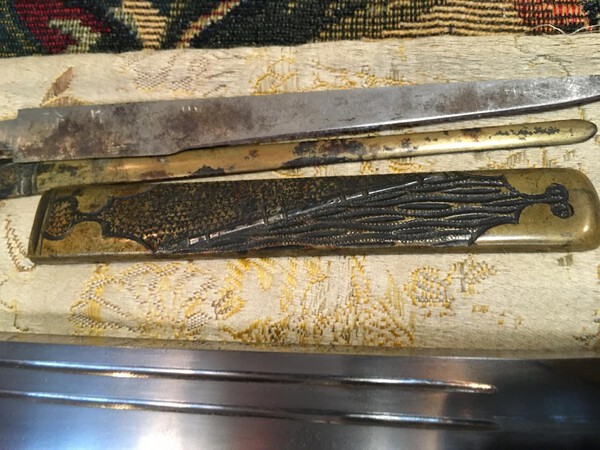
Sorry Chris, it of that one. I took some of a Murimachi (sp?) though that they wanted $20,000 for! Also a really nice tanto.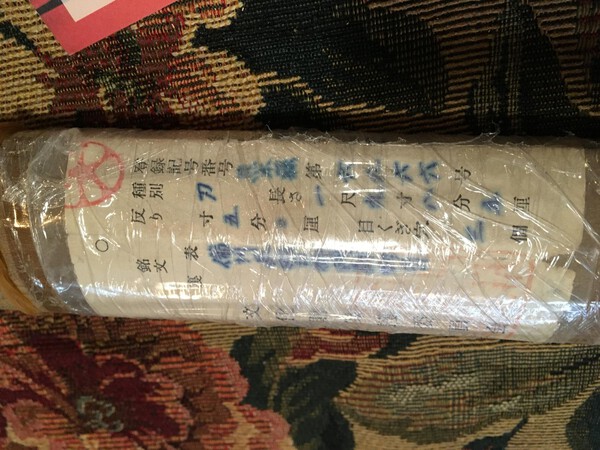
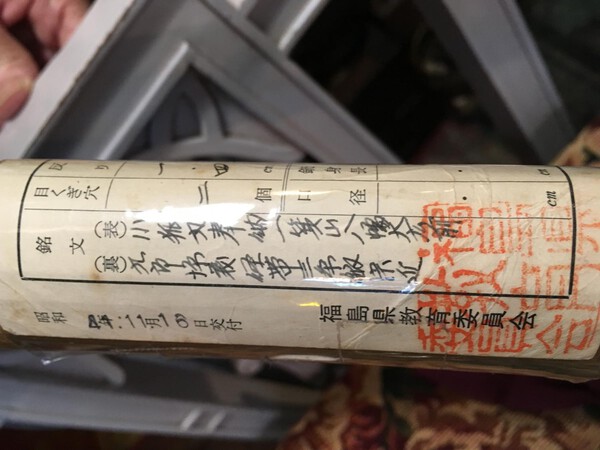
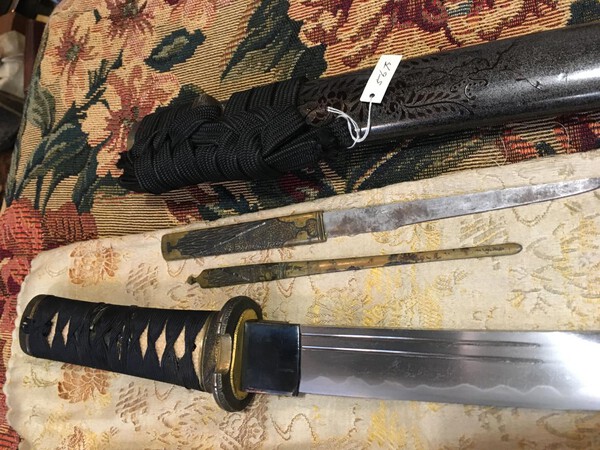
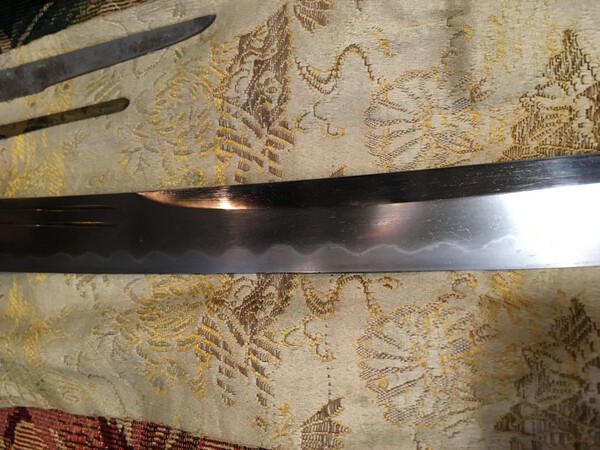
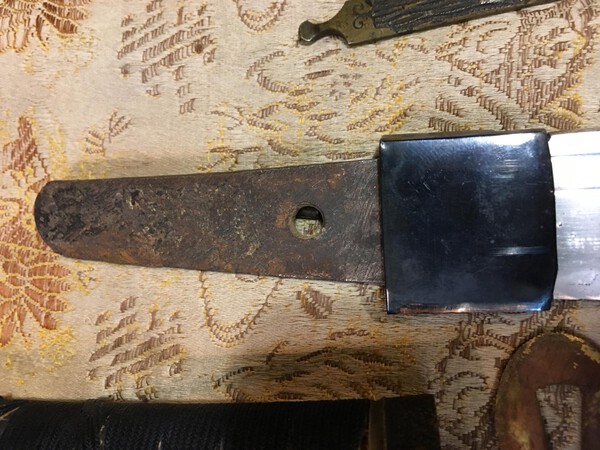
-
Matchlock Certificate Translation, Please
Bruce Pennington replied to Bruce Pennington's topic in Translation Assistance
Ok, thanks! -
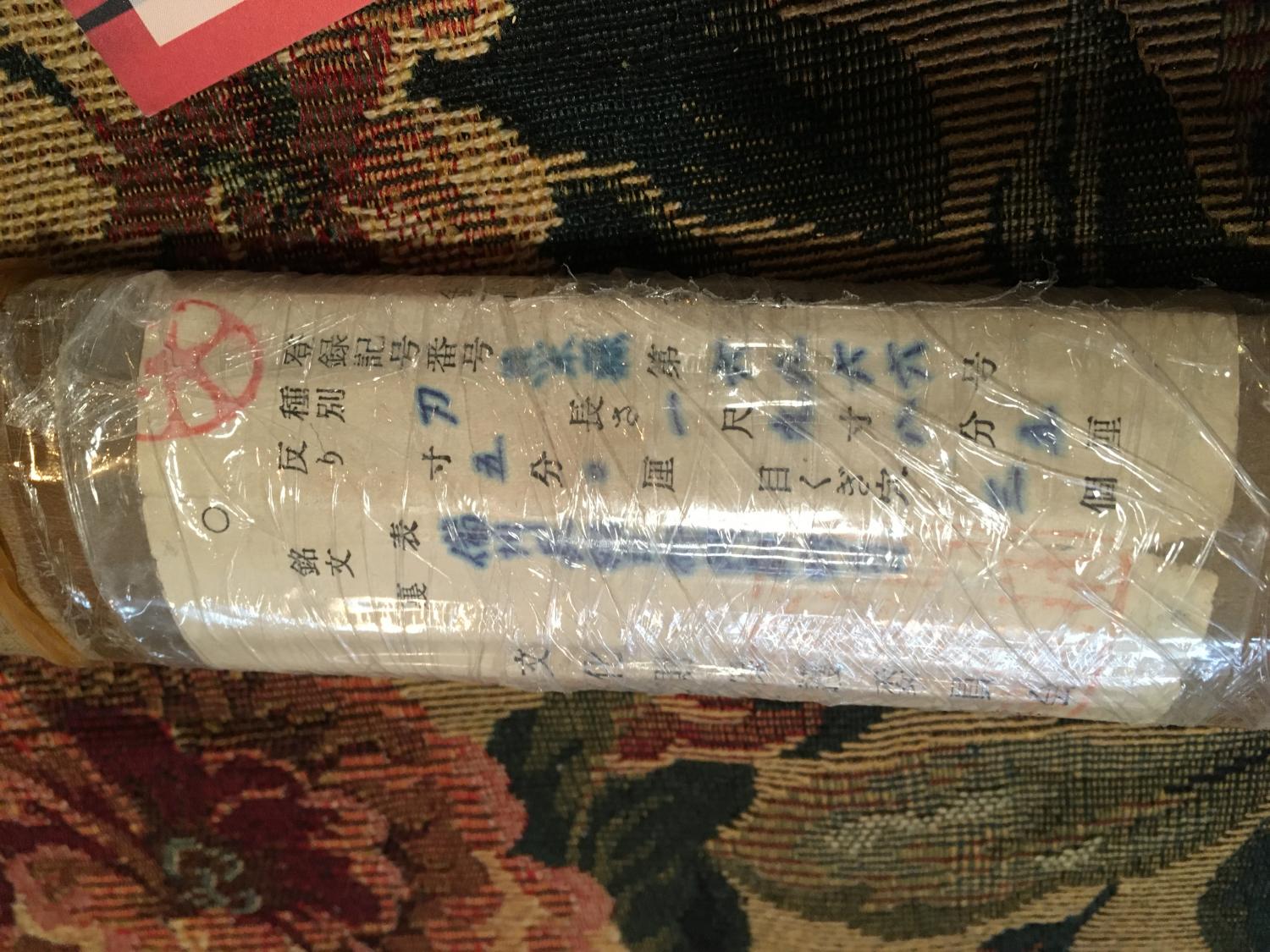
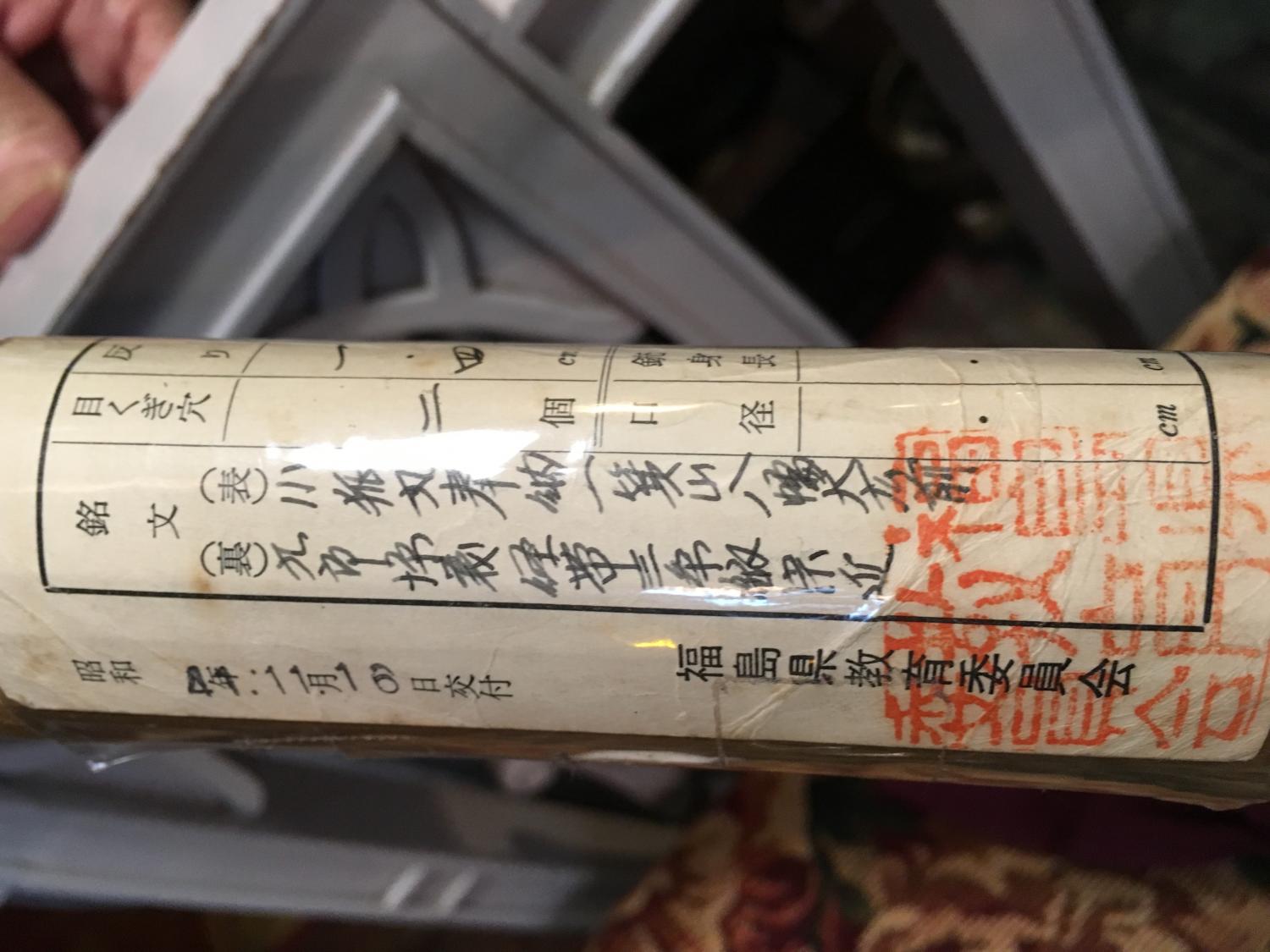
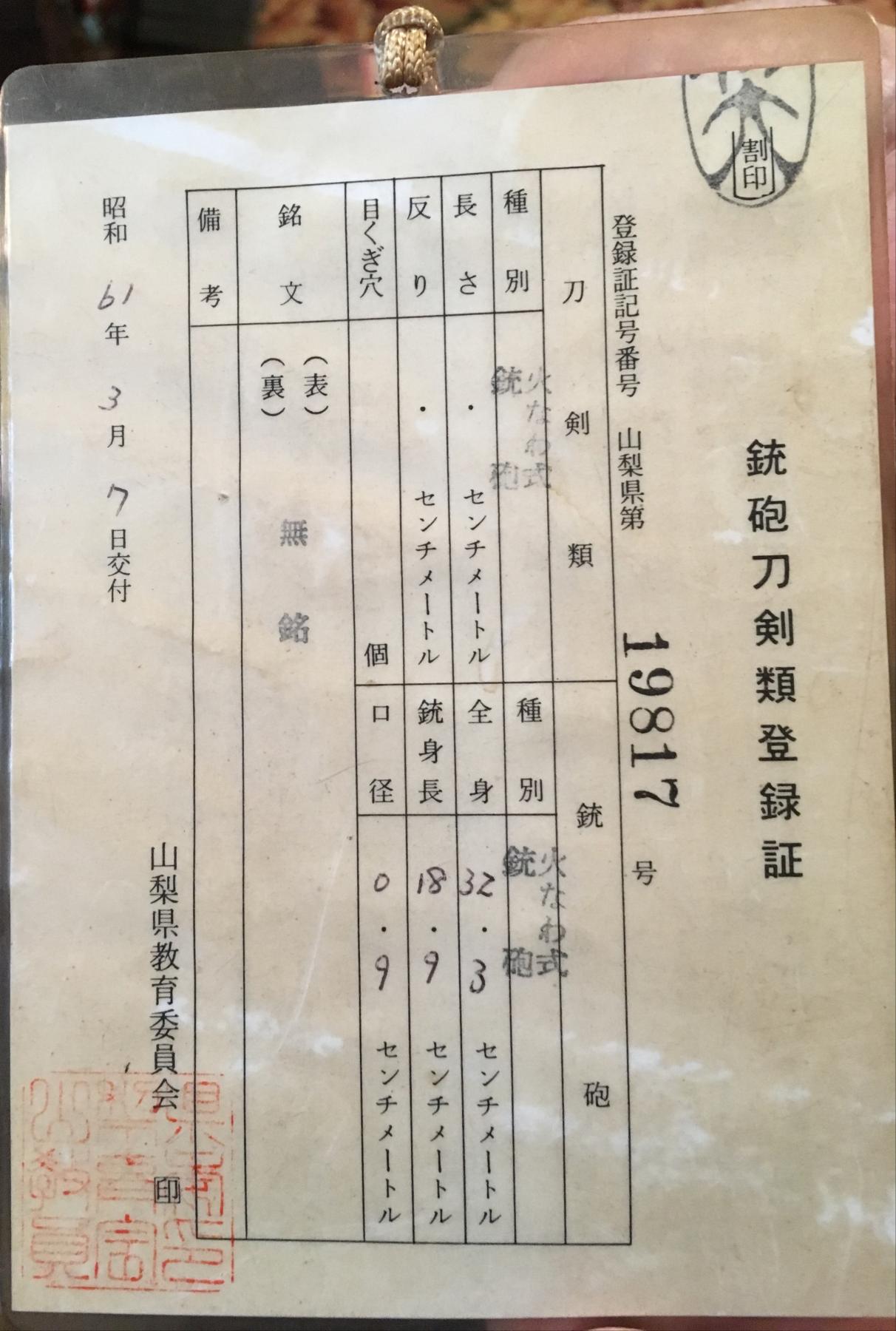
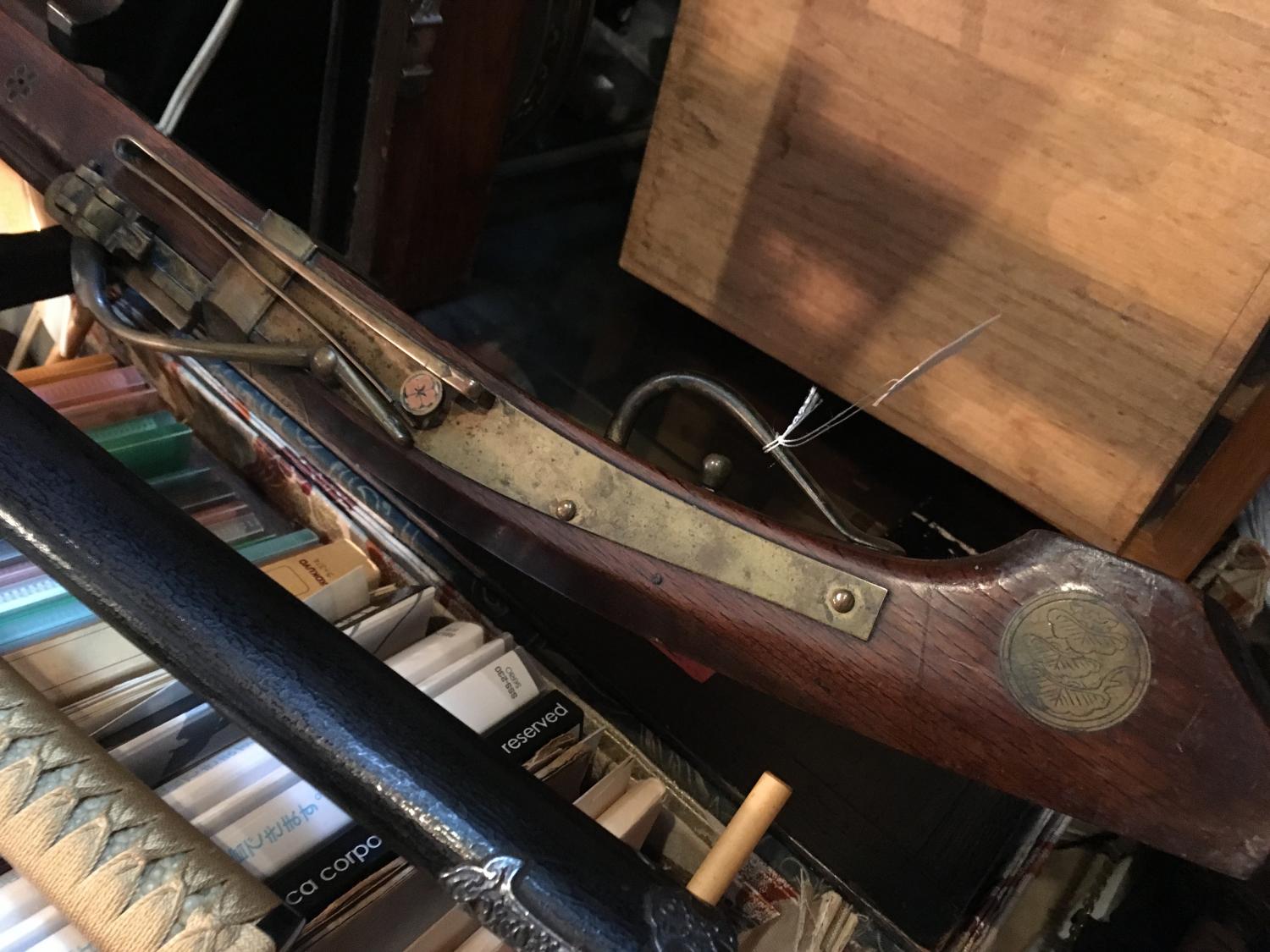
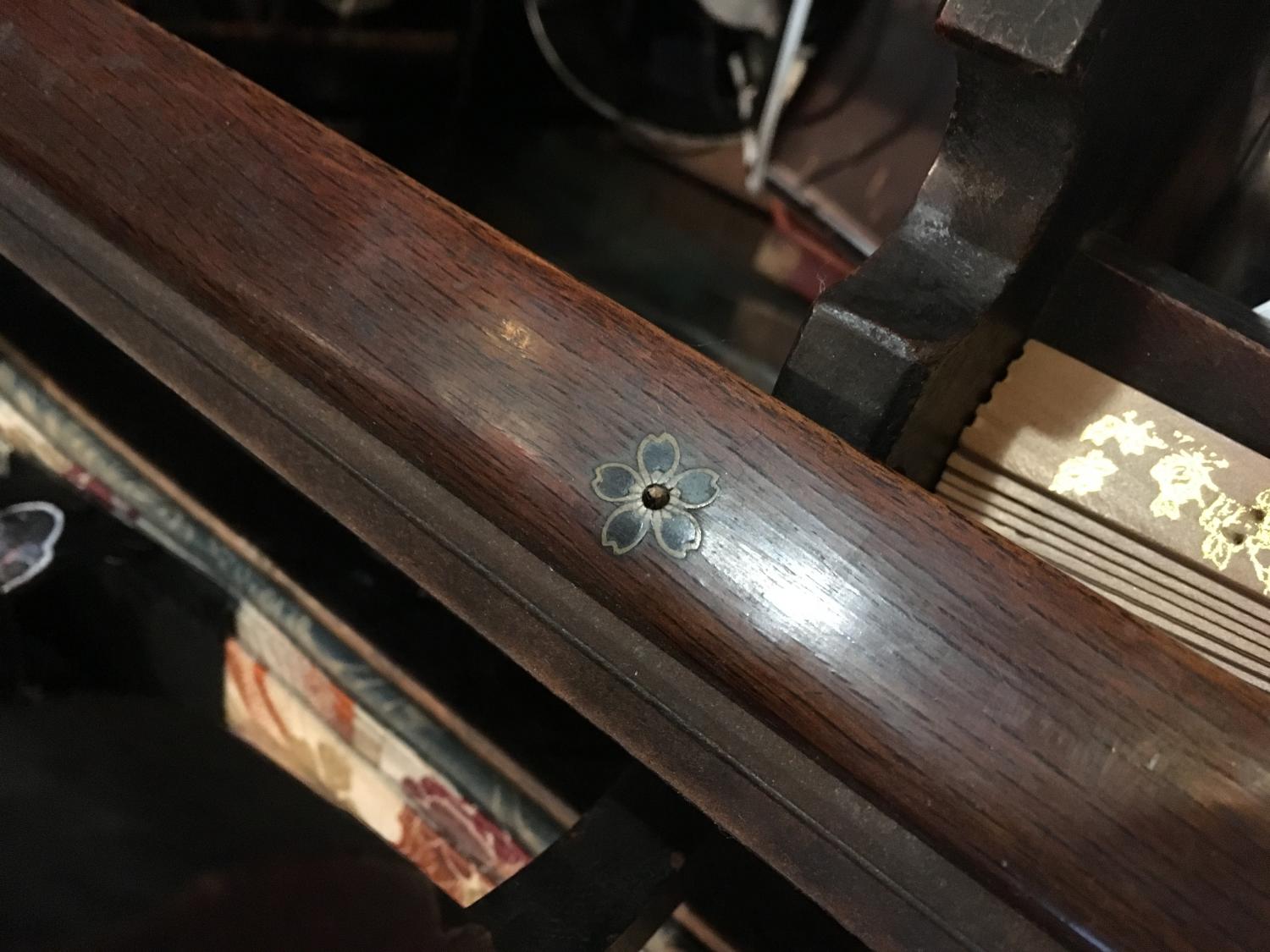
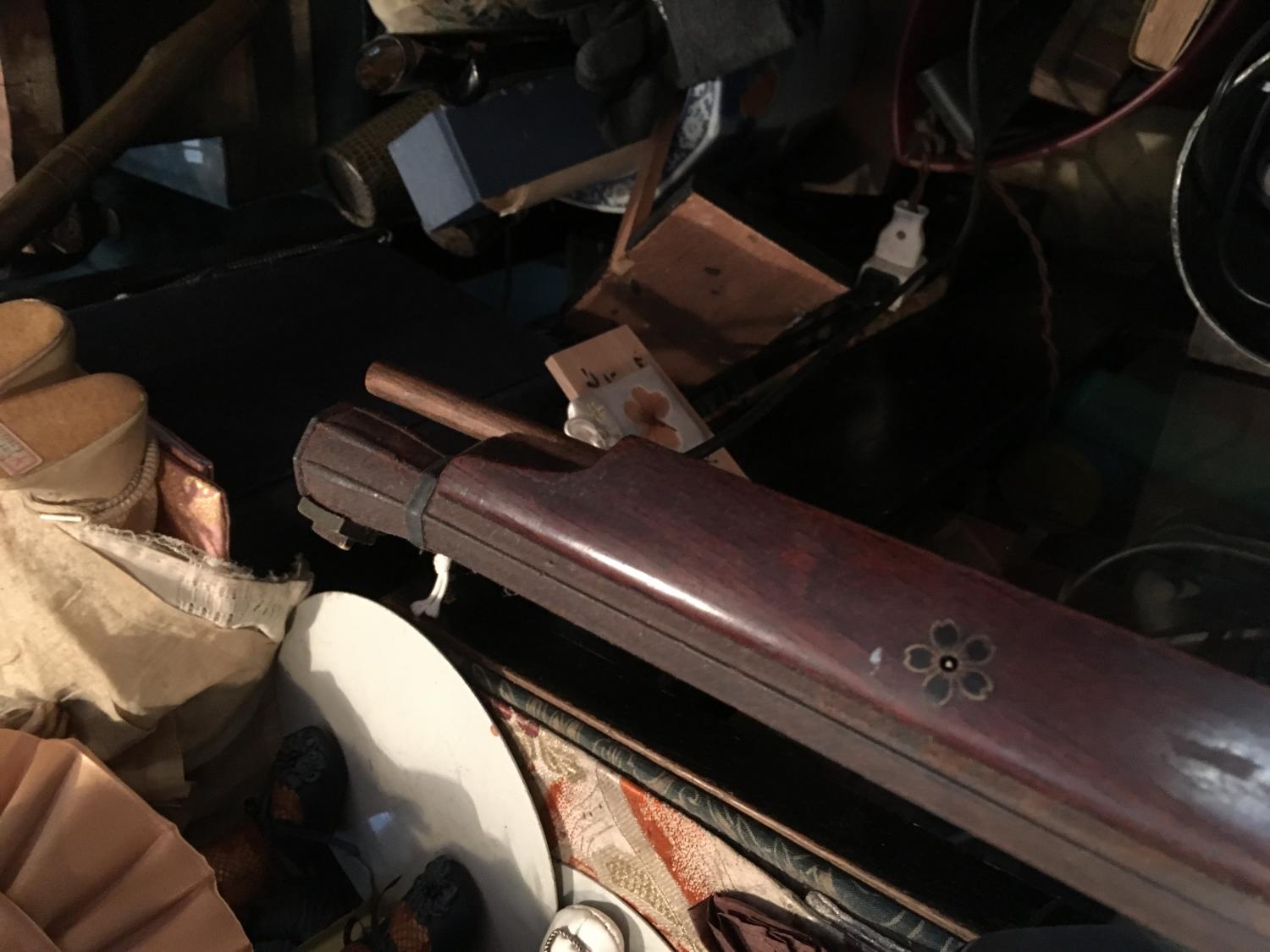
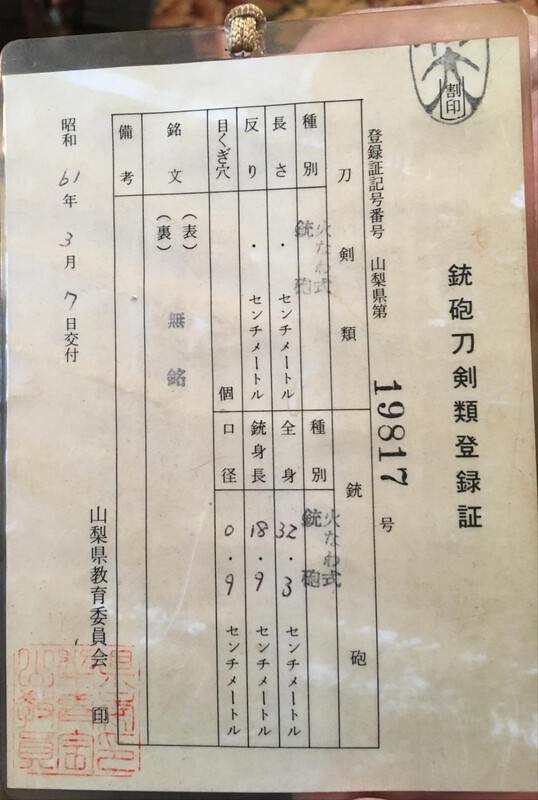
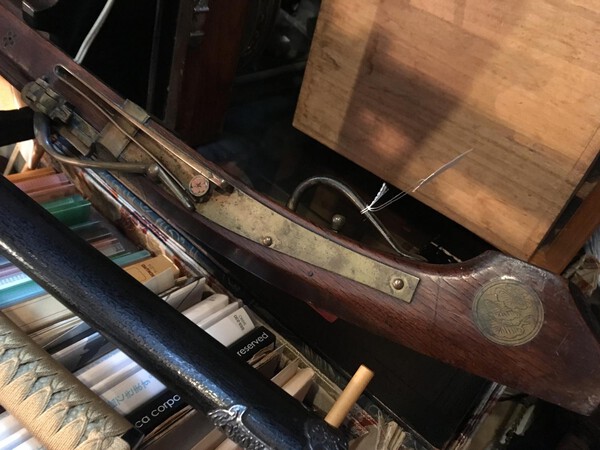
I found this matchlock at an antique store in Narita JP, Does the certificate say anything about it's age or authenticity? I haven't bought it, thought I'd get more info. I know we're sword guys, but this is the best place I know to get translation, THANKS!
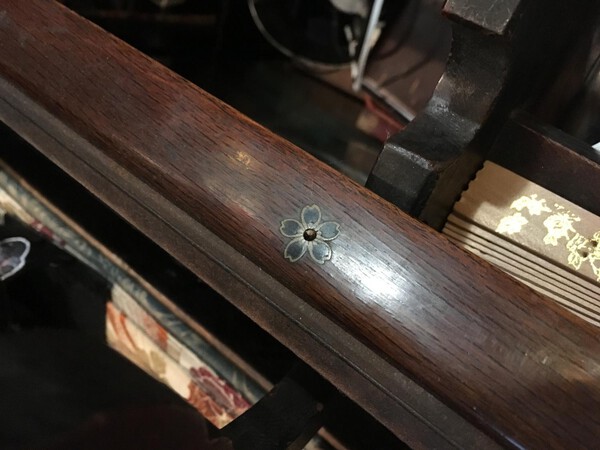
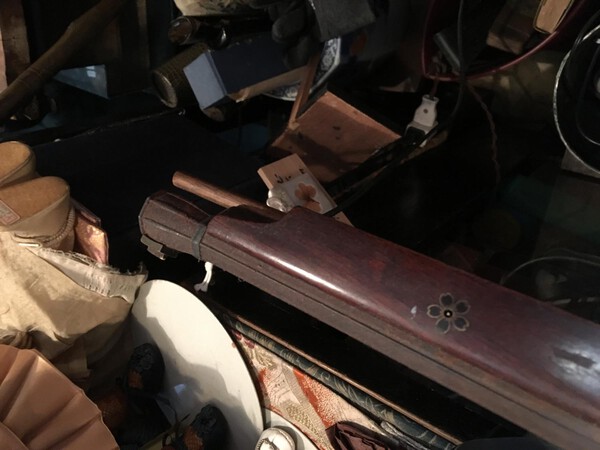
-
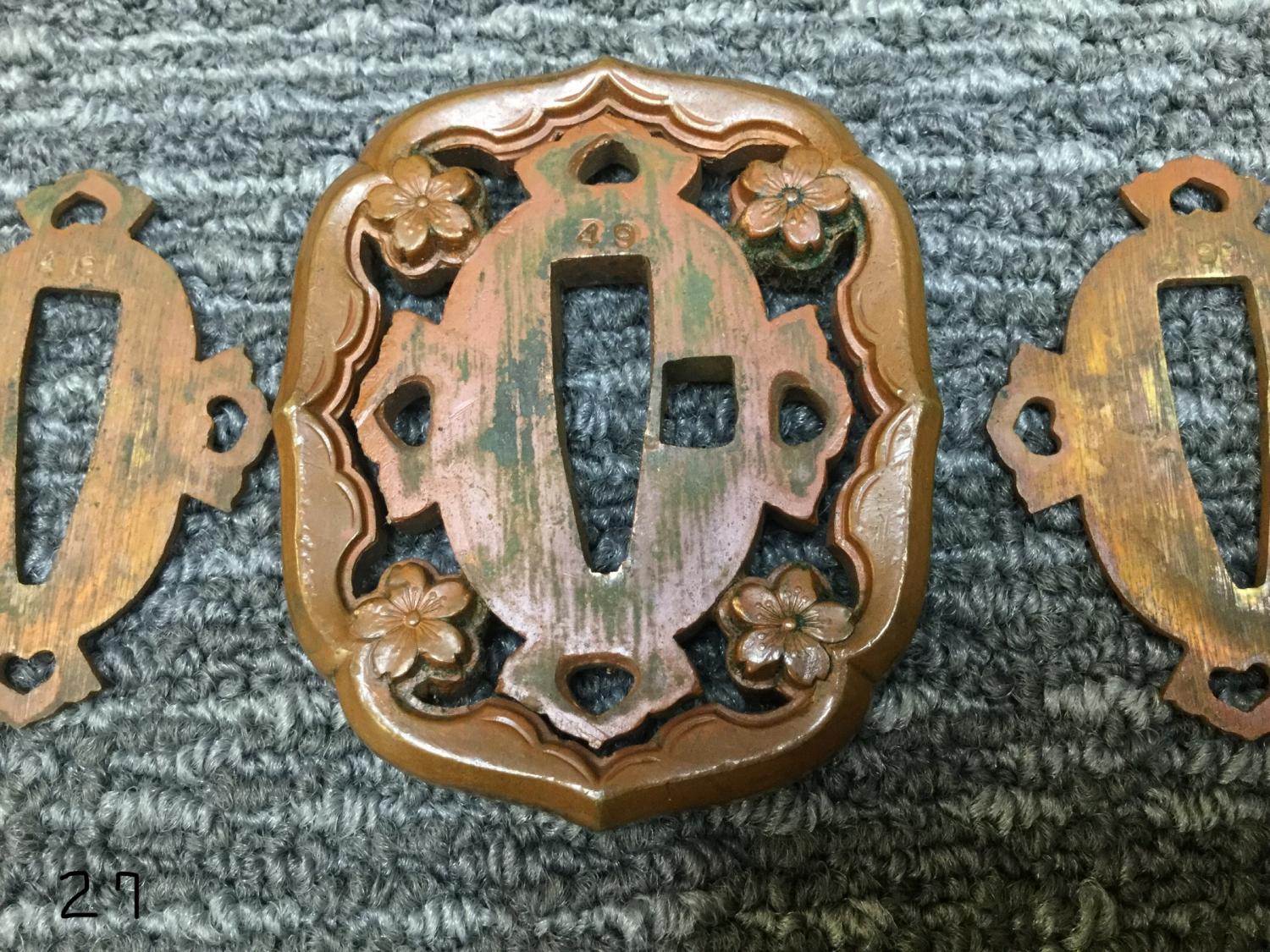
Interesting Malcolm. The base under the Sakura on the Haiikan look like leaves interspersed with FAT stamen. I’d never paid that much attention before!
-
2 vet bring back Japanese swords And a yari spear
Bruce Pennington replied to Dean1981's topic in Military Swords of Japan
Dean, No biggy if it’s stuck. But I have gotten them off by tapping with a rubber mallet. Sometimes you can just grip both sides of the tsuba and rock it side to side, like a teeter totter. -
2 vet bring back Japanese swords And a yari spear
Bruce Pennington replied to Dean1981's topic in Military Swords of Japan
I’m the worst person to say the age of an old blade, but I want to say the kai blade is pre 1800 at least. I could be wrong though.. Can we PLEASE see the tang on the shorty?! -
2 vet bring back Japanese swords And a yari spear
Bruce Pennington replied to Dean1981's topic in Military Swords of Japan
Dean, That's a very interesting group there! I'd really like to the pics of the full blades on both and would you mind getting good pics of the tangs of each sword? The really short one is quite unusual! Also, those canvas covers are fairly rare, but to have one that was fitted for back-carry is really rare! -
Malcolm, I'm aware that they differ on gunto, kaigunto, and contingency models, if that's what you mean. Are you saying that there are 3 different styled sakura found on army gunto?
-
Grev, I just re-checked Dawson and he was definitive that the Type 8 had 2 belt loops, so as yours have 1 loop and are Type 19s, then they are the 1886 model. That doesn't mean your blades were made in 1886 though. That simply is the year the official order came out establishing the type. They were made all the way through the 1930s, as the Type 94 replaced the 19s in 1934. So the manufacture date of these could be anywhere in between.
-
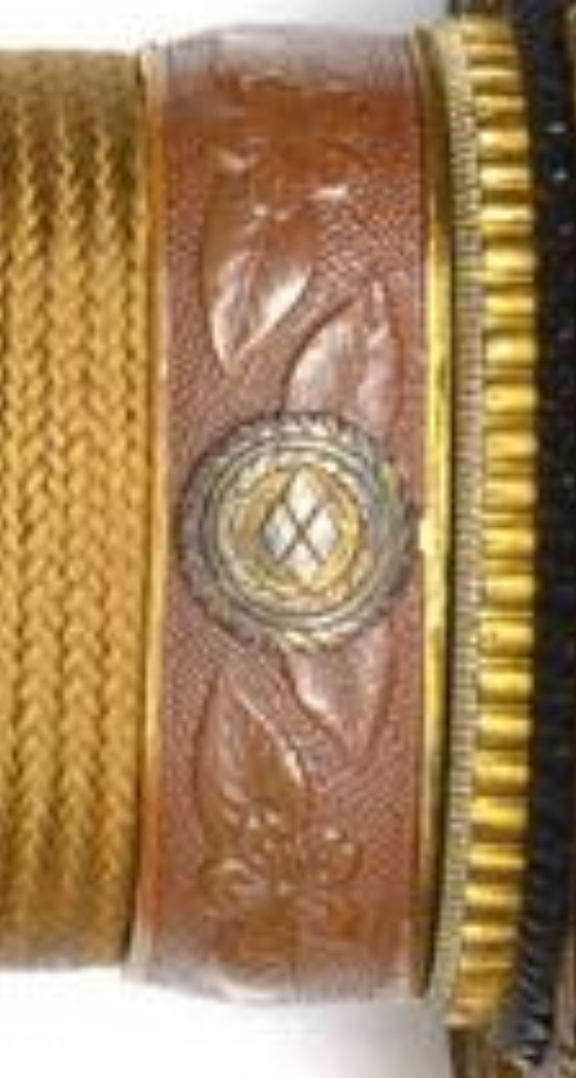
Here's a flatter diamond, found by John on the Pinned Kabutogane thread: http://www.militaria.co.za/nmb/topic/29629-pinned-kabutogane-on-type-94/
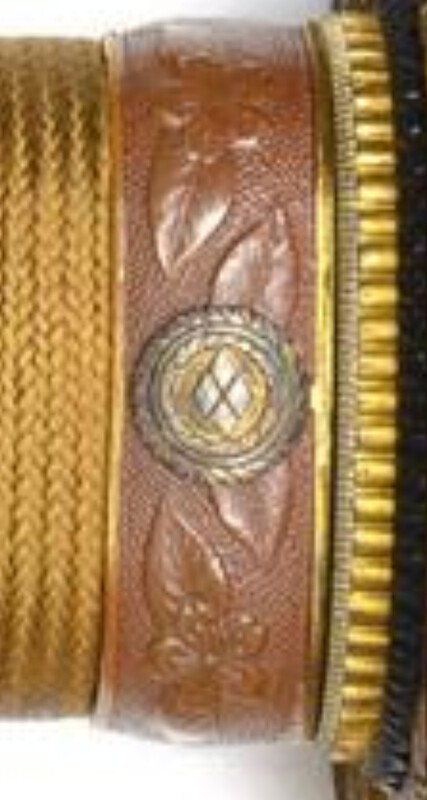
-
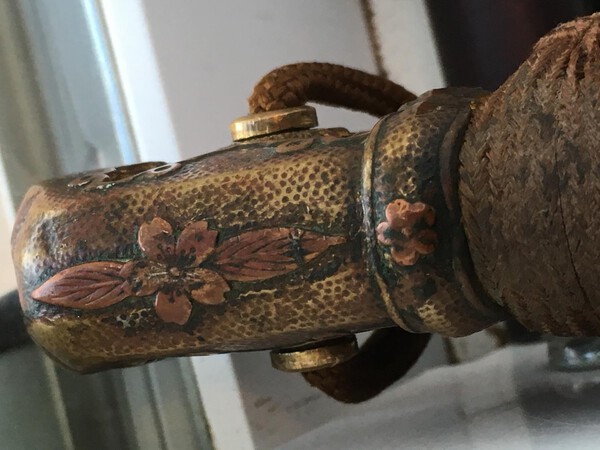
Well, how do you like that! It's a detail I've never noticed before! Ohmura's has it there, as does my Mantetsu and my chromed gunto.
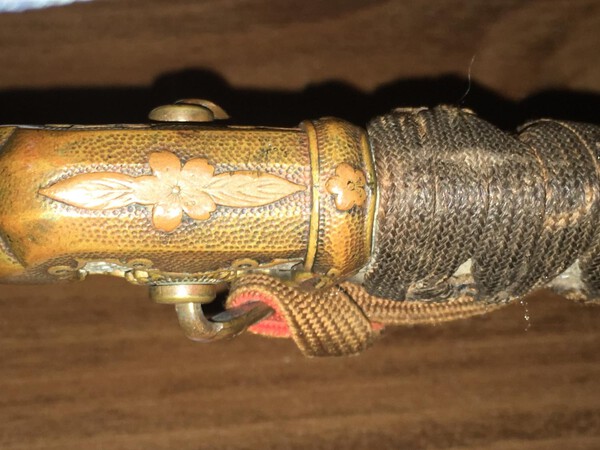
-
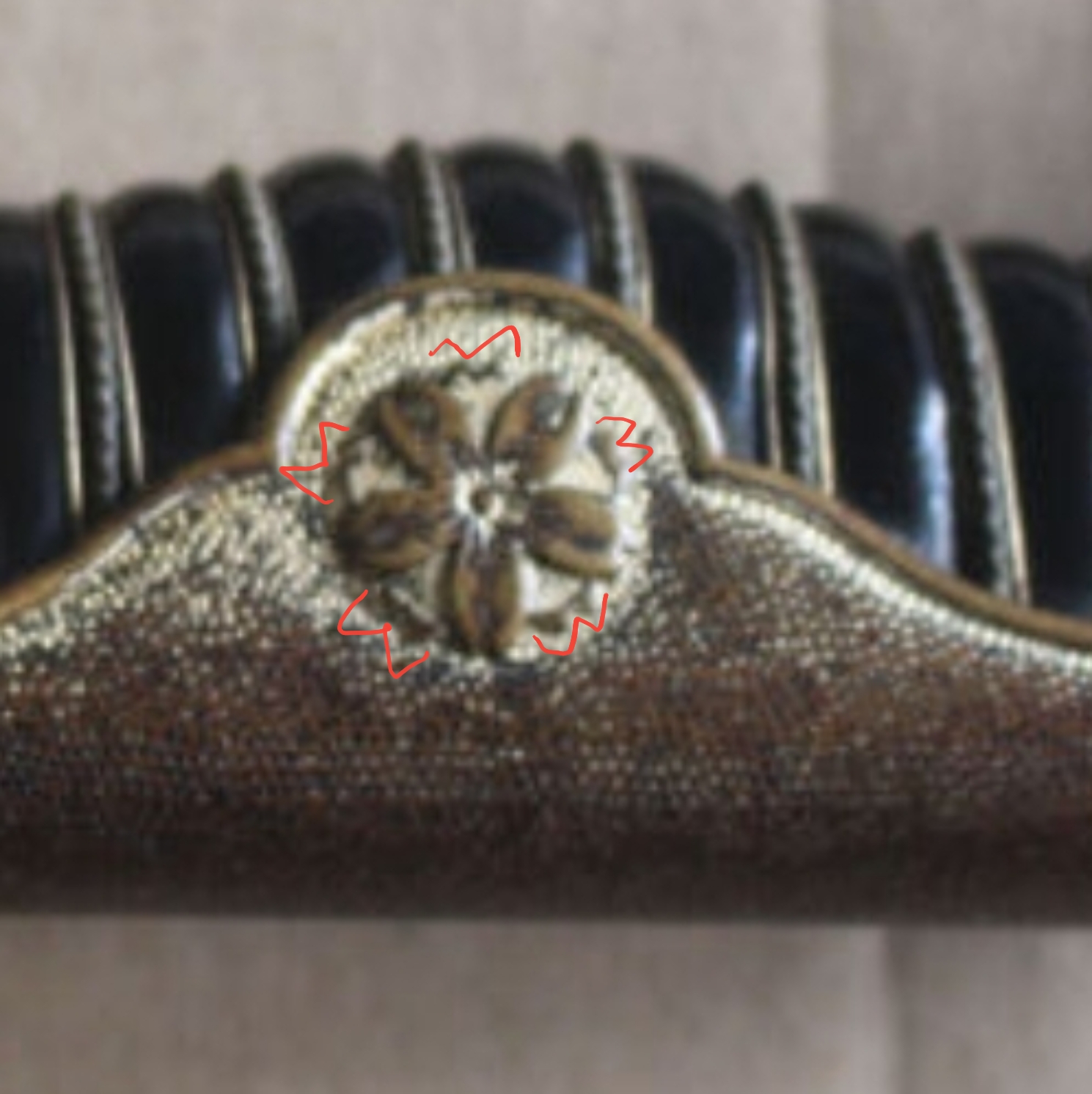
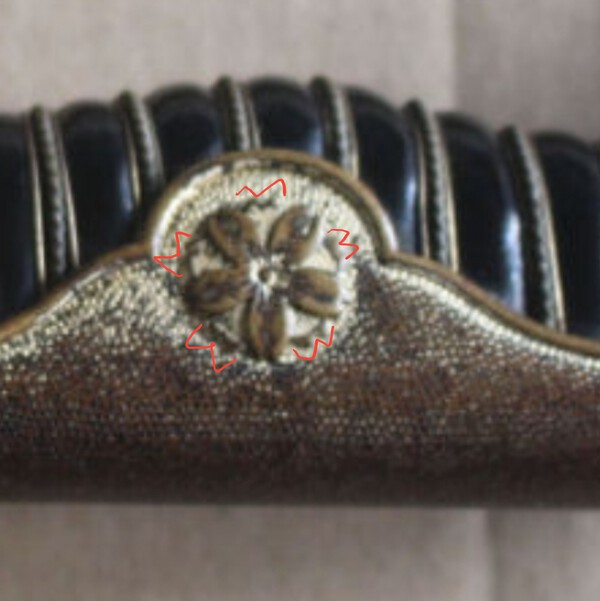
Grev, Both are Type 19, the second one is not police but Army. The background blossoms are just obscured by the coloration loss. I've highlighted them in this pic I've enhanced. The 8 and 19 can be hard to distinguish, according to Dawson, but if they have 2 belt hangers, then they're likely 8s. Single hanger, likely 19.
-
Is there a date on the other side?
-
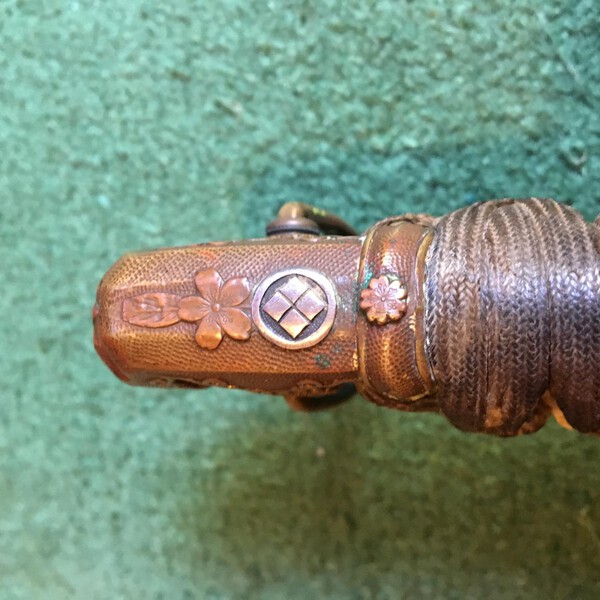
Luis, I have never seen either of those before. My suspicion is that the brass mekugi is post-war made, though, it does seem to have some age to it. There is really no way to know, only speculation. The cherry blossom isn't a family mon. I was going to say I'd never seen that done before, too, but on the "Mons" thread here: http://www.militaria.co.za/nmb/topic/29606-help-identity-our-mons/page-3, is one just like yours WITH a mon. Anyone else able to enlighten us on this practice? Neil?
-
I recently read in one of my reference books (on the road at the moment, I'll edit or add the book when I get home), where the authors had interviewed a smith named Kanefusa who had several thousand swords in his basement that had been cut in 2 after the war. He used them to make products to sell post-war. I believe many of these questionable tantos came to us this way.
-
Railway Swords & Stamps
Bruce Pennington replied to Bruce Pennington's topic in Military Swords of Japan
That’s fabulous info Thomas, thank you for the link! That one’s not even in Dawson’s chart!
-
Railway Swords & Stamps
Bruce Pennington replied to Bruce Pennington's topic in Military Swords of Japan
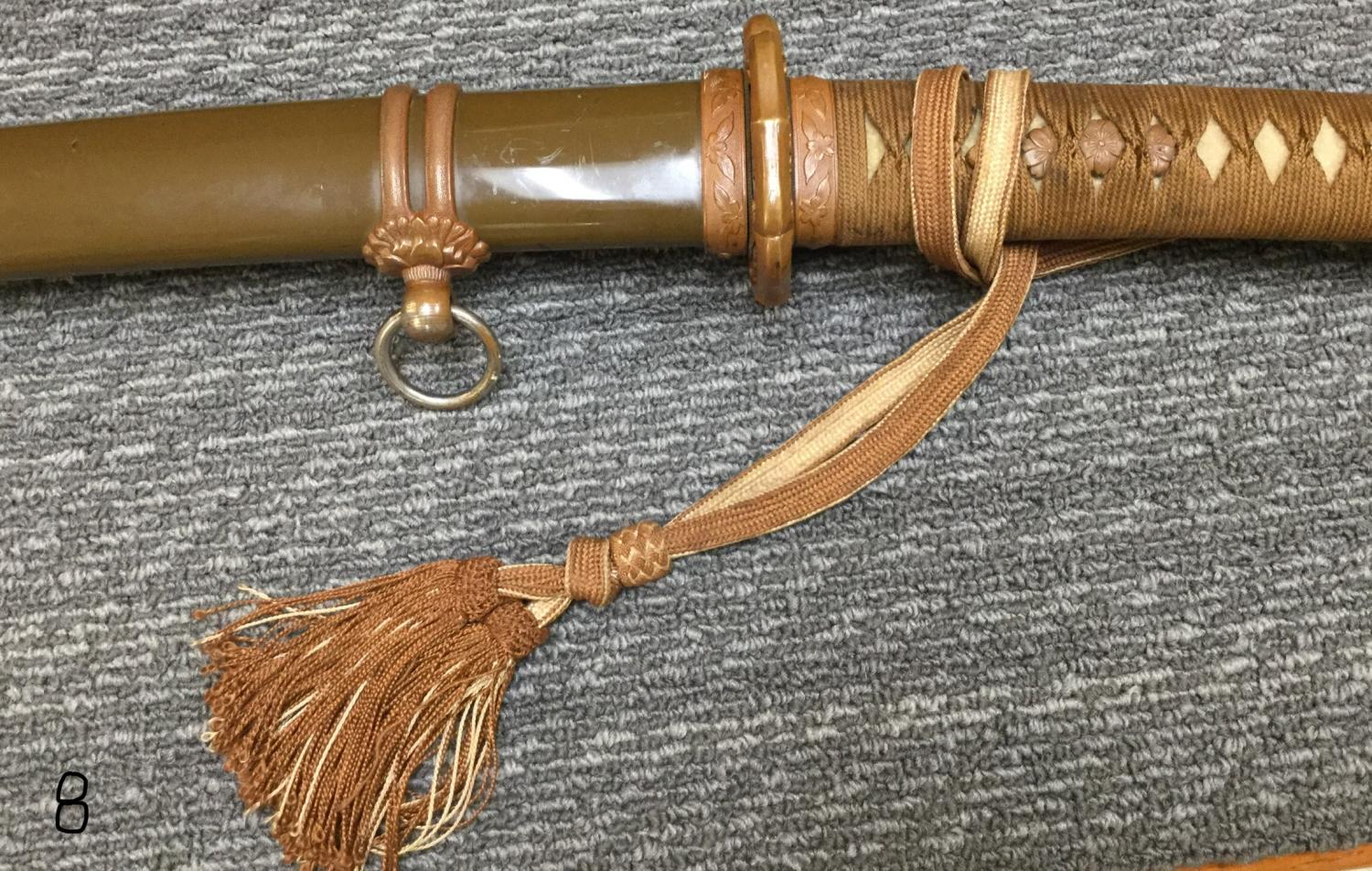
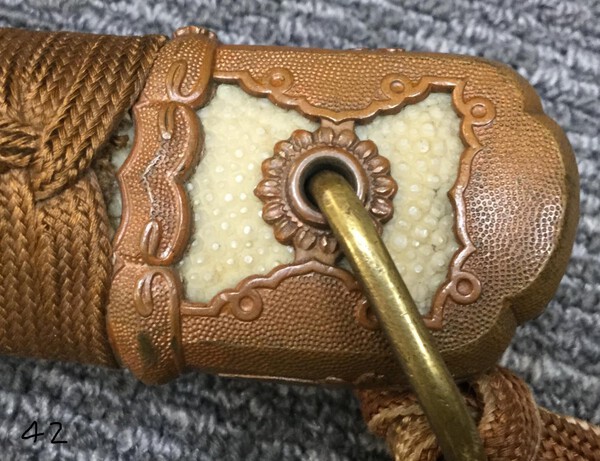
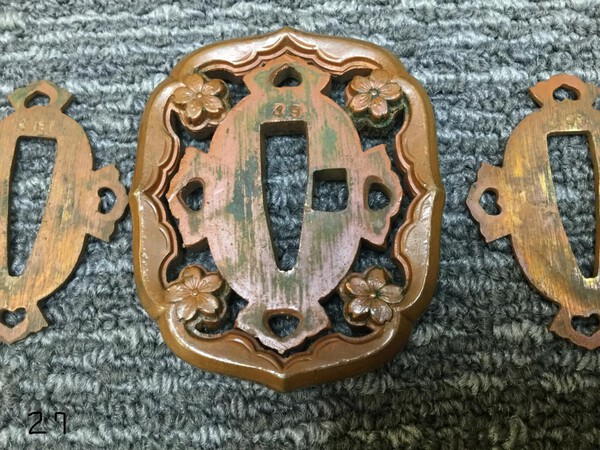
I'm adding a gunto owned by Michaelr, posted here: http://www.militaria.co.za/nmb/topic/29676-help-with-blade-tassel-and-fittings/. It is a non-Mantetsu blade in standard IJA 98 fittings (except for the all-brown fitting paint), but has the cream/brown tassel. It is only the second tassel I've seen in these colors outside Ohmura's site. Ohmura states gunto fitted this way are from the South China Railway police. SCR was taken over by SMR. Both military and civilians worked the policing of the lines, protetcting them from sabateurs. Ohmura's discussion is here: http://ohmura-study.net/308.html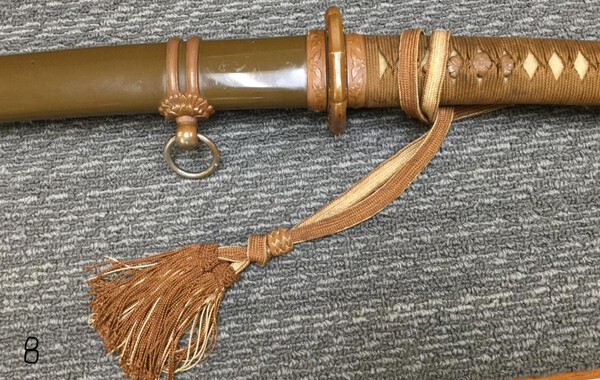
-
Help with blade, tassel and fittings
Bruce Pennington replied to Michaelr's topic in Military Swords of Japan
This is an interesting gunto. The tassel is of the North China Railway Police (taken over and run by South Manchurian Railway), but the fittings don't have the railway emblem. Ohmura discusses it in length here: http://ohmura-study.net/308.html He does state that many of the officers were actual army, which would explain the standard IJA fittings but I doubt an officer would carry a tan/brown tassel. It had to have been someone associated with the railway police though. And this would be a good discussion over on the Military Swords forum.