Bruce Pennington
-
Posts
14,221 -
Joined
-
Last visited
-
Days Won
169
Content Type
Profiles
Forums
Events
Store
Downloads
Gallery
Everything posted by Bruce Pennington
-
Great photo, Steve, thanks! Actually, it does look like they tried to emulate the Type 95. Whether a re-build from damage, or built from the ground up, it looks like Occupied Lands work.
-
Steve, Is the tsuka style inline with known late-war variants of the Type 95 (I don't follow those, so forgive the ignorant question)?
-
Jesse, I'd have to see more of the blade and nakago to comment. The mark is really a mess, but sort of looks like numbers - 1 6 6 or 2 6 - something like that. I doubt it's an arsenal mark.
-
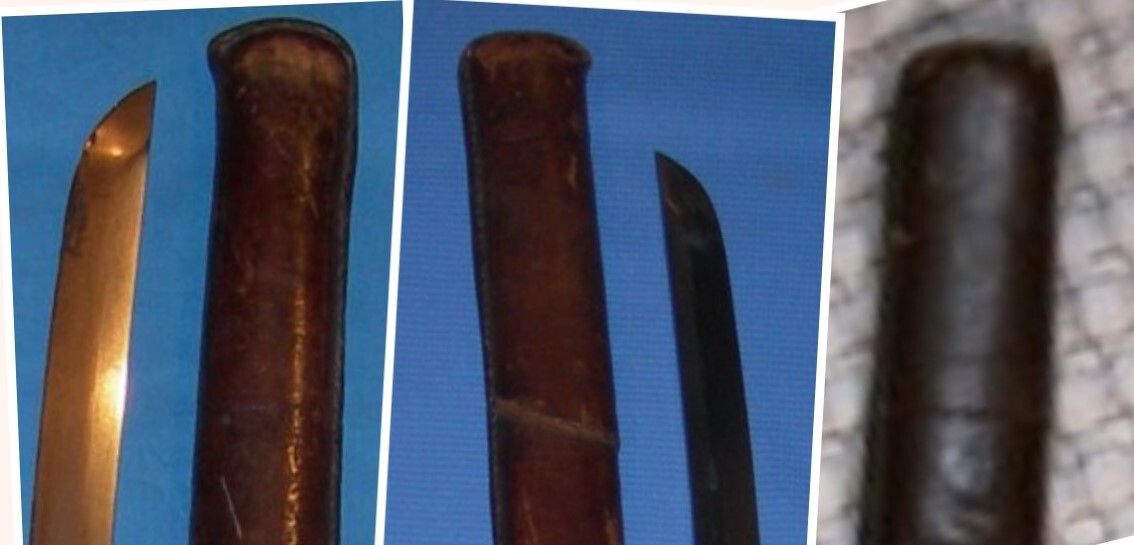
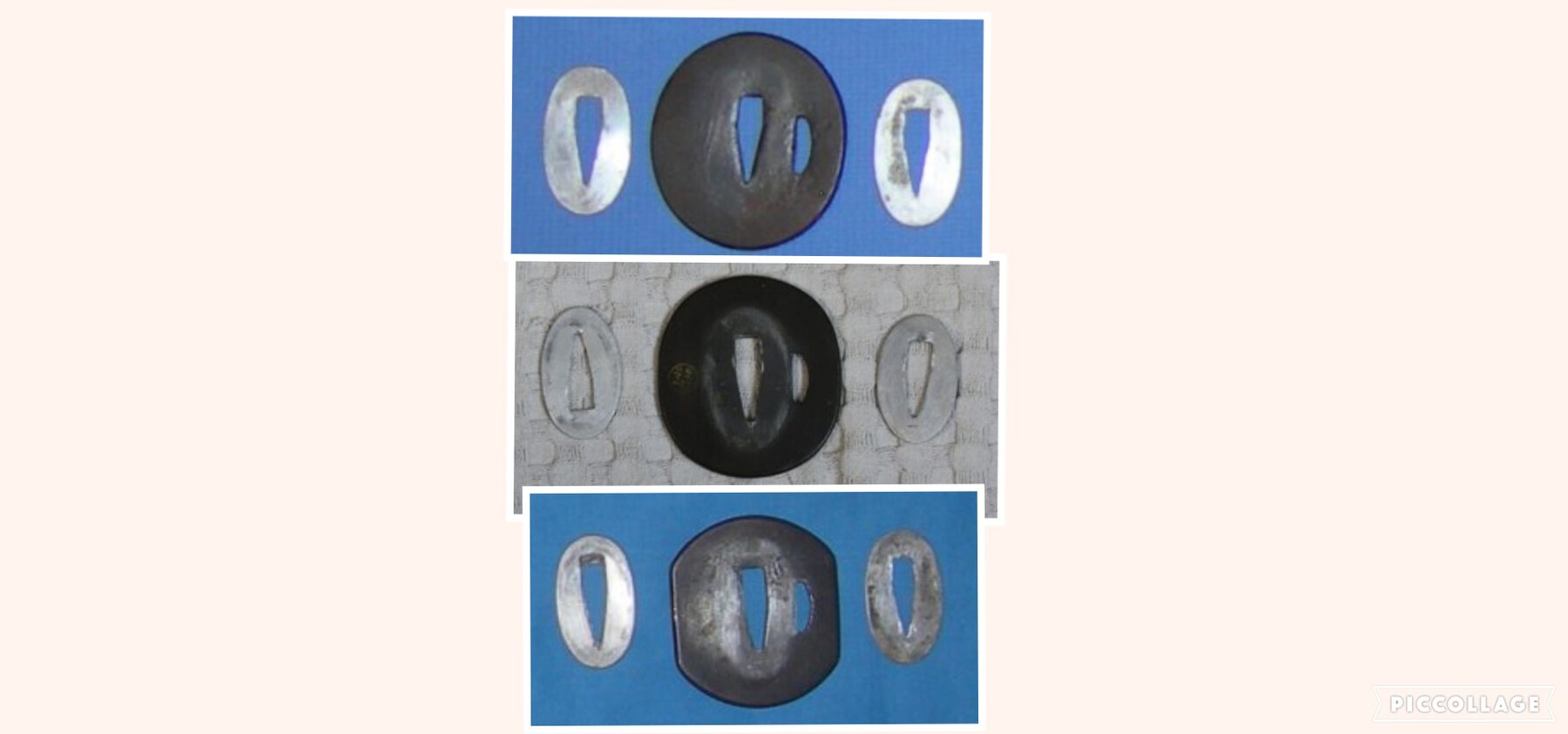
Game on, boys! That looks very well made. And we have 4, now. So, Fuller could only speculate, which is what we're doing as well. These are better made than the normal "Java" sword, but my money is on the idea that it was a late-war contract with a shop, location unknown.
-

Legendary zig-zag stitch Kai Gunto tassel
Bruce Pennington replied to PNSSHOGUN's topic in Military Swords of Japan
I noticed that! Ha! So my ploy worked!!! Sheesh, the things a guy's gotta do to get someone to post stuff around here! Just remember John "One man's trash is another man's treasure." -
On a Yasutsugu signed bladeHERE.

-
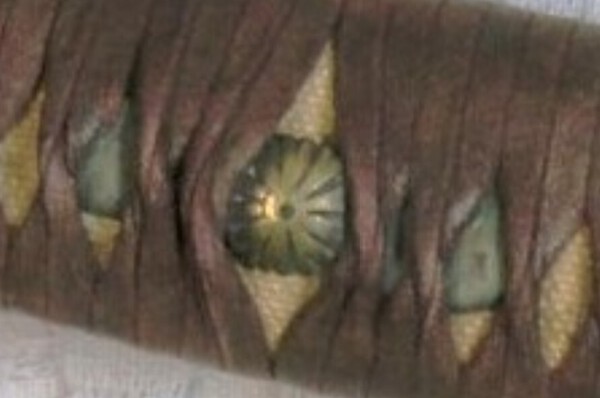
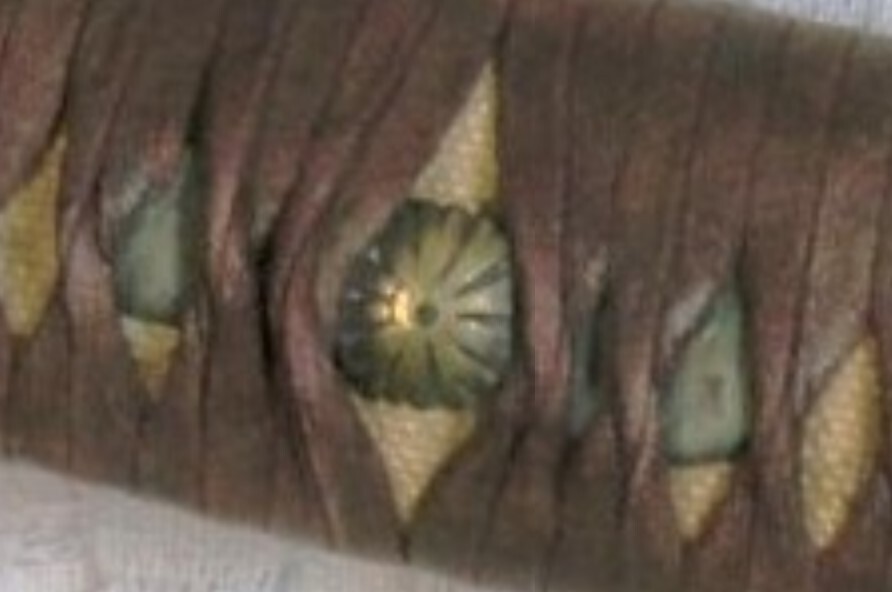
Wow, that's a new one! Good catch! It's obviously manufactured into the design. So, I agree with you that it seems unlikely to be a kamon. Plus, I couldn't find a mon of this design. Similar ones have 2 horizontal lines, not 1. There's a Tsunemitsu shop that has an emblem very similar, but the line doesn't go all the way across: A real mystery. I like your idea about it marking where they want the chuso button. In English, we say "X marks the spot". Do you know if the Japanese have a symbol they use for "marking the spot?"

-
Thanks Steve! Added to my files. It's the first on I have in the survey from a Type 95.
-
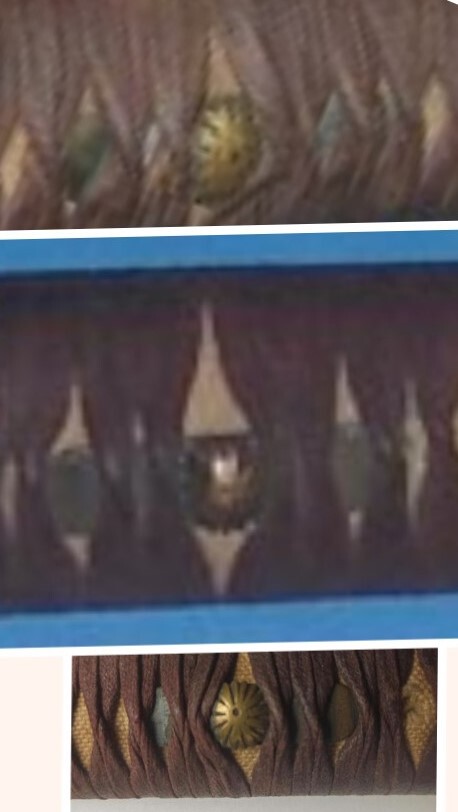
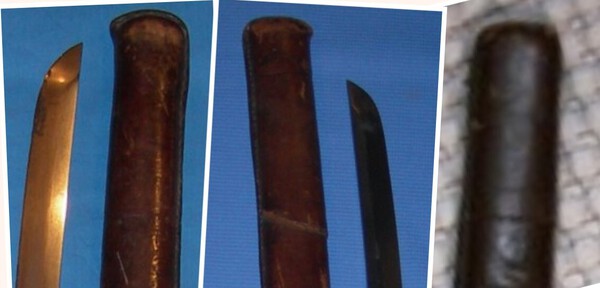
Neil, Are you saying they are modern fakes? I'm still open to that, but we now have 3, and I'm sure their not just the same one re-sold and posted 3 times, gunto that are clearly from the same shop. Close-ups seem to show legitimate age and wear. The "dremel" work on the menuki are identical, not what you'd expect for a Bubba job. Of course, there are known faker shops making near-carbon copies of their horrible fakes, so I know what I've just said doesn't rule that out. I just think the age and wear look legit.



-
Legendary zig-zag stitch Kai Gunto tassel
Bruce Pennington replied to PNSSHOGUN's topic in Military Swords of Japan
Looks identical to me. -
Legendary zig-zag stitch Kai Gunto tassel
Bruce Pennington replied to PNSSHOGUN's topic in Military Swords of Japan
It can’t be a coincidence that it matches the zigzag pattern of army general tassels. I bet some admirals got a private contractor to make these for them. -
Well shoot!!! The links weren't to Doug's site, they are to Antique swords. com! I got a brain-fart when I saw them and my head said "Gunto Art Swords". So Doug had nothing to do with these. He did respond and said as much. SORRY! As to why "WE" are talking about these ..... [sigh...] ..... you guys have been around for long enough to know the answer to that. Should be " 'nough said", but for the new guys that may not have read THIS discussion over and over - WE are discussing this because we enjoy "Military Swords of Japan." WWII didn't just have a beginning .. it had an end too. I study WWII, beginning to end. I find all aspects of the Japanese sword production, from beginning to end, fascinating, and I enjoy them all. Yes, the late-stage gunto are Mucho Ugly, but they were part of the story. Lives were spent making them, and many of those craftsmen died under Allied bombs while serving their country. To me it's not just about the sword, it's about the people as well. It's about respect. Whew! Got that out of my system .... SO, Still chasing down the emblem on the tsuka. No positive ID yet.
-
I see that. It's too small an lacking detail to make it out. Same with the tiny stamp (which seems to be different) on the nakago.
-
Thanks for the links Peter! I agree, exact same. I wrote to Doug at Gunto Art Swords to see if he can give us his source for claiming the model came out in 1938 as an NCO early prototype. I'll update when he responds. His reference to pg 78 of F & G is a discussion of what we now call the Rinji Seishiki, or Type 3. This version is clearly not a Rinji seishiki. We have 1945 dated blades in standard RS fittings. These are more inline with the loosening of mil specs in the final year of the war. The identical-ness of the growing example, though, does imply they were all made by the same shop or factory. I wish we could find one with an inspector stamp. It would help pin down a location of manufacture.
-
Attention Mantetsu Owners: A Survey
Bruce Pennington replied to Bruce Pennington's topic in Military Swords of Japan
I'm with you on this. The mumei blades are in the 1945 serial number range and are only found in the unique late war fittings only found with Mantetsu blades. Whether the fittings were actually made by SMR or simply by a contractor working exclusively for SMR is unknown, but they fit the end-of-the-war discussion about how Japan was transferring sword production out of the mainland and had loosened the mil specs on everything in an effort to keep the supply coming. This late war variation appears to be the last of the Mantetsu line. -
Here's one I can't find. Comes on a possible late-war gunto HERE Stephen found these, and they seem to be the same:

-
Thanks Inna! I'll get some guys to look at that mon. Steve can comment on the blade, but I like it. I'll get back when I get word on the mon.
-
Brian listed this exact type blade in the Fake Blades post in the Gallery.
-
What's that on, Steve, a Rinji?
-
Need help with a purchase
Bruce Pennington replied to PxN13's topic in General Nihonto Related Discussion
I can't speak to who made this, but I've always loved this style blade. This is quite gorgeous! -
Inna, still with us? Could we get a clear, close-up of that emblem on the menugi I had enlarged in post #12? Also a good clear close-up of the blade tip and a section of the blade showing the temper line? Brian, what do you think of moving this thread to the Military Section?
-
I have always wondered about that too. Mal Cox' survey of 426 oshigata found only half had dates, and in my meager survey of around 200, only half are dated. There are a higher percentage dated after 1942 when the Army took over all sword production. Of the Seki stamped blades after 1942, 72 are undated and 62 are dated, compared to the Showa stamped blades where 102 are undated vs 26 dated.
-
Don't put any weight on my opinion on this, as I'm usually wrong about the smiths, but if that's a Seki stamp at the top, maybe it's this one:
-
Still, yours may be heading more in the right direction. The number of rays, for Japanese police badges, in Dawson's book, are 5, or 8, or, 16 (one odd one with 6). This one seems to have 9. I don't know if the Manchuko govt used police. If so, could this be a Manchukou?
-
I can't find that mon (though I'm not the best at finding them!), but it reminds me of the early Army sun-ray pattern found on a couple of custom kyu, recently. Nick Komiya said the pattern was army, with a large "org" in the center. Smaller orb was for police. Discussed HERE on Warrelics.