Bruce Pennington
-
Posts
14,174 -
Joined
-
Last visited
-
Days Won
169
Content Type
Profiles
Forums
Events
Store
Downloads
Gallery
Everything posted by Bruce Pennington
-
While I recognize the talent an art of more complex pieces, for some reason I really like these: found Here.

-
More

-
Posting for future


-
The tsuba/seppa are made for a leather cover. No chuso. Wonder what became of that?
-
Thanks Dave. I've never heard or read, from the smith's perspective, why they would date some blades and not others. For the WWII blades, it is evident from the surveys that when the Army took control over blade production, 1942, a much higher percentage of them were dated.
-
Can you post pictures of the nakago (tang). It's the only way to check out the mei. Here is a pic of his mei if you want to compare: I don't know why sellers keep claiming his blades are Mantetsu. His blades often have the "W" stamp, as is seen on 5 other smiths as well as on several Mantetsu, but that is the only connection. But it's not a connection to SMR Mantetsu.
-
Dang I do have one other Tomonari recorded, in RS fittings, but not as nice as this!
-

Seki Inspection Tag On Combat Saya.
Bruce Pennington replied to mauser99's topic in Military Swords of Japan
Yes, thanks Neil. The labels are turning out to be more varied in their use than I first thought. Some are on gunto with Seki-made blades, but some, like yours, have something else entirely in them, and maybe the label is more for "finished gunto product" type of meaning. Some are on 1942 gunto, and some are on late war gunto like @Shamsy posted. So, my original idea that they were used in the last couple of years to replace blade stamping is out the window too. -
Seki Inspection Tag On Combat Saya.
Bruce Pennington replied to mauser99's topic in Military Swords of Japan
Neil, Any chance of finding out if there is a dated blade in this? Or does it have the large Seki stamp on the blade? -
Dave, Safe to assume no date on this Naotane?
-
Mark, I don't see any mention of a date on your blade, is there one on the other side?
-
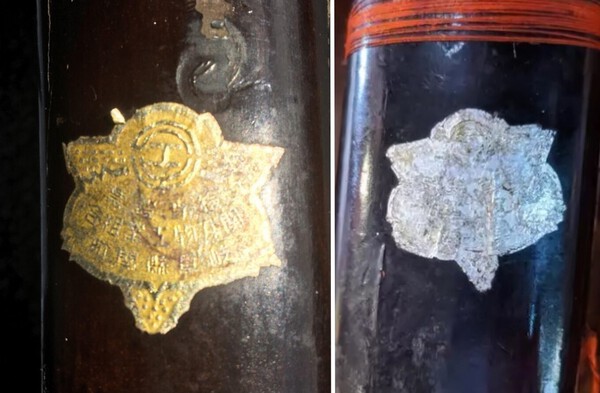
ANOTHER update! In discussing the foil labels: I realized the organization - Seki Cutlery Manufacturers Society - is the same organization mentioned in the Seki City website that was doing the showato testing and stamping! When and why they moved to foil labels rather than nakago stamps is unknown. I'm going to try to backtrack on these gunto to see if the blades were dated. If anyone reading this owns one like this, please post your nakago, especially if it's dated.


-
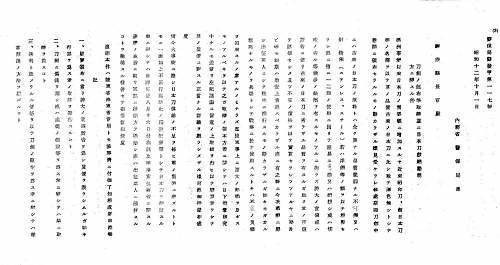
Another update on the background history: Nick's found an Police letter which addresses the concerns about gimei (mentioned by Keven Jones, Ryujin Swords) and poor quality showato (Seki City website) You can read his post (#36) HERE. Here is his post: Nihon-to 911 I earlier mentioned that Ohmura-san’s theory about the Ministry of the Interior imposing stamping on swords made by non-traditional methods was unfounded, as no such law was ever published in the government gazette. However, it is true that the Ministry of the Interior, responsible for policing was greatly concerned about the fraudulent manner in which “Showa-to” was being sold right after the China Incident of 1937. The following Police memo is from a police file containing all gun, sword and explosive control documents for the year 1938 and earlier. The APB memo is dated 1st October 1937, the entirety of which I translated below. It instructs prefectural police to crack down on certain fraudulent sales activities regarding Nihon-to, while they contemplate a more fundamental solution to the frauds occurring in the market. However, no further police documents got issued on this topic up to the end of 1938, which indicates to me that the fraudulent claims made to sell “Showa-to” ceased to be a police concern between October 1937 and December 1938. It is very likely that the police was agreeable to voluntary initiatives proposed by the cutlery industry to impose quality tests upon itself and stamp products with its seal of approval. It is also interesting to see that the police regarded the word “Showa-to” as a deceptive marketing gimmick in those days, equally misleading as the ridiculous term “Super Nihon-to”. I should also add that this was also accompanied by the leaflet I showed here calling for sword donations. Regarding policing of the sale of Japanese swords and encouraging citizen sword donations 1st Oct. 1937 Letter from the Chief of Police & Security Bureau of the Ministry of the Interior to the Police Chiefs of Prefectures. As the demand for Nihon-to has surged since the outbreak of the China Incident, recently, sales of swords claiming to be “Showa-to 昭和刀” or “Super Nihonto 超日本刀” have increased, promoting them as if they were comparable in quality to traditional Nihon-to. However, some such products are said to be of dubious quality, made of material totally different from traditional Nihon-to, out of such inferior material as stainless steel or western steel, which can easily bend or break only after being used a couple of times or poor in sharpness. These swords, despite such defects are being promoted and advertised in a way that mislead buyers into believing them to be equals of traditional Nihon-to, and at exorbitant prices. Such practices are harmful to social order and, in consideration of the fact that such defective products may end up in the hands of our soldiers called to the battlefield as a result of the Incident, they may even lead to casualties that become immeasurable military setbacks. Thus we are currently contemplating fundamental approaches to rectify this problem. In the meanwhile, we expect you to enforce order by focusing on the following three points, to prevent consumers from being deceived of the true nature and value of the products offered them. Additionally, as a means to offset the shortage of Nihon-to supply caused by this Incident and as a preemptive measure against the forgoing fraudulent sales practices, please call upon sword owners to encourage them to donate their swords to the military in the same manner as the 16th August memo regarding the transfer of pistols and live ammunition thereof. Lastly, please be aware that these points have already been discussed and agreed with the Army and Navy Ministries. 1. Crack down on those that engage in deceptive practices that misrepresent the true worth of the items being sold through exaggerated claims in promotions and advertising. 2. Crack down on those that apply Gimei to swords or provide false appraisals. 3. Inhibit attempted sales of swords at unjustifiably exorbitant prices . Police Letter.docx
-
Great, thanks! I'll pass that on.
-
Hey guys! Could we get a translation for a guy (Blitz, on this Warrelics thread.)

-
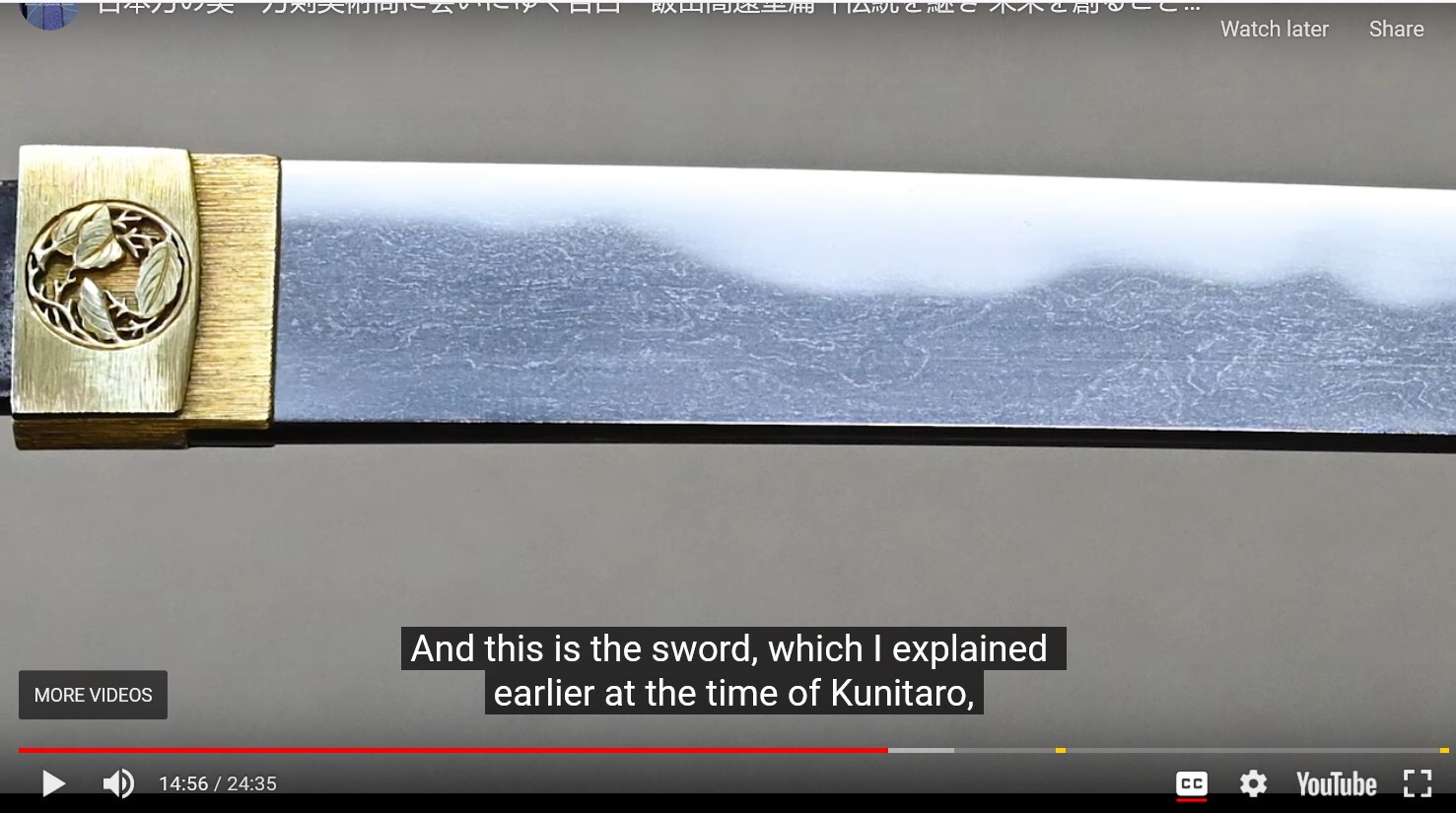
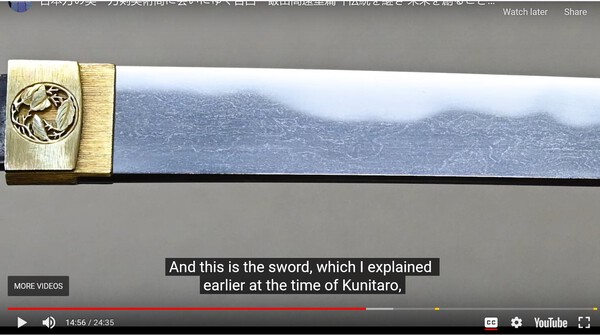
Wow, I just spotted it on the video @Stephen posted HERE on a Kaneuji tanto.
-
Jean Paul, The guys are right about this Mantetsu Koa Isshin, dated 1941 Spring, although the massive majority of Mantetsu were marked "Spring" regardless of the time of year. Your serial number "TA 287" puts it almost halfway through the fiscal year of 1941, so more like late Summer or Fall. The Mantetsu blades were a breakthrough achievement for the time invented (late 1930's) and were so well regarded that there was reportedly a wait-list of officers that wanted them. Good articles about them at Ohmura's site HERE and an article we compiled from NMB guys, attached. MANTETSU DISCOVERIES.docx
-
No. All I have is the Slough reference, but his oshigata of it is hard to see. I thought I had a memory of it being discussed, but my search of it comes up empty. Do you have one spotted? I was able to enlarge it enough to make out the letters:

-
General Yamashita the Gunto collector
Bruce Pennington replied to PNSSHOGUN's topic in Military Swords of Japan
So he was an admiral after all! On another note, this gunto with worn off lacquer of the same’ might explain some of the “white“ handled Swords we see in pictures of Navy officers. I can’t believe I had not thought of it, but I own a navy one where the lacquer is worn off like this as well. -
Stephen just posted a video interviewing the 5th generation Iida, who runs a sword shop. He briefly discusses his ancestor's invention.
-
Not just gunto fittings - Iida latch and it's inventor! I'll link this to Neil's thread at Iida Latches. That was one massive naganita, too! This Type 19 was interesting. The front lip of the guard seems to extend considerably more than the norm. Wonder if it's just an illusion due to something on his jacket behind it?

-
General Yamashita the Gunto collector
Bruce Pennington replied to PNSSHOGUN's topic in Military Swords of Japan
I love the marketing lingo in the auction description, like "ancient samurai blade from the 19th century"! Ha! So, made in the 1800s? Not what I'd call "ancient." And the "very rare double layered" saya tip cover ....... except ALL leather covers had the saya tip layer too. Nothing of which takes away from the actual gunto, just lamenting the display of hype by the auction house. As an aside, interesting to see a rank tassel, on what appears to be a cane sword! That sword of "Admiral Yamashita" has the black leather saya cover. Nice. -
FYI: The black saya under the item of interest in the second photo is the Toyokawa post-war souvenir made for the 8th Army PX.
-
Love it! Much better!
-
Sort of looks like a fancy “Kane”; but I’m the worst guy to comment on kanji. Agree with Steve though, it’s his Kao.