


Bruce Pennington
-
Posts
14,642 -
Joined
-
Last visited
-
Days Won
176
Content Type
Profiles
Forums
Events
Store
Downloads
Gallery
Everything posted by Bruce Pennington
-

Translation assistance - approx date
Bruce Pennington replied to Eds's topic in Translation Assistance
Depends on your perspective. The Tenshozan factory was one of several Japanese businesses that MacArthur kept running after the war to try to bring Japan back to life. Some of these souvenirs have blades made during WWII and therefore hold the last swords ever made by Japan for war. They mark the end of centuries of Japanese war blades. So, to me, quite a significant part of Japanese sword history. Dollar value? They run $400-500 USD when people know what they are buying. @John C @Jcstroud -
Well that's something new, no pun intended! Not only was the tassel added, but the sarute, too. I put it in the Souvenir Chart, and was tempted to put it in the Brown Tassel chart, simply as raw data, but if our Tassel chart's purpose is to track dates of use to see if we could decern whether the tassel was a late war Army or a unique design for Gunzoku, it doesn't help the investigation, at least on the early end of the date spectrum. I bet your theory explains it, Matt. Sellers keep calling these Navy swords, so why not add a "Navy" tassel.
-
Nlf Gunto Discussion
Bruce Pennington replied to Bruce Pennington's topic in Military Swords of Japan
That’s a great observation John! I took a look at one on page 1 of this thread, and it matches, like you say, dot for dot also. -
Nlf Gunto Discussion
Bruce Pennington replied to Bruce Pennington's topic in Military Swords of Japan
Found another Takayamato, made by Masanao, small anchor stamp, painted "29" on this Wehrmacht-awards Thread.


-
Ok, after going back through them all, I found a couple filing errors (my administrative skills really suck). I now have all 15 filed and charted. There is only that one we discussed earlier that I still think is a faded blue/brown, but I put it in the chart for you. Statistically, it's not going to throw anything off in a significant way. With the added 2 Type 95s, the new stats are: 56 swords 5 Civil 4 Type 95 24 Type 98 23 RS Brown Tassel SWORD TYPE SMITH DATE SOURCE Civil Unknown ND Tensho, NMB Civil, re-fit Yoshichika ND Kolekt-to, NMB Civil w/Sakura tsuba Kanezane ND; Showa stamp Cernie, ebay Civil w/Sakura tsuba Kanezane ND; Showa stamp Cb1100f.b10…..jp Civil, re-fit Mumei ND Civicsecondhand.ebay T95 Suya/Tokyo 1st Ser # not shown; but likely 1942 or later GFL775, Gunbrds T95 Unknown Unknown Bangbangsan, NMB T95 Wooden tsuka Nagoya 1944-45 IJASWORDS, NMB T95 Wooden tsuka Nagoya 1944-45 Bangbangsan, NMB T98 combat saya Shigemitsu ND Deadoscilate, NMB T98 combat saya Masatsune ND Brian, NMB T98 combat saya Masayuki 1942 Waljamada, NMB T98 combat saya Sukenori ND Crow23, NMB T98 combat saya Kanetake ND Large Seki stamp CMD, NMB T98 combat saya Kiyonobu 1943 Nzef1940, W-A T98 combat saya Kaneshige ND Large Seki stamp Mark Shefly, W-A T98 combat saya Unknown Unknown RI auction T98 combat saya Mumei, old blade ND Gilbergauthie-5, ebay T98 combat saya Mumei, old blade ND Panzerfaust, Gunbrds T98 standard fittings Yoshichika ND Nickindy, NMB T98 standard fittings Kaneyuki 1820 Bazza, NMB T98 alum. Saya Shoshin 1940 Aug Mike T, NMB T98 NCO blade Nagoya ND The_Derz, NMB T98 Occupied/late war Mumei ND Doomsday Runner, NMB T98 Kanesada 1944 Chrisfe, NMB T98 Kiyonobu 1942, Mar Mp409mm, W-A T98 Mumei, old blade ND St Croix Blades T98 Unknown Unknown Mortis, NMB T98 Unknown Unknown Ianb3hr2uh, NMB T98 Mumei ND Robinalexander, NMB T98 Waki refit, leather Tadayoshi, old blade ND Chip62287, NMB T98 Civil tsuba Norinaga, old blade Koto BenCld, NMB T98 Civil tsuba Kanenori ND, Large Seki stamp Dosh, NMB RS Unknown Unknown Kolekt-to, NMB RS Seisui 1944 George Trotter, NMB RS No blade photo Unknown Robinalexander, ebay RS Masayoshi, Star stamp 1944, Apr Vajo, NMB RS Kanemune 1945, Feb Panzerfaust, Gunbrds RS Katsumasa 1945, Jan PBacsuk, Warrelics RS black saya Kaneyuki 1945, Mar Narvik1940, W-A RS Nagamitsu ND Sohei-swords RS 1 Unknown Unknown Mdiddy, NMB RS 2 Unknown Unknown Mdiddy, NMB RS 3 Unknown Unknown Mdiddy, NMB RS 4 Unknown Unknown Mdiddy, NMB RS 5 Unknown Unknown Mdiddy, NMB RS 6 Unknown Unknown Mdiddy, NMB RS 7 Unknown Unknown Mdiddy, NMB RS 8 Unknown Unknown Mdiddy, NMB RS 9 Unknown Unknown Mdiddy, NMB RS 10 Unknown Unknown Mdiddy, NMB RS 11 Unknown Unknown Mdiddy, NMB RS 12 Unknown Unknown Mdiddy, NMB RS 13 Unknown Unknown Mdiddy, NMB Rs 14 Unknown Unknown Mdiddy, NMB RS 15 Unknown Unknown Mdiddy, NMB
-
James, Any small stamps above the mei?
-
Matt, The sources I list on all my charts are really so that I can go back to NMB, or the web, to search for the original photos. So, listing you is sufficient for my purposes. We could add your original sources if someone might think it useful, though. As to the 2 missing, I find several gunto in my searches that at first appear to be all brown, but on closer look, are really almost completely faded blue/brown, so I don't include them in the chart. I personally think 2 of the ones you posted fall into this category. If you would still like them in there, I can add a "Possible" section for those we find like this. After filing this one, I realized I had another wooden handle 95 from Neil, IJASWORDS, in the files! So, there are 4 Type 95s on file, now.
-
Nlf Gunto Discussion
Bruce Pennington replied to Bruce Pennington's topic in Military Swords of Japan
For future searches, Chris' link is to a Tenshozan Forging Workshop mei, August 1940 blade in civil fittings


-
Sure. Here's what we've got so far. Your examples just about evened up the score. 49 swords 23 Type 98 20 RS 5 Civil, leather covered saya Brown Tassel SWORD TYPE SMITH DATE SOURCE Civil Unknown ND Tensho, NMB Civil, re-fit Yoshichika ND Kolekt-to, NMB Civil w/Sakura tsuba Kanezane ND; Showa stamp Cernie, ebay Civil w/Sakura tsuba Kanezane ND; Showa stamp Cb1100f.b10…..jp Civil, re-fit Mumei ND Civicsecondhand.ebay T95 Suya/Tokyo 1st Ser # not shown; but likely 1942 or later GFL775, Gunbrds T98 combat saya Shigemitsu ND Deadoscilate, NMB T98 combat saya Masatsune ND Brian, NMB T98 combat saya Masayuki 1942 Waljamada, NMB T98 combat saya Sukenori ND Crow23, NMB T98 combat saya Kanetake ND Large Seki stamp CMD, NMB T98 combat saya Kiyonobu 1943 Nzef1940, W-A T98 combat saya Kaneshige ND Large Seki stamp Mark Shefly, W-A T98 combat saya Unknown Unknown RI auction T98 combat saya Mumei, old blade ND Gilbergauthie-5, ebay T98 combat saya Mumei, old blade ND Panzerfaust, Gunbrds T98 standard fittings Yoshichika ND Nickindy, NMB T98 standard fittings Kaneyuki 1820 Bazza, NMB T98 alum. Saya Shoshin 1940 Aug Mike T, NMB T98 NCO blade Nagoya ND The_Derz, NMB T98 Occupied/late war Mumei ND Doomsday Runner, NMB T98 Kanesada 1944 Chrisfe, NMB T98 Kiyonobu 1942, Mar Mp409mm, W-A T98 Mumei, old blade ND St Croix Blades T98 Unknown Unknown Mortis, NMB T98 Mumei ND Robinalexander, NMB T98 Waki refit, leather Tadayoshi, old blade ND Chip62287, NMB T98 Civil tsuba Norinaga, old blade Koto BenCld, NMB T98 Civil tsuba Kanenori ND, Large Seki stamp Dosh, NMB RS Unknown Unknown Kolekt-to, NMB RS Seisui 1944 George Trotter, NMB RS No blade photo Unknown Robinalexander, ebay RS Masayoshi, Star stamp 1944, Apr Vajo, NMB RS Kanemune 1945, Feb Panzerfaust, Gunbrds RS Katsumasa 1945, Jan PBacsuk, Warrelics RS black saya Kaneyuki 1945, Mar Narvik1940, W-A RS Nagamitsu ND Sohei-swords RS Unknown Unknown Mdiddy, NMB RS Unknown Unknown Mdiddy, NMB RS Unknown Unknown Mdiddy, NMB RS Unknown Unknown Mdiddy, NMB RS Unknown Unknown Mdiddy, NMB RS Unknown Unknown Mdiddy, NMB RS Unknown Unknown Mdiddy, NMB RS Unknown Unknown Mdiddy, NMB RS Unknown Unknown Mdiddy, NMB RS Unknown Unknown Mdiddy, NMB RS Unknown Unknown Mdiddy, NMB RS Unknown Unknown Mdiddy, NMB
-
The stamp wasn't used by an arsenal. It was the inspection/approval stamp of the Seki Cutlery Manufacturers Association. The stamp is predominantly seen on blades made in 1940 and 1941.
-
Ebay mantetsu - did I mess up?
Bruce Pennington replied to RobCarter3's topic in Military Swords of Japan
Ahhhh Soooo! OK I follow you. And I love the insight to the local politics that might’ve actually affected these swords. Pretty interesting idea. -
Ebay mantetsu - did I mess up?
Bruce Pennington replied to RobCarter3's topic in Military Swords of Japan
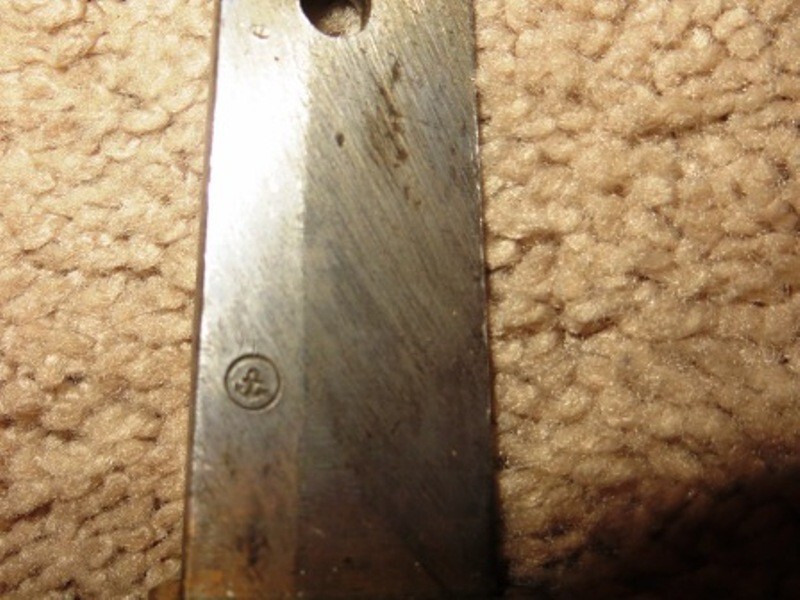
Right! Of the two stamps on the other side, the one on the right is of the Tokyo 1st Army Arsenal, and the one on the left is an unknown shop logo. We see it around here and there. The Tokyo 1st Arsenal star stamp started showing up in 1942 when the Kokura arsenal no longer held supervisory authority over the other arsenals. -
Ebay mantetsu - did I mess up?
Bruce Pennington replied to RobCarter3's topic in Military Swords of Japan
Ha!, You and me both brother! It appears you are a fast learner, as that was a really good summary of what we understand so far. -
Ebay mantetsu - did I mess up?
Bruce Pennington replied to RobCarter3's topic in Military Swords of Japan
Trystan, forgive me if I knew this already, and have forgotten, but refresh my memory on this whole thing. I don’t remember another army arsenal called the South Manchurian army arsenal. I don’t doubt what you were saying, but just refresh my memory, please! Do you think that this arsenal is the one using the Nan and Ren stamps? -
Any hope for a translation? @SteveM @uwe @k morita and anyone else?
-
Collection of photos from WWII smith's
Bruce Pennington replied to Itomagoi's topic in Military Swords of Japan
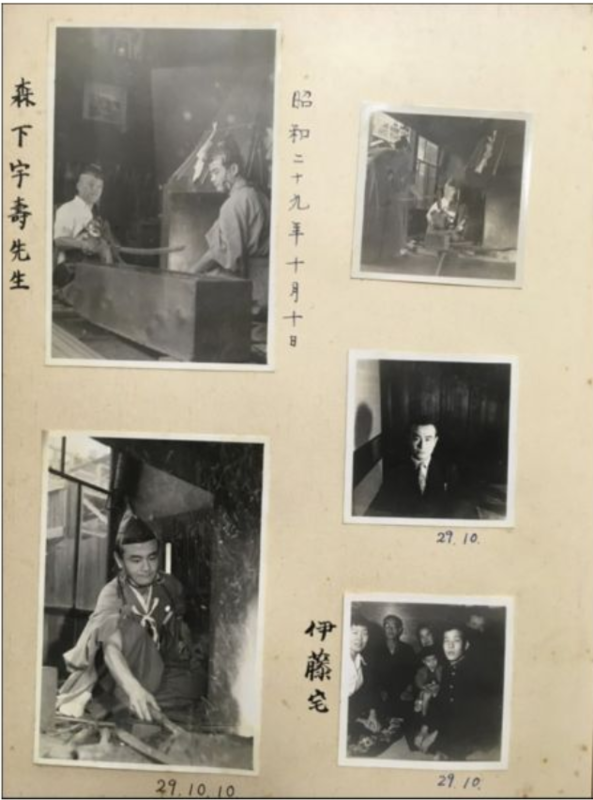
Adding a photo from the site, for the future when the auction goes dead. There are several, so I hope I grabbed the right ones!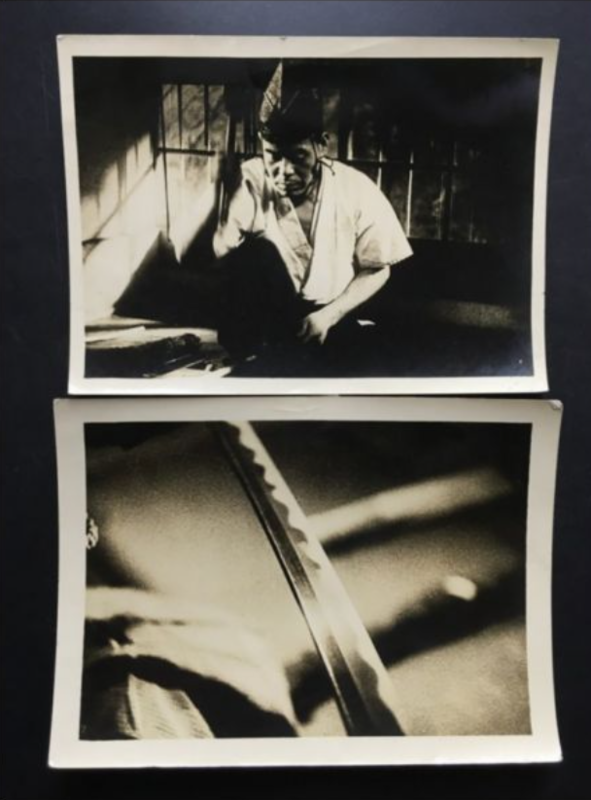
-
Ebay mantetsu - did I mess up?
Bruce Pennington replied to RobCarter3's topic in Military Swords of Japan
I knew I'd seem a mysterious stamp on a Mantetsu mune before - Autumn 1942 YA 702 Koa Isshin has the Nan stamp too! Have to run, but will post photos or link when I can. Update: It's a gunto owned by Edokko on Gunboards. The Nan is poorly struck with only the horizontal lines showing, the outer edges missing. It also bears the W/M stamp:


-
Ebay mantetsu - did I mess up?
Bruce Pennington replied to RobCarter3's topic in Military Swords of Japan
HA! Love it Stephen! And LOOK what we have here! A "Nan" stamp on the mune of a '42 Koa Isshin!!! Doesn't that toss a monkey-wrench twist into the SMR Mantetsu story! The "YA" line was the last pure '42 line, with the MA line overlapping '42 & '43. Yet, we don't see any Nan stamped blades showing up until 3 lines later with the '43 FU line, but not on Koa Isshin. The year was mixed with both Koa and non-Koa blades, with the Nan on the non-Koa blades. This is something to contemplate. Any thoughts @Kiipu @BANGBANGSAN? PS: Rob, There are a few good sources for catching up on your Mantetsu gunto, but our article on them summarizes them all: SMR - The Mantetsu Blade
-
Help identifying NCO Katana
Bruce Pennington replied to Martin Boniface's topic in Military Swords of Japan
The whole rig is a Type 98 Japanese Army officer sword (gunto) in field, or combat saya. I really love this site for learning all the various types: http://ohmura-study.net/900.html Look here for care and cleaning: http://www.japaneseswordindex.com/care.htm -
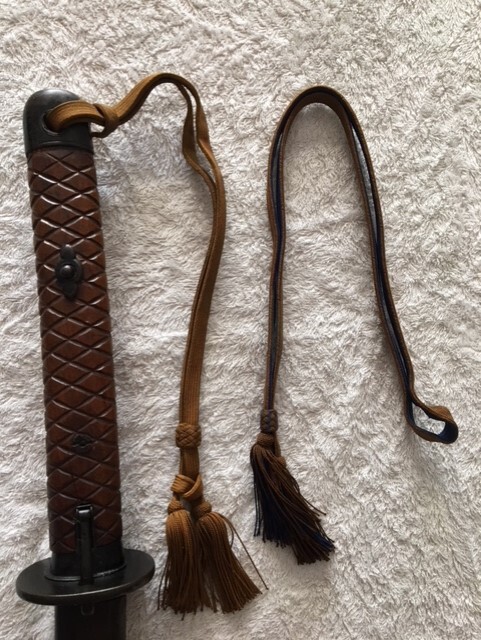
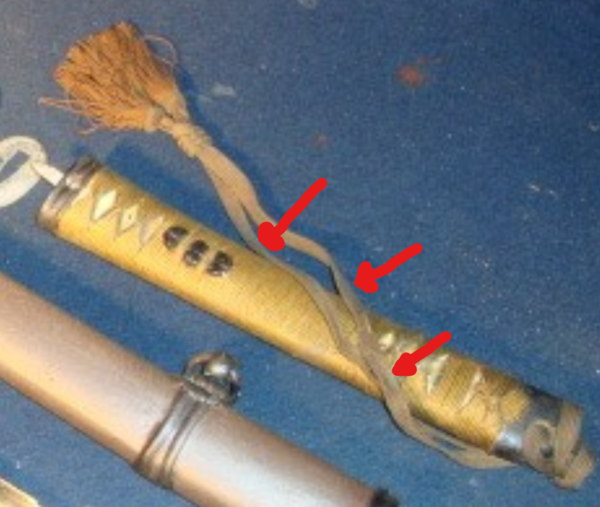
For discussion purpose, not doubting your items, if I were discovering some of these on my own, via the web, I wouldn't file them. Looking closely, you can sometimes see faded blue, meaning the whole tassel is an extremely faded brown/blue. What do you think about this latest one?
-
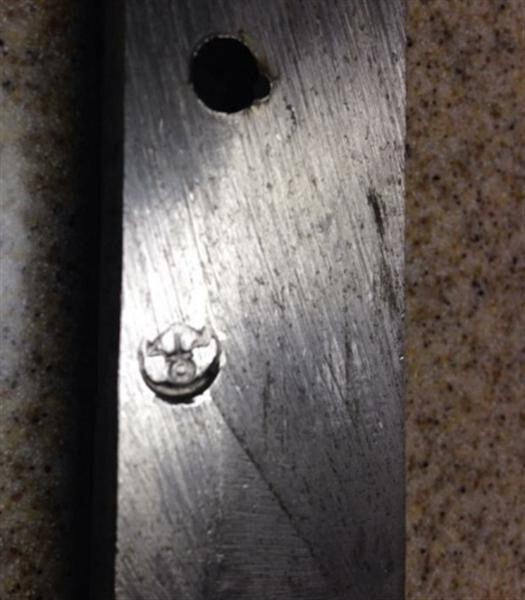
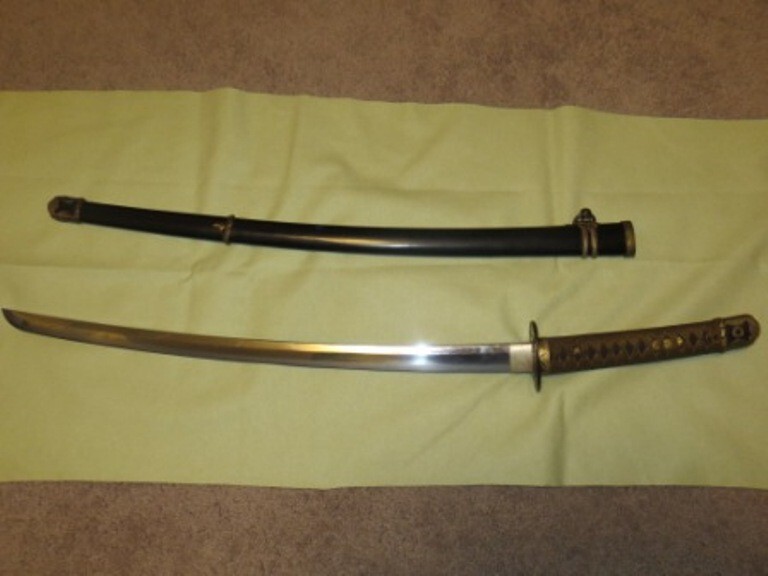
Yes, it's the one I used for the intro photo for the Mysterious Naval Landing Sword article. I just never had it recorded in my files! @Jcstroud prompted me about it and I got the photos from my old AF buddy through an email. Here's the whole sword and upside-down anchor.

.thumb.jpg.f47cd578e8391eedb28a58944f48487e.jpg)
-
@Brian Any chance of getting the Nao variant added to the "Kanji used in names" page? You've got 2 versions there already, but not this one, and I've seen this a couple of times, or 3, on gunto.
-
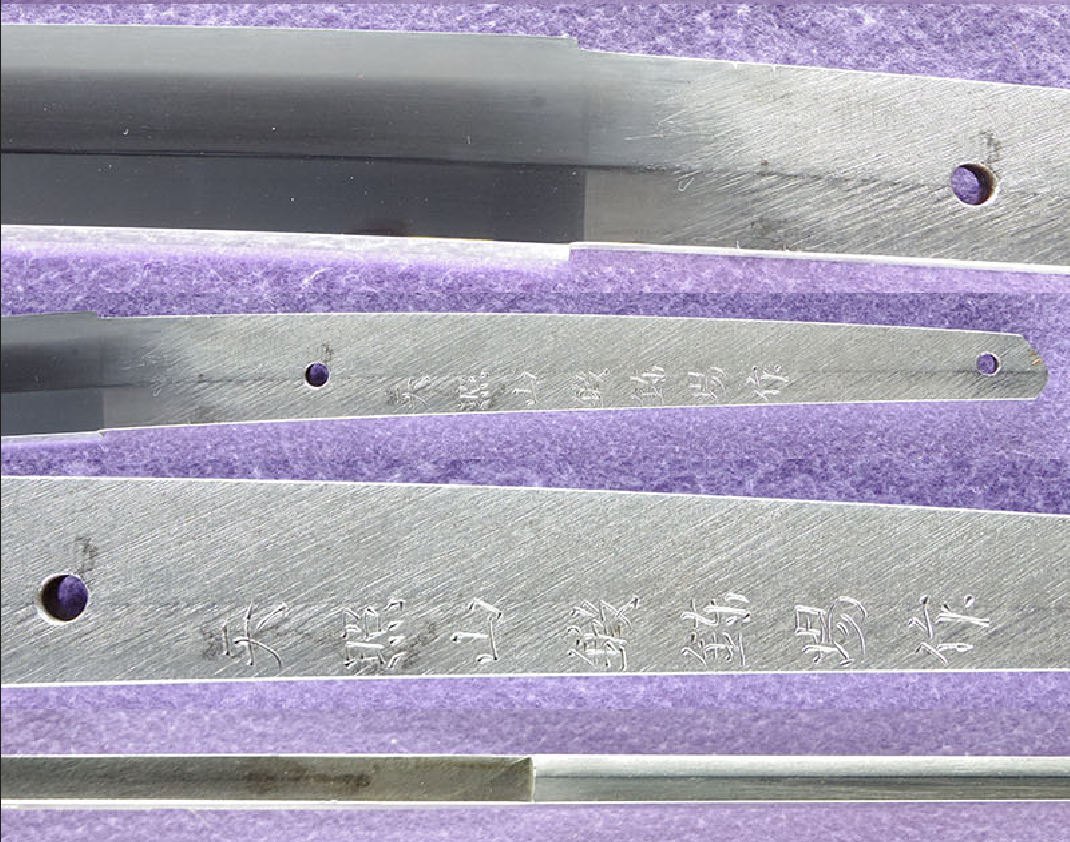
Well, this is going to be one for the record books! Calling all translation experts!
-
chippy seki-to mei got me beat
Bruce Pennington replied to lonely panet's topic in Translation Assistance
I have 3 of his showa-stamped blades on file now. 4 (now 5) with large seki stamps. I only have 1 of his star-stamped blades recorded. -
Looks like the craftsman was making it like it was hand-carved out of stone. I admit, on first glance I thought "Hm, kind of crude and ugly" but after taking a close look, there's an incredible amount of detail in there!!!












.jpg.ce9403784d257d41ac02c1b352bd0f39.jpg)